Start
$590$990/month
1 platform · Google or MetaGoogle + Meta- Ad spend
- up to $3,000
- New creativesmade by us
- Google + Meta only4 a month
 By Matteo Braghetta, Founder · Google Ads
Denton's medspa market in 2025 has a supply gap that doesn't exist 20 miles south in Frisco or Lewisville: a young, culturally progressive city with a 31.4-year median age, a large professional and creative population built around UNT's arts culture, and fewer branded medspa operators than the market can support. The city that calls itself "Little Austin" has the demographics for strong aesthetics demand — and a PPC landscape that hasn't caught up yet.
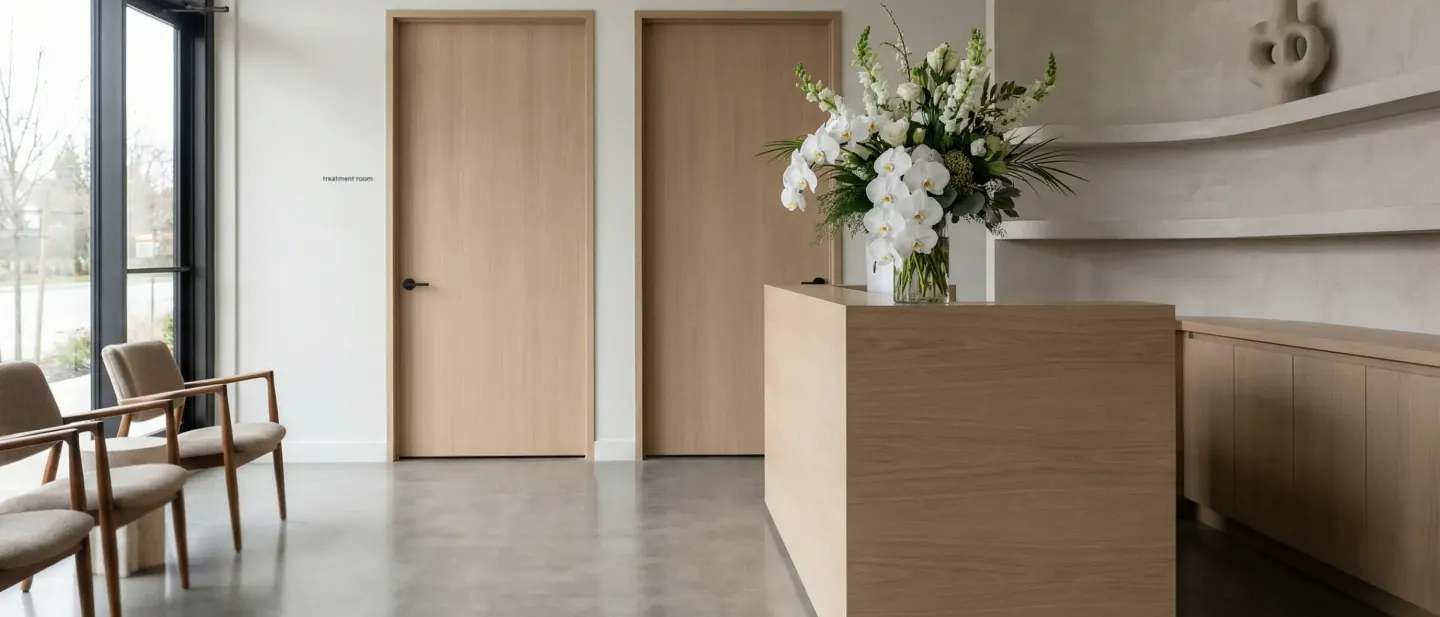
In Denton, TX, people search for medspa services about 1,350 times a month on Google; a top-of-page click costs $3–$17, and demand peaks in September.
Google Keyword Planner · Oct 2025 – Sep 2026
| Search | Monthly searches | Top-of-page CPC |
|---|---|---|
| facial near me | 260 | $1.53–$6.83 |
| laser hair removal | 140 | $7–$72 |
| med spa | 110 | $2.57–$7.00 |
| med spa near me | 110 | $5–$13 |
| microneedling | 110 | $1.36–$7.58 |
| medical spa | 110 | $2.57–$7.00 |
| botox | 90 | $3–$12 |
| lip filler | 50 | $1.79–$5.00 |
| hydrafacial | 50 | $0.36–$5.87 |
| lip flip | 50 | — |
US: $15
Google Keyword Planner · Oct 2025 – Sep 2026
Source: Google Keyword Planner (Google Ads), Google Search, English, Denton, TX, Oct 2025 – Sep 2026. Volumes are Google's monthly averages; CPC is the top-of-page bid range, weighted by search volume. How we collect these figures.
Denton's medspa PPC market has an unusual challenge for local operators: the most dangerous competitor isn't another Denton medspa. It's Ideal Image — the national laser hair removal and injectable franchise with locations in Lewisville and Plano — running DFW-wide brand campaigns that capture Denton search traffic while offering appointments 20–25 miles away. Ideal Image's brand recognition, national ad budget, and keyword dominance on general medspa terms ("laser hair removal near me," "Botox near me") creates a competitive ceiling that local Denton operators can't match on volume alone.
The secondary challenge: many Denton medspa operators are not running paid search at all, or are running it through Instagram-first marketing agencies that don't understand search intent. The Denton medspa searcher on Google is in a different mindset than the Instagram scroller who sees a sponsored post — they're actively looking for a provider, ready to book a consultation, and comparing 2–3 options. Campaigns that can't capture this active-intent searcher cede them to the chains and DFW-based operators who show up when Denton searchers are ready to buy.
The medspa search market in Denton is not a single keyword pool. It's a collection of treatment-specific intent clusters, each with its own searcher mindset, conversion cycle, and competitive landscape. "Botox Denton TX" and "medspa Denton TX" are different buyers: the Botox searcher knows what they want, knows the price range, and is comparing providers on trust and convenience; the medspa searcher is in an earlier exploration phase and needs education before booking. "Laser hair removal Denton TX" attracts a price-conscious, package-buying buyer; "lip filler Denton TX" attracts a trend-conscious younger buyer who's seen results on Instagram and is now cross-checking on Google.
Campaigns that dump all of these keywords into a single ad group with one landing page are not optimizing for any of them. The Botox buyer who lands on a generic "we offer everything" homepage bounces because they don't immediately see pricing, provider credentials, and a booking button. A treatment-specific landing page for each service category improves CVR by 40–60% in the aesthetics vertical — a magnitude that fundamentally changes campaign economics at equivalent spend.
Medspa is a medical service with visible results — and visible risks. The Denton searcher considering Botox or filler is not just comparing price; they're evaluating whether the provider is safe, credible, and qualified. A clinic run by an NP or PA medical director is perfectly safe and clinically equivalent to a physician-run practice, but the Google ad that says nothing about credentials, reviews, or before/after outcomes gives the searcher no reason to trust it over the national franchise whose brand they've heard of.
Google Reviews are an underused conversion lever in Denton medspa PPC. A practice with 150+ Google Reviews averaging 4.7+ stars should be leading every ad with that signal. Star ratings show in ad extensions and significantly increase CTR on medical service searches — LocalIQ healthcare benchmark CTR averages show practices with prominently displayed reviews outperforming category average CTR by 15–25%. In a market where the purchase decision is trust-dependent, every click that comes from a reviews-reinforced ad is a higher-intent click than one from a generic headline.
The campaigns that generate consistent consultation bookings for Denton medspas share a structure: separate by treatment category, match messaging to buyer intent, and build trust signals into every ad and landing page element. Here's the architecture that works.
Campaign 1: Injectable Services (Botox / Neuromodulators / Fillers). This is the highest-volume treatment category for most Denton medspas and the most competitive:
Campaign 2: Laser and Body Treatments. These are package-sale opportunities with higher per-transaction value:
Campaign 3: Denton-Specific + "Near Me" Capture. This campaign captures the geographic intent that chains miss:
Consultation-first conversion flow. Unlike HVAC or dental (where a phone call generates a lead), medspa conversions almost always require a consultation. The conversion goal is a booked consultation — not a form fill that goes to a general inbox. Campaign landing pages should connect directly to a booking calendar (Acuity, Calendly, or practice-specific booking software) with a 24–48 hour consultation availability. Reduce friction in every step: no-obligation framing, provider photo and credentials visible, consultation duration stated ("30-minute complimentary consultation").
Denton's aesthetics market has three structural advantages for local medspa operators — advantages that aren't visible from DFW aggregate data but become clear when you look at Denton's specific demographic and competitive composition.
The supply gap is real and measurable. BBB search returns 67 results for "medspa" near Denton — compared to 200+ for comparable Frisco searches and 150+ for Lewisville. Denton is underserved in branded medspa capacity relative to its population and demographic profile. The city of 152,866 people with a 31.4-year median age and a progressive, wellness-oriented culture should support 8–12 established medspa operators. The current supply is lower — which means PPC campaigns for Denton-native providers face less local competition than their Frisco counterparts.
Key insight: Frisco and Plano market saturation is pushing buyers toward Denton-specific searches. As the Frisco/Plano/McKinney medspa market gets more crowded, price competition intensifies and quality differentiation becomes harder. Denton offers an alternative: a local practice with shorter drive times for Denton residents, comparable clinical quality, and a less saturated search landscape. Denton-specific search terms ("medspa Denton TX") operate at 30–40% lower CPCs than equivalent Frisco/Plano terms because fewer operators are competing for them.
Denton's cultural identity is a genuine marketing asset for medspa operators. The city has a disproportionately large community of artists, musicians, UNT graduate students, and young professionals who are appearance-conscious, wellness-focused, and open to aesthetic treatments. This isn't speculation: Denton's median age of 31.4 years and the creative-economy character of the UNT-adjacent population maps directly onto the primary Botox and filler buyer demographic (28–42-year-old professionals). The "wellness and self-care" messaging that might feel forced in a blue-collar market feels completely native in Denton — and should be built into both ad copy and landing page voice.
The student population contributes a secondary segment: 21–26-year-olds pursuing entry-level treatments (first Botox, lip filler, skin care consultations) at price-accessible levels. This segment won't be the highest-LTV patient, but they convert on consultation offers and "first treatment" promotions at above-average rates. Capturing them in their early twenties and building a multi-year treatment relationship generates the long-term LTV that makes aesthetics practices profitable at scale.
Denton medspa search demand follows a clear seasonal pattern that most Denton operators don't explicitly build into their campaign budgets:
January–March: New Year resolution surge drives body contouring inquiries; skin care reset after holiday event season. This is the highest-volume window for new patient acquisition — competitors who pull budget after the holiday season are ceding January to the practices that maintain spend. April–May: Pre-summer body treatment peak — laser hair removal, contouring, and "summer skin" injectable refreshes. CPCs begin to rise as competitors activate summer campaigns. October–November: Pre-holiday injectable peak — Botox and filler clients want refreshes before Thanksgiving and December events. This is the second-highest conversion window of the year. Summer is moderate — student population thins somewhat, but working-age professional demand remains year-round in Denton.
A Denton medspa campaign that maintains consistent spend year-round while increasing budget 25–35% in January–March and October–November captures the full seasonal demand cycle, including the periods when competitors reduce spend.
Denton's medspa market is a first-mover opportunity. The supply gap, the demographic fit, and the lower CPCs relative to Frisco and Plano create a window for well-positioned local operators to establish paid search dominance before the market matures. That window is closing as more DFW medspa chains extend their radius campaigns northward.
MB Adv Agency builds medspa campaigns with the treatment-specific segmentation that creates meaningful conversion advantages: dedicated Botox, filler, and laser campaigns with consultation-booking landing pages, seasonal budget management that captures January and October peak demand windows, and geo-targeting strategies that reach Denton's "Little Austin" demographic where they're actively searching — not where Frisco competitors are spending.
If your Denton medspa is competing for clicks against Ideal Image with a single blended campaign, we can build the structure that wins on specificity. Management is a fixed monthly fee set by your ad spend, with the tracking set up first: see the plans and prices.
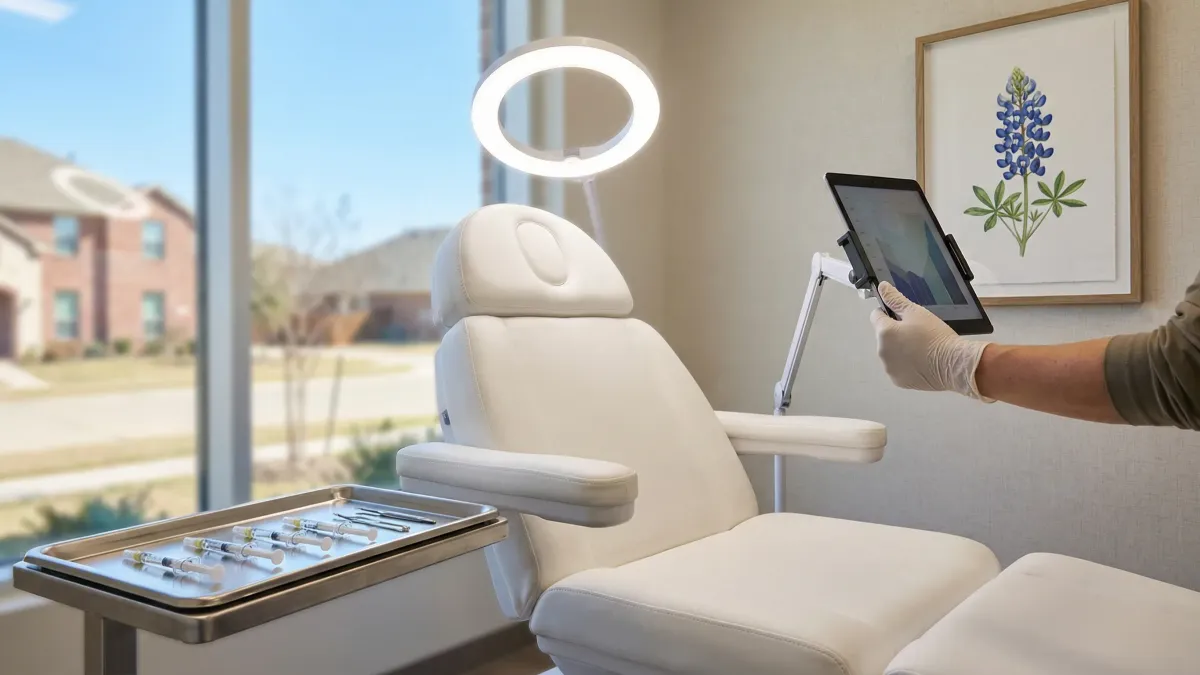
A Denton medspa should budget a minimum of $2,000 per month to generate consistent consultation bookings, with most growth-stage practices targeting $2,500–$4,500 per month for multi-treatment campaign coverage. At $2,000/month with clicks costing $2.87–$17.38 and a 6% conversion rate, a well-structured Denton medspa campaign generates approximately 7–42 consultation requests per month — and at a 50–60% consultation show rate and 70–80% conversion to first treatment, this produces roughly 2–20 new clients per month. With a conservative 3-year client LTV of $3,500 (annual Botox + one package treatment), 5 new clients per month generates $210,000 in LTV in year three alone. The math on medspa PPC is uniquely strong relative to other service categories because the repeat-purchase cycle is built in: a satisfied Botox client returns every 3–4 months without requiring additional ad spend. Acquisition cost is front-loaded; LTV accrues for years. This means the payback period on a well-managed Denton medspa campaign is often 3–6 months, not 12–18 months as it might be for a one-time-service business.
Seasonal budget allocation matters. January–March and October–November should each receive a 25–35% budget increase over baseline — these are the two peak conversion windows in the aesthetics calendar. April–May (pre-summer) should receive a 15–20% increase for body and laser campaigns specifically. The remainder of the year (June–September, December) runs at baseline. Total annual ad spend of $30,000–$45,000 — about $2,500–$3,750 average monthly — is the target band for a Denton medspa operating 2–4 treatment rooms with consistent consultation capacity.
Botox and injectable campaigns in Denton perform best when structured around three strategic principles: treatment specificity, consultation conversion optimization, and provider trust signaling. A Denton Botox campaign that treats injectables as a single keyword group and sends all traffic to a general homepage will achieve 2–3% CVR. A campaign with dedicated Botox, filler, and neuromodulator ad groups, each with its own landing page and consultation booking flow, can achieve 5–8% CVR — a 2–3x improvement at identical spend. Botox terms in Denton run $3–$12 per click — an advantage that can disappear as the Denton market matures. First-mover campaign structure built now will have Quality Score and conversion history advantages that later entrants can't replicate.
Provider trust signals are the second major lever. Include the medical director's credentials (NP-directed, PA-directed, or physician-directed) in ad copy or sitelinks wherever Google policy allows. Feature Google Review count and rating prominently in ad extensions. Landing pages should show the treatment space, the practitioner, and before/after results (Google policy compliant) above the fold. Before/after photos in the display network and YouTube remarketing dramatically accelerate the consideration cycle — a Denton searcher who sees a local before/after sequence on YouTube on Friday is significantly more likely to book a consultation by Sunday. Retargeting budget (10–15% of total campaign) allocated to display and YouTube for medspa is among the highest-ROI retargeting investments in the healthcare category.
How to read this Cost per click and monthly searches are measured with Google Keyword Planner (see above). Cost per lead, conversion rate, budget and leads are estimates compiled from public benchmarks such as WordStream, not measurements.
Sources LocalIQ 2025 Healthcare and Beauty benchmarks; American Med Spa Association 2023 data; Denton market estimates
$590$990/month
1 platform · Google or MetaGoogle + Meta$790$1,290/month
1 platform · Google or MetaGoogle + Meta$1,140$1,940/month
1 platform · Google or MetaGoogle + MetaChatGPT Ads: a separate pilot, $250/month, added to a plan. See the pilot →

Matteo Braghetta founded MB Adv and runs its Google Ads accounts. He takes the first call with every new client, reads the accounts every week and writes the agency’s guides.
The other half of his job is measurement: GA4, Consent Mode and server-side tracking, so the platforms learn from real sales.
MB Adv is a Google Partner agency managing about $4.4M a year in ad spend for clients in the US, the UK and Europe.
Managed on numbers you can check.
Plans for the US