Start
$590$990/month
1 platform · Google or MetaGoogle + Meta- Ad spend
- up to $3,000
- New creativesmade by us
- Google + Meta only4 a month
 By Matteo Braghetta, Founder · Google Ads
Two Men and a Truck was literally founded in Michigan — making Detroit one of the most franchise-saturated moving markets in the country. Independent movers competing here deal with a hometown brand advantage that no national franchise in any other market has: Two Men and a Truck's regional recognition, customer loyalty, and ad budget create a PPC ceiling that demands hyper-local targeting, speed-of-response differentiation, and relentless focus on the customer segments the franchise model serves poorly.
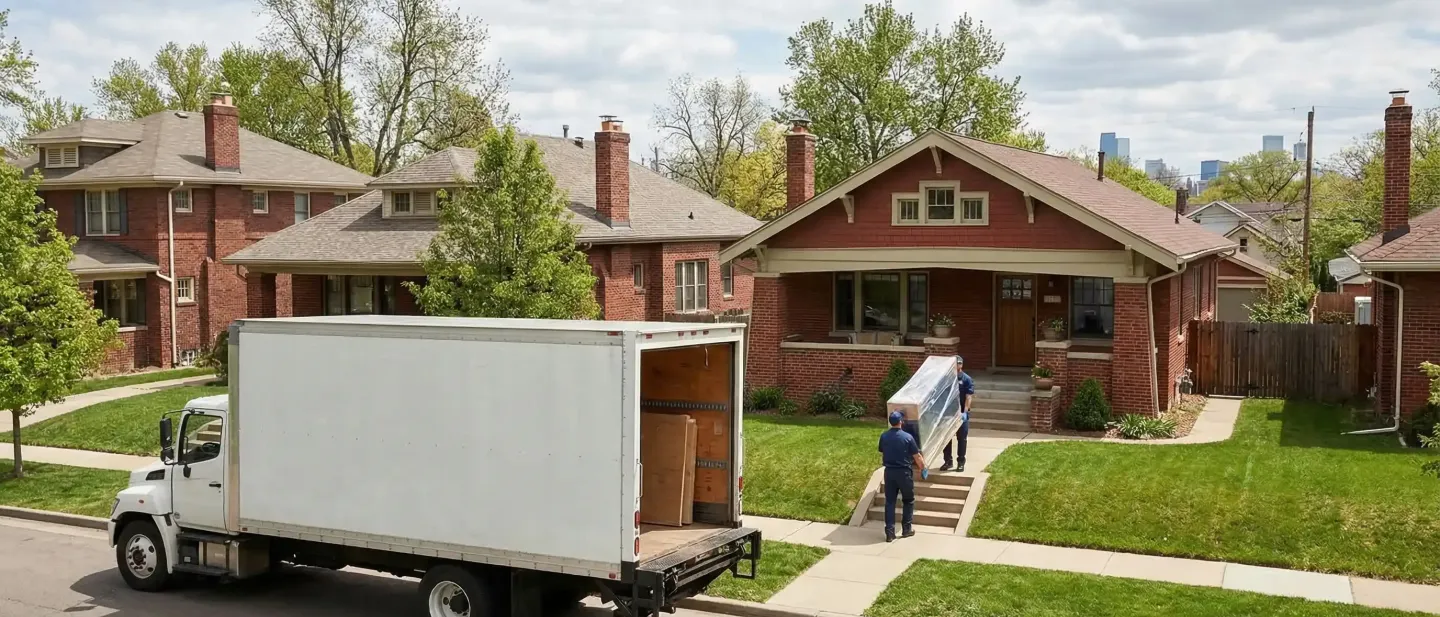
In Detroit, MI, people search for moving & storage services about 5,900 times a month on Google; a top-of-page click costs $7–$23, and demand peaks in July.
Google Keyword Planner · Oct 2025 – Sep 2026
| Search | Monthly searches | Top-of-page CPC |
|---|---|---|
| storage units near me | 2,900 | $6–$22 |
| storage units | 880 | $6–$23 |
| moving company | 480 | $9–$28 |
| movers near me | 390 | $8–$26 |
| self storage | 260 | $5–$19 |
| movers | 210 | $6–$24 |
| local movers | 170 | $12–$26 |
| moving company near me | 110 | $11–$31 |
| cheap movers | 90 | $3–$15 |
| climate controlled storage | 90 | $4–$19 |
US: $29
Google Keyword Planner · Oct 2025 – Sep 2026
Source: Google Keyword Planner (Google Ads), Google Search, English, Detroit, MI, Oct 2025 – Sep 2026. Volumes are Google's monthly averages; CPC is the top-of-page bid range, weighted by search volume. How we collect these figures.
Detroit's moving and storage PPC market is shaped by a single dominant competitive reality: Two Men and a Truck is a Michigan company. Founded in East Lansing in 1985, Two Men and a Truck grew to 400+ franchise locations nationally before their most recent brand repositioning — but the company's roots are unmistakably Midwestern, and metro Detroit consumers have decades of brand familiarity with the orange trucks. That familiarity creates a Quality Score and brand recognition advantage that independent movers cannot match through ad spend alone.
Two Men and a Truck isn't the only franchise challenge. All My Sons Moving & Storage runs active Google Ads in the Detroit market. PODS and 1-800-PACK-RAT dominate portable storage searches. North American Van Lines and United Van Lines (Mayflower) capture corporate relocation searches through their agent networks. Taken together, these franchise operators occupy a disproportionate share of the first-page real estate on high-volume moving searches — and they're bidding on each other's brand terms, on generic moving terms, and on every seasonal spike that drives consumer search volume.
The result: CPCs for core moving terms in Detroit have inflated to $7–$23 per click. "Moving company Detroit" runs $9–$28. "Local movers Detroit" runs $12–$26. At these CPCs (a typical click of about $15), an independent mover with a $2,000/month budget gets about 135 clicks per month. At an 8-10% conversion rate, that's 11–13 quote requests. At a 40-50% booking rate from quote, that's 4–7 jobs per month — enough to justify the campaign if average job revenue exceeds $1,000, but thin margins for growth.
The deeper problem: franchise brands bid on their own brand terms to dominate SERP coverage — but they also bid aggressively on competitor terms. Two Men and a Truck actively bids on terms like "local movers near me Detroit," pushing up CPCs market-wide. Independent movers who don't have a brand-differentiated response to this auction pressure get squeezed into higher CPCs without the franchise's conversion rate advantage.
Moving is one of the highest lead-waste categories in home services PPC. Consumers frequently get multiple quotes and book based on price. An independent mover who generates 20 quote requests per month may book only 6-8 jobs — a 30-40% booking rate. The other 60-70% of leads represent real ad spend with zero revenue return. The solution isn't spending less — it's pre-qualifying more aggressively through ad copy and landing page design. Ads that mention approximate price ranges ("Local moves starting at $350") or minimum requirements ("2-hour minimum, professional crew") attract price-qualified leads and repel tire-kickers — improving booking rates without increasing ad spend.
Detroit moving PPC strategy starts with a non-obvious insight: the franchise brands win on recognition, not on specificity. Two Men and a Truck's "We'll Move Your Stuff" generic positioning leaves significant room for an independent mover to own highly specific customer scenarios — last-minute moves, same-day availability, apartment-to-apartment specialty, junk removal add-on, corporate employee relocation, senior move management. Each of these is an underserved niche in Detroit's franchise-heavy market.
Structure campaigns by the type of move and customer intent, not just by geography. Each segment has distinct economic characteristics (job value, booking rate, seasonality) and responds to different ad copy and landing pages.
Detroit moving PPC follows a well-defined seasonal pattern. May-September captures 55-60% of annual moving volume. Budget strategy: increase spend 40-60% in May-July (apartment lease changeovers), reduce to baseline in February-March (Michigan winters suppress moving activity), and maintain a 20-30% budget increase in January to capture Q1 corporate relocation traffic before the spring consumer season begins.
Detroit's moving market has a structural demand driver that most independent movers underutilize in their PPC: the automotive OEM corporate transfer calendar. Ford, GM, and Stellantis collectively move thousands of employees annually through Michigan-based engineering, design, and management functions — and the Q1 and Q3 corporate transfer windows create predictable, non-seasonal moving demand that franchise brands address poorly.
Corporate employee relocations from automotive OEMs differ from consumer residential moves in three important ways: they're booked weeks in advance (not last-minute), they have defined budgets (relocation packages of $5,000-$25,000), and they require coordination with HR departments and relocation management companies. Two Men and a Truck's franchise structure makes them poor partners for corporate relocation coordinators — franchise unit owners aren't equipped to navigate corporate relocation billing, insurance certificate requirements, and corporate HR coordination. Independent movers who build relationships with OEM HR departments and advertise specifically to "corporate relocatees moving to Metro Detroit" capture this segment almost by default.
The PPC angle: "GM/Ford/Stellantis Employee Relocation — Detroit Corporate Moving Specialists" campaigns targeting professional audiences in out-of-state metros (primarily Ann Arbor, Chicago, Columbus, and Cincinnati) who are relocating to Detroit. These campaigns run on Location-based targeting (people in those cities who are actively job-searching or have employment history with automotive OEMs). Conversion rates are 8-12%, and average job values are $2,500-$5,000 — dramatically higher than consumer moves.
Detroit's apartment vacancy rate sits around 8% (2025), creating sustained residential mover demand from apartment turnover. Unlike home purchases (which follow seasonal patterns), apartment moves spike around lease-end dates — typically April 30, July 31, and September 30 in Detroit's largest apartment markets. Movers who increase bids 35-50% in the 2-week window before major lease-end dates capture disproportionate urgency-driven volume at above-market booking rates.
Junk removal is the underutilized growth category in Detroit moving PPC. The market has a significant "pre-move cleanout" need — Detroit's housing stock has a high percentage of older homes with accumulated possessions, estate situations, and hoarding scenarios that require junk removal before a full move can be executed. Movers who advertise junk removal alongside moving services (and offer a combined package discount) see 25-35% higher booking rates because they solve two consecutive customer problems in one engagement — and customers who need both services rarely get a combined-service offer from franchise movers.
Beating Two Men and a Truck in their home market requires more than matching their ad spend — it requires surgical targeting of the customer scenarios where a locally-owned, owner-operated moving company has genuine advantages: last-minute flexibility, corporate relocation expertise, combined junk removal services, and the ability to say "the owner will be at your move" in a way no franchise can authentically claim. Detroit customers who have had bad franchise experiences — damaged furniture, no-shows, hidden charges — are actively searching for an alternative. That alternative has to be visible when they search, with ad copy that speaks directly to what the franchise got wrong.
At MB Adv Agency, we build Detroit moving company campaigns that segment by move type, target corporate relocation windows, and use bid scheduling to capture the apartment lease-cycle surges that franchise brands miss because their national budget strategies don't account for Detroit's specific OEM corporate calendar. Our campaigns are structured to generate pre-qualified leads — not quote requests from price-shoppers who will never book.
If you're an independent Detroit mover tired of watching franchise brands collect clicks your business deserves, review our PPC management plans or book a free strategy session today.
Two Men and a Truck's budget advantage is real — but it's not insurmountable, because franchise brands have structural blind spots that independent movers exploit. Franchise brands buy broad, nationally-structured campaigns. They can't efficiently customize ad copy for "last minute apartment move Midtown Detroit this Saturday." You can.
Three tactics that level the playing field: First, keyword specificity. Instead of competing on "movers Detroit" ($6–$24 CPC), build campaigns around "same-day movers Detroit" and "apartment movers Detroit." Lower competition, same intent. Second, speed differentiation. Independent movers can offer same-day quotes and next-day scheduling in a way franchise scheduling systems can't match. Make that availability explicit in every ad. Third, Quality Score leverage. A landing page that says "Detroit's Same-Day Moving Specialists — Get a Quote in 10 Minutes" and loads in under 2 seconds on mobile will consistently outperform a franchise brand's generic "Get a Free Estimate" page — earning 6-8/10 Quality Score vs. franchise 4-6/10, effectively cutting your CPC by 25-40%.
The seasonal counter-strategy: launch campaigns in January, before the spring season inflates CPCs by 30-50%. Build Quality Score during low-competition months, then enter the May-July peak with established ad history and lower effective CPCs than franchise brands who budget-spike in spring without pre-built Quality Scores.
A Detroit independent moving company should budget $2,000-$3,500/month minimum for Google Ads to generate consistent lead volume. Here's the economics at the $2,500/month level:
At $2,500/month on targeted keywords (not broad head terms), expect about 165 clicks at average $7–$23 blended CPC (a typical click of about $15). At 8-10% conversion to quote requests, that's 13–17 quote requests per month. At a 40-50% booking rate, that's 5–8 booked moves. At Detroit's average local move revenue of $800-$1,400 per job, that's $4,000–$11,200 in gross revenue per month — a 1.6:1 to 4.5:1 ROAS before factoring in LTV from repeat customers and referrals.
The long-distance segment changes the economics significantly. At the same $2,500 budget, adding a Detroit-to-Chicago or Detroit-to-Columbus campaign captures lower volume but $2,000-$3,500 average job values. Even 2 long-distance bookings per month ($4,000-$7,000 in revenue) meaningfully improves overall ROAS. The highest-ROI Detroit moving campaigns dedicate 30-40% of budget to long-distance and corporate relocation, where franchise brands are weakest and job values are highest.
Junk removal campaigns ($800-$1,200/month additional) add pipeline volume during slow seasons. Junk removal jobs run $200-$600, but they create moving upsell conversations. Movers who offer combined services and advertise both together see 25-30% higher combined revenue per customer acquisition than movers who keep the categories siloed.
How to read this Cost per click and monthly searches are measured with Google Keyword Planner (see above). Cost per lead, conversion rate, budget and leads are estimates compiled from public benchmarks such as WordStream, not measurements.
Sources WordStream Home Services 2025 + LocaliQ 2024 + Detroit moving market estimates
$590$990/month
1 platform · Google or MetaGoogle + Meta$790$1,290/month
1 platform · Google or MetaGoogle + Meta$1,140$1,940/month
1 platform · Google or MetaGoogle + MetaChatGPT Ads: a separate pilot, $250/month, added to a plan. See the pilot →

Matteo Braghetta founded MB Adv and runs its Google Ads accounts. He takes the first call with every new client, reads the accounts every week and writes the agency’s guides.
The other half of his job is measurement: GA4, Consent Mode and server-side tracking, so the platforms learn from real sales.
MB Adv is a Google Partner agency managing about $4.4M a year in ad spend for clients in the US, the UK and Europe.
Managed on numbers you can check.
Plans for the US