
Moving & Storage PPC San Francisco, CA
San Francisco is the #1 source market for interstate moves to Texas, Arizona, and Nevada — driven by 120,000+ Bay Area tech layoffs between 2022 and 2025 — yet most SF moving companies run PPC campaigns optimized for local apartment moves while the $4,000–$12,000 interstate jobs sit in an auction almost no one has built a campaign for. <!-- stats-article-link --> <p><em>See how this city's Moving & Storage PPC costs compare nationally in our <a href="https://www.mbadv.agency/ppc-industry-statistics/moving-storage-ppc-statistics">Moving & Storage PPC Statistics</a> report, featuring data from 40+ US cities.</em></p>
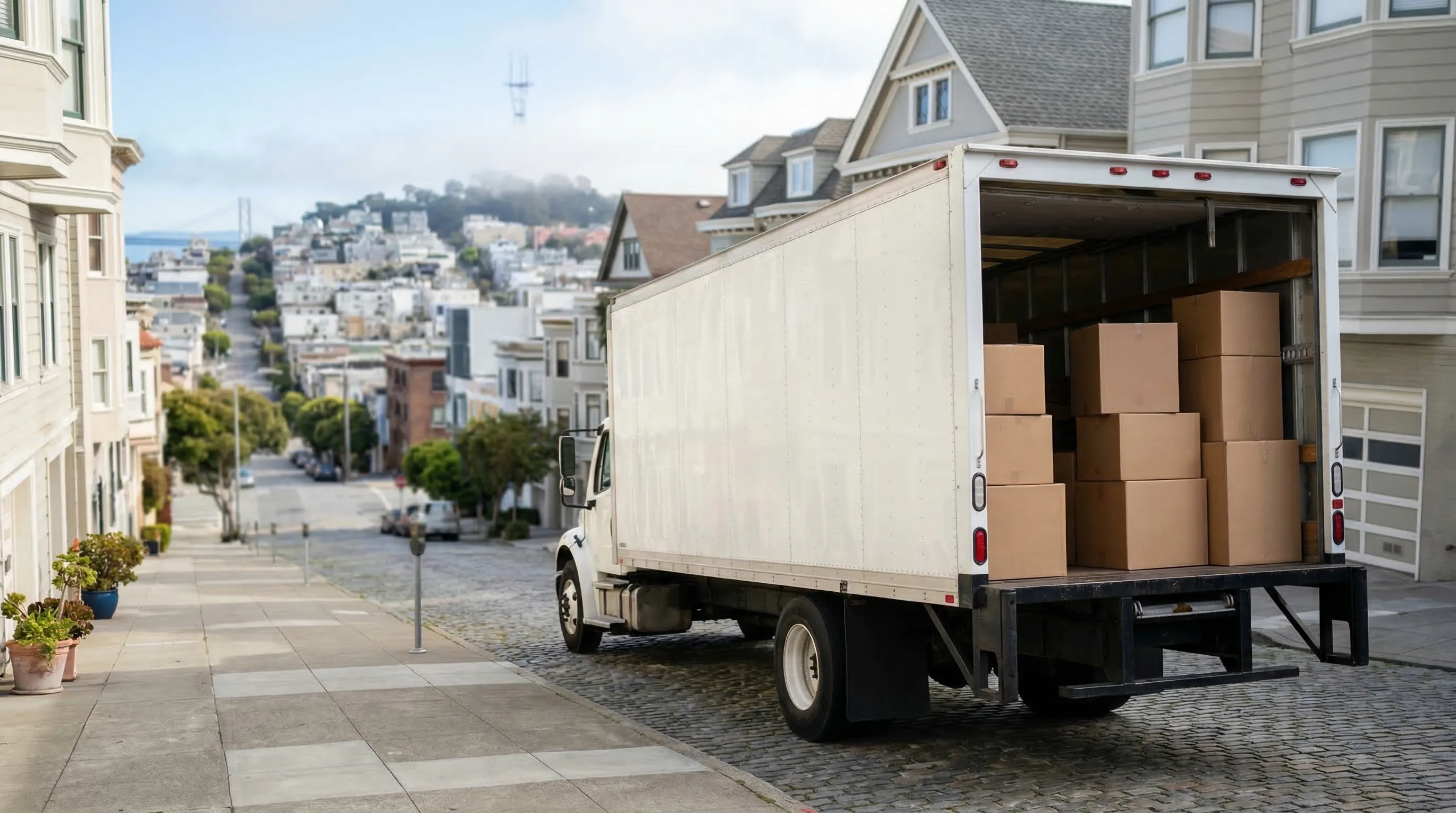
San Francisco's moving industry has a fundamental PPC problem: most companies are optimizing for the wrong job type. Local apartment moves in SF — the $800–$1,500 studio-to-studio relocations that dominate local campaign thinking — generate enough volume to look like the primary market. But the highest-value opportunity in SF moving PPC is the interstate out-migration market: the $4,000–$12,000 moves from San Francisco to Austin, Phoenix, Seattle, and Denver that the city's post-2022 tech layoff wave has made one of the most consistently searched relocation patterns in the country.
The competitive landscape for SF moving PPC reflects this distortion. National franchise chains — Two Men and a Truck, Allied Van Lines, North American Van Lines — compete aggressively on broad local terms like "movers San Francisco" and "moving companies SF." U-Haul competes heavily on branded searches and DIY-adjacent terms. PODS and portable storage companies bid on storage-related moving terms. The result is a broad local moving auction with CPC rates of $12–$25 and meaningful competition from national brands with institutional-level budgets and established Quality Scores.
The Yelp Culture Problem
San Francisco has a Yelp culture that doesn't exist at this intensity in any other US city. Over 60% of SF residents consult Yelp before booking a mover — a percentage that runs 2–3x higher than the national average for the moving industry. This creates a specific PPC challenge: an SF moving company with a strong Google Ads campaign but a weak Yelp presence (under 4.0 stars, fewer than 100 reviews) converts at dramatically lower rates than competitors with equivalent Google positions and strong Yelp credibility signals.
The practical consequence is that SF moving PPC operates in a two-platform ecosystem. Google Ads drives awareness and click intent; Yelp reviews drive the trust validation that converts clicks to bookings. A $3,000/month Google Ads budget without a parallel Yelp reputation management effort generates CPLs 40–60% higher than campaigns running alongside a strong Yelp presence. Companies that don't understand this dynamic will underestimate their true customer acquisition cost and abandon Google Ads campaigns that are technically succeeding but converting at below-potential rates.
The Physical Complexity of SF Moving
San Francisco's moving market has physical characteristics that create genuine competitive differentiation — and genuine reasons why companies fail to deliver on the moves they win:
- Steep streets: SF has 42 hills with grades up to 31.5°. Russian Hill, Nob Hill, and Twin Peaks have streets that require specialized equipment, experienced crew, and careful truck positioning. Movers without SF hill experience underquote, overrun time, and generate Yelp complaints — destroying the review profile that makes their PPC work.
- Victorian and Edwardian building stock: Most SF residences are in buildings constructed between 1880 and 1940. These buildings have narrow stairwells, no elevators, and low ceilings that complicate furniture moving. National chains' standardized operations frequently fail on Victorian building moves.
- Parking restrictions: SF's street cleaning schedules, permit-parking zones, and towaway hours make truck placement a logistical challenge on almost every move. Movers who don't know SF's parking system generate complaints and delays. Local expertise is a genuine operational differentiator.
- End-of-month surge: SF apartment leases overwhelmingly end on the 1st of the month. Demand for movers spikes dramatically in the final 10 days of each month, and movers without capacity management see their review profiles damaged by rushed, understaffed moves during this surge.
These physical realities aren't just operational considerations — they're PPC opportunities. National competitors and franchise chains can't credibly advertise "SF steep street experts" or "Victorian building specialists." Local SF movers who have solved these problems and can prove it through reviews and landing page copy own a differentiating narrative that no national competitor can match.
The most important strategic decision in SF moving PPC is separating interstate campaigns from local campaigns entirely. These are different job types, different customer decision timelines, different landing page requirements, and different economics. Running them in a single campaign produces CPL averages that make both look suboptimal while missing the specific optimization opportunities unique to each.
Campaign Structure for SF Moving PPC
The winning architecture for an SF moving company running Google Ads:
- Local residential moves — conversion-optimized: "Movers San Francisco" ($12–$25 CPC), "moving companies San Francisco" ($10–$22), "apartment movers SF" ($10–$20), "local movers SF same day" ($12–$22). Landing pages must have: instant quote form (date, origin, destination, home size), Yelp rating badge prominently displayed, Google Guarantee badge if LSA is active, and SF-specific credibility signals ("Licensed in California since [year]," "SF steep street specialists"). Mobile-first — 65–70% of local moving searches happen on mobile, often during apartment hunting.
- Interstate / long-distance — SF-outbound focused: "Moving from San Francisco to Austin" ($15–$35 CPC), "SF to Phoenix movers" ($14–$30), "San Francisco to Seattle long distance movers" ($15–$32), "movers from SF to Texas" ($16–$35). These terms have 20–35% higher CPCs than local terms but generate jobs worth 5–10x more. Dedicated landing pages for each origin-destination corridor (SF-to-Austin page, SF-to-Phoenix page) dramatically outperform generic "long distance movers SF" pages because they match the specific search intent exactly.
- Google LSAs (Google Guaranteed badge): Available for licensed movers. SF LSA CPLs run 30–50% below standard search CPLs. The Google Guaranteed badge carries specific credibility weight in SF's skeptical, review-reliant market. Movers with strong Google reviews (4.5+ stars, 200+) and LSA activation get above-all-ads placement and a trust signal that Yelp alone can't provide.
- Yelp Ads — SF-mandatory supplement: SF moving Yelp Ads ($800–$2,000/month) deliver ROI that doesn't exist in most US markets. Given that 60%+ of SF movers book based on Yelp reviews, appearing prominently in Yelp search results alongside strong organic reviews creates a one-two presence that pure Google campaigns miss. For SF movers, Yelp is not optional digital marketing — it's part of the core acquisition infrastructure.
- Storage lead campaigns: "Storage units San Francisco" ($6–$15 CPC), "self-storage SF near me" ($7–$14). Lower CPC than moving terms, steady year-round demand. SF's small apartments (average 740 sq ft) and high-churn tech population create consistent storage demand independent of seasonality. Storage leads can be added to a moving campaign portfolio to generate year-round revenue that partially offsets the slow November–January moving window.
The Tech Layoff Trigger System
The single highest-leverage tactic in SF moving PPC is building a layoff-triggered campaign system. When a major SF-area tech company announces layoffs — a recurring event throughout 2022–2025 at Twitter/X, Google, Meta, Lyft, Coinbase, Salesforce — searches for "moving from San Francisco" and "SF to Austin movers" spike within 24–48 hours. Movers who have pre-built interstate campaign structures can manually activate budget on these terms immediately after layoff announcements, capturing demand while competitors scramble to respond.
Budget allocation for a $4,000/month SF moving company: 45% local residential campaigns, 30% interstate out-migration campaigns (SF-specific origin), 15% storage lead campaigns, 10% Yelp Ads (supplementary). During layoff announcement windows — activate an additional $500–$1,000 burst on interstate terms for 2–3 weeks.
Google Partner Agency
We're a certified Google Partner Agency, which means we don’t guess — we optimize withGoogle’s full toolkit and insider support.
Your campaigns get pro-level execution, backed by real expertise (not theory).

San Francisco's out-migration patterns have created a moving PPC dynamic that doesn't exist in any other major US city. Between 2022 and 2025, roughly 40,000–60,000 people moved out of SF (net population decline of approximately -0.8% per year from 2020's peak of 873,965 to 2024's estimated 827,526–830,000). The primary driver isn't retirement or normal household churn — it's tech workforce displacement and cost-of-living pressure acting simultaneously on the same demographic cohort.
The SF-to-Texas Corridor Opportunity
Texas has emerged as the single largest interstate destination for SF out-migrants. Austin specifically has seen documented Silicon Valley transplant communities form, driven by lower taxes (no California state income tax), lower housing costs (Austin median home price ~$465,000 vs. SF's $1,299,230), and the presence of Tesla's gigafactory, Oracle's campus, and dozens of tech company satellite offices that gave laid-off SF tech workers an employment alternative without leaving the industry.
"Moving from San Francisco to Austin" generates consistent search volume and relatively low PPC competition despite CPCs of $18–$35 — because most SF moving companies haven't built dedicated interstate PPC campaigns. The companies competing for these keywords nationally are Allied Van Lines and North American Van Lines agents — national brands with generic landing pages that can't speak to the SF tech worker's specific situation (apartment contents, tech equipment, SF address-to-Austin suburb timing). A local SF mover with a dedicated "SF to Austin movers" landing page featuring real crew photos, California-to-Texas route specifics, and SF-specific testimonials converts at meaningfully higher rates than generic national brand pages.
The End-of-Month Demand Spike
SF's apartment rental market has a structural pattern that moving company PPC can exploit precisely: leases overwhelmingly terminate on the 1st of the month. Unlike most US cities where lease end dates are distributed throughout the month, SF's rental market concentrates move-out dates into a 5–7 day window at month-end — when moves scheduled for the last few days before the 1st and the first few days after stack into a surge that exceeds industry capacity.
Movers who understand this can run time-of-month bid adjustments: increase bids in the final 10 days of each month (when "movers San Francisco" searches spike as people finalize move logistics), and reduce bids in the first 15 days (when search volume is lower and competition is lighter). This bid scheduling approach maintains budget efficiency throughout the month while capturing the highest-intent search window at maximum visibility — a tactic that flat-bidding campaigns consistently miss.
The Spanish-Language Moving Opportunity in the Mission
San Francisco's Mission District (94110) and Excelsior (94112) neighborhoods house the city's largest Latino residential community — with a significant Spanish-speaking population that moves frequently due to rent pressures, family formation, and neighborhood transitions. "Mudanzas San Francisco" and "empresa de mudanzas SF" have meaningful search volume and near-zero PPC competition. A local SF mover with Spanish-speaking crew members who activates a $400–$600/month Spanish-language campaign targeting Mission and Excelsior zip codes is entering an auction with essentially one bidder: themselves.
The volume on Spanish-language moving terms in SF is lower than English-language equivalents, but the conversion economics are exceptional because the audience is underserved by standard PPC and will convert readily when a Spanish-language moving company ad appears. Combined with the Vietnamese and Cantonese-speaking communities in other SF neighborhoods — also largely absent from moving company PPC — the multilingual moving niche represents a consistently underexploited efficiency opportunity in SF's most competitive moving market.
Running moving company PPC in San Francisco requires understanding the city's terrain — literally and strategically. The steep streets, Victorian building stock, end-of-month surge, Yelp culture, and tech-workforce-driven interstate demand are not footnotes to an SF moving campaign. They are the campaign. A national PPC agency template built for suburban Atlanta or suburban Phoenix doesn't know that "SF to Austin movers" is a high-volume search term, that Yelp Ads generate exceptional SF moving ROI, or that Spanish-language moving PPC in the Mission has zero competition.
At MB Adv Agency, we build SF moving company PPC from the ground up — local campaigns with SF-specific credibility signals, dedicated interstate origin-destination campaigns, Google LSA activation, and Yelp strategy integration. Our Plastic-Brick methodology eliminates the two most common SF moving PPC failures: competing on broad terms against national brands with no differentiated positioning, and ignoring the $4,000–$12,000 interstate job market entirely.
SF moving PPC done right generates leads across the full job-value spectrum — from same-day local moves to cross-country relocations to storage unit rentals. See how we structure the full campaign set at mbadv.agency/ppc-services and transparent pricing at mbadv.agency/ppc-pricing. We work with independent SF movers and regional Bay Area companies — and we build the interstate campaign infrastructure that turns SF's tech-workforce out-migration from a threat to your local market into the highest-value revenue stream in your business. Our San Francisco PPC page covers the full market context.
Frequently Asked Questions
How important is Yelp advertising for a San Francisco moving company running Google Ads?
In San Francisco specifically, Yelp advertising is part of the mandatory moving company acquisition infrastructure — not an optional add-on. The national average for Yelp consultation before booking a mover is around 25–30%. In SF, that figure is 60%+, driven by the city's deeply ingrained Yelp review culture that predates Google Reviews and still dominates service-industry trust validation for SF residents in their 30s and 40s — the core moving customer demographic.
The practical implication: a Google Ads campaign generating 25 click-throughs per month to a landing page, from a customer base that then cross-checks Yelp before calling, will convert at 30–50% higher rates for a company with 4.5+ Yelp stars and 200+ reviews versus a company with 3.8 stars and 40 reviews. The Google Ad worked — the prospect found you, clicked, and visited your site. The Yelp profile determined whether they booked.
Yelp Ads for SF movers ($800–$2,000/month) amplify this further by maintaining visibility in Yelp search results alongside organic review credibility. The campaigns that deliver the best SF moving PPC ROI run Google Ads as the primary acquisition channel and Yelp Ads as the trust-validation supplemental — creating a presence at both the search discovery point (Google) and the trust verification point (Yelp) in the SF customer journey. Running only Google without Yelp in SF is like running a half-funnel: strong at the top, leaking at the bottom.
What's the ROI timeline for moving company PPC in San Francisco, and which job type pays off fastest?
Local SF residential moves generate positive ROI within the first 30–45 days of a well-structured campaign. At CPLs of $80–$140 and average local job values of $800–$1,500, a campaign generating 20 leads per month needs 7–11% booking conversion to reach break-even — a conversion rate well within reach for movers with strong Yelp profiles and responsive phone follow-up. The payback cycle is short because the sales cycle is short: a customer searching "movers San Francisco" typically books within 2–7 days of the search.
Interstate campaigns have a longer payback cycle but dramatically higher per-job revenue. At CPLs of $120–$220 and average job values of $4,000–$12,000 for SF-outbound interstate moves, even a 5–10% booking conversion on 15 interstate leads per month generates $3,000–$18,000 in monthly revenue from a campaign segment that costs $1,800–$3,300 to run. The ROAS on interstate campaigns — when properly structured with origin-specific landing pages — consistently outperforms local campaigns on an absolute revenue basis, even though lead volume is lower.
Seasonal timing matters significantly for SF moving PPC budgeting. Peak season runs May through September (spring moving season peaks in May–June; summer peaks in July–August). During peak, increase all campaign budgets by 30–50% and activate the interstate burst campaigns. November through January is the slow window — reduce local campaign budgets by 20–30% and shift to storage lead campaigns, which maintain year-round demand. March and April represent an emerging shoulder-season opportunity as spring lease renewals and SF school lottery results (released in late March) trigger a wave of family moves that local campaigns can capture with family-oriented ad copy and messaging.