Pest Control PPC Knoxville, TN
Knox County's position in the southern Appalachian foothills creates pest pressure that flat-terrain Southern metros simply don't experience — subterranean termite swarms in March and April, carpenter ant emergence as ridgeline moisture drains into the valley, and wildlife incursions from the national forest edge that generate service calls no national franchise is positioned to handle quickly. With 60 firms reviewed on Expertise.com and Arrow Exterminators holding the dominant regional chain position, independent pest control operators need Google Ads campaigns calibrated to Knoxville's specific pest calendar — not generic national templates. <!-- stats-article-link --> <p><em>See how this city's Pest Control PPC costs compare nationally in our <a href="https://www.mbadv.agency/ppc-industry-statistics/pest-control-ppc-statistics">Pest Control PPC Statistics</a> report, featuring data from 40+ US cities.</em></p>
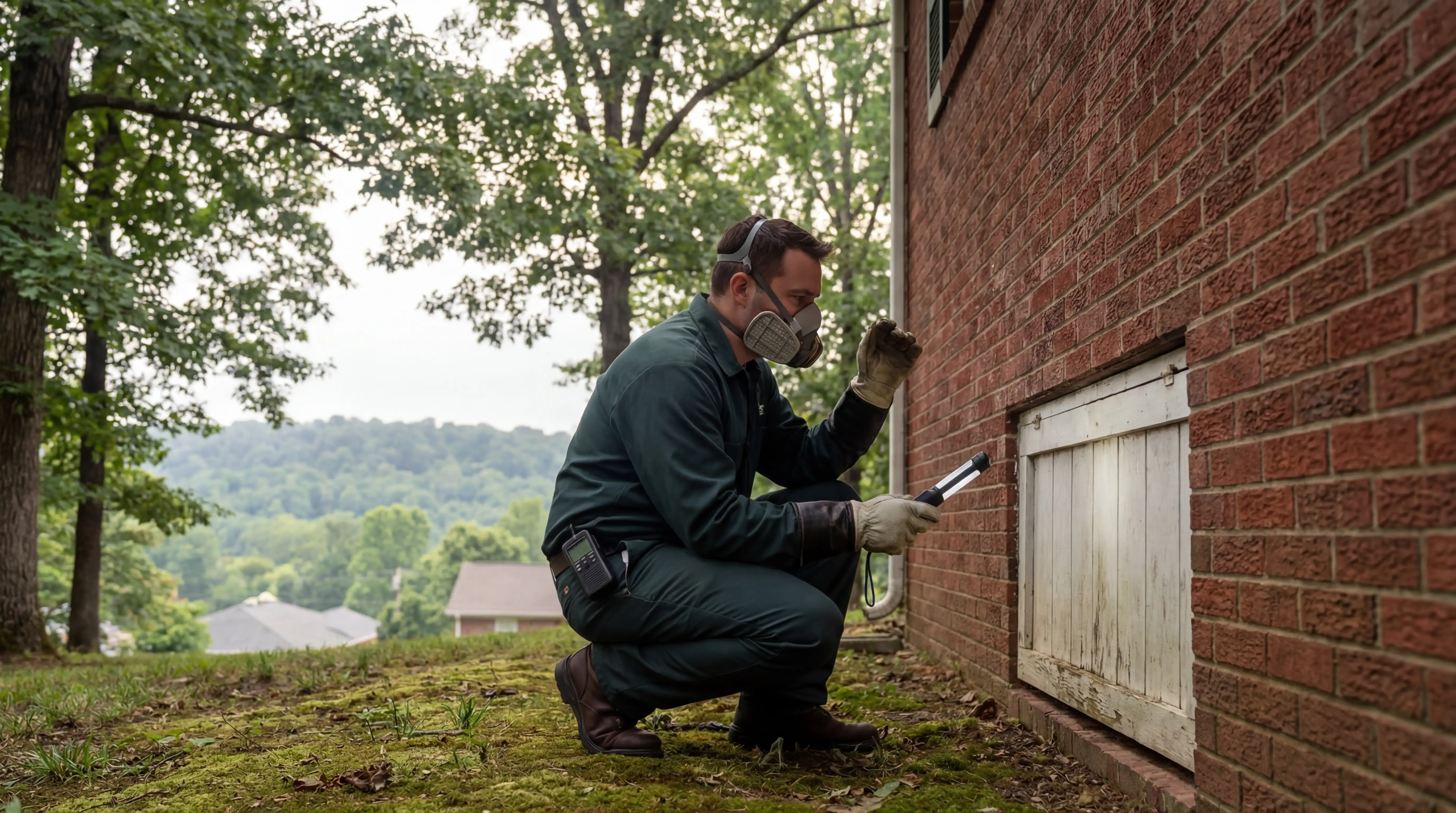
Why Do Pest Control PPC Campaigns Fail in Knoxville?
The failure pattern in Knoxville pest control advertising is predictable: a company launches broad campaigns targeting "pest control Knoxville TN" and "exterminator Knoxville" year-round at flat monthly budgets — and immediately discovers they're competing against Arrow Exterminators' regional budget, Terminix's national brand spend, and Orkin's co-op digital program on every keyword simultaneously. The result is CPCs that run $10–$18/click on the most generic terms, a campaign that generates leads but not at sustainable economics, and a budget that fails to surge during the three specific windows when Knoxville pest control conversion rates spike highest: termite swarm season (March–April), mosquito season (May–August), and rodent season (October–November).
The Termite Swarm Window: The Most Important 72 Hours in Knoxville Pest Control
Subterranean termite swarms in Knox County peak between March 15 and April 30 — and the search behavior during a swarm event is one of the most compressed demand cycles in any service category. When a homeowner sees termite swarmers around their foundation or coming through an interior wall, they search within minutes, not hours. They click the first credible result, call immediately, and expect a same-day or next-day inspection appointment. The entire decision cycle compresses to under 2 hours. The pest control company that is in position 1–3 on Google Ads during a Knoxville termite swarm event captures the lead; companies that paused campaigns or reduced budgets going into spring miss the window entirely.
Russell's Pest Control — established 1971, the market's longest-running independent — holds the strongest local brand position through review depth and multi-generational client relationships. Johnson Pest Control (QualityPro certified, 30+ years) holds the strongest credential position. Independent operators launching against these incumbents cannot win on brand awareness. They win on availability: a "same-day termite inspection" campaign that runs from February 15 through May 15, with budget concentrated between March 15 and April 30, positions around the window where demand exceeds capacity for the established incumbents and where homeowners are searching for any qualified, available operator.
The STR Pest Control Gap: A Knoxville-Specific Opportunity
Knoxville's proximity to Great Smoky Mountains National Park generates a short-term rental market — Airbnb and VRBO operators in the I-40 East corridor and in adjacent Sevier County — that creates a structurally different pest control buyer than residential homeowners. An STR operator discovering a pest problem treats it as a revenue emergency: every day a unit is offline for pest remediation is direct income loss. These operators need fast, discreet service that doesn't require them to cancel bookings and leave guests who've already paid stranded. National franchise operations routing calls through regional call centers cannot reliably commit to same-day or next-morning service windows that STR operators need. Local independent operators who can — and who build a landing page specifically for the STR market with messaging around "won't delay your rental calendar" and "discreet service, same-day scheduling" — are competing in a segment with virtually no organized competition and above-average willingness to pay for speed.
- Year-round flat budgets: Miss termite swarm (March–April), mosquito (May–August), and rodent (October–November) surge windows
- Brand keyword collision: Arrow/Terminix/Orkin dominate broad terms; independents overspend to compete
- Swarm-window unpreparedness: Campaigns not pre-launched before March 15 miss the highest-CVR pest control event of the year
- STR segment ignored: No Knoxville independent has built PPC infrastructure around the Smokies-corridor STR operator pest market
The pest control company that dominates Knoxville PPC isn't the one with the largest annual budget — it's the one that concentrates spend on the three demand spikes (termite, mosquito, rodent), builds keyword-specific landing pages for each pest type, and captures the STR market through a campaign that no national chain has thought to build. Pest control has the highest average CVR of any home service category — 10–16% — because pest discovery creates immediate action. The companies not capturing that conversion rate are primarily losing to operational gaps (slow response, no online booking) rather than to competitors with better PPC mechanics.
Pest Control PPC Strategy for Knoxville: Calendar-Driven, Pest-Specific Campaigns
A Knoxville pest control campaign that converts at the industry's natural 10–16% rate uses three pest-type campaign tracks with calendar-based budget overlays. Each track has its own keyword set and landing page; the budget overlay pulses spend according to Knoxville's actual pest emergence calendar rather than a flat monthly allocation.
Campaign Architecture: Three Pest-Type Tracks
Track 1 — Termite (February 15 – May 15, then year-round maintenance): Highest revenue per job in the pest control category. Termite treatment ranges from $1,200–$3,500 depending on home size and treatment method. Budget this track at 35–40% of total spend during the peak swarm window, reducing to 15–20% as maintenance year-round.
- "termite treatment Knoxville TN" — $10–$24 CPC — primary high-value intent
- "termite inspection Knoxville TN" — $8–$18 CPC — entry-point conversion; inspection leads to treatment
- "termite swarm Knoxville" — $9–$20 CPC — seasonal emergency intent; run March–April only
- "subterranean termite treatment TN" — $8–$16 CPC — research-phase buyer; longer conversion cycle
- "Sentricon installation Knoxville" — $7–$15 CPC — brand-specific treatment searcher; near purchase decision
Track 2 — Mosquito & Seasonal Pest (March – October): Subscription plan driver. Mosquito control campaigns generate recurring annual contract revenue — the highest-LTV lead type in pest control. Budget 30–35% May–August; reduce to 15% September–October.
- "mosquito control Knoxville TN" — $6–$15 CPC — subscription intent; run March–October
- "mosquito treatment Knoxville" — $6–$14 CPC — treatment-specific searcher
- "ant exterminator Knoxville TN" — $7–$15 CPC — spring ant emergence, March–May
- "wasp nest removal Knoxville" — $7–$14 CPC — summer stinging insect, June–August
- "bed bug exterminator Knoxville TN" — $9–$22 CPC — year-round; spikes post-travel summer
Track 3 — Rodent & Wildlife (September – March): Fall and winter demand layer. Knox County's proximity to Appalachian forest creates wildlife incursion demand (raccoons, squirrels, groundhogs from GSMNP adjacent habitat) that most pest control PPC campaigns don't build for. Budget 25–30% October–January; reduce to maintenance May–August.
- "rodent control Knoxville TN" — $7–$16 CPC — primary fall rodent season
- "mice exterminator Knoxville" — $7–$14 CPC — residential rodent emergency
- "wildlife removal Knoxville TN" — $8–$18 CPC — Appalachian wildlife intrusion; unique local demand
- "squirrel removal Knoxville TN" — $6–$14 CPC — specific wildlife type; lower competition
Bid modifier strategy: Apply +25% to older Knox County ZIP codes (37914, 37915, 37917, 37918) for termite campaigns — East Knoxville aging foundation structures have above-average subterranean termite pressure. Apply +15% to forested perimeter neighborhoods (Hardin Valley, Powell, Corryton) for wildlife and rodent campaigns. STR-specific campaigns targeting Sevier County operators: run a separate landing page with "STR pest control Knoxville" and "Airbnb pest control Gatlinburg corridor" keywords at $6–$14 CPC — low competition, high conversion.
Google Partner Agency
We're a certified Google Partner Agency, which means we don’t guess — we optimize withGoogle’s full toolkit and insider support.
Your campaigns get pro-level execution, backed by real expertise (not theory).

What Market Trends Should Knoxville Pest Control Companies Know Before Running Google Ads?
Knoxville's pest pressure is structurally elevated by geography in ways that matter for PPC campaign design. The Tennessee River valley basin collects moisture from surrounding Appalachian ridges — the valley floor where most of Knox County's housing stock sits maintains higher soil moisture levels year-round than the surrounding ridgeline terrain. Subterranean termites require moisture to establish colonies; Knox County's above-average soil moisture makes it one of the higher-risk termite markets in Tennessee, a state already classified as Termite Infestation Probability Zone (TIP Zone 1 — highest probability) by the International Residential Code. This isn't a marketing claim — it's a structural reality that PPC campaigns can legitimately lead with when targeting homeowners in older Knox County neighborhoods.
The Crawl Space Problem and Its SEO Angle
Knox County's housing stock includes a high proportion of homes built 1940–1980 with crawl space foundations — the foundation type most vulnerable to moisture damage, subterranean termite entry, and fungal rot. True Blue Termite and Pest Control, one of the market's named independents, has explicitly built crawl space services (vapor barrier, sump pump, dehumidifier) into their pest control offer — an extension of the pest-moisture connection that converts well with East Knoxville homeowners. For PPC purposes, this creates an adjacent keyword opportunity: "crawl space pest control Knoxville" and "crawl space moisture problem Knoxville TN" are searches with lower CPCs ($5–$12) than primary pest terms but high conversion intent because the homeowner is already aware of a structural problem that needs solving.
Seasonal demand data for Knoxville pest control — the full calendar:
- February–March: Pre-swarm termite education campaigns; CPCs 25–30% below peak; convert homeowners before the swarm panic
- March–April: Peak termite swarm — highest CVR of any pest control window (14–18%); full budget allocation
- May–August: Mosquito subscription season; ant and stinging insect peak; STR operator demand in Sevierville corridor
- September–October: Fall pest-proofing window; rodent prevention campaigns; budget transitioning from mosquito to rodent tracks
- November–January: Rodent and wildlife exclusion peak; coldest months drive indoor shelter-seeking; lowest keyword CPCs of the year
The off-peak November–January window is counterintuitively valuable: CPCs drop to $5–$12 range on rodent and wildlife keywords, CVR stays strong because pest discoveries are urgent, and the competition from Arrow and national chains drops noticeably (their co-op budgets often concentrate on spring). A pest control company maintaining campaigns year-round — even at reduced $600–$900/month budgets in winter — generates leads at $28–$45 CPL during the off-peak window versus $40–$80 during spring and summer peak. The winter lead economics are among the best in the year for properly structured campaigns.
Why Knoxville Pest Control Companies Need Market-Calibrated PPC Campaigns
The three-track, calendar-weighted campaign structure that works in Knoxville pest control — termite swarm window (February–May), mosquito subscription season (May–August), and rodent fall exclusion (September–January) — requires a level of seasonal campaign management that flat-budget national PPC approaches never deliver. Knoxville's pest calendar is specific: a campaign that isn't live and optimized before March 15 misses the highest-CVR event of the year. A company running even monthly budgets misses the summer mosquito subscription window. A company without a crawl space services landing page is ignoring one of the most structurally relevant pest concerns for East Knoxville homeowners.
MB Adv Agency manages pest control Google Ads accounts with campaign structures calibrated to each market's actual pest emergence calendar. For Knoxville, that means pre-swarm termite campaigns launching in February, mosquito subscription landing pages running May through September, and wildlife exclusion overlays starting in October. Our PPC management service and pricing page outline how we structure accounts for local service businesses operating in seasonal demand markets. The termite swarm season is Knoxville's highest-conversion pest control window — campaigns must be live 30 days before it starts, not launched in reaction to it.
Frequently Asked Questions
What Keywords Should a Knoxville Pest Control Company Target on Google Ads?
A Knoxville pest control company's Google Ads keyword strategy should be built around three pest-type tracks aligned to the market's actual emergence calendar, not a single broad campaign targeting "pest control Knoxville TN." The highest-revenue keyword category is termite: "termite treatment Knoxville TN" ($10–$24 CPC), "termite inspection Knoxville TN" ($8–$18 CPC), and seasonal swarm keywords ("termite swarm Knoxville," $9–$20 CPC) that run specifically March through April. Termite treatment jobs average $1,200–$3,500 — the highest single-job revenue in pest control — making elevated CPCs economically justified if campaign structure is efficient. The second track covers mosquito and seasonal pest control: "mosquito control Knoxville TN" ($6–$15 CPC), "ant exterminator Knoxville TN" ($7–$15 CPC), and bed bug keywords ($9–$22 CPC), which run May through October with peak budget in June–July. These campaigns generate subscription plan leads — the highest-LTV lead type, converting homeowners into $800–$2,400 annual contracts. The third track covers rodent and wildlife: "rodent control Knoxville TN" ($7–$16 CPC) and "wildlife removal Knoxville TN" ($8–$18 CPC), running September through March. The wildlife category is unique to Appalachian-adjacent markets like Knoxville and carries lower CPC competition than rodent terms because national chains don't build wildlife-specific campaigns consistently. Hyper-local modifiers — "pest control Powell TN," "termite inspection East Knoxville" — reduce CPCs 20–35% versus city-only keywords while maintaining high conversion intent.
How Much Does Pest Control Google Ads Cost in Knoxville, and What ROI Can I Expect?
A Knoxville pest control company should budget $1,000–$1,800/month as a starting investment in Google Ads, generating 20–38 qualified leads per month at a CPL of $35–$80. The ROI math is favorable: a single converted termite treatment job ($1,200–$3,500) pays for 2–4 weeks of campaign spend; a converted annual mosquito subscription ($800–$2,400) pays for 1–3 months. The ROI compounds significantly when annual contracts are factored: an average pest control client retained for 24–36 months generates $1,600–$7,200 in lifetime revenue from a single $40–$80 lead acquisition cost. Calendar-weighted budget allocation dramatically improves ROI versus flat-monthly spending: concentrate 40–50% of annual budget in the March–May termite/spring pest window (the highest-CVR period of the year), 30–35% in May–August mosquito season, and maintain reduced budgets of $600–$900/month for rodent and wildlife campaigns in fall and winter. The off-peak November–January window produces some of the year's best CPL economics — $28–$45 — because competing chain budgets reduce and organic search volume for rodent problems stays steady as temperatures drop. Minimum viable budget for consistent lead generation without seasonal pulsing is approximately $800–$1,000/month; below that level, daily budget caps limit impression share during peak swarm or mosquito days and the campaign cannot build the Google algorithm learning data needed for Smart Bidding optimization.