Plumbing PPC Grand Rapids, MI
Grand Rapids sits at the intersection of two plumbing market drivers: aging 1950s–1980s housing stock with original cast-iron and galvanized pipe, and a Climate Zone 5 winter that regularly pushes lows below 0°F. Emergency plumbing is not a seasonal spike here — it's a six-month category from November through April.
Why Do Plumbing PPC Campaigns Fail in Grand Rapids?
Plumbing PPC in Grand Rapids has one of the strongest conversion fundamentals in home services — the national average CVR is 7.63%, highest of any trade category (LocalIQ 2025). Emergency intent converts fast because the homeowner has no choice: a burst pipe at -10°F, a failed water heater on a Sunday morning, a backed-up main line — these aren't comparison-shopping situations. The challenge isn't demand. It's that most plumbing campaigns are set up to lose money before the first call comes in, and the structural failures are always the same.
The first failure is keyword sprawl. "Plumber Grand Rapids" is a high-volume head term that captures homeowners at every stage — from "I should get an estimate someday" to "water is running through my ceiling right now." Bidding the same CPC on both intent levels — which is what broad-match and phrase-match campaigns do by default — means emergency traffic (which converts at 15–20%) subsidizes research traffic (which converts at 1–3%). The result is a blended CVR that looks acceptable in the dashboard and hides the fact that the campaign is structurally underfunded on the terms that actually convert.
The Hard Water Problem That Kills Water Heaters
Grand Rapids has a specific local market reality that distinguishes it from most plumbing markets: hard water. The Lake Michigan watershed delivers water with a calcium and magnesium mineral load that accelerates corrosion in standard tank water heaters, typically cutting effective lifespan from 10–12 years to 7–9 years in Grand Rapids homes. Kent County has hundreds of thousands of households cycling through water heater replacements at an above-average rate — which means the "water heater replacement Grand Rapids" keyword cluster is structurally underpriced relative to its actual conversion value. Campaigns that target this cluster specifically, with landing pages addressing the hard water context, convert at well above the category average.
National brands exploit the Grand Rapids plumbing market aggressively. Roto-Rooter runs always-on national campaigns with significant local presence; Benjamin Franklin Plumbing maintains active Google Ads and LSA presence. Both have significant trust advantages from brand recognition — a homeowner who's seen Roto-Rooter on TV for 20 years defaults to the familiar name when calling at midnight. Local operators win on response time and pricing, but only if their campaign copy explicitly claims those advantages: "West Michigan family-owned — we answer every call" outperforms "professional plumbing services available" consistently.
Sump Pump Seasonality — A Missed Opportunity
Grand Rapids sits in a region with a high water table and spring snowmelt flooding risk. Sump pump failures — both the original pump dying and backup systems failing — represent a significant spring plumbing demand spike that most campaigns miss entirely. April and May are the highest-volume months for sump pump searches in West Michigan, driven by homeowners discovering flooded basements after winter melt. These leads have the urgency of emergency calls (water is actively entering the basement) with average tickets of $300–$600 for pump replacement. A campaign without a dedicated sump pump ad group leaves significant spring revenue uncaptured — at CPCs well below the emergency plumbing premium ($5–$7 versus $10–$12).
The secondary failure mode in Grand Rapids plumbing is inadequate geographic coverage. The metro spans Wyoming, Kentwood, Grandville, East Grand Rapids, and Walker — distinct ZIP codes that require separate landing page relevance signals. A campaign targeting "Grand Rapids" generally misses searchers in Kentwood or Wyoming who qualify their searches with their suburb name. Geo-expanded campaigns with suburb-specific ad groups capture 20–30% more relevant traffic volume at lower CPCs because competition drops when you target "plumber Kentwood" instead of "plumber Grand Rapids."
Plumbing PPC Strategies That Win in Grand Rapids
The winning structure for a Grand Rapids plumbing campaign separates emergency, water heater, drain/sewer, and seasonal (sump pump) into independent campaigns with separate budgets, ad copy, and landing pages. This isn't complexity for its own sake — it's the only way to allocate budget correctly across a category where emergency terms convert at 15–20% and research terms convert at 2–4%. Combined campaigns flatten these differences and produce median performance on every term.
Named keyword groups with Grand Rapids-specific CPC ranges (2025 benchmarks):
- Emergency plumbing terms: "emergency plumber Grand Rapids," "burst pipe Grand Rapids," "pipe burst repair," "24/7 plumber Grand Rapids" — $10–$14 CPC; position 1–2 mandatory; budget these at 40–50% of total spend during Nov–April peak
- Water heater terms: "water heater replacement Grand Rapids," "water heater repair Grand Rapids," "tankless water heater Grand Rapids" — $8–$12 CPC; hard water angle converts; same-day service messaging drives CTR
- Drain and sewer terms: "drain cleaning Grand Rapids," "sewer line repair Grand Rapids," "clogged drain Grand Rapids" — $7–$10 CPC; year-round demand; lower CPCs than emergency terms
- Sump pump terms: "sump pump Grand Rapids," "sump pump replacement," "sump pump failure West Michigan" — $5–$8 CPC; seasonal peak April–May; low competition; high-urgency spring leads
- Suburban/geo terms: "plumber Kentwood," "plumber Wyoming MI," "plumber Grandville," "plumber Walker MI" — $5–$8 CPC; lower competition; captures suburb-qualified traffic that citywide campaigns miss
Google Local Service Ads are critical for Grand Rapids plumbing — plumbing is one of the top three LSA categories nationally, and the Google Guaranteed badge converts exceptionally well for emergency queries on mobile. 70%+ of emergency plumbing searches happen on mobile, and LSA captures the top position on mobile SERPs above all standard Search ads. The cost ($22–$35 per verified lead for plumbing) is justified by the emergency conversion rate — these leads are calling, not browsing.
For water heater replacement campaigns specifically, Grand Rapids hard water context is the most powerful conversion lever available. Ad copy reading "Grand Rapids hard water kills water heaters early — we replace same day, 2-year warranty" outperforms generic "water heater repair available" by 30–45% in comparable Midwest markets with similar water hardness. This specificity signals local expertise and pre-empts the "should I repair or replace" objection in the ad copy itself.
Remarketing for drain and sewer campaigns captures the homeowner who searched, read one article about DIY drain cleaning, tried Drano, and is now searching again three days later with more urgency. A $200–$400/month remarketing campaign targeting site visitors who viewed drain cleaning content converts this audience at 2–3x the rate of cold traffic — because they've already self-qualified and the DIY attempt has already failed.
Seasonal budget management should be proactive, not reactive. Increase budgets for emergency terms in October (before the freeze season), for sump pump terms in March (before the melt), and for water heater terms year-round (hard water creates consistent replacement demand independent of season). Decreasing budgets in June–September frees budget for the high-value winter window without reducing annual performance.
Google Partner Agency
We're a certified Google Partner Agency, which means we don’t guess — we optimize withGoogle’s full toolkit and insider support.
Your campaigns get pro-level execution, backed by real expertise (not theory).

What Market Trends Should Grand Rapids Plumbing Businesses Know?
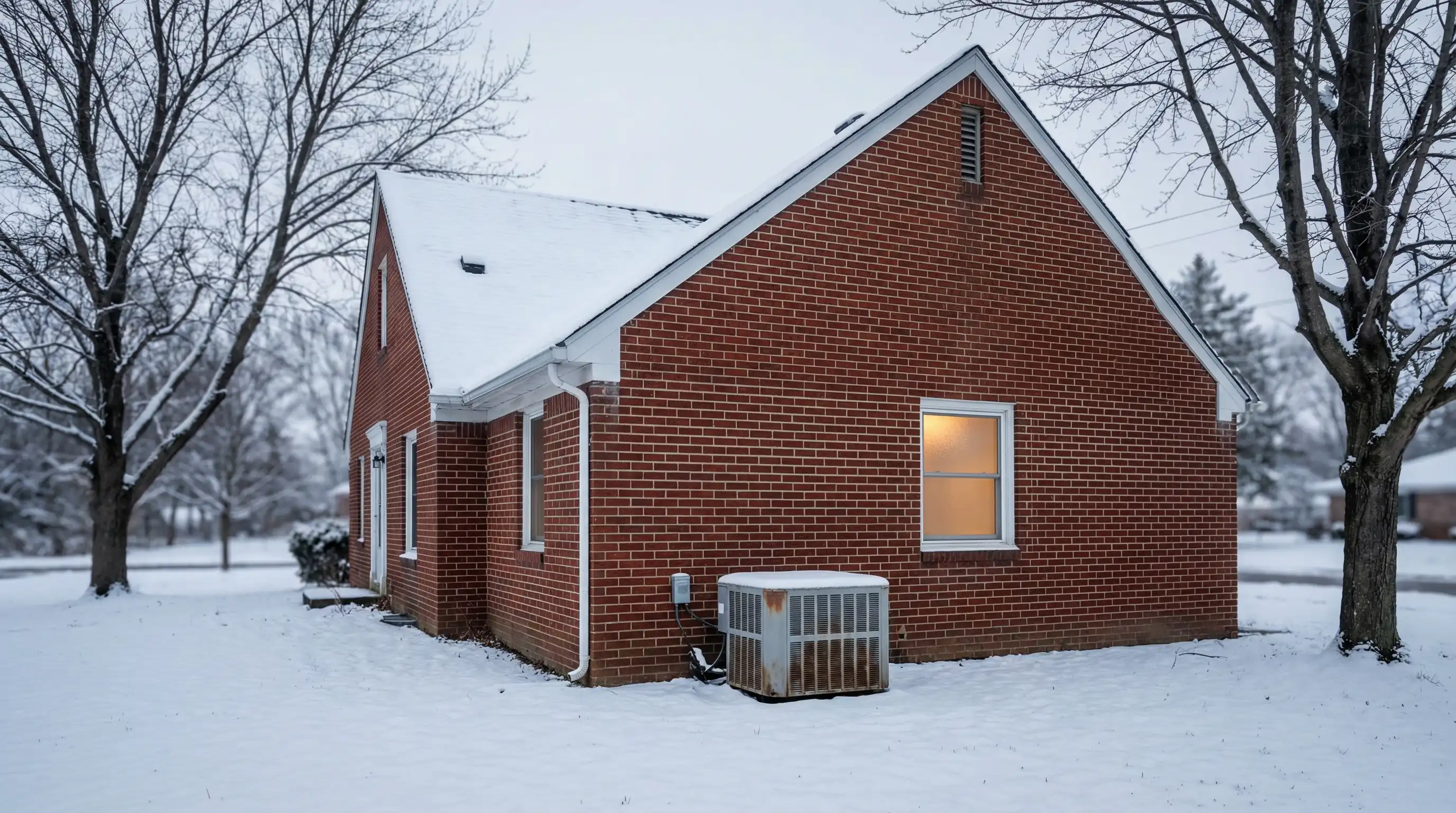
The Grand Rapids plumbing market is entering a demand cycle that favors operators who planned ahead. The city's primary housing stock — brick homes built 1940s–1980s — is reaching the age at which original plumbing systems fail systematically. Cast-iron drain lines develop cracks and root intrusion at 50+ years. Galvanized steel supply pipes corrode from the inside at 40–70 years. Original water heaters are long gone, but the hard water that killed the first replacement is killing the second one too. This isn't deferred maintenance — it's structural replacement demand arriving on schedule across 40,000+ homes simultaneously.
The Water Quality Angle That Competitors Miss
Grand Rapids water hardness averages 125–150 mg/L (moderately hard to hard on the grains-per-gallon scale), driven by the calcium-rich geology of the Lake Michigan watershed. Hard water accelerates water heater anode rod depletion, clogs aerators and showerheads, and deposits scale in copper pipe connections. The typical Grand Rapids water heater fails at 7–9 years versus the 10–12 year national average — a fact that creates a structural replacement cycle 20–30% faster than most markets. Plumbing campaigns that surface water quality data — "Grand Rapids water is hard; here's what it's doing to your pipes" — generate higher engagement and longer landing page sessions, which correlates with higher conversion rates in multi-touch attribution models.
- Water softener installation: emerging demand driver; Grand Rapids homeowners increasingly aware of hard water impacts; $1,200–$3,000 average ticket; low PPC competition
- Tankless water heater upgrades: hard water households that install water softeners often upgrade to tankless simultaneously; $2,500–$4,500 average ticket; high-value lead category
- Main line replacement: 60+ year cast-iron or clay tile sewer lines in the urban core; average replacement $4,000–$12,000; high urgency when roots invade
Workforce and Permit Dynamics That Affect Campaign Positioning
Grand Rapids has a tighter licensed plumber supply than comparable Midwest metros — the metro's concentration in healthcare and manufacturing has historically drawn trade workers into specialized industrial plumbing, leaving residential plumbing relatively underserved per capita. During winter emergency windows, wait times for residential plumbers in the Grand Rapids metro can stretch to 24–48 hours for non-emergency calls. This creates a conversion advantage for operators who can guarantee same-day or next-day service — and who say so in ad copy. "Same-day service — no waiting 2 days for a plumber in Grand Rapids" is a directly competitive claim that resonates in a market where homeowners have experienced the wait.
Kent County permit requirements for plumbing work are enforced at above-average rates — Grand Rapids has an active building inspection department, and homeowners who've dealt with permit issues are increasingly searching for "licensed plumber Grand Rapids" and "permitted plumbing Grand Rapids" as trust signals. Campaigns targeting these credential-specific terms operate at lower CPCs with higher conversion intent — the searcher is already pre-qualifying for a licensed professional rather than shopping on price.
The immigration-driven demographic shift in Grand Rapids — the Hispanic population reached 16.3% of city residents in 2024 — creates an emerging bilingual service opportunity. Spanish-language plumbing campaigns targeting Wyoming and Southeast Grand Rapids neighborhoods operate at near-zero competition, reaching a homeowner demographic that is systematically underserved by English-only marketing. Even a small Spanish-language ad group ($300–$500/month) targeting "plomero Grand Rapids" and "plomería de emergencia" captures leads with no competitive pressure.
Why MB Adv Agency Builds Plumbing Campaigns That Convert in Kent County
Grand Rapids plumbing PPC has some of the strongest conversion fundamentals in home services — 7.63% national CVR — but capturing that performance requires campaign architecture that matches the local market: emergency segmentation, hard water messaging, sump pump seasonality, and geographic expansion into the suburban ZIP codes where competition thins out.
MB Adv Agency builds plumbing campaigns for the Grand Rapids reality. We know the February freeze window drives more emergency revenue than any other 60-day period in the year. We know Grand Rapids hard water kills water heaters early and that saying so in ad copy converts. We know that Roto-Rooter and Benjamin Franklin have national budgets and local operators win on speed and specificity — not by outspending them.
Our approach is detailed in our PPC services overview. Pricing is at our pricing page. For plumbing contractors in Grand Rapids, Kentwood, Wyoming, and Grandville who want to compete effectively against national brands without matching their budgets, our lead generation service delivers the campaign architecture that turns 7.63% CVR from a statistic into a revenue result. Contact us to discuss your plumbing campaign before the next freeze season arrives.
Frequently Asked Questions
What Does Plumbing PPC Cost in Grand Rapids, MI?
Plumbing PPC in Grand Rapids runs $7.50–$11.00 average CPC across the main keyword clusters in 2025, with emergency terms ("burst pipe Grand Rapids," "emergency plumber Grand Rapids") spiking to $12–$14 during winter peak periods. The national average cost per lead for plumbing is $129.02 (LocalIQ 2025); in Grand Rapids' mid-tier market, a well-structured campaign delivers $95–$145 per qualified lead. A baseline budget of $2,000–$2,500/month covers emergency, water heater, and drain keyword clusters with enough daily budget to maintain top-3 positions during peak hours. At $2,500–$3,500/month, a contractor can run separate campaigns with dedicated landing pages for emergency, water heater, sump pump, and suburban geo terms — the full keyword architecture. The CPL math is straightforward: plumbing average tickets run $175–$450 for routine work and $1,500–$4,000 for water heaters and main line repair. At $130 CPL and a 30% close rate, a $2,000 monthly budget producing 15 leads generates $675–$2,250 in revenue per closed lead — a 3–10x monthly return, not accounting for repeat business and referrals from satisfied customers.
Google LSA should be budgeted separately at $500–$800/month for plumbing in Grand Rapids. LSA leads run $22–$35 per verified contact — significantly cheaper per lead than Search in most cases — and the Google Guaranteed badge is a meaningful trust signal for homeowners calling an unknown company at midnight. LSA plus Search together cover the full SERP for emergency queries, which is the most valuable moment in plumbing PPC.
Seasonal budget shifts produce better annual economics than flat monthly spend. Allocate 40–50% of annual plumbing budget to October–March (freeze season + sump pump pre-season), reduce June–September by 20–25%, and plan a March/April bump for sump pump campaigns. This matches budget to demand rather than averaging it out — which produces lower average CPL year-round.
How Do Plumbing Google Ads Perform During Grand Rapids Winters?
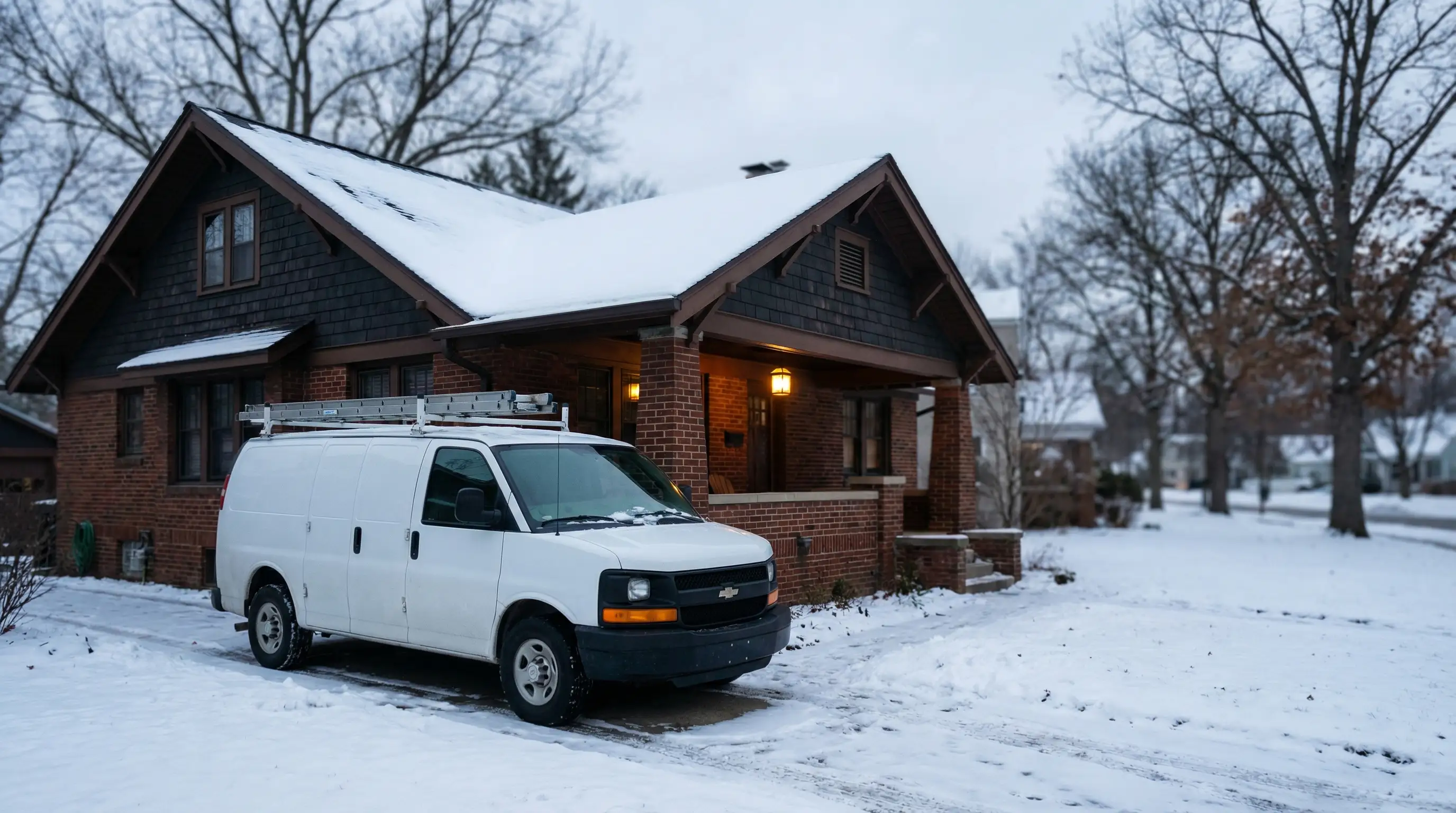
Grand Rapids plumbing PPC performs best during winters — specifically, the November–March window when freeze temperatures, burst pipes, and water heater failures create genuine emergency demand. Conversion rates on emergency keywords climb to 15–20% during active cold snaps (when temperatures fall below 10°F for 48+ hours), versus the 7–8% average for the rest of the year. This means a $3,000 monthly budget deployed in January produces proportionally more leads than the same budget in July — and those leads are often higher urgency with less price sensitivity. An emergency call at midnight in a Grand Rapids winter doesn't comparison-shop. The homeowner calls the first number that answers, which is why ad scheduling matters: campaigns should be configured to show at full bid during evening and weekend hours in the November–March window, when freeze emergencies are most likely to occur outside business hours.
The freeze risk window is geographically concentrated. Neighborhoods with older infrastructure — the near-northwest side, Heritage Hill, Eastown — have higher pipe burst rates than the newer suburban stock in Kentwood or Caledonia. Geographic bid modifiers targeting these ZIP codes during winter can improve emergency campaign efficiency by 15–25%, concentrating spend where the risk — and the calls — are highest.
Post-winter is almost as valuable as winter itself. March and April bring sump pump failures, thaw-related water heater stress, and homeowners discovering pipe damage that occurred during the winter but wasn't immediately visible. Maintaining full campaign budgets through April — rather than pulling back as temperatures rise — captures this secondary demand wave at lower CPCs than the peak winter emergency window, typically $5–$8 for sump pump terms versus $10–$14 for emergency freeze calls. The combination of winter emergency revenue and spring follow-on demand makes plumbing one of the most defensible PPC categories in the Grand Rapids market year-round.