Roofing PPC Baltimore, MD
Baltimore has more flat-roofed row houses per square mile than almost any other American city, and the roofing contractors who advertise their TPO and EPDM membrane expertise specifically — rather than running generic "roofing company Baltimore" campaigns — capture a high-intent, low-competition keyword territory that larger regional competitors can't match with their standardized suburban campaign structures. <!-- stats-article-link --> <p><em>See how this city's Roofing PPC costs compare nationally in our <a href="/resources/roofing-ppc-statistics">Roofing PPC Statistics</a> report, featuring data from 40+ US cities.</em></p>
Why Generic Roofing Campaigns Miss Baltimore's Biggest Market Segment
The fundamental problem in Baltimore roofing PPC is that the city's housing stock requires a different product category than what most roofing campaigns are built around. National roofing brands — Mr. Roof, Power Home Remodeling, Owens Corning Platinum contractors — structure their Google Ads for the asphalt shingle replacement market that dominates suburban America: pitched roofs, architectural shingles, standard ridge cap installation. Their campaigns, landing pages, and conversion flows are built for this product. In Baltimore city proper, this is not the primary market.
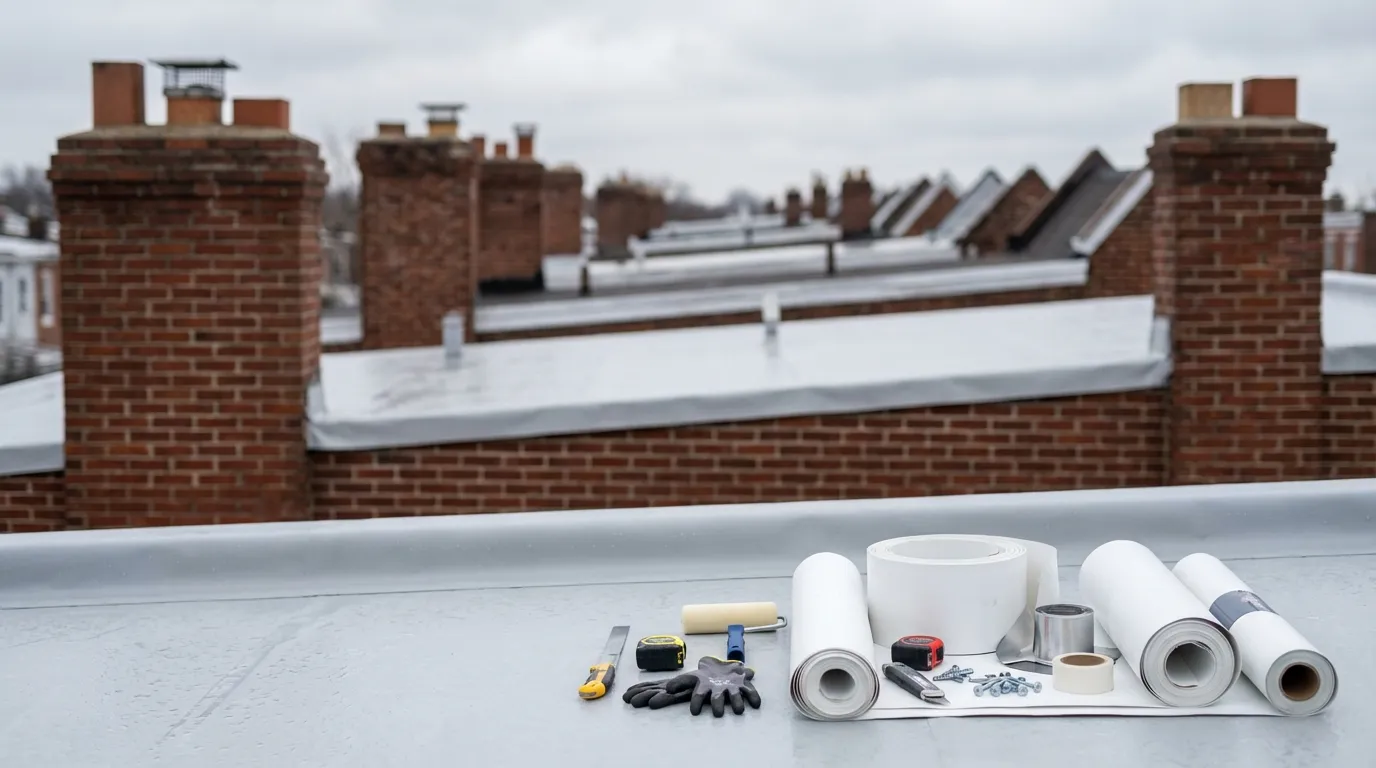
The dominant residential roof in Baltimore is flat or low-slope membrane roofing — TPO, EPDM, and modified bitumen — covering the flat tops of the city's 80,000+ row houses. These roofs require completely different materials, installation techniques, and maintenance schedules than asphalt shingles. A homeowner searching "flat roof repair Baltimore" or "TPO roof replacement Baltimore MD" is not looking for the same contractor as someone searching "roof replacement Baltimore" generically. They need a membrane roofing specialist, and when they find an ad that speaks directly to their flat roof, they click and convert at significantly higher rates than they do for generic roofing ads.
The Storm Damage vs. Planned Replacement Split
Baltimore roofing PPC has two distinct intent categories that require separate campaign handling: storm damage (urgency-driven, insurance-involved, peaks after weather events) and planned replacement (research-phase, multiple estimates, 2–6 week decision cycle). Running them in the same campaign produces mediocre performance in both categories — emergency storm damage searches require different ad copy, different landing page urgency, and different call-to-action than replacement research searches.
Storm damage CPCs run $14–$22 in Baltimore because urgency drives bidding up post-event. Planned replacement CPCs run $12–$20. Maintenance and inspection searches run $7–$12. The contractor who segments these into separate campaigns with appropriate budgets and landing pages consistently generates more qualified leads at lower blended CPL than the one running a single "Baltimore Roofing" campaign.
Key competitors in Baltimore roofing PPC: Capital Roof & Chimney (Baltimore-specific brand), Maryland Home Improvement (regional), and several Owens Corning Platinum dealers who run brand-associated campaigns. These competitors are strongest on generic "roof replacement Baltimore" terms. Independent contractors can beat them on flat-roof specific, neighborhood-specific, and inspection/assessment terms.
- Flat roof repair: "flat roof repair Baltimore," "roof membrane repair Baltimore MD" — CPC $10–$18, Baltimore-dominant
- TPO/EPDM specific: "TPO roofing Baltimore," "EPDM roof replacement Baltimore" — CPC $10–$16, specialist territory
- Storm damage: "hail damage roof Baltimore," "storm roof repair Baltimore MD" — CPC $14–$22, post-storm spikes
- General replacement: "roof replacement Baltimore MD," "new roof Baltimore cost" — CPC $14–$22, competitive
- Inspection/assessment: "roof inspection Baltimore," "free roof estimate Baltimore MD" — CPC $8–$13, top-of-funnel
Building a Baltimore Roofing Campaign Around the Flat Roof Advantage
The core strategic insight for Baltimore roofing PPC is that flat roof membrane keywords are the city's lowest-cost, highest-specificity opportunity. CPCs for "TPO roofing Baltimore" and "flat roof repair Baltimore" run $10–$16 — 25–35% below generic "roof replacement Baltimore" terms — and they attract buyers who have already identified their product type, meaning the sales conversation starts further down the funnel. A lead who found you searching "EPDM roof Baltimore" knows they have a flat roof that needs membrane work; you skip the diagnostic step that consumes estimate time on generic replacement leads.
Campaign Architecture: Three Tracks
Baltimore roofing campaigns should run as three parallel tracks: flat roof specialist (year-round, moderate budget), storm damage response (weather-triggered budget increases), and general replacement (peak season April–October). Each track has a dedicated landing page. The flat roof landing page features photos of completed Baltimore row house membrane installations. The storm damage page leads with "Baltimore Storm Roof Damage — Emergency Assessment" and a phone number. The replacement page shows before/after photos of full shingle replacements on suburban Baltimore homes.
- "flat roof repair Baltimore MD" — $10–$16 CPC, year-round demand
- "TPO roofing Baltimore" — $11–$16 CPC, specialist intent
- "EPDM roof replacement Baltimore" — $10–$15 CPC, moderate competition
- "modified bitumen roofing Baltimore" — $9–$14 CPC, near-zero competition
- "row house roof replacement Baltimore" — $10–$15 CPC, Baltimore-specific
Post-Storm Rapid Response Protocol
Baltimore receives significant spring and summer storm activity — thunderstorms, high winds, and occasional hail events that damage both flat membranes and pitched shingles. The contractors who capture the post-storm search surge are those who have pre-built storm damage campaigns that can be activated at increased budget within 24 hours of a weather event. This means the storm damage campaign exists year-round at low budget and low impression share, ready to scale on demand.
MHIC (Maryland Home Improvement Commission) license verification is a key trust signal for Baltimore roofing PPC. Ads that mention MHIC licensing consistently outperform generic ads on CTR — because Baltimore homeowners are accustomed to contractor fraud and license verification is a genuine purchase criterion. Landing pages should prominently display MHIC license number and link to the state verification portal. Gutter replacement pairs naturally with flat roof work — a Baltimore row house owner replacing a 20-year-old membrane is a natural candidate for gutter assessment, and combined landing pages consistently see higher average ticket sizes than single-service pages.
Google Partner Agency
We're a certified Google Partner Agency, which means we don’t guess — we optimize withGoogle’s full toolkit and insider support.
Your campaigns get pro-level execution, backed by real expertise (not theory).

The Baltimore Roofing Data Point That Reshapes Seasonal Budgeting
Baltimore's flat roof market has a seasonal pattern that differs from the pitched-roof suburban market most roofing campaigns are designed around. Flat membrane roofs — TPO, EPDM, modified bitumen — are most vulnerable to damage during freeze-thaw cycles in late winter and early spring. Standing water that freezes overnight, expands, and contracts causes membrane stress and seam failures that become visible in March and April as temperatures rise. The Baltimore flat roof assessment and repair season begins in March — two months before most roofing contractors consider "season" to have started.
Contractors who activate flat roof inspection campaigns in late February at below-season CPCs capture homeowners discovering post-winter damage before the general roofing market wakes up. By April and May, when all roofers have ramped their campaigns simultaneously, CPCs on roofing terms increase 25–35%. The early-activating contractor has already built Quality Score history, filled the spring estimate calendar, and established brand recall with Baltimore row house owners — before the competitive field crowds in.
The Aging Stock Replacement Pipeline
Baltimore's row house flat roofs have a documented replacement cycle problem: many were last replaced 15–25 years ago using modified bitumen materials that are approaching or past their expected lifespan. The 2010s wave of Baltimore row house gentrification (in Federal Hill, Canton, Hampden, Remington, and Pigtown) produced a cohort of homeowners who renovated interiors but deferred flat roof replacement. That deferral is now coming due — the 10–15 year post-renovation flat roof inspection window has arrived for thousands of Baltimore properties. This is a specific, addressable segment: "flat roof inspection Baltimore" campaigns targeting homeowners in these gentrified neighborhoods capture buyers who bought 8–12 years ago and are ready to hear that their roof needs attention. Roofing contractors who build a campaign around this latent replacement pipeline — targeting Federal Hill, Canton, Hampden, and Remington ZIP codes with messaging around membrane lifespan and free inspection — consistently generate February and March leads at $70–$100 CPL, well below the $140 category average during peak season months.
Baltimore roofing PPC is not suburban roofing PPC. The city's flat membrane market, the freeze-thaw damage cycle, the MHIC licensing requirement, and the row house-specific search vocabulary all require campaign structures that national roofing franchises with standardized templates cannot replicate. The contractors who thrive in Baltimore roofing PPC are those who build their campaigns around the city's actual housing stock — not around a national roofing playbook.
At MB Adv Agency, we build Baltimore roofing accounts around three campaign tracks — flat roof specialist, storm damage response, and planned replacement — each with Baltimore-specific landing pages featuring local project photography and MHIC license verification. We activate flat roof inspection campaigns in late February before the competitive season opens, capturing post-winter damage assessment leads at below-season CPCs.
For contractors who specialize in flat roof membrane work, we build the keyword infrastructure that generic roofing competitors can't occupy credibly — and we own it at $10–$16 CPC while competitors pay $18–$22 for generic terms that attract more comparison shopping.
Review our Google Ads management for roofing companies and our Growth Mode and Aggressive Push tiers for Baltimore roofing operators.

Frequently Asked Questions
Is flat roof roofing PPC different from regular roofing PPC in Baltimore?
Yes — significantly. Flat roof PPC in Baltimore targets a product-specific buyer who has already identified their roof type and needs a membrane specialist, not a general roofer. This changes the entire conversion flow: the buyer who searches "TPO roof replacement Baltimore" is not comparison shopping between roofing types — they know they need membrane work, and they're selecting a contractor. The sales cycle is shorter and the close rate is higher than for generic "roof replacement Baltimore" leads who may need diagnosis and product education.
The CPC dynamics are also different. Flat roof specific terms in Baltimore run $10–$16 CPC versus $14–$22 for generic replacement terms — because most national roofing advertisers don't bother building flat roof-specific campaigns. The result is that a specialist who owns the flat roof keyword territory gets better leads at lower cost than a generalist competing on the most expensive keywords in the category.
Landing page requirements differ as well. A flat roof landing page should feature photos of completed Baltimore membrane installations (TPO, EPDM, or modified bitumen on actual row houses), specify the brands and materials you install, and mention MHIC licensing. This signals specialist expertise immediately — a contractor who shows photos of row house flat roof work is communicating "I've done this exact job on houses like yours" in a way that generic roofing pages cannot.
When is the best time to run roofing PPC in Baltimore, MD?
Baltimore roofing PPC has distinct seasonal windows that smart operators treat differently. The flat roof market activates in late February / early March — before peak season — when freeze-thaw damage becomes visible. General replacement season runs April through October. Storm damage campaigns should be live year-round at low base budget, ready to scale within 24 hours of significant weather events.
The highest-ROI activation window is late February for flat roof inspection campaigns. CPCs are 25–35% below April peak levels, competition is thin because most roofers are still in off-season mode, and demand is real — Baltimore homeowners are discovering post-winter membrane damage and searching for assessments. Contractors who activate here consistently fill their April and May calendars before competitors have ramped their spring campaigns.
Budget allocation: concentrate 55–60% of annual spend in April–September (peak replacement season), 15% in February–March (early flat roof inspection), and 25% split across October–January for maintenance and storm damage response. December and January are the lowest-ROI months for planned replacement work but remain important for booked repairs — don't go fully dark, just reduce budget to maintenance levels ($1,200–$1,500/month) and let the storm damage and emergency repair campaigns carry the winter load.