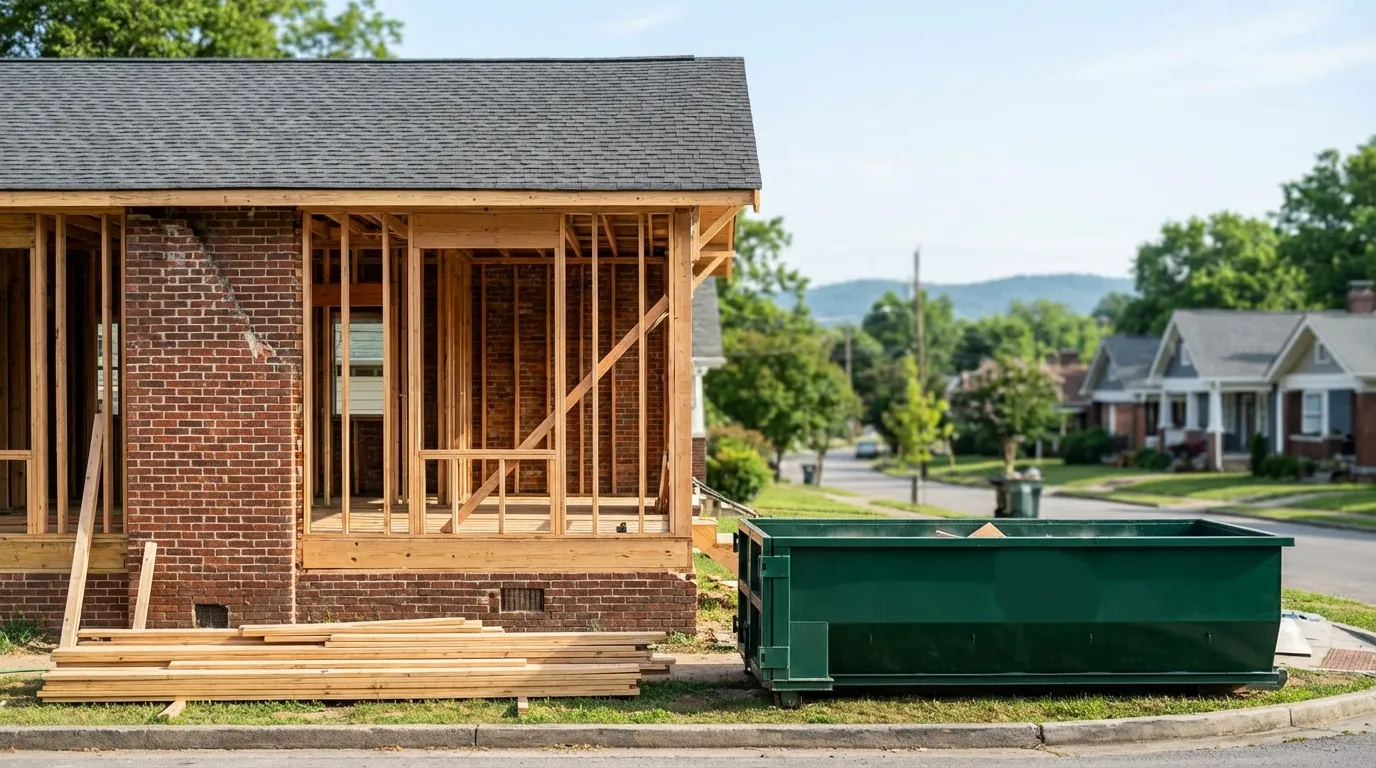
Roofing PPC Nashville, TN
Nashville sits in the southern Dixie Alley storm corridor, where March–May hail events trigger neighborhood-wide replacement demand overnight — and six years after the 2020 EF-3 tornado leveled East Nashville, Donelson, and Germantown, the original patch repairs are failing and a second replacement wave is building. Roofing contractors with Google Ads running before the storm passes capture 3–5x normal lead volume within 24 hours. The ones who pause between events surrender that first-mover window to whoever's already live. <!-- stats-article-link --> <p><em>See how this city's Roofing PPC costs compare nationally in our <a href="/resources/roofing-ppc-statistics">Roofing PPC Statistics</a> report, featuring data from 40+ US cities.</em></p>
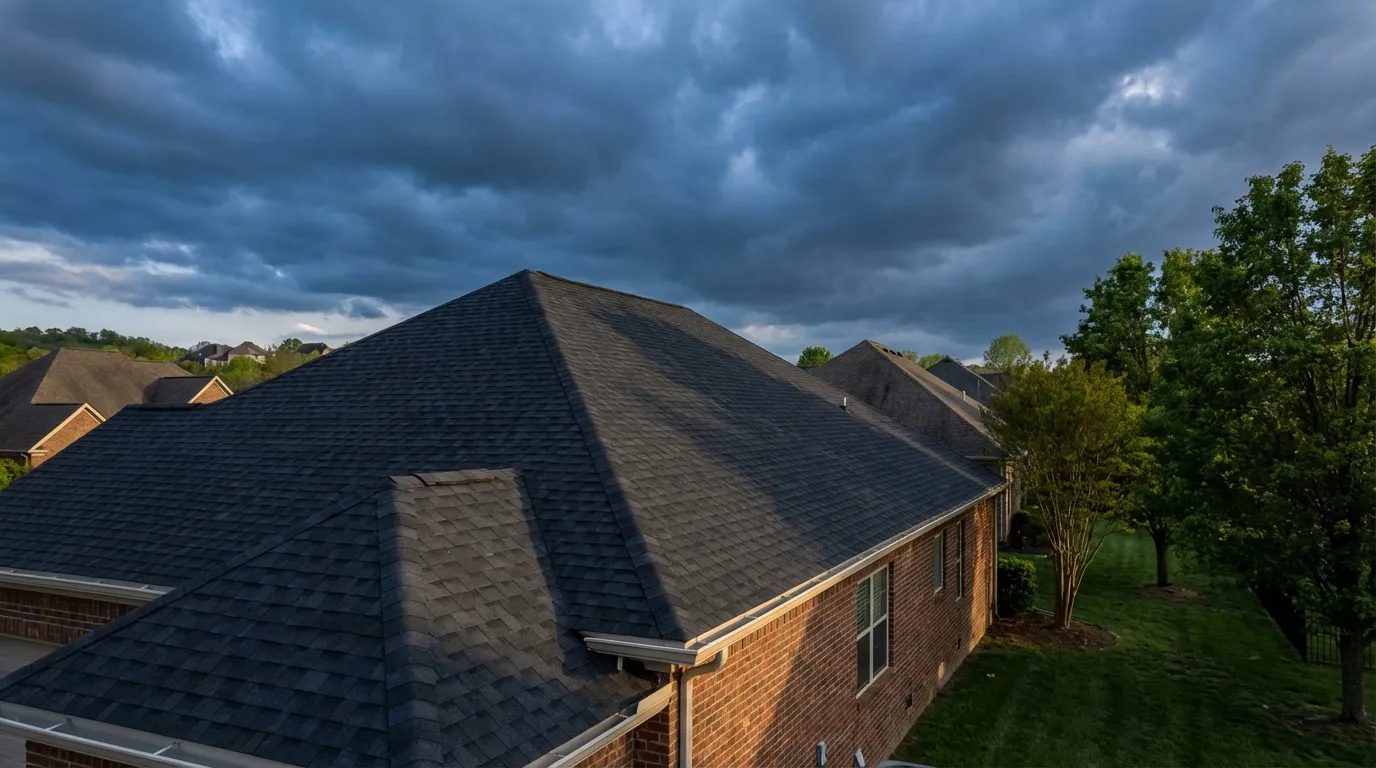
Nashville's Roofing Market: Two Demand Spikes, One Seasonal Window, and a Crowded Auction
Nashville's roofing market operates on a dual-engine demand cycle that creates extraordinary revenue opportunity — and punishing competitive conditions. The spring storm season (March–May) and the ongoing second wave of 2020 tornado replacement demand combine to make Nashville one of the highest-ROI roofing PPC markets in the Southeast. But the same dynamics that make this market attractive — high average job values, insurance-driven replacement cycles, motivated homeowners — also draw aggressive national operators who treat Nashville's storm events as a revenue harvest.
The April 2020 EF-3 tornado struck downtown Nashville, East Nashville, Germantown, and Donelson with catastrophic force, causing an estimated $1.5 billion in insured losses and damaging approximately 1,500 structures. The immediate surge in roofing demand lasted 2–3 years. Now, in 2026, those same properties are six years past the storm event — and the emergency patch repairs performed in the chaotic post-tornado period are failing. Asphalt shingles installed quickly in 2020–2021 under high-demand conditions are showing premature wear. East Nashville homeowners who thought they were done with their roof are back in the market. This isn't speculative: it's a predictable failure cycle that local contractors who track their post-tornado customer base are already experiencing firsthand.
The Competitive Landscape: Storm Chasers vs. Year-Round Operators
The arrival of out-of-state storm chasers after major Nashville weather events creates a specific competitive challenge that's different from any other home service vertical. Bone Dry Roofing — the major Indianapolis-based regional operator — maintains year-round Nashville Google Ads investment. Storm Group Roofing deployed to Nashville post-2020 with aggressive direct marketing and digital presence. Both run national-style campaigns with high budgets and broad keyword coverage.
More disruptively, the 400–600 licensed roofing contractors who operate in the Nashville metro are joined after every significant hail event by an additional wave of unlicensed or out-of-state operators working door-to-door in affected neighborhoods. These operators don't typically run Google Ads, but their presence creates a trust problem for the entire category: homeowners who've been approached by storm chasers become skeptical of all roofing solicitation, which means Google Ads — where the homeowner initiates the search — actually gains relative credibility after storm events.
The core challenge for Nashville roofing SMBs isn't budget scale — it's timing precision and trust differentiation. National franchises like Bone Dry run consistent campaigns but lack the real-time storm-response automation that converts post-event search spikes into immediate leads. HomeAdvisor and Angi buy broad "roofing Nashville" terms and resell those leads to multiple contractors simultaneously, guaranteeing that any homeowner who converts through those channels will receive 3–5 contractor calls within minutes — destroying close rates. The independent contractor who runs a tightly targeted Nashville campaign with a single-offer landing page and strong local trust signals (GAF Master Elite certification, East Nashville community history, BBB accreditation) wins at lower CPCs and higher close rates than anything the national aggregators deliver.
Campaign Architecture for Nashville's Storm-Driven Market
The winning Nashville roofing campaign structure centers on three operating modes: steady-state year-round, pre-storm readiness, and post-storm surge. Each requires different keyword emphasis, budget allocation, and landing page messaging. Most Nashville roofing campaigns run in steady-state only and miss both the pre-storm preparation window (when homeowners research roofing in spring) and the post-storm surge (when 24-hour first-mover advantage determines which contractor gets the surge volume).
Geographic targeting: Roofing campaigns require metro-wide coverage because storm cells don't respect county lines. However, bid modifiers should reflect job value differences:
- Brentwood/Franklin (37027, 37064, 37067): +25–30% bid modifier — premium replacement jobs at $18,000–$35,000 for designer and metal roofing systems
- East Nashville/Donelson (37206, 37214, 37216): Standard bids — high volume, second-wave 2020 tornado replacements; always-on coverage
- Nolensville/Spring Hill (37135, 37174): Standard bids — new construction roofing on Williamson County builds; subcontractor pipeline opportunity
- Outer Davidson/Rutherford counties: Reduce bids 20%; activate surge bids during severe weather events only
Keyword Groups With CPC Ranges
- Storm emergency: "roof repair Nashville storm," "hail damage roof Nashville TN," "emergency roof tarp Nashville" — $40–$75/click peak storm season; highest conversion intent
- Replacement research: "roof replacement cost Nashville," "roofing contractors Nashville TN," "best roofing company Nashville" — $25–$50/click; 1–3 week decision cycle
- Trust/certification: "GAF certified roofer Nashville," "licensed roofing contractor Nashville TN," "BBB roofing company Nashville" — $18–$35/click; lower volume, extremely high buyer intent
- Insurance pathway: "insurance claim roof replacement Nashville," "roof inspection Nashville free," "storm damage roof inspection" — $20–$40/click; post-storm peak, insurance claim-aware homeowners
- Suburb-specific: "roofing contractor Brentwood TN," "Franklin TN roofing company" — $15–$30/click; lower competition, higher average ticket
Post-storm activation protocol: Set Google Alerts for "Nashville hail" and "Nashville severe weather." Within 2–4 hours of a confirmed 1"+ hail event in the Nashville metro, increase all bids by 50–75% and expand keyword match types from phrase/exact to include broad modified. Maintain surge bids for 48–72 hours. This automation step — which takes 15 minutes to configure — can generate 3–5x the normal lead volume from a single storm event. National competitors without real-time bid management miss this window completely.
Budget allocation:
- March–May (storm season peak): $6,000–$9,000/month — maximum campaign coverage
- August–September (secondary): $4,000–$5,000/month — hurricane remnants, late summer storm activity
- October–February (off-peak): $2,000–$3,000/month — brand awareness, inspection keywords, new construction focus
Google Partner Agency
We're a certified Google Partner Agency, which means we don’t guess — we optimize withGoogle’s full toolkit and insider support.
Your campaigns get pro-level execution, backed by real expertise (not theory).

The Second-Wave Opportunity: 2020 Tornado Follow-Through
Nashville's roofing market has a built-in demand signal that no other Southeast metro can match: the aftermath of the April 2020 EF-3 tornado. Six years later, this event continues to shape the competitive landscape in ways that most contractors haven't fully mapped.
Approximately 1,500 structures in East Nashville (37206, 37216), Germantown (37208), and Donelson (37214, 37076) sustained damage in April 2020. Many of those roofs received emergency repairs or full replacements in the peak-demand environment of 2020–2021, when demand outstripped quality supply and some installations were rushed or underspecified. A standard 3-tab asphalt shingle installed in 2020 has a manufacturer warranty of 25–30 years but a real-world performance life closer to 18–22 years under Nashville's humid subtropical conditions. For roofs that were installed under high-demand, contractor-strapped conditions in 2020–2021, the practical performance window could be shorter.
East Nashville homeowners are now beginning to see subtle signs — granule loss in gutters, minor flashing issues, attic moisture — that indicate the 2020 replacement is approaching the end of its high-performance window. A Nashville roofing campaign that specifically targets East Nashville ZIP codes (37206, 37216) with inspection-offer messaging ("Is your 2020 storm replacement still performing? Free inspection.") captures this second-wave demand before competitors recognize the pattern.
Williamson County: Nashville's Highest-Value Roofing Market
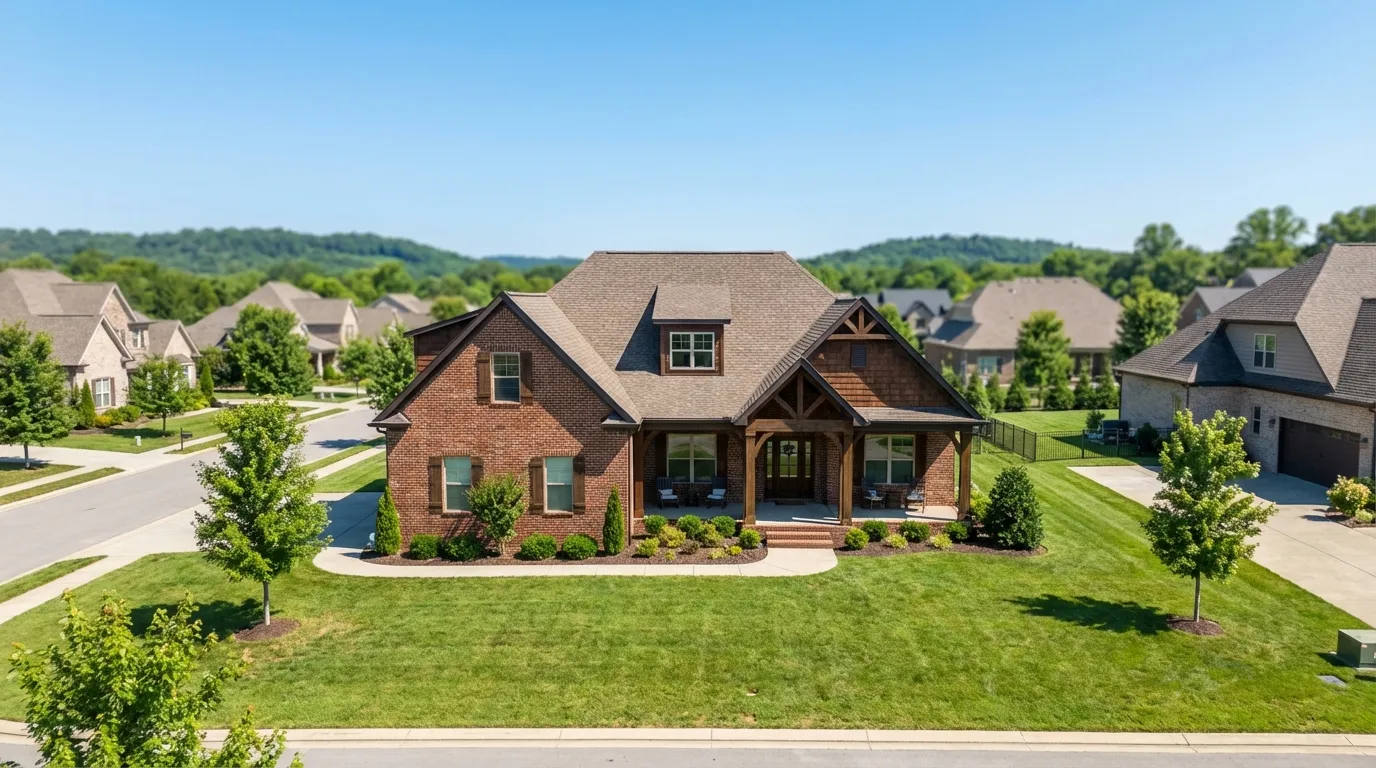
Brentwood and Franklin represent the highest average roofing ticket in the Nashville metro. Homeowners in Williamson County (median household income $104,000+, median home price $700,000–$900,000+) don't shop on price for a $20,000–$35,000 roofing system. They shop on manufacturer certification, warranty length, crew quality, and contractor community reputation. A GAF Master Elite certification — held by only 3% of roofing contractors nationwide — is a genuine competitive moat in Williamson County because it demonstrates the training, insurance levels, and quality standards that $800K+ homeowners require before writing a large check.
Williamson County's new construction build rate (Nolensville, Spring Hill, Thompsons Station) also creates a parallel subcontractor pipeline for roofing contractors willing to build builder relationships. While the direct-to-consumer replacement job pays more per installation, a subcontractor relationship with a high-volume Williamson County builder generates predictable, year-round work volume that cushions the seasonal dips in residential replacement demand.
Nashville's roofing market rewards timing, trust, and local specificity — three qualities that national storm-chasing franchises structurally can't deliver. Bone Dry has Nashville recognition and consistent digital spend. Storm Group has post-2020 visibility. Neither has your knowledge of which East Nashville streets had rushed 2020 installations, or which Brentwood neighborhoods are entering the 20-year shingle replacement window.
MB Adv Agency builds Nashville roofing campaigns that operate in real time. That means storm-surge bid automation already configured before March. It means separate campaigns for Williamson County premium replacement versus Davidson County post-storm repair. It means landing pages that lead with local photos, local reviews, and local trust signals — not the generic national-brand templates that kill conversion rates for homeowners who want evidence that you've actually worked in their neighborhood.
Our roofing lead generation approach targets 12–22 qualified leads per month at the $3,000–$4,500 starter budget range, with blended CPLs of $140–$220. For Nashville roofing contractors with average job values of $13,000–$18,000, that math produces a 10–14x ROAS at campaign maturity. During spring storm surge months, lead volume can triple — and the ROI compounds accordingly.
See how our pricing tiers align with roofing season budgets — including how we structure aggressive spring spend and reduced off-season maintenance.

Frequently Asked Questions
When is the best time to run Google Ads for a Nashville roofing company?
Year-round with strategic surges — but the single highest-priority period is the 48 hours immediately after a confirmed hail event in the Nashville metro. Roofing PPC campaigns that are live and already bidding on storm-related keywords when Nashville hail events generate homeowner searches capture 3–5x normal lead volume in that first-mover window. Contractors who turn ads on after the storm has already been in the news for two days are competing for leftovers.
Beyond storm events, the annual planning calendar for Nashville roofing PPC looks like this: March–May is the primary revenue harvest period — maintain maximum budget, expand to broad modified match types, and keep bid adjustments ready to activate on 2-hour notice. August–September is the secondary surge period when late-season thunderstorms and hurricane remnants hit Middle Tennessee. October–February shifts to brand-building and inspection keywords at reduced spend — this period is about building pipeline and maintaining Quality Score so the campaign performs at its best when March arrives.
One counterintuitive insight: December and January are undervalued months for roofing PPC in Nashville. Most contractors pull back, reducing the auction competition significantly. Homeowners who identified roof issues in fall but delayed action until the new year are actively searching in January with no competing storm chasers in the market. Maintaining a $2,000–$2,500/month December–January budget captures these leads at CPLs significantly below the spring peak — often $100–$140 versus $200–$280 during storm surge periods.
What makes Nashville roofing PPC different from other cities?
Three things set Nashville's roofing market apart from comparable Southeast metros: the storm-trigger demand pattern, the 2020 tornado second-wave effect, and the Williamson County premium market segment. Each requires different campaign logic that generic roofing PPC templates don't account for.
Nashville sits in the southern Dixie Alley storm corridor — which means March through May brings regular hail events with 1"–2.5" diameter hailstones capable of triggering neighborhood-wide insurance claim cycles. Unlike Florida (hurricane season) or Texas (more predictable spring patterns), Nashville's storm events are concentrated enough to create city-wide demand spikes but irregular enough that contractors who pause campaigns between events consistently miss the first-mover window. The correct strategy is never pausing: maintain the campaign at reduced off-season spend so it's always live, always optimizing, and always ready to surge within hours.
The Williamson County premium dimension means Nashville's highest-value roofing jobs — $18,000–$35,000 designer shingle, metal, or slate-look systems on $700K–$1.5M homes — are concentrated in a specific geographic zone (37027, 37064, 37067) that justifies its own campaign with premium bid adjustments and landing pages emphasizing manufacturer certifications, warranty terms, and portfolio quality. Running one undifferentiated Nashville-wide campaign misses the opportunity to capture Brentwood and Franklin leads at the premium price points they actually represent.
Finally, Nashville CPCs for roofing keywords run 20–30% above Southeast averages due to high average ticket values and national competitor presence. The correct response isn't avoiding the auction — it's targeting with enough specificity that you're not competing against national budgets on broad terms, but instead dominating the exact-match and phrase-match keywords where local relevance wins at lower cost per qualified lead.