Roofing PPC Rapid City, SD
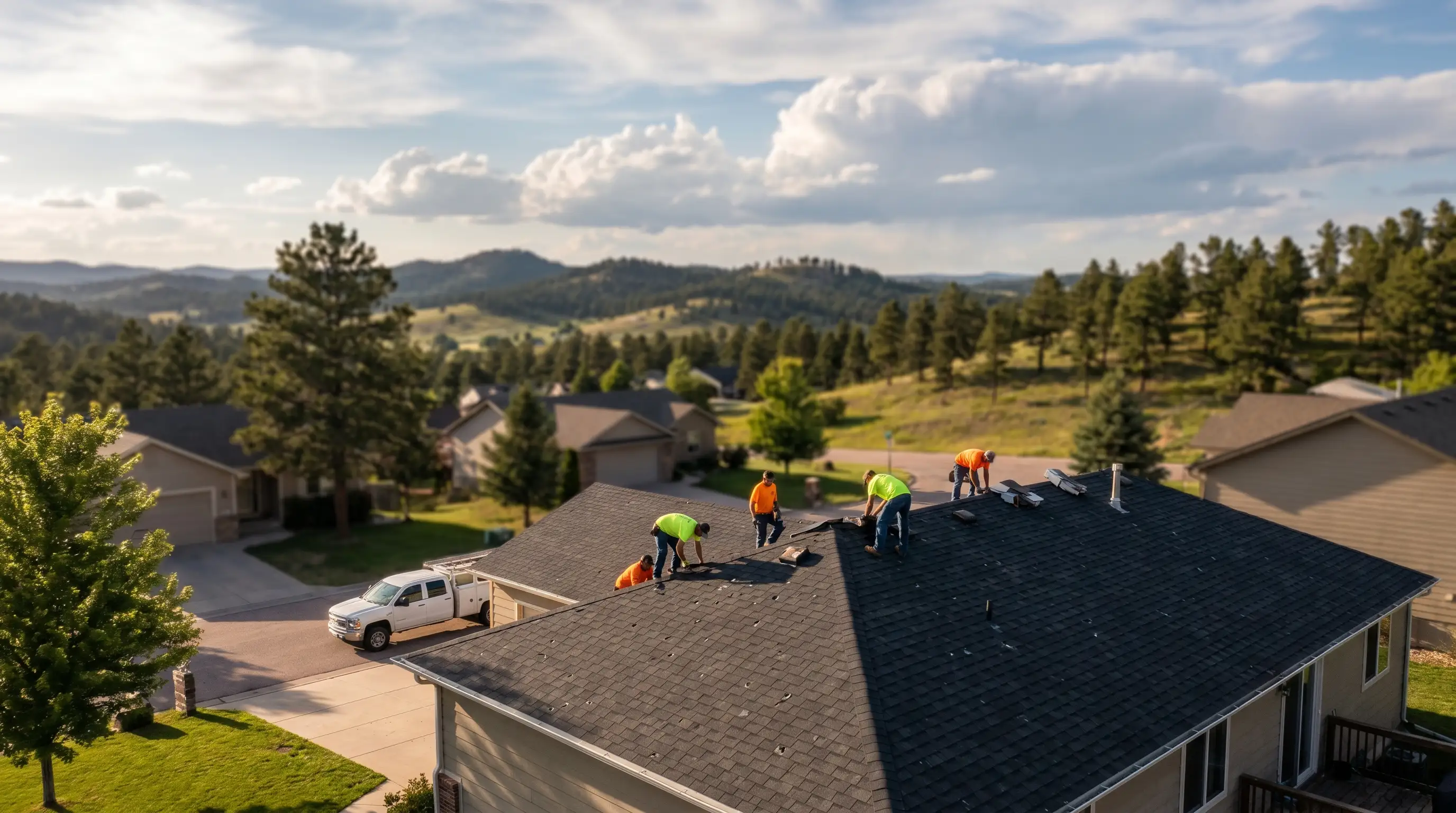
Rapid City sits in one of the highest hail-frequency zones in the continental United States — baseball-sized hailstones are documented annually across the Black Hills corridor, destroying roofs and generating insurance claim cycles that make this one of the highest-average-ticket roofing markets in the country at $8,000–$25,000 per replacement job. <!-- stats-article-link --> <p><em>See how this city's Roofing PPC costs compare nationally in our <a href="/resources/roofing-ppc-statistics">Roofing PPC Statistics</a> report, featuring data from 40+ US cities.</em></p>
Why Do Roofing PPC Campaigns Fail in Rapid City?
Rapid City's roofing market operates on weather events, not steady-state demand — and that event-driven dynamic is what breaks most PPC campaigns. The market is defined by the Black Hills hail corridor, one of the highest hail-frequency zones in the continental United States. When a major storm rolls through, search volume for "roof repair Rapid City" and "hail damage inspection" can spike 400–600% above baseline within 48 hours of an event. Campaigns that aren't properly structured with surge-friendly budgets and pre-built ad copy for storm response miss the highest-intent window entirely — and that window lasts only 5–10 days before the initial urgency fades.
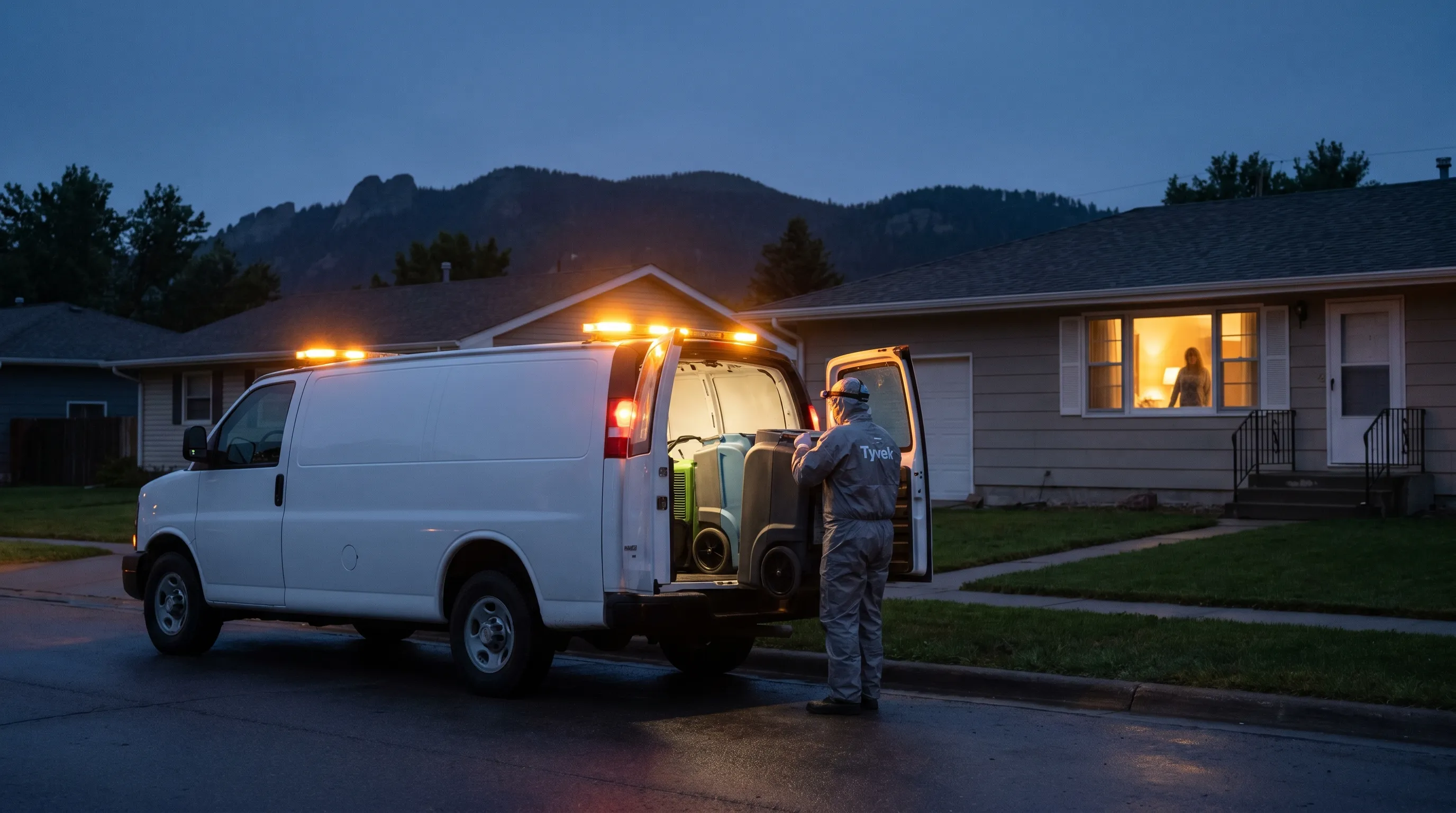
The second campaign failure mode is losing leads to storm chasers. After every major hail event, out-of-state contractors flood the Rapid City market — trucks arrive from Texas, Oklahoma, and Missouri with aggressive door-knocking and Google Ads campaigns funded by corporate marketing budgets. Local operators who go dark on PPC during or after a storm hand their own market to these transient competitors. The damage is compounded: homeowners who get burned by storm chasers (delayed work, disappeared after deposit, inferior materials) don't return to those companies — but they also don't automatically return to local contractors who weren't visible during the critical post-storm decision window.
The Insurance Claim Complexity Problem
Rapid City's roofing PPC challenge isn't just generating leads — it's generating the right leads. Insurance claim jobs average $8,000–$25,000+ and represent the vast majority of revenue in storm markets. But homeowners searching after a hail event have different questions at different stages of the insurance process. A homeowner who just filed a claim searches differently than one who has received an adjuster estimate and is now choosing a contractor. Generic "roofing company Rapid City" campaigns capture both audiences inefficiently — an "insurance claim adjuster coordination" landing page will convert the claim-stage searcher at twice the rate of a generic "free estimate" page.
Local market players demonstrate the competitive landscape clearly. Black Hills Roofing is an established storm restoration specialist with strong brand recall in the corridor. Quality Roofing & Construction leads with hail damage and insurance claims positioning. Roberts Complete Restoration offers full-service restoration including interior water damage — a meaningful competitive advantage when hail penetrates a roof and creates interior damage. Renatus Exteriors is a newer entrant with aggressive pricing and active digital presence. Any PPC campaign must be built with awareness of these specific competitors, not generic roofing industry tactics.
Pre-Storm vs. Post-Storm Campaign Structure
Most roofing campaigns in Rapid City are reactive — contractors activate PPC after a storm. The contractors who win consistently are those whose campaigns are already live, optimized, and bidding competitively before the storm arrives. The first contractor to appear in Google results in the 6–12 hours after a major hail event wins a disproportionate share of the emergency tarp and inspection calls — calls that convert into full replacement projects within 30–60 days. Being second in search results 48 hours later is worth a fraction of being first the morning after the storm.
The Roofing PPC Strategy Built for Rapid City's Storm Market
Rapid City roofing campaigns require three distinct campaign types running simultaneously: a storm emergency campaign (surge-capable, always-on), an insurance claim campaign (process-oriented, trust-focused), and a non-storm replacement campaign (seasonal, efficiency-focused). Running them as separate campaigns allows independent budget control and ad copy optimization.
Storm Response Campaign — The Revenue Driver
The storm response campaign is the highest-revenue campaign type in this market. It runs always-on at baseline budget and scales immediately after a storm event. Key keyword groups:
- Emergency tarp/inspection keywords: "emergency roof repair Rapid City," "hail damage roof SD," "roof tarp installation Black Hills" — $18–$35 CPC post-storm, CVR 12–20%
- Free inspection offer keywords: "free hail inspection Rapid City," "roof damage inspection SD," "storm damage assessment" — $12–$25 CPC, drives high call volume, lower immediate CPA
- Insurance claim guidance keywords: "roof insurance claim Rapid City," "hail damage insurance help," "work with insurance adjuster" — $15–$28 CPC, medium competition, very high lead quality
Budget strategy: set a campaign budget cap 5–8x higher than daily spend so that when a storm event triggers search spikes, Google can scale spend automatically without daily budget exhaustion. A campaign capped at $150/day that spends $30/day pre-storm can legitimately spend $120–$150/day in the 72 hours after a major event — capturing the surge without manual intervention.
Insurance Claim Campaign — Conversion-Optimized
- Adjuster coordination keywords: "roofing contractor insurance claim Rapid City," "we work with your insurance adjuster" — $15–$28 CPC
- Deductible-focused keywords: "roof replacement you pay deductible only," "insurance roof replacement SD" — $14–$24 CPC, high close rate
- Local accountability keywords: "local roofer Rapid City," "Black Hills roofing company reviews," "established roofing contractor SD" — $10–$20 CPC, filters for homeowners specifically seeking local operators over storm chasers
Landing pages for the insurance campaign must explicitly address the storm chaser threat: "We're local. We're licensed in South Dakota. We'll be here after your job is complete." This single point of differentiation converts skeptical post-storm homeowners at significantly higher rates than generic "free estimate" pages.
Non-Storm Replacement Campaign — Year-Round Baseline
Between storm events, target homeowners replacing aging roofs proactively. Rapid City's population growth (+12,000 residents since 2020) and suburban expansion in Box Elder, Rapid Valley, and Black Hawk creates a steady baseline of new-construction and aging-roof-replacement demand. Key terms: "roof replacement cost Rapid City," "new roof estimate Black Hills," "metal roofing SD" at $10–$18 CPC. These convert more slowly but at high average ticket ($8,000–$15,000) and zero competition from storm chasers who aren't present between events.
Google Partner Agency
We're a certified Google Partner Agency, which means we don’t guess — we optimize withGoogle’s full toolkit and insider support.
Your campaigns get pro-level execution, backed by real expertise (not theory).

What Market Trends Should Rapid City Roofing Contractors Know?
The most consequential market trend for roofing PPC in Rapid City is a trend that creates a predictable revenue engine — not a one-time event. Rapid City's population grew by 12,000 residents since the 2020 Census, a +16% increase concentrated primarily in the suburban ring of Box Elder, Rapid Valley, and Black Hawk. New suburban housing means new roofs being installed on homes that will enter the hail-damage replacement cycle within 10–15 years — and it means a growing base of homeowners who have never navigated a hail damage insurance claim before and need a trusted guide through the process. Roofing PPC campaigns targeting these newer suburban zip codes capture both first-time buyers and the ongoing replacement demand from population growth.
The B-21 Expansion and Housing Demand
Ellsworth Air Force Base's designation as the first operational B-21 Raider base is driving a construction boom in the Box Elder and Rapid Valley corridors that will extend through 2027–2028. New housing being built to accommodate ~4,000 additional military and civilian personnel means new roofs — and military homeowners are a distinctly high-value roofing customer. Military families on PCS orders frequently rent rather than own, but the landlords serving military rental markets are active home investors who need roofing contractors for their rental property portfolios. Targeting landlord-specific keywords ("rental property roof repair Rapid City," "property management roofing SD") alongside standard residential terms captures this underserved high-volume segment.
The Sturgis Motorcycle Rally dynamic deserves a note for roofing contractors: the Rally (1M+ annual attendance in the first week of August) doesn't directly impact roofing demand, but it does tighten the Rapid City labor market during the week — contractors who schedule non-emergency roofing projects in early August compete with Sturgis-driven hospitality and service labor demand. Scheduling PPC spend to reduce lead volume during Sturgis week and immediately spike it in the two weeks following aligns campaign performance with actual installation capacity.
Roofing Material Trends in the Black Hills Market
Impact-resistant roofing materials (Class 4 shingles) are gaining significant traction in Rapid City because South Dakota insurance carriers offer premium discounts of 20–35% for homes with Class 4 impact-resistant roofing. Homeowners replacing hail-damaged roofs are increasingly asking about impact-resistant options — and roofing contractors who can explain the insurance premium savings alongside the product upgrade command higher closing rates on premium materials. PPC campaigns that include "impact resistant shingles Rapid City" and "Class 4 roofing SD" keywords at $12–$20 CPC capture homeowners researching this upgrade path — a highly qualified, high-ticket audience that most competitors aren't specifically targeting.
Why Rapid City Roofing PPC Requires Black Hills Market Knowledge
A cookie-cutter roofing campaign deployed from a national agency template will fail in Rapid City because the storm event cycle, the storm chaser competitive dynamic, and the insurance claim conversion process are specific to this market and require locally-calibrated strategy. Knowing that Roberts Complete Restoration competes on full-service restoration (not just roofing), that Renatus Exteriors is a new aggressive entrant, and that storm chaser influx peaks in the 72 hours post-storm are market facts that change bidding, ad copy, and landing page strategy.
At MB Adv Agency, we manage roofing campaigns in storm-prone markets with the specific architecture this market demands: surge-capable budgets, pre-built storm response ad copy activated by weather triggers, insurance claim landing pages that directly address the storm chaser trust problem, geo-targeting concentrated on the highest-impact zip codes, and post-storm remarketing to re-engage homeowners who searched but didn't convert during the first response window. Learn more about our approach on our PPC services page, review our transparent pricing, or visit the Rapid City PPC services page to see how we approach this specific market.

Frequently Asked Questions
How Much Does Roofing PPC Cost in Rapid City, SD?
Rapid City roofing PPC runs at $10–$35 per click depending on campaign type and timing — storm-response keywords spike to $25–$35 post-event, while baseline replacement and non-storm inspection keywords run $10–$18. A recommended starting budget of $2,500–$4,000 per month generates 15–25 qualified leads at an average cost per lead of $100–$175. At an average job ticket of $8,000–$25,000, the math is straightforward: two closed insurance replacement jobs from one month of ad spend returns $16,000–$50,000 in revenue against a $3,000 ad cost — a 5:1 to 17:1 ROAS on those two jobs alone. Budget strategy matters more than budget size: a $2,500/month campaign with surge capabilities (campaign budget caps set 5–8x above daily spend) outperforms a static $5,000/month campaign during storm response because Google can scale spend automatically when search volume spikes. Off-season (October–March, between storm events), reduce campaign spend to $1,500–$2,000/month for baseline replacement and insurance claim keywords, then increase to $3,500–$5,000/month from May through September during the primary hail season.
Don't forget that Local Services Ads (LSAs) run separately from Google Ads and deliver CPL 25–35% lower in storm-prone markets. For a roofing contractor, the Google Guaranteed badge in LSAs is particularly powerful post-storm — it's a visual trust signal that differentiates you from the storm chasers who cannot get Google Guaranteed certification without a physical address and verified license in South Dakota.
How Do Rapid City Roofing Contractors Win Against Storm Chasers in Google Ads?
Storm chasers compete aggressively on generic post-storm keywords — "roof repair Rapid City," "hail damage roof," "emergency roof tarp." To outperform them, local contractors need to compete on dimensions that out-of-state operators structurally cannot match. First, lead with local accountability in ad copy and landing pages: "Rapid City's Local Roofer — Licensed in SD, Here Before and After the Storm" directly addresses the #1 homeowner concern about storm chasers disappearing after a deposit. Second, leverage Google Guaranteed (Local Services Ads) — storm chasers typically don't invest in getting Google Guaranteed in South Dakota because they're only in the market for 3–4 weeks; local operators who hold the badge get preferential placement and a trust signal that storm chasers can't display. Third, use review-forward ad extensions: a local operator with 150+ Rapid City reviews and a 4.8-star rating displayed in ads consistently outperforms a storm chaser with no local reviews, even when the storm chaser bids higher. Fourth, invest in landing page conversion rates: a page with a specific "We Are Your Neighbor" message, South Dakota license number visible, and a gallery of completed local jobs converts at 12–18% vs. 6–8% for generic pages — which means you win more leads at the same click spend. The storm chaser volume recedes within 30 days of the event; the local operator who held position during the rush captures both the immediate leads and the referral chain that follows from satisfied local customers.