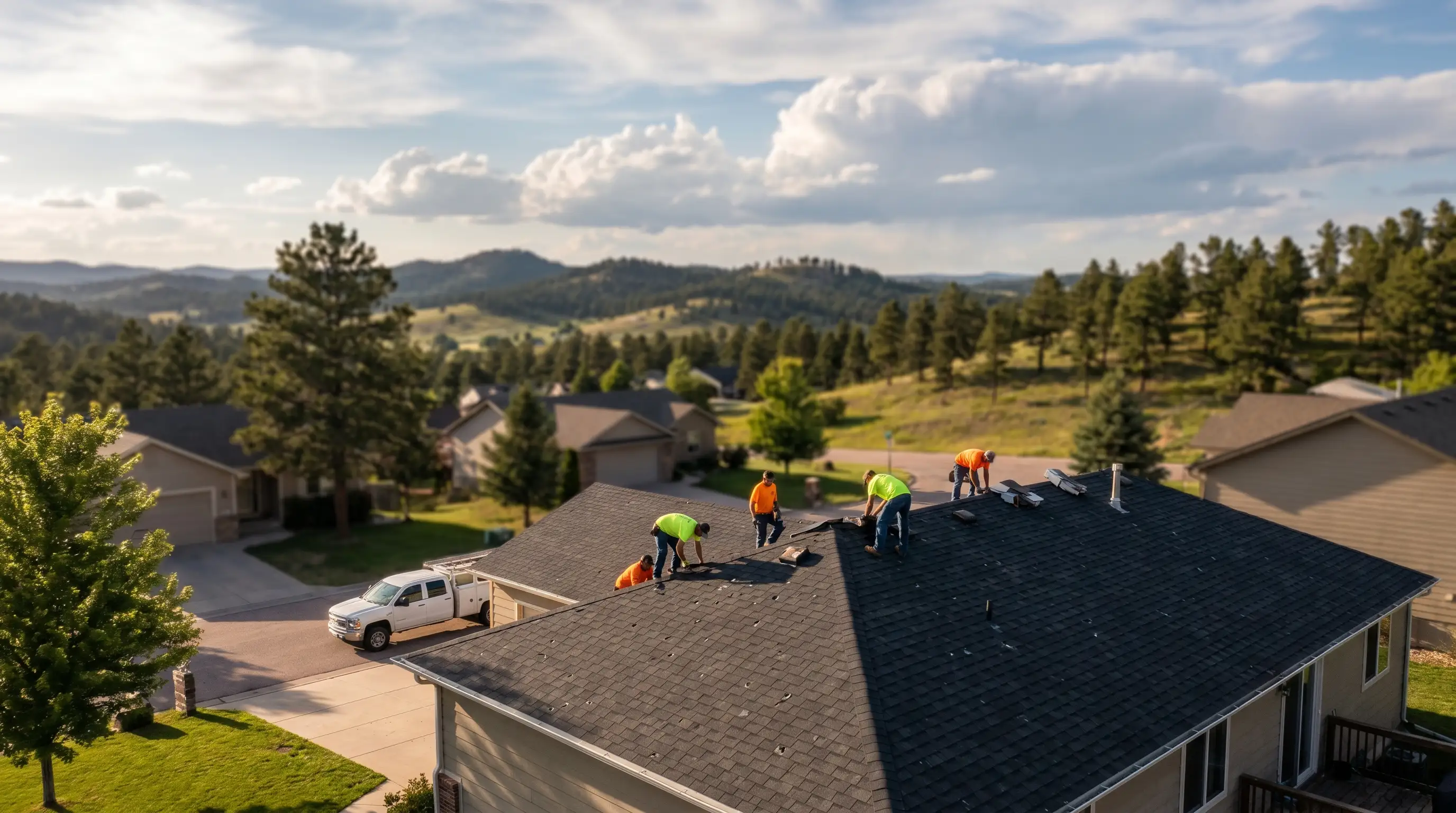
Water Damage Restoration PPC Rapid City, SD
When a Rapid City homeowner discovers water pouring through a hail-punched roof at midnight or finds their basement flooded during spring snowmelt, they search once and call the first result that answers — making water damage restoration the highest-conversion PPC category in Rapid City's home services market, with conversion rates of 15–25% versus the 5–8% typical of most service industries.
Why Do Water Damage Restoration PPC Campaigns Fail in Rapid City?
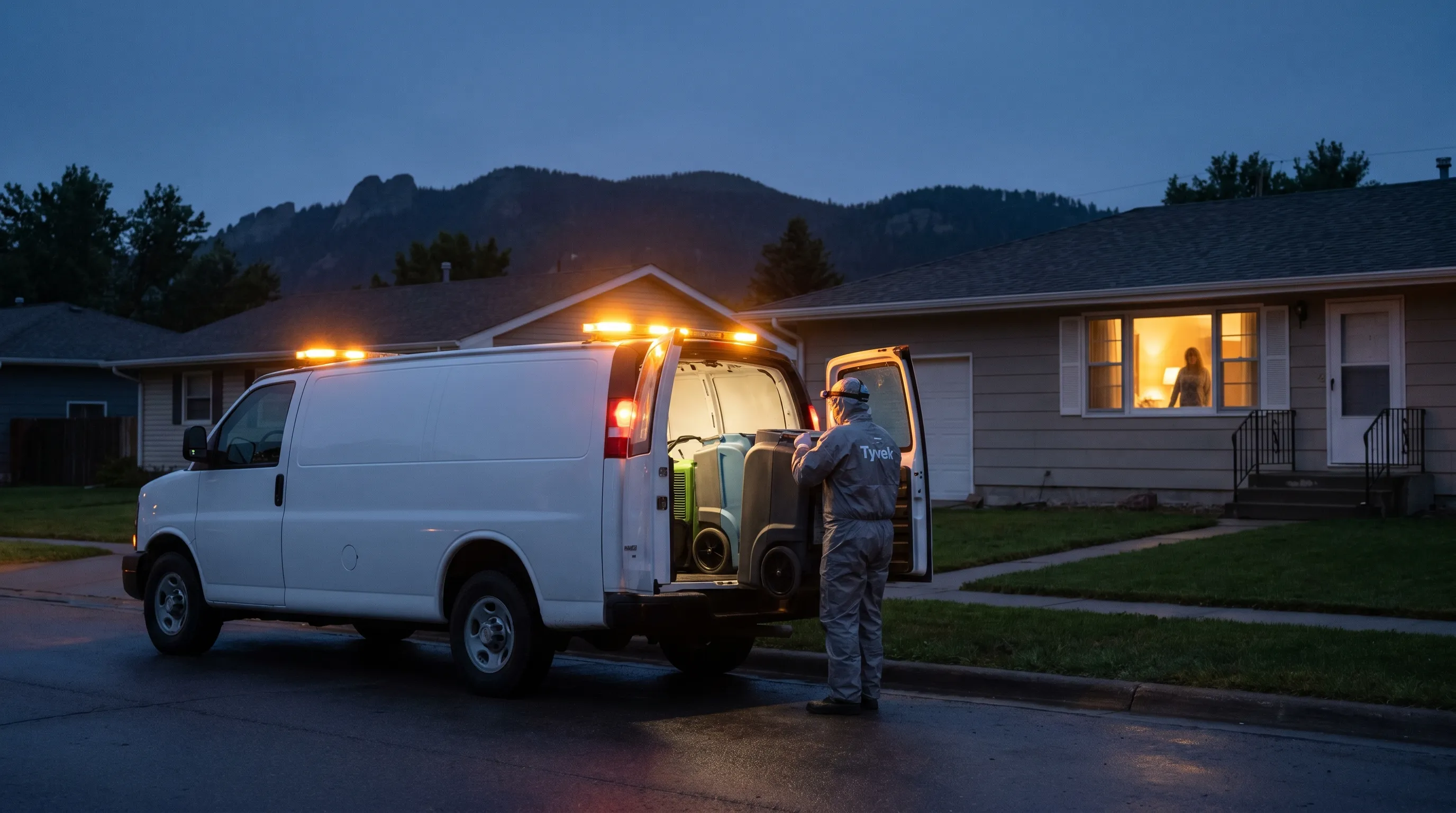
Water damage restoration in Rapid City operates on pure emergency economics — and emergency economics punish every failure in campaign structure ruthlessly. SERVPRO of Rapid City/Spearfish dominates brand recall: the national franchise's green trucks are a recognized symbol of disaster response, their name is embedded in insurance carrier pre-approval lists, and they spend heavily on local SEO and brand terms. For an independent restoration company, running a generic "water damage restoration Rapid City" campaign without a differentiation strategy is a direct spend war against a franchise with corporate PPC support. That's a battle the independent loses on budget before they lose on quality.
The more insidious failure mode: campaigns that don't run 24/7 miss the most valuable leads in the market. Burst pipes are discovered at 2 AM. Basements flood during early-morning rainstorms. Hail penetrates a roof at 8 PM on a Tuesday in May. The search and call patterns for emergency water damage peak at exactly the times most campaigns pause — late evening, overnight, and weekend mornings. A campaign that runs Monday–Friday 8 AM–6 PM with no weekend coverage converts 30–40% fewer emergency leads than a 24/7 campaign at the same monthly budget.
The Speed Imperative and Response Time Positioning
Emergency water damage searches are not comparison-shopping exercises. The homeowner with water pouring through their ceiling does not have time to evaluate three providers. They call the first result that communicates immediate availability and fast response. A campaign landing page that leads with "Free Estimate — We'll Get Back to You Within 24 Hours" loses every emergency caller to a competitor page that says "60-Minute Response — Call Now." The copy difference costs nothing to change and doubles conversion rates on emergency traffic.
The competitive reality compounds this. ServiceMaster Restore is the second national franchise operating in Rapid City alongside SERVPRO. Between these two national brands and Roberts Complete Restoration (which competes on full-service storm and water restoration), independent local operators face brand recognition disadvantages on every generic search term. The path to winning is not outbidding national brands on brand terms — it's owning the response speed positioning those brands cannot credibly claim when calls route through national call centers.
Mold Prevention Urgency — The Conversion Accelerator
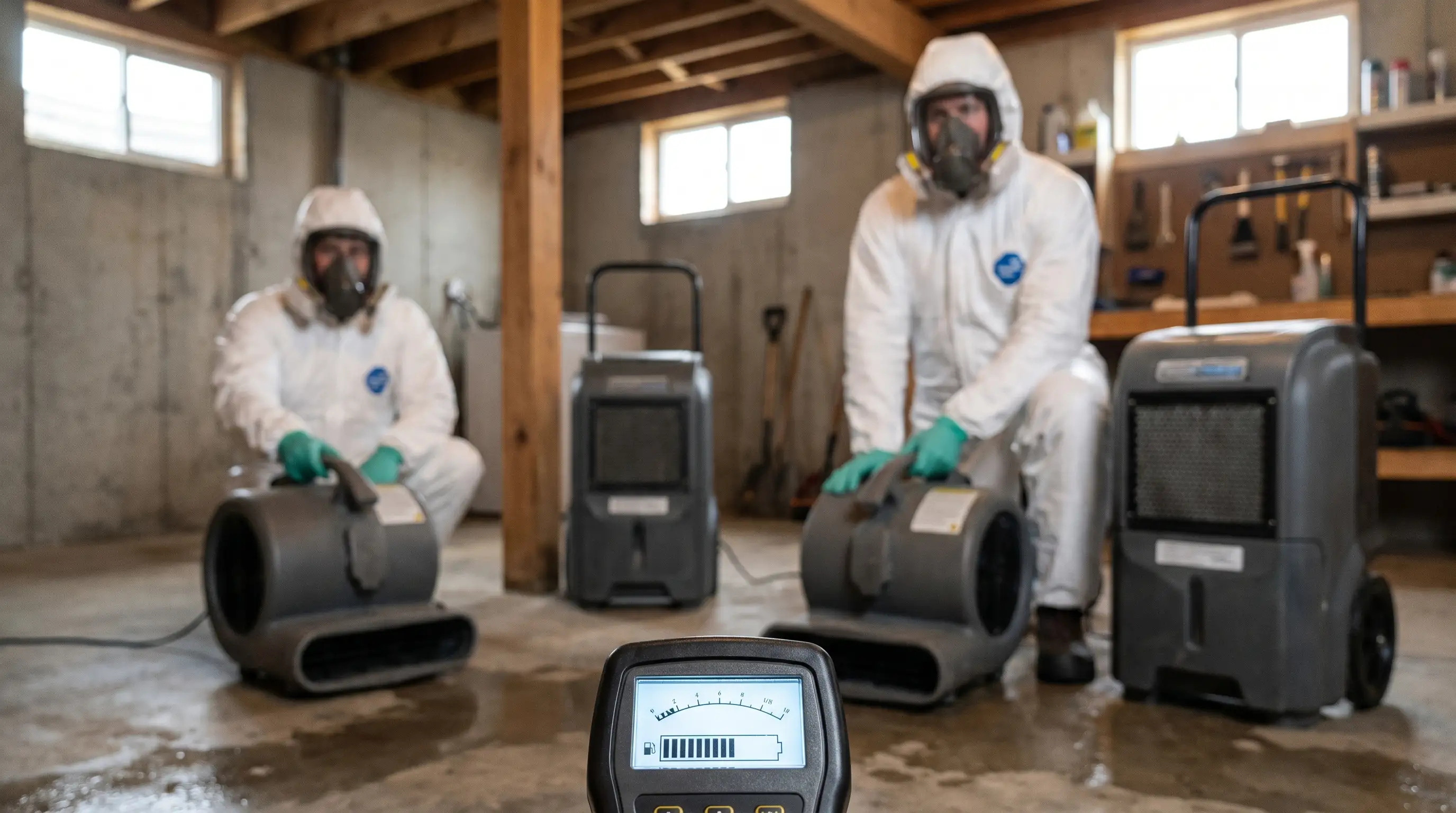
Water damage restoration has a biological clock attached to every lead. IICRC standards require structural drying within 24–48 hours to prevent secondary mold damage — and every hour beyond that window increases remediation scope and cost. PPC campaigns that communicate this urgency ("Water Damage Must Be Dried in 48 Hours — Every Hour Counts") don't just create artificial pressure — they communicate a real and consequential fact. Campaigns that fail to incorporate mold prevention urgency miss the conversion lever that distinguishes restoration PPC from general home services PPC. They also fail to capture the "mold remediation" search volume that follows water damage events — a secondary revenue stream worth $3,000–$8,000 per remediation job.
The Water Damage Restoration PPC Campaign Built to Beat SERVPRO on Speed
The winning strategy in Rapid City's water damage market is not outspending SERVPRO — it's out-responding them. Three campaign types drive the revenue structure: an emergency response campaign (always-on, 24/7), an insurance claim coordination campaign (process-focused, higher intent), and a seasonal prevention campaign (spring and fall, lower competition).
Emergency Response Campaign — 24/7, Call-Only
This campaign runs every hour of every day with call-only ads and location extensions. The ads lead with response time: "Rapid City Water Damage — 60-Min Response." No landing page required for emergency searches — the homeowner calls, not clicks. Key keyword groups:
- Emergency flooding keywords: "flooded basement Rapid City," "water damage emergency SD," "burst pipe repair Rapid City" — $45–$85 CPC, CVR 20–30% for call-only ads
- Storm-related water damage: "roof leak water damage," "hail damage water intrusion," "storm flood restoration Rapid City" — $30–$65 CPC, highest volume after storm events
- After-hours/weekend modifiers: Bid +60–80% after 6 PM weekdays, +100% on weekends — emergency calls peak precisely when SERVPRO's national call routing causes delays
Negative keyword discipline is critical in this campaign. Add negatives for "DIY," "rental equipment," "dehumidifier rental," and "tips" to filter out research queries and keep CPL contained. The emergency campaign should capture only homeowners who are in immediate crisis, not those who are researching how to address minor moisture themselves.
Insurance Claim Campaign — Friction Removal
- Direct billing keywords: "insurance water damage restoration," "water damage company bill insurance directly," "we handle your insurance claim Rapid City" — $20–$50 CPC, medium competition, extremely high close rate when paired with direct-billing landing page
- Mold prevention urgency keywords: "water damage mold prevention Rapid City," "emergency water extraction SD," "professional water mitigation" — $25–$55 CPC, captures the post-event research phase within 12–24 hours of discovery
- SERVPRO alternative keywords: "water damage restoration company Rapid City," "restoration company vs SERVPRO" — $30–$60 CPC, competitor conquest positioning that captures homeowners who searched SERVPRO but are still deciding
Seasonal Prevention Campaign — Spring Snowmelt Window
Run a reduced-budget prevention campaign (March–May) targeting basement waterproofing, sump pump failure, and foundation seepage keywords at $15–$35 CPC. These searches happen before the emergency — homeowners who see news coverage about spring flooding in the Black Hills go looking for waterproofing solutions. These leads are lower urgency but convert into $3,000–$8,000 prevention jobs with zero competition from SERVPRO on the prevention-oriented keywords. Capture them before the emergency, and you own the relationship when the emergency eventually happens.
Google Partner Agency
We're a certified Google Partner Agency, which means we don’t guess — we optimize withGoogle’s full toolkit and insider support.
Your campaigns get pro-level execution, backed by real expertise (not theory).

What Market Trends Should Rapid City Restoration Companies Know?
The defining market trend for Rapid City water damage restoration is the causal chain from hail to roof penetration to interior water damage — a sequence that plays out repeatedly across the Black Hills hail corridor and creates a compounding demand cycle. When a major hail event strikes Rapid City (typically May through September), the immediate damage is visible on rooftops within hours. But the interior water damage from roof penetrations often isn't discovered for days or weeks — the next significant rainfall after the hail event turns a damaged shingle field into a flooding interior. This delayed discovery pattern means post-storm water damage restoration searches peak 7–21 days after the hail event, not simultaneously with roofing searches. A restoration company that runs PPC campaigns in the 2–3 weeks after every major hail event captures this delayed demand cycle that most operators miss.
The Military Community — A High-Value Underserved Segment
Ellsworth AFB's 12,000+ military personnel and dependents, expanding with the B-21 Raider program to approximately 4,000 additional personnel, represents a structurally underserved water damage restoration customer. Military rental properties — a significant portion of the Box Elder and Black Hawk housing market — have landlords who are often out-of-state investors managing properties remotely. When a tenant reports water damage in a military rental, the landlord is searching Google from Minnesota or California for "water damage restoration Rapid City" and needs a restoration company that can respond immediately, document for insurance, and communicate via email or phone without requiring an in-person consultation. Restoration companies that position as landlord-friendly — fast response, detailed documentation, direct insurance billing — capture this underserved high-value segment at CPCs far below the standard emergency search competition.
The Federal Reserve Bank of Minneapolis identified Rapid City as a retiree magnet in 2025, and this demographic trend has a direct impact on the restoration market. Retirees purchasing Rapid City's mid-century ranch homes are buying the most water-damage-vulnerable building stock in the market — homes with 20–40 year old roofing systems, aging plumbing, and basement designs from an era when waterproofing standards were lower. A retiree who purchased a home in 2022 or 2023 in Rapid City's established neighborhoods is statistically likely to experience a water intrusion event within 5 years. Remarketing campaigns targeting home buyers in specific Rapid City zip codes (West Boulevard, North Rapid, neighborhoods with older building stock) capture this predictable future demand before competitors.
SERVPRO's Structural Weakness — The Local Speed Advantage
SERVPRO's franchise model has a structural weakness that local operators can exploit consistently. National franchise call routing introduces 15–45 minutes of delay between a customer's first call and the confirmation of a local technician dispatch — calls go through regional dispatch centers before reaching the local franchise. A local operator that answers immediately, confirms a 60-minute dispatch, and arrives on-time wins on the dimension that matters most in emergency restoration: speed to arrival. This is not a marginal advantage — restoration companies that arrive first have a 70–80% close rate on emergency jobs versus 30–40% for companies that arrive second, because homeowners sign with the first company that demonstrates they are present and solving the problem.
Local Speed vs. National Brand — Why Rapid City Restoration PPC Demands Both
Water damage restoration PPC in Rapid City isn't won on the biggest budget — it's won on the best campaign structure and the fastest response system behind the phone number in the ad. SERVPRO's national brand cannot be outbid on brand terms, and trying is expensive. The winning play is owning the speed and local accountability positioning: 60-minute response guarantees, direct insurance billing messaging, and 24/7 ad scheduling that captures the 2 AM burst pipe call that franchise call centers route slowly.
MB Adv Agency builds water damage restoration campaigns around the emergency response dynamics specific to Rapid City — the hail-to-water-damage delay cycle, the spring snowmelt window, the military rental property segment, and the SERVPRO structural weakness that local operators can consistently exploit. We structure campaigns with 24/7 scheduling, surge-capable budgets for post-storm demand spikes, and conversion-optimized landing pages built for crisis-state callers, not general browsers. Visit our PPC services page or our Rapid City PPC page to see how we structure emergency service campaigns for this market. Review our pricing — a starter budget of $2,500–$4,000/month captures 10–20 emergency leads per month with a market-calibrated campaign structure.
Frequently Asked Questions
How Do Water Damage Restoration Companies Beat SERVPRO in Rapid City Google Ads?
Beating SERVPRO in Rapid City's Google Ads market requires competing on speed and local trust — two dimensions where the franchise model has structural weaknesses. First, run call-only ads with 24/7 scheduling and a direct dispatch phone number: when a homeowner calls at 11 PM and a human answers immediately with "We're dispatching a crew now — we'll be there in 60 minutes," the SERVPRO national call center routing system cannot compete with that response. Second, run Local Services Ads with Google Guaranteed certification: SERVPRO's franchise may or may not hold the Guaranteed badge in Rapid City; local operators who do hold it get preferential placement above standard text ads for emergency queries. Third, invest in conversion-optimized landing pages that lead with response time and direct billing, not features and company history — homeowners in a crisis are not reading about your company's founding year. They want to know how fast you arrive and whether you handle insurance. Fourth, build a remarketing list from emergency visitors and re-target them 7–30 days later for mold assessment follow-up — water damage events often require secondary mold remediation 30–60 days later, and the company that was first on-site has a referral advantage for that follow-up work. Running these four strategies simultaneously, a local Rapid City restoration company consistently captures emergency leads at a CPL of $75–$150 versus competing head-on with SERVPRO for brand searches at $200+ CPL.
What Budget Does a Rapid City Restoration Company Need to Generate Consistent Leads?
A Rapid City water damage restoration company generating 10–20 qualified emergency leads per month needs a baseline Google Ads budget of $2,500–$4,000/month. At an average CPC of $35–$55 for the primary emergency keyword mix and a conversion rate of 15–25% (higher than almost any other home services category because emergency intent eliminates comparison shopping), this budget produces 10–20 calls per month. At an average job ticket of $3,000–$12,000, closing just 3–4 jobs per month from campaign-generated leads returns $9,000–$48,000 in revenue against a $3,000 ad spend — a 3:1 to 16:1 ROAS depending on job scope. Budget should be structured with surge capability for storm events: set the campaign budget cap 5–8x above daily baseline spend so Google can scale automatically when hail-related search volume spikes. The 5–10 days after a major storm event often produce as much emergency search volume as the prior 30 days combined. A company with a static daily budget cap misses most of this window. The smart budgeting move: run at $80–$100/day baseline, configure the campaign to scale to $300–$400/day when triggered, and set a spend alert at $4,000 to avoid unexpected overruns. This structure costs the same monthly as a static $2,500 budget in calm months but captures the storm surge revenue that pays for the entire year.