Start
$590$990/month
1 platform · Google or MetaGoogle + Meta- Ad spend
- up to $3,000
- New creativesmade by us
- Google + Meta only4 a month
 By Matteo Braghetta, Founder · Google Ads
Greene County sits squarely in Missouri's storm corridor — hail events, high-wind incidents, and tornado-adjacent severe weather generate insurance claim surges that transform the Springfield roofing market overnight. With 3,652 BBB-listed roofing businesses competing in the metro and CPCs that spike immediately after a hail event, the roofing contractors who win are those whose campaigns are already built for the storm before it arrives.
See how this city's Roofing PPC costs compare nationally in our Roofing PPC Statistics report, featuring data from 40+ US cities.
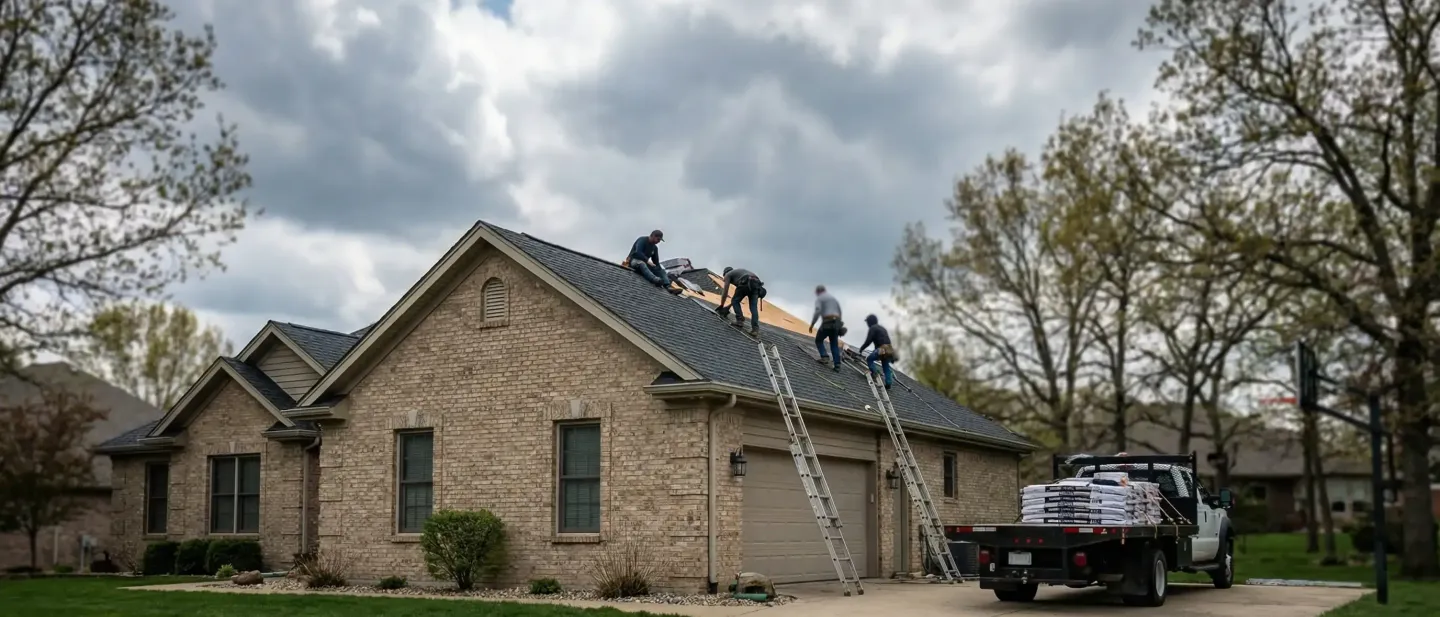
In the Springfield metro area, people search for roofing services about 2,740 times a month on Google; a top-of-page click costs $9–$49, and demand peaks in May.
Search volumes for Springfield, MO alone are too thin to report; the figures are for the Springfield, MO,United States metro area.
Google Keyword Planner · Oct 2025 – Sep 2026
| Search | Monthly searches | Top-of-page CPC |
|---|---|---|
| roofer near me | 590 | $9–$56 |
| metal roofing | 390 | $3–$16 |
| roofing company | 320 | $16–$78 |
| roofers | 320 | $6–$46 |
| roofing contractor | 260 | — |
| roof repair | 170 | $7–$23 |
| roof inspection | 110 | $13–$108 |
| roof replacement | 90 | $12–$37 |
| gutter installation | 90 | $3–$53 |
| roof leak repair | 70 | — |
US: $61
Google Keyword Planner · Oct 2025 – Sep 2026
Source: Google Keyword Planner (Google Ads), Google Search, English, the Springfield metro area, Oct 2025 – Sep 2026. Volumes are Google's monthly averages; CPC is the top-of-page bid range, weighted by search volume. How we collect these figures.
Springfield roofing is a tale of two markets: the predictable year-round replacement business and the volatile storm-surge market that can compress months of search volume into 72 hours. Most roofing campaigns are built for one or the other — and fail at both. Campaigns optimized purely for storm response are invisible between events. Campaigns structured for steady replacement volume are outbid and outmaneuvered the moment a hail cell crosses Greene County. Building a campaign architecture that performs in both conditions requires understanding what makes Springfield's roofing market fundamentally different from most mid-size Midwest cities.
The first challenge is the storm chaser problem. When significant hail events hit Greene County, national storm-chasing contractors flood Google Ads within hours. CPCs for "roof repair Springfield MO" run $7–$23 and jump sharply as these operators deploy centralized ad budgets with no ceiling. Established local roofers who haven't pre-loaded campaign budgets and ad copy for this scenario find themselves priced out of their own market at the exact moment demand peaks. The irony: homeowners trust local contractors far more than storm chasers, but they click the ad that appears — and the storm chasers have the ad ready, the local contractor doesn't.
Springfield's residential construction profile creates a structural replacement opportunity that operates entirely independently of storm events. The 1980s–2000s suburban expansion along major Springfield corridors — South Campbell, Republic Road, National Avenue — produced tens of thousands of homes with asphalt shingle roofs now approaching or exceeding their 20–30-year design lifespan. Christian County's 20%+ population growth over the past decade (Nixa, Ozark, Republic) has added new first-time homeowners who purchased older homes and are now facing their first major roof assessment. The 71,000+ owner-occupied units in Greene County represent a replacement pipeline that's perpetually active regardless of storm season.
Key local competitors include DaBella (A+, 300 S John Q Hammons Pkwy — a national franchise with a dedicated Springfield office and significant marketing budget), 3:16 Exteriors (A+, 1449 E Saint Louis St, Springfield), and Delta Roofing Inc. — an established commercial and residential operator. National franchise brands bring recognition; local operators win on response time, insurance claim expertise, and community accountability. The PPC battlefield for a Springfield roofer is capturing leads before the national brand recognition advantage takes hold — and that means being in front of homeowners the moment they start searching, not after they've already seen five other ads.
Roofing PPC in Springfield bleeds budget through three systematic failure modes. First: national match type contamination — roofing queries pull in "roofing jobs Springfield MO," "roofing materials near me," "roofing supplies wholesale," and "how to install shingles" searches that generate zero commercial leads while consuming ad spend. Waste rates without active negative keyword management run 28–36% in Springfield's roofing auction. Second: the "inspection" trap — homeowners searching for "free roof inspection" after a storm have high intent, but contractors running broad match on this term also capture "roof inspection forms," "roof inspection checklist free download," and similar non-buyer queries. Third: seasonal budget misallocation — spreading roofing budgets evenly across 12 months ignores that 60% of Springfield's highest-intent roofing searches occur between March and June (storm season) and August–October (pre-winter assessment). Flat budgets are structurally inefficient in this market.
The compounding problem: during storm surges, Google's broad match algorithms become more aggressive in serving ads for adjacent queries — a campaign without tight negative keyword management burns through a reserved storm budget in days on low-quality traffic, leaving nothing for the sustained 3–6 week post-storm lead window that generates the actual high-value inspection and replacement jobs.
Springfield roofing demands a two-tier campaign architecture: a baseline year-round campaign that captures replacement and maintenance demand, and a storm-response campaign that activates pre-loaded ad copy and reserved budget within hours of a significant weather event. These two campaigns share keyword infrastructure but operate with distinct bid logic, ad copy, and budget allocation rules.
Year-Round Replacement Campaign: The evergreen revenue driver. This campaign targets homeowners in research mode — they've seen a missing shingle, had a recent repair, or received an insurance renewal that prompted a roof assessment. The buyer is not in emergency mode, but they're moving toward a decision. Ad copy should lead with inspection offers ("Free Roof Assessment — No Obligation, Serving Greene County") and cost transparency ("Upfront Pricing, Insurance Claim Specialists"). Keywords:
Storm-Response Campaign (Pre-Built, Ready to Activate): This campaign sits in the account ready to go — pre-approved ads, pre-loaded budget allocation, pre-set bid increases. When weather monitoring indicates a significant hail or wind event, the campaign activates within hours. The ad copy is storm-specific: "Hail Damage Inspection Springfield — Free Assessment, Insurance Experts." Keywords shift to urgency and insurance language:
The Post-Storm Timing Insight: The optimal budget deployment window for post-storm roofing in Springfield is 3–7 days after the event — not the first 48 hours. Storm chasers saturate the auction in the immediate aftermath, spiking CPCs sharply. By day 3–4, storm chaser budgets thin out, CPCs fall back, and homeowners who didn't act immediately are now ready to schedule inspections. Local contractors with budget remaining after the first wave consistently achieve 2–3x better CPL in this post-surge window than those who exhausted their storm budget competing with national operators in the first 24 hours.
Commercial Roofing Segment: Springfield's healthcare, retail, and restaurant commercial property base creates a separate, less competitive B2B roofing campaign opportunity. Commercial roofing CPCs run $18–$85 for terms like "commercial roofing Springfield MO" and "flat roof repair Springfield," with meaningfully less auction competition than residential. Average commercial job ticket: $25,000–$150,000. Even a single closed commercial lead from a $2,000/month campaign generates exceptional ROAS. This campaign runs year-round in a separate ad group targeting facility managers, property management companies, and commercial property owners in Greene County's commercial corridors.
Bidding Strategy: Target CPA ($130–$150 target) works well for established accounts with 30+ monthly conversions. For contractors entering Google Ads or operating below that conversion threshold, Enhanced CPC with phrase and exact match provides the control needed to manage Springfield's storm-surge CPC volatility without automated bidding overshooting during peak events. Remarketing lists for search ads (RLSA) targeting past website visitors during storm periods — these visitors already have brand familiarity and convert at 2–3x the rate of cold traffic.
Three structural trends shape Springfield's roofing market in ways that most contractors — and most PPC agencies — don't fully integrate into their advertising strategy. Understanding these trends doesn't just improve campaign ROI; it identifies the specific moments and buyer segments where advertising spend generates disproportionate return.
Missouri's central position in the national storm track makes roofing a categorically different PPC investment than it is in more climate-stable markets. Greene County experiences multiple hail-producing events per year, with a meaningful percentage generating damage sufficient to trigger insurance claims. Insurance-driven roofing is a nearly frictionless sales channel — when a homeowner's insurance company is paying for 80–90% of the job, the purchasing resistance that kills other home improvement sales evaporates. The Springfield roofer's job shifts from price negotiation to inspection documentation and claims facilitation. Campaigns that lead with "insurance claim specialists" and "we work with all insurance companies" consistently outperform generic "roof replacement" messaging in post-storm periods because they address the homeowner's actual concern: navigating the claims process, not choosing a shingle color.
The insurance claim buyer is also a longer-engagement lead. They don't call and book immediately — they research contractors, read reviews, and often get 2–3 estimates before deciding. Remarketing campaigns that follow storm-period website visitors for 21–30 days with consistent messaging ("Still waiting on your insurance adjuster? We'll help you document the damage.") extend the conversion window and capture leads who weren't ready to commit during the initial research phase but are decision-ready 2–3 weeks later.
The roofing replacement cycle in Springfield's established residential neighborhoods is not a future trend — it's happening now. Homes built in the 1985–2005 period across Greene County's South Side, Southeast Springfield, and the Republic Road and National Avenue corridors are reaching peak replacement age simultaneously. Asphalt shingles installed in the 1990s are 25–35 years old. Even without storm damage, granule loss, moss growth, and structural deck deterioration are driving homeowner awareness of replacement need.
The long-term market signal is favorable: Springfield's regional GDP growth of 4.4% in 2023 and continued population inflow mean a consistently growing owner-occupied housing base. More homeowners, combined with an aging residential stock, produces a roofing replacement TAM that expands year over year. Contractors who build brand recognition through consistent PPC presence today are positioned as the first-call option when these homeowners begin replacement research — often 6–12 months before the actual purchase decision.
The competitive implication: establishing brand presence in Springfield's roofing market before the next storm season, before the 2026 pre-summer inspection wave, costs significantly less than bidding into a saturated post-storm auction. Early brand investment in Google Ads creates quality score advantages, account history, and bid efficiency that new-to-market advertisers — including national storm chasers entering the market post-event — cannot replicate quickly.
Managing roofing PPC in Springfield without storm-response infrastructure isn't just a missed opportunity — it's a structural vulnerability. When a hail event hits Greene County and your campaign isn't ready, your competitors are capturing every high-intent homeowner searching "roof damage Springfield" while your ads either overspend on irrelevant traffic or simply can't match the auction competition.
At MB Adv Agency, we build roofing campaigns with storm-response protocols built in from day one: pre-approved ad copy in separate storm campaigns, budget reserve allocation, weather-monitoring triggers, and post-storm remarketing sequences that extend the conversion window well beyond the initial surge. Our experience with the Missouri home services market means the campaign structure reflects Springfield's actual demand pattern — not a national template applied to a local market.
Our Google Ads management service handles full campaign architecture, conversion tracking, and monthly strategy reviews. Management is a fixed monthly fee set by your ad spend, with the tracking set up first: see the plans and prices. An audit shows exactly what your current campaign is missing before the next storm season hits.
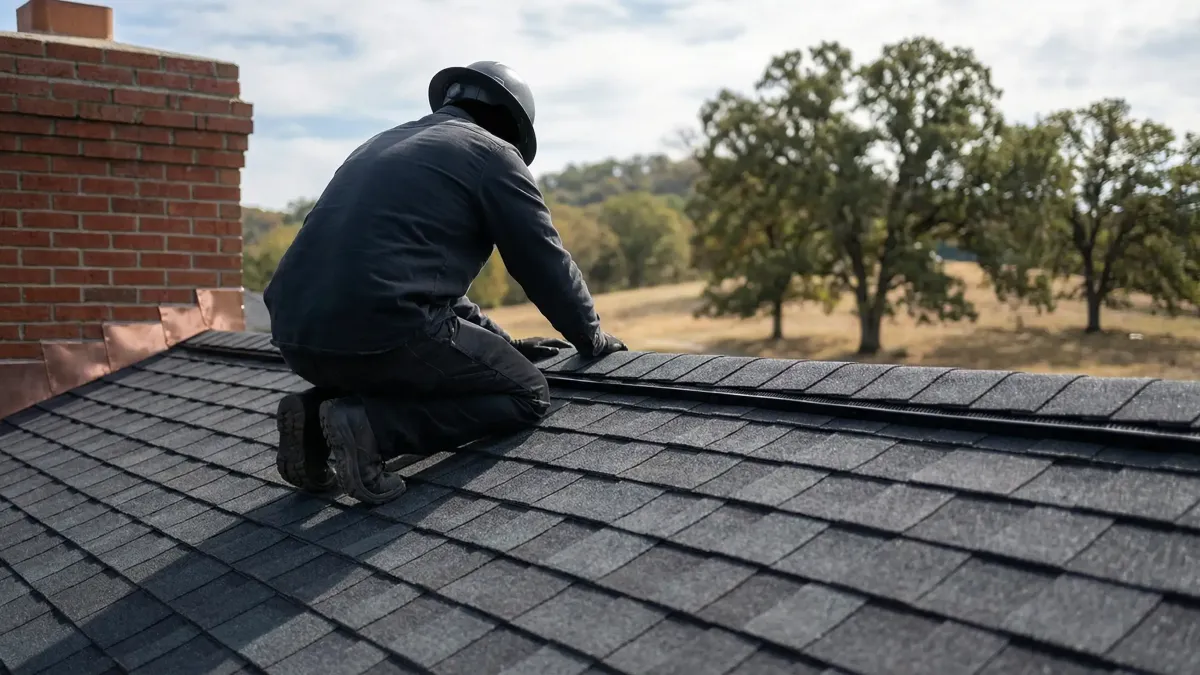
A Springfield roofing company running an effective Google Ads campaign should plan for $3,000–$6,000 per month as a baseline budget, with storm-event reserves of $1,500–$3,000 available to deploy during active hail and storm periods. At $9–$49 CPC for core roofing terms — rising higher during storm surges — a $4,000 monthly budget generates approximately 82–468 clicks in normal market conditions. At Springfield's estimated 7.5–10% conversion rate for roofing, that's 6–47 leads per month before lead quality filtering. The high-value nature of roofing projects — $8,000–$18,000 for full residential replacement in Springfield — makes even a $200 CPL highly profitable: one closed replacement job from a $4,000 monthly campaign generates 4x–4.5x ROAS on that single transaction.
Storm budget reserves change the economics. Contractors who maintain a separate storm-response budget of $1,500–$3,000 — held specifically for post-hail deployment — capture the highest-conversion roofing traffic of the year at dramatically better CPL than those bidding into the storm surge's peak CPC environment. Deploying $2,000 in the 3–7 day post-storm window (when storm chaser budgets thin and CPCs fall back) consistently produces 30–50 leads at CPL under $60 — the best return available in Springfield's entire home services PPC landscape during storm season.
Seasonality budget guidance: Allocate 40–50% of annual roofing budget to March–June (primary storm and inspection season), 20–25% to August–October (pre-winter assessment), 15–20% to November–February (replacement planning), and hold 10–15% as storm-event reserve throughout the year. This allocation captures Springfield's actual demand curve and avoids the costly mistake of spending heavily in winter months when search volume and conversion rates are lowest.
The highest-priority roofing keywords in Springfield fall into three distinct intent clusters, each requiring separate campaign treatment. Emergency and storm-damage terms — "storm damage roof repair Springfield MO," "hail damage roof inspection," "emergency roof tarping Springfield" — carry elevated CPCs during storm seasons and convert at 10–15% because the buyer's decision is already made: they have roof damage and need it fixed. These terms should run in a dedicated storm-response campaign with its own budget, distinct from year-round replacement campaigns. Replacement intent terms — "roof replacement Springfield MO," "new roof cost Greene County," "roofing contractor near me Springfield" — run at $12–$37 CPC in normal conditions and convert at 7–9%. Insurance claim terms — "roof insurance claim help Springfield," "hail damage insurance claim Missouri," "free roof inspection Springfield" — bridge both markets and are often the most cost-efficient high-intent terms available, because they qualify the buyer (insurance-motivated, serious intent) while maintaining CPCs slightly below pure emergency terms.
Match type discipline matters more in roofing than almost any other category. Broad match pulls roofing job listings, material suppliers, DIY instructional content, and commercial metal building searches — traffic that can consume 30% or more of a roofing campaign budget with zero conversion potential. The recommended structure: exact match for your top 10–15 proven-converting terms, phrase match for intent variants (e.g., "roofing company + Springfield/Greene County/Nixa/Republic"), and an aggressive negative keyword list blocking career, supply, DIY, and non-residential queries. Run discovery search term reports weekly during storm season — new irrelevant queries surface rapidly as storm search patterns shift, and catching them early prevents waste from compounding through the highest-spend period of the year.
Commercial roofing keywords deserve their own campaign: "commercial roofing Springfield MO," "flat roof repair Springfield," "commercial roof replacement Missouri" run at $18–$85 CPC with far less competition than residential terms. A single closed commercial project ($25,000–$150,000) from a modest $1,500/month commercial campaign produces exceptional ROAS that no residential campaign can match per-conversion.
How to read this Cost per click and monthly searches are measured with Google Keyword Planner (see above). Cost per lead, conversion rate, budget and leads are estimates compiled from public benchmarks such as WordStream, not measurements.
Sources WebFX 2025 Google Ads Cost Report + Springfield storm market research, Phase 2 industry deep dive
$590$990/month
1 platform · Google or MetaGoogle + Meta$790$1,290/month
1 platform · Google or MetaGoogle + Meta$1,140$1,940/month
1 platform · Google or MetaGoogle + MetaChatGPT Ads: a separate pilot, $250/month, added to a plan. See the pilot →

Matteo Braghetta founded MB Adv and runs its Google Ads accounts. He takes the first call with every new client, reads the accounts every week and writes the agency’s guides.
The other half of his job is measurement: GA4, Consent Mode and server-side tracking, so the platforms learn from real sales.
MB Adv is a Google Partner agency managing about $4.4M a year in ad spend for clients in the US, the UK and Europe.
Managed on numbers you can check.
Plans for the US