Start
$590$990/month
1 platform · Google or MetaGoogle + Meta- Ad spend
- up to $3,000
- New creativesmade by us
- Google + Meta only4 a month
 By Matteo Braghetta, Founder · Google Ads
Water damage in Springfield doesn't announce itself in advance. When a pipe bursts at 2 AM or a basement fills during a March storm surge, the homeowner searches immediately — and hires the first credible result they find. With only 515 BBB-listed restoration businesses in the metro (versus 2,500+ for HVAC), Springfield's water damage PPC market is one of the least saturated, highest-converting categories available to home service advertisers.
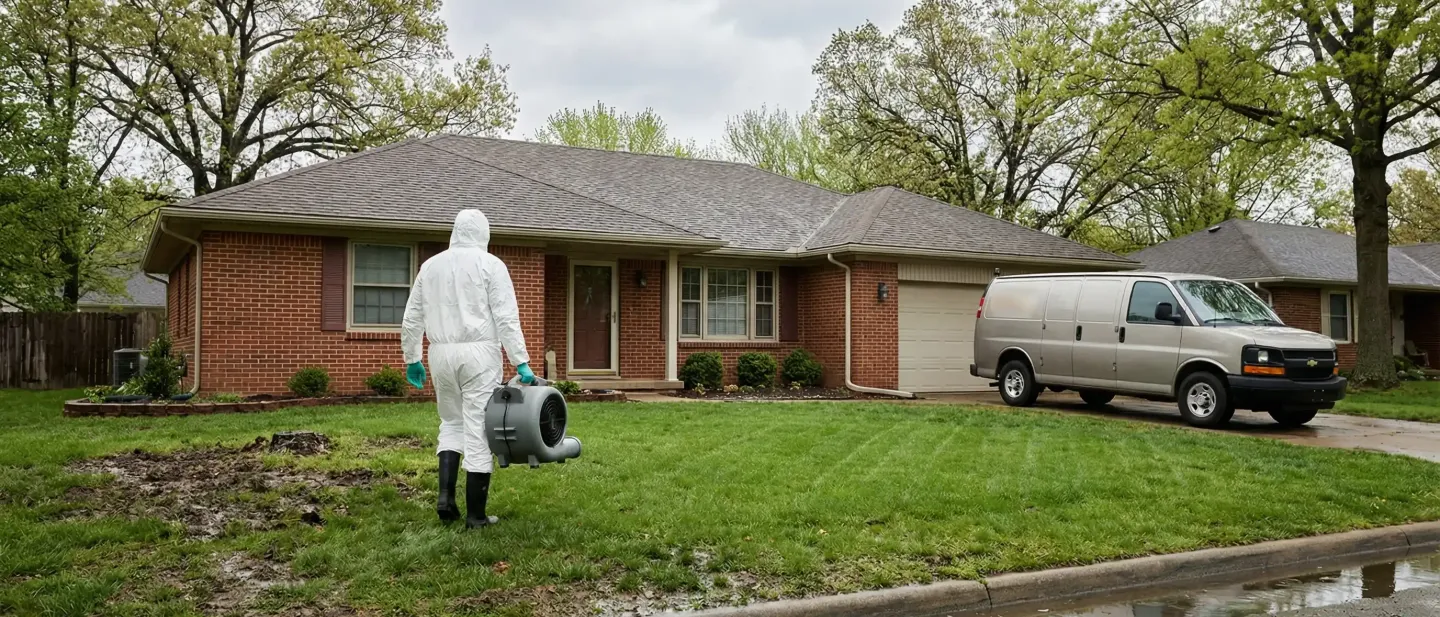
In the Springfield metro area, people search for water damage restoration services about 790 times a month on Google; a top-of-page click costs $5–$25, and demand peaks in September.
Search volumes for Springfield, MO alone are too thin to report; the figures are for the Springfield, MO,United States metro area.
Google Keyword Planner · Oct 2025 – Sep 2026
| Search | Monthly searches | Top-of-page CPC |
|---|---|---|
| mold remediation | 210 | $4–$34 |
| water damage restoration near me | 170 | — |
| mold removal | 110 | $3–$11 |
| water damage restoration | 70 | $11–$25 |
| mold removal near me | 30 | $5–$20 |
| restoration company | 30 | — |
| water damage repair | 20 | — |
| flood damage restoration | 10 | — |
| water removal | 10 | — |
| water extraction | 10 | — |
Source: Google Keyword Planner (Google Ads), Google Search, English, the Springfield metro area, Oct 2025 – Sep 2026. Volumes are Google's monthly averages; CPC is the top-of-page bid range, weighted by search volume. How we collect these figures.
Water damage restoration PPC in Springfield fails for a reason that's different from most home service categories: it's not a competition volume problem, it's a timing and intent problem. The market has fewer active advertisers (515 BBB-listed restoration businesses versus 2,569 for HVAC), but campaigns that aren't built for emergency-mode buyers leave money sitting on the table that the competition will take. The buyer's psychology in water damage is uniquely high-stakes — a basement flooding at 2 AM is not a browsing experience. It is an acute emergency with real financial consequences. The homeowner is anxious, decisive, and ready to act. Campaigns that don't communicate immediate availability, credibility, and local response time within the first two seconds of ad impression lose those conversions to whoever does.
The most common campaign failure is treating water damage restoration like a comparison-shopping category. Ads that lead with pricing, general service lists, or corporate brand statements miss the buyer's actual state of mind. An ad reading "Ozarks Water Damage — 24/7 Emergency Response, We're Available Now — Call" outperforms "Water Damage Restoration Services | Free Estimates | Licensed & Insured" consistently in emergency-intent categories because it matches the buyer's urgency. The technical term for this is ad relevance — but the practical reality is simpler: the homeowner has water coming in and needs someone to say they'll come right now.
Springfield's water damage market is anchored by two national franchise operators: SERVPRO (national franchise, strong Springfield territory) and ServiceMaster Clean (national, regional franchise). Both carry significant brand recognition from insurance industry relationships — when homeowners file a claim, their insurance adjuster often recommends a national restoration brand. Ozarks Fire and Water Restoration (A-, 1736 E Sunshine St, Springfield) represents the established local independent competing against national brand authority with local speed and accountability advantages.
The national brand recognition dynamic creates both a challenge and an opportunity. SERVPRO and ServiceMaster's insurance relationships mean they capture a portion of insurance-driven work outside the Google Ads auction. But for the significant volume of water damage events where homeowners search before calling their insurance company — or choose a contractor independently — local operators who dominate the Google Ads auction for emergency-intent searches capture that traffic first. Search engine results for "water damage Springfield MO" and "flooded basement near me" represent the moment before the insurance company gets involved — the moment local contractors can establish first contact and define the restoration scope.
Water damage queries pull significant non-buyer traffic that bleeds budgets without generating leads. The highest-waste query categories in Springfield's restoration market include:
Without active negative keyword management, waste rates in Springfield's water damage PPC market run 20–28% — slightly lower than roofing or HVAC due to fewer advertiser-level competitors, but significant enough to inflate CPL from a potential $65–$80 to $100–$130 on mismanaged campaigns. The return on aggressive negative keyword management in this category is among the highest of any home service vertical — because the core converting traffic is so high-intent, protecting that traffic from budget dilution directly improves CPL efficiency.
A second structural failure: single-geography campaigns that don't account for Springfield's regional draw. Ozarks-area residents in smaller communities (Ozark, Nixa, Republic, Willard, Battlefield) regularly search for restoration services in Springfield because local options are limited. Campaigns restricted to Springfield city limits miss 25–35% of the addressable search volume reachable from a Springfield-based restoration company operating a regional service area.
Water damage restoration PPC in Springfield requires an emergency-first architecture — the campaign structure, bidding logic, and ad copy should all reflect the reality that most converting searchers are in active crisis, not research mode. The secondary layer is an insurance claim and mold remediation campaign that targets the post-event restoration timeline (days to weeks after the initial emergency) where the job scope and revenue potential are highest.
Emergency Response Campaign (Primary): Call-only ads, 24/7 scheduling language, response-time framing. This is the core revenue driver. The single most important element: explicit availability language in every ad. "Available Now," "We're Coming Tonight," "24-Hour Emergency Response" are not marketing fluff in this category — they are the functional information the buyer needs to make a hiring decision in 30 seconds. Keywords for this campaign:
Insurance Restoration Campaign: The highest-revenue segment — full property restoration after insurance claim approval typically generates $5,000–$15,000 per project versus $1,500–$3,000 for emergency extraction only. This campaign targets homeowners who've already had the emergency and are now in the restoration decision phase:
Bidding Approach: Water damage restoration converts at 13–18% in Springfield — one of the highest CVR categories in home services PPC. This conversion rate supports aggressive target CPA bidding ($80–$100 CPA target) for accounts with sufficient conversion history (25+ conversions/month). The economic rationale: average restoration project value of $3,000–$8,000 makes a $100 CPL a 30–80x ROAS. Smart bidding tuned to this CPA target maximizes conversion volume while controlling per-lead cost. For newer accounts or those below the conversion threshold, Enhanced CPC with phrase/exact match preserves auction control during the account's learning phase.
Call Extension and Call-Only Ads: In no other home service category is phone call conversion more important than in water damage. A homeowner with a basement flooding at 11 PM is not filling out a contact form — they're dialing. Call-only ads during evening and overnight hours (5 PM–8 AM) ensure the campaign serves the right ad format to the highest-intent, highest-urgency search sessions. Call extensions on standard text ads during daytime hours maintain the option for phone contact while allowing form submissions for less time-sensitive inquiries. Track call conversions with a minimum 60-second call duration threshold — shorter calls are typically wrong-number or competitor research, not actual leads.
Regional Geo-Expansion: Extend campaigns to cover Springfield's regional draw — add bid modifiers for Ozark (+10%), Nixa (+10%), Republic (+10%), Willard (+8%), Battlefield (+8%), and Rogersville (+5%). These communities generate genuine emergency restoration searches with limited local options, giving a Springfield-based operator with regional capability meaningful additional lead volume at CPCs 15–25% below Springfield core pricing.
Springfield's water damage market sits at the intersection of three structural trends that, taken together, make it one of the most compelling PPC investment opportunities in the city's home service landscape. The combination of below-average competition density, above-average CVR, and a climate pattern that generates recurring demand creates a market where well-managed PPC consistently delivers among the strongest ROAS of any home service category.
Springfield's climate creates recurring water damage events on a predictable seasonal calendar. Spring storm surges (March–May) drive basement flooding from rain accumulation and rising water tables in Greene County's rolling terrain. Winter cold snaps — particularly the Canadian air mass events that regularly push Springfield temperatures into the single digits — create pipe freeze risk throughout the residential housing stock, with older homes (pre-1990 construction, common in central Springfield neighborhoods) facing galvanized pipe deterioration that accelerates freeze-burst risk. Summer thunderstorm activity (June–August) drives roof intrusion and window well flooding events. There is no true off-season for water damage restoration in Springfield — only seasonal pattern shifts that should inform campaign budget allocation rather than driving budget reductions.
The Missouri State University rental property ecosystem creates a parallel demand channel. Landlords managing off-campus rental housing — hundreds of older homes in the residential neighborhoods surrounding the MSU campus — face water damage events that require immediate remediation to protect rental income and avoid habitability violations. A Springfield restoration company with commercial and multi-unit landlord campaigns ("rental property water damage Springfield," "property management flood cleanup") reaches a client segment with recurring multi-unit service needs and lower price sensitivity than residential homeowners.
The 515 BBB-listed restoration businesses in Springfield represents approximately one-fifth the competition count of HVAC (2,569) and one-seventh of roofing (3,652). This density difference directly translates to lower CPCs and more accessible auction share. A roofing advertiser in Springfield must outbid 3,600+ potential competitors to win top-of-page placement. A water damage restoration advertiser operates against a field roughly 80% smaller — with proportionally less auction pressure during normal market conditions.
The long-term competitive dynamic in Springfield's water damage market will shift as national brands increase their digital advertising investment — SERVPRO and ServiceMaster continue to scale Google Ads spending nationally. Local operators who establish account history, quality scores, and landing page optimization now build structural advantages that new-to-market advertisers (including national brands entering or expanding in specific markets) cannot acquire quickly. The time to build that advantage is before increased competition drives CPC upward, not after.
Regional growth trends add to the case: Springfield's 4.4% GDP growth, 11%+ metro population increase, and Christian County's 20%+ residential expansion mean a growing property base experiencing water damage events. More owner-occupied units across Greene County and surrounding communities means more emergency restoration searches every year — a TAM that grows organically with the region's residential development.
Managing water damage restoration PPC requires building for the buyer who is in crisis — not the buyer who is browsing. The campaign architecture, the ad copy, the landing page, and the conversion tracking all need to reflect the reality that a significant portion of water damage conversions happen via phone call at nonstandard hours from homeowners who are stressed and need confidence immediately.
At MB Adv Agency, we build water damage restoration campaigns with emergency-first architecture: call-only ads during evening and overnight hours, urgency-framed copy that leads with availability rather than features, and regional geo-expansion strategies that capture Springfield's broader service area without overbidding in zip codes where response time claims can't be honored. Our experience with the Ozarks home services market means campaign structure reflects Springfield's actual demand pattern, including the seasonal calendar of spring flood surges and winter pipe-freeze risk periods.
Our Google Ads management service includes full campaign architecture, call tracking setup, and monthly CPL and ROAS reporting. Management is a fixed monthly fee set by your ad spend, with the tracking set up first: see the plans and prices. An audit will benchmark your current campaign performance against Springfield market potential.
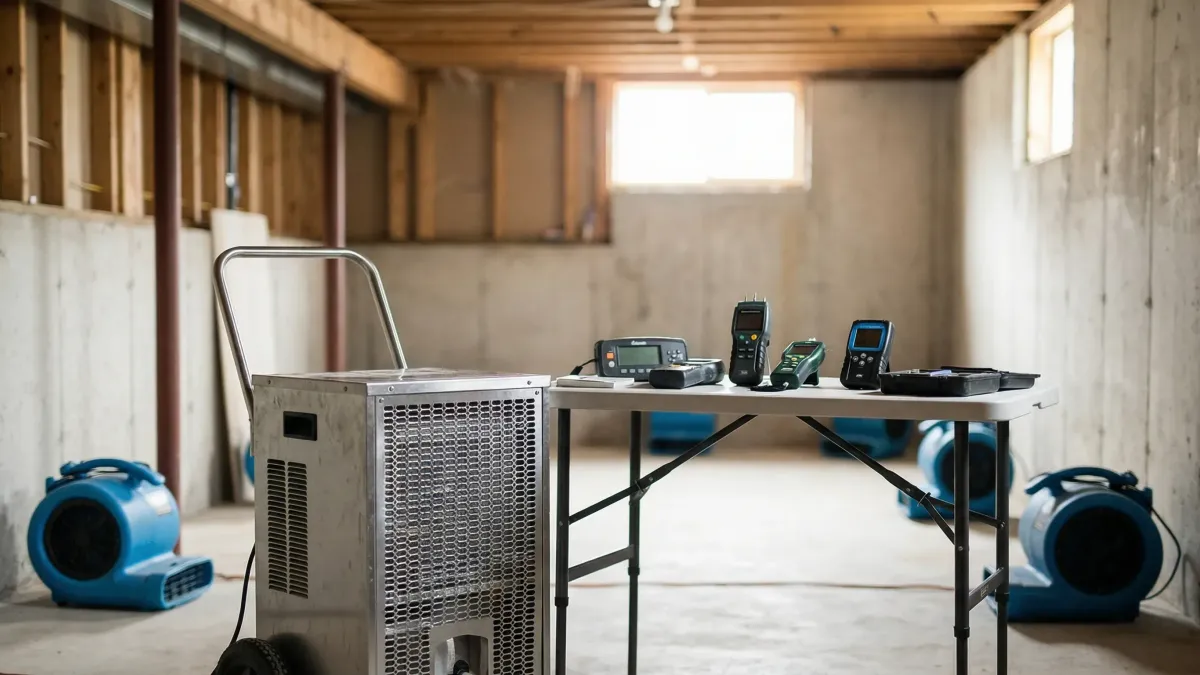
A Springfield water damage restoration company running an effective Google Ads campaign should budget $2,000–$3,500 per month as a starting point, with seasonal increases to $4,000–$5,000 during high-risk periods (March–May spring storm season, December–February pipe freeze risk). At $11–$25 CPC for core emergency restoration terms in Springfield, at a typical click of about $18, a $2,500 monthly budget generates approximately 140 clicks. At the market's 13–18% CVR, that's 18–25 leads per month — exceptional volume for a home service category. CPL in a well-managed Springfield water damage campaign runs $55–$100, producing 30–80x ROAS against average restoration project values of $2,500–$8,000. The combination of relatively low CPCs (versus HVAC or roofing), high CVR (emergency-intent category), and high average job value makes water damage restoration one of the best ROAS-per-dollar investments available in Springfield's home service PPC landscape.
Budget allocation across the service calendar: Spring (March–May) is the single highest-priority period — storm surges, rain accumulation, and flooding events generate the densest concentration of high-intent emergency searches. Allocate 30–35% of annual budget here. Winter (December–February) captures pipe-freeze emergency volume — allocate 25–30%. Summer (June–August) covers storm intrusion and roof leak events — 20–25%. Fall (September–November) is the lightest demand period — maintain baseline presence at 10–15% of annual spend rather than reducing to zero.
Avoid the common budget mistake: Restoration campaigns that run flat monthly budgets without seasonal amplification miss the concentrated demand windows where emergency-intent CVR is highest. A $3,000/month flat budget generates consistently mediocre results. A $2,000/month base budget with a reserved $1,000–$1,500 storm-period flex allocation deployed during high-probability weather windows generates 40–60% better lead volume at comparable CPL — because emergency-intent searches during actual emergencies convert at 15–18%, versus 8–11% during normal market conditions.
Water damage restoration PPC operates on fundamentally different buyer psychology than any other home service category, and understanding this distinction determines whether campaigns perform at the market's potential or produce mediocre results. The core difference: water damage is a non-deferrable emergency purchase made by a buyer in active crisis. A homeowner shopping for a new HVAC system or planning a roof replacement has days or weeks to research, compare, and decide. A homeowner with a basement flooding at midnight has 30 seconds to pick a contractor before the damage gets worse. This compressed decision window means ad relevance — specifically, ads that immediately communicate availability and local response capability — drives conversion rates of 13–18% that no other home service category in Springfield approaches.
The insurance dimension distinguishes water damage from nearly every other category. Mold remediation, structural drying, content restoration, and rebuild services — the full scope of water damage restoration — are typically covered by homeowners insurance, shifting the buyer from price-sensitive to service-quality-motivated. Restoration contractors who communicate insurance claim expertise ("We handle insurance claims directly," "Documented restoration for your adjuster") in their ads and landing pages consistently capture the highest-value restoration leads: those who are already planning to file a claim and want a contractor who can navigate the process. Average insurance-driven restoration projects run $5,000–$15,000 — 3–5x the average emergency extraction-only job.
Operational implications for PPC: Call tracking is mandatory (most conversions are phone calls, not form submissions). Call-only ads outperform standard text ads during evening and overnight hours when the highest-urgency searches occur. Landing pages must be mobile-optimized with a click-to-call button above the fold — a water damage lead who has to scroll to find a phone number will call a competitor. Response time is a conversion variable: contractors who answer calls within 3 rings and can quote a response time convert at 2–3x the rate of those who route to voicemail or quote vague timelines.
How to read this Cost per click and monthly searches are measured with Google Keyword Planner (see above). Cost per lead, conversion rate, budget and leads are estimates compiled from public benchmarks such as WordStream, not measurements.
Sources Industry benchmarks + Springfield market research, Phase 2 industry deep dive
$590$990/month
1 platform · Google or MetaGoogle + Meta$790$1,290/month
1 platform · Google or MetaGoogle + Meta$1,140$1,940/month
1 platform · Google or MetaGoogle + MetaChatGPT Ads: a separate pilot, $250/month, added to a plan. See the pilot →

Matteo Braghetta founded MB Adv and runs its Google Ads accounts. He takes the first call with every new client, reads the accounts every week and writes the agency’s guides.
The other half of his job is measurement: GA4, Consent Mode and server-side tracking, so the platforms learn from real sales.
MB Adv is a Google Partner agency managing about $4.4M a year in ad spend for clients in the US, the UK and Europe.
Managed on numbers you can check.
Plans for the US