Senior Services PPC Duluth, MN
Duluth's 15,068 seniors — 16.72% of the city's population — are supported by a home care market of 22 active agencies, yet most providers rely on Essentia Health and Aspirus St. Luke's referral networks rather than paid search. That referral dependence leaves Google Ads largely unclaimed: families searching "home care duluth mn" and "assisted living duluth" at 11pm after a parent's fall face minimal competition from well-structured digital advertisers, creating one of the lowest-cost, highest-intent lead opportunities in the Twin Ports care market. <!-- stats-article-link --> <p><em>See how this city's Senior Services PPC costs compare nationally in our <a href="https://www.mbadv.agency/ppc-industry-statistics/senior-services-ppc-statistics">Senior Services PPC Statistics</a> report, featuring data from 40+ US cities.</em></p>
Why Do Senior Care PPC Campaigns Fail in Duluth?
Senior services PPC in Duluth fails for a reason that has nothing to do with ad copy or bidding: most providers don't run PPC campaigns at all. The dominant acquisition model in Duluth's home care market is hospital referrals — discharge planners at Essentia Health and Aspirus St. Luke's recommend agencies they know, and those referrals sustain many providers without any digital presence. The problem with this model is its fragility: referral volume depends on relationships with specific social workers and discharge staff, and those relationships change when staff turn over or hospital policies shift. Agencies that don't complement referral networks with paid search have no lead generation infrastructure when referrals slow.
The Competitor Landscape: Referral-Dependent and Digitally Underinvested
The active competitors in Duluth's home care market span a range of service levels — but share a common digital marketing gap. Village Caregiving Duluth provides non-medical in-home support for veterans, seniors, and people with disabilities — daily tasks, companionship, and transportation. Touching Hearts at Home serves Duluth, Brook Park, and Sturgeon Lake with 24/7 availability for non-medical care. Benedictine Home Health provides skilled and medical home care across Duluth, Proctor, Hermantown, Cloquet, and Two Harbors. Interim HealthCare Duluth brings national franchise infrastructure with skilled nursing and personal care capabilities. Cornerstone Caregiving rates among the top three agencies near Duluth in consumer directories.
None of these competitors consistently dominates paid search for the core decision-stage queries families use when making care decisions: "home care for elderly parent duluth," "in-home senior care duluth mn," or "assisted living options duluth." The search volume on these terms is steady year-round — with a pronounced fall and early winter spike — and the advertiser competition is thin. Blended CPCs for in-home care keywords run $4–$12, rising to $10–$25 on assisted living and memory care terms. These rates are exceptionally low relative to the average client revenue: a single in-home care client generates $2,400–$4,500 per month, and a resident placed in assisted living represents $3,500–$7,500 per month in recurring revenue.
The Seasonal Search Pattern Most Agencies Miss
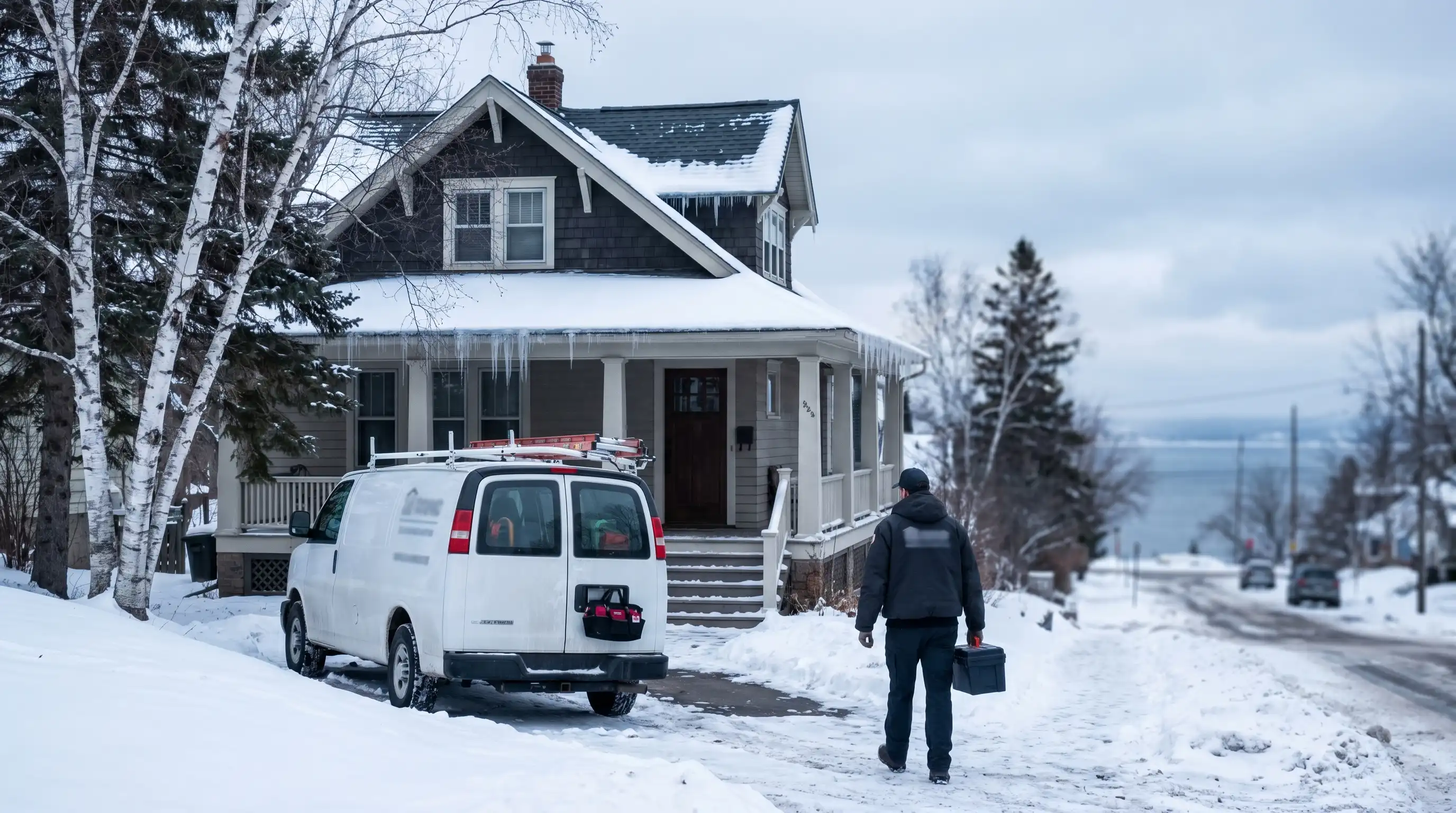
Duluth's extreme winters create a family decision cycle that most providers don't structure campaigns around. When an adult child visits their parent in Duluth for Thanksgiving and discovers that the parent is struggling with winter safety — navigating icy steps, managing medications, maintaining heat — they don't call the discharge planner at Essentia. They search on their phone. Peak family care searches in this market arrive in September through December, driven by adult children who are either planning ahead for winter or responding to a recent incident that made the parent's vulnerability visible.
Campaigns that run flat spend year-round miss the September–December urgency window — the highest-conversion period in home care PPC — and waste budget in late spring and summer when search intent is lower. The second structural miss: most providers run their ads only during business hours. Families researching care options do so in the evenings — often after a distressing phone call with a parent. A campaign scheduled to stop at 5pm misses the exact window when family decision-makers are on Google, emotionally engaged, and ready to contact a provider.
Old-age dependency in Duluth — 24.4 seniors per 100 working-age adults — indicates that this market is structurally demand-rich. Remote northeastern Minnesota's limited care infrastructure extends Duluth providers' effective catchment well into St. Louis County. Families in Biwabik, Virginia, and Hibbing frequently seek Duluth-based providers when local options don't meet their needs — a geographic expansion that most provider PPC campaigns never target.
Senior Care PPC Strategies That Win in Duluth's Market
The winning account structure for a Duluth senior care provider runs three campaign tracks that align with the three distinct conversion triggers families use when researching care. Each trigger has its own intent level, decision timeline, and conversion action — and collapsing all senior care searches into a single campaign produces mediocre CPL across every segment instead of strong performance in each.
Campaign Track 1: Winter Safety and Fall Prevention (September–December)
The fall campaign targets adult children — often out-of-state — who are planning ahead for a parent's winter safety before the first significant snowfall. This is the highest-intent, highest-urgency window in home care advertising in Duluth, and the campaign that generates the fastest close rates. Ad copy leads with Duluth's winter reality: "Is Your Parent Safe This Winter in Duluth? Free In-Home Assessment." The specificity of Duluth's winter risk — icy hillside streets, extreme wind chills, furnace failures at -16°F — creates genuine urgency that generic senior care ad copy never achieves.
- Winter safety keywords: "home care for elderly parent duluth," "senior care help winter duluth," "in-home care duluth winter" — CPC $4–$10
- Fall prevention keywords: "senior fall prevention duluth," "fall prevention home care duluth mn," "elderly care icy conditions duluth" — CPC $4–$8
- Family decision-maker keywords: "home care for aging parent duluth," "help for elderly mom duluth mn," "senior care options duluth minnesota" — CPC $5–$12
- Geographic expansion: Separate campaigns for "home care virginia mn," "senior care hibbing mn," "in-home care iron range" — lower CPCs, no local competitors
Campaign Track 2: Post-Hospital Discharge and Skilled Care Bridge
Essentia Health and Aspirus St. Luke's discharge hundreds of patients monthly — many of whom need short-term skilled nursing or transitional support at home before they can safely manage independently. These searchers are in "find care now" mode: a family member is in the hospital, discharge is happening in 24–48 hours, and they are searching for an agency that can begin services immediately. Close rates on these leads exceed 70% — the highest in the home care category — because the decision has already been made by the clinical situation, not the family's preference for comparison shopping.
Ad copy for this campaign must communicate immediacy and clinical credibility: "Skilled Home Care After Essentia Discharge — Same-Day Service Available in Duluth." Landing pages must prominently address insurance and Medicare coverage, since many post-hospital patients have skilled care benefits they don't know apply. Average CPL for post-discharge leads runs $100–$200 — justified by the immediate start, high close rate, and potential for long-term ongoing care enrollment.
Campaign Track 3: Assisted Living and Memory Care Research
Families researching assisted living and memory care are on a longer consideration cycle — typically 30–90 days from first search to placement decision. The CPL is higher ($250–$431) and conversion velocity is slower, but the revenue per placement is correspondingly larger: a single assisted living resident generates $42,000–$90,000 in annual revenue. Retargeting is essential in this campaign: families who visited the assisted living landing page but didn't call must be followed with reminder ads ("Still searching for memory care in Duluth? We can help.") throughout the consideration cycle at CPM rates that are far cheaper than new-click acquisition.
- Assisted living keywords: "assisted living duluth mn," "assisted living facilities duluth," "senior living duluth mn" — CPC $10–$25
- Memory care keywords: "memory care duluth mn," "dementia care duluth," "alzheimer's care duluth mn" — CPC $12–$22
Google Partner Agency
We're a certified Google Partner Agency, which means we don’t guess — we optimize withGoogle’s full toolkit and insider support.
Your campaigns get pro-level execution, backed by real expertise (not theory).

What Market Trends Should Duluth Senior Care Providers Know?
Three structural dynamics in Duluth's senior care market create PPC opportunities that are invisible in national benchmark reports — and that most local providers haven't built campaigns to capture.
Essentia + Aspirus Expansion Creates a Referral Corridor — and a Digital Opportunity
Duluth's two dominant healthcare systems — Essentia Health and Aspirus St. Luke's — have collectively invested over $1 billion in regional expansion, with senior care as a central focus. This expansion increases hospital capacity and discharge volume, which means more post-acute patients needing home care following hospitalization. It also means the referral corridor Duluth providers depend on is growing — but so is the supply of providers seeking a share of those referrals. Agencies that add PPC as a parallel acquisition channel reduce their dependency on referral relationships that can shift with staff changes or hospital policy updates.
Key insight: The digital gap is real and current. "Home care duluth mn" — the primary conversion-intent query for this market — is being searched consistently by families making active care decisions, with minimal advertiser competition. The average industry CPL for in-home care runs $75–$200. At a monthly client value of $2,400–$4,500, a CPL of $200 has a 12:1 return in the first month alone — before the 12–18 month average client retention is factored in. Providers running PPC today operate with no competitive interference from the market's largest players, who remain referral-dependent.
Duluth's Winter Creates a Unique Urgency Window
In most U.S. markets, home care inquiry volume distributes relatively evenly across quarters. In Duluth, the September–December window drives 40–50% of annual inquiry volume as adult children respond to the combination of Thanksgiving family visits, the approaching winter isolation risk, and the immediate danger of a parent navigating ice and extreme cold without support. This concentrated window means a provider who runs heavy ad spend from September through December captures a disproportionate share of annual new clients — but only if the campaign was live and optimized before the intent surge arrived.
The second Duluth-specific dynamic is the spring thaw recovery cycle. Seniors who survived winter without formal care often experience a functional decline becoming visible in March and April — after months of reduced mobility, social isolation, and deferred medical appointments. Spring inquiry volume picks up in April and May as families who visited for Easter see the functional decline that winter masked. Campaigns running from April through June target this secondary intent peak at lower competitive CPCs than the fall window.
Seasonal budget allocation for Duluth senior care PPC:
- September–December: $2,500–$3,500/month — peak family decision season; winter safety campaigns and post-discharge campaigns at full budget
- January–March: $1,500–$2,000/month — winter isolation and maintenance; memory care and assisted living campaigns continue
- April–June: $2,000–$2,500/month — spring thaw recovery inquiry spike; scale back up
- July–August: $1,000–$1,500/month — lower intent summer window; brand visibility maintenance
Why Duluth Senior Care Providers Need Local PPC Expertise
Senior care PPC in Duluth is not a keyword-volume game — it's a timing game. The September–December urgency window, the post-hospital discharge segment, and the regional catchment extending into the Iron Range are all opportunities that require campaign structures built from local market knowledge, not national template accounts. A provider running a generic "home care near me" campaign loses the winter urgency messaging, the regional geographic targeting, and the post-discharge timing that convert Duluth-specific searchers into clients.
MB Adv Agency builds lead generation PPC for high-value service businesses in markets with exactly this type of concentrated seasonal demand. We structure winter safety campaigns to front-load September spend before the urgency window peaks, post-discharge campaigns to capture Essentia and Aspirus patients at the moment of family search, and Iron Range geographic expansions that extend your catchment with minimal incremental competition. Our clients in comparable senior care markets reach CPL under $150 on in-home care campaigns within the first 60 days.
Visit our Duluth PPC services page or review our management pricing to discuss building a senior care campaign timed to Duluth's family decision cycle.

Frequently Asked Questions
How Much Does Senior Care PPC Advertising Cost in Duluth, MN?
Senior care PPC in Duluth costs between $1,500 and $3,500 per month in ad spend for a campaign covering in-home care, post-discharge recovery, and regional geographic expansion. In-home care keywords run $4–$12 CPC — exceptionally low for a service category where a single client generates $2,400–$4,500 in monthly recurring revenue. Assisted living and memory care keywords run higher at $10–$25 CPC, reflecting the higher placement value and longer consideration cycle. Average cost per lead from in-home care campaigns runs $75–$200, while assisted living placements run $250–$431 CPL — justified by the $42,000–$90,000 in annual revenue per placed resident. Duluth's thin advertiser competition in this category means these CPL benchmarks are achievable today, but the window is limited: as providers recognize the opportunity, competition and CPCs will rise. The current market conditions — high intent, low competition, low CPCs — represent an acquisition window that won't stay this wide indefinitely.
The most efficient spend allocation: concentrate 60–70% of annual budget in the September–December window when family decision-making peaks in response to winter urgency. The remaining budget distributes across the spring recovery period (April–June) and a maintenance layer for year-round post-discharge and memory care keyword coverage. A flat monthly budget ignores Duluth's seasonal demand pattern and produces consistent mediocre performance instead of peak-season dominance.
For providers serving the Iron Range — Hibbing, Virginia, Eveleth, Chisholm — geographic campaign expansion adds incremental lead volume at CPCs 30–50% lower than Duluth proper, because regional competitor presence drops sharply outside the city limits. A $500/month Iron Range campaign layered onto the core Duluth account often produces 8–12 additional leads per month at minimal incremental cost.
How Long Before Senior Care PPC Campaigns Generate Leads in Duluth?
A senior care PPC campaign in Duluth generates its first leads within 48–96 hours of going live, provided it targets in-home care and winter safety keywords with a landing page built around the family decision-maker's primary question: "What does this cost and how quickly can care begin?" Post-discharge campaigns targeting Essentia and Aspirus discharge searchers produce leads within the first 24–48 hours when launched during an active discharge period — these are among the fastest-converting leads in the home care category because the decision has already been forced by the clinical situation. Assisted living campaigns generate leads more slowly — the 30–90 day consideration cycle means initial traffic often doesn't convert until the second or third retargeting contact — but close rates, once achieved, are near-certain given the family's investment in the research process. Running retargeting campaigns for assisted living searchers at $0.50–$1.50 CPM keeps the provider visible throughout the consideration cycle without requiring the same budget commitment as acquiring new search clicks each week.
The September launch timing is the single most important factor in Duluth senior care PPC performance. Campaigns that go live in late August — before the Thanksgiving family visit cycle and before the first significant cold event — build Quality Scores, optimize ad scheduling, and accumulate conversion data before the highest-intent window of the year arrives in October and November. Campaigns launched in October compete in a priced-up market; campaigns launched in August own September's lower-CPC lead flow before fall competition intensifies.
Long-term benchmarks at 90+ days: blended CPL under $150 for in-home care campaigns, post-discharge CPL under $200, and memory care campaigns running $300–$400 CPL — all well within the ROI threshold for services generating $2,400–$7,500 in monthly recurring client revenue. Quality Score improvements over the first 90 days reduce CPL by an average of 15–25% as the algorithm learns your highest-converting search patterns and time windows.