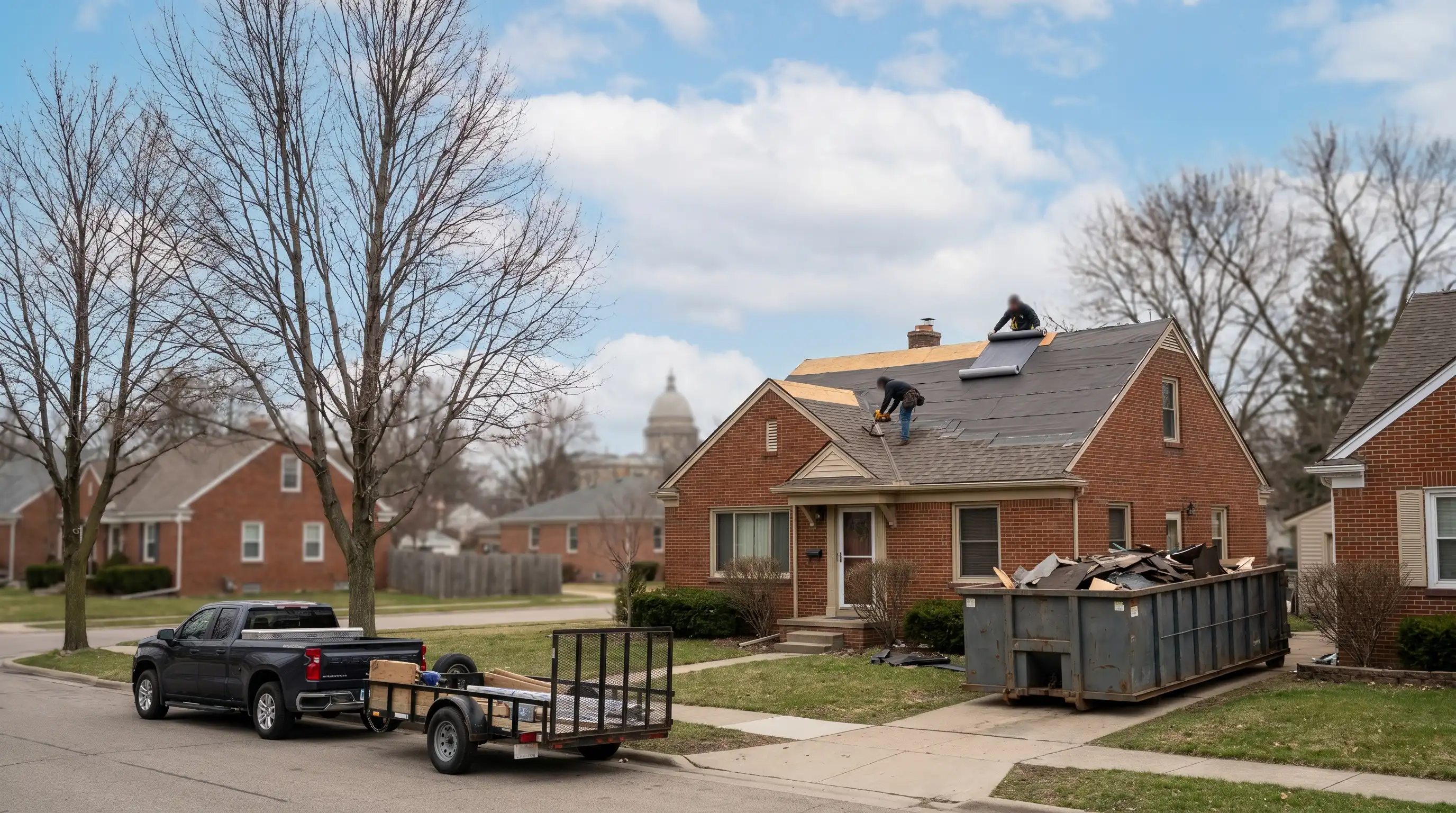
Senior Services PPC Lansing, MI
Lansing's 14,710 seniors today are just the leading edge of a 25-year demographic surge — the metro's projections add 30,000 more residents aged 65+ by 2050, making senior services one of the highest-growth PPC categories in mid-Michigan. Michigan's statewide home care worker shortage means agencies that can credibly advertise availability are capturing clients that competitors with better websites but no ad presence simply miss. <!-- stats-article-link --> <p><em>See how this city's Senior Services PPC costs compare nationally in our <a href="https://www.mbadv.agency/ppc-industry-statistics/senior-services-ppc-statistics">Senior Services PPC Statistics</a> report, featuring data from 40+ US cities.</em></p>
Why Do Senior Services PPC Campaigns Struggle in Lansing, MI?
Senior services PPC looks deceptively straightforward — low CPCs, moderate competition, persistent year-round demand. But most campaigns targeting Lansing's senior care market underperform because they're built for the wrong customer. The person searching for senior care is almost never the senior. It's an adult child, often living in another city, making an emotional decision under time pressure about a parent's safety. Campaigns built around clinical service descriptions lose to campaigns built around the family's actual emotional trigger — and most local senior care agencies write ad copy for the former.
National Franchise Brands Own Brand-Level Search
The first structural challenge is the franchise dominance problem. Comfort Keepers (Lansing office, serves East Lansing, Okemos, Grand Ledge), Visiting Angels Lansing, and Right at Home East Lansing are all national franchise operators with national brand recognition and established digital presences. These brands carry Google review volume, national landing page infrastructure, and marketing budgets that dwarf typical local agency spend. They dominate branded search ("Comfort Keepers Lansing") and appear prominently on generic service queries. For an independent Lansing home care agency, competing head-to-head on "senior home care Lansing" against three national franchises requires more than outbidding — it requires out-positioning on specificity, availability, and credibility signals that national brands structurally can't replicate.
The second challenge is the long consideration cycle. Families researching senior care don't convert on first touch — they research for 2–6 weeks before placing a parent with an agency. A campaign that generates initial site visitors but doesn't remarket to them loses the majority of its potential clients between first intent and final decision. Most Lansing senior care agencies don't run remarketing at all — they run search campaigns that stop touching a prospect the moment they leave the website. This gap is directly measurable: agencies with remarketing campaigns consistently convert initial visitors to clients at 2–3x the rate of search-only campaigns in this category.
Call Tracking Is Essential in a Phone-First Category
Senior care decisions happen over the phone. Form fills are a minority of conversions in this category — families researching care for an aging parent want to talk to a person, not submit a form. Agencies without call tracking have no visibility into which campaigns generate calls, which keywords drive consultations, or how fast staff are responding to inbound inquiries. Without this data, campaigns optimize toward website visits rather than actual client inquiries, and cost-per-lead calculations are wrong by a factor of 2–3x. Campaigns that properly track calls consistently show CPLs of $50–$200 for home care inquiries — significantly more efficient than the $431 national assisted living benchmark, but only measurable when call tracking is in place.
The TCOA competitive dynamic adds a fourth challenge specific to Lansing. The Tri-County Office on Aging serves Ingham, Eaton, and Clinton Counties with publicly funded referrals and case management for lower-income seniors. Families who discover TCOA's services may decline private care in favor of subsidized referrals. PPC campaigns that compete on quality, immediate availability, and staff qualifications — rather than price — convert better against the TCOA comparison set than campaigns leading with cost.
Winning Senior Services PPC Strategies for Lansing Agencies
Senior care campaigns in Lansing win by targeting the adult child decision-maker — not the senior — with copy that speaks to urgency, trust, and caregiver quality. The campaigns that book clients consistently separate care-type keyword clusters, run remarketing as a standard campaign layer, and lead with availability rather than capability.
Keyword Targeting by Decision-Maker Intent
The adult child searching for a parent's care uses different language than a senior searching for their own services. Effective senior care campaigns target both user types with distinct ad groups:
- Adult child — urgency triggers: "senior home care Lansing MI," "in-home care for elderly parents Lansing," "caregiver for aging parent Lansing," "help for elderly parent Lansing Michigan" — CPCs $4–$10; highest emotional urgency; lead with immediate availability
- Condition-specific: "Alzheimer's care at home Lansing," "memory care home services Lansing," "dementia caregiver Lansing MI," "Parkinson's home care Lansing" — CPCs $6–$14; high-intent; families already past the consideration stage
- Service-level: "companion care Lansing MI," "personal care aide Lansing," "home health aide Lansing Michigan," "senior transportation Lansing" — CPCs $4–$8; broader funnel; good for building awareness among consideration-stage families
- Facility and placement: "assisted living Lansing MI," "senior living East Lansing," "memory care facility Lansing" — CPCs $8–$18; different product (placement vs. in-home care) but often searched by families evaluating all options
Remarketing Structure for the 2-6 Week Decision Cycle
Senior care's consideration window requires a remarketing layer running parallel to search campaigns. The structure:
- Site visitor remarketing (days 1–7): Display ads showing specific service types visited (companion care, Alzheimer's care); reinforce agency credibility with staff credentials and review language; CPCs $0.50–$1.50
- Extended consideration (days 8–42): Search remarketing lists (RLSAs) that increase bids on returning visitors searching for senior care terms; these visitors convert at 3–5x higher rates than cold traffic; worth 50–100% bid adjustments
- Testimonial and social proof ads: Remarketing creative featuring real client stories (privacy-compliant), caregiver credentials, or emergency availability messaging; addresses the "can I trust this agency" question that stops conversions
Ad copy should lead with availability and response time, not service lists. "Caregivers available this week in Lansing" outperforms "professional senior home care services" in this market because it addresses the family's most immediate anxiety — whether help can actually start soon. Michigan's statewide home care worker shortage means genuine availability is a competitive differentiator, not a generic claim.
Google Partner Agency
We're a certified Google Partner Agency, which means we don’t guess — we optimize withGoogle’s full toolkit and insider support.
Your campaigns get pro-level execution, backed by real expertise (not theory).

What Market Trends Should Lansing Senior Care Businesses Know?
Lansing's senior services market sits at the intersection of three structural trends that are reshaping demand in ways that most current providers haven't fully priced into their marketing strategies. Understanding them surfaces PPC opportunities that operate below the radar of the national franchise campaigns.
Michigan's Home Care Worker Shortage Creates an Advertising Opportunity
Michigan's 2026 eldercare labor report flags a structural shortage of qualified home care workers statewide — agencies that can staff care promptly are genuinely differentiated from agencies with wait lists. This creates an unusual market condition: PPC demand exceeds supply capacity for some agencies, but the agencies with available staff aren't advertising the fact effectively. A campaign that leads with "caregivers available this week in Lansing — no waitlist" converts families who have already been turned away by competitors. The shortage also elevates caregiver quality as a decision factor: families who've had bad experiences with undertrained caregivers respond strongly to copy emphasizing background checks, training credentials, and ongoing supervision. These are claims that national franchises make generically; local agencies that make them specifically (named certifications, state licensing references) earn a credibility edge in the Lansing market.
Lansing's 25-Year Senior Boom Is Front-Loading Demand Now
The Lansing metro's projection of 30,000 additional seniors by 2050 sounds like a long-term trend — but the aging cohort that produces that projection is already in their 50s and 60s in Lansing today. The families of the current 14,710 Lansing seniors aged 65+ are actively making care decisions now. Ingham County's old-age dependency ratio of 19.2 per 100 working-age adults — driven by a median housing stock built in 1954 that concentrates older homeowners in Lansing's established neighborhoods — means the senior care market is already at scale. The 25-year demographic curve isn't future demand; it's current demand that's still growing. Agencies that establish PPC presence and Google review velocity now will own brand recognition when the cohort peaks — and have a built-in SEO and campaign maturity advantage over competitors who enter the market later.
Key insight: The September–November window is Lansing's highest-intent senior care period. Adult children who visited parents during summer see cognitive or physical decline they hadn't noticed previously — and begin arranging care urgently in the fall. Post-January sees a secondary surge as families who assessed parents at Christmas begin implementation. Running higher-budget campaigns in September–November and January–February aligned to these family decision windows — rather than evenly distributing budget year-round — captures the periods with highest signing intent at no additional CPC cost.
Why Lansing Senior Care Agencies Win with Local PPC Expertise
Senior services PPC in Lansing requires campaigns built for the adult child decision-maker, tuned to Michigan's specific supply constraints, and structured with remarketing that captures the 2–6 week consideration cycle that defines how Lansing families choose care. Generic senior care campaigns built for large metro markets miss all three of these dynamics.
At MB Adv Agency, we build senior care campaigns for mid-size markets where the math works — low CPCs, persistent demand, and a franchise-heavy competitive set that can be outpositioning on specificity and availability. Our campaigns include search, remarketing, call tracking integration, and monthly reporting that maps PPC spend to actual client consultations — not just website visits. View our pricing tiers to understand investment levels appropriate for Lansing's market.
We handle keyword architecture by decision-maker intent, ad copy that counters franchise brand recall, remarketing campaign setup, call tracking integration, and monthly reporting mapped to actual client consultations. Visit our Lansing PPC services page to see how we approach this market, or explore our full service offering. The family deciding on care for a Lansing parent is searching right now — the agency that appears first with credible availability messaging books the consultation.
Frequently Asked Questions
How Much Does Senior Services PPC Advertising Cost in Lansing, MI?
Senior services PPC in Lansing, MI typically runs $1,500–$3,500 per month for a well-structured campaign covering in-home care, companion care, and condition-specific keyword groups. Average CPCs in the senior care category run $4–$14 — among the lowest in Lansing's PPC-viable service industries — while CPLs for home care inquiries range from $50–$200 for well-structured campaigns. The $431 national assisted living CPL benchmark (DIGITAL& 2026) applies to facility placement searches; in-home care searches in a mid-market like Lansing run substantially lower due to reduced competition and lower CPC baselines. A $2,000 monthly budget generates approximately 15–25 qualified family consultations per month at these CPLs. Annual client lifetime value in home care ranges from $10,560–$26,880 (40–80 hours per month at $22–$28/hour) — making even a $200 CPL highly favorable when viewed against full-year client value. Lansing's secondary market status keeps CPCs lower than Michigan's major metros, and the franchise-heavy competitive set means smart local advertisers can outmaneuver national brand campaigns with better geographic targeting and availability messaging.
Remarketing should be budgeted as a standard campaign layer — not an optional add-on. Allocate 15–20% of total budget to remarketing, targeting the 2–6 week consideration window after initial site visits. At display CPCs of $0.50–$1.50, remarketing converts at 3–5x the rate of cold search traffic and is the highest-leverage spend in the senior care campaign budget. Agencies that run remarketing alongside search campaigns consistently report shorter time-to-sign and higher consultation-to-client conversion rates.
Call tracking is non-negotiable in this category. Senior care families call — they don't submit forms. Without call tracking, campaigns optimize toward clicks rather than actual consultations, and cost-per-lead calculations are inflated by 50–100% compared to properly tracked accounts. Standard call tracking platforms cost $20–$60/month and immediately improve campaign optimization and reporting accuracy.
How Quickly Do Senior Services PPC Campaigns Generate Clients in Lansing?
Senior services PPC campaigns in Lansing, MI typically generate their first qualified family consultations within 7–14 days of launch, with stable monthly lead volume reached by the end of month two. The category's compressed decision urgency — a family discovering a parent needs care now doesn't deliberate for weeks — means high-intent searches convert quickly when campaigns are configured correctly. However, the 2–6 week consideration cycle means not every consultation converts immediately: families researching "just in case" take longer to sign than families facing an active care crisis. The campaigns that convert most efficiently separate these two intent signals — emergency-trigger keywords ("caregiver available now Lansing," "immediate senior care Lansing") versus research-mode keywords ("senior care options Lansing," "home care vs assisted living Lansing") — and apply appropriate landing pages and follow-up cadences to each. By month three, well-managed senior care campaigns in Lansing reach 15–25 consultations per month on a $2,000–$3,000 budget, with consultation-to-signed-client rates of 20–35% for agencies with strong follow-up processes and genuine staff availability.
September–November is Lansing's fastest-converting window for senior care PPC. Adult children returning from summer visits who discover a parent's decline begin searching urgently — this window produces the highest consultation rate and fastest time-to-sign of any period in the annual cycle. Launching or scaling campaigns in August — ahead of the September intent spike — builds Quality Score and conversion history before the peak arrives.
The client lifetime value math makes patience worthwhile. A client signed at a $200 CPL who engages 40 hours per month for 12 months generates $10,560–$13,440 in revenue at Lansing market rates. At 24 months, that same client generates $21,120–$26,880. The PPC investment that signed them — $200 — represents less than 2% of first-year revenue. This is the core ROI argument for senior care PPC: high LTV assets acquired at moderate CPLs compound in value over time.