Senior Services PPC Palm Bay, FL
Palm Bay's aging-in-place demographic — anchored by thousands of original Port Malabar homeowners now in their 70s and 80s, a large military veteran population eligible for VA Aid & Attendance benefits, and steady retirement in-migration from the Northeast — makes senior in-home care one of the most structurally underserved PPC markets in Brevard County. <!-- stats-article-link --> <p><em>See how this city's Senior Services PPC costs compare nationally in our <a href="https://www.mbadv.agency/ppc-industry-statistics/senior-services-ppc-statistics">Senior Services PPC Statistics</a> report, featuring data from 40+ US cities.</em></p>
Why Do Senior Care PPC Campaigns Underperform in Palm Bay?
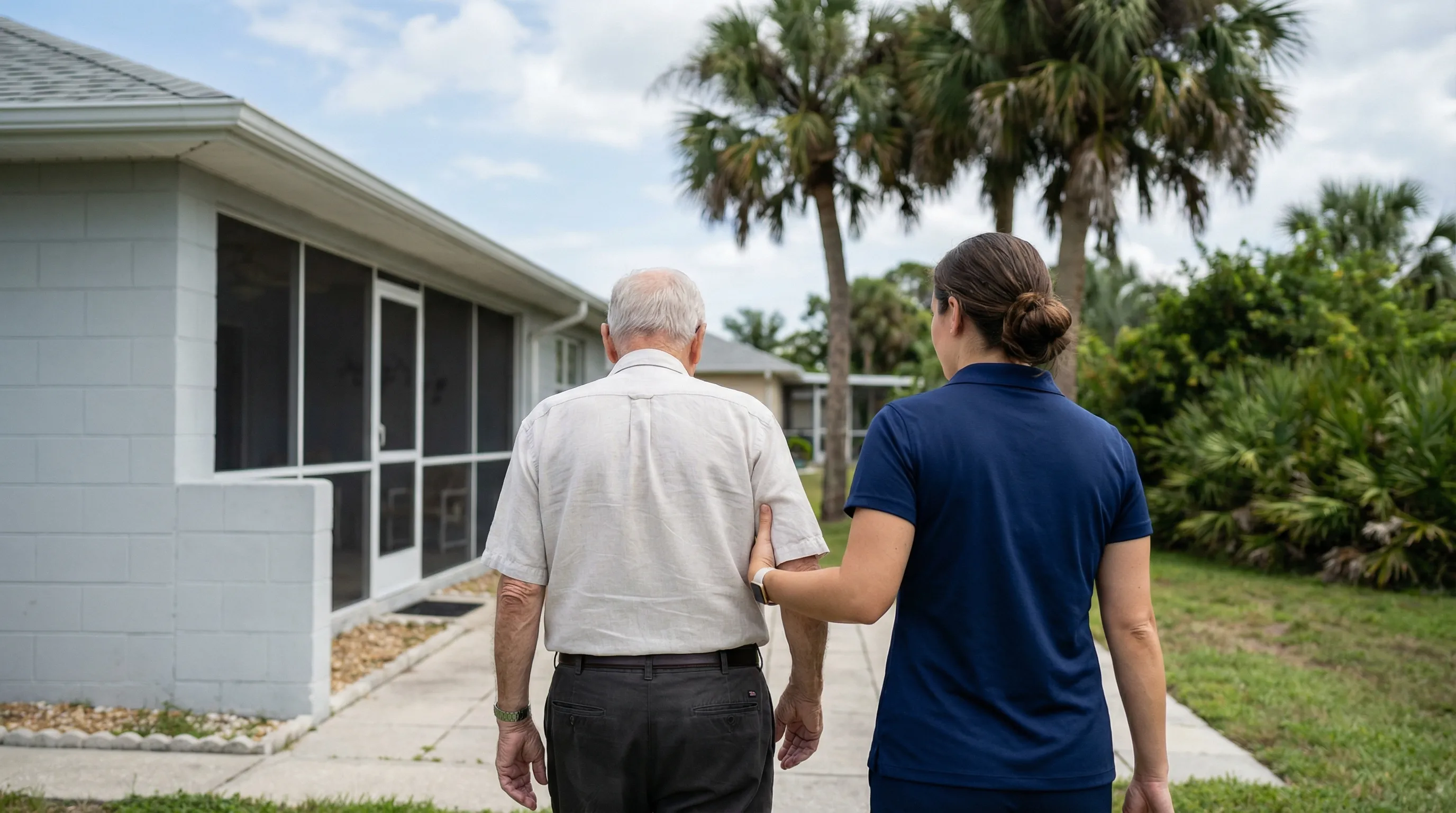
Palm Bay's senior services market rewards specificity and loses campaigns that treat it as a single, homogeneous audience. In-home care PPC in this city draws from at least four distinct search cohorts — each with different motivations, different timelines, and different conversion triggers — and campaigns that fail to segment them blend into irrelevance. The result is CPLs that creep toward $120+ and conversion rates that plateau at 4–5%, well below the 8–13% this market can deliver when structured correctly.
The Multi-Audience Segmentation Problem
Adult children initiating care searches for an aging parent are the primary converting audience — but they are not homogeneous. An adult child in Brevard County whose parent was just discharged from Palm Bay Hospital searches on a 24–72 hour decision cycle: they need a provider this week, and they will call the first credible result. An adult child in New York whose parent lives in Palm Bay's original Port Malabar neighborhoods is searching on a 2–4 week research cycle: they are comparing providers, reading reviews, and looking for reassurance about a provider they cannot personally vet. These two searchers share keywords but convert on completely different signals. A single campaign and landing page cannot close both cohorts effectively.
Veterans and their families represent a third distinct audience — one that is largely invisible to providers who don't actively target them. Palm Bay and Brevard County have 3,200+ Vietnam-era veterans and 2,700+ Gulf War-era veterans per Census ACS data. Many of these veterans qualify for VA Aid & Attendance benefits, which can cover in-home care costs for eligible recipients. The keywords that capture this audience ("VA home care Palm Bay," "Aid and Attendance Palm Bay FL") carry CPCs of $4–$6 — well below the $7–$11 emergency care range — but convert exceptionally well because the decision barrier is lower: the government is subsidizing the cost. Campaigns that ignore this segment leave a high-volume, low-competition opportunity untouched.
Competitor Positioning in Brevard County
The Brevard County in-home care competitive landscape includes four major national franchise operators: Comfort Keepers (Melbourne), Right at Home (Brevard County), Visiting Angels (Melbourne/Brevard), and BrightSpring Health Services. These franchises run regional Google Ads campaigns, but their targeting is often weakly geo-fenced — they bid on "home care Brevard County" rather than "home care Palm Bay FL," meaning a provider with tight Palm Bay-specific geo-targeting can outperform them on relevance scores and lower their own CPCs in the process. National franchises also use generic ad copy ("We care about your family") that fails to speak to Palm Bay-specific triggers like Health First hospital discharge, VA benefit eligibility, or the aging Port Malabar homeowner cohort.
- Emergency/post-hospital searches: "home health aide Palm Bay," "in-home care after surgery" — $7–$11 CPC, 10–13% CVR, 24–72 hour decision cycle
- Companion/routine care searches: "companion care Palm Bay," "elderly care Palm Bay FL" — $4–$7 CPC, 6–9% CVR, 1–3 week research cycle
- Veteran-specific searches: "VA home care Palm Bay," "Aid and Attendance Brevard County" — $4–$6 CPC, 8–11% CVR, motivated buyer with financial qualification
- Memory/dementia care searches: "memory care Palm Bay FL," "Alzheimer's home care Brevard" — $7–$11 CPC, 10%+ CVR, highly motivated family in crisis
A campaign that pools these intent types into a single ad group and a single landing page treats a $28/hour ongoing care client — worth $26,000+ per year in LTV — with the same conversion architecture as a one-time service call. That misalignment is the single largest driver of underperformance in Palm Bay's senior care PPC market.
Building a Senior Care PPC Campaign That Converts in Palm Bay
The foundational structure for a Palm Bay senior services campaign is four parallel campaigns, each addressing a distinct demand cohort. The total starter budget sits between $1,000–$2,200/month, with allocation shifting based on the care need urgency and seasonal patterns. Given the $26,000+ annual LTV of a single converted private-pay client, a $75–$85 CPL is not a cost — it's a 340:1 return on investment over a 12-month engagement.
Campaign Architecture: Four Demand Cohorts
Each campaign addresses a specific segment with dedicated keywords, ad copy, and landing page. This is not optional complexity — it's the minimum required to achieve the 8–13% CVR this market delivers at scale.
- Post-hospital discharge campaign: "home health aide Palm Bay," "in-home care after hospital Palm Bay," "recovery care Brevard County," "home care after surgery" — call-only ads preferred, dayparted to hospital discharge hours (10am–4pm weekdays), bid modifiers +25% on mobile
- Veteran/VA campaign: "VA home care Palm Bay FL," "Aid and Attendance Palm Bay," "veteran in-home care Brevard County," "VA home health aide" — dedicated landing page explaining VA benefit eligibility and provider VA compatibility, lower CPC range, high intent conversion
- Memory and dementia care campaign: "memory care Palm Bay FL," "Alzheimer's home care Brevard," "dementia caregiver Palm Bay" — separate landing page with empathetic framing, family-first decision language, 24/7 availability emphasized
- General companion/ADL care campaign: "companion care Palm Bay," "in-home senior care Palm Bay FL," "elderly care Palm Bay," "home care Palm Bay" — awareness-to-research phase targeting, educational landing page, longer conversion window, review-forward messaging
Geographic and Audience Layering
Palm Bay's 79.7% homeownership rate means the senior cohort is geographically concentrated in owner-occupied residential areas. The original Port Malabar development zones — SE Palm Bay, NE Palm Bay along Emerson Drive, and the older established sections west of Babcock Street — have the highest concentration of 1960s–1980s era homes where aging original owners now live. Google Ads geo-bid modifiers of +15–20% on zip codes 32905, 32907, and 32909 (highest residential density zones in Palm Bay) can improve campaign efficiency meaningfully.
In-market audience layering is particularly powerful here: Google's "Assisted Living & Long-Term Care" and "Family & Relationships" in-market audiences identify active searchers in the research phase. Combined with location targeting and keyword campaigns, audience layering consistently reduces CPL by 12–18% in comparable senior care markets. This is the lowest-cost optimization lever available — implement it in all four campaigns from day one.
Ad scheduling should prioritize weekday mornings (8am–12pm) — the primary window when adult children make care-seeking calls and when Health First discharge planners make outbound referral calls. Evening hours (5pm–8pm) also perform well, capturing adult children searching after their own workday ends. Weekend bids can be reduced 20–30% on companion care campaigns but should remain fully funded on memory/dementia and post-hospital campaigns — care crises don't follow office schedules.
Google Partner Agency
We're a certified Google Partner Agency, which means we don’t guess — we optimize withGoogle’s full toolkit and insider support.
Your campaigns get pro-level execution, backed by real expertise (not theory).

What Market Trends Should Palm Bay Senior Care Businesses Know?
Palm Bay's senior care market has two structural demand drivers that don't show up in statewide senior care reports — and both are directly exploitable via precisely targeted PPC campaigns.
The Port Malabar Aging Cohort
The General Development Corporation's Port Malabar project brought tens of thousands of buyers to Palm Bay beginning in the 1960s. Many of those original purchasers — and the families they raised here — are now in their 70s, 80s, and 90s. This aging-in-place cohort is geographically concentrated in the older SE and W Palm Bay neighborhoods, owns their homes outright or with minimal mortgage, and strongly prefers remaining in their own homes over institutional placement. Florida's homeownership rate of 67.9% nationally, and Palm Bay's exceptional 79.7%, means the overwhelming majority of Palm Bay seniors have home equity and a strong financial and emotional preference for aging in place.
Adult children of Port Malabar-era families often remain in Brevard County (or have moved to nearby Orlando/Melbourne), making them a close-proximity searcher who can visit providers personally and make fast decisions. The combination of geographic concentration, strong aging-in-place preference, and proximity of adult decision-makers creates a local PPC market where relevance and trust signaling — Google Reviews, local brand recognition, specific neighborhood mentions in ad copy — drive outsized conversion lifts.
The VA Benefit Underserved Gap
Palm Bay's large military veteran population creates a specific market gap that most in-home care PPC campaigns ignore entirely. VA Aid & Attendance benefits can provide $1,432–$2,727/month (2025 rates) to eligible veterans and surviving spouses for in-home care costs. Tens of thousands of Brevard County veterans qualify, but awareness of these benefits is low — many families don't know the benefit exists until they search for it. Provider campaigns that actively communicate VA benefit compatibility ("We work with VA Aid & Attendance") capture a highly motivated, financially-qualified audience at CPCs 30–40% below general senior care terms.
Seasonal care demand patterns in Palm Bay:
- October–April (snowbird season): Seasonal residents return to Palm Bay, bringing care needs that were managed elsewhere or deferred over the summer; new care engagements start at elevated rates during this window
- June–September (peak heat): Florida summer heat is dangerous for elderly residents; heat-related illness risk drives emergency care searches; HVAC failures in older homes disproportionately affect elderly homeowners
- November–January (holiday season): Adult children visiting for the holidays discover parent care needs they weren't aware of; post-holiday care search volume spikes in January as family members return home and initiate searches they delayed during the visit
- Year-round: Post-hospitalization demand from Health First network (Palm Bay Hospital + Holmes Regional) runs consistently; discharge planning contacts generate search demand within 24–72 hours of release
Health First's hospital network is a demand generator that national franchise campaigns almost never address directly. An in-home care PPC campaign that includes hospital-adjacent keywords ("home care after Palm Bay Hospital," "recovery care Brevard County") and uses Health First-compatible messaging is positioned to capture the highest-urgency, fastest-converting segment of the entire market.
Why Local PPC Expertise Converts Palm Bay's Senior Care Market
Palm Bay's senior care PPC market is not served by statewide or national campaign templates. The veteran population, the Port Malabar aging cohort, the Health First hospital network, and the snowbird-driven seasonal patterns are all specific to Brevard County — and none of them appear in the generic "senior care PPC strategy" playbook. A campaign managed from Tampa or Atlanta will miss all four.
What works here is market-specific architecture: separate campaigns for the post-hospital discharge audience versus the VA benefit audience versus the memory care audience, with geo-bid modifiers concentrated in the highest-density residential zones and ad scheduling layered to match how and when Palm Bay families search. The private-pay economics justify the investment — a single converted client at $28/hour for 20 hours/week generates $26,880 in annual revenue. A campaign that costs $1,500/month and converts 2 new clients per month is delivering 35:1 annual ROAS before LTV multipliers.
MB Adv Agency builds Palm Bay senior care campaigns from the local market data up — not from a national template. Our PPC management services are built for the SMB care operators competing in mid-tier Florida markets, where the right structure at the right budget level outperforms raw spend every time. If you're an in-home care provider serving Palm Bay and Brevard County, our engagement tiers start at the level where this market is most efficiently captured.
Frequently Asked Questions
How much does senior care PPC cost in Palm Bay, FL?
Senior care PPC in Palm Bay operates across a CPC range of $4–$11 per click, depending on search intent and audience type. General companion care keywords ("companion care Palm Bay," "in-home senior care Palm Bay FL") carry lower CPCs of $4–$7 with moderate conversion rates of 6–9%. Urgent-intent searches — post-hospital discharge, memory care, and immediate-need queries — command $7–$11 CPCs but convert at 10–13%, delivering cost-per-leads of $60–$85. VA-specific keywords ("VA home care Palm Bay," "Aid and Attendance Brevard County") are a standout exception: CPCs of $4–$6 with conversion rates of 8–11%, making them the most cost-efficient segment in the Palm Bay senior care PPC market. A well-structured Palm Bay senior care campaign operates on a starter budget of $1,000–$2,200/month, with the allocation weighted toward post-hospital and VA campaigns where CPL economics are strongest. The underlying unit economics make senior care PPC exceptionally defensible: a single converted private-pay client generating $2,240/month in recurring revenue makes even a $120 CPL a 220:1 first-year return.
The most effective Palm Bay senior care campaigns use seasonal budget variations aligned to demand patterns: higher budgets during the October–April snowbird return season (when new care engagements initiate at elevated rates) and during the January post-holiday spike (when adult children who visited for the holidays initiate searches after returning home). Summer (June–September) brings a secondary demand spike around heat-related emergency care and post-hospitalization needs. Flat monthly spend misses all three windows.
What makes senior care PPC different from other home services categories in Palm Bay?
Senior care PPC differs from most home services categories in two critical ways: the buyer is almost never the end user, and the conversion timeline is highly variable depending on urgency. In HVAC or auto repair PPC, the person searching is the person with the problem — they need service today or this week. In senior care, the searcher is typically an adult child (often not living in the same home as the parent) making a care decision on behalf of a parent who may or may not be actively participating in the decision. This creates a longer, more trust-dependent funnel — landing pages must address family anxiety, not just service features, and ad copy must speak to the emotional weight of the care decision, not just the transactional outcome. Palm Bay's specific demographic profile — a large aging-in-place homeowner cohort, significant veteran population, and active Health First hospital discharge flow — means campaigns that incorporate local credibility signals (neighborhood references, VA compatibility, Health First adjacency) consistently outperform generic Florida senior care copy on click-through and conversion rates.
The exception to the longer conversion timeline is the post-hospital discharge audience, which behaves more like an emergency home services search: the family has a concrete need, a tight timeline (insurance covers limited hospital days), and is ready to book within 24–72 hours. Capturing this audience requires call-only ad formats, 24/7 call routing, and landing pages that emphasize availability — not long-form educational content. The two audiences (researching vs. urgent) need completely different conversion architectures in the same campaign account.