Solar Installation PPC Yuma, AZ
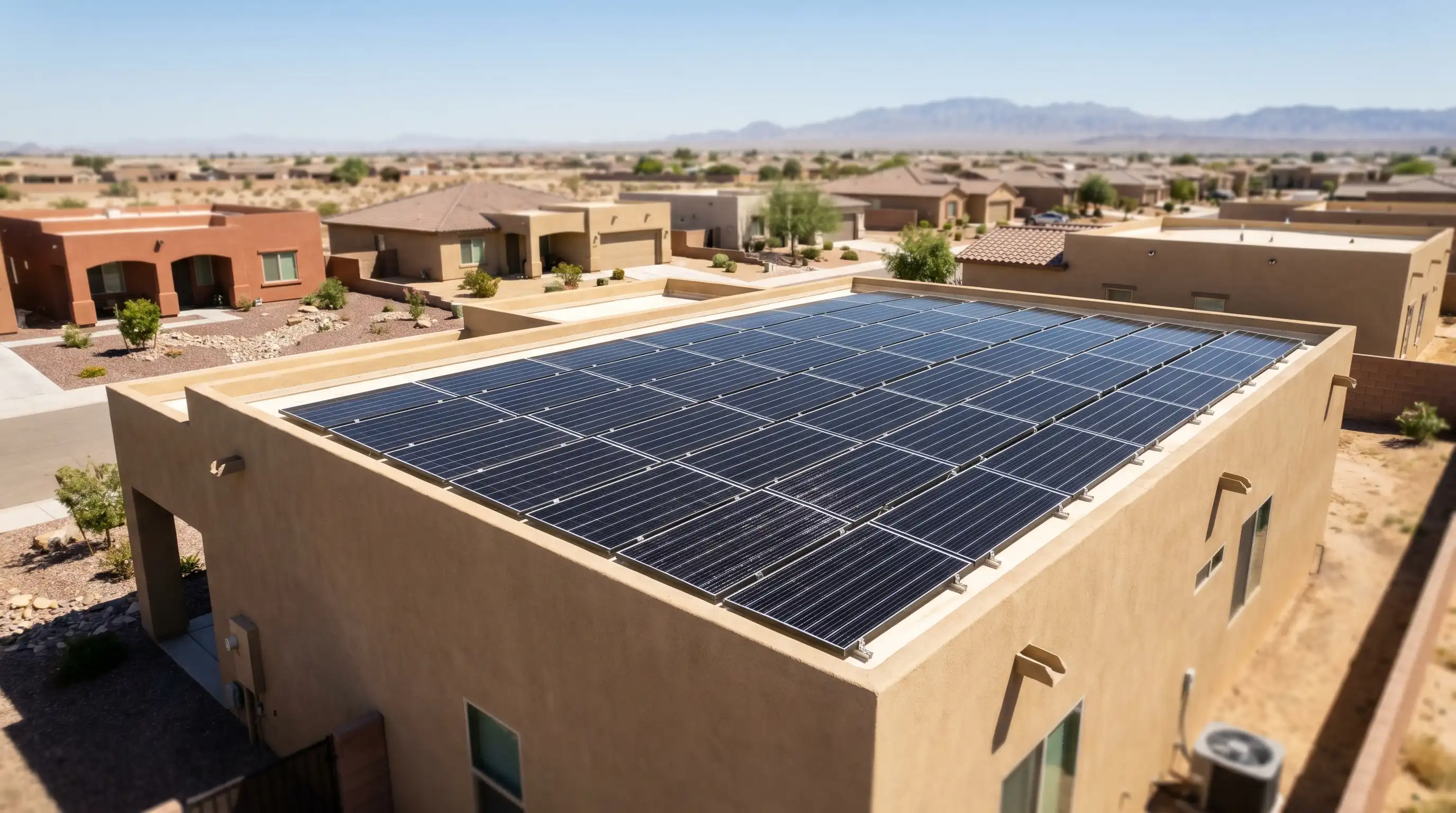
Yuma receives 6.94–7.5 kWh/m²/day of direct solar irradiance — the highest of any major American city — and summer electricity bills regularly top $400–$600/month. Only 8 solar installers appear on the EnergySage marketplace for Yuma, meaning PPC competition is minimal relative to the lead volume available right now.
Why Do Solar PPC Campaigns Underperform in Yuma, AZ?
Yuma is arguably the best solar market in the United States by irradiance data — and yet most local installers fail to capture the leads that market potential should be generating. The reasons aren't technical. They're strategic: the wrong offer structure, the wrong decision-cycle assumptions, and a failure to use Yuma's unique energy economics as the primary conversion argument.
The Long Decision-Cycle Problem
Solar is a $10,000–$25,000 purchase decision. Homeowners don't convert from a single ad click — they research, compare multiple installers, request quotes from 2–3 companies, and typically take 30–90 days from first search to signed contract. PPC campaigns built for immediate conversion expectations (like HVAC emergency models) fail to account for this timeline. 70% of solar buyers request 3+ quotes before deciding, which means the installer who captures the first touchpoint and stays top-of-mind through the consideration window wins, not the one who bids the highest on a single search query.
The failure mode in Yuma's thin market: installers run search campaigns without a follow-up remarketing layer. A homeowner searches "solar company Yuma," clicks an ad, browses the site, and doesn't convert that day — which is completely normal. Without a remarketing campaign to re-engage that visitor over the next 30–60 days as they continue researching, that $3–8 click investment is abandoned with zero return. National solar markets solve this with aggressive remarketing; Yuma's 8-installer landscape means almost nobody is doing it here.
Ignoring the Tax Credit Urgency Window
Arizona homeowners who go solar qualify for the 30% federal investment tax credit (ITC), an Arizona state credit of 25% (up to $1,000), and a full property tax exemption on the added home value from a solar system. These are significant financial incentives — and the federal ITC has a defined timeline that creates genuine urgency for buyers considering solar in any given tax year. Most Yuma solar advertisers don't build campaigns around tax credit deadlines, despite this being one of the most reliable urgency triggers available in any high-ticket home improvement category.
The competitive landscape magnifies this gap. Renewable Power USA (rated 4.70 stars) and Yuma Solar (10+ years in market) are the primary established players. With only 8 installers total in the EnergySage marketplace — compared to 50+ in Phoenix — a single well-optimized campaign can achieve category dominance at CPCs that would be unthinkable in more competitive markets. That window closes as soon as more national installers enter the market, which the solar industry's growth trajectory makes inevitable within 2–3 years.
Solar PPC Strategy Built for Yuma's Energy Economics
Campaign Structure: Three Funnel Stages
Solar PPC in Yuma requires a multi-stage campaign structure that matches the longer buyer decision cycle. A single lead-generation campaign misses buyers at different stages of their consideration window:
- Awareness/pain keywords: "high electric bill Yuma," "reduce electricity costs," "solar panels Arizona" — $2–4 CPC. Targets homeowners in the early research phase, motivated by summer electricity bills exceeding $400/month. Landing page focuses on the savings story: average $1,700/year savings, 6–10 year payback.
- Intent/quote keywords: "solar panel quote Yuma," "solar company near me," "free solar estimate Yuma," "solar installation cost" — $3–6 CPC. High-intent buyers actively comparing installers. Landing page leads with installer credentials, review count, and a visible quote-request form above the fold.
- Tax credit / incentive keywords: "solar tax credit Arizona," "federal solar rebate," "ITC solar 2025," "Arizona solar incentives" — $4–8 CPC. Urgency-driven buyers researching financial benefits. Landing page combines incentive calculator with a call-to-action to lock in before year-end.
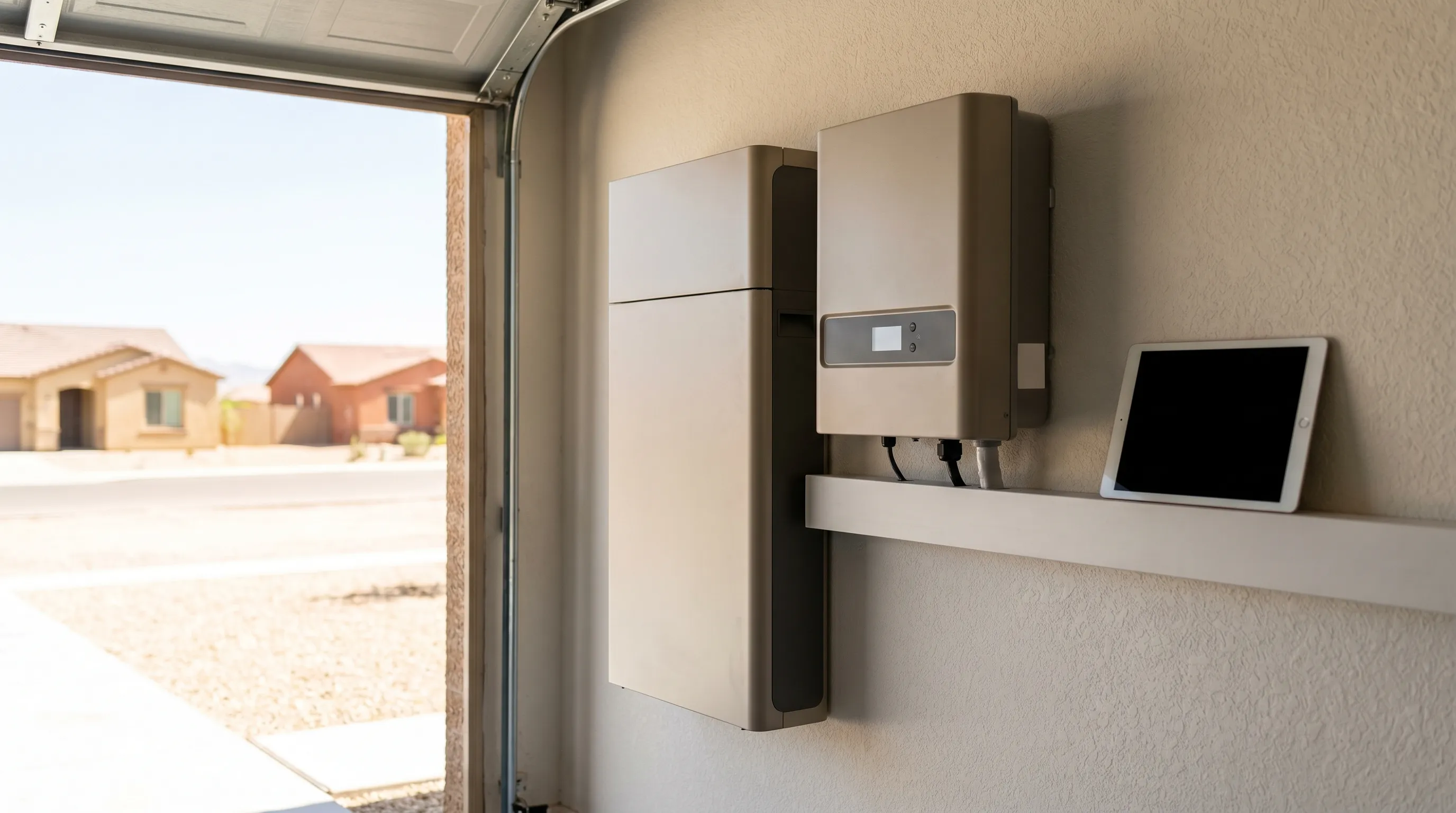
- Battery storage keywords: "solar battery storage Yuma," "home battery backup," "solar plus storage," "backup power Arizona" — $5–10 CPC. Higher-value customer segment adding battery to system. Average system cost increases $8,000–$15,000 with storage; worth separate bid strategy.
Remarketing Architecture and Budget Allocation
A $1,000–$2,500 monthly budget is the recommended starting range for Yuma solar, with 70% allocated to search campaigns and 30% to a layered remarketing strategy. The remarketing layer is critical: visitors who arrive via search but don't convert immediately should be tracked and re-engaged with Display and YouTube ads over the following 30–60 days. With an average close rate of 15% and a CPL target of $80–$150, the remarketing spend recaptures leads that search alone abandons mid-funnel.
Bidding strategy recommendation: Start with Manual CPC for the first 60 days to accumulate conversion data. Once 30+ conversions per month are tracked, switch to Target CPA with an initial target of $120–$150. Yuma's small search volume means automated bidding algorithms need more ramp time than in major metros — deploying Target CPA before the account has sufficient data leads to erratic bid behavior and wasted spend.
Ad creative must lead with Yuma-specific electric bill data. "Yuma homeowners average $480 in summer electricity costs — solar pays for itself in under 9 years" outperforms generic solar headlines by a significant margin because it connects the ad directly to the financial pain the homeowner already knows they have. Localized ad copy consistently outperforms national templates by 30–45% on CTR in regional markets.
Google Partner Agency
We're a certified Google Partner Agency, which means we don’t guess — we optimize withGoogle’s full toolkit and insider support.
Your campaigns get pro-level execution, backed by real expertise (not theory).

What Market Trends Should Yuma Solar Installers Know?
Yuma's solar market has two growth trajectories that PPC strategy needs to anticipate — not just respond to. The installer who positions first in each segment captures LTV that compounds for years.
Commercial and Agricultural Solar: The Underserved Vertical
Yuma's economy is anchored by a $3.9 billion annual agriculture sector covering 230,000 acres of irrigated farmland with constant pump and refrigeration loads. Commercial agricultural operations — cold storage facilities, packing sheds, irrigation pump stations — represent high-value solar targets with electricity consumption profiles ideal for solar ROI. A 100-acre lettuce operation running refrigerated packing 24/7 during the November–March growing season pays electric bills that make residential solar economics look modest. Yet almost no solar installer in Yuma runs Google Ads specifically targeting commercial or agricultural operators. The keyword terms are cheap ($8–15 CPC vs. national commercial solar rates of $30–60), the lead quality is exceptional, and the transaction values are 5–10x residential.
Military personnel stationed at MCAS Yuma and Yuma Proving Ground represent a separate high-value segment. Military homeowners with BAH allowances, strong credit profiles, and multi-year station commitments are ideal solar financing candidates — and they respond well to messaging that emphasizes predictable monthly savings against a fixed housing budget. A dedicated campaign targeting military-adjacent neighborhoods with USAA and military-financing focused messaging is a segment no current Yuma solar advertiser appears to be running.
Grid Approval Delays Create Installer-Selection Urgency
Grid connection approval in Yuma takes 6–14 weeks through Arizona Public Service (APS). This creates a genuine urgency driver for buyers who want solar generating power before the next summer's peak billing cycle. An installer who actively advertises permit navigation experience and typical APS approval timelines — framing the delay risk as something they manage — converts buyers who might otherwise wait. The messaging angle: "Start now — APS approvals take 6–14 weeks. Homeowners who wait until May miss the summer savings window." This is factual, locally specific, and creates urgency without manufactured scarcity.
Yuma's solar market advantages compared to Phoenix or Tucson, at a glance:
- Irradiance: 6.94–7.5 kWh/m²/day — the highest direct normal irradiance of any major US city
- Competition: 8 EnergySage installers vs. 50+ in Phoenix — blended CPCs of $2–5 vs. $15–40
- Electric bill pain: $400–$600/month summer bills — buyer motivation is structural and recurring every year
- Incentive stack: 30% federal ITC + 25% AZ state credit (up to $1,000) + full property tax exemption on added home value
Why Yuma Solar Installers Need Market-Specific PPC Strategy
National solar PPC templates are built for Phoenix-density markets with 50+ competitors and CPCs of $30–100. Applying that playbook to Yuma — where there are 8 installers and CPCs of $2–8 — wastes budget on overbidding in an auction that doesn't require it, and misses the locally-specific conversion angles that make Yuma buyers act: the $480 summer bill, the APS approval timeline, the Arizona state tax credit that expires annually.
At MB Adv Agency, we build solar PPC campaigns calibrated to Yuma's actual market conditions: thin competition, long decision cycles, and a specific set of financial incentives that close deals when messaged correctly. Our campaigns separate awareness from high-intent search, deploy remarketing to recapture the 85% of visitors who don't convert on the first visit, and build landing pages that connect Yuma's electricity economics to the solar decision in language homeowners recognize from their own bills.
See our solar PPC pricing or learn more about our Yuma PPC services. The installer market here is still thin — but it won't stay that way.
Frequently Asked Questions
How Much Does Solar PPC Advertising Cost in Yuma, AZ?
Solar PPC in Yuma, Arizona runs considerably cheaper than in saturated metro markets due to low installer competition — only 8 solar companies appear on the EnergySage marketplace for the entire Yuma region, compared to 50+ in Phoenix. Blended CPCs for a well-structured Yuma solar campaign run $2–5 per click for standard awareness and quote-intent keywords, rising to $8–15 per click in more competitive segments like battery storage and commercial solar. Cost per lead on a properly optimized campaign lands between $80–150, compared to the national solar average of $206 per lead reported by Digital Division Group in 2025. A starting monthly budget of $1,000–$1,500 is sufficient to generate 6–12 qualified leads per month in Yuma — enough for a growing installer to keep installation crews consistently scheduled without overspending in a market that doesn't require Phoenix-level budgets to win.
Transaction economics favor sustained investment: average residential system costs run $10,983 for a standard 5.1 kW install and $17,500–$25,000 for the larger systems Yuma homes require to offset A/C loads. At a 15% close rate and $130 CPL, total cost of customer acquisition is approximately $867 — highly favorable against gross margins of $3,500–$7,500 per job. Adding battery storage increases system value by $8,000–$15,000 per customer, making every lead generated in the battery-storage campaign track the highest ROI segment in the account.
Remarketing spend should be budgeted separately at roughly 30% of total campaign spend. Solar buyers research for 30–90 days — remarketing recaptures that mid-funnel investment for pennies compared to acquiring new search clicks.
What Makes Yuma a Better Solar Market Than Phoenix or Tucson for PPC?
Yuma outperforms Phoenix and Tucson as a PPC market for solar installers on three dimensions that directly affect campaign profitability. First, irradiance: Yuma receives 6.94–7.5 kWh/m²/day of direct solar radiation — the highest direct normal irradiance of any major American city — meaning system ROI calculations are stronger here than anywhere else in the state. A homeowner considering solar in Yuma is looking at a payback period of 6–8 years with an average annual savings of $1,700, compared to 8–11 years in less sunny markets. Stronger economics mean higher intent from buyers who do the math. Second, competition: Yuma has 8 installers on EnergySage vs. 50+ in Phoenix, translating directly to lower CPCs — $2–5 in Yuma vs. $15–40 in Phoenix for comparable intent keywords. Third, electricity cost pain: Yuma summer bills routinely exceed $400–$600/month, a financial motivation that buyers feel personally every time their bill arrives. Phoenix homeowners face high bills too — but Yuma's combination of extreme irradiance, thin competition, and pain-point intensity makes it a more efficient PPC market per dollar spent.
The one advantage Phoenix has is search volume — more people means more searches per month. But for an installer serving the Yuma market, capturing a high percentage of local intent at low CPC is more valuable than competing for a fraction of Phoenix's high-volume, high-CPC auction. Market efficiency beats market size at the local level.
The window to establish this advantage is now. As national solar brands expand into Yuma — a trajectory already visible in nearby Tucson — CPCs will rise toward Phoenix levels. Installers who build Quality Score and brand recognition now will hold structural CPC advantages over late entrants for years.