Technology & Software PPC Plano, TX
Plano hosts Nokia US HQ, Ericsson US HQ, Toyota North America, and Capital One tech — and the hundreds of IT service companies, MSPs, and software shops that orbit those campuses. With managed IT contract LTV running $18,000–$72,000 per year, a single PPC-acquired client can return 40x the campaign cost. The challenge isn't demand — it's cutting through the noise in an auction crowded with both national MSP brands and well-funded local competitors.
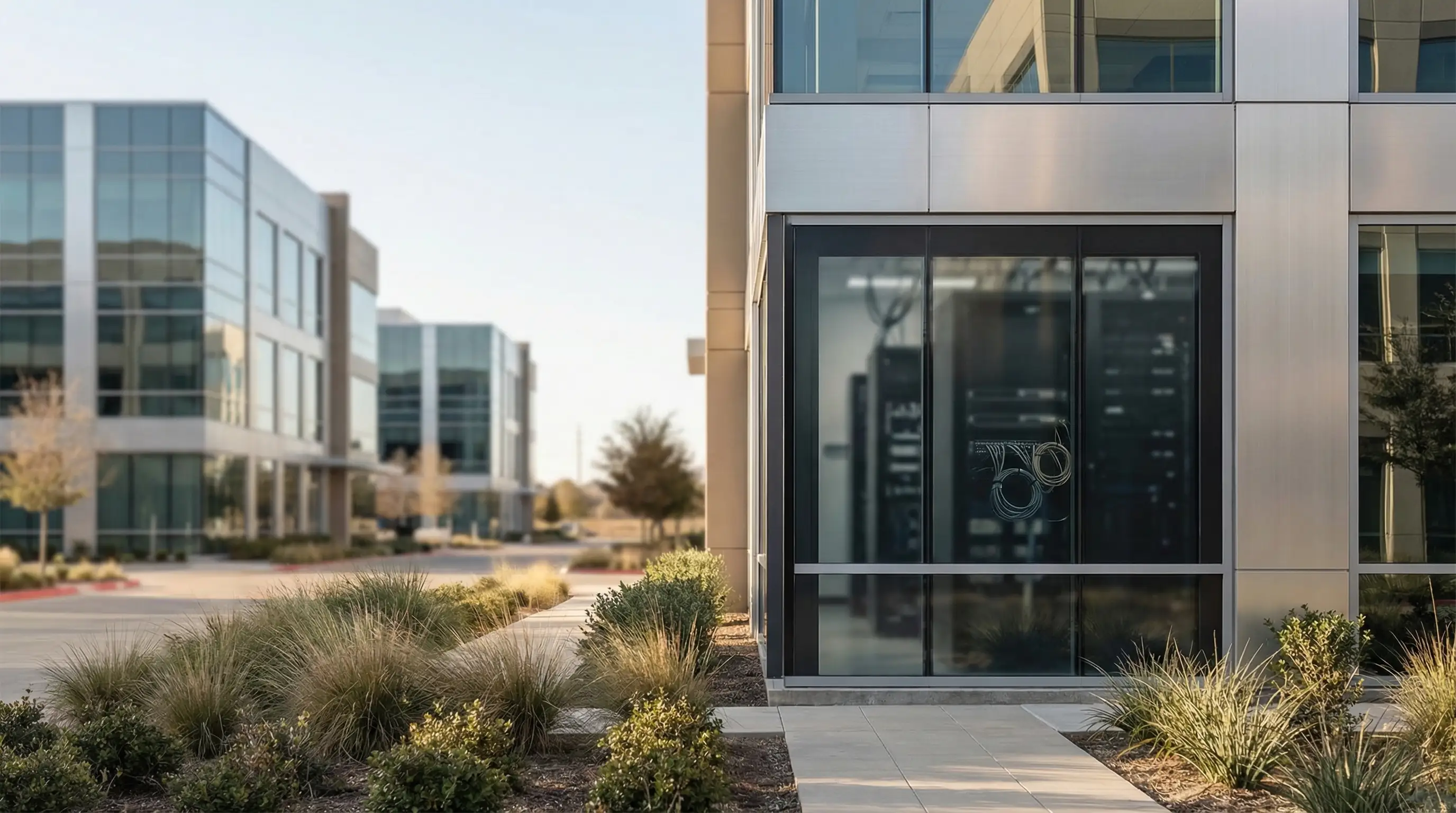
Technology and IT services PPC in Plano carries a challenge no other industry in this market quite replicates: the buyer is technically sophisticated. A decision-maker at a 20-person technology consulting firm or a supply chain SMB supporting Toyota's assembly operations knows what managed IT looks like. They've been pitched by every MSP and VAR in DFW. An ad that leads with "fast," "reliable," and "affordable" IT support doesn't stop a scroll — it confirms they've already read your ad a dozen times under a different company name.
The Commodity Perception Problem
Managed IT services advertising in DFW has converged on three creative patterns: the free network audit offer, the flat monthly rate promise, and the "local vs. national" trust angle. CCS Horizon, Liqtech, Ntegra IT, and Dataprise — the major players in Plano's IT services market — are all running some variation of these messages. The result is a perception of commodity: buyers can't differentiate between providers on ad copy alone, so they click based on brand familiarity or ad position, not on actual value differentiation.
This creates a Quality Score problem for new entrants. When ad copy is generic, expected CTR falls below the category average, which drives Quality Score down, which raises effective CPC — sometimes 30–50% above the base rate. A campaign built on generic IT service messaging in Plano will overpay for every click it earns. Technology and IT services national average CTR is just 2.09% — the lowest of any Google Ads industry category — partly because the creative is so undifferentiated that buyers skip ads entirely and go direct to organic results.
B2B Sales Cycle Mismatch
The second structural challenge is the sales cycle. MSP contracts don't close in 24 hours. A business owner searching for "managed IT Plano TX" today will evaluate 3–5 providers, request proposals, run internal security audits, and make a decision 4–8 weeks later. Most IT service PPC campaigns are not built for this. They drive traffic to a generic homepage, collect no lead information, and have no retargeting sequence. The result: a $12 click generates a bounce, and the advertiser blames Google Ads for not producing ROI.
The fix requires lead capture architecture — a landing page with a high-value offer (free network audit, cybersecurity vulnerability scan, IT cost comparison tool) that turns a first visit into an identifiable prospect. Without this infrastructure, IT services PPC in Plano's competitive market is expensive lead leakage. With it, well-managed MSP campaigns deliver leads at $150–$400 per qualified inquiry — and a single MSP contract at $3,000/month recurring justifies 6–12 months of PPC spend from one conversion.
Plano's B2B tech market also requires compliance-aware advertising that competitors frequently miss. A significant share of the SMBs in Plano's corporate corridor — particularly those in the Toyota, Ericsson, and Nokia supply chains — operate in environments requiring SOC 2 compliance, CMMC certification, or HIPAA compliance for healthtech spinoffs. An MSP that explicitly addresses "SOC2-ready IT environments" or "CMMC compliance for DFW defense contractors" in its ad copy is targeting a buyer with a non-discretionary need — not a buyer who might want IT support if the price is right.
Effective tech and IT services PPC in Plano requires matching campaign architecture to buyer segment, not service category. MSP buyers, cybersecurity buyers, and AI/automation buyers are different people with different search behavior and different conversion paths. A single campaign targeting all three is unfocused and inefficient.
Segmented Campaign Structure
- Managed IT / MSP campaign: "managed IT services Plano TX," "IT support Plano TX," "MSP DFW," "outsourced IT Plano," "IT helpdesk Plano" — $8–$15/click. Offer: free network audit or 30-day trial. Landing page: flat monthly rate, response time SLA, local team emphasis.
- Cybersecurity campaign: "cybersecurity company Plano TX," "cybersecurity services DFW SMB," "SOC2 compliance IT Plano," "CMMC IT provider Texas," "ransomware protection Plano" — $10–$20/click. Offer: free vulnerability scan. Framing: liability and compliance, not just security.
- AI/Automation campaign: "AI consulting DFW," "business automation Plano TX," "process automation SMB Dallas," "AI tools for small business" — $6–$14/click. Lower competition, high-LTV buyers. Earliest-stage funnel; nurture sequence required.
- Cloud migration campaign: "cloud migration services DFW," "Microsoft 365 migration Plano," "AWS setup small business Texas" — $8–$16/click. Project-based buyers; strong LTV from ongoing support post-migration.
Geographic and audience targeting in Plano's tech market requires a different logic than consumer services. The buyer is the business owner or IT decision-maker, not the end user. In-market audience segments for "IT services" and "business software" in Google Ads, layered with job title targeting in Performance Max and Display campaigns, increases campaign relevance without requiring keyword match. Combined with postal code targeting of Plano's corporate corridor zip codes (75024, 75023), this approach reduces wasted spend on irrelevant searches from residential users.
Ad extensions are unusually important for B2B IT campaigns. Sitelinks to the "Free Network Audit" landing page, the cybersecurity service page, and the client case studies page give the buyer multiple entry points from a single search result. Call extensions should be active but suppressed after-hours for B2B campaigns — nobody calls an MSP at 11pm, and showing a phone number during off-hours wastes impression space. Structured snippets listing compliance credentials (SOC2, CMMC, HIPAA) can increase CTR 15–25% for compliance-focused buyer segments.
Negative keyword discipline is critical in tech PPC. Without an aggressive negative keyword list, "IT support" campaigns attract job seekers ("IT support jobs Plano"), students ("IT support certification courses"), and consumer tech queries ("IT support for home computer"). These clicks cost the same as qualified B2B leads and convert at zero. A well-maintained negative keyword list maintained weekly — blocking job listings, consumer tech, and off-topic queries — reduces wasted spend by 20–35% and improves Quality Scores by raising the campaign's signal-to-noise ratio for commercial intent queries.
Google Partner Agency
We're a certified Google Partner Agency, which means we don’t guess — we optimize withGoogle’s full toolkit and insider support.
Your campaigns get pro-level execution, backed by real expertise (not theory).

Plano's tech market has a supply-demand imbalance that creates an asymmetric PPC opportunity: the demand side is enormous, and the ad competition is thinner than any comparable metro area. DFW's tech SMB market is anchored by Plano, but most IT service advertisers are targeting "Dallas" as their primary geo — not "Plano" specifically. Keyword CPCs for "IT support Plano TX" are $8–$12 versus $15–$25 for "IT support Dallas" — essentially the same buyers at half the cost.
The Corporate Campus Ecosystem Effect
Nokia, Ericsson, Toyota, and Capital One aren't just employers — they're ecosystem generators. Each corporate campus anchors a cluster of 30–100 SMBs: contractors, vendors, consulting firms, logistics providers, and tech startups that serve the campus supply chain. These businesses operate in a compliance-aware environment — they interact with Fortune 500 procurement systems that require cybersecurity certifications, data protection standards, and IT redundancy. This makes Plano's SMB IT market structurally different from generic suburban markets.
The AI consulting segment is the highest-growth opportunity in Plano's tech PPC landscape right now. Searches for "AI tools for business" and "business automation consulting" have grown 180%+ nationally since 2023. In Plano's tech-dense environment, where business owners see AI applications in their corporate employer's workflows and want to replicate them at the SMB level, demand is ahead of supply. MSPs and IT consultants that add AI/automation consulting to their Google Ads campaigns today are entering a category where keyword CPCs are still low ($6–$14) before the market matures.
MSP contract LTV makes the economics of Plano tech PPC exceptional. A managed IT contract at $3,000/month generates $36,000/year. A cybersecurity audit plus ongoing monitoring contract at $2,000/month is $24,000/year. Combined, a single SMB client acquired through PPC has a year-1 value of $36,000–$72,000. At a PPC-driven CAC of $300–$600 (realistic for a well-managed Plano campaign), that's a 60–120x return in year one alone — before accounting for contract renewals and expansion into additional services.
- MSP contract (avg $3,000/month): $36,000 year-1 value; 5-year LTV $180,000+
- Cybersecurity retainer ($1,500–$2,500/month): $18K–$30K/year, compounding with incident response upsells
- Cloud migration project ($8,000–$25,000): One-time high-value + ongoing managed cloud support at $500–$1,500/month
- AI/automation project ($15,000–$40,000): Project-based with potential recurring automation maintenance contracts
Technology and IT services PPC in Plano requires an agency that understands B2B conversion architecture, not just keyword selection. Most SMB PPC agencies build campaigns for consumer services — short consideration cycles, impulse purchases, simple landing pages. Managed IT is the opposite: a 6–8 week sales cycle, a technically sophisticated buyer, and a conversion path that requires lead capture, nurture, and sales team handoff.
MB Adv Agency builds tech PPC campaigns with the full B2B conversion stack: a lead-capture landing page with a high-value offer (free audit or vulnerability scan), call tracking that connects inbound calls to specific campaigns and keywords, CRM integration for lead nurturing through the evaluation window, and retargeting sequences that re-engage decision-makers who visited but didn't convert. Our lead generation campaigns are built around qualified pipeline, not vanity click metrics.
For Plano MSPs and IT service firms competing with national brands and regional incumbents, the advantage is local specificity: ads that mention Plano's corporate corridor, compliance requirements relevant to Toyota/Nokia supply chains, and the flat-rate pricing model that legacy enterprise IT can't offer. See our PPC pricing plans to find the right investment level for your growth stage, or request a free campaign audit to see what your competitors are bidding on that you're missing.

Frequently Asked Questions
Why is my IT services Google Ads campaign generating clicks but no leads?
The most common cause is a landing page mismatch. In managed IT services, the buyer is cautious — they've been burned by bad MSPs, they're evaluating multiple providers, and they will not fill out a generic contact form for a company they've never heard of. A campaign that drives traffic to the firm's homepage (with no specific offer, no clear next step, no social proof) loses 70–80% of its potential leads at the landing page, not at the search results page. The ad itself may be performing fine — the clicks are qualified — but there's no conversion infrastructure to capture them.
The fix is a dedicated landing page per campaign with a low-friction, high-value offer. "Free 30-minute network security assessment" or "Free IT cost comparison: what other Plano businesses pay vs. what you pay" converts significantly better than a general "Contact Us" CTA because it gives the buyer something specific in exchange for their information. This offer also pre-qualifies the lead — a decision-maker willing to schedule a network audit is further down the funnel than someone who just submitted a vague inquiry.
A seasonal note worth tracking: IT services PPC ROI peaks in Q1 (January–February) and Q3 (July–August) in Plano. Q1 is when businesses finalize technology budgets and make vendor decisions delayed from Q4. Q3 is when mid-year budget reviews prompt cost-cutting and consolidation — a prime moment for an MSP to position as a more efficient alternative to an existing fragmented IT setup. Campaigns running consistent spend year-round often find these two windows deliver 40–50% of annual conversions.
What budget does a Plano IT company need to generate MSP leads from Google Ads?
Growth-stage MSPs focusing on Plano's corporate corridor (75024, 75023) can generate meaningful lead volume starting at $2,000–$3,500/month. At $8–$12/click for managed IT keywords, that budget supports 180–430 clicks per month — enough to generate 5–12 qualified leads at a 3–4% conversion rate. The key constraint at this budget level is geographic discipline: target Plano and immediate adjacent markets (Allen, Frisco, Richardson), not all of DFW. Spreading the budget across the metro inflates CPCs and dilutes impression share.
Scaling to $3,500–$6,000/month adds the cybersecurity campaign layer and expands to additional Collin County markets. At this level, 15–25 qualified MSP leads per month is a realistic target for a well-structured campaign, depending on landing page quality and offer strength. The cybersecurity campaign often produces higher-value leads — compliance-driven buyers who are already sold on the need, just evaluating providers.
The calculation that matters most for budget-setting isn't CPL — it's payback period. An MSP client at $3,000/month recurring recoups a $4,500 PPC spend in 45 days. At that math, the question isn't "can we afford Google Ads" but "how quickly do we want to scale acquisition." The firms that see the best long-term ROI from IT services PPC are the ones that reinvest early wins back into budget expansion during high-intent windows (Q1 and the September–October corporate budget season).