Start
$590$990/month
1 platform · Google or MetaGoogle + Meta- Ad spend
- up to $3,000
- New creativesmade by us
- Google + Meta only4 a month
 By Matteo Braghetta, Founder · Google Ads
Stockton's Port is the inland-most deepwater seaport on the US West Coast, its dual I-5/SR-99 interchange is one of California's most strategically positioned freight junctions, and the warehouse and distribution boom of the past five years has turned the surrounding corridor into a major Central California logistics cluster. Yet local transportation and logistics SMBs — owner-operated trucking companies, freight brokerages, 3PL operators, and last-mile delivery services — have been almost entirely absent from Google Ads, leaving a high-intent B2B keyword set largely uncontested and systematically under-exploited.
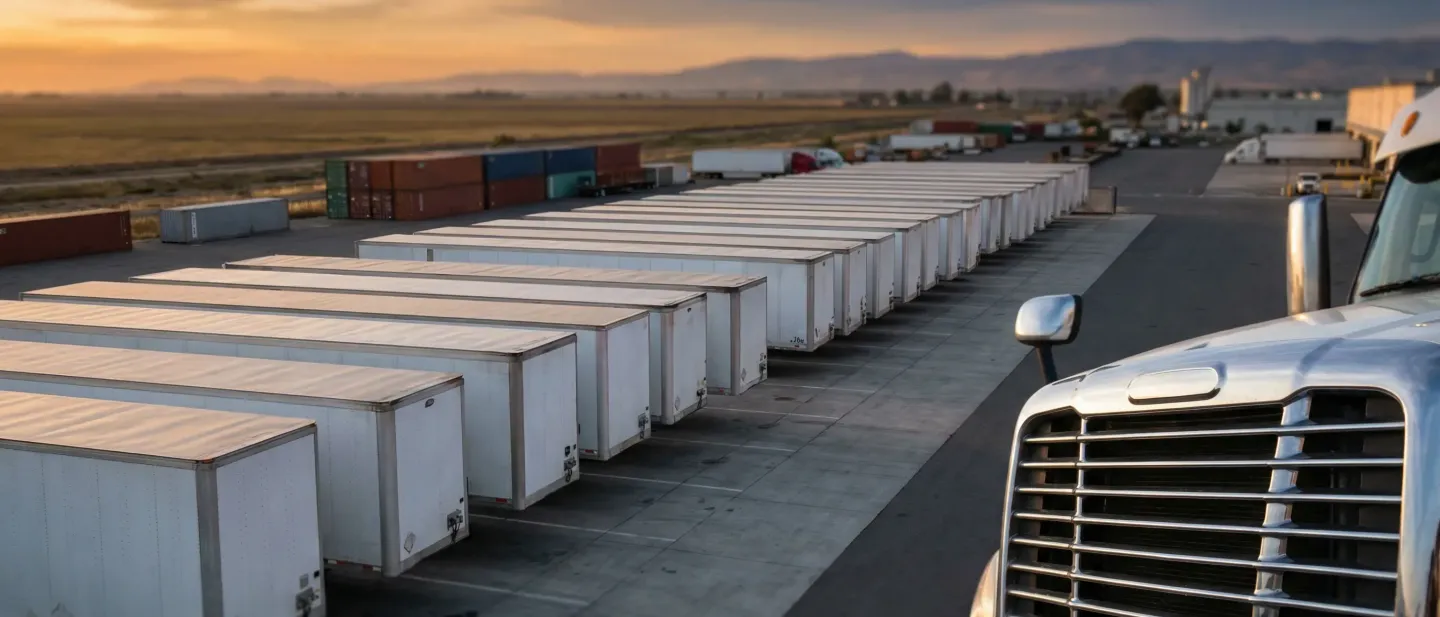
In the Sacramento-Stockton-Modesto metro area, people search for transportation & logistics services about 3,320 times a month on Google; a top-of-page click costs $3–$12, and demand peaks in July.
Search volumes for Stockton, CA alone are too thin to report; the figures are for the Sacramento-Stockton-Modesto, CA,California,United States metro area.
Google Keyword Planner · Oct 2025 – Sep 2026
| Search | Monthly searches | Top-of-page CPC |
|---|---|---|
| trucking company | 720 | $3.21–$9.29 |
| trucking companies near me | 480 | $2.97–$8.84 |
| ltl shipping | 320 | $4–$16 |
| courier service | 260 | $2.24–$9.49 |
| freight broker | 210 | $2.15–$7.00 |
| third party logistics | 210 | $7–$25 |
| delivery service | 210 | $3–$10 |
| hotshot trucking | 210 | $1.00–$7.58 |
| freight forwarder | 140 | $4–$13 |
| freight shipping | 110 | $4–$23 |
Source: Google Keyword Planner (Google Ads), Google Search, English, the Sacramento-Stockton-Modesto metro area, Oct 2025 – Sep 2026. Volumes are Google's monthly averages; CPC is the top-of-page bid range, weighted by search volume. How we collect these figures.
Stockton's transportation and logistics sector is one of the most structurally significant in inland California, but it's also one of the most underinvested in digital marketing. Most SMB trucking operators and freight brokerages in this market have built their books of business on broker relationships, personal referrals, and load board activity — not inbound digital lead generation. The result is that when shippers and logistics buyers search Google for "trucking company Stockton CA" or "freight broker Central Valley," they encounter a sparse competitive landscape. The few operators running PPC campaigns face almost no bidding competition from local companies. That's the opportunity. It's also the source of a specific failure pattern when local operators do attempt PPC without understanding the B2B nature of the vertical.
Transportation and logistics PPC is fundamentally different from consumer service verticals. An HVAC customer decides in hours. A dental patient decides in days. A freight contract decision — selecting a new carrier relationship, signing a warehousing agreement, or awarding a last-mile delivery partnership — takes weeks to months. This conversion timeline means that campaigns optimized for immediate form submissions or phone calls (the standard consumer PPC playbook) produce misleading metrics and frustrated operators who conclude "PPC doesn't work for trucking." It works. But it requires a B2B-appropriate structure: dedicated landing pages with quote request forms, CRM integration to track multi-touch attribution across a 30-90 day sales cycle, and a remarketing layer that keeps the company visible to warm prospects through the decision process.
Most Stockton T&L operators who attempt Google Ads run generic "trucking company Stockton" broad match campaigns to their homepage, track nothing, and conclude after 60 days that the platform doesn't produce results. They're measuring immediate phone calls — a metric appropriate for emergency HVAC but irrelevant for freight contract acquisition. The operator that converts a $200,000/year freight contract from a Google Ads lead generated in month 1, closed in month 3, looks at the campaign and sees "no conversions" because no one set up the CRM attribution.
Stockton's logistics market isn't monolithic — it contains several distinct sub-verticals with different searcher intent, different decision-makers, and different conversion paths. Generic "trucking Stockton" campaigns miss the most valuable sub-verticals:
Each sub-vertical has different buyers, different search terms, and different conversion paths. A refrigerated trucking operator's landing page has no value to a warehouse storage buyer. A "drayage services Stockton" searcher is looking for a specific service that a generic "we do all trucking" page fails to address. The fragmentation is the challenge — but it's also the early-mover advantage: operators who build sub-vertical campaign structures now establish keyword relevance and Quality Score before the market gets more competitive.
Stockton T&L PPC requires a B2B-specific campaign architecture: sub-vertical keyword segmentation, service-specific landing pages, quote-request conversion tracking, CRM integration, and a remarketing layer built for a 30-90 day sales cycle. Here's how to build the structure that produces freight contracts, warehousing clients, and last-mile delivery partnerships from Google Ads.
A high-performing Stockton T&L Google Ads account separates service lines into distinct campaigns. A trucking company should not run "trucking Stockton," "warehouse Stockton," and "drayage Stockton" in a single campaign — the searcher intent, landing page requirements, and conversion actions are fundamentally different across service lines.
Keyword groups with CPC estimates for Stockton T&L operators:
Remarketing is not optional in B2B logistics PPC — it's the conversion mechanism. A shipper who clicks a "warehousing Stockton" ad, visits the landing page, and requests a quote on day 1 is in a 60-90 day evaluation process. They're comparing 2-4 providers, running internal approvals, and signing contracts months after the first touchpoint. Remarketing display campaigns that keep your brand visible during this evaluation window — showing professional freight imagery and a clear "Get a Quote" CTA — maintain awareness through the decision cycle without requiring the lead to remember your company name and return to Google to find you again. Allocate 20-25% of total budget to remarketing for B2B logistics campaigns.
Route-specific messaging dramatically increases ad relevance and CTR for freight campaigns. "Sacramento to LA trucking — Stockton-based carrier" outperforms "trucking company Stockton CA" because it speaks to the specific need. "I-5 corridor freight," "Bay Area to Central Valley trucking," and "Stockton to Las Vegas route" campaigns reach shippers with specific origin/destination pairs at the moment they're searching for exactly that route coverage.
Stockton's transportation and logistics market is in the middle of a structural expansion that creates a specific window of early-mover advantage for SMB operators who establish Google Ads presence before the market gets competitive. Understanding the growth drivers — and the timing of the opportunity — is what separates operators who own the top positions in 2026 from those who spend 3x more in 2028 to catch up.
The post-pandemic e-commerce logistics build-out has significantly expanded Stockton's warehouse and distribution footprint. Amazon, FedEx, and multiple regional 3PLs have opened or expanded distribution centers in the Lathrop-Tracy-Stockton corridor, creating demand for SMB last-mile delivery contractors, local drayage operators, and regional trucking companies to service these facilities. These facilities don't exclusively use national carriers — they actively seek local SMB partners for last-mile deliveries, inter-facility transfers, and regional distribution runs that national carriers don't cover cost-effectively at smaller volumes. The SMB operator with a 5-20 truck fleet and a professional Google Ads presence is positioned to capture these subcontract and direct client relationships that large carriers don't pursue.
Key market data for Stockton T&L operators:
San Joaquin County is consistently one of the most productive agricultural counties in the United States, generating significant seasonal freight volume from almond harvest (August-October), tomato processing (July-September), wine grape harvest (September-October), and asparagus (March-June). These seasons create predictable demand spikes for refrigerated trucking, bulk commodity transport, and food-grade container hauling — at a time when most agricultural freight brokers and carriers are booking capacity through relationships rather than digital channels. A targeted agricultural freight campaign with peak-season bid increases in June-November reaches shippers and food processors actively searching for additional carrier capacity at exactly the moment demand exceeds their existing carrier relationships. This is a seasonal window with minimal Google Ads competition and strong buyer intent.
The broader opportunity for Stockton T&L SMBs is timing. The window of low CPC competition in this vertical won't remain open indefinitely. As national freight brokerages and regional logistics companies increase their Google Ads investment in Central California, CPCs for core trucking and warehousing terms will rise. The operators who establish campaigns, build Quality Scores, and develop attribution tracking now will compete from a position of advantage. Those who wait until the market gets crowded will pay 2-3x the CPCs for the same positions.
Transportation and logistics PPC is structurally different from consumer service verticals — longer sales cycles, B2B decision-makers, sub-vertical keyword fragmentation, and CRM-dependent attribution make it a category where generic Google Ads templates produce frustrating non-results. The operator who runs a "trucking Stockton" broad match campaign to their homepage and tracks nothing will conclude PPC doesn't work. The operator who builds sub-vertical campaigns with service-specific landing pages, quote request tracking, and a 90-day remarketing window will close freight contracts from Google Ads.
MB Adv Agency specializes in building PPC campaigns for service-business SMBs that understand B2B conversion cycles. For Stockton T&L operators, we structure campaigns around your specific service lines — freight, warehousing, last-mile, agricultural, Port drayage — with dedicated landing pages, call and form tracking, and the remarketing infrastructure that captures the 60-90 day decision cycle. We build in the CRM attribution framework from day one, so every freight lead is tracked from first click to signed contract — not just to a form submission that may convert 60 days later with no visible connection to the original ad. Our Google Ads management service is built for operators who want a systematic new business engine, not a traffic experiment. Review our pricing tiers or contact us for a Stockton logistics PPC assessment.
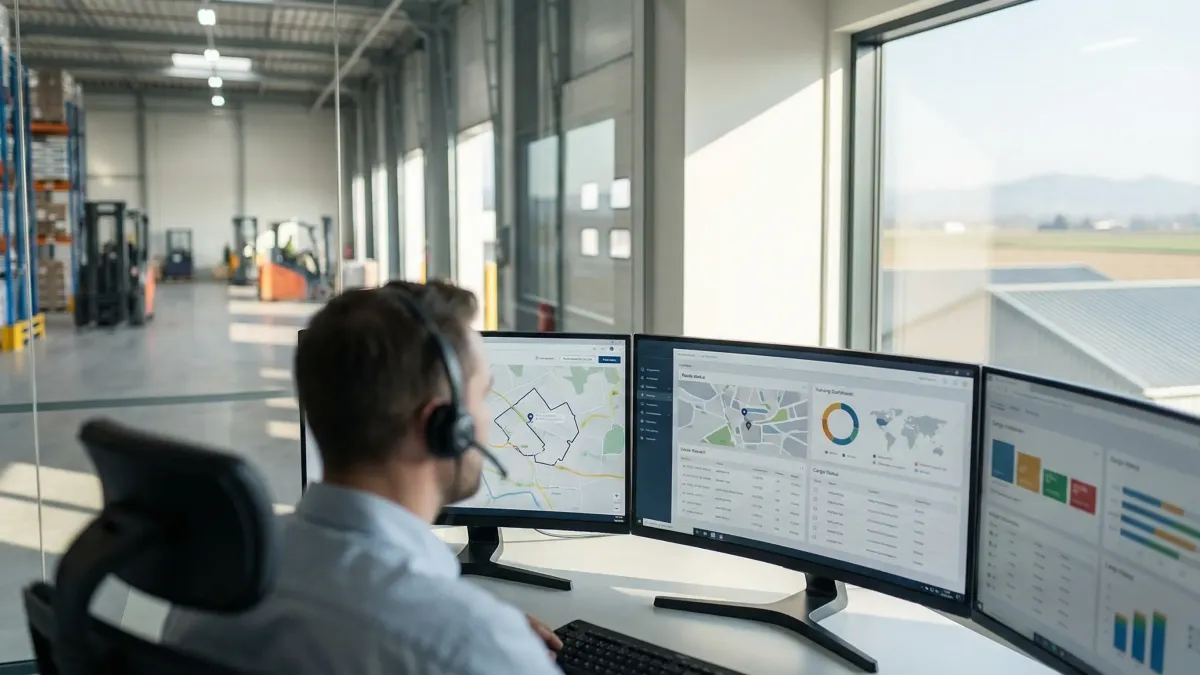
Transportation and logistics PPC in Stockton produces leads at $50-$200 CPL depending on service line and campaign maturity, with the economic case for PPC built not on CPL but on contract value. Core freight and trucking terms ("trucking company Stockton CA," "freight broker Central Valley") run at $2–$9 CPC with 3-4% CVR. Last-mile delivery contract leads run $80-$200 CPL. Warehousing and 3PL leads run $100-$250 CPL due to higher CPCs ($7–$40) and longer sales cycles. Agricultural freight leads — acquired during the May-November harvest season when CPCs are low and intent is high — run at $50-$120 CPL. The economics across all segments are compelling when measured against contract value: a single freight contract at $150,000/year produces 750-3,000x the CPL in annual revenue. A warehousing contract at $15,000/month produces 60-150x the CPL in monthly revenue. The B2B lead economics in this vertical are exceptional — but only when measured correctly. CPL means nothing in isolation; contract value per acquired client is the metric that determines whether PPC is profitable for a Stockton trucking or logistics operator.
B2B transportation and logistics PPC has a longer time-to-ROI than consumer service verticals, and Stockton operators should plan their campaigns accordingly. The first 30 days produce clicks and form submissions — but most freight contract decisions take 30-90 days from first inquiry to contract signature. This means month 1 campaign results look sparse if you're tracking immediate conversions. Month 3 is when attribution becomes clear: the lead that submitted a quote request in week 2 has now been through vendor evaluation and internal approval, and if your remarketing sequence kept your company visible through that process, you're in the final decision set. Campaigns that run for less than 90 days and conclude "it didn't work" have ended before the first conversion cycle could complete. For Stockton T&L operators, plan a 90-day minimum evaluation window with conversion tracking connected to your CRM — not just form submissions. Track leads from first click through quote request through contract signature. The ROAS on a properly attributed B2B logistics PPC campaign — measured at the contract level — consistently runs 15-50x. The campaigns that "don't work" are the ones measuring traffic instead of contracts, or that end before the first sales cycle completes. Agricultural freight campaigns run on a faster cycle during harvest season: shippers searching for additional carrier capacity in September have a 1-2 week decision window, not 90 days, because harvest freight is perishable and capacity is time-sensitive.
How to read this Cost per click and monthly searches are measured with Google Keyword Planner (see above). Cost per lead, conversion rate, budget and leads are estimates compiled from public benchmarks such as WordStream, not measurements.
Sources WordStream B2B/Industrial Services benchmarks 2024/2025; Port of Stockton public documentation; San Joaquin County agricultural freight seasonal data; Stockton-specific CPC estimates based on local market competition analysis
$590$990/month
1 platform · Google or MetaGoogle + Meta$790$1,290/month
1 platform · Google or MetaGoogle + Meta$1,140$1,940/month
1 platform · Google or MetaGoogle + MetaChatGPT Ads: a separate pilot, $250/month, added to a plan. See the pilot →

Matteo Braghetta founded MB Adv and runs its Google Ads accounts. He takes the first call with every new client, reads the accounts every week and writes the agency’s guides.
The other half of his job is measurement: GA4, Consent Mode and server-side tracking, so the platforms learn from real sales.
MB Adv is a Google Partner agency managing about $4.4M a year in ad spend for clients in the US, the UK and Europe.
Managed on numbers you can check.
Plans for the US