Water Damage Restoration PPC New Haven, CT
New Haven sits on Long Island Sound with FEMA flood zones across coastal neighborhoods and a housing stock where 40.75% of homes predate 1939 — carrying original cast-iron plumbing, deteriorated drain stacks, and below-grade living spaces that flood. Add coastal storm surge, Mill River and West River backup events, and Connecticut's winter freeze-thaw burst-pipe cycle, and you have a water damage restoration market with both chronic structural demand and acute seasonal spikes. The insurance-backed job model means a single lead can be worth $3,000–$50,000. The contractors capturing those leads are the ones running PPC.
Why Do Water Damage Restoration PPC Campaigns Fail in New Haven, CT?
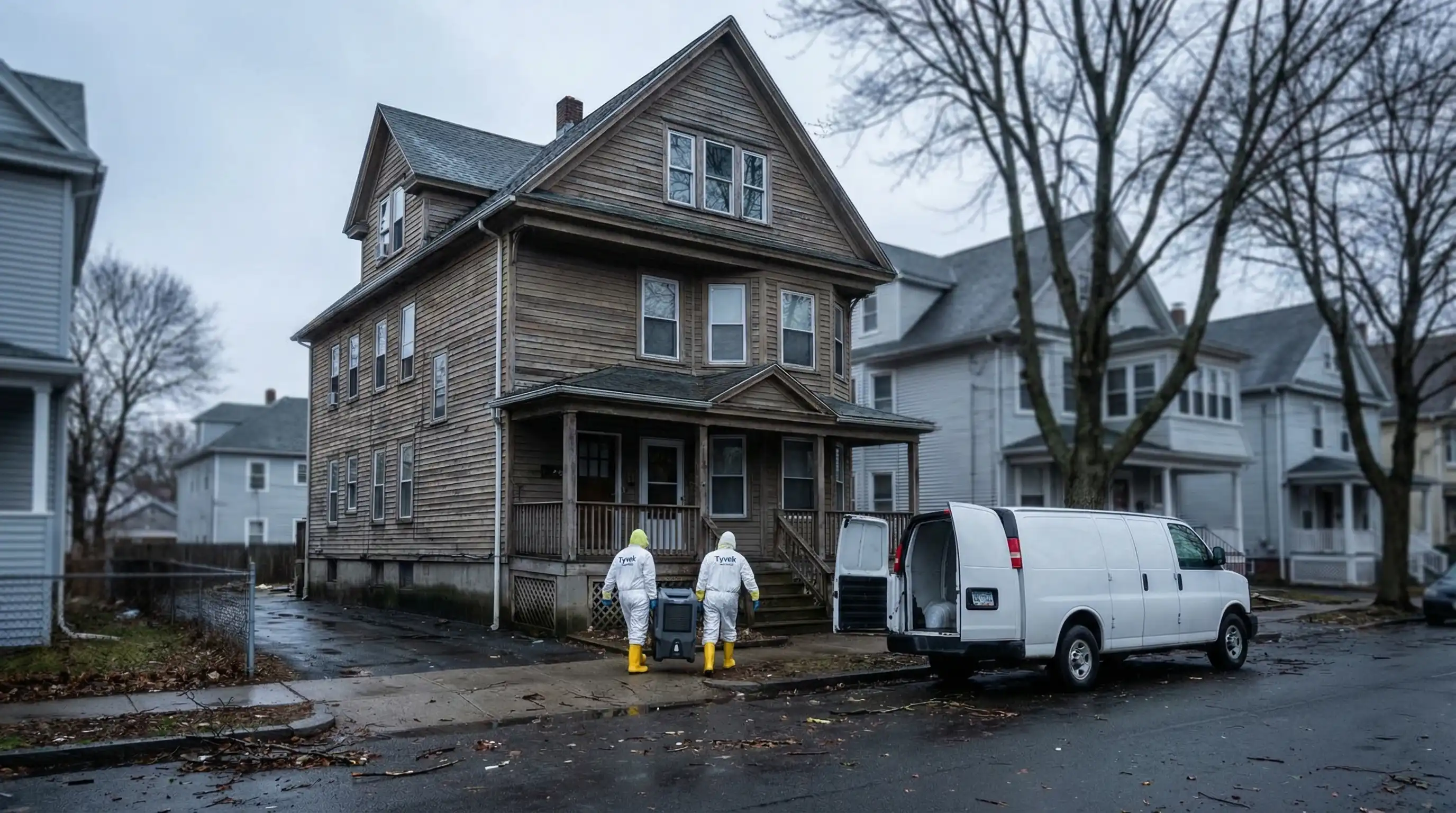
Water damage restoration PPC fails in New Haven for a specific and consistent reason: campaigns built for the general home services buyer persona miss the actual demand structure of this market. The New Haven restoration buyer isn't primarily a homeowner researching options. In most cases, they're in an active emergency — water on the floor right now — and their search behavior reflects pure urgency. Generic "water damage services" campaigns with slow-loading landing pages, too many nav options, and form fills above the phone number lose those leads in under 10 seconds.
The Emergency Conversion Window Problem
Water damage restoration has a conversion window measured in minutes, not hours. A homeowner with three inches of water in their basement from a burst pipe in January isn't comparison-shopping. They're calling the first number they see that signals immediate availability. The campaign that wins is the one whose ad copy says "New Haven 24/7 Emergency Water Removal — On-Site in 60 Minutes" — not "Trusted Water Damage Services Since 2005." Landing pages for emergency water damage traffic need one thing above the fold: a phone number in 40+ pixel font. Everything else is secondary.
Most restoration PPC campaigns running in Greater New Haven don't make this distinction. They run a single campaign with mixed intent — emergency and non-emergency searches in the same ad group, sharing the same generic landing page — and bleed budget on non-converting clicks while the urgent leads abandon to competitors with faster conversion paths.
The National Franchise Positioning Problem
New Haven's restoration market is partially dominated by national franchises. SERVPRO of Milford-Orange-Stratford (Woodbridge) and SERVPRO of Branford/Shoreline (East Haven) operate two franchises directly in the market. ServiceMaster Restoration Services (Hamden) holds the third major franchise presence. These operators carry enormous brand recognition — and that recognition is both their strength and their weakness in PPC.
National franchise campaigns run template copy: "SERVPRO — Faster to Any Size Disaster." They don't run New Haven-specific copy. They don't mention coastal flooding in Morris Cove. They don't target Fair Haven landlords facing basement backup events from Mill River overflow. They don't mention insurance direct billing by name. The localized urgency and specificity gap is real — and it's where independent operators can compete directly against larger franchises on paid search, even when outspent on brand terms.
The Insurance Billing Blind Spot
Most water damage jobs in New Haven are insurance-backed. A homeowner whose basement flooded from a burst pipe calls their insurance company — and then needs a restoration contractor. The contractors who prominently advertise that they accept insurance assignments and handle claim paperwork directly remove the #1 friction point in the conversion path. Green Restoration (Orange) runs an eco-friendly differentiation angle. Steamatic of Connecticut (North Haven) leads with certifications. Neither leads with "We Handle Your Insurance Claim." That lane is open.
The coastal geography adds layers of acute demand that chronic structural campaigns alone don't capture. FEMA flood zone properties in Morris Cove, Fair Haven, Long Wharf, and the waterfront district generate insurance-backed claims that can run $15,000–$50,000+ for major flood events — numbers that change the PPC ROI math entirely. A $200 lead cost on a $40,000 job is a 200:1 return, not a 15:1.
PPC Strategies That Win Water Damage Restoration Leads in New Haven
Water damage restoration in New Haven requires three campaign lanes: emergency residential, insurance-backed commercial, and mold remediation follow-up. Each operates on different urgency timelines, different CPCs, and different conversion paths.
Emergency Residential Lane (highest priority, year-round): This is the core of any restoration PPC investment. Emergency intent searches — burst pipes, active flooding, sewage backup — convert at 5–7.5% and require the fastest-loading, simplest landing pages of any campaign type. Phone number above the fold. Response time promise in the headline. No menu navigation. One CTA.
- Burst pipe / water intrusion keywords: "emergency water damage New Haven CT," "water damage restoration New Haven," "burst pipe New Haven CT," "flooded basement New Haven CT" — avg $12–$18 CPC
- Sewage backup keywords: "sewage backup New Haven CT," "sewage cleanup New Haven," "sewage restoration New Haven" — avg $10–$16 CPC, high urgency, high job value
- Storm flood keywords: "flood cleanup New Haven CT," "water removal New Haven," "basement flooding New Haven CT" — avg $10–$17 CPC, spikes during and after storm events
Insurance-Assisted Lane (post-storm priority): Target the homeowner who knows they have storm damage and is trying to figure out how the insurance process works. This audience converts in 24–72 hours — not in minutes. They need landing pages with content: insurance claim process explanation, what to document, what to expect from the adjuster visit, and clear messaging that the contractor works directly with insurance companies.
- Insurance navigation keywords: "water damage insurance claim New Haven," "storm damage restoration New Haven CT," "insurance claim water damage CT," "restoration contractor accepts insurance New Haven" — avg $11–$18 CPC
- Coastal flooding specific keywords: "coastal flood damage New Haven CT," "storm surge cleanup New Haven," "flood zone restoration New Haven" — avg $10–$16 CPC, activated during and post-storm events
Mold Remediation Lane (Q2 and Q4 priority): Mold is the downstream consequence of water damage — and it's often discovered months after the initial event. Homeowners who had water intrusion in Q4 or Q1 discover mold in spring. The mold remediation audience is less urgent but high-value, and the conversion path involves testing + remediation, often a $2,000–$8,000 project.
- Mold keywords: "mold remediation New Haven CT," "mold testing New Haven," "mold removal New Haven CT," "mold inspection New Haven" — avg $8–$14 CPC
Commercial/Landlord Lane (year-round): New Haven's 73.4% renter rate and dense multi-family housing stock create a commercial-adjacent restoration audience: property managers and landlords dealing with tenant water emergencies. This audience is recurring — a property manager with 50 units will need restoration services multiple times over the course of a year. Target them with service agreement messaging and priority response positioning.
- Landlord/commercial keywords: "commercial water damage New Haven CT," "property manager water damage New Haven," "emergency water removal multi-family New Haven" — avg $10–$16 CPC
Budget scaling for storm events: Pre-configure automatic campaign budget increases of 50–75% for 48–72 hours following a major coastal storm or nor'easter. The first three hours after a major flooding event are the highest-converting window in any restoration market — and the contractors who are already running campaigns at increased spend when the first searches appear capture the majority of those leads before slower advertisers add budget manually.
Google Partner Agency
We're a certified Google Partner Agency, which means we don’t guess — we optimize withGoogle’s full toolkit and insider support.
Your campaigns get pro-level execution, backed by real expertise (not theory).

What Market Trends Should New Haven Water Damage Restoration Businesses Know?
New Haven's restoration market is evolving in ways that create specific PPC opportunities for operators who understand the underlying demand drivers. Three trends stand out as particularly actionable in 2025–2026.
Coastal Flood Risk Is Expanding the Addressable Market
FEMA's updated flood maps have expanded the designated flood zone area across Greater New Haven in recent years, adding properties in Morris Cove, Fair Haven, the waterfront district, and sections of Hamden and North Haven that weren't previously classified as flood-risk. This means more homeowners are discovering for the first time that they carry flood damage exposure — and more are searching for information on storm damage restoration, emergency flood cleanup, and insurance claim processes before they actually need them.
Pre-event awareness campaigns — "Is Your New Haven Home in a Flood Zone? Know Your Restoration Options" — have shown strong engagement in comparable coastal markets (Stamford, Bridgeport) because they address the anxiety of flood-risk property owners before an emergency occurs. These campaigns convert at lower rates than pure emergency searches but build brand recognition that pays off when the storm does arrive: homeowners who've seen a restoration company's ad pre-event call them first when water starts coming in.
The Landlord Emergency Contract Opportunity
New Haven's landlord market — managing the city's 40.87% duplex and converted apartment housing stock — represents a systematically underserved PPC audience in water damage restoration. A landlord managing 20 units across New Haven's pre-WWII triple-deckers deals with water intrusion events regularly: aging pipe failures, basement backup from the Mill River drainage basin, coastal moisture infiltration. A property management emergency contract with a restoration company is worth $5,000–$20,000+ annually in recurring work — and almost no current PPC campaigns target this buyer persona directly.
The messaging for this audience is different: not "emergency water removal fast" but "Preferred restoration partner for New Haven property managers — priority response, direct insurance billing, 24/7 tenant emergency line." That's a landing page and campaign structure that doesn't exist in the current market.
Seasonal Demand Breakdown for New Haven Restoration
- Q1 (Jan–Mar): Highest emergency volume. Burst pipes during Connecticut cold snaps + snowmelt basement flooding. Run emergency campaigns at +30–50% above baseline. 24/7 coverage mandatory.
- Q2 (Mar–Apr): Snowmelt sump pump failures + mold discovery season (from Q4–Q1 water intrusion). Mold remediation campaigns peak here. Transition budget from emergency to mold focus in late March.
- Q3 (Aug–Oct): Coastal storm season — tropical remnants and late-season nor'easters. Insurance-backed storm damage campaigns run strongest here. Pre-configure storm budget rules before August 1.
- Q4 (Nov–Dec): Deferred moisture issues discovered in home sale inspections. Landlord pre-winter audits. Mold remediation from unaddressed summer water events.
Key insight: New Haven restoration PPC has four distinct demand types running simultaneously — chronic structural (aging plumbing), acute emergency (burst pipes), seasonal coastal (storms), and discovery-based (mold found during renovations or sales). A campaign that only targets one of these demand types captures a fraction of the total market opportunity.
Why New Haven Restoration Campaigns Need Local PPC Expertise
Water damage restoration PPC in New Haven requires a campaign structure designed around the actual demand profile of a coastal Connecticut city with a 70%+ renter rate, active FEMA flood zones, and an aging housing stock generating chronic structural water intrusion. A national template doesn't price in coastal storm surge seasonality, doesn't target Fair Haven landlords with emergency contract messaging, and doesn't pre-configure storm budget scaling rules before August.
At MB Adv Agency, we build restoration campaigns on local market data. Emergency lane, insurance lane, mold lane, and commercial lane — each with separate budgets, dedicated landing pages, and conversion tracking calibrated to the actual conversion path of each audience type. We configure storm response budget scaling rules before the season opens, so our clients capture the first-mover advantage in post-storm search without a manual scramble.
Our restoration lead generation is built for the SMB restoration company that can't afford to waste budget on non-converting clicks — and can't afford to miss the peak demand windows that define annual revenue. See our pricing for restoration contractors, or contact us through our New Haven PPC page. Full PPC campaign management available for operators ready to compete seriously in this market.
Frequently Asked Questions
How much does water damage restoration PPC cost in New Haven, CT?
Water damage restoration PPC in New Haven costs between $10 and $20 per click for core emergency search terms, with coastal storm event periods pushing CPCs to $18–$25 for 24–72 hours post-event. At a 5–7.5% conversion rate, that translates to a cost per lead of $120–$200. The math is strongly positive: standard water intrusion and drying jobs run $3,000–$15,000 with insurance reimbursement, and major coastal flood events generate $15,000–$50,000+ restoration and reconstruction contracts. A realistic starter budget for a New Haven restoration operator is $2,000–$3,500 per month, generating 10–20 qualified emergency leads. During storm season (August–October) and winter burst-pipe peak (January–March), budget should scale 30–50% above baseline to capture the demand windows that define annual revenue. The insurance-backed job model means the effective CPL ceiling is much higher than typical home services — a $200 lead cost on a $20,000 insurance-reimbursed job is a 100:1 return, and that math justifies aggressive bidding on emergency terms that would look expensive in a lower-ticket category.
Mold remediation keywords run at lower CPCs ($8–$14) with a slower conversion cycle — but $2,000–$8,000 mold projects convert reliably when landing pages address the health and habitability concerns that drive mold search intent. Allocate 20–25% of monthly budget to mold terms during Q2 (mold discovery season) for the highest return on that spend.
What types of water damage leads convert best with Google Ads in New Haven?
The highest-converting water damage leads in New Haven come from active emergency searches — burst pipes, active basement flooding, sewage backup — where intent is immediate and the buyer has no time to comparison-shop. These searches convert at 6–9% on well-structured landing pages (phone number above the fold, response time promise in the headline, zero distractions). They represent the highest single-session conversion rate of any restoration search type, and they're most frequent in January–March (burst pipe season) and August–October (coastal storm season). Second-highest converting are insurance-assisted storm damage searches — homeowners who know they have damage and are figuring out the insurance process. These convert in 24–72 hours with landing pages that explain the insurance claim process and promise direct billing. They generate slightly lower urgency but consistently higher job values ($8,000–$50,000+ for major coastal events). Mold remediation searches convert more slowly (1–2 week research cycle) but are high-confidence buyers — mold doesn't resolve itself, and the homeowner who discovers it will hire someone. These leads run at lower CPCs and convert reliably to $2,000–$8,000 projects.
- Burst pipe / active flooding: Converts in minutes. Highest urgency. 6–9% CVR. Best in Q1 and post-storm.
- Storm damage / insurance: Converts in 24–72 hours. Highest job values. Best in Q3 coastal storm season.
- Mold remediation: Converts in 1–2 weeks. Reliable, high-confidence buyer. Best in Q2 (spring discovery season).
- Landlord/commercial: Converts to recurring service agreements. Highest LTV. Targeted year-round with dedicated commercial messaging.