Construction PPC Cincinnati, OH
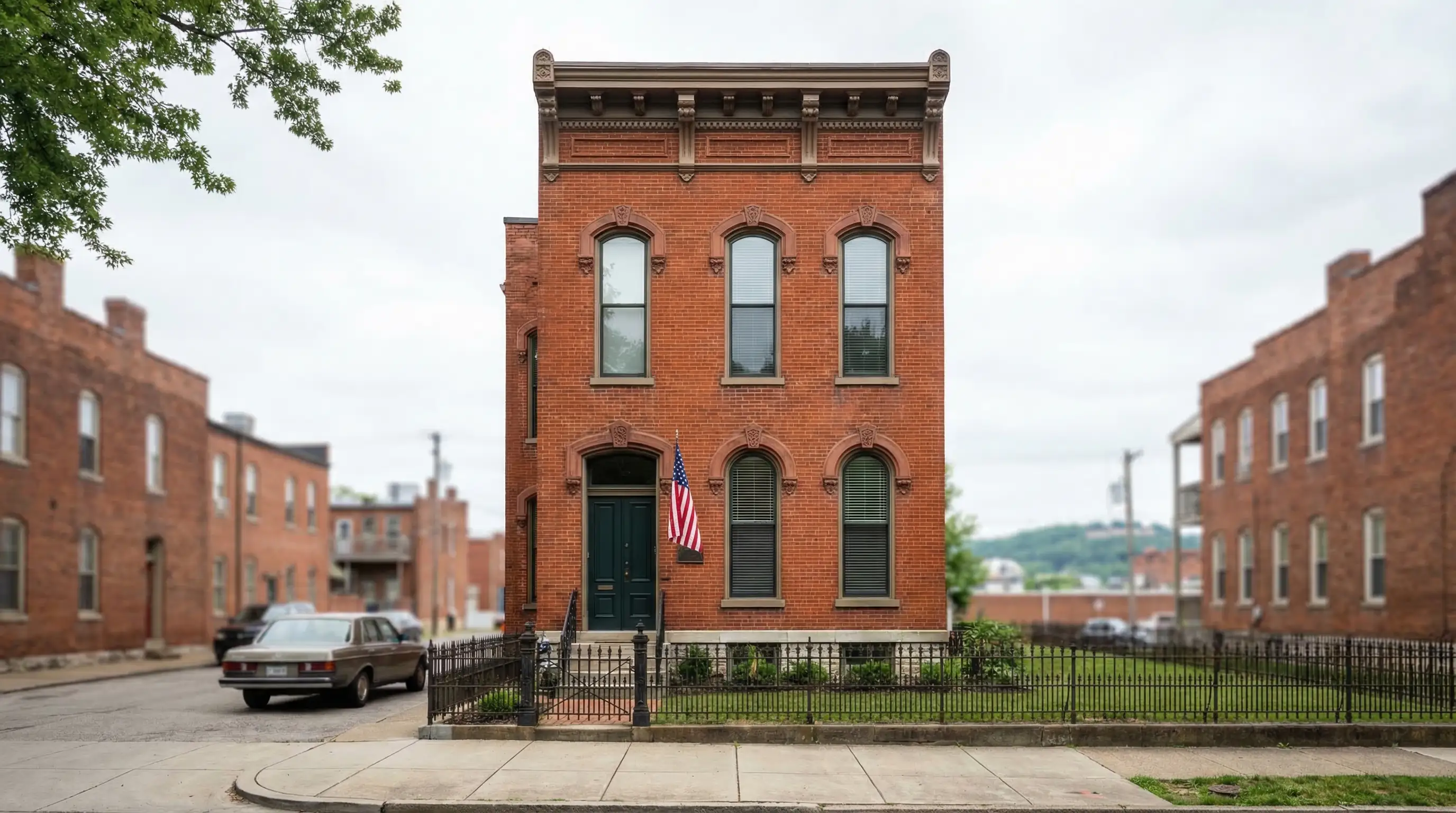
Cincinnati's 40% pre-1939 housing stock doesn't just need HVAC and plumbing work — it needs structural renovation, kitchen and bathroom modernization, foundation repairs, and addition framing at a scale that makes Cincinnati one of the highest-demand residential remodeling markets in the Midwest. The Hyde Park Victorian selling for $900,000 needs a $150,000 kitchen renovation. The Clifton foursquare with original 1922 bones needs a master bath addition. The demand is structural, the job values are high, and most Cincinnati general contractors are still relying on HomeAdvisor shared leads — a system that charges $50–$200 per lead with no exclusivity — instead of Google Ads campaigns that generate inbound intent at comparable or lower CPL. <!-- stats-article-link --> <p><em>See how this city's Construction PPC costs compare nationally in our <a href="https://www.mbadv.agency/ppc-industry-statistics/construction-ppc-statistics">Construction PPC Statistics</a> report, featuring data from 40+ US cities.</em></p>
The HomeAdvisor Dependency Trap
The most widespread problem in Cincinnati's construction and remodeling PPC landscape isn't campaign structure — it's that most Cincinnati GCs aren't running Google Ads campaigns at all. They're buying shared leads from HomeAdvisor, Houzz, and Angi at $50–$200 per lead, getting the same lead simultaneously sent to 3–5 competitors, and wondering why their close rate is 15–20%. The shared lead model is built to serve the platform, not the contractor. A Cincinnati GC that converts 20% of shared leads at $150 per lead is paying $750 for every job closed. That's before labor and materials.
Google Ads generates exclusive inbound leads — homeowners who searched, clicked your ad, and called your company. No competing GCs receive the same lead. The CPL for construction PPC in Cincinnati runs $150–$260 depending on the service, but the exclusivity of inbound intent-driven leads means close rates are typically 35–55% versus 15–20% for shared platforms. The effective cost per closed job on Google Ads is often lower than HomeAdvisor despite the higher CPL, because the close rate advantage more than compensates for the lead cost difference.
The Contractor Reliability Problem: Cincinnati's Trust Deficit
Cincinnati's remodeling market has a well-documented contractor reliability problem. Consumer complaints about general contractors consistently rank among the highest of any home service category: abandoned projects, missed timelines, cost overruns that weren't disclosed at quoting, and contractors who take deposits and disappear. This reputation creates a search behavior where Cincinnati homeowners typing "general contractor Cincinnati OH" are not just looking for options — they're conducting due diligence to filter out bad actors.
Campaigns that don't address this trust barrier in ad copy miss the primary anxiety driving search behavior. Generic "Free Estimate," "Licensed & Insured," and "Quality Work" copy provides no actual trust signal — every contractor says these things, including the ones with abandoned projects on their record. Copy that leads with verifiable trust signals converts dramatically better: "A+ BBB Rating," "40+ Google Reviews," "3-Year Workmanship Warranty," or "Cincinnati-Based Since 2001" addresses the consumer's specific fear before the click and pre-qualifies the click for higher conversion intent.
The high project values in Cincinnati renovation amplify the trust sensitivity. A homeowner considering a $75,000 kitchen remodel is not making an impulse decision — they're vetting contractors over 2–6 weeks, reading reviews, visiting showrooms, and getting 3–5 estimates. CPCs for high-consideration queries like "kitchen remodel Cincinnati" run $14–$20 precisely because the lead intent is strong and job values are high. A campaign that captures this intent but fails the trust check on the landing page — no photos, no reviews, no warranty language — wastes the most valuable clicks in the construction PPC market.
The geographic complexity of Cincinnati's renovation market adds a third structural challenge. The high-value renovation demand concentrates in specific neighborhoods: Hyde Park, Clifton, O'Bryonville, Indian Hill, and Mt. Lookout on the Cincinnati side; Mason, West Chester, and Loveland in the suburban ring. Campaigns that run broad "Cincinnati OH" geo-targeting miss the opportunity to bid up in high-value zip codes and bid down in lower-value ones. A $200K+ kitchen remodel lead from Indian Hill has fundamentally different economics than a $20,000 bathroom update from a mid-market suburb — but most Cincinnati construction campaigns treat them identically.
Cincinnati construction PPC works best with a procedure-specific campaign architecture that separates high-consideration renovation categories by job type, not by generic "remodeling" umbrella terms.
Campaign Architecture by Renovation Type
- Kitchen remodeling: "kitchen remodel Cincinnati," "kitchen renovation Cincinnati OH," "kitchen contractor Cincinnati" — CPCs $14–$20; CVR 4–6%; highest search volume in home improvement; portfolio landing page with before/after photos is non-negotiable
- Bathroom remodeling: "bathroom remodel Cincinnati," "bathroom renovation Cincinnati," "master bath addition Cincinnati" — CPCs $12–$17; CVR 4–7%; second-highest volume; combo "bathroom + kitchen" campaign can share budget efficiently
- Basement finishing: "basement finishing Cincinnati," "basement remodel Cincinnati," "finished basement contractor Cincinnati" — CPCs $10–$14; CVR 5–8%; strong seasonal play in Q1 (winter interior project season); lower competition than kitchen/bath
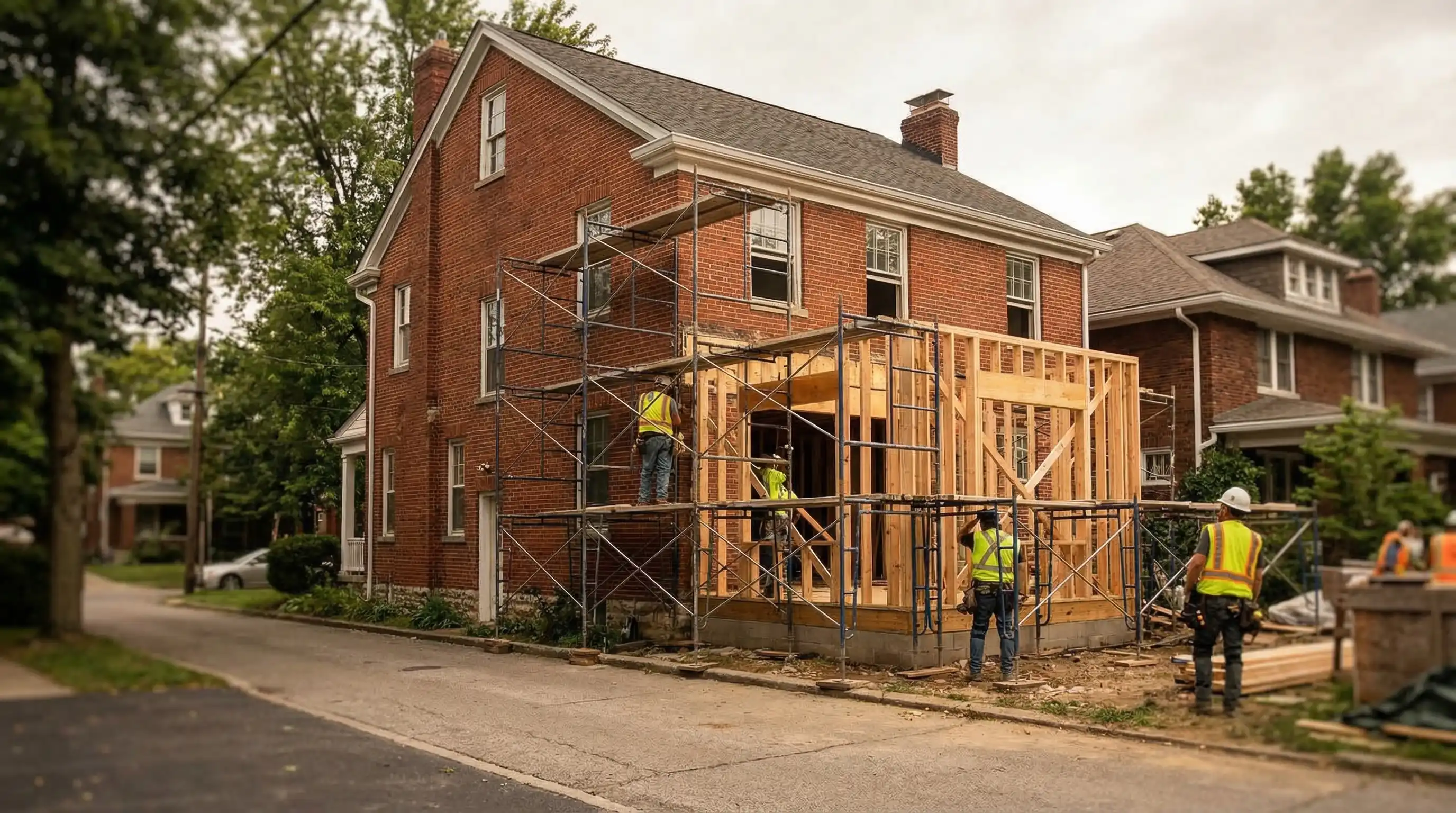
- Home additions: "home addition Cincinnati," "room addition Cincinnati OH," "home addition contractor Cincinnati" — CPCs $12–$16; CVR 3–5%; longer decision cycle; highest average job value ($80,000–$250,000)
- Historic home renovation: "historic home contractor Cincinnati," "historic renovation Hyde Park," "old home renovation Cincinnati" — CPCs $9–$13; CVR 5–8%; niche but high-intent; Hyde Park and Clifton zip code targeting; less competition, premium customer quality
- Foundation and structural repair: "foundation repair Cincinnati," "structural contractor Cincinnati," "basement waterproofing Cincinnati" — CPCs $11–$15; CVR 5–7%; non-deferrable if structural damage is confirmed; technically separate from remodeling but cross-sells well
Bidding Strategy and Budget Allocation
Construction and remodeling has the longest decision cycle of any home services PPC category — homeowners research 2–6 weeks for major renovations. This changes the optimal bidding strategy: target CPA bidding with a 30-day attribution window is appropriate for renovation campaigns, because a homeowner who clicks your ad today may not call for 3 weeks. Campaigns using 7-day attribution windows drastically undercount conversions from the planning phase and misallocate budget away from high-intent searches.
Geo-bid adjustments matter more in construction than in almost any other home services category. Indian Hill zip codes (45243, 45236) should carry +25–35% bid premiums because average project values are 3–4x the Cincinnati median. Hyde Park and Clifton (45208, 45220) carry +15–20% premiums. Mid-market suburban zip codes in Cincinnati proper can run at base bid. This zip-code-level differentiation captures the premium project leads at higher CPCs (justified by job value) while keeping mid-market leads efficient.
- Q1 (Jan–Mar): Interior project planning season; kitchen/bath/basement campaigns at full budget; homeowners research through winter for spring projects
- Q2 (Apr–Jun): Construction season begins; exterior and addition campaigns ramp; full budget across all categories
- Q3 (Jul–Aug): Peak exterior season; additions and large-scale renovations in progress; maintain budget; focus on projects starting in September
- Q4 (Oct–Nov): Interior project season; kitchen and basement campaigns strong; Q4 is the second-best planning window before year-end
Google Partner Agency
We're a certified Google Partner Agency, which means we don’t guess — we optimize withGoogle’s full toolkit and insider support.
Your campaigns get pro-level execution, backed by real expertise (not theory).

The Historic District Premium: Cincinnati's 18 Recognized Historic Areas
Cincinnati has 18 locally recognized historic districts, including Hyde Park, Clifton, Mt. Auburn, Norwood, and Columbia Tusculum. Renovation within these districts is not just a preference — it often involves architectural review requirements, specific material standards, and contractor experience with historic preservation methods. The search volume for "historic home contractor Cincinnati" is low, but the intent concentration is extraordinary: a homeowner searching this phrase has already pre-qualified themselves as needing a specialized GC with historic renovation experience, not a commodity remodeler.
The economics of historic renovation campaigns in Cincinnati are compelling precisely because of low competition. Most Cincinnati GCs don't specifically target "historic home renovation" keywords — they run generic "home renovation Cincinnati" campaigns that dilute historic renovation intent into a general pool. A GC with documented historic district experience running a dedicated "historic home contractor Cincinnati" campaign faces minimal PPC competition for a customer type willing to pay premium rates for appropriate expertise. Hyde Park and Clifton homeowners paying $800,000–$1.5M+ for a historic home are not shopping for the cheapest renovation bid — they're shopping for the most qualified specialist.
The Pre-War Renovation Wave: Every Cincinnati Old Home Is on a Timeline
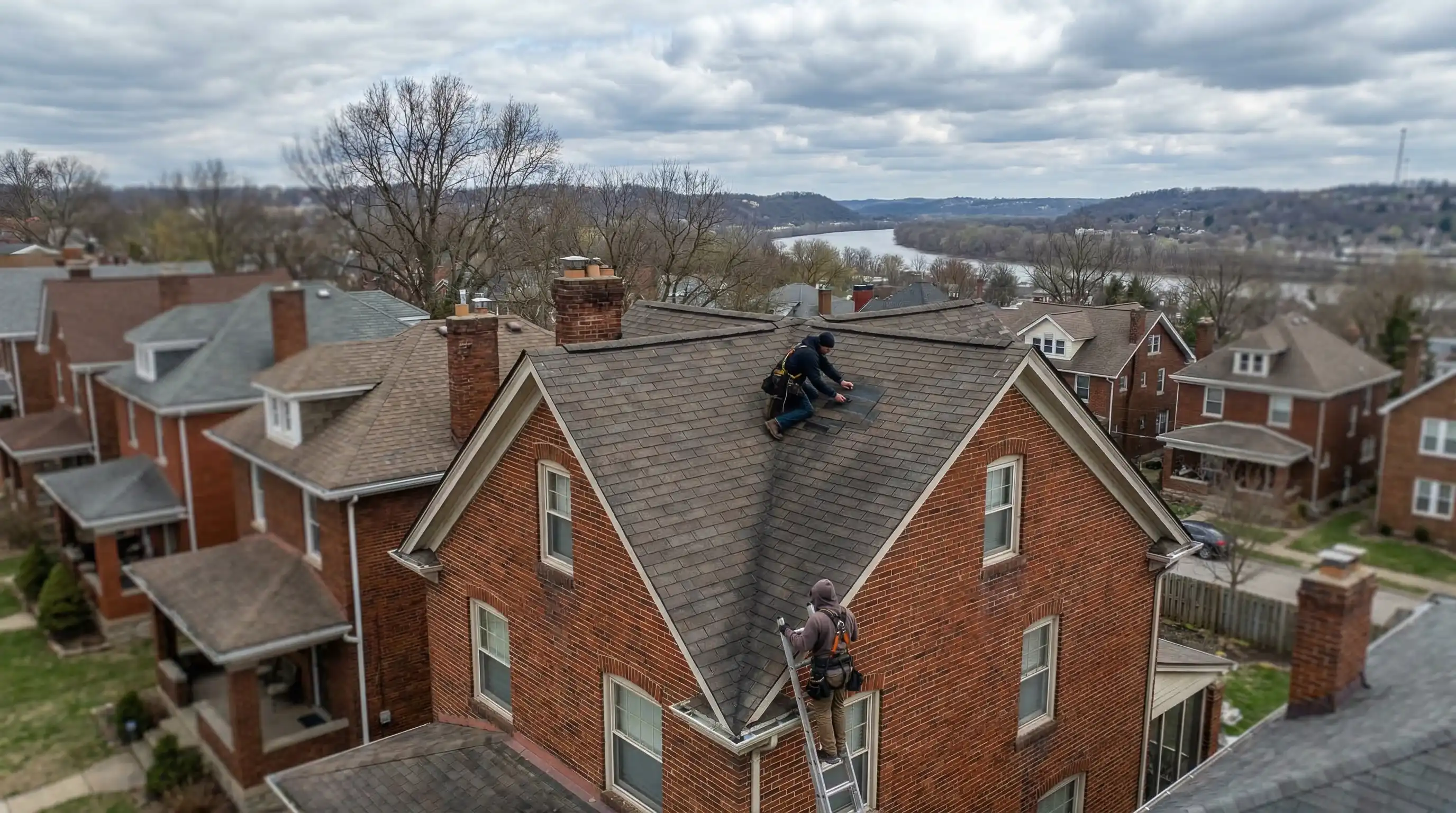
The same pre-1939 housing stock that drives HVAC and plumbing demand is driving a parallel renovation wave. A home built in 1928 that has had reasonable maintenance still needs: a kitchen that hasn't been updated since the 1980s, bathrooms that predate modern fixtures and tile, a basement that was never properly finished, and potentially original single-pane windows that fail modern insulation standards. Cincinnati's 40% pre-war housing stock represents a renovation backlog that will take decades to work through — it is not a one-time market event but a structural, persistent demand driver.
The renovation demand concentrates in the 35–60 homeowner demographic who bought these older homes in the 2000s–2010s when prices were lower, have built equity, and now have the financial capacity for major renovation. These homeowners are digitally active and research-driven — they read renovation blogs, follow design Instagram accounts, and search specifically for Cincinnati contractors with relevant portfolios. They convert on landing pages with project galleries, not on landing pages with stock photos and "free estimate" forms. GCs running portfolio-forward landing pages in Cincinnati see 2–3x higher conversion rates from organic renovation searches compared to generic landing pages.
The Northern Kentucky suburban ring (Florence, Burlington, Union Township) adds a second renovation market tier: newer homes (1980s–2000s construction) where kitchen and bath renovations are driven by age and style obsolescence rather than historic stock issues. This demographic has different price sensitivity and different design preferences — but they use the same Google search terms and respond well to the same conversion-focused PPC strategy.
Cincinnati's construction market is underserved by PPC — most GCs are still on HomeAdvisor shared leads, and the ones running Google Ads often run generic campaigns with stock photo landing pages and no portfolio evidence. The firms that build procedure-specific campaigns with authentic local portfolio content, trust-forward copy, and zip code bid premiums for high-value neighborhoods are competing in a market where most of their competitors haven't even shown up yet.
MB Adv Agency builds Cincinnati construction campaigns with the market's structural realities built in: the historic district premium, the pre-war renovation wave, the zip-code-level bid adjustments for Indian Hill and Hyde Park, and the portfolio landing pages that convert renovation researchers into qualified leads. We understand that a kitchen remodel campaign and a foundation repair campaign require fundamentally different landing pages, bidding strategies, and attribution windows — and we build them accordingly.
If your GC or remodeling firm is spending $3,000/month on HomeAdvisor and seeing 15% close rates on shared leads, the math on switching to Google Ads-driven inbound campaigns is worth running. See our PPC management pricing or explore our local industry guides to understand what Cincinnati-specific construction PPC produces in lead volume and quality.

Frequently Asked Questions
What's a realistic cost per lead for construction PPC in Cincinnati?
Cincinnati construction PPC generates leads at $150–$260 CPL across most renovation categories, with kitchen and home addition campaigns at the higher end ($200–$260) and basement finishing and bathroom campaigns at the lower end ($150–$200). The CPL range is wide because construction spans a broad job value range — from $8,000 bathroom updates to $250,000 addition projects. CPL that looks high in absolute terms often makes strong economic sense relative to the job value it's generating.
The more useful metric for construction PPC is cost per booked job, not cost per lead. At a 40–50% close rate on inbound intent-driven Google Ads leads (typical for well-structured campaigns with strong landing pages), a $200 CPL translates to $400–$500 per booked job. A $35,000 kitchen remodel at $450 acquisition cost is a 77:1 ROAS. Compare that to HomeAdvisor shared leads at $150 CPL and 15–20% close rates: $750–$1,000 per booked job on the same project type. The PPC advantage is not just in lead quality — it's in the math of close rates applied to comparable CPLs.
Seasonal CPL variation is meaningful in Cincinnati construction. Q1 (January–March) generates the most efficient CPL of the year because homeowners are planning spring projects, competition is lower (many GCs cut budgets in winter), and quality scores built over Q1 compound into stronger Q2 performance. GCs that maintain PPC spend through winter and ramp in spring consistently outperform those who restart campaigns from zero in April.
Should my remodeling company target kitchen, bathroom, and addition keywords together in one campaign?
No — and running them together is one of the most common campaign structure errors in Cincinnati construction PPC. Kitchen, bathroom, and addition searches have fundamentally different intent profiles, decision cycles, and average job values. Mixing them in a single campaign forces Google to optimize for an average that doesn't reflect any of them accurately.
Kitchen remodeling searches are high-intent but long consideration: the homeowner is actively planning a project and researching contractors over 3–6 weeks. The landing page needs a portfolio gallery, cost guidance, and a strong CTA for a consultation — not a generic "free estimate" form. Home addition searches are even longer consideration: $80,000–$250,000 decisions take 8–16 weeks from first search to signed contract. The landing page, ad copy, and follow-up sequence for addition inquiries need to be built around a longer nurture cycle.
Basement finishing is the outlier: shorter consideration cycle, lower average job value ($15,000–$45,000), and a strong Q1 seasonal pattern when Cincinnati homeowners are planning winter interior projects. Running basement finishing keywords in the same campaign as kitchen remodeling dilutes quality scores for both, reduces relevance scores, and produces weaker ad rank at higher CPCs than either campaign would achieve independently.
The practical recommendation: build separate campaigns for each renovation category, each with a dedicated landing page featuring relevant portfolio photos (kitchens on the kitchen page, basements on the basement page). Quality score improvements from tighter campaign structure typically reduce CPCs by 15–25% while improving conversion rates simultaneously — the structural change pays for itself within 60–90 days of optimization.