Construction PPC Kansas City, KS
Median home values in Kansas City, KS rose 13.8% year-over-year to $167,400 — and the homes doing the appreciating were built in the 1950s–1970s, meaning a growing share of KCK's 60.9% homeowner base now has both the equity and the incentive to renovate. For remodeling contractors and general contractors serving Wyandotte County, that combination is the best PPC environment the market has seen in a decade. <!-- stats-article-link --> <p><em>See how this city's Construction PPC costs compare nationally in our <a href="https://www.mbadv.agency/ppc-industry-statistics/construction-ppc-statistics">Construction PPC Statistics</a> report, featuring data from 40+ US cities.</em></p>
Construction and remodeling PPC in Kansas City, KS has a distinctive competitive structure: the largest PPC budget in the category belongs not to any contractor but to the national lead aggregators. HomeAdvisor (Angi), Thumbtack, Houzz, and BuildZoom all run aggressive search campaigns on the exact remodeling keywords local contractors want. They capture the click, collect contact information, and resell that lead to five to eight contractors simultaneously. A contractor receiving a lead from HomeAdvisor is almost certainly the third or fourth call that homeowner receives within two hours of submitting a form — price pressure is immediate, and close rates on aggregator leads are structurally lower than on direct-book inquiries.
The Lead Quality Trap
HomeAdvisor in particular has built a model specifically designed to undermine local contractor PPC. Their landing pages are optimized by a team of conversion specialists working from millions of data points. Their CPCs are subsidized across national volume. And critically — their brand appears in Google Ads on the exact same queries where a local contractor bids. When a homeowner searches "kitchen remodel Kansas City KS" and sees both "HomeAdvisor — Kansas City Contractors, Free Quotes" and a local contractor's ad, a significant portion of clicks goes to the aggregator name recognition. The local contractor pays for the click that converts on HomeAdvisor's landing page.
The solution isn't to avoid PPC — it's to bid on terms where aggregator pages are weaker: specific project types, specific neighborhoods, specific contractor specializations where a thin aggregator landing page cannot match a contractor's specific content. "Basement finishing contractor Wyandotte County" converts better for a contractor than "home renovation Kansas City KS" precisely because the former implies the customer already knows what they want and is looking for the right specialist.
High-Ticket Sales Cycles and Budget Waste
Remodeling projects have longer decision cycles than emergency services. A homeowner searching "kitchen remodel Kansas City KS" in March may not pull the trigger until May or June — after getting three quotes, reviewing financing options, and finalizing the project scope. This elongated cycle creates a PPC budget waste problem: clicks that don't convert immediately are expensive and look like failures when they're actually early-funnel leads. Campaigns without remarketing lose the 70–80% of visitors who don't convert on their first visit and never reconnect with them.
Permit requirements in KCK's Unified Government of Wyandotte County and Kansas City, Kansas add a trust barrier for homeowners. Contractors who mention licensure, bonding, and permit-handling in their ads signal credibility that unlicensed or out-of-area contractors cannot match. Ad copy that includes "licensed KS contractor" and "we pull all permits" converts at measurably higher rates with the homeowner segment that has already been burned by a contractor who skipped the permit process.
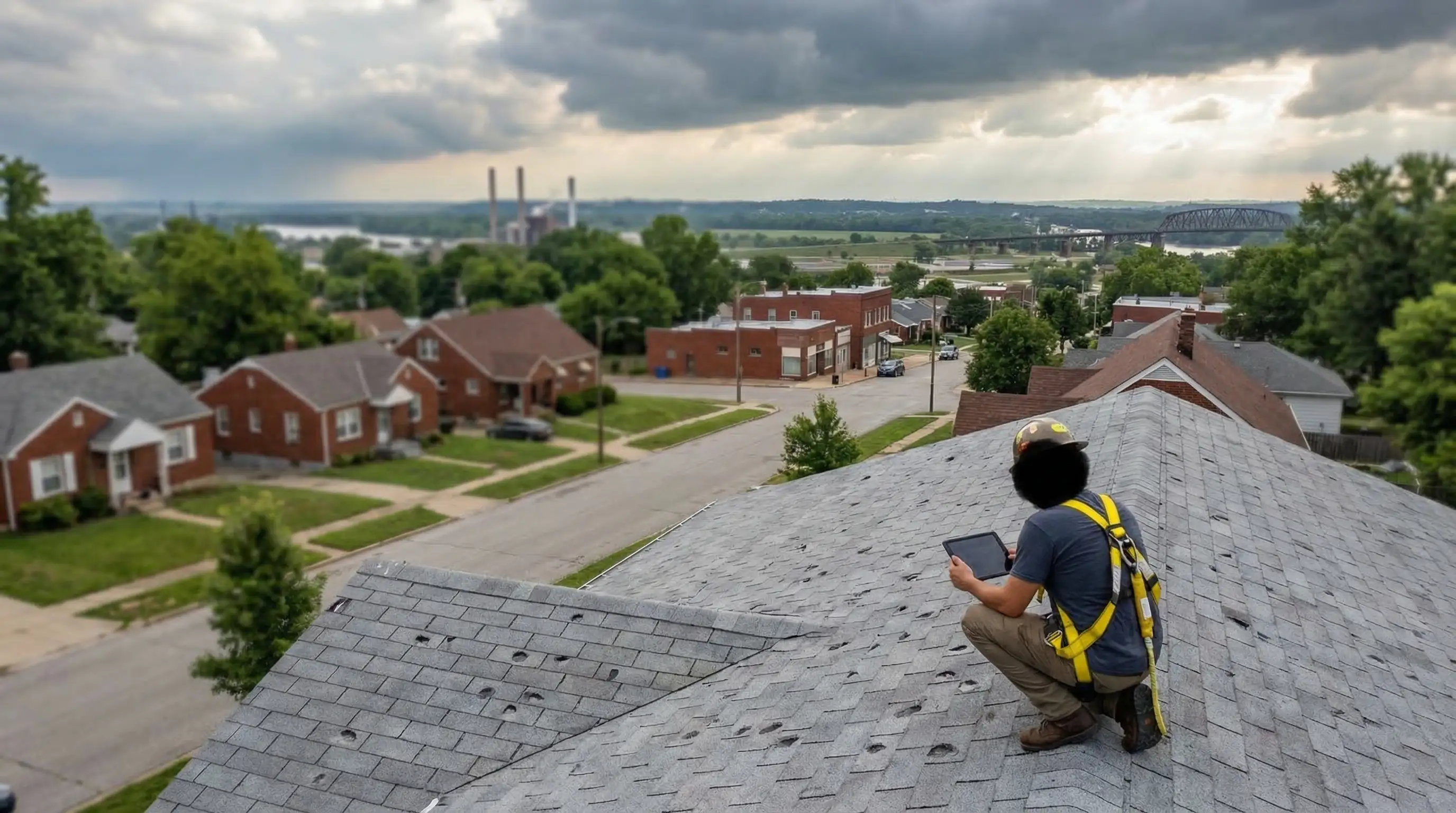
Storm damage creates seasonal competition that complicates budget planning. After a hail event or tornado — and Wyandotte County is solidly in Tornado Alley — out-of-state storm chasers flood Kansas City with trucks, door-knockers, and PPC ads targeting damage repair terms. These opportunistic competitors inflate CPCs on storm repair keywords for 2–4 weeks, then disappear. Local contractors who understand this pattern can either pause storm keywords during the surge or bid specifically on terms that emphasize local presence versus "out of town crews."
Winning construction PPC in KCK requires a four-layer campaign structure: specific project campaigns, remarketing, seasonal timing, and trust-signal ad copy. None of these elements alone is sufficient — combined, they create a system that captures homeowners at multiple points in the decision cycle.
Project-Specific Campaign Architecture
The foundational principle: separate ad campaigns for separate project types. A homeowner searching "kitchen remodel Kansas City KS" has specific intent that cannot be served by the same landing page as someone searching "basement finishing Wyandotte County." Project-specific campaigns with project-specific landing pages — showing photos of completed work, relevant before-and-after, and project-specific pricing guidance — convert at 2–3x the rate of generic "full-service remodeling" pages.
- Kitchen remodel keywords: "kitchen remodel Kansas City KS," "kitchen renovation Wyandotte County," "custom kitchen contractor Kansas City Kansas" — estimated CPC $10–$18, CVR 3–5%
- Bathroom remodel keywords: "bathroom remodel Kansas City KS," "shower remodel KCK," "master bath renovation Kansas City Kansas" — estimated CPC $9–$15
- Basement finishing keywords: "basement finishing Kansas City KS," "basement remodel Wyandotte County," "finished basement contractor KCK" — estimated CPC $8–$14
- General contractor / free estimate keywords: "general contractor Kansas City KS," "free estimate home renovation KCK," "licensed contractor Wyandotte County" — estimated CPC $7–$12
Each campaign needs a corresponding landing page that leads with the project type, shows local completed work, and has a single conversion goal — a phone number or a "request a free estimate" form. Multi-purpose pages that try to sell all remodeling services simultaneously convert poorly because they create too many choices for a customer who came in with a specific project in mind.
Remarketing and the Long Decision Cycle
Because remodeling decisions often take 60–120 days from first search to signed contract, remarketing is not optional — it's the mechanism that recovers the 75–80% of first-visit non-converters. A homeowner who visits a kitchen remodel landing page in March and leaves without calling should see the contractor's ads on Google Display and YouTube through May. Remarketing CPCs for home improvement are $0.50–$2.00 — a tiny fraction of search CPCs — which makes it extremely cost-effective to maintain presence through a long decision cycle. The contractor who stays visible from first search to decision wins the quote request; the one who disappears after the first click often loses to a competitor they never competed against directly.
- Storm repair campaign: "Hail or wind damage to your home? We restore siding, windows, decks" — activated post-storm, estimated CPC $8–$15 during surge periods
- Deck/outdoor living keywords (spring campaign): "deck builder Kansas City KS," "patio contractor Wyandotte County" — estimated CPC $7–$12, peak March–May
Google Partner Agency
We're a certified Google Partner Agency, which means we don’t guess — we optimize withGoogle’s full toolkit and insider support.
Your campaigns get pro-level execution, backed by real expertise (not theory).

The most important data point for construction PPC in KCK is not a keyword CPC — it's the equity equation. Median home values at $167,400 (up 13.8% YoY) means a KCK homeowner who purchased a $120,000 home five years ago now has roughly $47,400 in equity. That equity is accessible through a HELOC or cash-out refinance, and it's increasingly being directed toward home improvement. Renovation demand in KCK is equity-driven, not just cosmetic — which means the average project ticket is higher than in markets where home values are flat.
The 1950s–1970s Housing Stock Renovation Wave
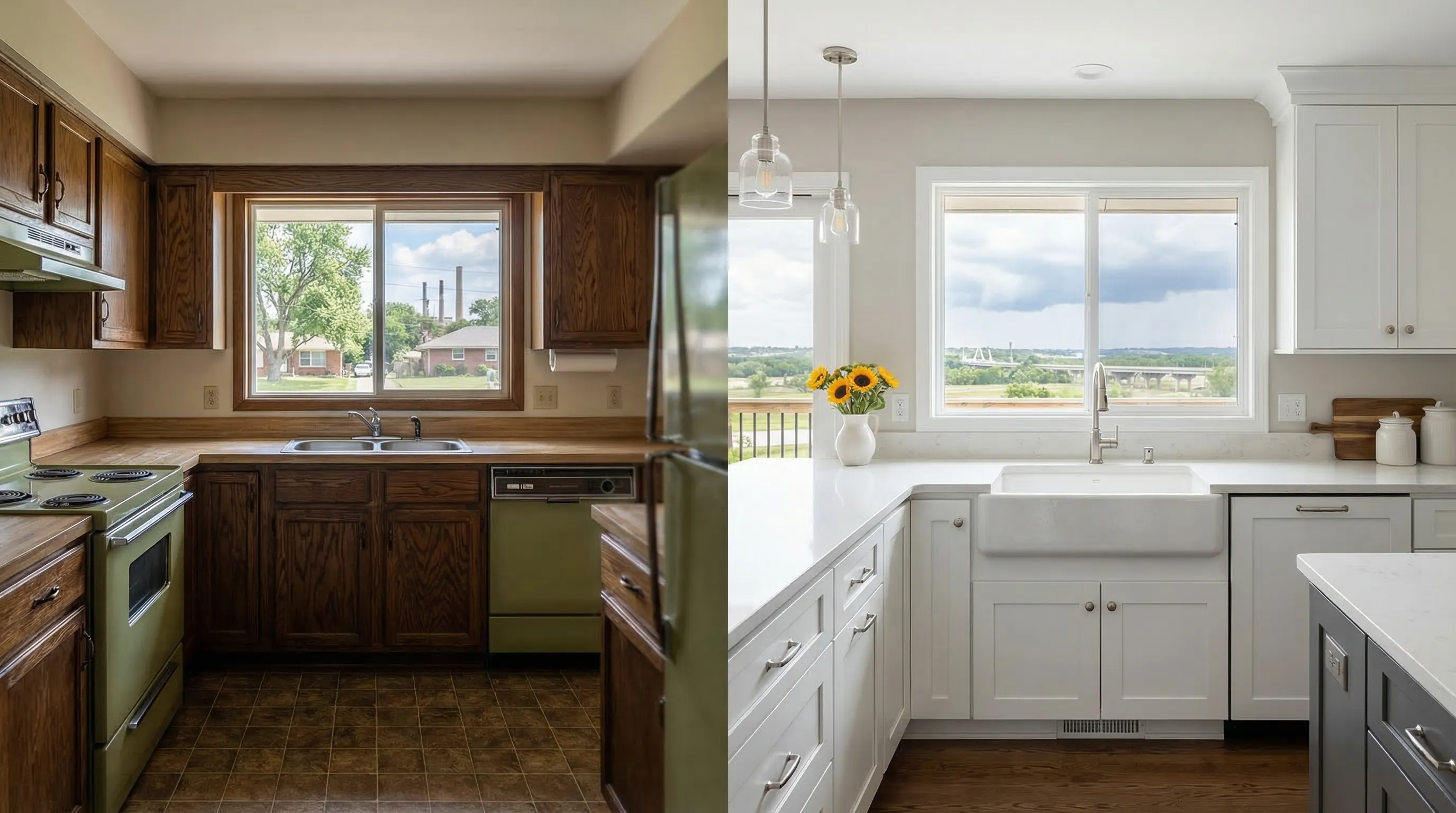
KCK's housing inventory is overwhelmingly pre-1980. Homes built in this era are hitting their second major renovation cycle: the first renovation was done in the 1990s–2000s, and those 20–30-year-old updates are now dated. Original kitchens that survived the first renovation are now reaching the point where they cannot be cosmetically refreshed — they need full replacement. Bathroom tile from 1985 is not a "vintage" aesthetic; it's a remodel project. The 1960s–1970s housing stock is the engine of KCK's residential remodel market.
Basement finishing is a particular opportunity tied to this housing profile. KCK's abundant split-level and ranch homes have unfinished basements that represent 600–1,200 square feet of potential living space. As equity rises and families grow, basement finishing becomes an alternative to moving up in the market — a $25,000–$50,000 basement project versus a $80,000–$100,000 move to a larger home. PPC campaigns targeting basement finishing keywords in KCK compete for customers who are actively calculating that trade-off.
Commercial construction demand adds a secondary market layer. Village West continues commercial development; Fairfax Industrial District has ongoing facility upgrades; UKMC's medical campus is in an expansion cycle. These commercial opportunities require different PPC targeting (LinkedIn for B2B decision-makers, or search terms like "commercial general contractor Kansas City KS") but represent significantly higher ticket projects ($100,000–$1M+) for qualified GCs. A contractor running both residential and commercial PPC should budget separately for each — the sales cycle, keywords, and decision-maker profile are entirely different.
Seasonality in KCK construction follows a predictable pattern: March–May is peak inquiry season (planning projects before summer), June–August is peak construction season (outdoor and renovation work in good weather), September–October is a second inquiry wave (finishing before winter), and November–February is renovation planning season (interior work when outdoor projects pause). Budget allocation should match this cycle: heavier advertising in March–May when project decisions are being made, lighter in December–January when decision rates drop.
Construction PPC in Kansas City, KS is a market where the agency running your campaigns has to understand the difference between a general contractor campaign and a kitchen remodel specialist campaign — and build accordingly. Most PPC agencies apply the same structure to both because they don't know the difference. The result is a high CPC, low conversion campaign that generates expensive traffic but few qualified quote requests.
MB Adv Agency's approach to construction PPC starts with the project-specific structure: separate campaigns, separate landing pages, separate bid strategies for each remodeling category. Remarketing is built in from day one because 80% of construction conversions don't happen on the first visit — and losing that traffic to a competitor after you paid for the click is the most expensive mistake in home improvement PPC.
For KCK contractors specifically, our strategy incorporates the equity-driven renovation opportunity, the aging housing stock profile, and the seasonal budget rotation that this market demands. The result is a campaign that generates quote requests at predictable CPLs — not traffic reports with no conversion data attached. See what management tier fits your business, or start with a free Google Ads audit and see exactly what your current campaigns are missing in the KCK remodeling market.

Frequently Asked Questions
What's a realistic CPL for construction and remodeling PPC in Kansas City, KS?
For residential remodeling in KCK, a well-optimized campaign generates quote requests at $70–$170 CPL depending on project type and campaign structure. Kitchen and bathroom remodels are at the higher end of that range ($100–$170 CPL) because the keywords are more competitive ($9–$18 CPC) and the customer decision cycle is longer — first visit to conversion often spans 30–90 days, requiring remarketing investment to recover non-converting first-time visitors. Basement finishing and general contracting run at lower CPLs ($70–$120) because keywords are slightly less competitive and the project type is more specific, making it easier to match search intent precisely.
These CPLs are profitable for projects in the $15,000–$50,000 range — the typical kitchen, bathroom, or basement remodel in KCK's equity-driven market. At a 30–40% quote close rate and average project revenue of $25,000+, a CPL of $100–$150 is not a cost problem; it's a customer acquisition investment with a defined return. The mistake remodeling contractors make is comparing their CPL to HVAC or plumbing CPLs without accounting for the fact that their average project revenue is 5–10x higher. A $120 CPL for a $30,000 kitchen remodel is a 250:1 revenue-to-acquisition ratio on a closed project.
Remarketing dramatically changes the effective CPL equation. Because remodeling customers research for weeks before requesting a quote, a campaign with active remarketing recovers 30–40% of non-converting first visits at CPCs of $0.50–$2.00 — far below search CPCs. The result is a blended CPL that's significantly lower than search-only campaigns when remarketing conversions are attributed correctly. Any construction PPC campaign without remarketing is leaving 30–40% of its addressable conversions on the table.
Should contractors in KCK advertise on Google or only rely on Angi/Thumbtack for leads?
The short answer: Google Ads, not Angi. The long answer explains why. Angi (HomeAdvisor) leads are sold to 5–8 contractors simultaneously. Every Angi lead becomes a speed-to-call race where the contractor who calls within 5 minutes gets the appointment, and everyone else wasted their money. Close rates on aggregator leads average 15–25% for contractors — which means 75–85% of lead spend generates no revenue. When Angi charges $30–$100 per lead and 8 of every 10 don't close, the effective customer acquisition cost through aggregators is $120–$500 per booked project — far higher than a well-run direct Google Ads campaign.
Google Ads generates direct leads: the homeowner searched, saw your specific ad, clicked to your landing page, and called you. You're the only contractor they contacted through that path. Close rates on direct PPC leads average 30–50% for contractors with solid phone follow-up systems, because the customer self-selected on your ad copy and landing page before calling. A direct lead at $100 CPL closing at 40% costs $250 per booked job — versus an aggregator lead at $50 closing at 20% costing $250 per booked job with far more competition and price pressure. The math is equivalent at best for aggregators, and worse at scale.
The tactical answer for contractors who want to maximize coverage: run Google Ads for direct lead generation and treat Angi/Thumbtack as a secondary reputation builder (the profile and reviews matter for organic ranking, not the paid leads). Building a Google Ads channel that owns your project-specific keywords in KCK creates a durable, scalable pipeline that aggregators cannot disrupt because it bypasses their model entirely.