HVAC PPC Kansas City, KS
Kansas City, KS logs 47+ days above 90°F every summer and has recorded lows of -23°F in winter — two extremes that turn HVAC search volume into one of the most concentrated emergency demand cycles in the Midwest. While national chains blanket Kansas City MO with ad spend, the KCK side of the metro remains systematically underserved by Google Ads competitors, creating a measurable window for local HVAC operators willing to run precise, data-driven campaigns. <!-- stats-article-link --> <p><em>See how this city's Hvac PPC costs compare nationally in our <a href="/resources/hvac-ppc-statistics">Hvac PPC Statistics</a> report, featuring data from 40+ US cities.</em></p>
Running HVAC PPC in Kansas City, KS is not the same as running it in a coastal metro or a gentler Midwest city. The market here has structural characteristics that make generic campaign templates fail — and specific campaign structures that make them win.
The Dual-Season Emergency Cycle
KCK's climate creates two distinct emergency peaks, not one. July and August bring 47+ days above 90°F — air conditioners run continuously, older units fail under sustained load, and "AC not working" becomes a panic-buy search with zero price sensitivity. Then January arrives. With recorded lows of -23°F and an average 22 days at or below freezing, furnace failures in KCK are genuine household emergencies. A homeowner without heat at midnight in a Kansas January calls the first company that answers — not the cheapest one.
This dual cycle means HVAC advertisers cannot run a single "set and forget" campaign. Seasonal budget rotation is mandatory: summer campaigns need peak allocation from May through August, winter campaigns need surge capacity from November through February, and shoulder-season months (March–April, September–October) are when tune-up and maintenance keywords dominate at lower CPCs.
Aging Housing Stock Drives Replacement Volume
KCK's median home was built in the 1960s–1970s. The average HVAC system lifespan is 15–20 years, meaning a significant share of Wyandotte County's approximately 95,000 residential units are on or past their replacement cycle. This matters for PPC because replacement keywords ("new AC unit Kansas City KS," "furnace replacement Wyandotte County") carry higher intent and higher ticket value than repair searches — and they're available year-round, not just during emergency spikes.
The 60.9% homeownership rate amplifies this opportunity. Renters don't Google HVAC companies — their landlords do. KCK's homeowner base is your actual customer pool, and with a 16% poverty rate, financing messaging converts on replacement campaigns. Homeowners who know they need a new system but are balancing finances respond to "flexible financing available" copy at measurably higher rates.
Competitive Landscape: The KCK Advantage
The major regional HVAC chains — One Hour Heating & Air, Precision Air — concentrate their ad spend on the Kansas City MO side and Johnson County (Overland Park, Olathe). The KCK side of Wyandotte County sees significantly less Google Ads saturation than the Missouri metro. This translates directly to lower CPCs on KCK-specific geography targets. While KC MO HVAC keywords run $18–$35 for emergency terms, KCK-targeted campaigns can capture the same high-intent traffic at $10–$28 estimated CPC — a structural market advantage that won't last once the larger operators notice it.
Google Local Services Ads are active for HVAC across the metro. The Google Guarantee badge — visible in LSA placements — is increasingly the first click a homeowner makes during an emergency. HVAC operators without LSA verification are invisible at the top of the page when intent is highest.
One additional competitive angle: KCK's 35.7% Hispanic population — concentrated in Argentine, Rosedale, and Armourdale neighborhoods — is significantly underserved by bilingual HVAC advertising. Spanish-language ad copy targeting "reparación de AC Kansas City" runs at dramatically lower CPCs than English counterparts, with conversion rates that match or exceed them, because the bilingual audience faces minimal competition from other advertisers.
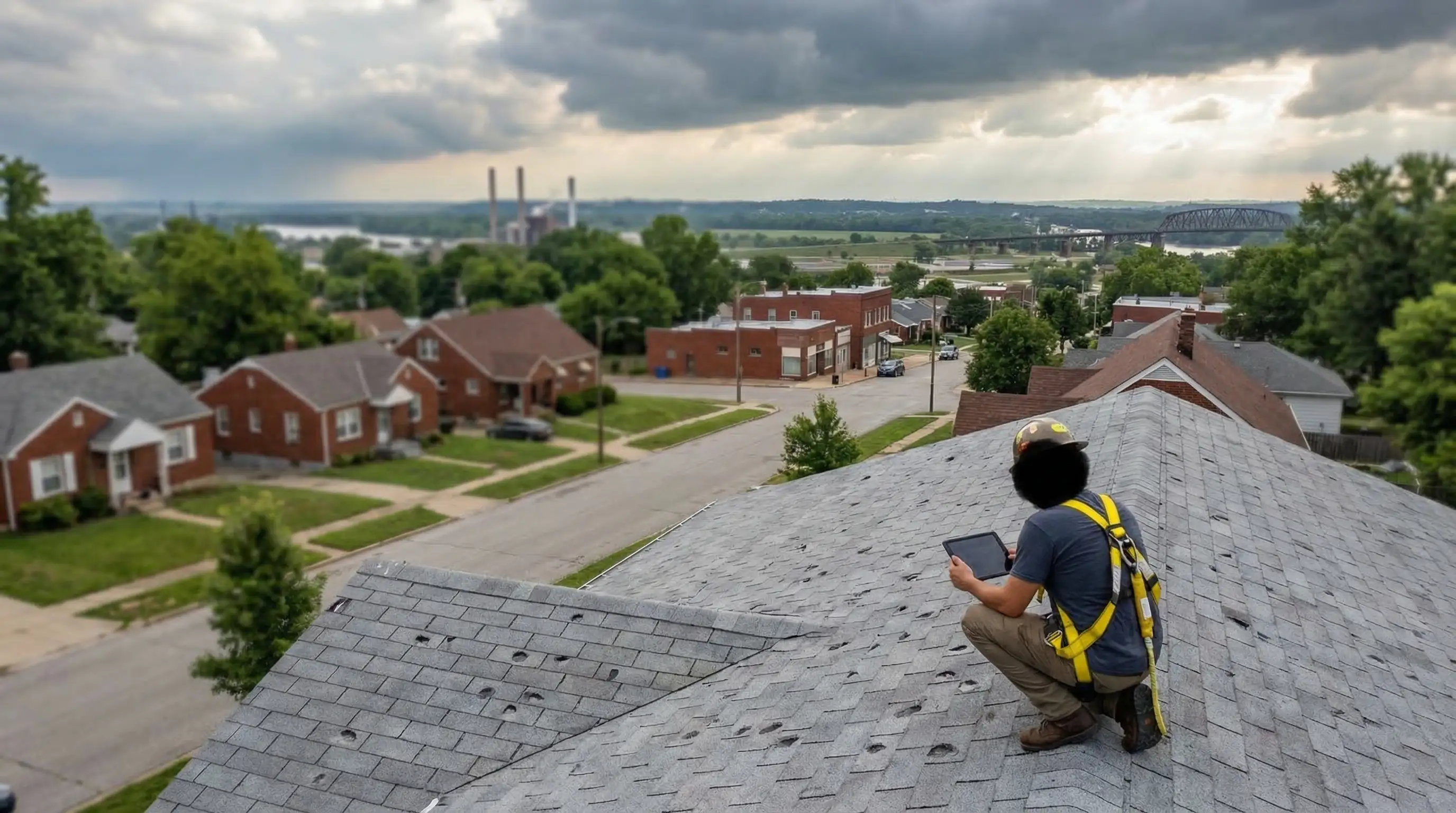
Tornado Alley geography adds a third demand category beyond seasonal: post-storm hail damage to condenser coils and wind damage to outdoor units. HVAC operators who run reactive storm-damage campaigns within 24–48 hours of a major weather event in Wyandotte County capture a surge of high-intent searches that competitors without active campaigns completely miss.
KCK HVAC campaigns win on four strategic axes: emergency response structure, seasonal rotation, replacement demand capture, and bilingual targeting. Each requires its own campaign architecture — combined, they create full-year coverage without budget waste.
Emergency Response Campaign Structure
Emergency keywords ("AC not working Kansas City," "furnace not turning on KCK," "emergency HVAC repair Wyandotte County") are the highest CPC in the category but also the highest CVR. These searches happen when someone's house is 95°F or has no heat — they're not comparing prices, they're calling the first number they trust. The campaign structure for emergency terms must:
- Emergency repair keywords: "AC not working Kansas City KS," "emergency AC repair KCK," "furnace emergency Wyandotte County" — estimated CPC $18–$35, CVR 6–10%
- 24/7 availability keywords: "HVAC repair near me open now," "emergency furnace repair Kansas City Kansas" — estimated CPC $15–$28
- Storm damage keywords: "hail damaged AC unit Kansas City," "condenser coil damage storm" — estimated CPC $12–$20 (lower competition)
Ad copy for emergency campaigns leads with speed and availability: "24/7 Emergency HVAC — We Answer Every Call." Phone extensions are mandatory. Click-to-call on mobile captures the highest-intent searches at the moment of maximum urgency.
Seasonal Tune-Up and Maintenance Campaigns
Pre-season maintenance campaigns run at lower CPCs and build customer relationships before emergencies happen. These campaigns capture homeowners who proactively service their systems — a different buyer, but a valuable one with higher LTV:
- Spring AC tune-up keywords: "AC tune-up Kansas City KS," "air conditioner service before summer" — estimated CPC $10–$16
- Fall furnace prep keywords: "furnace tune-up Kansas City Kansas," "pre-winter HVAC checkup KCK" — estimated CPC $10–$15
- Maintenance plan keywords: "HVAC maintenance plan Wyandotte County," "annual AC service contract" — estimated CPC $9–$14
Replacement and Financing Campaigns
Replacement keywords carry the highest average ticket value — a full system replacement in KC metro runs $5,000–$12,000+ depending on home size and system type. These campaigns run year-round, accelerating in spring (before summer emergency costs more) and fall (before winter emergency costs more):
- System replacement keywords: "new AC unit Kansas City KS," "furnace replacement Wyandotte County," "HVAC system replacement KCK" — estimated CPC $15–$22
- Financing angle keywords: "HVAC financing Kansas City Kansas," "new furnace no money down" — estimated CPC $12–$18
Financing ad copy converts measurably better in KCK's working-class market than premium-quality messaging. "Replace your aging furnace — $0 down, 12 months same as cash" outperforms "Award-winning HVAC service" for this audience.
Bilingual Campaign Track
Spanish-language HVAC campaigns targeting KCK's 35.7% Hispanic population run at 40–60% lower CPC than English equivalents. The audience is large (55,400+ Hispanic residents), the competition is minimal, and conversion rates match English campaigns. Core Spanish keywords: "reparación de aire acondicionado Kansas City," "técnico de calefacción KCK," "servicio de HVAC Kansas City Kansas." This is the lowest-cost customer acquisition channel available in this market.
Google Partner Agency
We're a certified Google Partner Agency, which means we don’t guess — we optimize withGoogle’s full toolkit and insider support.
Your campaigns get pro-level execution, backed by real expertise (not theory).

Three market dynamics in KCK create PPC opportunities that don't appear in standard HVAC advertising playbooks. Understanding them separates campaigns that win the market from campaigns that just spend budget.
The Underserved KCK Gap
The Kansas City metro has a structural advertising imbalance. Google Ads competition — and therefore CPCs — clusters heavily on the Missouri side of the state line and in Johnson County, Kansas (Overland Park, Olathe, Leawood). KCK's Wyandotte County sits in a gap: large enough to generate significant search volume (156,000+ residents, 95,000+ residential units), but consistently underinvested by regional HVAC advertisers who default to KC MO geo-targeting.
Key insight: Geographic bid modifiers that boost bids for zip codes 66101–66119 (KCK/Wyandotte County) while maintaining standard bids for the broader metro can capture above-average impression share in KCK at below-average CPCs. This works precisely because competitors haven't caught on — and it continues working until they do.
The practical impact: a KCK HVAC operator running a well-structured $3,500/month campaign can achieve the market presence that would require a $6,000–$8,000/month budget in KC MO or Johnson County. This isn't speculation — it's a function of the competitive density difference between these adjacent markets.
Storm Cycle Timing Creates Predictable Surges
KCK averages 4–6 significant hail events per year, with spring tornado season (April–June) bringing the highest concentration of severe weather. Post-storm HVAC search volume for "hail damaged AC unit" and "condenser repair after storm" spikes within 24–72 hours of a major event. National HVAC chains respond to this reactively — adjusting bids days after the event, when search volume is already declining.
Local operators who pre-configure storm-response ad groups — with creative ready, bids set to surge on weather triggers, and landing pages referencing storm damage specifically — capture this window before competitors arrive. The NOAA Severe Weather API can trigger automated bid increases the moment a storm warning is issued for Wyandotte County. The first HVAC company visible during the 24-hour post-storm search spike wins a disproportionate share of that revenue cycle.
Aging Housing Stock as a Database, Not Just a Market
Homes built in the 1960s–1970s are hitting their second major HVAC replacement cycle. The average system installed in 1998–2008 is now 18–28 years old and failing. This creates a predictable replacement pipeline — not random demand, but an aging cohort of systems entering end-of-life at scale.
The strategic implication: Replacement campaigns ("Is your AC over 15 years old? It's time.") targeted at KCK zip codes with highest concentrations of 1960s–1970s housing stock can be run as evergreen campaigns, not just seasonal spikes. Neighborhoods like Argentine, Armourdale, and central KCK's core residential blocks have median home ages that put HVAC system replacement directly in the current search cycle. A campaign that speaks to "aging system" language — rather than emergency repair language — captures a different, lower-CPC segment of the market at higher average ticket value.
Kansas City, KS is not a market where general PPC expertise translates automatically. The dual emergency seasons, the bilingual customer base, the specific competitive gap on the Wyandotte County side of the metro — these require campaign adjustments that only come from understanding this city, not just the HVAC category.
MB Adv Agency manages PPC for home services businesses in working-class markets across the US. We understand that KCK homeowners make purchase decisions under time pressure and financial constraint — and that the ad copy, bidding strategy, and landing page messaging that works in suburban Johnson County does not work the same way in Argentine or Armourdale. Our campaigns are built from market data, not templates.
We build KCK HVAC campaigns on three pillars: emergency response architecture that captures urgent calls at maximum CVR, seasonal budget rotation aligned to KCK's actual weather patterns rather than national averages, and bilingual targeting that reaches the 35.7% Hispanic market at costs competitors ignore.
If you're an HVAC operator in Kansas City, KS running campaigns that target the full KC metro without KCK-specific bid adjustments, you're leaving money in the market that a competitor will take. See how our campaigns are structured at MB Adv Agency lead generation services, or review our PPC pricing tiers to understand what a correctly-built HVAC campaign costs.
The window on KCK's lower-competition HVAC market will not stay open indefinitely. The moment a national HVAC chain identifies the Wyandotte County gap and allocates budget to it, CPCs normalize. The operators who enter that gap first build customer relationships and review volume that sustains their position even after the competitive landscape catches up.
Frequently Asked Questions
What budget do I need to run effective HVAC PPC in Kansas City, KS?
Entry-level HVAC PPC in KCK starts at $2,000/month in ad spend — enough to run a focused emergency and seasonal tune-up campaign targeting Wyandotte County zip codes. At this level, expect 20–40 qualified leads per month during peak season (July–August for AC, December–January for heating) based on estimated CPLs of $55–$100 per lead at 4–7% conversion rates.
The optimal budget for full-year, full-service coverage — including emergency, replacement, tune-up, and bilingual campaigns — is $3,500–$6,000/month. This range allows seasonal budget reallocation: heavier in July–August and December–February, lighter in the shoulder months when lower CPCs make maintenance campaigns economical.
One budget consideration unique to KCK: storm surge reserves matter. When a major hail event hits Wyandotte County, competitors flood the auction within 24–48 hours and CPCs for "HVAC storm damage" and "condenser repair" spike significantly. Operators with a $500–$1,000 storm surge reserve in their budget — pre-configured to activate on weather triggers — capture that spike profitably. Without it, you're outbid precisely when search intent is highest.
Budget should also account for Google Local Services Ads separately from search campaigns. LSAs operate on a pay-per-lead model (not per-click) and the Google Guarantee badge drives disproportionate trust during emergency searches. Many KCK HVAC operators run $500–$1,500/month on LSAs alongside their search budget as a separate, trust-building channel.
When is the best time to start HVAC PPC in Kansas City, KS?
The best time to start is 8–10 weeks before your first peak season — which means February–March for summer AC campaigns and September–October for winter heating campaigns. Starting before the season serves two purposes: Google's algorithm needs 4–6 weeks of conversion data to optimize smart bidding strategies effectively, and CPCs are significantly lower in pre-season months than during peak demand.
Operators who launch HVAC campaigns on July 1st — when the AC emergency season is already fully active — pay peak CPCs from day one and run smart bidding in optimization mode simultaneously. Conversion data from July is expensive to accumulate. Operators who launch in March, gather data through the spring tune-up season at $10–$16 CPCs, and arrive at July with optimized campaigns and established Quality Scores consistently outperform late launchers on both lead volume and cost per lead.
If you're starting from scratch with no existing Google Ads history for your KCK HVAC business, the most cost-effective sequence is: (1) launch in February with furnace tune-up and pre-spring maintenance campaigns, (2) collect conversion data through March–April, (3) transition to full summer emergency campaigns in May with smart bidding already optimized, (4) scale budget through peak season. By the time July heat emergencies hit, your campaign structure is mature, your Quality Scores are established, and your CPCs are lower than a competitor entering cold in summer.
Seasonal nuance: November is an underrated month for KCK HVAC PPC. Pre-winter furnace campaigns in November run before the December freeze emergencies drive CPCs up, and they capture homeowners who want to avoid an emergency by being proactive. November CPL for furnace tune-up campaigns is typically 30–40% lower than January emergency CPL — same potential customer, lower acquisition cost.