HVAC PPC New York, NY
New York City's pre-war building stock runs on steam boilers that haven't been manufactured in decades, its summers now regularly hit 95°F with 80% humidity, and Local Law 97 mandates HVAC system upgrades for buildings over 25,000 square feet by 2030 — creating three distinct demand streams that reward the HVAC contractors who understand them and punish those running generic national PPC playbooks. <!-- stats-article-link --> <p><em>See how this city's Hvac PPC costs compare nationally in our <a href="/resources/hvac-ppc-statistics">Hvac PPC Statistics</a> report, featuring data from 40+ US cities.</em></p>
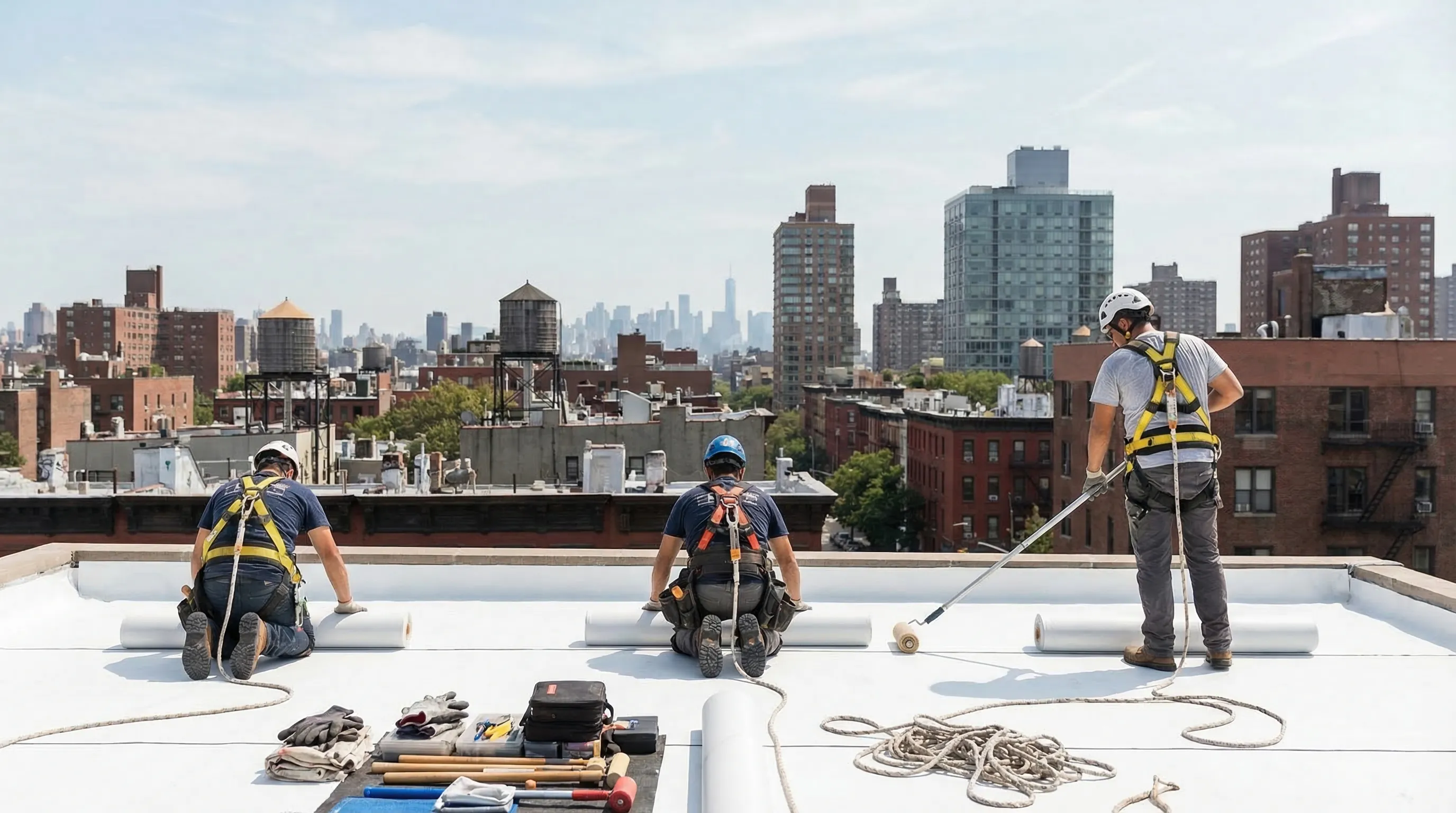
HVAC PPC in New York City presents a set of challenges that don't exist in any other major US market. The building stock is wrong for standard playbooks. The competition dynamics are layered in unusual ways. And the emergency demand windows are so compressed and high-value that missing them by even a few days produces catastrophic lost opportunity.
The Building Stock Problem
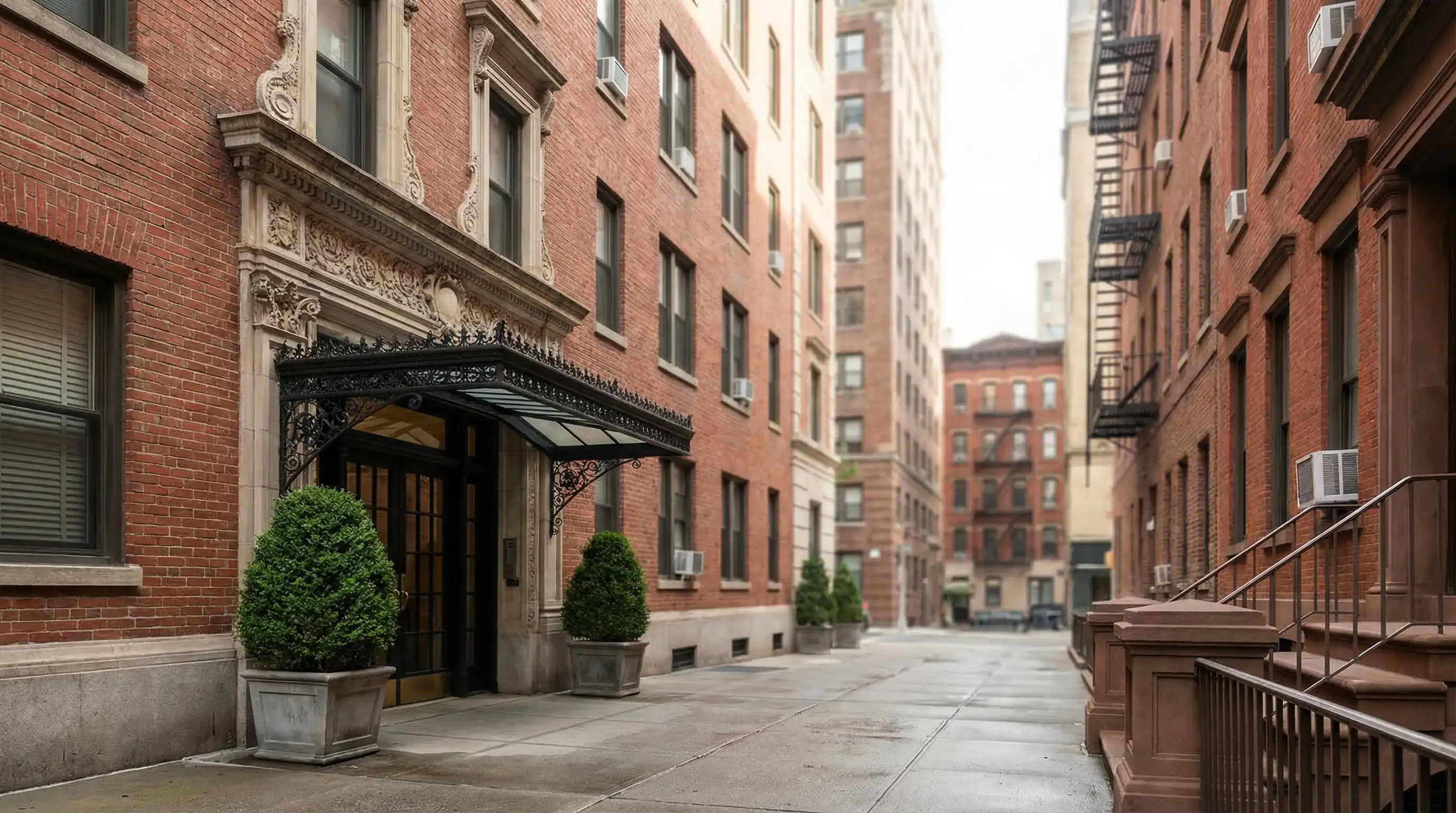
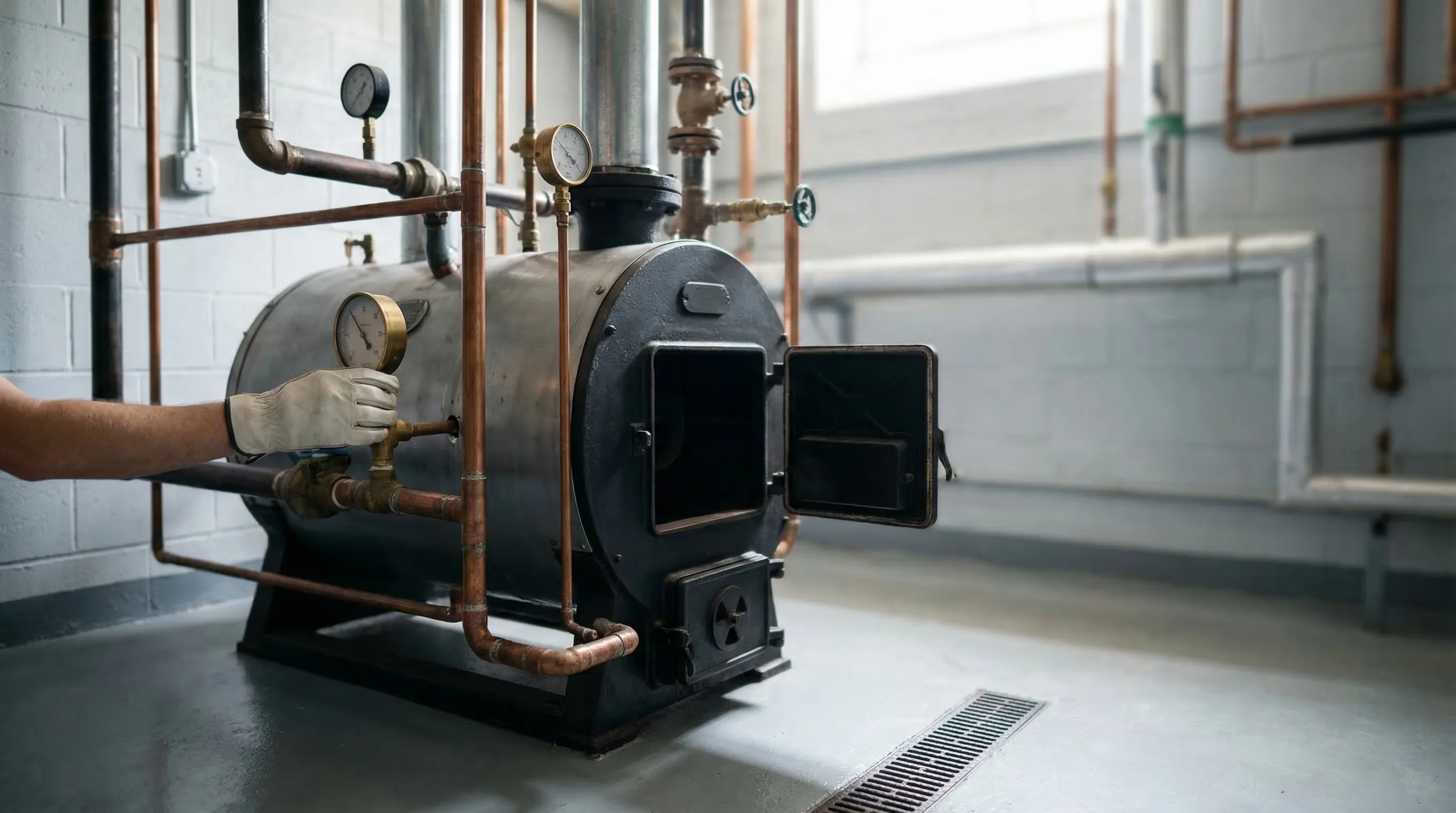
NYC's residential building stock is dominated by pre-war (pre-1940) construction — roughly 60–70% of residential buildings use hydronic radiator heat (steam or hot water boiler systems). This is a near-unique characteristic of the NYC market: most US cities have minimal steam-heat residential stock, and most HVAC PPC playbooks are built around forced-air systems, central AC replacement, and residential heat pump installation. A national HVAC franchise that runs its standard campaign in NYC will generate calls from building owners asking about boiler service, radiator bleeding, steam trap replacement, and pre-war building heating retrofits — and have no one qualified to answer those questions. Boutique NYC HVAC companies with boiler expertise should be dominating this segment in paid search. Most aren't, because they're running the same generic HVAC campaigns everyone else runs.
Competition is asymmetric by segment. General HVAC terms — "AC repair NYC," "HVAC installation New York" — attract heavy competition from national franchises (Service Experts, One Hour Heating & Air), large local operators (Arnica Heating & Cooling, Abacus Plumbing Air Conditioning & Electrical), and Home Depot Home Services acting as an installation aggregator. CPCs for these terms run $25–$55 during peak emergency periods. Boiler-specific terms — "steam boiler repair NYC," "radiator heat specialist Manhattan," "boiler maintenance Brooklyn" — cost $12–$28 per click, a 50–70% CPC reduction, while attracting searchers with specific, qualified need that non-specialist firms cannot serve.
The Two-Peak Emergency Structure
NYC HVAC demand has a true dual-peak structure unlike Sun Belt single-season markets. Peak 1: January–February — no-heat emergencies in pre-war buildings with cast-iron boiler systems. In a city where temperatures regularly drop below 25°F and many elderly residents live in pre-war apartments with no supplemental heat source, a boiler failure is a genuine emergency. NYC's 311 "no heat" complaint volume spikes to thousands of calls per week during polar events. Peak 2: June–August — AC failures during heat waves. NYC recorded multiple heat emergencies in 2023 and 2024 with temperatures above 95°F and heat indexes above 105°F. Window AC failure and central AC breakdown searches spike 400–600% on the first 90°F+ day of the year.
The campaign management challenge: emergency PPC must be pre-built and pre-approved before the emergency occurs. A company that tries to launch or scale an emergency campaign on the day of the first heat wave is competing against companies that pre-loaded their campaigns months earlier. Google's ad approval process, bid strategy learning windows, and Quality Score accumulation all take time. The HVAC companies with the best emergency CPL are the ones who built their emergency campaigns in April and May — not July 15th when the heat is already hitting.
The NYC HVAC PPC framework requires three separate campaign architectures running simultaneously: emergency, planned/seasonal, and specialty niche. Each has different bidding strategy, ad scheduling, and conversion tracking requirements.
Keyword Groups with CPC Ranges
- Emergency AC (Summer): "AC repair NYC," "AC not working New York," "emergency air conditioning repair Brooklyn" — $25–$55 CPC. Highest urgency, highest CVR (15–25%). 24/7 campaigns with call-only ads mandatory. Budget surge June–August.
- Emergency Heat (Winter): "no heat NYC," "boiler not working Manhattan," "emergency heating repair New York" — $20–$45 CPC. Peak January–February. Night/weekend bid adjustments +40–60% (boiler failures don't keep business hours).
- Boiler Specialist: "boiler repair NYC," "steam boiler service New York," "radiator heat Manhattan," "boiler maintenance Brooklyn" — $12–$28 CPC. Best cost-efficiency in NYC HVAC PPC. Captures uniquely NYC intent from searchers whose building type filters out non-specialist firms.
- Planned Installation: "HVAC installation NYC," "central AC installation New York," "mini-split installation Brooklyn" — $18–$35 CPC. Higher CPL ($120–$200) but job values of $5,000–$18,000. Target homeowners in Staten Island and Queens suburban zones.
- Local Law 97 / Heat Pump: "heat pump installation NYC," "Local Law 97 HVAC compliance," "VRF system NYC buildings" — $20–$50 CPC. Early-stage but growing segment; regulatory mandate creates non-negotiable demand through 2030. First-mover advantage available now.
- Spanish-Language HVAC: "reparación de aire acondicionado NYC," "calefacción reparación Bronx," "instalación de mini-split Queens" — $8–$18 CPC. Bronx and Queens Hispanic communities have high renter and small building owner concentration; nearly no Spanish HVAC PPC exists in NYC.
Bidding strategy: emergency campaigns use maximize conversions with a target CPA of $100–$130. With enough conversion data (30+ conversions in 30 days during peak season), smart bidding outperforms manual by 20–35%. Boiler specialist campaigns, which have lower volume, should run manual CPC until 30+ conversions are achieved. Local Law 97 campaigns are new-territory and require manual bidding with conservative daily caps until intent signals are established.
Google Local Services Ads (LSA) with Google Guarantee are increasingly mandatory for NYC HVAC. LSA ads appear above all standard search ads and include the Google Guarantee badge — the most effective trust signal for NYC HVAC consumers who have been burned by unlicensed contractors. Companies with LSA presence consistently report 20–30% lower CPL than standard search alone. HVAC companies without LSA in NYC are ceding the SERP's top two positions to competitors.
Google Partner Agency
We're a certified Google Partner Agency, which means we don’t guess — we optimize withGoogle’s full toolkit and insider support.
Your campaigns get pro-level execution, backed by real expertise (not theory).

NYC's HVAC market contains structural demand drivers that most PPC campaigns completely ignore — and that represent both a significant near-term revenue opportunity and a multi-year regulatory tailwind.
Local Law 97: The Mandated Upgrade Cycle
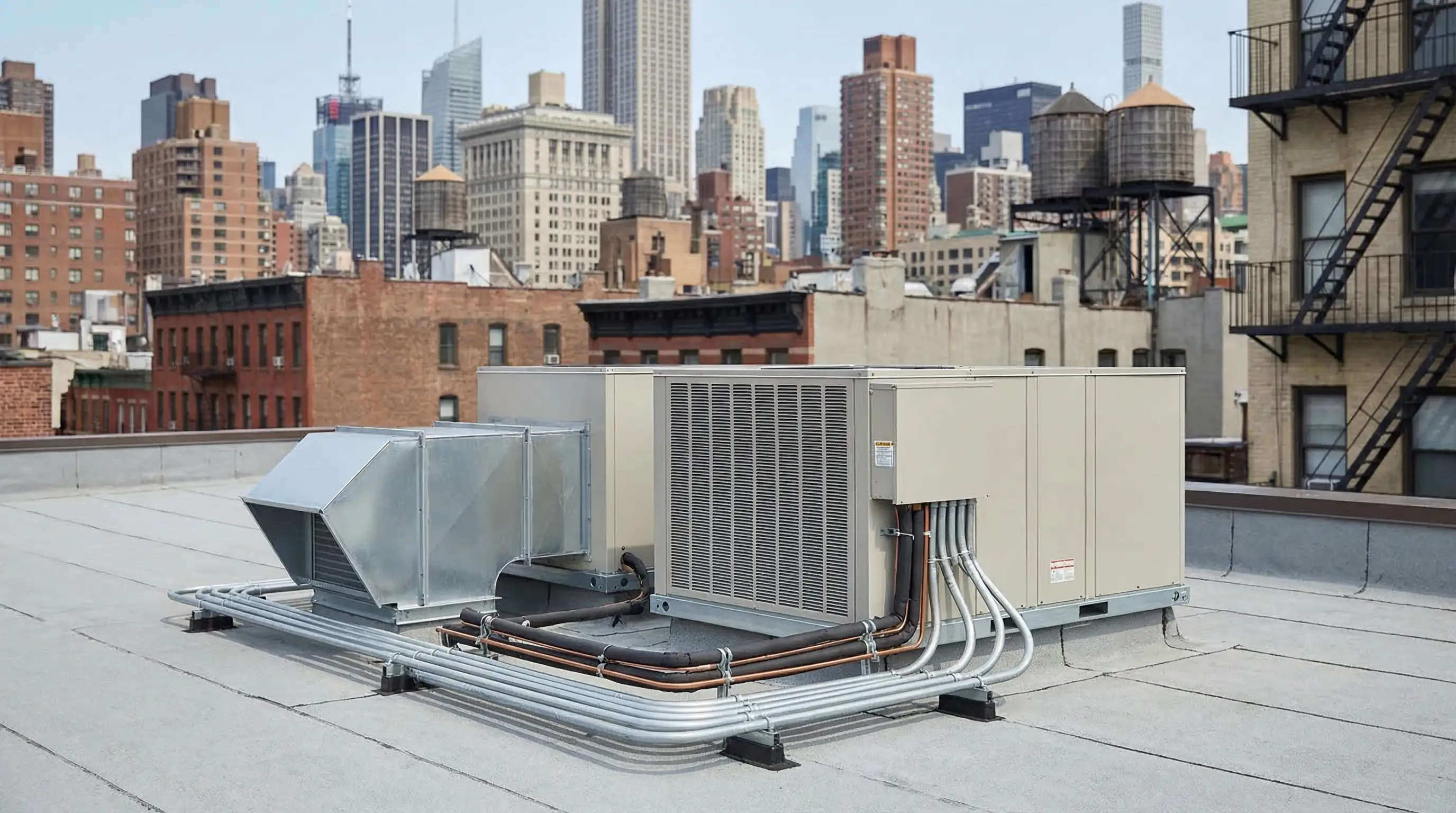
New York City's Local Law 97 (Climate Mobilization Act) requires all buildings over 25,000 square feet to reduce carbon emissions by 40% by 2030 and 80% by 2050. The compliance pathway for most large buildings runs through HVAC system upgrades — replacing fossil-fuel boilers with heat pump systems, installing VRF (variable refrigerant flow) systems, or retrofitting heating/cooling with high-efficiency equipment. Fines for non-compliance run up to $268 per ton of CO2 exceeded, creating real financial urgency for building owners and managers. The total addressable market for Local Law 97 HVAC compliance across NYC's large building stock is valued in the billions. The number of HVAC companies running PPC campaigns targeting "Local Law 97 HVAC compliance" or "NYC heat pump building retrofit" is minimal. First-mover PPC advantage in this segment is available today at CPCs of $20–$50, before major brands recognize and crowd into the opportunity.
The mini-split/ductless installation segment is similarly underrepresented in NYC HVAC PPC. NYC apartments have no ductwork — central AC installation in most pre-war buildings requires either a costly new ductwork installation or a ductless mini-split. Mini-split system demand has grown 25–40% year-over-year as NYC landlords comply with cooling requirements and renters seek AC in buildings where window units are prohibited or impractical. "Ductless AC installation NYC," "mini-split installation Brooklyn," "ductless heating and cooling New York" — CPCs run $18–$35 with job values of $3,000–$12,000 per unit. Competition in this specific niche is moderate — far below general AC installation terms — while demand growth is accelerating.
The Building Super Network
NYC's approximately 30,000+ building superintendents make HVAC vendor decisions for the city's multi-unit residential stock. A super managing a 50-unit pre-war building controls HVAC service contracts worth $5,000–$20,000 annually. Most supers find their HVAC vendors through referral and Google search — "commercial HVAC service NYC," "boiler service contract New York," "HVAC maintenance for apartment buildings." These B2B terms are searched during business hours by decision-makers with direct purchasing authority and multi-year contract potential. CPCs run $15–$30, and a single signed building contract generates more annual revenue than 10 individual residential service calls. HVAC companies that build a B2B campaign targeting building supers and property managers create a revenue layer that residential-only campaigns cannot match.
NYC HVAC PPC opportunity segments ranked by current competition-to-demand ratio:
- Local Law 97 compliance — regulatory mandate; $20–$50 CPC; first-mover advantage; billions in total addressable market
- Boiler/steam specialist — $12–$28 CPC; NYC-only demand; 14–20% CVR; builds super referral network
- Mini-split/ductless installation — 25–40% annual demand growth; $18–$35 CPC; apartment-specific NYC need
- Spanish-language HVAC — Bronx/Queens concentration; $8–$18 CPC; nearly zero competition today
NYC HVAC PPC rewards preparation over reaction. The companies generating the best August emergency CPLs launched their summer campaigns in April. The companies capturing Local Law 97 compliance contracts built that campaign category before their competitors recognized the opportunity. Generic HVAC campaigns in NYC produce generic results. Boiler specialist messaging, pre-built seasonal surge campaigns, and regulatory-compliance positioning are the three differentiators that separate high-ROI NYC HVAC PPC from average.
MB Adv Agency builds NYC HVAC campaigns that match the city's actual building stock: boiler specialist keywords, steam and radiator system messaging, dual-peak emergency campaign structure, and Local Law 97 positioning. Our lead generation service tracks campaign performance to booked service calls and signed contracts — not just form fills. For NYC HVAC, where a single boiler replacement at $12,000 returns 3x a monthly ad budget, conversion tracking to revenue matters.
ROI model: at $4,000/month with 35 leads and 20% close rate, you're booking 7 service calls. If 2 of those are boiler replacements at $10,000+ and 5 are repairs at $700 average, that's $23,500 in job revenue from $4,000 in ad spend. Scale to a $6,000/month summer campaign targeting emergency AC repair during peak heat weeks, and close rate climbs to 30%+ (emergency intent). See our management tiers or review our full NYC PPC service page.
Frequently Asked Questions
When should a NYC HVAC company increase its Google Ads budget?
Two windows — and both require pre-planning, not reactive adjustment. Window 1: The first week of June. NYC's first 90°F+ day — typically falling between late June and early July — triggers a 400–600% spike in AC emergency search volume. Companies that have scaled to their peak summer budget by June 1 capture these searches at their highest urgency and intent. Companies that try to increase budget on July 15th when the heat has already hit are paying CPCs 30–50% higher than competitors who pre-positioned, because Quality Scores and ad relevance signals take time to mature.
Window 2: October 15–November 1. NYC's first cold snap — temperatures dropping below 40°F — triggers a boiler preparation and no-heat-check surge. The most profitable heating season searches aren't the January emergency calls (where CPCs are highest and competition is most intense) — they're the October–November pre-season tune-up and inspection searches. "Boiler tune-up NYC," "pre-season HVAC maintenance New York," "boiler inspection Brooklyn" — these terms cost $12–$22 per click in October versus $30–$45 for emergency January searches. Closing a pre-season maintenance agreement in October often leads to same-customer replacement work in January when the boiler fails.
For budget magnitude: a $3,000/month baseline in spring/fall should scale to $6,000–$10,000/month during June–August (AC peak) and January–February (heating emergency peak). The seasonal scaling investment pays back at 3x–5x versus running a flat budget year-round. NYC HVAC is a business where 30% of annual revenue is earned in 6 peak weeks — the campaigns need to match that reality.
How does boiler specialist PPC outperform general HVAC campaigns in NYC?
The boiler specialist advantage in NYC is both a cost play and a conversion play simultaneously — which is rare in PPC. General HVAC terms ("AC repair NYC," "HVAC company New York") cost $25–$55 per click and attract a mix of searchers: some homeowners in Staten Island with central HVAC, some apartment dwellers with window units, some co-op boards with central building systems, and some renters who don't control their own HVAC and are wasting clicks. The conversion intent is real but diluted.
Boiler specialist terms — "steam boiler repair NYC," "radiator not working Manhattan," "boiler service Brooklyn," "hot water boiler maintenance New York" — cost $12–$28 per click. The searcher typing "steam boiler repair NYC" knows exactly what they have, knows it's broken, and is actively searching for someone who can fix it. CVR on boiler-specific terms runs 14–20% versus 8–12% for general HVAC search. Lower CPC × higher CVR = CPL of $60–$120 on boiler terms versus $80–$150 on general terms. The economics are better at every step of the funnel.
Long-term, the boiler specialist positioning builds something more valuable than campaign efficiency: a referral network among NYC building supers and co-op boards. NYC's pre-war building community is surprisingly tight-knit — building supers talk to each other, co-op boards share vendor references, and a company known as "the boiler specialists" in a neighborhood spreads through word-of-mouth at zero marginal ad cost. Starting the boiler specialty in PPC creates the credibility foundation for organic referral growth that general HVAC campaigns never build. The companies that own the NYC boiler segment in paid search typically also own it in organic search and referral — because specificity compounds over time in ways that generic positioning never does.