HVAC PPC Philadelphia, PA
Philadelphia's 400,000+ owner-occupied housing units are dominated by row homes and brick townhouses built between 1900 and 1970 — buildings with aging boilers, undersized ductwork, and HVAC systems approaching or past their 15-25 year replacement cycle. Add winters that drop below 15°F and summers with heat indexes above 95°F, and the emergency HVAC search volume is among the highest of any metro market on the East Coast. <!-- stats-article-link --> <p><em>See how this city's Hvac PPC costs compare nationally in our <a href="/resources/hvac-ppc-statistics">Hvac PPC Statistics</a> report, featuring data from 40+ US cities.</em></p>
HVAC Google Ads in Philadelphia have a paradox at their core: the market has enormous, consistent demand — yet most HVAC campaigns waste 35–50% of their budget before a single qualified lead arrives. The problem is not lack of search volume. "HVAC repair Philadelphia," "air conditioning repair Philadelphia," and "furnace replacement Philadelphia" are all high-frequency queries. The problem is competitive pressure on emergency keywords combined with poor campaign structure that can't distinguish between the homeowner whose AC broke at 3pm on a 95°F July day and the researcher who just wants to know what a new HVAC system costs.
The Philadelphia HVAC Competitive Landscape
Philadelphia HVAC PPC is competed by a mix of established local operators and national franchise brands. Day & Nite Plumbing & Heating, John Cipollone Inc., Cipollone Energy Services, and Minnick's maintain consistent Google Ads presence. National brands — One Hour Heating & Air, ARS/Rescue Rooter — run geo-targeted campaigns in the metro. National lead aggregators (Angi, HomeAdvisor, Thumbtack) compete for the same HVAC searches and sell the same leads to multiple contractors. A homeowner searching "HVAC repair Philadelphia" on a hot July afternoon may see ads from 8–12 advertisers competing for a single click. CPCs on emergency AC terms run $15–$25; furnace replacement terms run $12–$22.
The second challenge is seasonality. Philadelphia HVAC demand is intensely seasonal, but most campaigns run flat budgets year-round. Summer (June–August) is peak AC season — emergency repairs, new installations, and tune-ups all surge. Winter (November–February) is peak heating season — emergency furnace calls, boiler repairs, and heat pump installations dominate. The shoulder seasons (March–May, September–October) are tune-up and maintenance season — lower urgency, lower CPCs, and the best time to build a service contract customer base. A campaign that doesn't adjust budget and keyword emphasis by season overspends in slow months and underspends during peak demand windows when the ROI is highest.
Why Philadelphia's Housing Stock Changes Everything
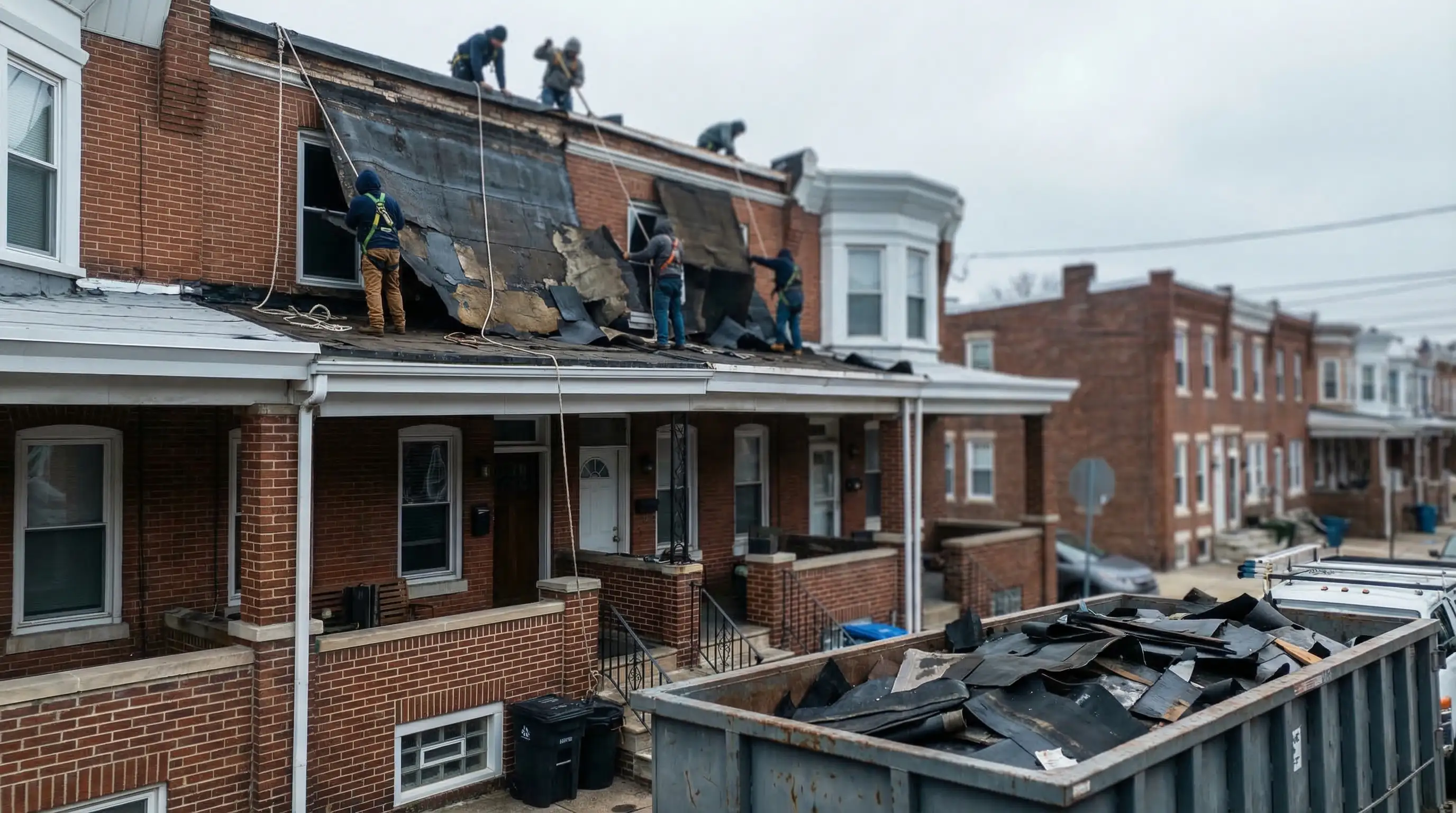
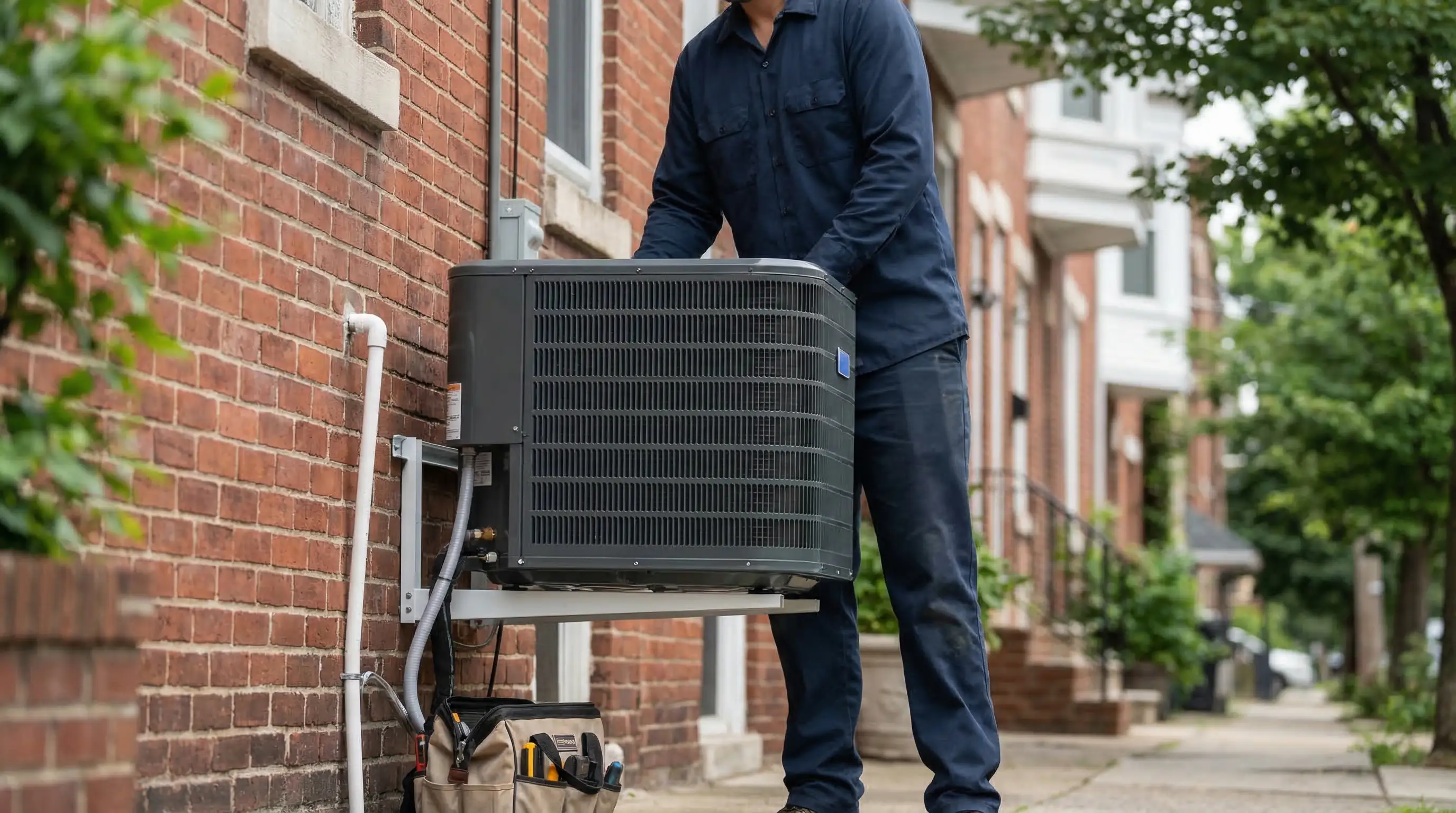
Philadelphia's row home and brick townhouse stock — with 60–70% of units predating 1970 — creates a HVAC demand profile that is structurally different from newer suburban markets. Row homes in neighborhoods like West Philadelphia, Kensington, South Philadelphia, and Port Richmond have aging boilers, original radiator systems, and poorly insulated attic spaces. Many of these homes lack central air entirely, driving demand for ductless mini-split installations. The replacement cycle for aging boilers (30–40 year systems in older row homes) means that in any given year, thousands of Philadelphia homeowners are facing a forced replacement decision — not a discretionary upgrade.
This creates a high-urgency conversion profile: homeowners searching "boiler replacement Philadelphia" or "furnace stopped working Philadelphia" are not comparison shopping leisurely. They are making a forced purchase decision under discomfort or safety pressure, and the company that answers the phone first — or whose ad appears at the top at 7pm on a January night — wins the job. After-hours ad scheduling and 24/7 call availability are not optional features in Philadelphia HVAC PPC; they are the margin between a $6,000 installation job and a missed call to a competitor.
The structure of a winning Philadelphia HVAC Google Ads campaign follows the urgency spectrum: highest spend and most aggressive bidding on emergency searches, structured campaigns for installation/replacement, and lower-budget awareness campaigns for maintenance and tune-ups. Mixing all three in one campaign with a single daily budget produces average results at every level — emergency searches lose to competitors with higher bids, installation leads are underfunded, and maintenance campaigns drain budget needed for peak-season emergency response.
Campaign Structure by Service Type
- Emergency AC repair (summer): "AC not working Philadelphia," "air conditioning repair Philadelphia same day," "emergency HVAC Philadelphia" — $15–$25 CPC; 24/7 ad scheduling, click-to-call primary CTA; peak budget June–August
- Emergency heating / furnace (winter): "no heat Philadelphia," "furnace repair emergency," "boiler not working Philadelphia" — $14–$22 CPC; same-day guarantee messaging, 24/7 phone, financing mentioned in copy; peak budget November–February
- Central AC installation: "central air conditioning installation Philadelphia," "AC unit replacement cost" — $12–$20 CPC; financing lead, PECO rebate messaging, consultation landing page; peak spring (April–May)
- Furnace / boiler replacement: "furnace replacement Philadelphia," "new boiler installation Philadelphia" — $11–$20 CPC; high-ticket conversion ($4,000–$10,000); financing terms, efficiency ratings, brand options in copy
- Mini-split installation: "ductless mini split Philadelphia," "mini split installation cost" — $9–$16 CPC; growing niche, lower competition; target row homes without existing ductwork
- Tune-up / maintenance: "HVAC tune up Philadelphia," "AC maintenance special" — $8–$14 CPC; lower urgency, use March–May and September–October windows; lead into service agreement upsell
Seasonal Budget Management
Philadelphia HVAC PPC requires dynamic monthly budgets, not flat allocation. The optimal distribution across a 12-month cycle:
- Dec–Feb (heating peak): Allocate 130–150% of baseline; furnace and boiler replacement campaigns dominate; emergency heating bids highest
- Mar–May (spring tune-up + AC install): Baseline; ramp AC installation campaigns in April; PECO rebate messaging in spring creates urgency before summer heat
- Jun–Aug (AC peak): Allocate 130–150% of baseline; emergency AC repair is highest priority; heat wave days require manual bid increases
- Sep–Nov (fall maintenance + heating prep): Baseline; shift to furnace tune-up and preventive maintenance; start building heating season campaigns in October
Use ad scheduling bid multipliers to increase bids by 20–30% during evening hours (6pm–10pm) and weekend mornings — times when Philadelphia homeowners are home and most likely to notice HVAC problems. Reduce bids overnight (11pm–6am) on non-emergency campaigns; maintain 24/7 scheduling only on dedicated emergency ad groups.
The PECO rebate angle is consistently underused by Philadelphia HVAC advertisers. PECO (Philadelphia's utility company) offers cash rebates of up to $500+ on qualifying high-efficiency HVAC equipment. Advertising this in ad copy — "qualify for up to $500 PECO rebate on a new AC" — differentiates your ad from every competitor using generic "licensed and insured" copy, and it creates a financial reason to contact you rather than calling around for quotes.
Google Partner Agency
We're a certified Google Partner Agency, which means we don’t guess — we optimize withGoogle’s full toolkit and insider support.
Your campaigns get pro-level execution, backed by real expertise (not theory).

Philadelphia HVAC PPC has an underexploited geographic pattern that consistently produces lower CPLs for contractors who recognize it: the city's aging row home neighborhoods have higher conversion rates per click than suburban zip codes. The reason is housing stock urgency. A homeowner in West Philadelphia or Kensington whose 40-year-old boiler fails in January has essentially no choice — they need a replacement, and they need it this week. Conversion rates on "boiler replacement" and "no heat" keywords in dense urban zip codes run 6–9%, compared to 3–5% in suburban areas where homeowners have newer systems and more time to comparison shop.
The Row Home Mini-Split Opportunity
One of the fastest-growing niches in Philadelphia HVAC PPC is ductless mini-split installation — and most advertisers aren't actively targeting it. Thousands of Philadelphia row homes have no existing ductwork (heated by radiators or baseboard systems), making central AC installation impractical without major renovation. Mini-split systems are the practical solution: no ductwork required, room-by-room temperature control, and installation that can be completed in 1–2 days. The average job value is $3,000–$8,000 — comparable to a furnace replacement.
The keyword opportunity: "ductless mini split Philadelphia," "mini split installation row house," and "ductless AC Philadelphia" currently have CPCs of $9–$16 — well below emergency AC repair CPCs of $15–$25 — with strong conversion intent. As Philadelphia row home owners become more aware of mini-split technology (accelerated by energy efficiency programs and PECO incentives), search volume is rising. An HVAC contractor who owns this keyword category now, before competition intensifies, will establish Quality Score advantages that translate into lower CPCs for years.
The Rental Property Landlord Segment
Philadelphia's rental market is substantial: with ~48% of housing units renter-occupied, there are hundreds of thousands of rental units that landlords are legally responsible for maintaining. Landlords are among the highest-value HVAC customers because they don't just buy a single installation — they buy a relationship. A landlord with 5 rental properties who calls you for one emergency furnace repair becomes a recurring customer for tune-ups, replacements, and emergency calls across their entire portfolio. B2B-oriented keywords — "HVAC service contract Philadelphia landlords," "commercial HVAC maintenance Philadelphia" — have low CPC and high lifetime customer value.
- Targeting tactic: Create a separate "landlord/property management" campaign with B2B-specific messaging ("HVAC maintenance contracts for Philadelphia landlords — one call covers all your properties")
- CPC range: $8–$16 for property management HVAC terms — 30–50% below consumer emergency HVAC CPCs
- Conversion value: A 5-property landlord generating $800/year per property in service calls = $4,000/year recurring — equivalent to acquiring multiple individual homeowner customers
Key insight: Philadelphia HVAC PPC rewards investment in both extremes of the urgency spectrum — emergency response campaigns and service contract relationship-building. The mistake most contractors make is focusing exclusively on emergency keywords (high CPC, short relationship) while ignoring the lower-CPC, higher-lifetime-value maintenance and landlord segments that compound in value over time.
Philadelphia HVAC PPC is not a set-and-forget campaign. Emergency demand patterns, heat wave spikes, seasonal bid adjustments, and the specific opportunity windows created by PECO rebate programs and mini-split growth all require active management from someone who understands the Philadelphia market — not a generic home services template applied to any city.
MB Adv Agency manages HVAC Google Ads campaigns for Philadelphia contractors with one objective: maximize booked service calls and installation appointments per dollar of ad spend. We build seasonally-structured campaigns with separate emergency, installation, and maintenance tracks, implement ad scheduling aligned with Philadelphia homeowner behavior, and track every phone call back to the campaign and keyword that generated it. PECO rebate messaging, row home mini-split targeting, and landlord B2B segments are built in from day one — not added as afterthoughts. Every campaign includes monthly performance reviews with actionable recommendations, not just reporting — because Philadelphia's seasonal demand patterns require active adjustments, not passive observation.
Review our HVAC campaign pricing, visit our Philadelphia PPC page for local context, and see our lead generation service methodology for how we approach high-urgency, seasonal markets. For a full picture of what we offer, our services overview covers every aspect of our campaign management approach.
Frequently Asked Questions
How much should a Philadelphia HVAC company spend on Google Ads per month?
The baseline for a functional Philadelphia HVAC Google Ads campaign is $2,500–$4,500/month for a company with 2–5 technicians. Below $2,500, the daily budget is insufficient to maintain consistent top-3 positioning on emergency keywords during peak demand hours — and HVAC conversions are heavily weighted toward top-of-page ads, especially on mobile where click-to-call behavior dominates. At $3,000/month average spend, expect 15–25 qualified leads per month across emergency, installation, and maintenance categories.
Seasonal budget peaks matter. During a Philadelphia heat wave (July–August) or a cold snap (January), daily search volume for emergency HVAC terms can spike 3–5× above baseline. A campaign running a flat $100/day budget hits its daily cap by noon on a 97°F day — and misses hundreds of qualified afternoon searches when competitors with flexible budgets are still showing ads. Smart HVAC advertisers build in a seasonal budget flex of 30–50% above baseline for June–August and November–February, funded by reducing non-emergency maintenance budgets during slower months. The total annual spend stays roughly constant; the allocation shifts to match when Philadelphians actually need HVAC service.
What does that budget buy? At $3,500/month with a blended CPL of $85–$120, a Philadelphia HVAC company generates 30–40 qualified leads per month — a mix of emergency service calls, installation consultations, and tune-up bookings. The emergency calls convert to jobs at 60–75% (someone whose AC isn't working calls one or two companies; if you answer first, you win the job). Installation consultations convert at 30–50%. At an average job value of $3,500 for a replacement installation and $250 for a service call, the math on a well-run $3,500/month HVAC campaign closes comfortably — and improves every month as Quality Score accumulates and CPL drops.
How do I compete against Roto-Rooter and One Hour Heating & Air on Google Ads in Philadelphia?
National franchise brands and large regional competitors in Philadelphia HVAC PPC have two structural advantages: larger budgets and years of accumulated Quality Score. You can't out-spend them directly on their strongest keywords. What you can do is out-target them on the searches they're ignoring — and there are more of those than you'd expect.
National competitors run generic Philadelphia-wide campaigns with generic copy ("HVAC repair Philadelphia — call now"). They don't run neighborhood-specific campaigns. "HVAC repair West Philadelphia," "furnace repair Kensington," "mini split installation South Philly" are all queries with meaningful search volume, lower competition, and no national brand presence. A $500/month campaign targeting 15–20 neighborhood-specific keywords will produce CPLs 30–50% below the citywide emergency keywords the nationals are fighting over — and it captures homeowners who feel more comfortable calling a company that knows their neighborhood.
The second advantage is speed of response. National franchises route calls through call centers; callbacks can take 30–60 minutes. An independent Philadelphia HVAC company that answers the phone directly and promises same-day service captures the emergency customer every time, even if they appear below the national brand in search results. Ad copy that reads "Philadelphia-based — we answer every call" is a verifiable claim that differentiates your ads from national competitors who can't say the same. Pair that with a Google Guaranteed badge and 100+ Google Reviews, and a local operator consistently converts clicks at higher rates than the national brands — even from a lower ad position.