Start
$590$990/month
1 platform · Google or MetaGoogle + Meta- Ad spend
- up to $3,000
- New creativesmade by us
- Google + Meta only4 a month
 By Matteo Braghetta, Founder · Google Ads
Philadelphia home values average $229,411, up 2.1% year-over-year, with properties going to pending in 38 days — an active but not runaway market where buyers are researching online before contacting an agent. The NYC-to-Philadelphia migration trend is creating a steady stream of out-of-state buyers who rely entirely on Google to find local representation, and they're searching right now.
See how this city's Real Estate PPC costs compare nationally in our Real Estate PPC Statistics report, featuring data from 40+ US cities.
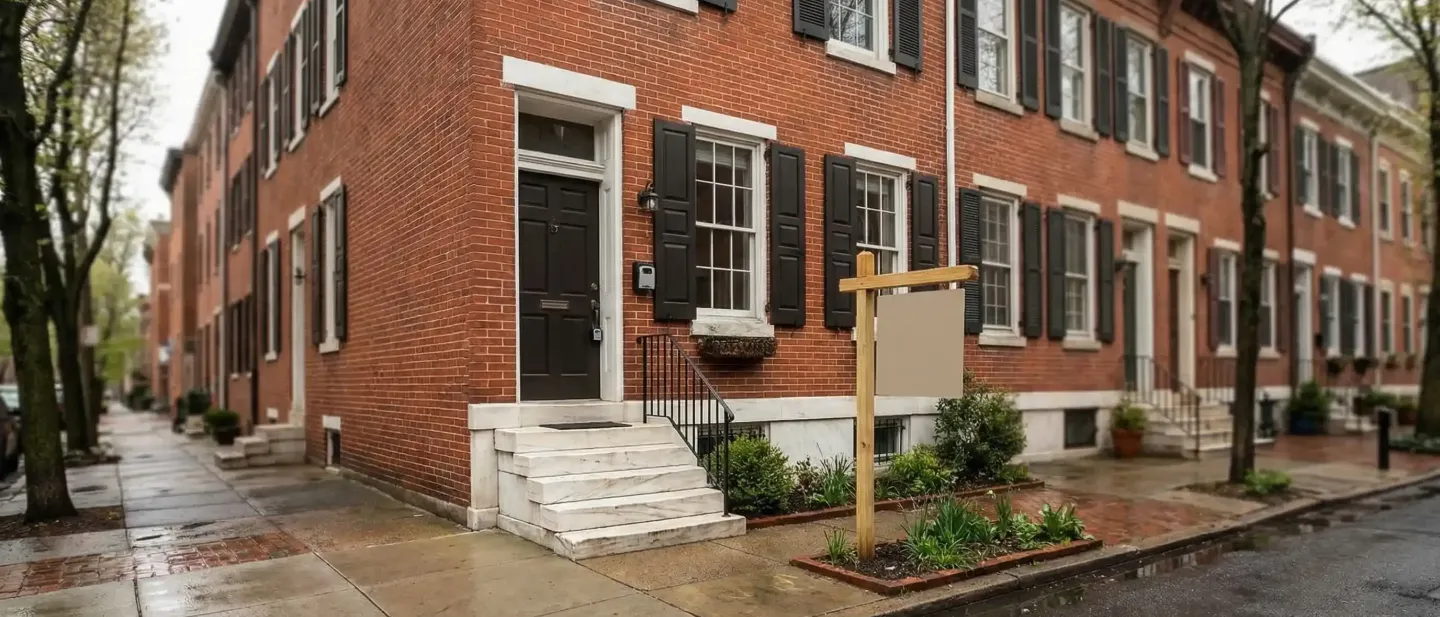
In Philadelphia, PA, people search for real estate services about 9,920 times a month on Google; a top-of-page click costs $1.53–$7.02, and demand peaks in March.
Google Keyword Planner · Oct 2025 – Sep 2026
| Search | Monthly searches | Top-of-page CPC |
|---|---|---|
| houses for sale | 3,600 | $0.13–$2.02 |
| homes for sale | 1,900 | $0.14–$2.28 |
| real estate agent | 1,000 | $4–$15 |
| commercial real estate | 720 | $0.40–$3.60 |
| property management | 590 | $2.05–$9.23 |
| realtor near me | 390 | $4–$18 |
| first time home buyer | 320 | $2–$14 |
| condos for sale | 260 | $0.16–$1.10 |
| real estate broker | 260 | $2.41–$6.64 |
| real estate agents near me | 210 | $6–$17 |
US: $9.02
Google Keyword Planner · Oct 2025 – Sep 2026
Source: Google Keyword Planner (Google Ads), Google Search, English, Philadelphia, PA, Oct 2025 – Sep 2026. Volumes are Google's monthly averages; CPC is the top-of-page bid range, weighted by search volume. How we collect these figures.
Real estate PPC in Philadelphia has a deceptively competitive structure. On the surface, the CPCs look accessible — "homes for sale Philadelphia" runs $0.14–$2.28, "first time home buyer Philadelphia" runs $2–$14. Compared to legal or HVAC, these numbers look manageable. The real challenge is conversion rate: real estate PPC converts at 2–4% (WordStream benchmark: 2.47%), the lowest of any category in this guide. That means you're paying for 25–50 clicks for every lead. At $1.53–$7.02 average CPC, that adds up to a high cost per lead before optimization — and seller leads cost even more, running $150–$400 CPL for a listing appointment request.
The primary reason real estate Google Ads campaigns fail in Philadelphia is a mismatch between ad copy intent and landing page experience. A buyer searching "Philadelphia homes for sale" is expecting to see available listings — if your ad leads to a generic agent biography page or a "contact me" form, conversion rate drops to near zero. Zillow and Realtor.com have trained Philadelphia buyers to expect searchable listing inventory the moment they land on a page. An agent campaign that can't approximate this experience — even with a curated listings page or IDX integration — will generate clicks without conversions.
The second challenge is lead quality. Real estate searches are broad by nature, and broad intent does not mean buying intent. "Philadelphia real estate" could mean a buyer six months from a purchase, an investor researching prices, or a renter checking if they could afford to buy. Without careful match type selection and intent-specific ad groups, a real estate campaign will generate inquiry volume from people who aren't transactionally ready. High inquiry volume with low conversion to actual appointments is the most common complaint from real estate agents running Google Ads for the first time.
Two niches in Philadelphia real estate PPC are structurally underserved and offer dramatic CPL advantages. First: cash home buyers. "Sell my house fast Philadelphia," "we buy houses Philadelphia," and related distressed-seller terms convert at very high rates because the searcher has already decided to sell — they're just choosing who to call. CPC runs $33–$171, CPL typically $30–$80 for a seller lead. This is 3–5× lower CPL than traditional buyer-side PPC, and the conversion event (cash offer request) is immediate and measurable.
Second: NYC-to-Philadelphia relocation buyers. Philadelphia's cost-of-living advantage over Manhattan and Brooklyn is 30–40% lower housing costs for comparable space. The active migration trend (documented throughout Phase 1 research) produces buyers who are highly motivated, pre-qualified financially, and unfamiliar with Philadelphia's neighborhood geography — which means they rely on an agent for local knowledge. Ads targeting these buyers with specific messaging ("more space, half the commute, 60% of the price — Philadelphia vs. NYC") generate above-average engagement from a high-intent, out-of-market audience that most local competitors aren't reaching.
Philadelphia's 51.8% homeownership rate means nearly half the city is renting — a large pool of potential first-time buyers who are pre-research stage. The Pennsylvania Housing Finance Agency (PHFA) first-time buyer assistance programs actively drive search volume for "PHFA down payment assistance Philadelphia," "FHA loan specialist Philadelphia," and related terms. These keywords have below-average CPCs and strong conversion because the search is already pre-qualified by program awareness: a person searching for PHFA assistance has made the mental decision to buy and is looking for an agent who understands the program.
Real estate PPC strategy in Philadelphia must be built around intent specificity. The difference between "Philadelphia real estate" (research intent) and "buyer's agent Philadelphia" (hiring intent) is enormous — and treating them with the same ad copy and landing page produces mediocre results across both. Build separate campaigns for buyer-side, seller-side, investor, and relocation audiences, each with its own keywords, ad copy, and conversion goal.
Real estate has the longest buyer consideration cycle of any consumer category — often 3–12 months from first search to transaction. A campaign that optimizes only for immediate phone calls will miss the majority of its potential leads. Build a two-stage conversion path: stage one captures email + phone (low friction form: "Get Philadelphia neighborhood pricing — enter your email"), then stage two nurtures to appointment via email sequence and retargeting ads. Buyers who give you their email at 90 days before purchase will close with you if you stay visible during the consideration period.
Home valuation tools are the highest-converting landing page format for seller leads in Philadelphia. "What's my home worth?" searches convert to form completion at 8–15% — 3–6× higher than a standard contact form. Third-party valuation widgets (Cloud CMA, HouseValues.com) or custom valuation forms generate the email + address data needed to follow up with a personalized CMA. At $1.11–$6.42 CPC and 8–12% conversion rate, seller valuation leads deliver strong ROI for agents whose average commission is $8,000–$18,000 on a Philadelphia home sale.
Philadelphia's real estate PPC market has a timing dynamic that most campaigns miss entirely. The active buying season peaks March–July, but the highest-converting window for seller leads is actually October–December. Homeowners who decide to sell in fall — before listing in spring — begin searching for agents and valuation information in the fall. Running seller-side campaigns year-round at flat budget misses the November–December research window, when seller intent is high but advertiser competition is at its seasonal low. A campaign that increases seller-side budget by 30–40% in November–December captures motivated pre-listing sellers at below-peak CPCs.
Philadelphia's hyper-local neighborhood identity creates a keyword opportunity that citywide advertisers consistently ignore. "Fishtown real estate agent," "South Philadelphia row homes for sale," "Chestnut Hill homes," and "Rittenhouse Square condos" are all active searches with below-average CPCs and above-average conversion rates — because a buyer searching a specific neighborhood has already made a location decision and is in active selection mode. A real estate campaign built around 10–15 Philadelphia neighborhood keywords will generate higher-quality leads than a campaign targeting "Philadelphia homes for sale" at twice the budget.
The market data supports neighborhood-level specificity. Philadelphia's row home inventory is geographically concentrated: Fishtown and South Philly for young professional buyers, Northeast Philadelphia for family-size townhouses, Center City and Rittenhouse for luxury condos, Germantown and Mt. Airy for buyers seeking more space at lower prices. These neighborhoods have distinct price ranges, buyer profiles, and search behaviors. An agent who builds campaign content around two or three neighborhoods — with neighborhood-specific ad copy, landing pages featuring neighborhood inventory, and neighborhood-mention keywords — consistently outperforms generalist agents running broader campaigns.
Key insight: The NYC transplant audience is the single highest-lifetime-value buyer pool in Philadelphia right now. These buyers are pre-qualified (moving from a high-cost market), unfamiliar with local geography (needs a trusted agent), and typically purchasing above the city median (coming from a higher price point). A $200–$300 CPL to capture a NYC transplant buyer who purchases a $450K Philadelphia home represents an acquisition cost below 0.5% of the transaction value — exceptional ROI for any agent running a structured relocation campaign.
Philadelphia real estate PPC rewards specificity over scale. The agents and brokers who generate the best results from Google Ads aren't the ones with the largest budgets — they're the ones who've chosen two or three audience segments, built campaigns that speak directly to those buyers or sellers, and maintained those campaigns consistently through the 90–180 day window that separates first search from closed transaction.
MB Adv Agency builds real estate PPC campaigns structured around your market position — whether that's buyer representation, cash offer acquisitions, first-time buyer programs, or investor sales. We match campaign structure to your actual business model, not a generic real estate template. Our campaigns include intent-segmented ad groups, neighborhood-specific landing pages, and conversion tracking that distinguishes form fills from phone calls from appointment bookings.
Review our pricing tiers — real estate campaigns start for agents managing under $3K/month in ad spend. For teams ready to scale, our full services overview covers how we structure campaigns for high-volume real estate businesses. Philadelphia-specific context is available at our Philadelphia PPC page. Our lead generation service covers the full buyer and seller lead acquisition methodology we deploy in competitive markets like this one.

Faster than most agents expect — and slower than most hope. First leads typically arrive within 7–14 days of campaign launch. Google's algorithm approves ads quickly, and if the campaign is targeting active buyer searches ("Philadelphia homes for sale," "buyer's agent Philadelphia"), the initial traffic is near-immediate. The issue is that early leads from a new campaign are often lower quality as the algorithm learns which clicks convert. The campaign typically reaches peak lead quality and cost-efficiency at 60–90 days, after accumulating 50–100 clicks per ad group and enough conversion data for the bidding algorithm to optimize.
The conversion-to-appointment timeline is a separate issue from lead arrival timing. A buyer searching in early March may not schedule a showing until May and close in July. Campaigns should be evaluated over a 90–180 day window, not a 30-day window. Agents who cancel campaigns after 30 days with "not enough leads" are often abandoning campaigns at the point where the algorithm was about to optimize and the pipeline was 60 days from producing closings. The key leading indicator is not immediate closings — it's cost per lead trend. If CPL is declining month-over-month, the campaign is working; wait for the transaction pipeline to catch up.
A minimum viable budget for real estate PPC in Philadelphia is $2,500/month. Below that threshold, you won't generate enough daily click volume to give the algorithm sufficient conversion data to optimize. At $2,500/month with CPCs of $1.53–$7.02, you're generating enough clicks for a steady flow of leads at the 3–4% CVR typical of real estate search. That's workable but tight. A $4,000–$5,000/month budget generates more clicks and leads per month — a volume level that supports meaningful optimization and consistent deal flow.
Seller-side campaigns require more budget per lead than buyer-side. Seller keywords are more competitive ($91–$229 CPC for "sell my home" vs. $4–$15 for "real estate agent"), and seller leads convert at lower rates — homeowners are more deliberate about choosing a listing agent than buyers are about requesting information. Budget $1,500–$2,500/month specifically for seller lead generation, separate from buyer campaigns, and expect a smaller volume of seller leads with a strong home valuation landing page. At Philadelphia's average commission on a listing (2.5–3% of $229K median = ~$5,700–$6,900/transaction), a single closed listing more than justifies the monthly campaign cost.
Seasonal budget allocation matters: shift 20–30% more budget to buyer campaigns in March–June (peak search season), and redirect that budget to seller campaigns in October–December. Flat budgets year-round consistently underperform seasonally adjusted budgets at the same annual total.
How to read this Cost per click and monthly searches are measured with Google Keyword Planner (see above). Cost per lead, conversion rate, budget and leads are estimates compiled from public benchmarks such as WordStream, not measurements.
Sources WordStream Real Estate 2021 + Philadelphia metro estimates; seller leads higher CPL than buyer leads
$590$990/month
1 platform · Google or MetaGoogle + Meta$790$1,290/month
1 platform · Google or MetaGoogle + Meta$1,140$1,940/month
1 platform · Google or MetaGoogle + MetaChatGPT Ads: a separate pilot, $250/month, added to a plan. See the pilot →

Matteo Braghetta founded MB Adv and runs its Google Ads accounts. He takes the first call with every new client, reads the accounts every week and writes the agency’s guides.
The other half of his job is measurement: GA4, Consent Mode and server-side tracking, so the platforms learn from real sales.
MB Adv is a Google Partner agency managing about $4.4M a year in ad spend for clients in the US, the UK and Europe.
Managed on numbers you can check.
Plans for the US