Moving & Storage PPC Philadelphia, PA
Philadelphia's moving market runs on three distinct demand engines simultaneously: an active residential real estate market turning over homes in 38 days, a steady NYC-to-Philadelphia migration wave driven by 30–40% lower housing costs, and an August university surge from 80,000+ students at Penn, Temple, Drexel, and Jefferson beginning or ending academic leases. Each engine peaks at different times — and each responds to different ad copy. <!-- stats-article-link --> <p><em>See how this city's Moving & Storage PPC costs compare nationally in our <a href="https://www.mbadv.agency/ppc-industry-statistics/moving-storage-ppc-statistics">Moving & Storage PPC Statistics</a> report, featuring data from 40+ US cities.</em></p>
Moving company Google Ads in Philadelphia has a paradox that trips up most campaign operators: the market is high-volume but highly seasonal, and the seasonality isn't uniform across customer types. A campaign optimized for August student moves will underperform in March when NYC-to-Philly relocation buyers are making spring purchase decisions. A campaign built for local residential moves won't convert the long-distance client who needs a full-service move from Brooklyn to Fishtown. The core challenge is building a campaign architecture that captures multiple high-value audiences without diffusing budget across all of them simultaneously.
The August Surge Problem
Philadelphia's university move-in window creates the most intense short-duration demand spike in the entire moving calendar. August 15–31 is effectively peak season compressed into two weeks: UPenn, Temple University, Drexel, Jefferson, LaSalle, and Saint Joseph's all begin fall leases within days of each other, creating a surge of student and family move requests that overwhelms local moving capacity. CPCs on "moving company Philadelphia" jump 25–40% during this window as every local mover increases bids simultaneously. A campaign that isn't pre-positioned going into August — with established Quality Scores, tested ad copy, and sufficient daily budget — loses top-3 placement at the exact moment conversion volume is highest.
The operational implication matters for PPC strategy: moving companies that book their August calendar full by July 15 don't need August PPC spend. The strategic use of Google Ads in this context is to run aggressive August-focused campaigns starting in late June, capturing early bookers (families and students who plan 4–6 weeks ahead) before competitors ramp up. Late July and August ad spend competes against a much more crowded and expensive auction; early campaign investment in June–July books the same customers at 20–30% lower CPL.
Local Market Structure and Competitive Dynamics
Philadelphia moving PPC is moderately competitive with strong seasonal variance. Key ongoing advertisers include College Hunks Hauling Junk & Moving, Suburban Solutions Moving & Storage, JB Moving, and several national lead-gen platforms (Moving.com, HireAHelper) that aggregate leads and redistribute to local movers. National van lines (United Van Lines, Atlas, Allied) compete for long-distance keywords. The most underserved segments in paid search are the NYC-to-Philadelphia relocation niche and the student/university move niche — most local moving company ads use generic "moving company Philadelphia" copy that doesn't differentiate for these specific, high-intent audiences.
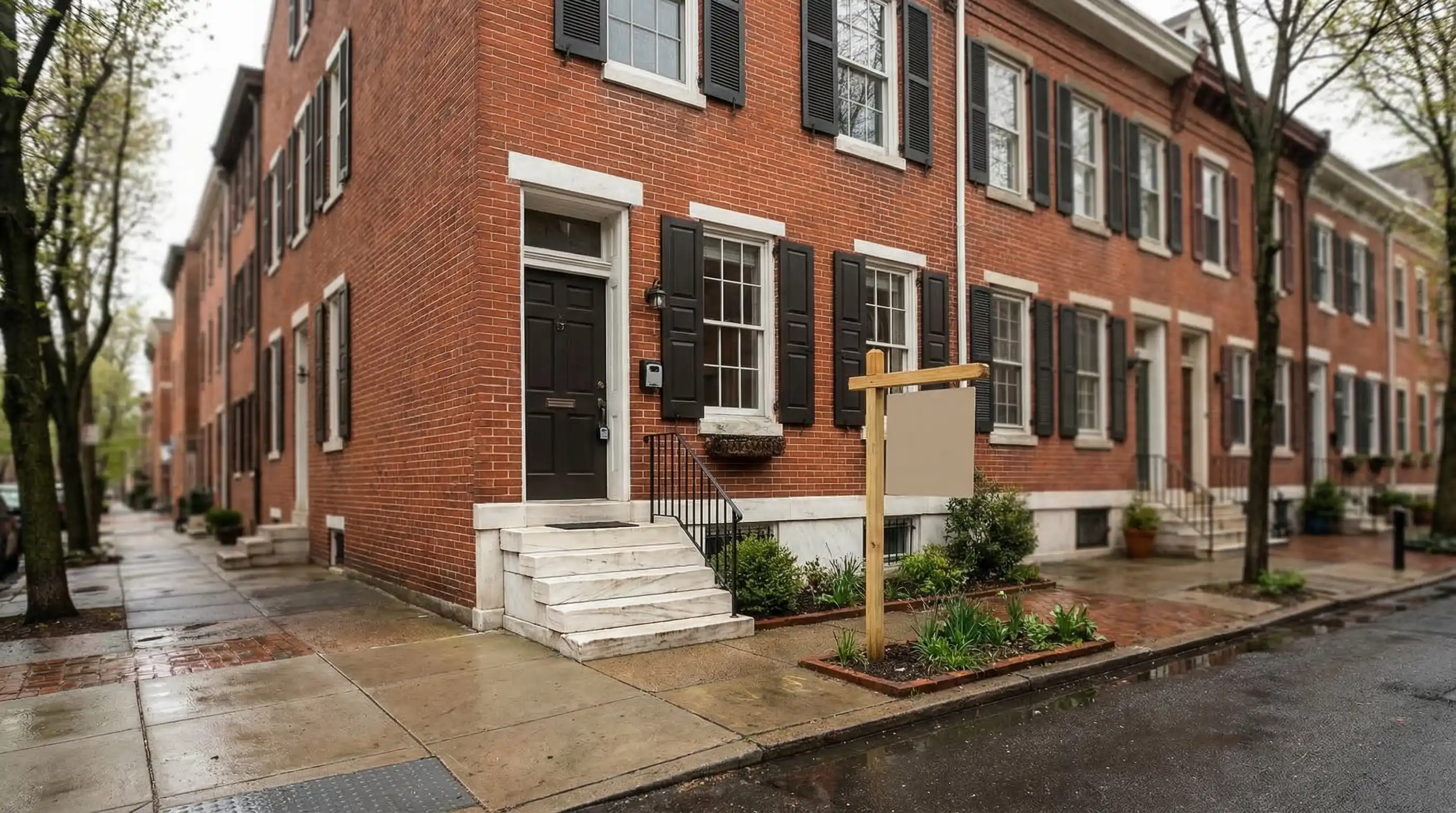
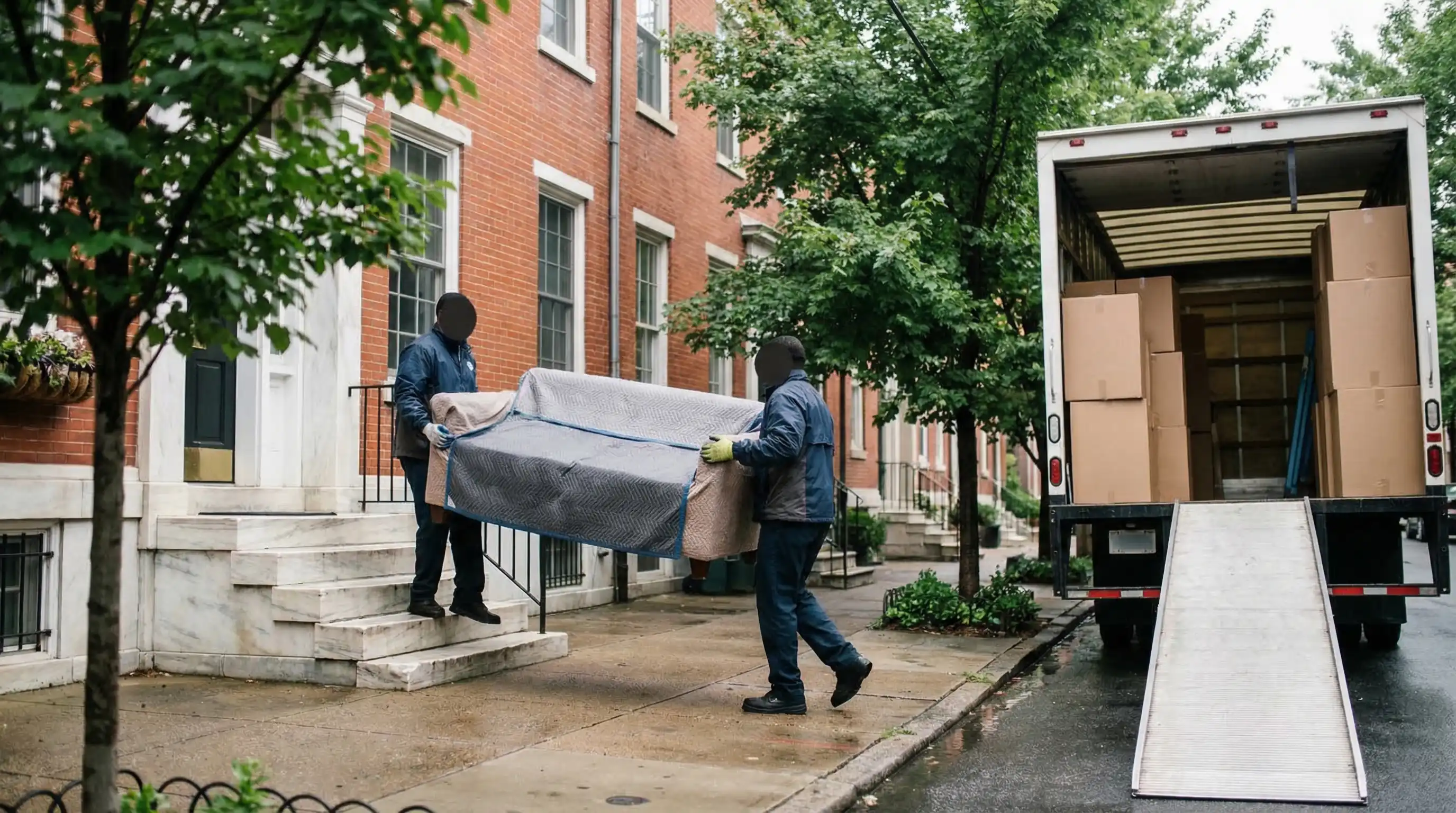
Philadelphia's row home architecture creates a genuine operational differentiator that translates directly into PPC copy: row homes have narrow staircases, white marble front steps, and third-floor walkups that inexperienced movers damage. A mover who advertises "we know Philadelphia's narrow streets and walk-up buildings — no damage, no drama" is making a verifiable claim that addresses the actual anxiety of Philadelphia homeowners hiring movers for the first time. That specificity converts better than generic "professional movers" copy because it demonstrates local knowledge, not just service availability.
Job value ranges are important for ROI calculation. Local moves (2–3 bedroom, under 50 miles) generate $600–$1,800. NYC-to-Philly moves (2–3 bedroom) generate $2,500–$6,000. Full-service long-distance moves generate $4,000–$12,000+. A campaign focused on long-distance and NYC relocation leads will generate lower lead volume but dramatically higher revenue per job — the right trade-off for a mover with limited truck availability who needs to prioritize high-value bookings.
The correct Philadelphia moving company PPC structure runs four parallel campaigns targeting distinct audiences, with budget weights that shift across the calendar year. A single "moving company Philadelphia" campaign is the most common mistake in this category — it mixes student moves ($400–$600 jobs) with NYC relocation moves ($3,000–$6,000 jobs), distributes budget across intent types, and produces mediocre CPL at every level.
Campaign Structure by Customer Segment
- NYC-to-Philadelphia relocation: "moving from NYC to Philadelphia," "long distance movers Philadelphia," "New York to Philly moving company" — $10–$25 CPC; dedicated relocation landing page with NYC comparison content; phone + quote form CTA; peak March–June and September–November
- Local residential moving: "local movers Philadelphia," "moving company Philadelphia," "affordable movers Philadelphia" — $8–$20 CPC; online quote tool or booking form; Google Reviews prominently featured; peak April–September
- Student / university moving: "student movers Philadelphia," "college move Philadelphia," "moving near Temple University" — $5–$12 CPC; budget-conscious copy; same-day availability messaging; peak campaign window June 15–August 31
- Senior relocation: "senior movers Philadelphia," "senior moving service Philadelphia," "assisted living relocation" — $6–$14 CPC; trust-focused copy; white-glove service messaging; low volume, high conversion, high trust requirement
- Commercial / office moving: "office movers Philadelphia," "commercial moving company Philadelphia" — $8–$18 CPC; B2B landing page; after-hours availability; ROI framing (minimize business downtime)
- Junk removal / packing services: "junk removal Philadelphia," "packing service Philadelphia" — $6–$14 CPC; upsell services that increase average job value; strong year-round volume
Conversion Mechanics and Quote Flow
Moving company conversions happen on two tracks: phone calls (high urgency, same-week moves) and online quote forms (planned moves, 2–8 weeks out). Both must be tracked separately with call tracking software. The highest-value leads — NYC relocation and commercial moves — almost always start with a phone consultation, not a form. Click-to-call ads with prominent phone numbers outperform form-only campaigns for these segments.
For online quote forms, keep the form to 5–6 fields maximum: move date, origin zip, destination zip, home size (approximate), and phone number. Every additional field reduces form completion rate by 8–12%. An online instant estimate tool — even an approximate one ("your move estimate: $X–$Y based on 2 bedrooms, 12 miles") — dramatically increases form completion because it gives the prospect something of value before asking for contact information. Movers with online estimate tools consistently achieve form conversion rates of 8–15%, versus 3–5% for simple contact forms.
Run ad scheduling bid multipliers that increase bids 15–25% on Saturday mornings (peak moving decision day) and Sunday evenings (week-ahead planning window). Reduce bids on Tuesday–Wednesday midday (low conversion period for consumer moving searches). These adjustments typically improve overall CPL by 10–20% without changing total budget.
Google Partner Agency
We're a certified Google Partner Agency, which means we don’t guess — we optimize withGoogle’s full toolkit and insider support.
Your campaigns get pro-level execution, backed by real expertise (not theory).

Philadelphia's moving PPC market has a demand driver that most campaigns actively ignore: the NYC-to-Philadelphia migration trend is not a seasonal spike — it's a structural, year-round flow that accelerates in spring and fall. The cost-of-living arbitrage (Philadelphia housing costs 30–40% below comparable NYC neighborhoods) drives a consistent inbound stream of professional-class buyers who are purchasing their first Philadelphia home, often sight-unseen based on online research, and who need a trusted mover to manage a relocation they've never done before. These are the highest-value moving customers in the Philadelphia market: average job value $3,000–$6,000, trust-motivated (they need a reliable company), and geographically unfamiliar (they rely on Google rather than local word-of-mouth).
The University Demand Calendar
Philadelphia's university system creates two distinct moving demand windows that a well-structured campaign captures separately:
- August (move-in peak): UPenn, Temple, Drexel, Jefferson, LaSalle all begin in late August; family and student move-in generates 3–5× baseline moving search volume for 2–3 weeks; CPC peaks 25–40% above annual baseline; start campaigns in late June to capture early bookers
- May (move-out window): Secondary surge as students vacate leases and 4-year graduates relocate for jobs in NYC, DC, or elsewhere; volume is lower than August but CPCs are significantly below peak because fewer movers advertise for May moves specifically; strong ROI for a targeted "May move-out" campaign
The gap between the August and May windows — September through April — is the lowest-competition period for Philadelphia moving PPC. CPCs drop 20–35% below summer peaks. This window is ideal for building campaign Quality Score and bidding aggressively for NYC relocation and residential real estate-driven local moves at below-peak costs. Movers who stay active year-round (even at reduced budgets of $1,500–$2,000/month in the off-season) build Quality Score advantages that translate into lower CPCs when they scale back up for August — spending less for better placement than competitors who went dark and are re-entering the auction cold.
The Row Home Specialization Angle
Philadelphia's row home architecture is a genuine competitive differentiator that translates into measurable PPC performance. Row homes have narrow staircases (typically 32–36 inches wide), marble front steps that crack under heavy loads, and third-floor master bedrooms that require specialized moving equipment and experienced crews. Damage claims and Google Review complaints about Philadelphia moving companies almost universally involve these specific challenges. A moving company that advertises "Philadelphia row home specialists — narrow staircase experts, no damage guarantee" is addressing the specific fear driving the search, not just offering a generic moving service. This specificity consistently outperforms generic "professional movers" copy in Philadelphia A/B tests.
Key insight: The highest-ROI Philadelphia moving PPC strategy is a three-tier approach: build Quality Score year-round with a $1,500–$2,000/month base campaign targeting local and NYC relocation keywords, ramp to $3,500–$5,000/month in July–August for the university surge, and let the accumulated Quality Score advantages carry you into the peak auction at below-competitor CPCs. The movers who try to enter the August auction cold — starting campaigns in July or August — pay 30–50% more per click for worse positions than those who've been running all year.
Philadelphia moving PPC is not a generic home services campaign. It requires understanding which of the city's three distinct demand drivers — real estate turnover, NYC migration, university moves — is active in any given month, and adjusting campaign emphasis accordingly. A flat, year-round campaign that treats every week the same leaves significant revenue on the table during peak windows and overspends during slow periods.
MB Adv Agency builds moving company PPC campaigns around Philadelphia's specific demand calendar. We manage separate campaigns for local, long-distance/relocation, and student segments; implement the seasonal budget shifts that align spend with actual demand; and track quote requests and phone calls separately to measure cost per booked job — not just cost per click. The NYC relocation angle and university move-in windows are built into campaign planning from day one. We also implement pre-season Quality Score building so your August campaigns enter the auction with established performance history — paying lower CPCs for better position than competitors who ramp up cold.
See our pricing tiers for moving company campaigns, visit our Philadelphia PPC page for local context, and review our lead generation approach for high-volume consumer service markets. Our full services overview covers how we structure and manage campaigns from launch through optimization.

Frequently Asked Questions
How much should a Philadelphia moving company budget for Google Ads?
The minimum viable budget for a Philadelphia moving company to generate consistent lead flow is $2,000–$2,500/month during the off-peak months (October–June), scaling to $5,000–$7,000/month in July–August during the university peak. Below $2,000/month, the daily budget is too thin to maintain consistent top-3 placement on competitive moving keywords — especially when competitors increase bids during high-demand periods.
At $2,500/month with an average CPC of $10–$12, you're generating 200–250 clicks/month. At a 5–8% quote request conversion rate, that's 10–20 quote requests per month. For a mover converting quotes to bookings at 30–40%, that's 3–8 booked jobs from a $2,500 campaign — ROI positive if the average job generates $800+. The NYC relocation segment provides the best return on moving company PPC spend: CPL of $100–$200 per relocation quote, closing rate of 35–50%, average job value of $3,000–$6,000. A single closed NYC-to-Philly move more than covers a month of campaign costs at the $2,500 tier.
For the August university surge, budget $5,000–$7,000/month and expect 50–80 quote requests at a blended CPL of $70–$100. Student moves are lower-value per job ($400–$800), but the volume is high and the conversion rate is fast — students book same-week or same-day. A mover who runs a dedicated student campaign in July–August and fills their calendar by mid-August has effectively acquired that revenue at $70–$100 per booking. At an average $600 job value, the math closes comfortably with room for repeat business as students return semester after semester.
Should Philadelphia movers run Google Ads year-round or only during peak season?
Year-round, without question — but with seasonal budget adjustment, not flat spend. The argument for going dark in winter rests on a false assumption: that demand disappears. It doesn't. Philadelphia's residential real estate market generates moving demand 12 months a year — homes sell in January, corporate relocations happen in February, and NYC transplants make their move any time they find the right Philadelphia house. The winter moving search volume in Philadelphia is lower than summer, but it's not zero, and winter CPCs are 20–35% below summer peaks because most movers pull back their budgets. A $1,500/month winter campaign generates leads at some of the lowest CPLs of the year.
The Quality Score argument is equally important. Google rewards accounts with consistent historical performance — campaigns that run year-round accumulate Quality Score data that translates into lower CPCs and better ad position when budgets increase for summer. A mover who shuts down in October and relaunches in June is starting from scratch in the auction, paying higher CPCs for worse positions than a competitor who maintained even a modest winter presence. The compounding Quality Score advantage of a year-round account — even at reduced winter budgets — is worth 15–25% lower CPCs during peak season. Over a full year, the total cost of the winter campaigns is more than offset by the CPC savings during the high-volume summer months.