HVAC PPC Seattle, WA
Seattle's HVAC market changed permanently after the 2021 Pacific Northwest heat dome — a city where fewer than half of homes had air conditioning suddenly had a 300%+ surge in AC and heat pump installs that has never normalized. Today, 180–220 licensed HVAC contractors compete across King County for heat pump jobs worth $8,000–$20,000, emergency repairs, and PSE rebate-driven replacements. In this market, the contractors winning on Google Ads aren't the biggest — they're the ones with the sharpest rebate messaging and the fastest call response. <!-- stats-article-link --> <p><em>See how this city's Hvac PPC costs compare nationally in our <a href="/resources/hvac-ppc-statistics">Hvac PPC Statistics</a> report, featuring data from 40+ US cities.</em></p>
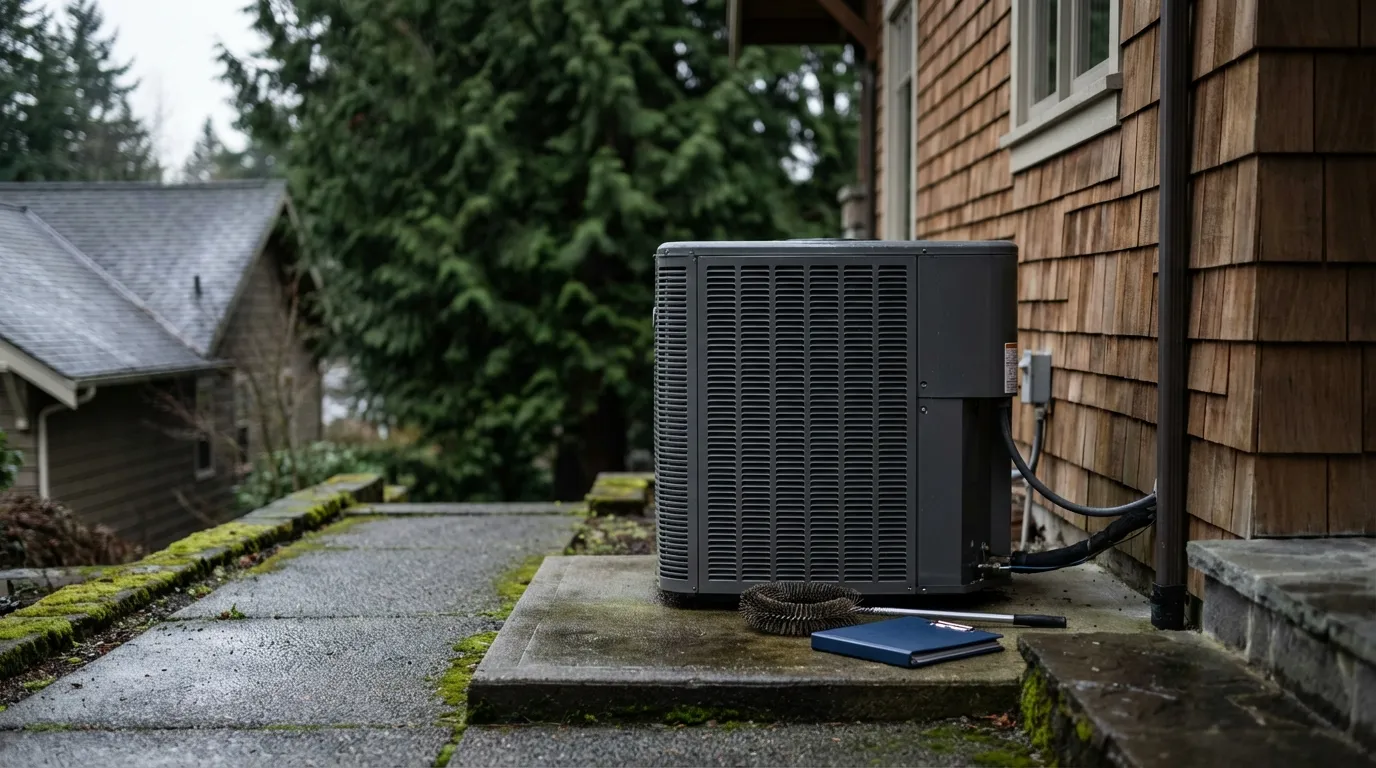
Running HVAC PPC in Seattle means navigating a market that doesn't follow the national playbook. The coastal climate, the post-2021 AC boom, and Washington State's rebate ecosystem all create dynamics that generic campaign setups completely miss — and those misses are expensive when CPCs run $18–$38 on most keywords and heat pump installation terms hit $30–$50 per click.
The Competition Landscape Is Deeper Than It Looks
King County has an estimated 180–220 licensed HVAC contractors, but the real competitive pressure comes from a smaller group of well-funded players: Washington Energy Services and Brennan Heating & Air Conditioning dominate brand awareness with significant ad spend, while Beacon Plumbing competes on multi-service brand recognition. National franchises — One Hour Heating & Air Conditioning — run consistent campaigns with national PPC infrastructure behind them. Smaller operators who don't structure their campaigns to compete at the keyword and message level get outspent and outclicked on every search.
The typical Seattle HVAC campaign failure pattern is predictable: a contractor launches a broad-match Google Ads account targeting "HVAC Seattle" and related terms, burns budget on irrelevant queries (DIY repair guides, competitor brand name searches, commercial HVAC they don't service), generates a handful of low-intent leads at $250–$400 CPL, and declares PPC "too expensive." The problem isn't the channel — it's the setup.
Seattle's Unique Keyword Complexity
Seattle HVAC search intent splits into four distinct categories, each requiring separate campaign treatment:
- Emergency repair intent — "furnace not working Seattle," "heat pump emergency repair" — highest urgency, same-day decision, highest CPC ($28–$45), highest conversion rate. Requires call extensions and 24/7 availability messaging.
- Heat pump installation intent — "heat pump installation Seattle," "heat pump system cost Seattle" — the premium category post-2021. CPCs run $30–$50. Searchers are in 2–4 week research mode. Rebate messaging dramatically improves CTR.
- Rebate/incentive-driven intent — "PSE heat pump rebate," "heat pump rebate Washington state 2025" — lower CPC ($12–$22), but searchers are pre-qualified buyers actively planning a purchase. Converting this intent requires landing pages that actually explain the rebate stacking process.
- Maintenance/tune-up intent — "HVAC tune up Seattle," "AC service Seattle" — lower value per lead, but high volume and consistent year-round. Useful for keeping technicians scheduled during non-emergency periods.
The error most campaigns make is dumping all four intent types into a single campaign with shared budget and shared landing pages. An emergency repair searcher at 11pm on a January night has completely different needs than someone researching a $15,000 heat pump install — and the ad copy, landing page, and bid strategy should reflect that.
There's also a Local Services Ads problem. In Seattle's HVAC market, LSA positions sit above standard search ads on mobile — roughly 40% of HVAC searches on mobile devices never scroll past the LSA block. HVAC contractors without Google Screened status and active LSA campaigns are simply invisible to nearly half their mobile audience. This isn't optional infrastructure in this market.
Finally, Seattle's maritime climate creates a year-round demand pattern with no real slow season — which is good news for contractors, but means there's no off-season to recover budget overruns. Campaigns that overspend in summer without a reserve strategy for spring heat pump install season end up under-funded during the most profitable lead window of the year.
A well-structured Seattle HVAC PPC account separates campaigns by intent, seasons the budget against Seattle's demand calendar, and leads with the one message that outperforms everything else in this market: the heat pump rebate angle. Here's how it works.
Campaign Architecture: Four Campaigns, One Account
The baseline structure for a Seattle HVAC account should be four tightly defined campaigns:
- Campaign 1 — Emergency Repairs: Highest bids, call-only ads, 24/7 ad scheduling, immediate response messaging. Target phrase and exact match only. Keywords: "furnace repair Seattle," "emergency HVAC Seattle," "heat not working Seattle." Expected CPC: $28–$45. This campaign should never lose budget — if calls come in, this campaign funds itself on same-day service revenue.
- Campaign 2 — Heat Pump Installation: Longer-form responsive search ads with 3–5 headlines addressing cost, rebates, and manufacturer options. Landing page must include a rebate FAQ or rebate calculator. Keywords: "heat pump installation Seattle," "heat pump cost Seattle," "install heat pump home Seattle." Expected CPC: $30–$50. High CPL is offset by $8,000–$20,000 average ticket.
- Campaign 3 — Rebate/Incentive: Mid-funnel campaign capturing pre-purchase researchers. Headline lead: "Stack PSE + State + Federal Rebates." Keywords: "heat pump rebate Seattle," "WA clean energy rebate HVAC," "PSE rebate heat pump." Expected CPC: $12–$22. This campaign punches above its weight — rebate searchers are buyers with intent already formed, just needing a contractor they trust.
- Campaign 4 — Maintenance/Tune-Up: Lower bids, broad+phrase match, volume play. Keywords: "HVAC tune up Seattle," "AC maintenance King County," "furnace service Seattle." Expected CPC: $15–$25. Used to keep technicians scheduled year-round and generate upsell opportunities.
Rebate Messaging: The Highest-CTR Hook in the Market
No single message outperforms rebate-first copy in Seattle's current HVAC market. The combination of Puget Sound Energy rebates (up to $2,000), WA Clean Energy Fund rebates (up to $4,000 for qualifying households), and the federal Inflation Reduction Act energy efficiency credits (up to $2,000 additional) means that a qualifying homeowner can offset $4,000–$8,000+ of the cost of a heat pump system. Most homeowners don't know they can stack these incentives — and most contractors don't explain it clearly.
The ad copy formula that works: "Get Up to $4,000 Back on a New Heat Pump — We Handle the Rebate Paperwork." The latter half — handling the paperwork — is as important as the dollar figure. Seattle homeowners are willing to pay a price premium to a contractor who removes the bureaucratic friction from the rebate process. This is a genuine differentiator that should appear in ad headlines, landing page H1, and call scripts.
For Local Services Ads: run them in parallel with search campaigns. LSA requires Google Screened verification and a maintained review profile. Target the same geographic radius as standard campaigns but set a separate daily budget — LSA leads are typically phone calls with a shorter decision window. Budget allocation starting point: 60% standard search, 20% LSA, 20% rebate campaign.
Bidding strategy: use Target CPA bidding only after 30+ conversions per campaign have accumulated. Before that threshold, use Maximize Clicks with manual CPC caps to gather clean conversion data. Set call tracking on all campaigns — 40%+ of Seattle HVAC leads come via phone, not form — and import call conversions into Google Ads before CPA bidding will have accurate signal to optimize against.
Google Partner Agency
We're a certified Google Partner Agency, which means we don’t guess — we optimize withGoogle’s full toolkit and insider support.
Your campaigns get pro-level execution, backed by real expertise (not theory).

The heat dome effect is the single most important structural insight for anyone advertising HVAC in Seattle. Before June 29, 2021, central air conditioning was a genuine luxury in the Pacific Northwest — the mild summers made it easy to rationalize. The 2021 heat dome hit 108°F in Seattle, caused an estimated 100+ deaths in Washington State, and permanently altered purchasing behavior. AC is now considered essential infrastructure by a broad segment of Seattle homeowners, not an upgrade.
The Post-2021 Replacement Cycle Is Just Getting Started
Here's the data point that matters for PPC planning: the 300%+ surge in AC and heat pump installs that followed 2021 peaked in 2022–2023. The systems installed during that surge are now 2–4 years old — well outside warranty but before the typical 8–12 year replacement window. However, a second major heat event in 2024 reset the urgency cycle for homeowners who procrastinated after 2021. The install demand wave is not behind us — it's still active.
For PPC campaigns, this means the heat pump installation category will remain a high-volume, high-competition keyword space through at least 2027. Contractors who establish strong Quality Scores and landing page relevance now are building a cost advantage that compounds over time as newer competitors enter at higher CPCs.
The PSE Rebate Arbitrage Window
Puget Sound Energy serves approximately 1.1 million electric customers in Western Washington. Their current rebate program — up to $2,000 for qualifying heat pump systems — is funded through a state-mandated clean energy transition program and is not permanent. Industry analysts project the rebate pool at current funding levels to be depleted or restructured within 2–3 years.
This creates a time-limited market opportunity: homeowners who act before rebate programs are restructured save significantly more than those who wait. PPC messaging that creates urgency around rebate availability ("PSE Heat Pump Rebate: Check Availability Before It Runs Out") is honest, accurate, and highly effective. This messaging has a natural shelf life — which makes the current 18–24 month window unusually valuable for HVAC contractors who invest in PPC now.
Seasonally, Seattle's demand distribution is remarkably even compared to most U.S. HVAC markets — there is genuinely no dead season. January–February sees emergency heating calls; March–June is the heat pump installation window; July–August is peak AC demand during summer heat events; September–October is tune-up and pre-winter prep season. The implication is that HVAC PPC budgets in Seattle should be maintained at full capacity year-round, not cut in "slow" months that don't exist here.
Key insight: The average HVAC job value in Seattle ($500–$15,000 depending on scope) combined with the market's year-round activity means that a well-run $4,000–$5,000/month PPC budget targeting the four campaign types above should generate 18–30 leads per month at a $150–$250 CPL — and at a blended job value of $3,000+, that's a 12–20x return on ad spend before accounting for maintenance contract upsells and repeat service revenue.
Seattle HVAC PPC rewards specialists, not generalists. A campaign that treats the market like Houston or Phoenix — heat pump rebates ignored, emergency-only focus, no LSA setup — will spend $3,000/month and generate mediocre results. A campaign built around Seattle's specific demand calendar, rebate ecosystem, and competitive dynamics will generate the same leads at half the cost.
At MB Adv Agency, we've mapped the exact keyword architecture, bid strategies, and seasonal budget curves for Seattle's HVAC market. We set up call tracking before the first dollar is spent, so your CPL figures include every phone lead — not just form fills. We write the rebate-specific landing pages that convert PSE and WA Clean Energy Fund searchers at 2x the rate of generic service pages.
We manage PPC for contractors at the $3,000–$5,000/month investment level that this market requires to compete effectively — and we structure campaigns to deliver measurable returns from the first 30 days, not after a 6-month "learning period." Our pricing plans are transparent, and our Google Ads management service includes monthly reporting with the specific metrics that matter: CPL by campaign, call tracking data, conversion value by job type, and ROAS against your average ticket.
If your HVAC business operates in King County and you're not generating consistent leads from Google Ads, the problem is solvable — and the solution starts with a free campaign audit that shows exactly where your current spend is leaking.

Frequently Asked Questions
What's a realistic cost-per-lead for HVAC in Seattle, and how long until PPC pays off?
In Seattle's HVAC market, a well-structured campaign generates leads at $120–$280 CPL depending on the service type. Emergency repair leads run on the lower end ($120–$180) because call-only campaigns with high urgency copy convert at 8–12%. Heat pump installation leads are higher ($200–$350 CPL) due to competitive CPCs of $30–$50 — but at a $10,000–$15,000 average install ticket, even a $300 CPL represents a 33x return on ad spend on the first job, before factoring maintenance contract upsells or referrals.
The timeline question has an honest answer: if you have clean call tracking set up and a properly structured account from day one, you should see meaningful lead volume within the first 2–4 weeks. Google's algorithm needs 30–50 conversions per campaign before Smart Bidding kicks in effectively — so the first month is about gathering data while generating leads, not waiting. The critical early metric isn't CPL — it's conversion rate. A campaign generating leads at $250 CPL with a 5% CVR is healthy. The same CPL with a 1% CVR means something is wrong with the landing page, not the keywords.
Seasonally: the fastest ROI entry point is February–March, when the spring heat pump installation season is just beginning and CPCs haven't yet peaked. Campaigns launched in January with a 30-day ramp period hit the March–May peak window with seasoned algorithms and competitive Quality Scores — giving you a measurable bid advantage over contractors who launch fresh campaigns when demand is already at maximum.
Should my HVAC company run Local Services Ads in addition to standard Google Search campaigns?
Yes — in Seattle, LSA is not optional. Here's the technical reason: on mobile searches for "HVAC Seattle" and related terms, Local Services Ads occupy the top 2–3 positions above all standard search ads. On mobile devices (which represent 55–65% of HVAC searches), a contractor without LSA is effectively advertising below the fold — meaning your search campaign impressions and clicks are reduced before a single keyword bid is placed.
The LSA setup requires Google Screened verification (background check, license verification, insurance confirmation for the business and individual technicians) and an active Google Business Profile with reviews. This isn't fast — allow 4–6 weeks for the verification process. But once verified, LSA leads come in as direct phone calls at a pay-per-lead model ($25–$65 per lead depending on service type) rather than pay-per-click, which changes the risk profile significantly. You only pay when a qualified customer contacts you.
The optimal budget split for a Seattle HVAC contractor running both: allocate 60% of monthly PPC budget to standard search campaigns (where you have precise keyword and bid control), 20% to LSA (for mobile top-of-page coverage), and 20% to the rebate-specific campaign (the highest-ROI category given Seattle's unique incentive landscape). As LSA performance data accumulates and you understand your lead quality by source, adjust the ratio. In peak summer months (July–August when heat events drive emergency calls), shift an additional 10% toward call-only campaigns and LSA — speed of response wins emergency HVAC jobs, and LSA phone calls are the fastest path to an answered call.