Moving & Storage PPC Seattle, WA
Seattle's moving market is the most tech-relocation-dependent in the United States outside of Silicon Valley. Amazon and Microsoft together bring an estimated 15,000–25,000 net new employees into the metro annually, the majority relocating from other cities and states — many with corporate relocation budgets of $5,000–$20,000 that they're actively looking to spend on a full-service, professional mover. Against this backdrop, 120–150 licensed movers compete in King County, with national franchises running consistent PPC budgets and local operators fighting for the high-value tech worker segment that rewards premium service over price competition. <!-- stats-article-link --> <p><em>See how this city's Moving & Storage PPC costs compare nationally in our <a href="https://www.mbadv.agency/ppc-industry-statistics/moving-storage-ppc-statistics">Moving & Storage PPC Statistics</a> report, featuring data from 40+ US cities.</em></p>
Moving PPC in Seattle presents a specific strategic challenge: the highest-value customer segment — tech workers with corporate relocation budgets — searches with the same general keywords ("movers Seattle," "moving companies Seattle") as the price-sensitive segment that wants the cheapest truck-and-driver quote. A campaign that doesn't differentiate by customer type burns premium-positioning budget on low-value leads, and vice versa. The challenge is building an account that captures both segments without cross-contaminating the bid economics and messaging.
The Franchise Competition Layer
National franchises present a consistent competitive ceiling in Seattle moving PPC. Two Men and a Truck and College Hunks Hauling Junk both operate Seattle locations with national PPC infrastructure — professional creative libraries, centralized account management, and competitor brand bidding strategies already in place. Hansen Bros. Moving & Storage, the dominant regional player, runs the strongest local brand campaign in the market. Moving Ahead Services and All Purpose Moving round out the active PPC competitor field.
Competing directly against Two Men and a Truck on their brand keywords is legal but low-ROI — their conversion rates on branded queries are high and their Quality Scores for their own brand terms are near-perfect. The more productive competitive angle is counter-positioning: a local, Seattle-owned moving company that knows the city's high-rises, the Capitol Hill building elevator booking policies, the West Seattle bridge traffic patterns, and the condo move-in/move-out regulations — vs. a franchise that sends any available crew. This local expertise angle converts the tech-worker segment at a significantly higher rate than generic "affordable movers" messaging.
Seattle's Physical Complexity Creates Premium Demand
Seattle's topography, density, and architecture create a moving market with structurally higher demand for experienced professional movers than most U.S. cities:
- High-rise condo buildings: Downtown Seattle, Capitol Hill, and South Lake Union have high-density residential towers with strict elevator booking windows, narrow loading docks, and building-specific move regulations. Inexperienced movers get rejected by building management; experienced Seattle movers know the protocols.
- Steep residential streets: Seattle's hills — Queen Anne, Capitol Hill, Magnolia, First Hill — create logistical challenges that flat-city moving companies underestimate. Long carries, limited truck parking, and pitch-sensitive furniture handling all increase the service premium that professional local movers command.
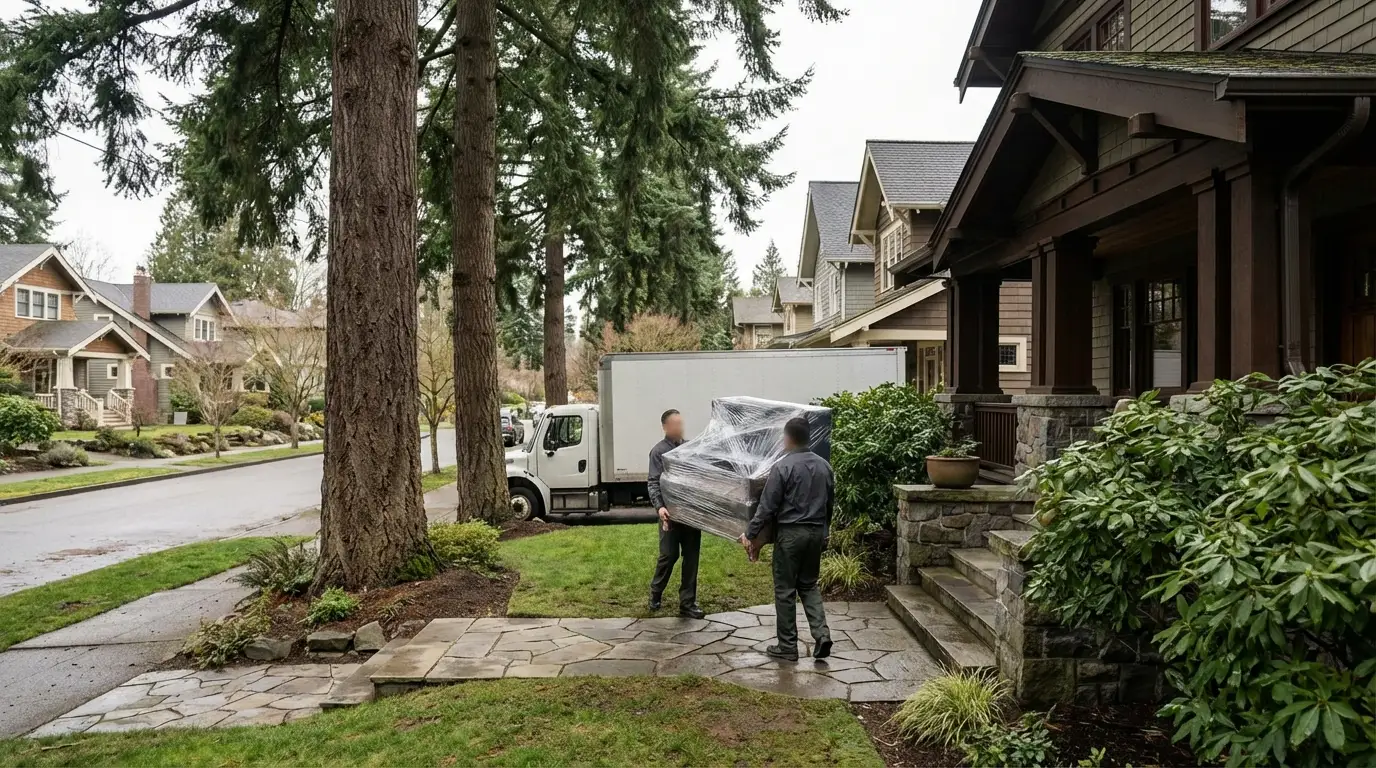
- Craftsman home architecture: Narrow doorways, basement units, and the structural characteristics of Seattle's early-20th-century housing stock require experience that national franchise crews frequently lack.
- Storage-in-transit demand: Tech worker relocations frequently involve a 30–90 day housing gap (company housing expires before personal lease begins, or closing on a purchase takes longer than expected). Seattle movers who offer combined moving + storage with transit hold services capture significantly higher average tickets than move-only operators.
The campaign implication: Seattle moving ads that lead with local expertise, high-rise experience, and full-service white-glove positioning outperform generic "reliable movers" copy for the tech-worker segment — which is also the highest-value segment in the market.
The Seattle moving PPC account that captures both the high-value tech relocation segment and the general local moving market runs three separated campaigns with distinct messaging, landing pages, and bidding structures — plus a summer seasonality spike strategy that reflects the moving industry's extreme seasonal concentration.
Campaign Architecture: Three Campaigns by Customer Type
- Campaign 1 — Tech Worker / Corporate Relocation: The highest-value campaign in the account. Low keyword competition, high-intent searchers with corporate budgets. Keywords: "moving to Seattle Amazon job," "corporate relocation movers Seattle," "white glove moving Seattle," "moving to Seattle from [city]," "tech relocation moving company Seattle." Expected CPC: $8–$16. Landing page must speak directly to the tech worker profile: white-glove full-pack service, storage-in-transit options, high-rise experience, the specific Seattle neighborhoods near Amazon (SLU, Capitol Hill, Eastside Bellevue) and Microsoft (Redmond, Bellevue, Kirkland). "We've moved 400+ tech workers to Seattle — here's what you need to know" is a landing page H1 that converts this audience at measurably higher rates than generic moving pages.
- Campaign 2 — Local Moves (Seattle Metro): The volume engine. Higher competition, lower average ticket, but consistent year-round demand. Keywords: "movers Seattle," "local moving company Seattle," "apartment movers Seattle," "moving company King County." Expected CPC: $10–$18. Ads should feature reviews prominently (Google star rating extensions), same-week availability messaging, and specific local credibility signals (Seattle-owned, years in business, neighborhoods served). Landing page: transparent local move pricing structure, testimonials from recognizable Seattle neighborhoods.
- Campaign 3 — Long-Distance Moves: Separate campaign for interstate moves (Seattle to/from other cities). Different customer psychology — longer planning horizon, larger ticket, more comparison shopping. Keywords: "long distance moving Seattle," "interstate movers Seattle," "moving from Seattle to Phoenix," "Seattle to Portland movers." Expected CPC: $12–$22. Landing page: interstate move timeline guide, licensing information (USDOT number, WA UTC license), and testimonials from long-distance moves specifically.
Summer Peak: The Moving Industry's Revenue Window
Moving is the most seasonally concentrated industry in this guide — 60%+ of annual moves happen May–August. The budget strategy for Seattle moving PPC must account for this aggressively:
- January–March: Budget at 60–70% of peak. Building Smart Bidding data, capturing early tech hiring wave relocation intent.
- April–May: Budget at 90% of peak. Spring market begins; home sales closing drives moving demand.
- June–August: Full peak budget. "Now booking July move dates — limited slots" urgency copy. Add date-specific scheduling messaging to all campaigns. This is the window to spend aggressively — ROAS is highest here.
- September–October: Budget at 80% of peak. Amazon fall hiring wave, back-to-office relocations, second home sale closing surge.
- November–December: Budget at 40–50% of peak. Volume drops significantly; maintain presence for corporate year-end relocation moves (common in the tech industry).
Review acquisition is equally critical to bidding strategy in this market. Moving is a high-stakes, high-anxiety purchase — 4.8+ star Google Reviews are effectively required to convert the tech-worker segment. A moving company with 4.3 stars competing against Hansen Bros. at 4.8 stars will lose the premium lead every time, regardless of ad copy quality. Implement an automated post-move review request system (SMS or email 24 hours after move completion) and prioritize review volume before scaling PPC budgets.
Google Partner Agency
We're a certified Google Partner Agency, which means we don’t guess — we optimize withGoogle’s full toolkit and insider support.
Your campaigns get pro-level execution, backed by real expertise (not theory).

Amazon and Microsoft's combined hiring cadence creates a moving demand pattern unlike anything in a typical U.S. metro. The two companies together have announced multi-year plans to maintain or grow Seattle headcount — Microsoft's ongoing Copilot and AI expansion, Amazon's fulfillment and AWS engineering growth — creating a structural floor under tech relocation demand that is not cyclical. Even in tech hiring slowdowns (2022–2023 saw layoffs), both companies' net Seattle headcount remained substantial. Moving companies that position themselves specifically for tech worker relocation are building a customer acquisition channel with multi-year durability.
The Corporate Relocation Budget Segment
Amazon provides new hires with relocation assistance of $5,000–$20,000 depending on role level and move distance. Microsoft provides similar packages. This means a meaningful percentage of Seattle inbound movers are not price-sensitive — they have a pre-funded relocation budget they're trying to spend on the best available service, not the cheapest. A tech worker with a $15,000 relocation budget and a $3,500 moving quote has no incentive to comparison-shop aggressively. They want a mover who won't lose their equipment and knows how to navigate a Capitol Hill high-rise.
The PPC implication: a campaign that targets "moving to Seattle Amazon" or "corporate relocation movers Seattle" and leads with white-glove positioning, high-rise experience, and tech-industry testimonials converts this segment at CPLs of $100–$180 — well below the $200–$250 CPL of generic local moving keywords — because the intent specificity is higher and the competitive field is smaller. National franchises don't build this kind of granular positioning for Seattle's tech-worker market. It's defensible territory.
Storage-in-Transit: The Underpriced Upsell
Seattle's relocation demographics create unusual storage demand. Tech workers relocating to Seattle frequently have a housing gap — corporate housing expires before a personal lease or purchase closes. The standard housing gap is 30–90 days. A moving company that offers storage-in-transit (move the customer's goods into a storage facility at the Seattle end, hold for 30–90 days, then deliver to the final address) captures a service add-on worth $500–$2,000 on top of the base move ticket. Landing pages that explicitly address the "what do I do with my stuff during my housing gap" question convert the tech relocation segment at measurably higher rates than move-only pages.
Key insight: Seattle's Redfin migration data shows the top inbound markets as San Francisco Bay Area, Los Angeles, Portland, and Washington D.C. — all high-income, high-expectation markets where professional moving services are standard, not premium. Buyers coming from these markets don't need to be convinced that professional movers are worth paying for — they already believe it. The conversion lever is local expertise and trust signals, not price justification. Every landing page for the tech relocation segment should feature a review from someone who moved specifically from San Francisco, Austin, or D.C. — this micro-level social proof closes the trust gap faster than any headline.
Seattle moving PPC rewards companies that understand the difference between a tech-worker relocation lead and a budget local move lead — and have the campaign architecture and landing pages to serve both without blending them. Generic moving ads that compete on price miss the highest-value segment in the market. White-glove positioning campaigns that don't address the local volume segment leave consistent revenue on the table.
MB Adv Agency builds moving campaigns around Seattle's actual customer segments. We write the tech-relocation landing pages that speak directly to Amazon and Microsoft employees with corporate budgets, configure the seasonal bid strategy that concentrates spend during June–August peak without burning budget in January, and set up the storage-in-transit messaging that captures the housing-gap segment other campaigns miss.
Our clients at the $2,000–$4,000/month investment level generate 20–40 moving leads per month in Seattle, with tech-relocation CPLs running $100–$180 and general local move CPLs at $120–$220. Review our pricing plans and Google Ads management approach — then book a free audit that shows exactly which moving segments your current campaigns are reaching and which ones they're missing.

Frequently Asked Questions
How do Seattle moving companies compete with Two Men and a Truck and College Hunks on Google Ads?
The answer is: don't compete on their terms. Two Men and a Truck and College Hunks have established brand recognition, national PPC infrastructure, and well-optimized accounts for generic local moving keywords like "movers Seattle" and "moving companies near me." Bidding head-on against these brands for the same keywords with the same messaging produces lower Quality Scores, higher CPCs, and lower conversion rates for independent operators. It's a structural disadvantage.
The competitive strategy that works for independent Seattle movers is segmentation and specificity. Build a campaign targeting the tech worker relocation segment with keywords and landing pages that franchise operations never build: "moving to Seattle Amazon employee," "corporate relocation movers Seattle," "white glove moving South Lake Union." National franchises don't build hyper-specific positioning for one city's tech-worker demographic. An independent Seattle mover with a dedicated tech-relocation page and the right review profile owns that segment by default.
The second competitive angle is brand bidding — legal in Google Ads — with counter-positioning. Bidding on "Two Men and a Truck Seattle" with ads like "Seattle-Owned Alternative to Two Men and a Truck — 4.9 Stars, 500+ Local Moves" is a legitimate tactic that captures competitor brand traffic with a local-vs-franchise differentiation message. The click costs are higher on competitor brand terms, but the conversion intent is extremely high (searcher is already in buying mode), and the local-vs-franchise narrative resonates strongly in Seattle's community-conscious culture. This tactic works best when your review profile is demonstrably stronger than the competitor's — 4.8+ stars with 200+ reviews is the baseline for this play to work.
What's the right Google Ads budget for a Seattle moving company, and how should it change by season?
The moving industry's extreme seasonality means flat monthly budgets are structurally incorrect. A moving company spending $2,500/month every month is significantly under-investing in June–August (when conversion rates are highest and capacity fills up) and potentially over-investing in January–February (when volume is lower). The right approach is a seasonal budget curve:
- January–March: $1,500–$2,000/month. Lower competition, lower volume. This is when Smart Bidding accumulates data for the summer peak — don't pause entirely.
- April–May: $2,500–$3,000/month. Spring market activates; tech hiring wave relocation intent begins.
- June–August: $3,500–$5,000/month. Peak season. Add "Now booking [month] move dates" urgency messaging. If campaigns are hitting target CPL in June, increase budget — this is the window where every incremental dollar generates the highest return.
- September–October: $2,500–$3,000/month. Fall hiring wave, home sale closings.
- November–December: $1,200–$1,500/month. Maintenance level to capture corporate year-end moves and early planners for next spring.
Total annual budget for this curve: approximately $30,000–$40,000/year, concentrated in peak season. Compare this to a flat $3,000/month ($36,000/year) strategy: the seasonal curve generates higher lead volume per dollar because it aligns spending with the demand peaks where conversion rates are highest. The June–August window at $4,000–$5,000/month with peak conversion rates will generate more revenue per dollar than $3,000/month in January at low demand. Treat your moving PPC budget the way you treat crew scheduling — proportional to actual demand, not distributed evenly across a calendar year that is anything but even.