HVAC PPC Washington, DC
Washington, DC is one of the few major US cities where HVAC demand peaks twice per year — brutal summers with 100°F+ heat index and cold, damp winters with regular ice events. Add in 85,000+ rowhouses that can't run ductwork, DC's DCSEU rebate program paying up to $1,200 per qualifying installation, and an aging housing stock full of steam radiators that most contractors won't touch — and you have one of the most structurally advantaged HVAC PPC markets on the East Coast. <!-- stats-article-link --> <p><em>See how this city's Hvac PPC costs compare nationally in our <a href="/resources/hvac-ppc-statistics">Hvac PPC Statistics</a> report, featuring data from 40+ US cities.</em></p>

HVAC PPC in Washington, DC is one of the most competitive local service advertising environments in the eastern US. ARS/Rescue Rooter, Michael & Son Services, and HVAC.com run combined budgets of $15K–$50K/month in the DC market. Generic HVAC terms — "hvac company washington dc" at $22–$45 CPC, "ac repair washington dc" at $20–$42 CPC, "air conditioning service washington dc" at $20–$40 CPC — are heavily contested, with impression share for SMB contractors typically falling below 20% unless they're spending at regional chain scale.
The Emergency/Seasonal Budget Trap
The most common failure mode for DC HVAC PPC is what can be called the emergency seasonality trap. A contractor launches an AC campaign in late May when summer is coming, spends aggressively in June and July, sees good lead volume, then cuts the budget in September assuming "AC season is over." What gets missed: HVAC demand in DC is genuinely year-round — furnace repair spikes November through February, heat pump demand runs year-round as the transition fuel of choice for DC's aging housing stock, and emergency calls happen in every month of the year. Contractors who pause campaigns in "off-season" months lose the planning-phase searches that drive booked installation appointments 30–60 days ahead of the actual install date. By October, the smart contractors who never paused have already locked in the November–February heating season project backlog.
DC's weather creates an additional complication: the summers are genuinely extreme. Heat index above 100°F is common in July and August, and when an AC system fails in that environment, it is a medical emergency — not just an inconvenience — for elderly residents, families with young children, and anyone with heat-sensitive health conditions. Emergency HVAC calls in DC August convert at 12–18% — the highest CVR in local services PPC. But capturing those calls requires always-on campaign infrastructure that doesn't go dark between emergencies. A contractor who pauses their campaign in June because "summer is expensive" misses the July crisis calls entirely.
Rowhouse Ductwork Constraints Create Opportunity
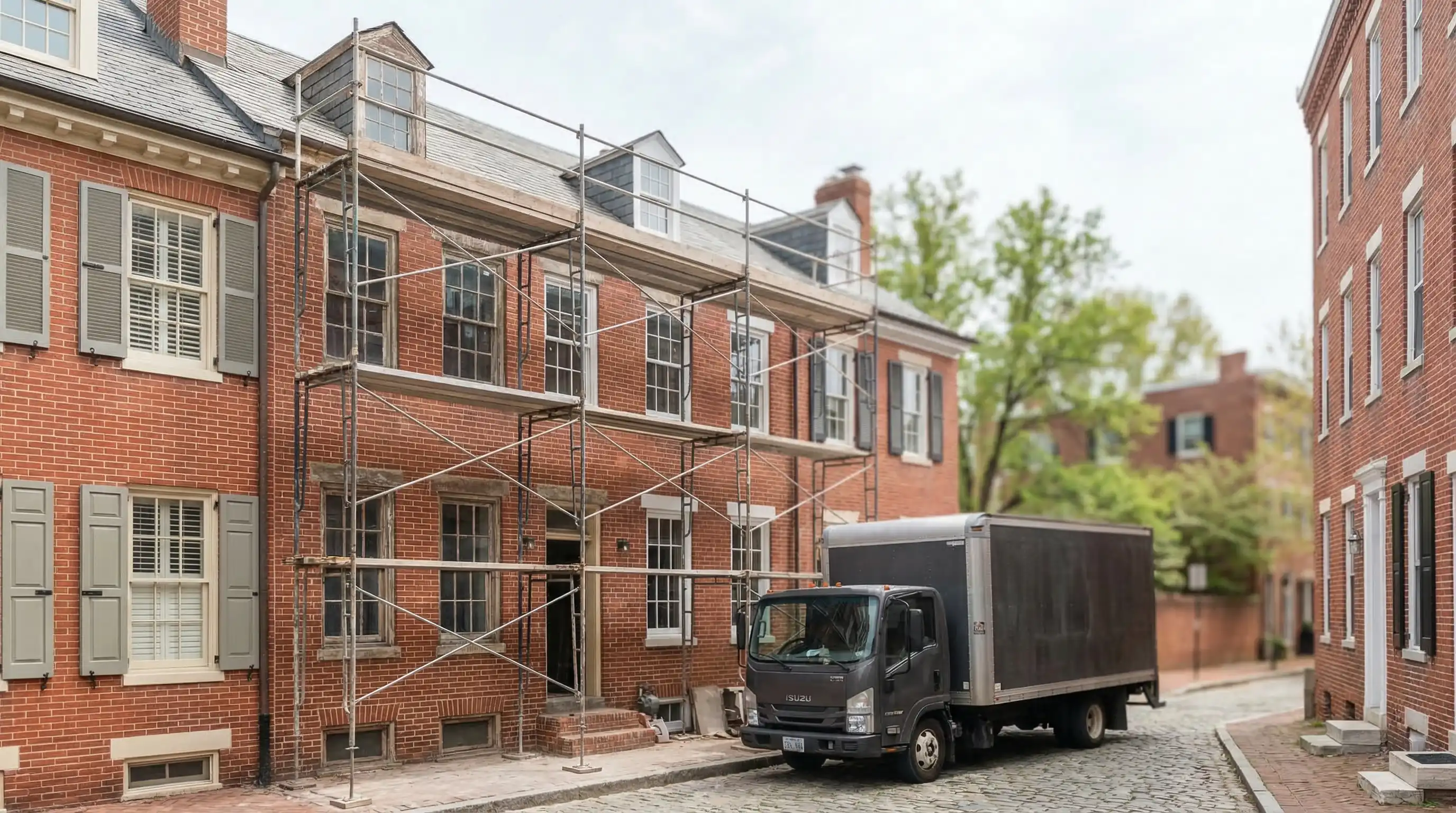
DC has an estimated 85,000+ rowhouses — Federal-style, Victorian, and Italianate row homes built primarily between 1880 and 1940. The overwhelming majority have no attic space for central HVAC ductwork and interior configurations that make traditional ducted systems prohibitively expensive to retrofit. The default upgrade path is a ductless mini-split system (Mitsubishi, Daiichi, Fujitsu) — one outdoor unit, two to four wall-mounted heads throughout the home, installed without tearing out walls or floors.
Mini-split installation in DC runs $4,000–$12,000 for a full rowhouse system. The CPCs for mini-split-specific keywords are significantly lower than generic HVAC terms — "mini split installation washington dc" runs $15–$30 CPC, "ductless ac dc rowhouse" runs $10–$22 CPC. The CVR is higher because these searchers have already concluded they need a mini-split (they've done the research), and they're looking for a contractor with rowhouse experience — not just any HVAC company. This keyword cluster is underexploited precisely because it requires DC-specific knowledge to recognize as an opportunity.
DC HVAC PPC needs to be structured around the city's three distinct demand segments — emergency service, seasonal replacement/installation, and the rowhouse ductless niche. Each requires separate campaigns, separate budget allocation, and separate seasonal rules.
Emergency/Same-Day Service Campaign (Always-On)
- Emergency keywords: "emergency hvac dc" — $25–$50 CPC (highest intent in HVAC); "ac not working washington dc" — $20–$40 CPC; "hvac repair same day dc" — $22–$42 CPC; "furnace not working dc" — $18–$38 CPC (winter); "heat not working washington dc" — $18–$36 CPC
- Never pause this campaign. Run 24/7/365. DC emergencies don't follow business hours — the 2am call in August when an elderly resident's AC fails is real, and the contractor whose ad appears at 2am captures the call
- Ad copy essentials: "Same-day," "24/7," and a phone number as the primary CTA. No forms for emergency traffic. The conversion event is a phone call, and every 10 seconds of friction between the searcher and your phone number costs you a lead
- Peak investment months: Double budget in June–August (AC emergencies) and December–February (heating emergencies). Year-round baseline at 70% of peak spend
Mini-Split Rowhouse Specialist Campaign
- Ductless keywords: "mini split installation washington dc" — $15–$30 CPC; "ductless ac dc rowhouse" — $10–$22 CPC; "mitsubishi mini split dc" — $12–$25 CPC; "ductless hvac capitol hill dc" — $8–$18 CPC; "mini split contractor dc rowhouse" — $10–$20 CPC
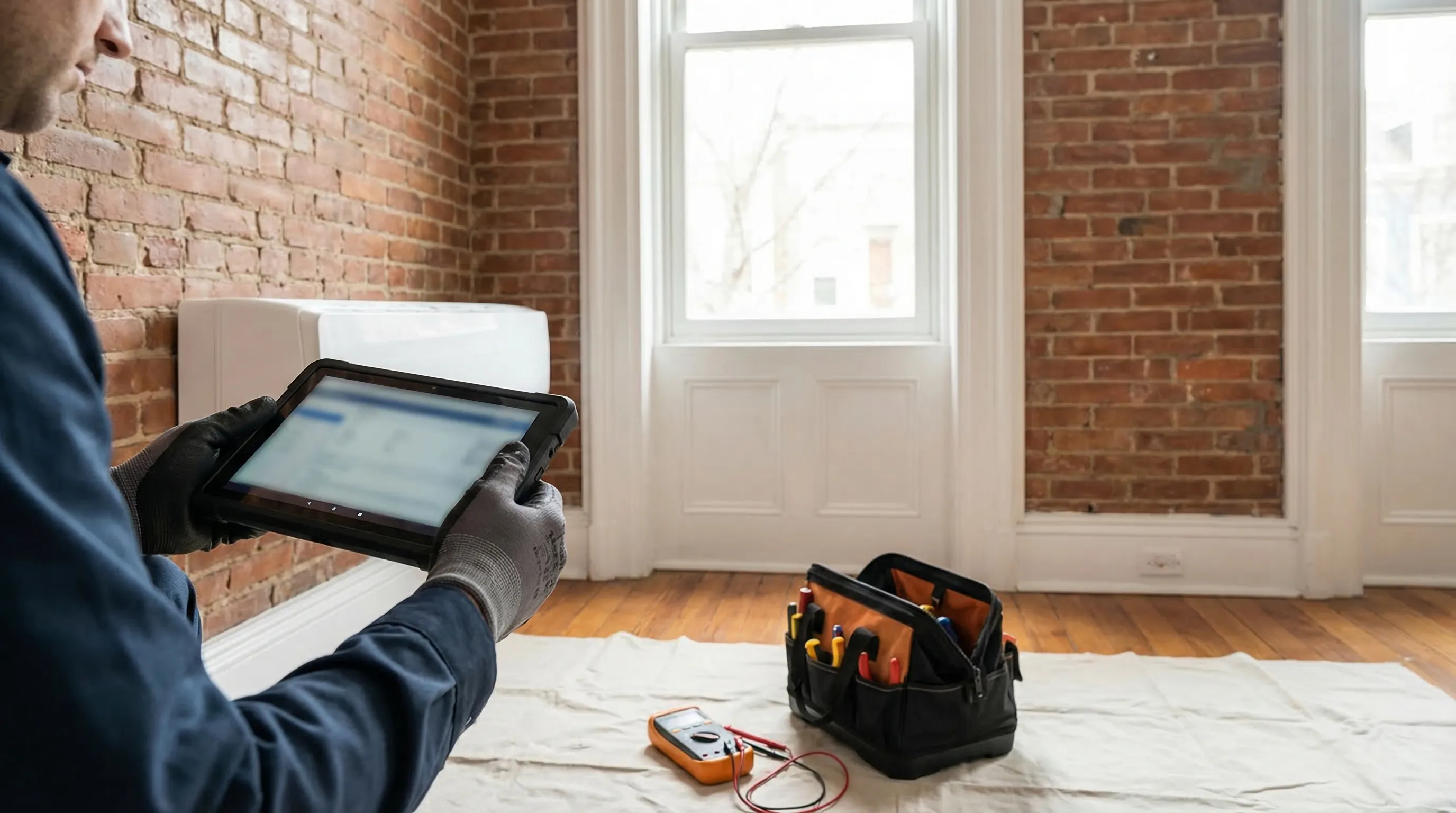
- Landing page requirement: Show completed mini-split installations in DC rowhouses specifically. Include the neighborhood names (Capitol Hill, Georgetown, Columbia Heights). The before/after visual of a clean wall-mounted Mitsubishi head unit against an exposed brick wall converts at 2–3x the rate of a generic contractor page
- Certification trust signals: Mitsubishi Diamond Dealer, Fujitsu Elite Dealer, Daikin D1 Dealer — these certifications are immediately recognizable to the rowhouse owner who has done their research and know exactly what they're looking for
DCSEU Rebate Campaign (Low-Competition, High-Intent)
- Rebate keywords: "DCSEU rebate hvac washington dc" — $6–$14 CPC (near-zero competition); "heat pump dc dcseu rebate" — $8–$18 CPC; "energy star ac dc rebate" — $7–$15 CPC; "dc sustainable energy utility hvac" — $5–$12 CPC
- Program details: The DC Sustainable Energy Utility (DCSEU) offers cash rebates up to $1,200 per qualifying HVAC unit for Energy Star replacements, heat pump installations, and smart thermostats. No national HVAC chain runs DCSEU-specific campaigns — they lack the local infrastructure knowledge. An independent contractor who understands and advertises the DCSEU program owns this entire search segment
- Rebate campaign hook: "Get up to $1,200 back on your new DC HVAC system — DCSEU-approved contractor." The rebate framing attracts budget-motivated homeowners who are financially ready to replace but needed a push. High conversion, high job value, zero competition
Google Partner Agency
We're a certified Google Partner Agency, which means we don’t guess — we optimize withGoogle’s full toolkit and insider support.
Your campaigns get pro-level execution, backed by real expertise (not theory).

DC's HVAC market contains two structural niches that large regional competitors systematically ignore — not because they're small, but because they require local knowledge and specialized contractor credentials that national chains don't maintain.
Steam Radiator and Boiler Repair: The Forgotten Niche
A significant portion of DC's oldest rowhouses — particularly in Capitol Hill, Dupont Circle, and Georgetown — were originally heated by steam radiator systems fed by gas or oil boilers. These systems were installed between 1890 and 1940 and, when properly maintained, are remarkably durable. Many are still in operation. The problem: most HVAC companies in DC refuse steam radiator work. It requires different skills (steam fitting vs. forced-air work), different parts knowledge (antique cast-iron radiator valves, steam trap replacements, boiler pressure gauges), and comfort with pre-war building infrastructure.
The result is a niche with zero PPC competition and genuine demand. "Boiler repair washington dc" runs $12–$25 CPC. "Steam radiator repair dc" runs $8–$18 CPC. "Steam heat service washington dc" runs $8–$16 CPC. Homeowners searching these terms are often desperate — they've called three HVAC companies who said "we don't do steam." A contractor who answers that search immediately becomes the solution. And because steam radiator work skews toward Capitol Hill and Georgetown rowhouses (where home values are $800K–$1.5M+), the homeowner demographics make this among the highest-value service call segments in DC HVAC.
Key insight: The steam radiator niche is invisible to most HVAC PPC campaigns because it requires industry-specific knowledge to recognize the keyword opportunity. The contractors who run these campaigns consistently report that steam radiator leads convert at 35–50% — among the highest close rates in service PPC — because the customer has already established that alternatives are unavailable.
Federal Building HVAC: B2B Satellite Office Segment
The General Services Administration (GSA) manages HVAC systems in hundreds of federal buildings in DC and the surrounding metro area. The largest federal facilities use enterprise-scale maintenance contractors. But the satellite office market — field offices for federal agencies, congressional district offices, GSA-leased small commercial spaces — actively contracts with regional HVAC SMBs for maintenance and emergency repair work. This is a B2B segment that runs on Google searches like "commercial hvac maintenance dc" ($15–$28 CPC) and "small commercial hvac service washington dc" ($12–$22 CPC).
Federal contracts have one specific advantage for HVAC contractors: once awarded, they recur annually. A maintenance contract on a single federal satellite office is typically worth $8,000–$25,000/year in predictable recurring revenue. The customer acquisition cost for federal B2B HVAC via PPC looks expensive on a first-look CPL basis but is exceptional when measured against multi-year contract value.
HVAC PPC in DC rewards contractors who understand the city's housing stock at a technical level — not just its geography. The rowhouse ductless opportunity, the steam radiator niche, the DCSEU rebate program, and the dual-season demand structure all require campaign strategies built specifically for DC, not recycled from Houston or Phoenix playbooks.
At MB Adv Agency, we structure DC HVAC campaigns around three questions: What type of system does DC's housing stock actually need? Where does your crew's certification and experience create a defensible competitive advantage? And how do we time budget allocation to match DC's genuine dual-season emergency demand pattern? Those three questions determine campaign structure, keyword priorities, and seasonal budget rules before we spend a dollar on clicks.
We also build trust infrastructure for DC HVAC campaigns from the ground up — because DC homeowners making $6,000–$12,000 mini-split decisions want to see contractor credentials (Mitsubishi Diamond Dealer, NATE certification, DC contractor license number), before/after photos of completed rowhouse installations, and Google reviews from recognizable DC neighborhoods. The landing page does the credentialing work so your sales call can focus on the project scope.
If you're a DC HVAC contractor ready to build a consistent lead pipeline that captures emergency calls, installation projects, and the mini-split rowhouse market, see our pricing options or learn about our Washington DC PPC services.
Frequently Asked Questions
What's the best time of year to start HVAC PPC in Washington, DC?
The optimal launch time is March or April — before the summer AC season peaks. DC's air conditioning demand accelerates rapidly from late May through August, and the campaigns that perform best in June and July are the ones that spent March and April building Quality Score, accumulating click data, and refining bid strategies. Launching in June means you're learning and optimizing while the peak season is already running — you lose the first 3–4 weeks to data collection during the highest-value period of the year.
For heating campaigns, the equivalent launch window is September or October. DC furnace and heat pump replacement inquiries begin rising in October and peak November through January. A campaign launched in October enters November with 4–6 weeks of optimization data behind it — enough to make intelligent bid adjustments on "furnace replacement dc" and "heat pump installation washington dc" before the winter surge hits.
For year-round mini-split installation campaigns, launch timing matters less — ductless demand is fairly steady across seasons in DC (driven more by home renovation project timing than weather). These campaigns can launch any month and reach optimization plateau within 6–8 weeks. The key is launching at least 8 weeks before any planned increases in construction or renovation season spend (spring and fall), so the campaign has stable Quality Scores before budget scales up.
How do DC HVAC companies compete against large regional chains in Google Ads?
Head-to-head on generic terms — "hvac company dc," "air conditioning repair washington dc" — small HVAC contractors cannot match ARS/Rescue Rooter or Michael & Son on budget. These chains spend $15K–$50K/month in DC and have the impression share to prove it. Any independent contractor trying to outspend them on broad match terms will deplete a $3,000/month budget in days with mediocre returns.
The winning approach is differentiation by specificity. Three areas where independent contractors consistently outperform national chains in DC PPC:
- Mini-split rowhouse specialization: National chains install mini-splits, but they don't market "rowhouse ductless specialist" or use Capitol Hill and Georgetown by name in ad copy. Local contractors who do this capture a self-qualifying audience at $10–$22 CPC versus $22–$45 for generic HVAC terms
- DCSEU rebate knowledge: Large chains don't market DCSEU rebates because their national ad infrastructure can't maintain local program awareness at DC-specific detail. A local contractor who knows the program, advertises it, and guides customers through the rebate application process wins this keyword cluster at $6–$14 CPC with zero chain competition
- Steam radiator repair: ARS and Michael & Son don't do steam work. "Boiler repair dc" and "steam radiator service washington dc" are entirely yours if you have the capability — and the homeowners searching them are motivated, high-value, and unable to find an alternative
The differentiation strategy works because it targets the searches where national chains have no competitive answer. Own three niche keyword clusters at $8–$25 CPC versus fighting for scraps of impression share at $35–$50 CPC on generic terms — the economics are not close.