Pest Control PPC Tucson, AZ
Arizona has the highest scorpion infestation rate in the country — and Tucson sits at its epicenter. With Arizona bark scorpions, desert subterranean termites, and pack rats all endemic to Pima County, pest control in Tucson isn't a seasonal business: it's a year-round emergency service with some of the most motivated searchers in any Google Ads market. <!-- stats-article-link --> <p><em>See how this city's Pest Control PPC costs compare nationally in our <a href="https://www.mbadv.agency/ppc-industry-statistics/pest-control-ppc-statistics">Pest Control PPC Statistics</a> report, featuring data from 40+ US cities.</em></p>
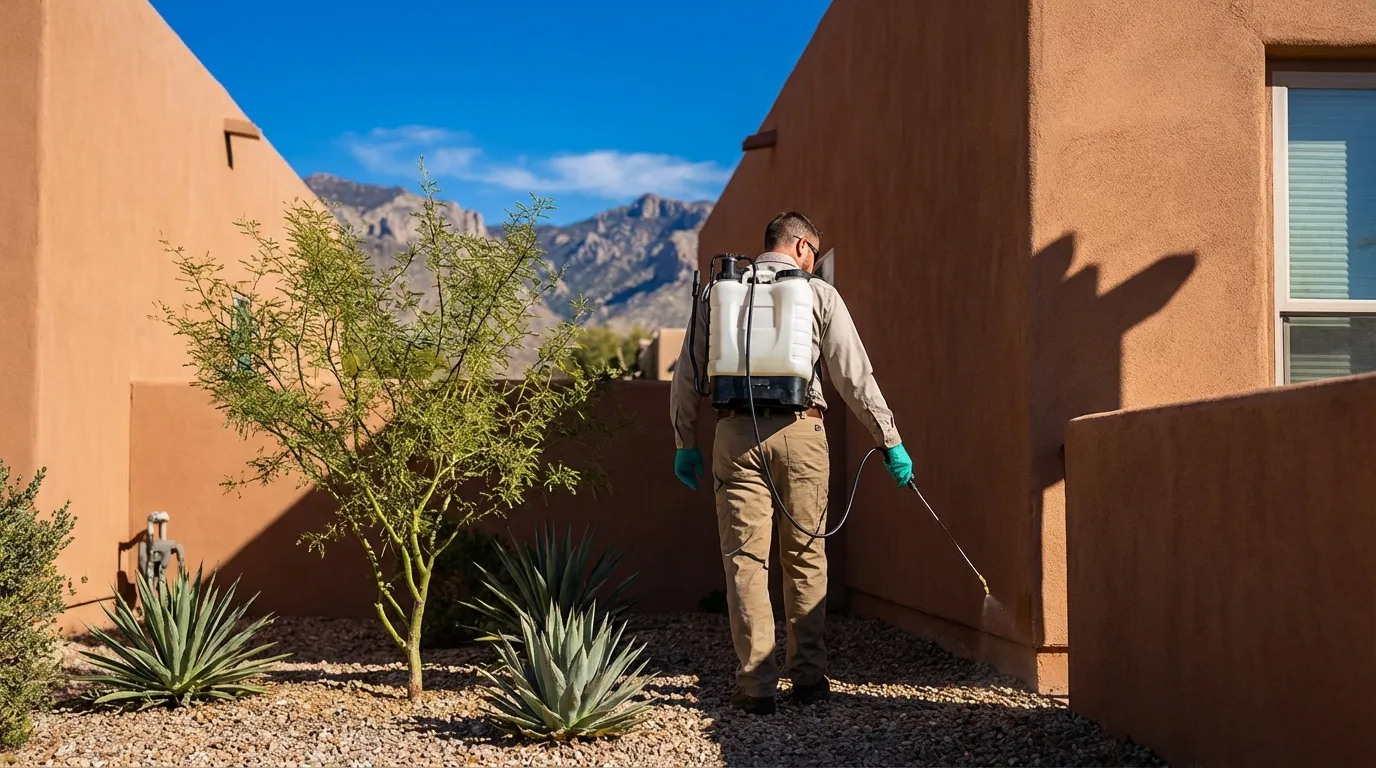
Pest control in Tucson isn't comparable to pest control anywhere else in the country. Northern and coastal markets deal with ants in summer, wasps in late fall, and the occasional rodent in winter. Tucson deals with Arizona bark scorpions — the most venomous scorpion in North America — year-round, alongside desert subterranean termites that silently destroy structural wood, pack rats that nest inside vehicle engine compartments and chew wiring harnesses, and Africanized honey bees whose territorial behavior makes a backyard colony a genuine safety emergency. This isn't seasonal pest pressure. It is an endemic, continuous demand environment — and the PPC market reflects it.
Year-Round Urgency Creates a Different Buyer Psychology
In a northern market, a homeowner discovering ants in June might wait a week before searching for an exterminator. In Tucson, a homeowner finding an Arizona bark scorpion inside their home — especially one with young children or pets — is searching within minutes. A single sting from an Arizona bark scorpion can require emergency medical treatment. This is not hyperbole: Arizona Poison Control handles hundreds of scorpion sting calls annually, with the highest concentration from Pima and Maricopa counties. The safety urgency embedded in Tucson scorpion searches means that scorpion control queries convert at rates significantly above national pest control averages — the searcher is already decided to buy before they click.
The termite market operates differently but with equally strong intent. Arizona's real estate disclosure law requires termite inspection at residential transactions — making termite awareness structurally high in a market where home values have appreciated 50%+ since 2020. A Tucson homeowner preparing to sell, a buyer who just received a disclosure report, or a new construction homeowner in Marana or Vail who's been told about desert subterranean termites — each of these is a high-value, high-intent searcher with immediate purchase motivation. The CPC for termite treatment searches runs $12–$22, reflecting the elevated ticket size ($800–$3,000+ for subterranean termite treatment) relative to general pest control.
National Brands vs. Local Operators
The Tucson pest control competitive landscape has a clear two-tier structure. Orkin and Terminix have national brand recognition and significant digital ad budgets, but their Tucson-specific presence is weaker than in larger markets. The field is dominated by strong regional and local operators: Bulwark Exterminating, Northwest Exterminating Company, Berrett Pest Control Arizona, and AZ Pest Solutions — all BBB A+ rated, all running Google Ads campaigns targeting Tucson searchers.
The national brands' advantage is name recognition in general pest queries. Their weakness is desert-specific species knowledge. Scorpion and pack rat campaigns require local expertise messaging that Orkin's national copy doesn't deliver. A Tucson operator who leads ad copy with "Arizona bark scorpion specialists" or "pack rat exclusion Tucson" is differentiating on exactly the terms that Orkin can't credibly claim — and in a market where Tucson homeowners know their pest problems are unique, that specificity converts.
- Scorpion control: CPC $10–$20 — peak spring/fall, safety-urgency driven, highest CVR in the category
- Termite treatment: CPC $12–$22 — spring swarm season premium; real estate transaction triggered
- Pack rat removal: CPC $8–$16 — niche, Tucson-specific, very low national competition
- General pest / monthly service: CPC $8–$15 — year-round, subscription model driver
- Bee removal: CPC $7–$13 — Africanized bee safety urgency in Tucson/southern AZ
The key challenge for independent operators: maintaining campaign presence across all five pest categories without spreading budget so thin that no single campaign generates enough impressions to compete. A focused strategy — leading with scorpion and termite as the highest-intent, highest-ticket categories, and building out general pest as the subscription acquisition engine — outperforms a fragmented spend across every pest type simultaneously.
Winning pest control PPC in Tucson requires building around the desert's species-specific demand structure. The playbook that works in Atlanta (ant season + mosquito season) fails here because Tucson's demand isn't seasonal — it's perpetual. The strategic framework that works is species-first campaign architecture + subscription upsell mechanics + real estate timing triggers.
Species-First Campaign Architecture
Each major pest type in Tucson deserves its own campaign with tailored ad copy and a dedicated landing page. Generic "pest control Tucson AZ" campaigns compete on the most expensive, most crowded keywords — while species-specific campaigns capture high-intent searches at lower CPCs and with higher conversion rates because the ad-to-landing-page relevance is tight.
- Scorpion control: "scorpion control Tucson AZ," "scorpion exterminator Tucson," "get rid of scorpions Tucson" — CPC $10–$20; headline leads with "Arizona bark scorpion specialists," landing page includes facts about bark scorpion risk and barrier treatment explanation
- Termite treatment: "termite treatment Tucson AZ," "termite inspection Tucson," "pre-sale termite inspection Tucson" — CPC $12–$22; landing page separated into subterranean treatment vs. inspection to match intent
- Pack rat removal: "pack rat removal Tucson AZ," "pack rat nest in car Tucson," "woodrat exterminator Tucson" — CPC $8–$16; very low competition from national brands; niche is 100% Tucson-specific demand
- General monthly plan: "pest control Tucson AZ," "monthly pest control Tucson," "exterminator Tucson AZ" — CPC $8–$15; leads to subscription plan landing page with free first treatment offer or price anchor
- Bee removal: "bee removal Tucson AZ," "Africanized bee removal Tucson," "bee exterminator Tucson" — CPC $7–$13; urgency-driven, safety-forward creative
Subscription Upsell as the Campaign's True Revenue Engine
The economics of Tucson pest control PPC depend on lifetime customer value, not first-appointment revenue. A one-time general pest treatment generates $150–$300. A monthly service contract at $49–$89/month generates $588–$1,068 in year one. The math means that campaigns optimized for monthly plan acquisition — even at a higher cost-per-lead — return significantly more revenue per ad dollar than campaigns targeting one-time treatment keywords.
The tactical implementation: landing pages for general pest and scorpion campaigns lead with a monthly plan offer (e.g., "Complete scorpion protection starting at $49/month — first treatment free") rather than an immediate service call booking. This reduces initial resistance from price-sensitive Tucson consumers (18.9% poverty rate) and frames the relationship as an ongoing protection service, not a one-time extermination. The "no contracts" and "cancel anytime" language is essential in Tucson's value-conscious market — but in practice, monthly pest service has low churn because the underlying pest pressure never goes away.
Real Estate Timing Triggers
Arizona's real estate termite disclosure requirement is a guaranteed demand trigger. When a home goes under contract in Pima County, the seller typically must disclose termite history and provide inspection documentation. Pest companies offering "48-hour termite inspection reports" — targeted at seller keywords ("termite inspection before selling Tucson") during spring buying season (February–May) — are capturing a motivated, time-constrained lead with low price sensitivity. Real estate agents are also high-value referral partners for termite campaigns; co-branded landing pages ("Referred by [Agent Name] — Schedule Your Disclosure Inspection") can create a referral network layer on top of direct PPC spend.
Google Partner Agency
We're a certified Google Partner Agency, which means we don’t guess — we optimize withGoogle’s full toolkit and insider support.
Your campaigns get pro-level execution, backed by real expertise (not theory).

Tucson's pest control market has one structural advantage that no other US city can claim: the Arizona bark scorpion makes pest control a safety product, not a comfort product. In most markets, pest control is something homeowners purchase when they're annoyed by bugs. In Tucson, pest control is something families with young children and pets treat as a household non-negotiable — the same category as smoke detectors and carbon monoxide alarms. This shifts the buyer psychology from price-shopping to urgency and creates a customer segment with very low price sensitivity and very high lifetime value.
The Pack Rat Vehicle Problem — An Uncontested Niche
Pack rats (woodrats) are one of Tucson's most distinctive pest problems — and one of the most underserved in digital marketing. Pack rats build nests inside vehicle engine compartments, under hoods, and in wheel wells, where they chew electrical wiring harnesses, hoses, and insulation. A single pack rat nest can cause $500–$5,000+ in vehicle repair costs — the wiring damage often isn't discovered until the vehicle fails to start or throws multiple sensor errors. This is not a fringe problem: in desert-heavy Tucson neighborhoods, particularly near washes and undeveloped land, pack rat vehicle intrusion is a regular occurrence.
The PPC opportunity: "pack rat removal Tucson," "pack rat nest in car Tucson," and "woodrat exterminator Tucson" are extremely low-competition keywords — national brands don't run dedicated pack rat campaigns, and most local operators treat it as a secondary service rather than a marketed specialty. A pest company that builds a pack rat landing page explaining the vehicle wiring risk, the exclusion service, and a protection plan converts well because the searcher has already experienced the vehicle damage and is highly motivated. CPCs in the $8–$16 range for a service that generates $300–$600+ per call is exceptional economics.
Desert Termite Seasonality — Spring Is Critical, Not Exclusive
The Sonoran Desert subterranean termite (Heterotermes aureus) swarms most actively in spring following rain events — typically February through April. This is when winged reproductives appear, triggering homeowner awareness and a surge in termite inspection searches. But unlike the Eastern subterranean termite in humid markets, the desert variety remains active year-round in Tucson's warm soil. Termite treatment demand doesn't disappear after swarm season — it is sustained by the continuous real estate transaction cycle and by homeowners who discover damage during home improvement projects at any time of year.
Peak termite demand windows for campaign planning:
- February–April (swarm season): 35–40% of annual termite search volume — highest CPC; maximum budget allocated here
- May–August (real estate season): Ongoing disclosure-triggered demand; moderate CPC
- September–January (off-peak): Lower volume but positive ROAS; maintain presence for renovation-discovery demand
Pest operators who run termite campaigns year-round — not just during swarm season — capture the real estate disclosure market and renovation-discovery segment that competitors deactivate campaigns to miss. In a market where a $1,500 termite treatment has a CPL of $55–$95, year-round termite presence is a straightforward positive-ROAS decision at even moderate budget levels.
Tucson's pest market is unlike anything else in the country — and it requires a PPC partner who understands that scorpion season, termite disclosure law, and pack rat vehicle protection are real, year-round search categories, not niche curiosities. Managing a Tucson pest control campaign from a generic home services playbook means leaving the highest-value, lowest-competition search segments completely unaddressed.
At MB Adv Agency, we build campaigns around the specific pest ecology that drives Tucson search demand. We know that "Arizona bark scorpion specialists" in a headline converts better than "best exterminator Tucson." We know when termite swarm season triggers the demand spike. We know which keyword groups the national brands don't bother to compete on — and we own them. Our Google Ads management service is built for exactly this kind of locally-specific, data-driven execution.
At a $1,500–$2,500/month starter budget, a properly structured Tucson pest control campaign generates 17–28 leads per month at a blended 6.6% conversion rate. The subscription upsell model means that first-month leads convert to multi-year customer relationships — the true ROI of pest control PPC extends well beyond the first campaign month. See our pricing page for transparent tier options.
Frequently Asked Questions
Is Google Ads worth it for a Tucson pest control company competing against Orkin and Terminix?
Yes — and here's why: Orkin and Terminix have national brand budgets, but they don't own Tucson-specific search intent. Their ad copy is written for a generic US pest consumer. "Get rid of pests. Call Orkin." doesn't speak to a Tucson homeowner searching "scorpion control Tucson AZ" or "pack rat nest in car Tucson." Local and regional operators who run species-specific ad campaigns with locally-informed creative consistently outperform national brands on the quality metrics that determine ad position — Quality Score, expected CTR, landing page relevance.
The economics support this: Bulwark Exterminating, Northwest Exterminating, and Berrett Pest Control are all running Google Ads in Tucson, all beating Orkin and Terminix on conversion rates in their core service areas, and all generating significant monthly lead volume at reasonable CPLs ($55–$95). These local operators win not by outspending the national brands — they don't — but by relevance. A homeowner searching "scorpion exterminator Tucson" and clicking an ad that says "Arizona Bark Scorpion Specialists — Barrier Treatment, Free Quote" is far more likely to convert than one landing on a generic national exterminator page.
For a Tucson operator spending $1,500–$2,500/month with proper campaign structure, the math works clearly: 17–28 leads at a blended CPL of $55–$95, with a meaningful percentage converting to monthly service contracts worth $600–$1,000+ per year. The ROI justification is strongest when campaign strategy prioritizes subscription acquisition over one-time treatment — that's where the lifetime value math overwhelms the CPC cost.
What budget does a Tucson pest control company need to compete effectively on Google Ads?
$1,500/month is the realistic entry point for meaningful Tucson metro coverage across the core pest categories. Here's how that breaks down and what it produces:
At $1,500/month with a properly structured campaign (scorpion + termite + general pest + pack rat), you're working with roughly $50/day in click spend. At a blended CPC of $10–$15 across the campaign mix and a 6.6% CVR, that generates approximately 17–22 leads per month. The scorpion and termite campaigns will consume a disproportionate share of budget during their peak periods (spring for termites, spring/fall for scorpions) — which is correct, because those are the highest-ticket, highest-converting categories.
For operators targeting $2,000–$2,500/month, the incremental budget is best deployed in two ways: expanding geographic coverage to Marana, Oro Valley, and Sahuarita (where new construction is actively disturbing desert habitat and creating scorpion migration pressure), and adding a dedicated pack rat campaign (very low CPC, near-zero competition from national brands, high per-job value). A $2,500 budget with this structure reaches 25–35 leads per month.
Seasonal budget note: pest control in Tucson doesn't have a true off-season, but spring (February–May) is the highest-ROAS window for termite campaigns due to swarm season + real estate disclosure demand. Allocating an additional $300–$500/month to termite-specific campaigns during February–April produces outsized returns and doesn't require permanently elevated annual spend.