Roofing PPC Tucson, AZ
Tucson is one of the hardest roofing markets in the US — not because of snow loads or hurricanes, but because 350+ days of annual sunshine, UV radiation that degrades materials twice as fast as northern climates, and a monsoon season that arrives suddenly with 60-mph winds and hail combine to make roofing a genuinely year-round business. Contractors who know how to capture that demand through Google Ads fill their schedules without chasing storm chasers. <!-- stats-article-link --> <p><em>See how this city's Roofing PPC costs compare nationally in our <a href="/resources/roofing-ppc-statistics">Roofing PPC Statistics</a> report, featuring data from 40+ US cities.</em></p>
Tucson's roofing market operates on completely different rules than any other US market, and contractors who try to run a copy-pasted Phoenix or Dallas roofing PPC campaign here systematically miss the highest-value opportunities. The architecture is different. The materials are different. The damage patterns are different. And the competitive landscape — while less intense than Phoenix — has distinct structural pressure from both national storm-chasing franchises and strong local operators who understand the desert roofing environment.
The Flat Roof Majority — A Market Most Advertisers Ignore
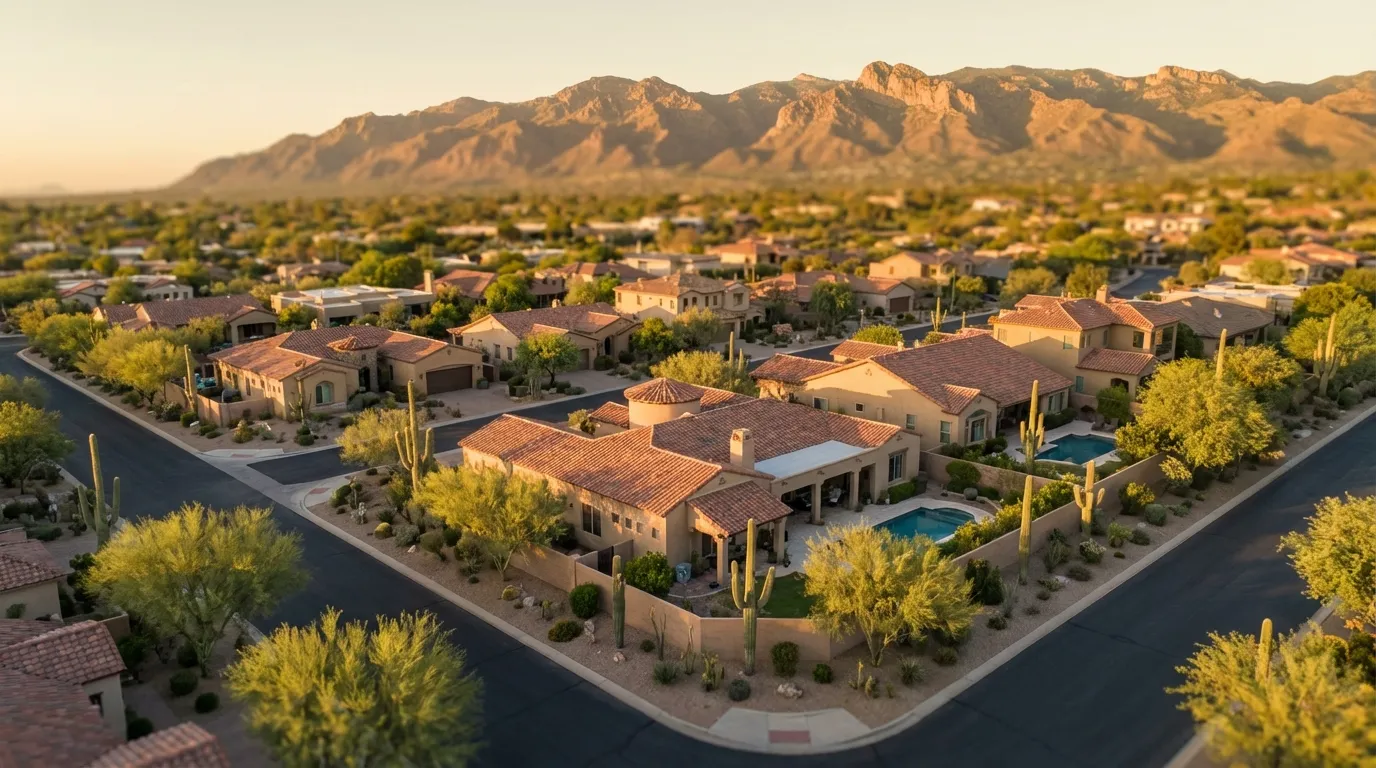
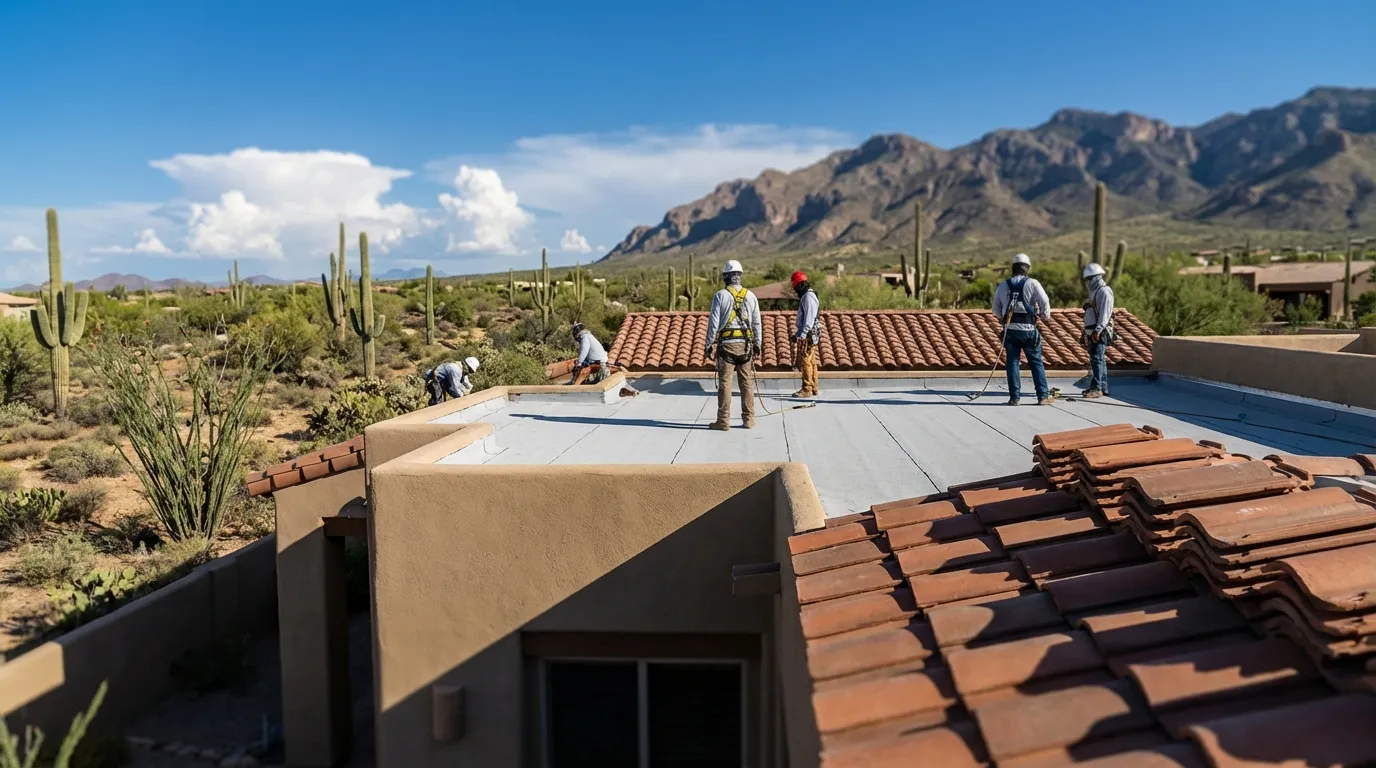
The dominant residential roofing system in Tucson is not asphalt shingles. It's flat and low-pitch roofing — built-up roofing (BUR), modified bitumen membrane, TPO, and spray polyurethane foam (SPF) systems. Tucson's Spanish Colonial Revival and Territorial architectural tradition produces flat and nearly-flat roof profiles with parapet walls. The suburban ring (Marana, Oro Valley, Sahuarita, Vail) has more clay and terracotta tile — but the core Tucson residential stock is overwhelmingly flat or low-pitch.
This matters for PPC because most national roofing brands — RoofClaim, Storm Group Roofing, and similar storm-chasing franchises — are optimized for steep-slope asphalt shingle replacement. Their crews, their sales training, and their landing pages are built around the homeowner with a pitch roof and a hail claim. A Tucson homeowner with a failing bitumen flat roof clicks their ads and immediately feels the mismatch. A Tucson contractor who runs "flat roof repair Tucson AZ" campaigns with flat-roof-specific landing pages captures this intent with minimal direct competition from the national brands.
The CPC for flat roof searches runs $10–$18 — lower than asphalt shingle replacement in storm-active markets — because the national brands aren't competing hard there. This is genuinely underserved keyword territory in a city where flat roofs represent a majority of the residential stock.
Monsoon Season: The High-Urgency Window
Tucson's monsoon season (July–September) creates a roofing demand surge unlike anything in the continental US outside of hurricane-affected coastal markets. Arizona monsoon haboobs generate wind gusts of 60–80 mph, carry abrasive dust that scours roofing membranes, and are frequently followed by hail. The post-haboob and post-hail search spike is intense: homeowners who just watched a storm roll through are searching "roof damage Tucson" and "emergency roof repair Tucson" within hours.
The challenge: this window is short. The search spike peaks 12–36 hours after a major storm event and then decays as homeowners either find a contractor or decide to wait. Competitors who are not running pre-staged campaigns — ad groups ready to activate on NWS Pima County severe weather alerts — miss the entire spike and are left trying to capture demand through social media and referrals. Hailstorm Roofing (a Tucson-local competitor) has built their brand name around exactly this dynamic — their name itself is a search trigger during and after monsoon events.
- Monsoon / storm damage: CPC $13–$22 — August peak, 12–36 hour urgency window after storms
- Flat roof repair / replace: CPC $10–$18 — year-round Tucson-specific demand; national brands not competing
- Tile roof repair: CPC $10–$17 — suburban ring focus (Oro Valley, Marana, Vail, Sahuarita)
- Emergency roof leak: CPC $12–$20 — monsoon season priority; urgency-first creative
- Planned replacement: CPC $11–$18 — spring (pre-summer) conversion cycle; financing-forward messaging
The competitive context: Modern Roofing, Hailstorm Roofing, and Western Roofing Installations are the local operators with the strongest digital presence. Each has built brand equity in specific Tucson roofing niches. National storm franchises arrive in force immediately after major weather events but lack the year-round local brand presence that wins pre-storm planning and replacement campaigns.
A winning Tucson roofing PPC strategy runs on two parallel tracks: always-on campaigns for flat roof and tile roof demand (year-round Tucson-specific categories) and event-triggered campaigns for monsoon and storm damage (the seasonal urgency window). Blending both into a single campaign produces diluted results. The most effective structure separates them clearly.
The Year-Round Flat Roof Track
Flat roof campaigns are the foundation of a Tucson roofing PPC program. They run year-round, capture a majority of Tucson's residential roofing stock, and face minimal competition from the national storm-chaser brands that dominate steep-slope keyword auctions during monsoon season. The campaign structure:
- Flat roof repair: "flat roof repair Tucson AZ," "flat roof leak Tucson," "bitumen roof repair Tucson AZ" — CPC $10–$18; landing page specific to flat/low-pitch systems with material-type identification tool
- Spray foam roofing: "foam roof Tucson AZ," "spray polyurethane foam roofing Tucson," "SPF roof Tucson" — CPC $8–$14; educational landing page (most homeowners don't know what foam roofing is); strong differentiation angle with TEP/APS cooling cost savings
- Tile roof repair: "tile roof repair Tucson AZ," "clay tile roof Tucson," "terracotta tile roof underlayment Tucson" — CPC $10–$17; targets Oro Valley, Marana, Sahuarita suburban ring homeowners
- Planned replacement: "roof replacement Tucson AZ," "new roof Tucson," "roofing contractor Tucson AZ" — CPC $11–$18; spring pre-season primary; financing messaging essential
- Pre-sale inspection: "roof inspection Tucson AZ," "roof inspection before selling Tucson," "free roof estimate Tucson" — CPC $8–$13; seller-motivated, urgency around closing timeline
The Monsoon Surge Playbook
Monsoon-response campaigns are pre-built but paused — activated manually or automatically when the NWS issues a Pima County severe thunderstorm or dust storm watch. The key elements: separate campaign with separate budget reserve (not drawn from always-on campaigns), emergency-copy headlines ("Storm damaged your roof? Same-day inspections available — Tucson-based"), call extensions with 24/7 availability, and landing pages with photo documentation instructions for insurance claims. The monsoon campaign budget allocation: $500–$800/month reserve, deployed intensively during August storm peaks.
The SPF (spray polyurethane foam) educational angle is a unique Tucson opportunity that deserves its own campaign. Tucson homeowners with aging flat roofs (bitumen or built-up roofing over 15 years old) are the highest-intent segment for foam roof replacement — but most don't know foam roofing exists or that it's well-suited to the desert UV environment. An educational PPC campaign ("Is foam roofing right for your Tucson home?") feeding into a long-form landing page with energy savings data (foam roofs reflect desert UV, reducing summer cooling costs) and cost comparison against membrane replacement generates qualified leads at CPC $8–$14 — well below the standard replacement keywords — because few competitors have identified this segment.
Geographic Strategy: Segment Suburban and Urban
Core Tucson (flat roofs) and the suburban ring (Oro Valley, Marana, Sahuarita, Vail — tile roofs) require different campaigns and different landing pages. A flat roof campaign running in Oro Valley — where clay tile is dominant — generates poor quality scores and wasted clicks. Geographic segmentation by zip code, matched to roofing material dominance, is a basic but consistently overlooked optimization that improves relevance scores and reduces wasted spend.
Google Partner Agency
We're a certified Google Partner Agency, which means we don’t guess — we optimize withGoogle’s full toolkit and insider support.
Your campaigns get pro-level execution, backed by real expertise (not theory).

The most important insight in Tucson's roofing market is not about monsoon season — it's about what happens to roofing materials under 350 days of annual Arizona sunshine. UV degradation in Tucson is the single most consistent driver of roofing demand, and it operates invisibly until a roof fails. Homeowners don't watch their roof degrade — they notice a water stain on the ceiling after a monsoon storm and assume storm damage caused the failure. In reality, the UV degradation over years is what made the membrane vulnerable to a storm it would have easily withstood when new.
The Replacement Cycle Is Faster Than Homeowners Know
The national narrative around roofing lifespans sets expectations Tucson's climate simply doesn't match. Asphalt shingles rated for 20–25 years in a northern climate degrade to 12–15 years under Tucson UV. Modified bitumen membrane rated for 20 years in a moderate climate requires replacement in 10–12 years in Tucson's thermal cycling environment — daily surface temperatures oscillate from 70°F overnight to 150°F+ on the roof surface in peak summer. This thermal fatigue is cumulative and exponential: a 15-year-old Tucson flat roof is not "mid-life" — it is at or past its practical useful life.
The PPC opportunity: campaigns that educate homeowners about Tucson-specific material lifespans ("Is your flat roof due for replacement? Desert UV shortens roofing lifespan significantly") generate top-of-funnel leads from homeowners who didn't know they had a roofing problem. These are higher-quality leads than post-storm emergency calls — they have time to schedule consultations, get multiple quotes, and make financing arrangements. The conversion timeline is longer (days rather than hours) but the average job value is higher because these are replacement projects, not repairs.
Pre-Sale Roof Inspection: A Growing Tucson Demand Segment
Tucson's 9.91% annual home value appreciation has created an active seller market. Sellers motivated to close cleanly and at full value are discovering that flat roof membrane condition is one of the most common inspection defects that triggers renegotiation or deal collapse. A motivated seller who needs a roof inspection and clearance before closing is a time-sensitive lead with low price sensitivity — they need the inspection done in days, not weeks.
Key Tucson roofing demand drivers by season:
- March–May (pre-summer): Planned replacement decisions, spring inspection demand, tile underlayment inspections — 25% of annual search volume
- June–September (peak/monsoon): Emergency repairs, monsoon damage, storm-triggered replacement decisions — 45% of annual search volume
- October–November (post-monsoon): Insurance claims processing, remediation work, pre-winter inspection — 15% of annual search volume
- December–February (mild winter): Pre-sale inspections, replacement planning, low-competition window — 15% of annual search volume
The winter low-competition window deserves specific mention: roofing CPCs in Tucson drop significantly in December–February because most contractors reduce or eliminate campaigns during the mild winter. Contractors who maintain presence — particularly for flat roof inspection, pre-sale inspection, and foam roof education campaigns — capture demand in a near-empty auction at CPCs 30–40% lower than summer peaks. The leads generated in winter convert to spring replacement jobs, creating a full-schedule buffer before the intense summer season begins.
Tucson roofing PPC rewards contractors who understand that the desert environment doesn't follow national roofing industry calendars. Flat roofs fail year-round under UV stress. Monsoon events create demand spikes that last 36 hours and then disappear. Spray foam roofing is uniquely well-suited to the desert but requires an educated buyer — and education campaigns at low CPCs are the entry to that conversation. These are Tucson-specific realities that generic national campaign templates miss entirely.
At MB Adv Agency, we build Tucson roofing campaigns that run on the desert's actual demand calendar — not a national template. We know when to activate monsoon reserve budgets, which zip codes concentrate flat roofs versus tile, and how to structure foam roofing campaigns that generate qualified leads at below-market CPCs. Our Google Ads management service is built for exactly this kind of locally-specific execution.
At a $2,000–$2,800/month starter budget, a properly structured Tucson roofing campaign generates 11–18 leads per month at a 5.5% CVR. At an average job value of $4,000–$12,000+ for flat roof replacement, a single closed job from a PPC lead covers multiple months of campaign cost. Visit our pricing page to see how we structure roofing accounts for Tucson contractors.
Frequently Asked Questions
How does monsoon season affect roofing PPC campaigns in Tucson?
Monsoon season (July–September) is the single highest-urgency demand window in Tucson roofing — and the most mismanaged period by contractors without a specific event-response strategy. Here's what actually happens during a significant monsoon event, and what a prepared campaign structure looks like:
A major Pima County haboob or hail event occurs. Within 2–4 hours, homeowners with visible roof damage — or homeowners who just watched a 70-mph wall of dust roll over their neighborhood and are anxious about their aging flat roof — begin searching "roof damage Tucson," "emergency roof repair Tucson AZ," and "roof inspection after storm Tucson." This search spike lasts 12–36 hours and then decays rapidly as contractors are booked out or homeowners go back to waiting.
A prepared Tucson roofing contractor has a paused "monsoon response" campaign that activates within 30 minutes of a major NWS alert — with a separate budget reserve ($500–$800), emergency ad copy ("Storm inspection available today — Tucson-based, same-day response"), and a landing page that explains how to document damage for insurance claims. This campaign runs at maximum budget for 48–72 hours post-event, captures the urgency spike, and then pauses when the demand wave passes. Contractors running this playbook consistently report that their most profitable leads of the year come from a handful of well-timed monsoon response campaigns — not from the ongoing general repair campaigns that run all summer.
Is spray foam roofing a viable PPC niche for Tucson contractors?
Yes — and it is one of the most underutilized roofing PPC niches in the Tucson market. Here's the full case:
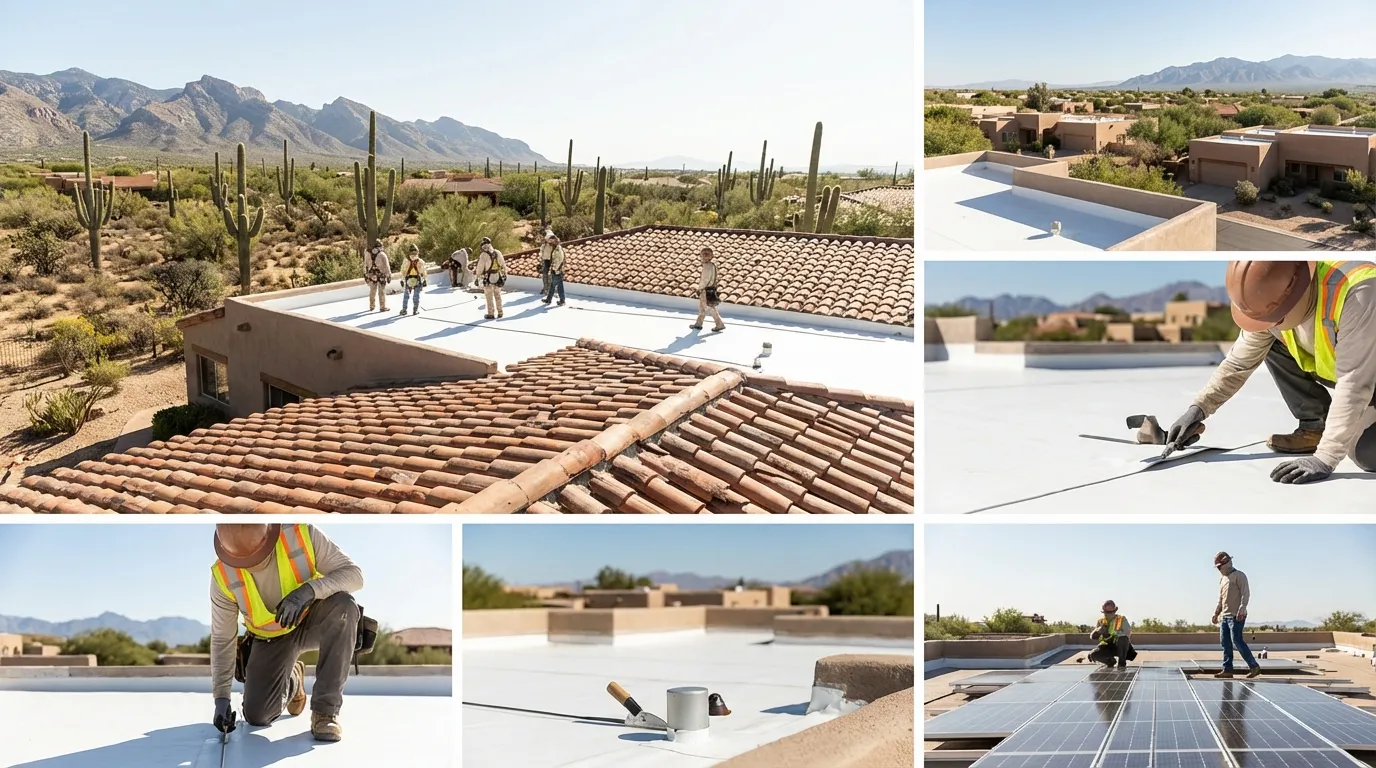
Spray polyurethane foam (SPF) roofing is genuinely well-suited to Tucson's climate. Foam roofs are seamless (no membrane seams to fail under thermal cycling), highly reflective (reducing summer cooling loads — important in a city where AC bills dominate household energy spend), and have a 20+ year lifespan with periodic recoating. In Tucson's UV environment, foam outperforms traditional flat roof membranes on both durability and energy performance.
The PPC opportunity: "foam roof Tucson AZ" and related keywords run at CPCs of $8–$14 — well below the $13–$22 range for monsoon emergency searches — because few Tucson roofing contractors run dedicated foam roof campaigns. The searcher who has found their way to "spray foam roofing Tucson" is typically a homeowner who has already researched roofing options and is specifically interested in foam — which means they are late-funnel, educated, and highly motivated. This is a high-conversion, low-CPC segment that converts to $5,000–$12,000+ foam replacement projects.
The implementation: a dedicated foam roof campaign (separate from general replacement) feeding into an educational landing page that explains what foam roofing is, why it works in the Tucson desert environment, what it costs versus traditional membrane, and how the TEP/APS energy efficiency angle (reflective coating reduces cooling costs) adds to the ROI argument. Contractors willing to invest in this educational content generate leads that national franchise competitors cannot serve — because most franchise roofing brands don't offer spray foam installation at all.