Roofing PPC Cranston, RI
Cranston's 21,936 owner-occupied homes sit under roofs that are aging simultaneously — most installed between 1975 and 2010, now absorbing 31 inches of annual snowfall, nor'easter wind events, and ice dam cycles that force water under shingles every January. With median home values at $450,000 and rising, homeowners have both the need and the financial motivation to invest in quality roofing work. The challenge for Cranston contractors is that PPC in this market rewards specificity — the ice dam specialist, the storm inspection responder, the GAF-certified premium installer — not the generic "roofing contractor Cranston" campaign. <!-- stats-article-link --> <p><em>See how this city's Roofing PPC costs compare nationally in our <a href="/resources/roofing-ppc-statistics">Roofing PPC Statistics</a> report, featuring data from 40+ US cities.</em></p>
Why Do Roofing PPC Campaigns Fail in Cranston, RI?
The most common strategic error in Cranston roofing PPC is seasonal budget misalignment. Many roofing contractors load spend in summer — when weather is cooperative and scheduling is straightforward — but Cranston's roofing demand cycle peaks in the opposite pattern. The highest-intent leads arrive October through March: ice dam damage calls, nor'easter inspection requests, emergency leak repairs from winter storm intrusion, and homeowners who survived one difficult winter and are determined not to repeat it. Operators who spend $500 per month in January and $2,000 in July are running a campaign backwards for the New England market and missing the period when roofing search intent is most urgent and conversion rates are highest.
The Ice Dam Blind Spot
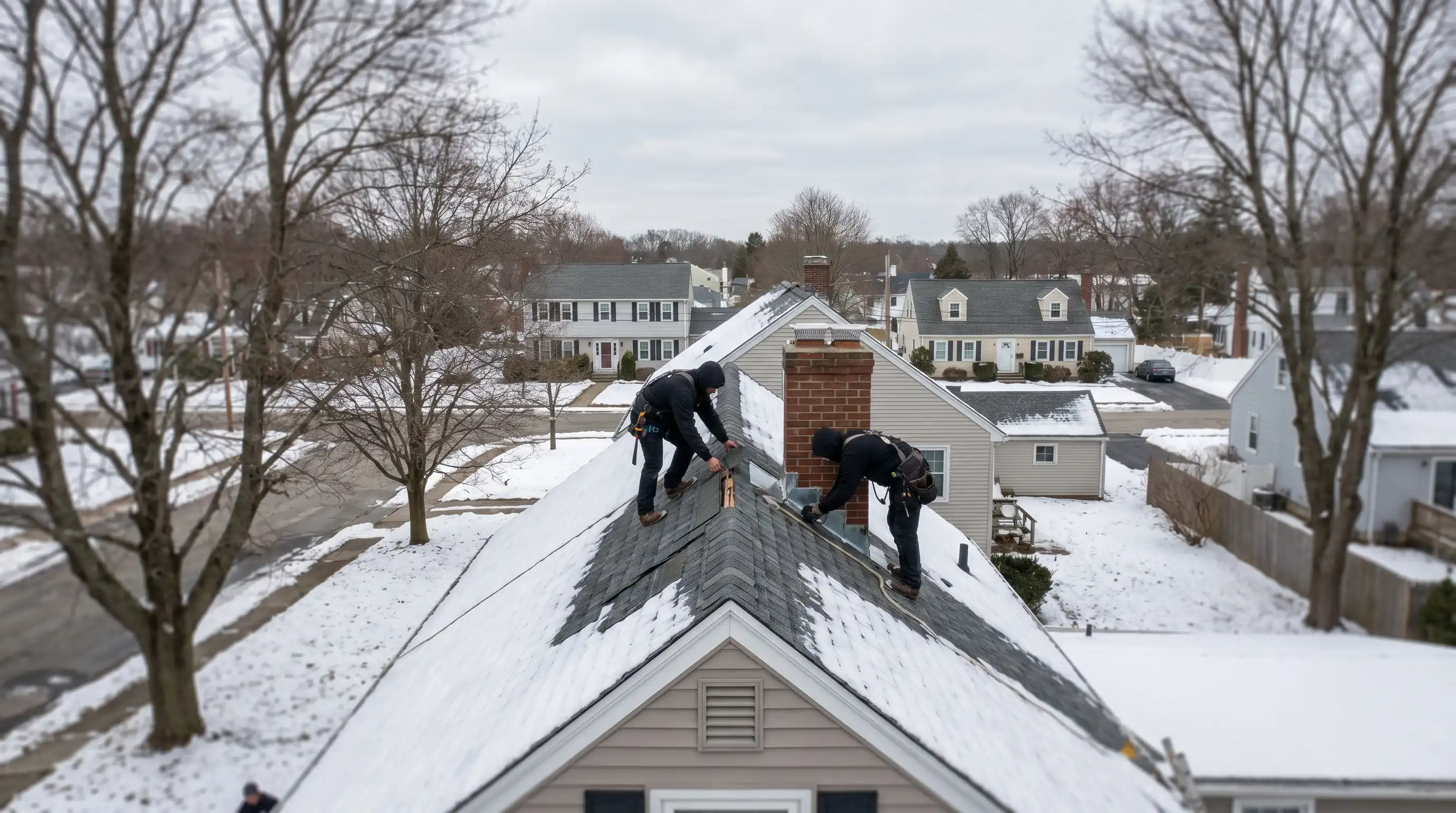
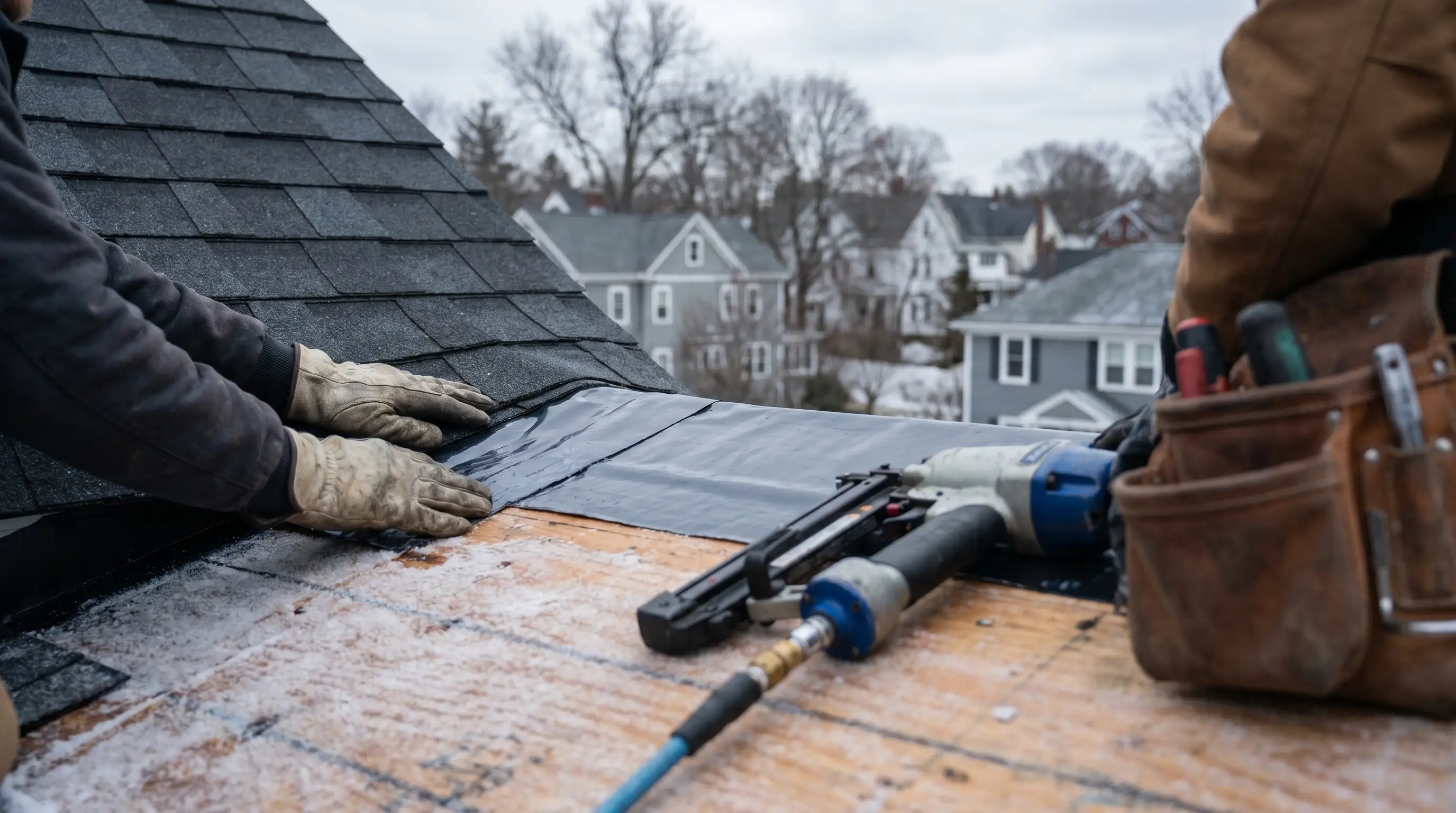
Ice dams are endemic to Cranston's roofing market and nearly invisible in most local PPC campaigns. Providence County averages 31 inches of annual snowfall, and Cranston's mix of low-slope Cape Cod rooflines and older colonial designs creates natural ice dam formation conditions: snow accumulates on the cold field of the roof, melts at the warmer interior-heated section near the ridge, and refreezes at the overhanging eaves — forcing water under shingles and into the building envelope. The search queries this generates ("ice dam removal Cranston," "ice dam damage repair RI," "ice and water shield installation Rhode Island") represent a market segment that most regional roofing contractors don't have dedicated campaigns for. Competition is near-zero in this keyword cluster. CPCs run $15–$30, and conversion rates for ice dam emergency queries reach 15–22% on properly structured landing pages — among the highest in the entire roofing vertical.
The homeowner searching these terms is not comparison shopping. They see water staining spreading across their ceiling mid-January and need it addressed before the next freeze cycle. A Cranston roofer with a dedicated ice dam landing page, call-only ads, and an ice dam removal crew on standby owns this traffic at minimal competitive pressure November through March. Any contractor who builds this campaign structure in September locks in a high-CVR lead source before the first snowfall.
Generic Copy and the $450K Home Value Disconnect
Regional competitors — Marshall Building & Remodeling, Titan Roofing RI, All American Roofing — run Providence County PPC with broad-match campaigns and generic ad copy. "Licensed, insured roofing contractor — free estimate" is the industry default. The opportunity for a Cranston SMB is to anchor copy to the market reality: at a $450,000 median sold price, Cranston homeowners are not selecting the cheapest option. They are protecting a significant financial asset. Copy that addresses this directly — "Protecting Cranston's $450K homes — GAF-certified shingles, 50-year warranty" — converts differently than a generic free estimate offer because it speaks to what the homeowner actually cares about: not saving $500 on a roof, but not destroying $450,000 of equity with a failed installation.
National storm-chasing franchise contractors enter Cranston after significant nor'easters with high budget and aggressive bidding. Their disadvantage is zero local credibility — they cannot claim knowledge of Cranston's specific housing stock, the distinction between ice dam damage and wind-driven rain intrusion in Cape Cod rooflines, or the RI licensing requirements homeowners should verify. A local SMB that builds storm inspection landing pages, ice dam content, and post-event remarketing audiences before storm season wins the post-storm traffic surge with local trust no national brand can replicate.
Geographic targeting errors compound budget waste. A 15-mile radius from Cranston pulls in Providence, Pawtucket, East Providence, and portions of North Attleborough, MA — municipalities with different contractor licensing requirements, different housing profiles, and often outside a Cranston-based crew's profitable service zone. Tightening targeting to Cranston, Warwick, Johnston, West Warwick, and North Providence concentrates spend on the addressable market and typically improves CPL by 20–35%.
How to Build a Winning Cranston Roofing PPC Campaign
A high-performance Cranston roofing campaign separates traffic into four distinct audience types, each with its own campaign structure and bidding logic: ice dam and winter emergency responders, proactive full replacement buyers, storm damage and insurance claim seekers, and pre-season inspection bookers. Pooling all four into a single campaign averages out performance across opposite intent profiles and makes seasonal optimization impossible. The ice dam campaign needs November budget concentration; the replacement campaign needs April–June funding; the storm inspection campaign needs a weather-triggered activation protocol. None of these timings overlap, and all require separate management.
Keyword Strategy by Audience Type
Ice dam and winter emergency keywords — CPC range $15–$35:
- "Ice dam removal Cranston" / "ice dam damage repair RI" — $15–$25 CPC, 18–22% CVR, November–March
- "Ice and water shield installation Rhode Island" / "ice dam leak repair" — $18–$30 CPC, high emergency intent from homeowners mid-problem
- "Roof leak repair winter Cranston" / "roof repair after storm RI" — $20–$35 CPC, post-nor'easter spike
Full replacement and high-intent keywords — CPC range $28–$70:
- "Roof replacement Cranston RI" / "new roof installation Cranston" — $28–$55 CPC, 9–14% CVR, active decision phase
- "GAF certified roofer Rhode Island" / "50-year roof warranty Cranston" — $30–$55 CPC, premium-quality buyers who are not price shopping
- "Roof cost estimate Cranston" / "how much does a roof cost RI" — $22–$45 CPC, research-phase capture with educational landing pages
Storm inspection and insurance claim keywords — CPC range $20–$45:
- "Free roof inspection Cranston" / "storm damage roof inspection RI" — $20–$38 CPC, spikes after nor'easter events
- "Roof insurance claim help Rhode Island" / "roofer insurance adjuster Cranston" — $25–$45 CPC, pre-motivated buyer already engaged in the claims process
Bidding strategy follows audience type. Ice dam and emergency campaigns run maximize conversions with a target CPA of $100–$150, reflecting the 18–22% CVR of this segment. Full replacement campaigns run target ROAS — roofing replacement CPLs of $90–$175 are acceptable given average project values of $9,000–$18,000 in Cranston's premium homeowner market. Storm inspection campaigns run maximize clicks with a CPC cap until a storm event occurs, then switch to maximize conversions immediately post-event when qualified traffic spikes. Build remarketing audiences from all website visitors and retarget storm-inspection page visitors with full replacement messaging 4–8 weeks after their initial visit — this converts the comparison shoppers who didn't call immediately but are still in the consideration cycle.
Weather-triggered activation is a structural advantage for Cranston roofing operators. A pre-built storm inspection campaign — paused, budget loaded, landing page tested — can be activated within 24 hours of a significant nor'easter. Competitors scrambling to build campaigns post-storm miss 48–72 hours of peak urgency traffic. The pre-built, ready-to-activate storm campaign is one of the highest-leverage structural decisions in Cranston roofing PPC.
Google Partner Agency
We're a certified Google Partner Agency, which means we don’t guess — we optimize withGoogle’s full toolkit and insider support.
Your campaigns get pro-level execution, backed by real expertise (not theory).

What Market Trends Should Cranston Roofing Businesses Know?
The timing of roof replacement demand in Cranston follows a predictable post-winter inspection cycle that most roofing contractors underutilize. After every nor'easter season, homeowners who experienced ice dam damage, wind-lifted shingles, or attic condensation issues schedule assessments in March and April before the problem recurs. The April–June window represents the highest-volume full replacement inquiry period of the year — driven not by warm-weather convenience but by post-storm urgency and the desire to address the problem before the next winter cycle arrives. Contractors who launch "post-winter inspection" campaigns in March capture leads at $90–$130 CPL before competitors recognize the demand surge and push CPCs up through May and June.
The Aging Roof Stock Replacement Wave
Cranston's 21,936 owner-occupied homes are predominantly 1940s–1980s construction. Most have asphalt shingle roofs installed between 1985 and 2010 — now entering the 15–30 year replacement window simultaneously. A GAF three-tab shingle roof from 1995 has 5–10 years of realistic remaining life in a New England climate characterized by freeze-thaw cycling, ice dams, and UV stress from summer sun. An architectural shingle roof from 2005 is approaching mid-life but showing accelerated degradation in older neighborhoods with inadequate attic ventilation. This is not a gradual replacement cycle distributed across diverse housing vintages — it is a concentrated replacement wave driven by a single generation of housing construction, compounded by New England climate stress that exceeds what manufacturer warranties assume for mild climates.
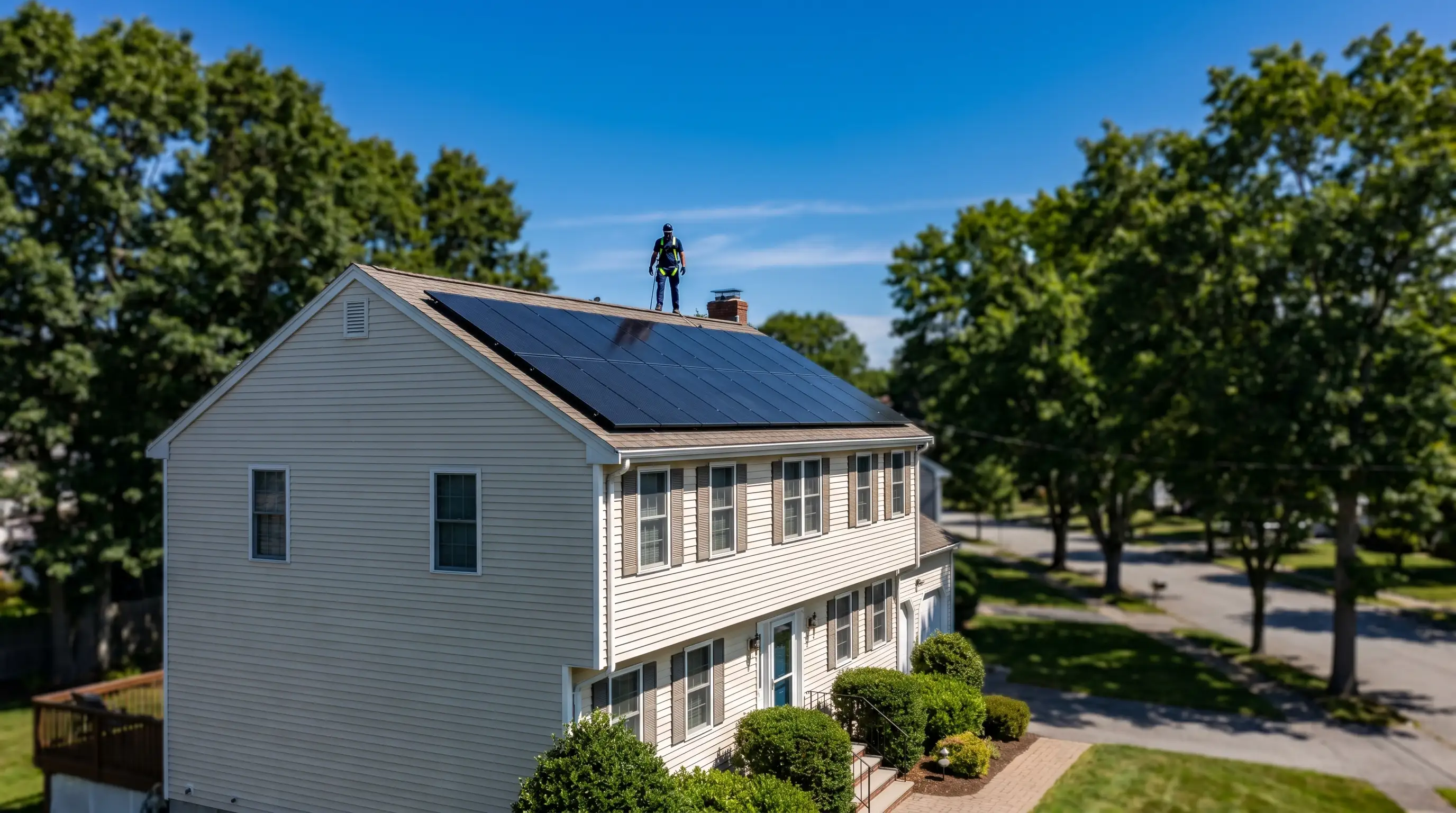
The solar installation trend creates a secondary roofing opportunity. Cranston homeowners pursuing solar assessments frequently discover their roof needs replacement before panels can be installed — the solar inspector flags it, and the project pauses pending roofing work. A Cranston roofing contractor with established relationships with local solar installers captures these pre-qualified, immediately motivated leads without any PPC spend. The intersection of "needs a new roof" and "motivated to go solar for the RI REF grant" represents a Cranston-specific conversion story no competitor from Providence or Warwick can tell.
At a $450,000 median sold price with 9.9% annual appreciation, Cranston homeowners have equity-driven motivation to protect their asset. A premium roofing upgrade — GAF Timberline HDZ architectural shingles, improved attic ventilation, 50-year workmanship warranty — represents 3–4% of asset value. In this income bracket and at this home value, the cheapest quote rarely wins. Contractors whose ad copy and landing pages speak to quality, warranty depth, and asset protection close at higher average ticket values than those competing on price. This is a premium market. Run premium-market PPC.
Why Cranston Roofing Contractors Need Local PPC Strategy
Roofing PPC in Cranston requires market knowledge that national platforms and generic agencies don't provide: the ice dam demand calendar, the post-nor'easter activation playbook, the $450K home value anchor in ad copy, and the structural distinction between ice dam emergency leads, post-winter replacement buyers, and storm-event insurance claim seekers. Getting these right is the difference between a CPL of $90 and $250 — and at roofing margins, that gap separates a profitable campaign from one that doesn't pencil at any reasonable budget level.
MB Adv Agency runs roofing PPC for SMB contractors across New England markets where winter weather creates both the demand spikes and the campaign complexity that generic setups miss. We structure campaigns around the ice dam season (October–March), the post-storm inspection activation window, and the spring replacement cycle that drives 40% of full replacement revenue in a single 10-week period. Our home services lead generation campaigns are purpose-built for markets like Cranston — high homeownership rates, aging housing stock, seasonal urgency, and premium home values that support higher CPL budgets with strong ROI.
We work with roofing contractors at the $2,500–$4,500/month ad spend level. Review our PPC pricing and home services lead generation capabilities. Our Cranston PPC management page details the full service scope for this market and how we handle the storm-activation, seasonal budget, and ice dam campaign structures that define performance in New England roofing.
Frequently Asked Questions
What Does Roofing PPC Cost in Cranston, RI?
Roofing PPC in Cranston costs between $15 and $70 per click depending on campaign type and season. Ice dam and winter emergency keywords — the highest-converting segment in the Cranston market — run $15–$35 per click with conversion rates of 18–22%, producing a cost-per-lead of $70–$130 for urgent winter roof damage calls. Full replacement keywords ("roof replacement Cranston RI," "new roof installation") run $28–$55 per click with conversion rates of 9–14% and a cost-per-lead of $90–$175. High-intent premium queries like "GAF certified roofer Rhode Island" or "50-year roof warranty Cranston" run $30–$70 at the upper end but attract replacement-ready buyers in Cranston's $450K-median home value market. A Cranston SMB roofing contractor should budget $2,500–$4,500 per month to generate 12–25 qualified leads at a blended CPL of $110–$200, with higher volume and lower CPL during the spring replacement cycle (April–June).
Seasonal cost patterns are pronounced. October through February represents the highest CPC period for emergency and ice dam keywords as competitors compete for storm-damaged homeowner traffic. March through June is the highest-volume period for full replacement inquiries at lower CPCs — this is the most cost-efficient window in the Cranston roofing calendar and the period where smart budget concentration produces the best CPL outcomes. Summer months (July–August) carry moderate volume at stable CPCs — roof replacement consideration continues, but with less urgency and slower decision timelines. Operators who maintain campaigns year-round with seasonal budget adjustments outperform those who concentrate all spend in summer and go dark in the January–March period when some of the highest-intent leads in the annual cycle are searching.
Storm-triggered demand creates unpredictable CPL swings. In the 48–72 hours following a significant nor'easter, roofing search volume spikes 3–5× above baseline and CPCs rise as competitors activate emergency budgets. Pre-built storm campaigns with pre-loaded budget handle this spike without requiring real-time bidding decisions — they activate immediately when weather triggers are met.
When Is the Best Time to Run Roofing Google Ads in Cranston?
The highest-ROI windows for roofing PPC in Cranston are the pre-winter and post-winter shoulder seasons — specifically September–October and March–May. In September and October, homeowners who survived a difficult previous winter are in pre-season inspection mode: they want to identify vulnerabilities before the next ice dam cycle. CPCs are 20–30% below their January peak, demand is predictable (not weather-dependent), and qualified homeowners are in active planning mode with time to evaluate contractors and schedule work. This is when a smart Cranston roofer builds pipeline before the emergency season begins. In March and May, the post-winter replacement surge arrives: homeowners assess winter damage, insurers process storm claims, and replacement decisions that were deferred in January (because getting on a roof in February is impractical) move forward. This 10-week window drives 35–40% of annual replacement revenue for active Cranston roofing contractors.
Year-round campaigns, however, outperform seasonal-only approaches for one structural reason: Google's smart bidding algorithms require 30–60 days of conversion data to optimize accurately. A campaign that runs only October–March spends its first 3–4 weeks in a sub-optimal learning phase during the highest-value period of the year. A year-round campaign with seasonal budget adjustments — higher budgets October–March and April–June, reduced budgets July–September — enters each high-demand period with fully calibrated bidding and established Quality Scores that produce lower CPCs than a freshly launched campaign.
Ice dam campaigns specifically: Activate no later than October 1, with full budget allocation by November 1. These campaigns should never go dark between October and March, because ice dam emergencies do not follow predictable weekly patterns — they follow weather events. A homeowner who discovers water staining on a Thursday in January needs a contractor by Friday. If your campaign paused to save budget mid-week, you miss that lead entirely.