Start
$590$990/month
1 platform · Google or MetaGoogle + Meta- Ad spend
- up to $3,000
- New creativesmade by us
- Google + Meta only4 a month
 By Matteo Braghetta, Founder · Google Ads
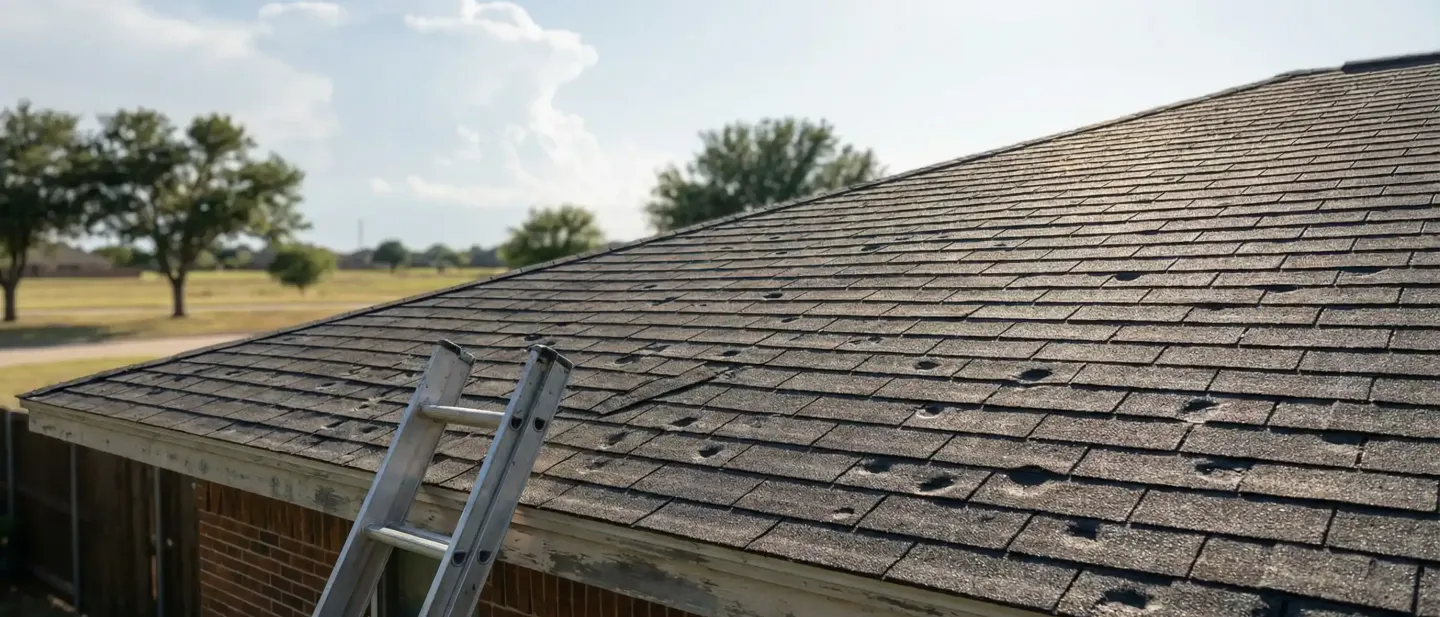
On December 26, 2015, an EF4 tornado carved through Garland and Rowlett, destroying thousands of homes and establishing this northeast Dallas suburb as one of the most storm-aware roofing markets in Texas. A decade later, 82,000+ homes — the majority built before 1985, with aging asphalt shingles and original decking — generate continuous baseline demand, while DFW's 5–8 major hail events per year create the storm-surge cycles that define the competitive calendar for every roofing company operating in Dallas County's eastern corridor.
See how this city's Roofing PPC costs compare nationally in our Roofing PPC Statistics report, featuring data from 40+ US cities.
In Garland, TX, people search for roofing services about 660 times a month on Google; a top-of-page click costs $11–$59, and demand peaks in July.
Garland, TX has few searches for these services, and Google reports no figure for some of them: read these numbers as indicative.
Google Keyword Planner · Oct 2025 – Sep 2026
| Search | Monthly searches | Top-of-page CPC |
|---|---|---|
| roofers | 140 | $6–$26 |
| roofer near me | 90 | $11–$91 |
| roofing company | 70 | $26–$73 |
| roofing contractor | 70 | $13–$101 |
| roof repair | 40 | — |
| metal roofing | 40 | $4–$21 |
| gutter installation | 30 | $3–$57 |
| roof inspection | 20 | — |
| roof replacement | 10 | — |
| new roof cost | 10 | $6–$16 |
US: $61
Google Keyword Planner · Oct 2025 – Sep 2026
Source: Google Keyword Planner (Google Ads), Google Search, English, Garland, TX, Oct 2025 – Sep 2026. Volumes are Google's monthly averages; CPC is the top-of-page bid range, weighted by search volume. How we collect these figures.
Garland's roofing market has two distinct demand cycles — and most PPC campaigns are built for only one of them. The first cycle is the storm surge: a major hail event drops on DFW, search volume for roofing terms spikes 10–20x within 24 hours, CPCs climb sharply, and every roofer in Dallas County activates emergency campaigns simultaneously. The second cycle is the baseline: year-round demand from Garland's aging housing stock, homeowners catching damaged shingles before they become leaks, and pre-sale inspection work in an active real estate market. A roofing campaign built only for the storm surge burns money in calm weeks. A campaign built only for baseline demand misses the highest-ROI window of the entire year.
The storm-timing problem is severe. After a confirmed hail event — a golf ball+ hailstorm is not unusual in DFW, which sits in the nation's most active hail corridor — the 24-to-72-hour post-storm window generates the majority of annual roofing search conversions in a single burst. Operators who activate campaigns within hours of a NOAA hail alert capture market share at premium but manageable CPCs. Operators who react 48 hours later find themselves bidding at peak prices against companies that have already locked up the first-mover leads. The difference between activating at hour 12 versus hour 48 can mean 40 leads versus 6 — same budget, same market, entirely different timing.
Garland's 2015 tornado legacy is well-known in the Texas roofing industry. After major DFW storm events, out-of-state storm-chaser crews converge on Dallas County suburbs with aggressive door-to-door solicitation and temporary Google Ads campaigns targeting the same emergency keywords. These operators — who frequently lack Texas-based accountability, manufacturer certifications, or BBB standing — bid up CPCs significantly during the post-storm window while simultaneously cluttering the local search results and depressing homeowner trust in the category overall.
Established Garland-based roofers face a counterintuitive challenge: they need to differentiate themselves from fly-by-night competitors in their own backyard, at precisely the moment when homeowners are making fast decisions under stress. Ad copy that explicitly addresses this dynamic — GAF Master Elite certification, BBB accreditation, local address, manufacturer warranty — doesn't just win the click; it disqualifies the chasers before the homeowner even clicks. Credentialed ad copy in a storm-surge environment converts at materially higher rates than generic "storm damage roofing" messaging.
Garland's roofing market is heavily insurance-driven. The majority of storm-related replacements run through homeowner insurance claims — and the claim process is complex, unfamiliar, and anxiety-inducing for most homeowners. The highest-converting roofing PPC ads in DFW acknowledge this complexity directly: "We handle your insurance claim" is not just a selling point. It is the single highest-LTV roofing ad message tested in the Dallas County market, because it transforms a $15,000 roofing job from a stressful financial decision into a managed service experience. Companies like Storm Guard Roofing & Construction and Rescue Roofing DFW have built their entire value propositions around this claim-management angle — and they run it aggressively in PPC.
The Texas roofing market has no state licensing requirement — anyone can call themselves a roofer and activate a Google Ads account. This creates both the credentialing opportunity (GAF Master Elite, Owens Corning Preferred Contractor, CertainTeed SELECT ShingleMaster) and the competition problem (low barriers to entry mean campaigns from undercapitalized, fly-by-night operators can temporarily suppress Quality Scores and inflate CPCs for legitimate operators). A well-structured campaign built around credential signals and tight geographic targeting — Garland's 75040–75044 ZIPs, not "DFW area" — is the foundation of a sustainable roofing PPC program.
Garland roofing campaigns require a dual-mode structure: a year-round baseline campaign and a pre-staged storm-surge campaign that activates within hours of a confirmed hail event. Operating only one mode produces either consistent underperformance or a single annual burst with months of wasted spend on either side.
The storm-surge campaign structure must be pre-built before any storm arrives. Creating a new campaign from scratch after a hail event — registering new ad groups, writing new copy, setting up landing pages — takes 24–48 hours minimum. By then, the first-mover window has closed. Pre-staged campaigns exist in the account in "paused" status with all ad copy written, bids set, and landing pages live. When a NOAA hail report confirms golf ball+ hail in Dallas County east ZIPs, the campaign goes live in minutes, not hours.
In storm-surge conditions, every roofer in DFW is running "storm damage experts" copy simultaneously. The operators who win on Quality Score and click-through rate lead with specific credentials and specific local relevance:
Year-round baseline strategy: off-season roofing demand in Garland is real and often undercontested. January and February, when storm chasers have long since left and most roofing campaigns are running minimal budgets, Garland homeowners still search for replacement quotes after noticing winter damage or preparing for spring property sales. A consistent $2,000–$3,000/month baseline campaign in the quiet season generates leads at significantly lower CPCs than peak-season competition — and books jobs that fill the winter schedule.
Garland's position in Dallas County's eastern corridor puts it squarely in the path of DFW's most common storm track — northeast-moving supercells from the west Texas plains that cross the DFW metroplex and hit Dallas County's eastern suburbs with concentrated force. The 2015 EF4 tornado is the most documented event, but DFW records 5–8 major hail events annually, with golf ball-size or larger hail appearing regularly in Garland's ZIP codes. The statistical probability of a major storm-damage event in any given year is not speculative — it's close to a certainty for a roofing company operating in this geography.
The baseline demand story is equally compelling. Garland's housing stock — 82,000+ households, predominantly 1950s through 1980s construction — contains a large share of original or single-replacement asphalt shingle roofs. Standard 3-tab shingles from the 1990s have a design life of 20–25 years; architectural shingles from the same era, 25–30 years. A significant portion of Garland's roof inventory is now at or past replacement age. This isn't storm-damage demand — it's planned maintenance demand, and it exists independent of weather events. Homeowners in the 75040 and 75042 ZIP codes who bought mid-century ranches are reaching the decade when roof replacement becomes inevitable rather than optional.
The competitive landscape for Garland roofing has a structural gap that most operators miss: the post-storm chaser problem creates homeowner distrust of the entire roofing PPC category after major events. This creates a counter-cyclical opportunity — the operators who run consistent, credentialed campaigns year-round and maintain strong Google Business Profile ratings (4.7+ stars, 50+ reviews) earn first-call trust during the post-storm surge, when homeowners are actively filtering out the storm chasers. The off-season investment in reputation, review generation, and consistent presence pays dividends when the storm season arrives.
Insurance claim volume in Garland has also changed the typical roofing sales cycle. The average Garland storm-damage job now involves an insurance adjuster visit, a supplement negotiation, and a materials decision — a 3–6 week process from first contact to job start. Roofing companies that have built PPC campaigns designed for a same-day conversion are structurally misaligned with this reality. Lead nurturing, follow-up sequences, and CRM integration matter more in a storm-damage market than a simple "call us now" conversion strategy.
Generic roofing PPC — a standard campaign running year-round on a flat budget with no storm-surge activation protocol — is not a viable strategy in Garland, TX. The market's storm exposure, the post-event competitive dynamics, and the insurance-claim sales cycle require a PPC partner who has built roofing campaigns for DFW suburban markets specifically, not a national template applied to a Garland address.
MB Adv Agency builds roofing campaigns with storm-surge activation as a core deliverable. Pre-staged campaigns go live within hours of a confirmed hail event. Insurance claim angle copy is built and tested before the storm arrives. Credential signals — manufacturer certifications, local address, review extensions — are configured to differentiate your business from storm-chaser competition in the post-event search window.
Our lead generation campaigns for roofing clients combine year-round baseline efficiency with storm-season dominance — maintaining a steady stream of replacement and inspection leads during calm months, then scaling aggressively when the weather creates the highest-intent window. Review our PPC management pricing to see the right tier for your roofing operation's ad spend level.
The Garland market has a genuine early-mover advantage for credentialed, locally-accountable roofing companies right now. As franchises expand their DFW suburban footprint and storm-chaser competition remains unpredictable, the operators who build strong campaigns, review profiles, and credential signals before the next major storm earn the leads that pay for the next several years of growth.
A Garland roofing company should budget a minimum of $2,500/month in ad spend for year-round baseline lead generation, with a surge allocation of $8,000–$15,000/month ready to activate post-storm. At baseline, a well-structured campaign generates 13–20 qualified leads per month at an average CPL of $110. The economics are compelling at any level: a single Garland roof replacement at $10,000–$15,000 (standard for a 2,000 sqft mid-century home with tear-off and architectural shingle installation) more than covers six weeks of baseline ad spend. Post-storm, CPL can drop to $40–$65 as demand spikes and conversion rates increase — the same $15,000 ad spend that produces 50 leads in a calm week might produce 200+ leads in a post-hail-event surge. The cost-per-click range is $11–$59 during normal conditions, climbing sharply in the 24–72 hours following a confirmed hail event. This is not a reason to pause campaigns during storm windows — it's a reason to have pre-staged surge budgets ready. The operators who pause because CPCs look expensive miss the highest-conversion window of the year. Insurance-claim roofing jobs average $10,000–$28,000 per project, making even $110 CPL highly profitable relative to typical roofing job LTV.
Seasonally, plan to allocate 50–60% of annual roofing PPC budget to March through June (DFW spring hail season), 20% to September through November (fall storm season), and maintain a 20–30% baseline allocation year-round for planned replacement demand from Garland's aging housing stock.
Three factors separate consistently profitable roofing PPC campaigns in Garland from the ones that burn budget without ROI. First: pre-staged storm-surge campaigns. Campaigns built from scratch after a hail event activate 24–48 hours late and miss the first-mover conversion window. Every major Garland hail event produces a surge of searches in the 12–24 hours immediately following — the operators with live, optimized campaigns during that window capture 3–5x more leads per dollar than those who scramble to respond. Second: credential signals in ad copy. GAF Master Elite certification, BBB accreditation, manufacturer warranty callouts, and a physical Garland address convert measurably higher than generic "storm damage experts" copy — particularly post-storm when homeowners are filtering out out-of-state chasers. Third: insurance-claim messaging. The single highest-converting ad message in Garland's roofing market is "we handle your insurance claim." Homeowners facing a storm-damage situation are not searching for a roofer — they're searching for a trusted guide through an unfamiliar, stressful process. The company whose ad speaks directly to that need — not just the roof repair — wins the lead at every CPC level.
Beyond these three, year-round consistency matters. January roofing PPC in Garland — when competitors have reduced budgets and storm chasers have left the market — generates leads at $30–$50 CPL compared to $80–$110 at peak season. Maintaining a baseline campaign through quiet months builds account Quality Scores that pay dividends in competitive summer and fall windows.
How to read this Cost per click and monthly searches are measured with Google Keyword Planner (see above). Cost per lead, conversion rate, budget and leads are estimates compiled from public benchmarks such as WordStream, not measurements.
Sources LocalIQ 2025 roofing search avg $10.70 CPC / $228.15 CPL nationally; Dallas/DFW metro premium 2.5–4x applied; Garland positioned slightly below core Dallas. Post-storm surge CPCs $65–$110; surge CPL can drop to $40–$65 on high demand days. 2015 Garland EF4 tornado established deep storm-damage roofing demand profile. No Garland-specific public PPC data available.
$590$990/month
1 platform · Google or MetaGoogle + Meta$790$1,290/month
1 platform · Google or MetaGoogle + Meta$1,140$1,940/month
1 platform · Google or MetaGoogle + MetaChatGPT Ads: a separate pilot, $250/month, added to a plan. See the pilot →

Matteo Braghetta founded MB Adv and runs its Google Ads accounts. He takes the first call with every new client, reads the accounts every week and writes the agency’s guides.
The other half of his job is measurement: GA4, Consent Mode and server-side tracking, so the platforms learn from real sales.
MB Adv is a Google Partner agency managing about $4.4M a year in ad spend for clients in the US, the UK and Europe.
Managed on numbers you can check.
Plans for the US