Solar Installation PPC Garland, TX
Garland is one of the most solar-favorable cities in DFW — GP&L net metering, 5.2–5.6 peak sun hours daily, and 61.6% homeownership rate — and a first-hand memory of Winter Storm Uri's grid failure keeps energy independence searches active year-round. The installers winning in this market aren't outbidding Sunrun; they're targeting the GP&L-specific and Spanish-language keywords that national brands don't know exist.
Why Do Solar PPC Campaigns Fail in Garland, TX?
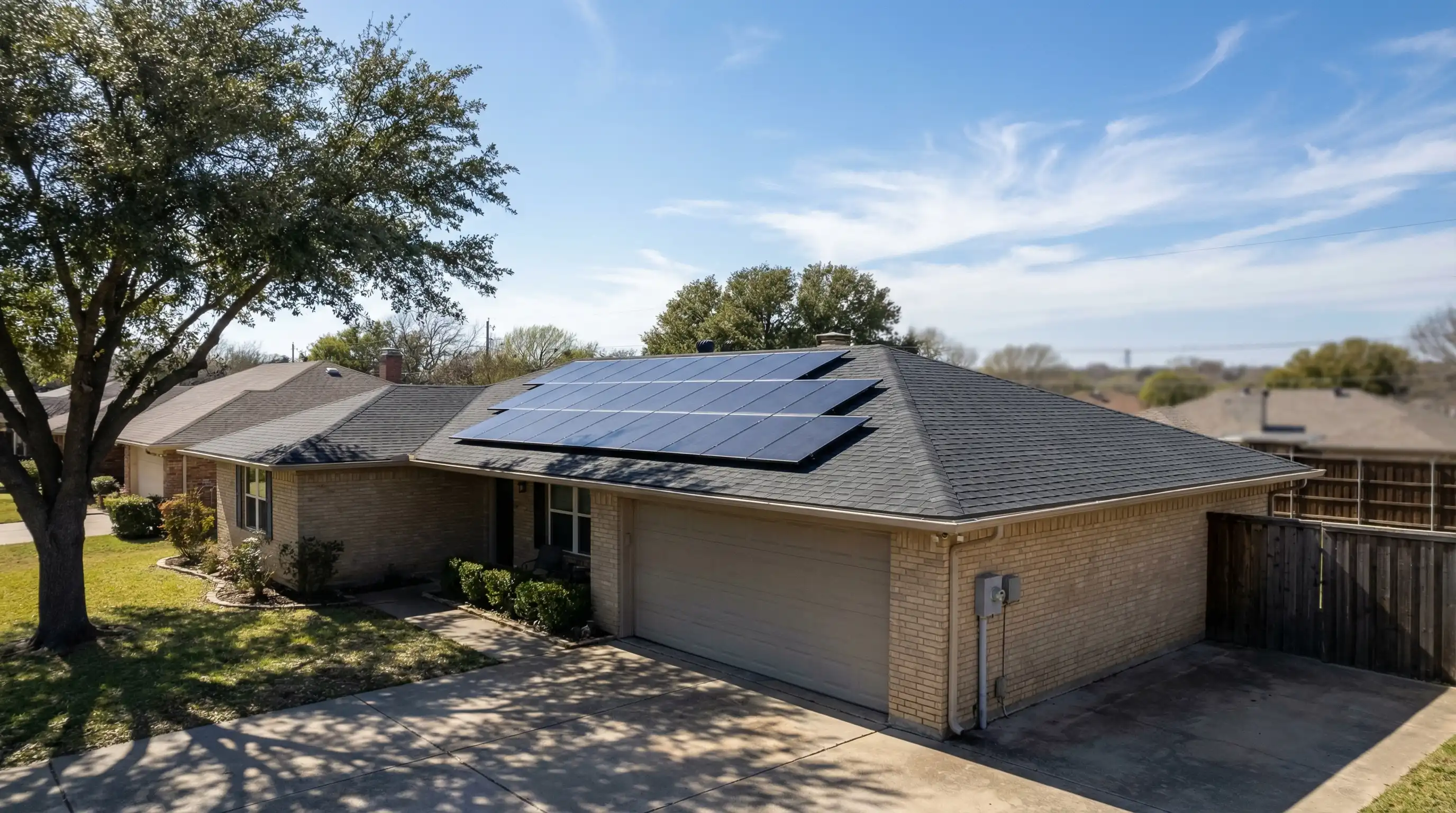
Garland's solar market is in an unusual position: the demand fundamentals are exceptionally strong, but most local installers are either not running Google Ads at all or running campaigns that treat Garland like any other DFW suburb. Both approaches miss the defining characteristic of this market — Garland Power & Light (GP&L) is a municipal electric utility, not a standard ERCOT residential retailer, and that single fact changes the entire economics and keyword strategy for solar in Garland.
GP&L operates net metering, which means Garland homeowners can sell excess solar generation back to the utility, creating a bill-reduction and payback timeline that is measurably different from homeowners on standard TXU or Reliant accounts. When a Garland homeowner searches for solar information, their questions — "Does GP&L allow solar panels?" "How does net metering work in Garland?" "Can I go solar with Garland Power and Light?" — are questions that generic DFW solar campaigns do not answer. National solar brands (Sunrun, Freedom Solar Power, Solar Energy World) optimize their landing pages for ERCOT residential customers. A Garland homeowner who clicks a generic ad, lands on a page that doesn't mention GP&L, and doesn't see their specific utility addressed — bounces. The conversion opportunity is lost to the next organic result or the competitor who built a GP&L-specific landing page.
The National Brand Messaging Problem
Sunrun's competitive advantage in the DFW solar market is its lease/PPA model — "go solar for $0 down." This is an effective awareness-stage message for homeowners who don't want to think about financing. But it also creates a misconception that solar is a rental arrangement rather than an owned asset. Garland installers selling owned systems — where the homeowner captures the full 30% federal ITC, accumulates equity, and reaches payback in 7–10 years — are competing against a "free solar" message with a more complex economic argument. The campaign language matters: "Own Your Solar System — GP&L Net Metering ROI" is a fundamentally different message from Sunrun's "$0 Down Solar" and attracts a homeowner who is researching ownership economics, not rental terms. Confusing these two audiences in one campaign produces mediocre results for both.
The second failure mode is bidding indiscriminately on broad solar terms — "solar panels DFW," "solar company Texas" — that attract homeowners outside Garland's municipal utility boundary. A homeowner in adjacent Rowlett or Mesquite is served by a different utility with different interconnection rules and different economics. The Garland-specific solar value proposition (GP&L net metering + municipal interconnection expertise) is irrelevant to this audience, yet broad-match campaigns pay $9–$20/click to reach them anyway.
The Post-Uri Search Pattern
Winter Storm Uri in February 2021 left Garland homeowners without power for 24–96 hours. The memory of that event continues to drive a background hum of energy resilience searches that spike every winter when cold fronts approach DFW. "Solar + battery storage Garland TX," "backup power solar Garland," and "solar with battery backup Garland Power and Light" are keyword categories that emerge every November and December as weather forecasts shift. National solar brands run spring and summer-heavy campaigns oriented toward peak solar billing savings. The installer running a Uri-anniversary battery storage campaign in November captures a distinct, high-intent audience at lower competition — and battery storage add-ons ($8,000–$15,000) represent a significant LTV increase on top of the base installation.
- GP&L-specific keyword gap: National solar brands don't create content or campaigns specific to Garland's municipal utility — a high-value local differentiator
- Lease vs. ownership messaging: Sunrun's $0-down lease message and ownership-economics campaigns attract entirely different audiences and should never share budget
- Geographic bleed: Broad-match DFW solar campaigns reach non-GP&L homeowners who can't benefit from Garland-specific interconnection expertise
- Post-Uri battery demand: Winter resilience searches spike annually with cold front forecasts — a recurring seasonal opportunity most solar campaigns miss
The Garland solar installer that builds a GP&L-specific keyword strategy, segments ownership campaigns from battery storage campaigns, and adds a Spanish-language layer for Garland's 42.7% Hispanic homeowner base is operating in a market segment that national brands either can't see or can't serve with their standardized campaign structures.
PPC Strategies That Win Solar Leads in Garland
A high-converting Garland solar campaign is built around three layers: a GP&L-specific ownership campaign for Garland homeowners researching return on investment, a battery storage / energy resilience campaign for post-Uri demand, and a Spanish-language campaign for the bilingual homeowner market that major installers ignore. These layers serve different audiences, justify different CPL targets, and require different ad copy and landing pages.
Campaign Architecture
- GP&L ownership campaign (exact + phrase match): "solar panels Garland TX," "solar installation Garland TX," "solar company Garland Power and Light," "net metering Garland TX solar" — CPC $9–$20; landing page specific to GP&L interconnection process, net metering calculator, 30% ITC calculation; ownership ROI messaging
- High-intent conversion terms (exact match): "best solar company Garland TX," "solar installation cost Garland TX," "solar panel installer Garland TX" — CPC $15–$30; highest-intent terms require position 1–2; landing page with transparent pricing, GP&L permit timeline, and instant quote form
- Battery storage / resilience (phrase match): "solar battery backup Garland TX," "solar with battery storage Garland," "Tesla Powerwall Garland TX" — CPC $12–$22; activate October–March (winter cold front pattern); Uri-anniversary messaging; battery upsell framing for homeowners already considering solar
- Spanish-language ownership (all match types): "paneles solares Garland TX," "instalación solar Garland TX," "empresa de energía solar Garland" — CPC $4–$9; minimal competition; bilingual landing page with GP&L net metering explanation in Spanish; targets Garland's Hispanic homeowner base (42.7% of population)
- Negative keyword discipline: "solar lease," "free solar," "solar rental," "solar for renters," "community solar" — removes non-ownership intent and lease-seeking traffic that won't convert to owned-system installations
Bidding and Conversion Tracking
Solar's 30–60 day sales cycle requires attribution patience. Set up call tracking, form submit, and consult booking as separate conversion events — track all three, but optimize to consult bookings (most predictive of closed deals). Use Target CPA bidding only after 30+ conversions; before that, manual CPC with aggressive mobile bid adjustments (Garland homeowners frequently do initial solar research on mobile during evening hours) and a +20% bid modifier on 75040–75044 ZIP codes.
Budget allocation: 60% to GP&L ownership campaign, 20% to Spanish-language campaign, 15% to battery storage, 5% to remarketing (users who visited the site but didn't convert — highly effective for a 30-60 day consideration cycle). Seasonality: 30–40% budget increase March through September (peak solar billing demand); maintain battery storage campaign at full budget October–March.
Google Partner Agency
We're a certified Google Partner Agency, which means we don’t guess — we optimize withGoogle’s full toolkit and insider support.
Your campaigns get pro-level execution, backed by real expertise (not theory).

What Market Trends Should Garland Solar Businesses Know?
Three market dynamics specific to Garland's solar landscape are creating PPC opportunities that standard DFW solar campaigns miss. The first is GP&L's net metering program and its differentiated economics. The second is the Spanish-language homeowner solar opportunity — almost entirely unaddressed by any installer in the market. The third is the growing battery storage demand driven by Winter Storm Uri's lasting psychological impact on DFW homeowners.
GP&L Net Metering as a Conversion Accelerator
Garland Power & Light's net metering program allows residential solar customers to export excess generation to the grid and receive bill credits at the retail rate. For a homeowner with a 7.5kW system generating 1,000+ kWh per month in peak DFW sun, this can mean near-zero July electricity bills — compelling economics against GP&L rates. The critical insight for PPC is that this benefit is Garland-specific. It doesn't apply in the same way to homeowners on Oncor-delivered competitive retail accounts. A landing page that leads with "GP&L Net Metering — How Garland Homeowners Save Differently" immediately signals local expertise and filters for the exact audience the installer can best serve. No national solar brand has built this page. The SEO and PPC territory is open.
The 30% federal Investment Tax Credit (ITC), locked through 2032, provides a time-horizon urgency frame that converts well in Google Ads copy: "Go Solar in Garland Now — 30% Federal Tax Credit Through 2032." Homeowners who understand they will capture $5,000–$8,000 in federal credit on a typical installation make faster decisions than homeowners evaluating solar on bill-savings alone. The ITC message combined with GP&L net metering ROI creates the strongest possible conversion landing page for a Garland solar installer.
The Bilingual Homeowner Opportunity
Garland's Hispanic community has a 61.6% homeownership rate that parallels the city's overall rate — meaning tens of thousands of Spanish-speaking homeowners who qualify for and could benefit from solar are effectively unaddressed by any solar PPC campaign operating in Garland. The keyword "paneles solares Garland TX" generates real search volume with CPCs of $4–$9 — a fraction of English-language solar CPCs — and near-zero advertiser competition. A bilingual installer campaign running this keyword category with a GP&L net metering explainer in Spanish is capturing a homeowner audience that Sunrun, Freedom Solar, and Longhorn Solar are not reaching.
- 30% ITC urgency window: 2032 phase-down creates decision deadline messaging that consistently reduces time-to-consult
- Post-Uri resilience demand: Each winter cold front re-activates grid vulnerability anxiety — battery storage searches spike predictably every November–December
- GP&L interconnection expertise: Most national solar brands optimize for ERCOT residential; GP&L municipal interconnection is a specialized process that local installers can position as a competitive advantage
The Garland solar market is not yet at the saturation levels of California or Florida. The installer that builds the GP&L-specific digital presence — keyword ownership, landing page authority, Spanish-language reach — in 2025–2026 is establishing a position that will be considerably harder to replicate when national brands eventually recognize the Garland market's distinct dynamics. The window is now, and the competition for GP&L-specific terms is effectively zero.
MB Adv Agency — Garland Solar PPC With GP&L Market Intelligence
We built our Garland solar campaign architecture around one insight that most solar PPC agencies miss: Garland is a GP&L city, and that changes everything about keyword strategy, landing page content, and conversion messaging. National brands spend millions on DFW solar campaigns and don't know what GP&L net metering pays per kWh. We do — and we build that into every campaign element from the ad copy to the consult booking page.
Our Garland solar campaigns include a GP&L-specific ownership layer, a battery storage campaign for winter resilience demand, and a Spanish-language campaign for the bilingual homeowner market that has been structurally ignored by every major installer in the area. We set up attribution-ready call tracking with 60-day lookback windows so clients understand their pipeline at the consult stage, not just the form-fill stage. And we manage the expectation that solar campaigns take 45–75 days to reach full optimization — the CPL in week 6 is not the CPL in week 14, and we have the data to prove the trajectory.
Our Aggressive Push tier at $697/month fits most Garland solar installers entering PPC; Market Crusher at $997/month is designed for installers pursuing simultaneous residential and commercial growth across east Dallas County. Every engagement includes full Google Ads management — campaign setup, keyword refinement, monthly reporting, and a team that doesn't rotate off your account when your pipeline starts converting.

Frequently Asked Questions
Does Solar PPC Work in Garland, TX?
Solar Google Ads in Garland produces strong results for installers who build their campaigns around Garland's specific market dynamics — GP&L net metering, the 30% federal ITC, and the post-Uri battery storage demand — rather than generic DFW solar messaging. At a starter budget of $2,500/month in ad spend, a properly structured Garland solar campaign generates approximately 9–15 qualified solar inquiries per month at an average CPL of $140–$180. With a typical residential installation closing rate of 20–30% from consult to signed contract, that produces 2–4 closed installations per month — at a gross profit of $5,000–$13,000 per installation, a $2,500/month campaign generates $10,000–$52,000 in gross profit from a single month's lead pipeline. No other digital channel for solar generates this return at comparable cost in the Garland market.
The GP&L-specific keyword layer is the highest ROI segment in a Garland solar campaign. Terms like "solar panels Garland Power Light," "GP&L net metering solar," and "solar installation Garland TX" have CPCs of $9–$20 with close-to-zero national brand competition because these terms have no value to a national installer whose lead pages are built for ERCOT customers. The Garland-based installer who builds GP&L-specific ad copy and landing pages owns these terms by default. Spanish-language solar campaigns in Garland run at $4–$9 CPC with minimal competition — the per-consult cost from bilingual campaigns typically runs $60–$90, making it the most cost-efficient acquisition segment in any Garland solar account we manage.
Seasonality matters: peak billing months (June–September) drive the highest solar search volume; winter cold fronts (November–December) drive battery storage inquiry spikes. Budget staging around these cycles — 40% increase summer, consistent battery storage campaign winter — improves annual account efficiency by 20–30% compared to flat-budget approaches.
How Long Does It Take for Solar PPC to Generate ROI in Garland?
Solar PPC in Garland requires a realistic timeline expectation: the first inquiries arrive within 7–10 days of campaign launch, but the first closed installations typically come 45–75 days after the initial lead — reflecting the solar sales cycle (consult → site assessment → GP&L permit → proposal acceptance → installation scheduling). Campaigns that are cancelled after 30 days because "no sales have closed yet" are cancelled in the exact window where the consult pipeline is building toward first closings. The correct measurement window for solar PPC performance is 90 days post-launch, with CPL and consult volume as the 30-day indicators and installation closings as the 90-day indicator.
The optimization timeline follows a predictable pattern: weeks 1–2 are data collection (high CPL, $180–$220 range as bidding strategy learns); weeks 3–6 see quality score improvement and CPL dropping to $140–$160; weeks 7–12 are the steady-state target ($120–$150 CPL for a well-managed Garland solar account). GP&L-specific campaigns reach steady state faster than generic DFW campaigns because there is no competitive pressure on these keywords — the algorithm doesn't need to win an auction battle, just match the right intent signal. Spanish-language campaigns reach steady state fastest of all, often within 2–3 weeks, because the keyword field is essentially uncontested.
ITC urgency messaging accelerates the sales cycle: homeowners who understand the 30% federal credit and its 2032 phase-down timeline book consultations faster than homeowners evaluating solar purely on monthly bill savings. Building ITC deadlines and GP&L net metering ROI into ad copy from day one produces a shorter average time-to-consult and a higher consult-to-close rate than campaigns running generic "save on electricity" messaging.