Roofing PPC Reading, PA
Berks County averages 30–40 thunderstorms annually, with 4–6 classified as severe — and Reading's Victorian row houses and pre-war colonials bear the full brunt of every one. With average replacement jobs running $15,000–$22,000 and insurance claim volume spiking after every major storm, roofing PPC in Reading delivers some of the highest-ticket ROI in the Pennsylvania home services market. <!-- stats-article-link --> <p><em>See how this city's Roofing PPC costs compare nationally in our <a href="/resources/roofing-ppc-statistics">Roofing PPC Statistics</a> report, featuring data from 40+ US cities.</em></p>
Why Do Roofing PPC Campaigns Fail in Reading, PA?
Roofing is one of the most chaotic PPC verticals in any market — and Reading adds layers of complexity that trip up contractors relying on generic campaign templates. The competitive landscape shifts dramatically based on weather events, national storm chasers descend without warning, and Reading's unique architectural mix creates conversion challenges that suburban roofing campaigns never encounter.
Storm Chasers and the Post-Event Spike
Every time a severe weather event moves through Berks County, national storm chasing contractors flood the Google Ads auction within 24–48 hours. These companies run large consolidated ad budgets targeting insurance-driven search terms like "hail damage roof inspection Reading" and "storm damage roof repair Berks County." During these post-storm windows, CPCs for competitive roofing keywords spike from the standard $10–$30 range to $40–$60+, pricing local contractors out of the keywords they've optimized for over months. Contractors without a rapid creative response protocol — pre-built storm damage ad variants ready to launch at a moment's notice — watch their cost-per-lead triple while storm chasers capture the surge.
Greenawalt Roofing Company and RAM Roofing & Exteriors have 20+ year local presences and strong organic and brand search visibility that insulates them from cost spikes. They also have established relationships with insurance adjusters — a conversion advantage that PPC alone can't replicate. New entrants face a dual challenge: competing against their brand recognition on general terms while also battling nationals on storm damage keywords.
The Architecture Problem
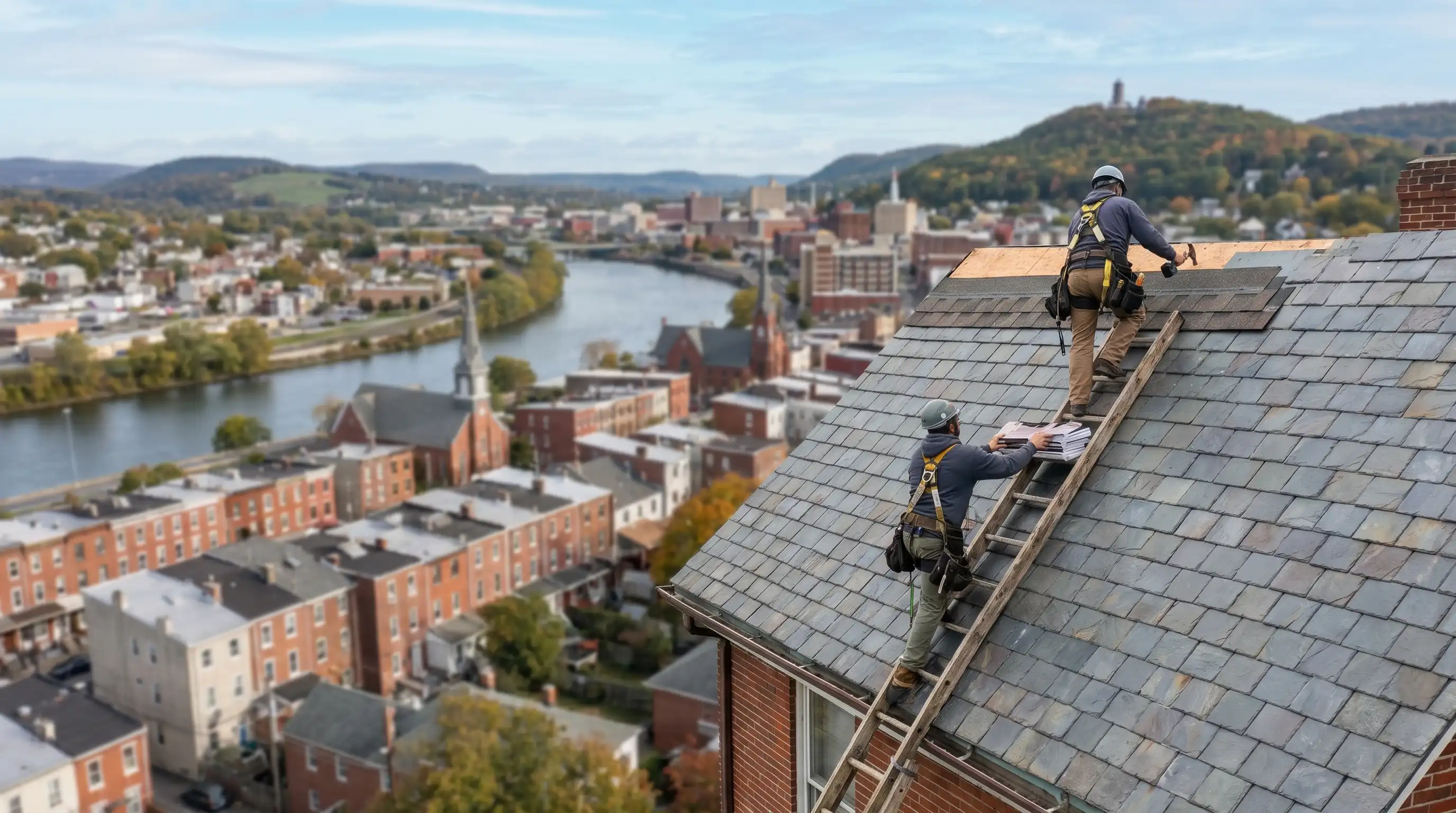
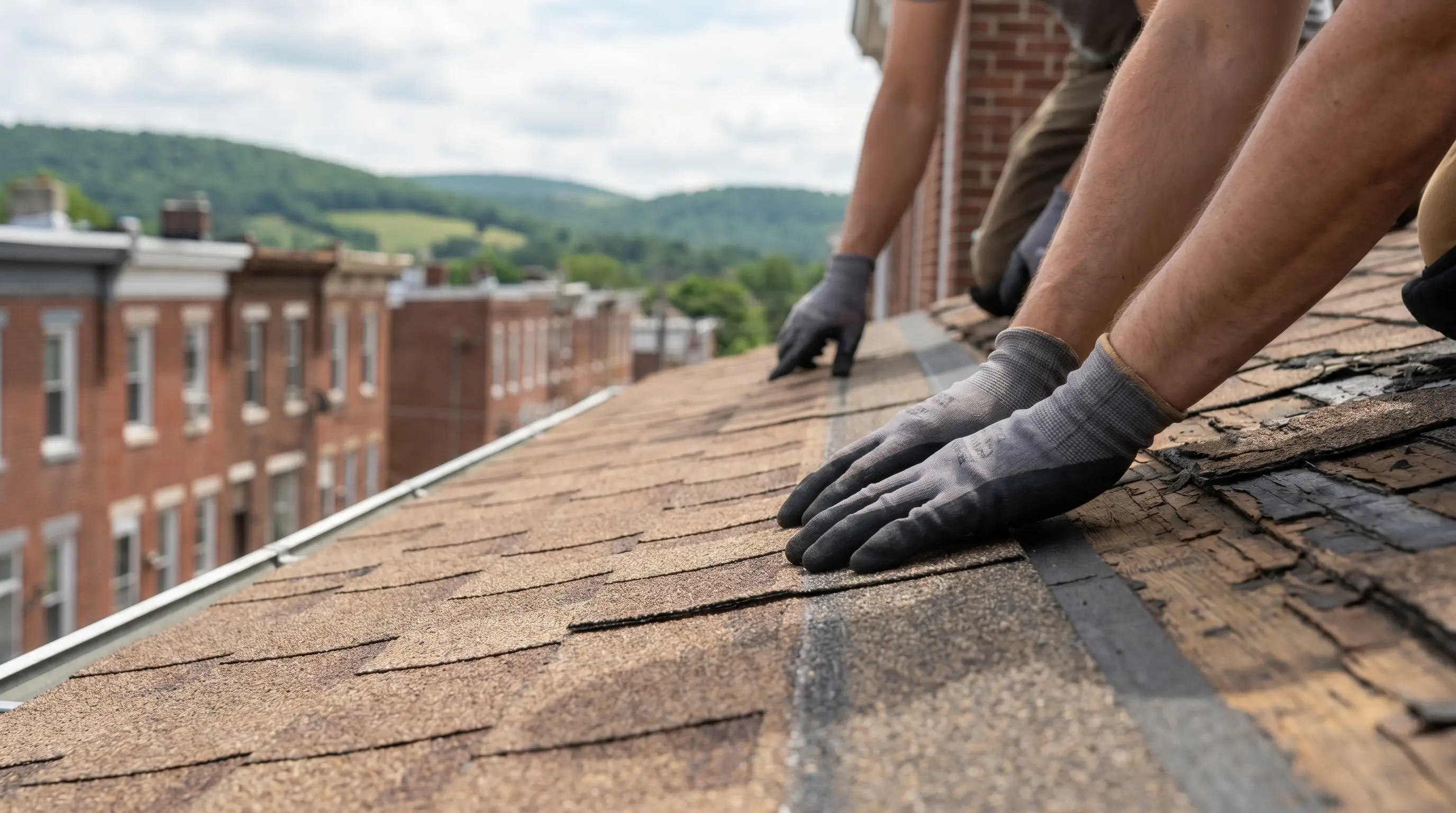
Reading's roofing market is not a standard suburban roofing market. The city's housing stock includes a high concentration of Victorian-era homes with complex roof geometries — steep pitches, multiple valleys, dormers, and decorative elements that require significantly more labor and materials than a simple ranch-style suburban roof. This architectural complexity means:
- Average replacement costs run $15,000–$22,000 versus the $8,000–$12,000 national average for simpler homes
- Job duration extends to 2–4 days versus 1-day suburban installs, affecting contractor capacity calculations
- Landing pages showing suburban roofing photos don't convert on Reading searches — homeowners recognize when imagery doesn't match their neighborhood's architecture
- Estimates require in-person assessment more often than in simpler markets, adding friction between ad click and booked job
Campaigns that don't address Reading's architectural reality in their ad creative and landing pages generate leads that fail to close — high click volume, low conversion on revenue. The best-performing Reading roofing campaigns lead with architectural specificity: "Reading's row houses and Victorian homes. We know them." This kind of local specificity increases conversion rates by 25–35% versus generic contractor messaging.
Finally, insurance claim campaigns require a distinctly different funnel than standard replacement campaigns. Homeowners pursuing insurance-covered repairs are not price shopping — they're looking for expertise in documentation, adjuster communication, and claim maximization. Ads and landing pages that focus on the insurance process rather than the installation process generate higher-intent leads with faster close cycles in the post-storm window.
Roofing PPC Strategy for Berks County Contractors
Reading's roofing market requires three campaign tracks running simultaneously: a baseline replacement campaign for year-round lead flow, a storm-response campaign that can be activated within hours of a severe weather event, and a financing-focused campaign that addresses the affordability barrier for the city's lower-income homeowners.
Keyword Structure by Campaign Type
- Replacement/aging roof keywords — "roof replacement Reading PA," "new roof installation Berks County," "roofing contractor near Reading PA" — $12–$25 CPC. Evergreen campaign, steady budget allocation. Focus on homes 15+ years old.
- Storm damage keywords — "hail damage roof Reading PA," "storm damage roof repair Berks County," "emergency roof repair Reading" — $15–$35 CPC baseline, $40–$60 post-storm. Activate surge budget within 24 hours of NOAA severe weather alerts for Berks County.
- Insurance claim keywords — "roof insurance claim Reading PA," "free roof inspection storm damage," "insurance adjuster roof claim" — $10–$20 CPC. Separate campaign with insurance-focused landing page and documentation offer as lead magnet.
- Repair and maintenance keywords — "roof leak repair Reading PA," "roof repair Berks County," "fix roof leak near me" — $10–$18 CPC. Lower ticket but faster close cycle; builds remarketing audience for future replacement conversations.
- Financing keywords — "roof financing Reading PA," "0 down roof replacement," "affordable roofing Berks County" — $8–$14 CPC. Reading's median income of $32K/year makes financing a primary decision factor; these keywords attract qualified buyers who might otherwise defer a necessary replacement.
Storm response protocol: Pre-build storm damage ad variants with weather-triggered headlines ("Hail hit Berks County last night? Free damage inspection today") and have landing pages ready before storm season starts. Connect to a NOAA weather alert feed or manually monitor for Berks County severe weather watches. Within 4–6 hours of a significant storm, launch the surge campaign with 3x normal daily budget and manual CPC bidding to maintain auction presence despite inflated CPCs.
Seasonal allocation: Spring and early summer (April–July) account for approximately 60% of annual storm lead volume in Berks County. Increase base roofing budgets 40–50% during this window. October–November captures the pre-winter replacement urgency period — homeowners who notice damage during summer but delay until fall often make final decisions when temperatures drop and rain increases.
Local competitor displacement: For broad match keywords where Greenawalt and RAM rank organically, use RLSA modifier to bid 30–40% higher for site visitors who previously engaged with your content. Warm audiences convert at substantially higher rates and justify the premium CPC.
Google Partner Agency
We're a certified Google Partner Agency, which means we don’t guess — we optimize withGoogle’s full toolkit and insider support.
Your campaigns get pro-level execution, backed by real expertise (not theory).

What Market Trends Should Reading Roofing Businesses Know?
Berks County's weather patterns are shifting in ways that are expanding the roofing replacement market beyond traditional storm response. Understanding these dynamics — and building campaigns that anticipate them — positions local contractors ahead of the next demand wave.
Storm Frequency Is Increasing
National weather data shows that the northeastern U.S. has seen a 15–20% increase in severe thunderstorm events over the past decade, with hail-producing storms becoming more common in the mid-Atlantic region. Berks County's position in the Schuylkill River valley — surrounded by ridges that funnel and intensify storm systems — makes it particularly susceptible. A contractor with a responsive storm campaign infrastructure doesn't just react to weather events; they position the entire campaign strategy around the probability of multiple significant events each spring and summer season.
Key insight: The average March 2025 roof replacement recorded in the Berks County market was $19,000 for premium architectural shingles with a 30-year warranty. At a 5–8% CVR and $124–$126 average CPL, a contractor spending $3,000/month generates 23–28 leads. At a 25% close rate, that's 5–7 completed jobs per month — representing $95,000–$133,000 in revenue against $3,000 in ad spend. The math is compelling even at conservative close rates.
The Insurance Claim Opportunity
- Many Reading homeowners don't realize their insurance policy covers storm damage — surveys suggest 40–50% of damage-eligible homeowners never file claims
- Contractors who educate on the claims process (free inspection + adjuster meeting accompaniment) capture leads that traditional roofing ads miss entirely
- Insurance-sourced jobs typically require no customer financing, reducing close friction significantly
- Post-storm claim windows run 4–6 weeks — contractors who get there first with an inspection offer control the eventual job booking
Reading's landlord market adds a commercial dimension most roofing PPC campaigns miss. With only 38% homeownership in the city, a substantial share of residential roofing work is driven by rental property owners — many managing multiple row houses simultaneously. A "commercial/multi-unit roofing" campaign track targeting "rental property roof Reading PA" and "apartment building roof replacement Berks County" taps a segment where average job values run higher and repeat business is consistent.
Why Berks County Roofers Win With MB Adv Agency
Roofing PPC in Reading is not a set-and-forget proposition. The market shifts with every storm, every insurance cycle, and every season — and campaigns that don't adapt in real time waste significant budget on the wrong keywords at the wrong moment. MB Adv Agency builds storm-responsive roofing campaigns for Reading and Berks County contractors — with pre-built storm damage creative, weather-event monitoring, and surge budget protocols that activate within hours of a significant event.
Our campaigns segment every intent type: replacement, storm damage, insurance claims, repairs, and financing. Each track has dedicated ad groups, landing pages, and conversion tracking — so you know exactly which campaign types are generating revenue, not just clicks. We connect campaign performance to actual closed job data, not just leads, so budget allocation follows real ROI.
Berks County's architectural complexity means your campaigns need local knowledge — what a Victorian row house roof job actually costs, why insurance claim funnels convert differently than direct replacement leads, and how the spring storm season compresses months of lead generation into weeks. That's the intelligence we bring to every Reading roofing account.
See how our lead generation service works for home services contractors, or check our pricing to find the right tier for your current ad spend.
Frequently Asked Questions
How Do I Compete Against Storm Chaser Companies in Berks County Google Ads?
Storm chasers win in Berks County when local contractors lack a pre-built response protocol. The answer is preparation, not budget. Before storm season starts, build dedicated storm damage campaigns with weather-specific headlines, a damage inspection landing page with a free estimate offer, and a surge budget allocation plan that can triple your daily spend within hours of a severe weather event. Storm chasers run national templated campaigns — they can't localize to Reading's Victorian housing stock, they don't have existing relationships with local insurance adjusters, and they don't carry PA contractor licenses that Berks County homeowners increasingly verify before hiring. Your local credibility is the moat. Compete on trust signals: PA licensing prominently displayed, "Berks County-based" in your ad copy, photos of actual Reading-area homes in your creative, and testimonials from Wyomissing, West Reading, and Shillington homeowners. Storm chasers can match your spend; they cannot match your authenticity in this market.
Tactically: bid on your own brand terms during storm events to prevent storm chasers from capturing your branded search. Set up NOAA Berks County weather alerts and have a human or automation trigger ready to launch the storm campaign within 4 hours of a severe weather event. After the storm window closes (typically 3–4 weeks), return to standard replacement campaigns and re-qualify any storm leads who weren't ready to move immediately.
Seasonal nuance: The highest-risk storm chaser window is April–June. Pre-season campaign builds in February–March give you 6–8 weeks of optimization data before the highest-volume period — don't wait until the first storm to start.
What's a Realistic Budget for Roofing PPC in Reading, PA?
A Berks County roofing contractor needs $2,000–$4,000 per month in ad spend to maintain consistent lead flow and weather-response capacity. At $2,500/month targeting replacement and repair keywords at $10–$25 CPC with a 5–8% CVR, expect 10–18 leads per month in baseline conditions. Post-storm periods require a surge allocation — plan for an additional $1,500–$3,000 during the 3–4 weeks following a significant hail or wind event when demand spikes and CPCs climb to $40–$60. The insurance claim funnel often runs the most efficient CPL in this market: $80–$150 per lead, with higher close rates and no customer financing friction. If your team has bandwidth to run insurance claim inspections during storm season, allocate 25–30% of your storm budget to insurance-specific keywords. Contractors below $2,000/month should focus exclusively on repair and emergency keywords — the lower ticket values still generate consistent cash flow and build the remarketing audience for eventual full replacement conversations at higher budget levels.
The ROI math on higher budgets is compelling: at $3,000/month, assuming a $19,000 average replacement job and a 25% close rate, you need just 2 booked jobs to break even on ad spend for the month. Most well-run Reading roofing accounts produce 5–8 replacements per month from that spend level — a 3:1 to 5:1 revenue return on ad spend before accounting for repair jobs and insurance claims.
Seasonal nuance: Reduce baseline budgets to maintenance levels ($800–$1,200/month) in January and December — storm frequency drops, homeowners defer non-emergency work, and budget is better reserved for the April–July surge window.