Senior Services PPC Scranton, PA
Scranton's senior population of 18.28% — above the national average of 16.84% — gives senior care providers a market with structurally deep, non-deferrable demand. The challenge isn't finding seniors who need care; it's reaching the adult children and family caregivers who make placement decisions during high-urgency moments like hospitalizations and falls, and converting them before the national chains do. <!-- stats-article-link --> <p><em>See how this city's Senior Services PPC costs compare nationally in our <a href="https://www.mbadv.agency/ppc-industry-statistics/senior-services-ppc-statistics">Senior Services PPC Statistics</a> report, featuring data from 40+ US cities.</em></p>
Why Do Senior Services PPC Campaigns Fail in Scranton, PA?
Scranton's senior market presents a deceptive challenge: demand is enormous — approximately 69,000 seniors across the MSA and a city senior concentration of 18.28% that outpaces the national average of 16.84% — but the market is dominated by established national brands with Quality Score advantages built over years of sustained bidding. When a family member receives a hospital discharge call and needs in-home care arranged by morning, they search Google, find the first credible result, and commit immediately. If your campaign isn't built for that exact moment — with the right keyword, the right message, and a landing page that answers the question instantly — Bayada, Visiting Angels, or Comfort Keepers collects the lead and the monthly recurring revenue that follows.
The Competitor Landscape Favors National Brands — with a Gap Local Providers Can Exploit
National in-home care brands dominate Scranton search visibility: Bayada Home Health Care, Visiting Angels, Comfort Keepers, Home Instead Senior Care, Right at Home, and BrightSpring all operate here with Google review volumes in the hundreds and national marketing budgets that sustain continuous bidding year-round. In the assisted living placement segment, Allied Services — NEPA's largest rehab and long-term care system — alongside The Gardens at Scranton, Wesley Village, and Abington Manor have established digital presences built over years. These providers carry real Quality Score advantages: historical click-through rates that earn preferential auction treatment and reduce their effective CPC per impression.
The gap that independent local providers exploit is service specificity. National brands compete on awareness keywords — "senior care Scranton," "home care agency NEPA" — where brand recognition drives CTR advantages. But searchers using specific service queries — "24-hour caregiver Scranton," "memory care placement NEPA," "veterans senior care Lackawanna County" — are deeper in the decision funnel, converting at rates 2–3× higher than broad awareness terms while facing substantially lower CPC competition. National brands default to reach campaigns; local providers win by going narrow and deep.
Audience Targeting Mistakes That Drain Senior Care Budgets
Senior services campaigns fail systematically in Scranton because of audience misidentification. The buyer is not the senior — it's the adult child or family caregiver, typically aged 40–65, researching care options after a triggering health event like a hospitalization, fall, or sudden cognitive decline. Campaigns targeting senior demographics directly miss the actual decision-maker population entirely. Running age targeting of 35–65, layered with household income filters and geographic radius extended across the full 378,000-person MSA, dramatically increases the qualified audience pool compared to campaigns aimed at seniors themselves.
Service conflation is the second structural failure. Mixing in-home care keywords (CPC: $7–$15) with assisted living placement keywords (CPC: $15–$40) into a single ad group creates message mismatch and Quality Score decay. A family searching "help mom stay at home Scranton" needs availability-and-caregiver messaging; a family searching "assisted living Scranton PA" is evaluating facility placement — two distinct buyers at different decision stages requiring different campaigns, different landing pages, and different conversion offers. Running them together in a single campaign degrades performance for both.
Geographic scope errors compound the damage. Campaigns restricted to Scranton's 76,000-resident city limits miss the broader MSA where the majority of the serviceable senior population lives — communities like Dunmore, Dickson City, Clarks Summit, Taylor, and Moosic generate significant search volume that city-only campaigns forfeit entirely to competitors with proper radius targeting. The 378,000-person MSA represents 5× the city's market size; a campaign configured for city limits leaves the majority of potential monthly revenue uncaptured.
Senior Services PPC Campaign Strategy for the Scranton Market
The highest-performing senior care campaigns in Scranton use a three-campaign structure that separates in-home care, assisted living placement, and memory care/specialized services into distinct budgets, ad groups, and landing pages. This architecture ensures that a family searching after a hospital discharge sees speed-and-availability messaging — "24-hour caregivers available now" — while a family researching assisted living facilities over days or weeks sees comprehensive comparison content, cost transparency, and a consultation scheduling form calibrated to their longer decision cycle.
Keyword Groups and CPC Ranges
- In-home care (immediate need): "in home care Scranton PA," "home health aide NEPA," "24-hour caregiver Scranton," "caregiver for elderly near me" — CPC $7–$12. Highest conversion rate; trigger is acute health event. Route to availability-focused landing page with phone number above the fold.
- Assisted living placement: "assisted living Scranton PA," "nursing home placement NEPA," "assisted living costs Scranton," "best senior care facilities Lackawanna County" — CPC $15–$30. Adult children researching options after hospitalization. Route to facility comparison page with cost transparency and consultation CTA.
- Memory care / dementia care: "memory care Scranton," "dementia care NEPA," "Alzheimer's care near Scranton PA," "memory care placement Lackawanna" — CPC $10–$20. Higher-urgency subset; family caregivers approaching burnout. Compassionate, crisis-aware messaging; separate landing page from standard assisted living.
- Veterans senior care: "senior care for veterans Scranton," "VA Aid and Attendance benefit NEPA," "veteran home care Lackawanna County" — CPC $8–$15. Self-selecting high-intent audience; VA Aid & Attendance is underutilized in NEPA, giving first-movers significant CPL advantage with near-zero competitor saturation.
- Respite care: "respite care Scranton PA," "caregiver relief NEPA," "temporary senior care near me" — CPC $6–$10. Family caregivers reaching capacity; converts to in-home care contracts at strong rates after initial contact is established.
Bid strategy should align with conversion urgency. In-home care campaigns launch on Maximize Conversions to accumulate data quickly — discharge calls are time-sensitive and the first 30 days of data collection determine future algorithmic performance. Shift to Target CPA once 30+ conversions are logged. Assisted living campaigns benefit from manual CPC with active bid adjustments favoring the 40–65 age band that dominates the placement decision-making population. Geographic bid modifiers should increase bids 15–25% for ZIP codes with above-average senior concentration in the Lackawanna County MSA.
Ad extensions are disproportionately powerful in senior care because trust is the primary conversion barrier. Callout extensions listing Background-Checked Caregivers, Medicare Accepted, and Flexible Scheduling address the top three objections in the first ad impression. Sitelink extensions to separate service pages — In-Home Care, Assisted Living, Memory Care — help qualified visitors self-navigate to the right service track without calling first, increasing overall form-fill conversion volume from non-call actions.
Daypart targeting in Scranton senior care should weight evenings (6–10 PM) and weekend afternoons — the windows when adult children, home from work, make placement calls and research options online. Hospital discharge calls peak Monday–Wednesday mornings; setting higher bids for Mon–Wed 8 AM–12 PM captures the acute post-discharge search window that converts at the highest CPL efficiency in the entire senior care keyword set.
Google Partner Agency
We're a certified Google Partner Agency, which means we don’t guess — we optimize withGoogle’s full toolkit and insider support.
Your campaigns get pro-level execution, backed by real expertise (not theory).

What Senior Services Market Trends Should Scranton Businesses Know?
Scranton's senior services market contains a structural advantage that regional providers rarely capitalize on: the intersection of an above-average senior concentration, a below-average median income of $50,739, and a historically working-class Catholic community that strongly prefers familiar, locally-embedded service providers over corporate national brands. This combination creates consistent demand for in-home care at transparent pricing, serving a Medicare-eligible population that responds to community-rooted messaging rather than franchise positioning.
Memory Care: The Most Underserved Segment in NEPA
Scranton's 18.28% senior concentration isn't just a volume signal — it's an Alzheimer's and dementia signal. Age is the primary risk factor for cognitive decline, and a city where nearly one in five residents is 65+ generates disproportionate memory care demand relative to its total population. The 26+ senior housing facilities in the Scranton area have expanded to include memory care wings and dedicated memory care communities, but these beds run consistently near-capacity. Families searching for memory care placement are in crisis mode: decision cycles are compressed, conversion rates are higher than standard assisted living searches, and CPCs of $10–$20 remain well below the facility LTV of $36,000–$96,000 per resident over a typical 12–24 month stay. A $400/month memory care keyword campaign generating 3–5 placement inquiries per month represents a ROI case that no other PPC vertical in this city can match.
Northeast Pennsylvania carries a historically above-average military service rate, and Scranton's working-class population includes a disproportionate share of veterans now aging into Medicare eligibility. The VA Aid & Attendance benefit — which provides $2,050–$3,261 per month for veterans and surviving spouses who need in-home or assisted living care — is dramatically underutilized in NEPA because many eligible families simply don't know it exists. Senior care providers who emphasize VA benefit eligibility in their PPC campaigns reach a self-selecting, high-intent audience with near-zero competitor saturation in this keyword segment.
Scranton's 17.7% poverty rate shapes campaign messaging rather than reducing demand. Essential care is non-deferrable — it concentrates demand toward Medicare-covered and Medicaid waiver services over private-pay premium care. Campaigns emphasizing "Medicare accepted," "Medicaid waiver services," and "no out-of-pocket cost for eligible seniors" consistently outperform premium-positioning messaging in this market. The working-class demographic responds to benefit transparency and government coverage framing rather than luxury service presentations.
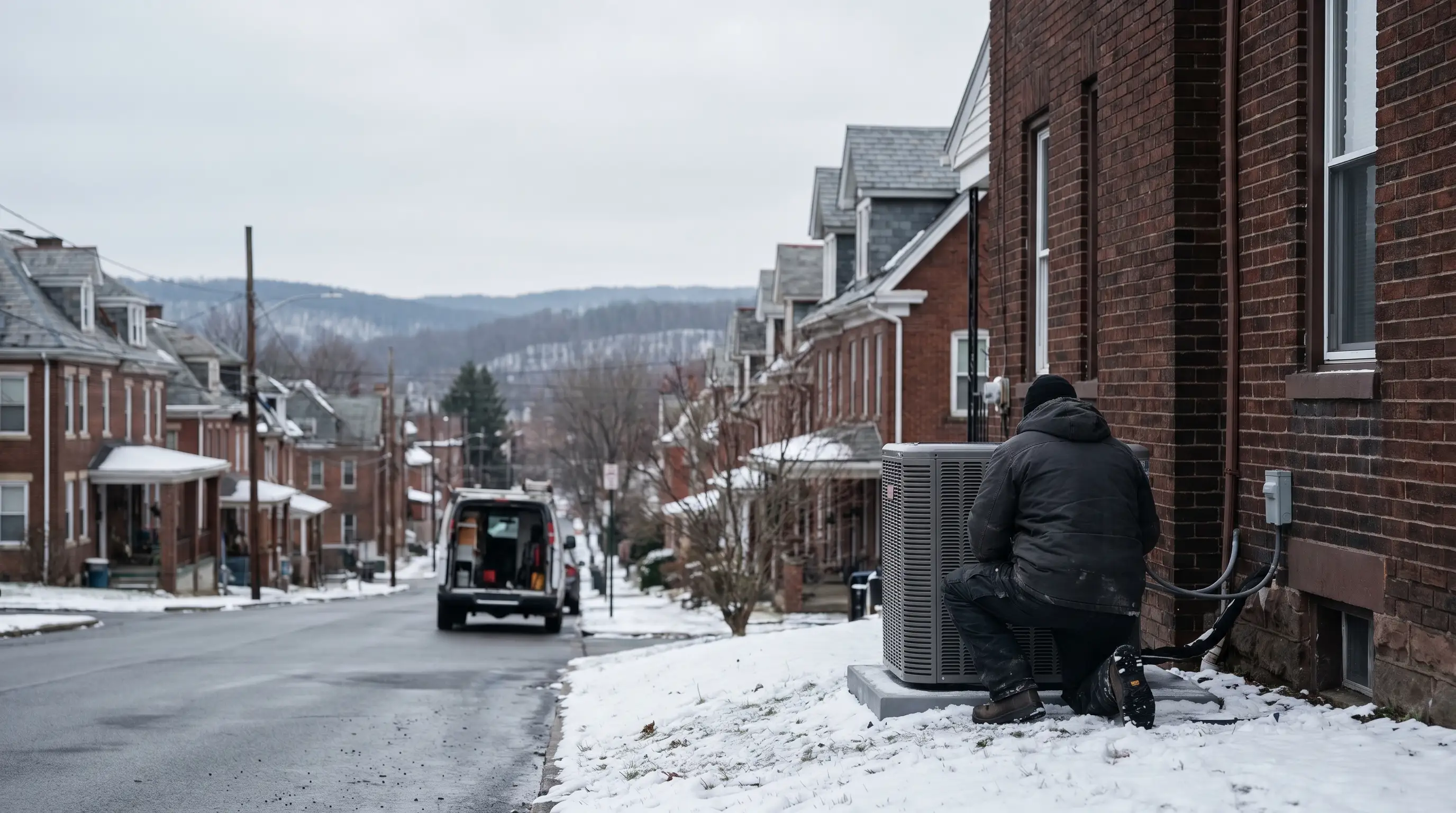
The October–November window is the highest-converting planning period in Scranton senior care. Families who deferred the care conversation through summer confront the reality of winter — reduced mobility, heating challenges in old housing, increased fall risk on icy Appalachian streets — and initiate searches in early October. Increasing monthly campaign budget by 25–40% during this period with winter-safety-themed messaging captures the planning surge before competitors recognize and respond to seasonal patterns.
Seasonal budget guidance for Scranton senior care campaigns:
- October–November: +25–40% above baseline. Winter planning surge. Lead messaging with fall prevention and winter safety angles.
- January–February: Full budget. Post-holiday health declines and weather-related incidents drive emergency in-home care searches.
- March–September: Standard baseline for in-home care. Maintain full memory care and assisted living budgets year-round — placement demand is event-driven, not seasonal.
Why Scranton Senior Care Providers Need Local PPC Expertise
Scranton's senior services market rewards campaign specificity that generic agency approaches and in-house accounts rarely achieve. Winning here requires understanding that the buyer is an adult child at a crisis moment — not the senior themselves — that the 378,000-person MSA is the true serviceable market, that Medicaid waiver eligibility messaging outperforms premium care positioning for working-class Scranton families, and that memory care and veterans care are the highest-converting, lowest-competition segments in the entire vertical. Getting these variables right from campaign launch determines whether a budget generates qualified family leads or burns on broad awareness terms where national brands already dominate.
MB Adv Agency's lead generation service builds senior care campaigns structured around decision-stage segmentation: separate campaigns for in-home care, assisted living placement, and memory care — each with dedicated landing pages, intent-matched messaging, and bid strategies calibrated to Scranton's CPL benchmarks. Geographic targeting extends across the full MSA so your campaign captures demand from Dunmore, Clarks Summit, Taylor, and all surrounding communities, not just Scranton's city limits.
See our pricing — our Growth Mode plan at $497/month handles campaigns under $3,000 monthly ad spend, the right starting configuration for in-home care agencies entering the Scranton market. For senior care businesses scaling to simultaneous assisted living and memory care campaigns, our Aggressive Push plan at $697/month manages $3,000–$10,000 in monthly spend across multiple service tracks. Our 98% client retention rate reflects the sustained performance that builds client pipelines month over month, not just in the first quarter. Visit our Scranton PPC service page to see how we structure campaigns for your specific market.
Frequently Asked Questions
How Much Should a Scranton Senior Care Business Spend on Google Ads?
A Scranton senior care business should budget $1,500–$3,000 per month for a competitive Google Ads campaign, with CPCs ranging from $7–$15 for in-home care keywords to $15–$40 for assisted living placement searches. At the senior care vertical's average conversion rate of 5–9%, a $2,000/month campaign generates 13–30 qualified inquiries per month. For in-home care agencies, average CPL runs $60–$150 — meaning each inquiry costs $60–$150 to acquire against a client generating $800–$3,000 per month in recurring revenue. The math justifies the spend decisively: a single in-home care client retained for 6 months pays back the monthly campaign budget 24–120× over the contract duration. Assisted living placement campaigns justify higher budgets — CPL of $200–$500 against a facility LTV of $36,000–$96,000 per resident makes the acquisition economics among the strongest in any healthcare service vertical in this market.
Budget timing matters as much as total spend. The October–November window is the highest-conversion planning period — families confronting winter realities initiate searches in earnest. Increase monthly budget by 25–40% in October with winter-safety messaging. January–February generates emergency care demand following weather incidents and post-holiday health declines; maintain full budget year-round for these months. Summer in-home care budgets can reduce 15–20% without significant lead loss, but memory care campaigns show no seasonality — maintain those at consistent levels year-round.
Assisted living placement campaigns require year-round presence at full budget. Placement decisions follow hospital discharge events, which are unpredictable — a campaign that goes dark for budget reallocation risks missing the highest-value conversion moment in the senior care vertical. For a placement that generates $36,000–$96,000 in facility revenue, a missed inquiry due to paused campaigns is the most expensive budget decision a senior care operator can make.
Which Google Ads Keywords Generate the Most Leads for Scranton Senior Care Providers?
The highest-performing senior care keywords in Scranton fall into three categories by buyer urgency: post-discharge immediate-need searches, active placement research, and proactive planning. Post-discharge searches — "in home care Scranton PA," "home health aide after hospital NEPA," "24-hour caregiver Scranton" — convert at 8–14% when campaigns route to availability-focused landing pages with above-the-fold phone numbers and same-day scheduling CTAs. These keywords run $7–$12 CPC and represent the highest lead volume per dollar in the senior care set because urgency compresses the decision cycle to hours. Active placement research keywords — "assisted living Scranton PA," "nursing home near me NEPA," "senior care facilities Lackawanna County" — run $15–$30 CPC and convert at 5–8%, requiring facility comparison content, cost transparency, and consultation scheduling. Proactive planning keywords run lower CPCs but attract earlier-stage researchers who need extended nurturing to convert.
Add to your negative keyword list immediately: "senior care jobs Scranton," "caregiver employment NEPA," "nursing home careers," "CNA training Scranton," and all job or careers variants. These searches are common in Scranton's healthcare-dominant market and consume real budget at zero conversion rate. Exclude information-seeking queries as well: "how to care for elderly parent at home" and "free senior care resources PA" indicate research behavior, not service-buying intent.
The memory care keyword set deserves a dedicated sub-campaign: "memory care facilities Scranton," "dementia care NEPA," "Alzheimer's care placement near me" run $10–$20 CPC with above-average conversion rates because families searching these terms are in acute crisis. A $400–$600/month sub-budget for memory care keywords generates 3–8 placement inquiries per month for providers with available beds — and at a facility LTV of $36,000–$96,000, three conversions from a $600 monthly budget is the kind of return that makes this segment the most important PPC investment in the Scranton senior care vertical.