Water Damage Restoration PPC Scranton, PA
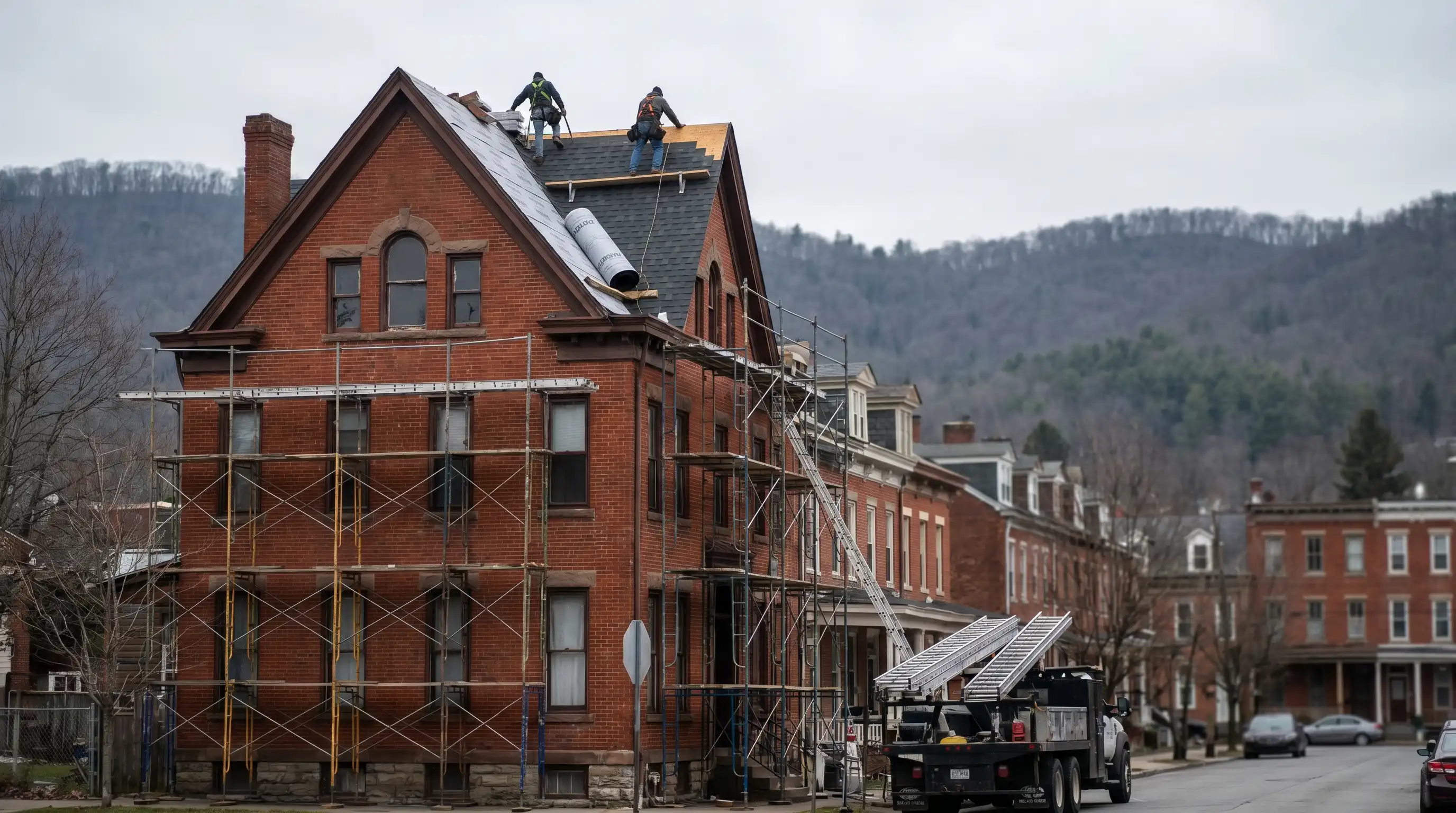
Scranton's freeze-thaw climate and pre-1940 housing majority — stone foundation walls, porous brick, and aged plumbing — create endemic baseline demand for water damage restoration, with frozen pipe bursts in January and spring snowmelt flooding generating the most predictable emergency surges. The challenge for local operators is competing against SERVPRO, ServiceMaster, and Paul Davis — national franchises with significant ad budgets, established Quality Scores, and Google Guaranteed badge status across the NEPA market.
Why Is Water Damage Restoration PPC So Competitive in Scranton, PA?
Water damage restoration is the most urgency-driven PPC vertical in home services — and also one of the most expensive to enter. Emergency search terms like "water damage restoration Scranton" run $45–$120 CPC in the Scranton market, discounted from major metro benchmarks of $91–$250+ but still among the highest CPCs in local services. At these costs, a campaign without tight structure — emergency terms isolated from non-emergency, LSA running in parallel, insurance messaging front and center — burns budget at a rate that produces losses rather than profit. Every click that doesn't convert is $45 to $120 gone, and the average restoration job at $3,500 only justifies those costs when conversion rates hold above 8%.
National Franchises with Market Incumbency
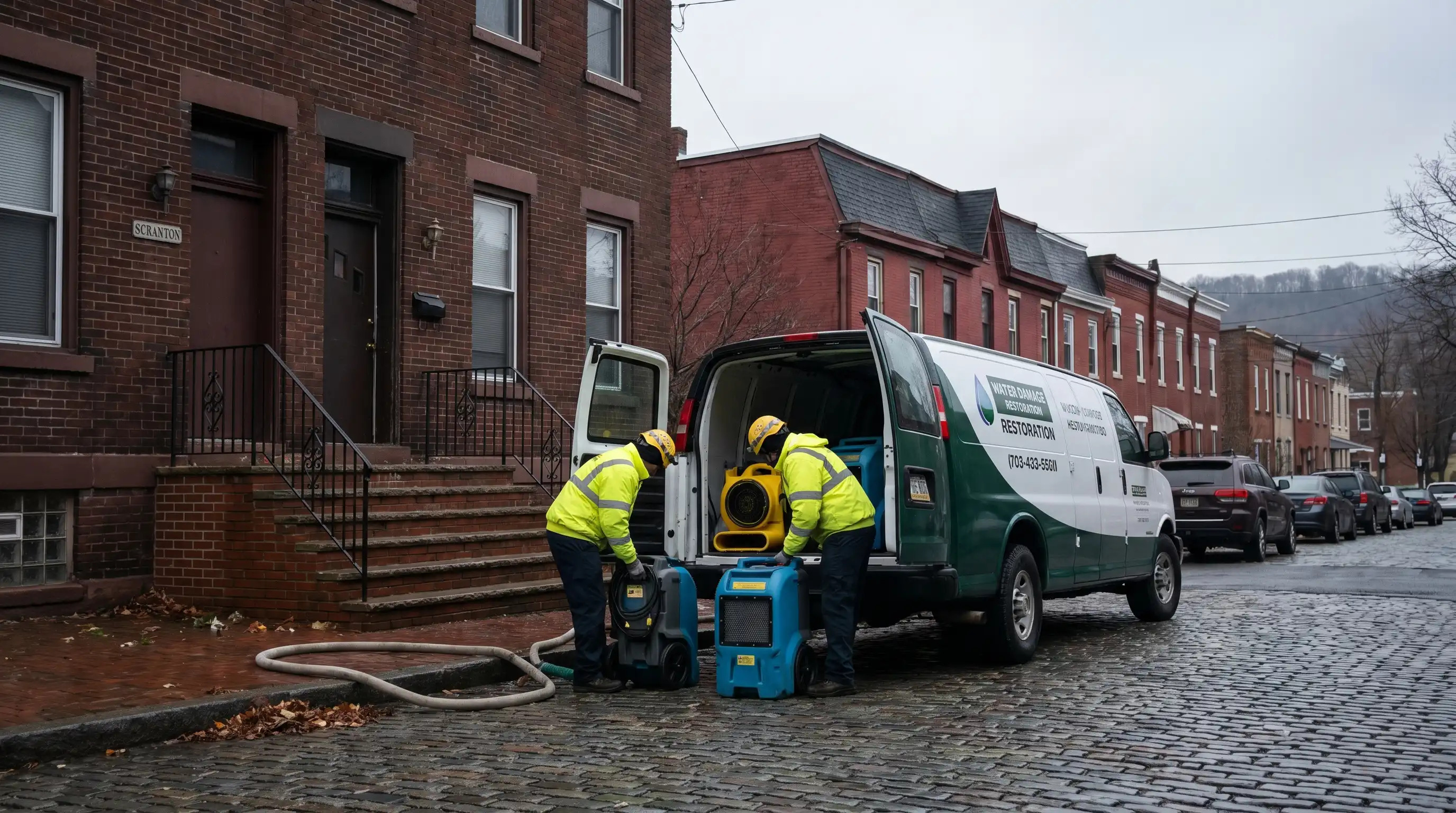
The Scranton restoration market is one of the more mature in northeastern Pennsylvania. SERVPRO operates a Scranton franchise with national brand support, centralized marketing, and Google Guaranteed badge status — the "green checkmark" placement that appears above standard PPC ads. ServiceMaster by Griffing holds strong local presence with residential and commercial restoration services. Paul Davis Emergency Services and Roto-Rooter Plumbing & Water Cleanup complete the national franchise presence. Local and regional operators — Integra-Clean & Dry, Damage Control, Tri State Flood Inc, and First General — compete on service quality and local responsiveness but face the brand recognition gap in the paid search auction.
National franchises carry structural advantages in this auction: centralized agency management, national-level Quality Score history on the brand, and marketing budgets that can sustain high-CPC categories across multiple markets simultaneously. Local operators who match them dollar-for-dollar on general terms lose. The winning strategy isn't symmetric competition — it's exploiting the gaps in franchise coverage.
Where Local Restoration Campaigns Break Down
The most common failure pattern in restoration PPC: all emergency terms run in a single campaign with a generic homepage destination. "Water damage emergency" and "mold remediation cost" are different buyer intents separated by weeks or months in urgency — bundling them wastes high-CPC emergency clicks on informational searchers while losing the emergency callers who need an immediate response commitment in the first headline. A mold remediation searcher has time to research; a homeowner with an inch of standing water in their basement is calling the first company that promises a technician within the hour.
Insurance messaging is consistently absent from local restoration campaigns. The research shows that restoration homeowners who hear "we work directly with your insurance company" convert at dramatically higher rates — yet most local PPC ads focus only on the service itself. Franchises like SERVPRO lead with insurance navigation because it eliminates the #1 conversion barrier: fear of dealing with the claim process alone.
Geographic targeting gaps also cost local operators. Scranton's freeze-thaw cycle affects the full MSA — Lackawanna, Luzerne, Wayne, and Monroe counties all generate water damage emergency searches. A campaign targeting only Scranton city limits misses a significant share of the serviceable emergency call volume.
Water Damage PPC Strategy for Scranton's Emergency-Driven Market
The highest-performing restoration campaigns in markets like Scranton use a three-track structure: emergency response (water damage, pipe burst, flooding), remediation follow-up (mold, structural drying), and insurance facilitation messaging woven throughout. Emergency response campaigns must run 24/7 with the fastest possible page load speeds — restoration homeowners are on mobile, panicked, and making a call within seconds of their first click. A landing page that loads in over 3 seconds loses calls to competitors regardless of ad quality.
Keyword Groups and CPC Ranges
- Emergency water damage: "water damage emergency Scranton," "flood cleanup NEPA," "water in basement emergency" — CPC $45–$120. Highest urgency, highest conversion. Run 24/7, no ad scheduling restrictions. Route to a landing page with phone number in H1, technician availability statement, and "response within 60 minutes" commitment.
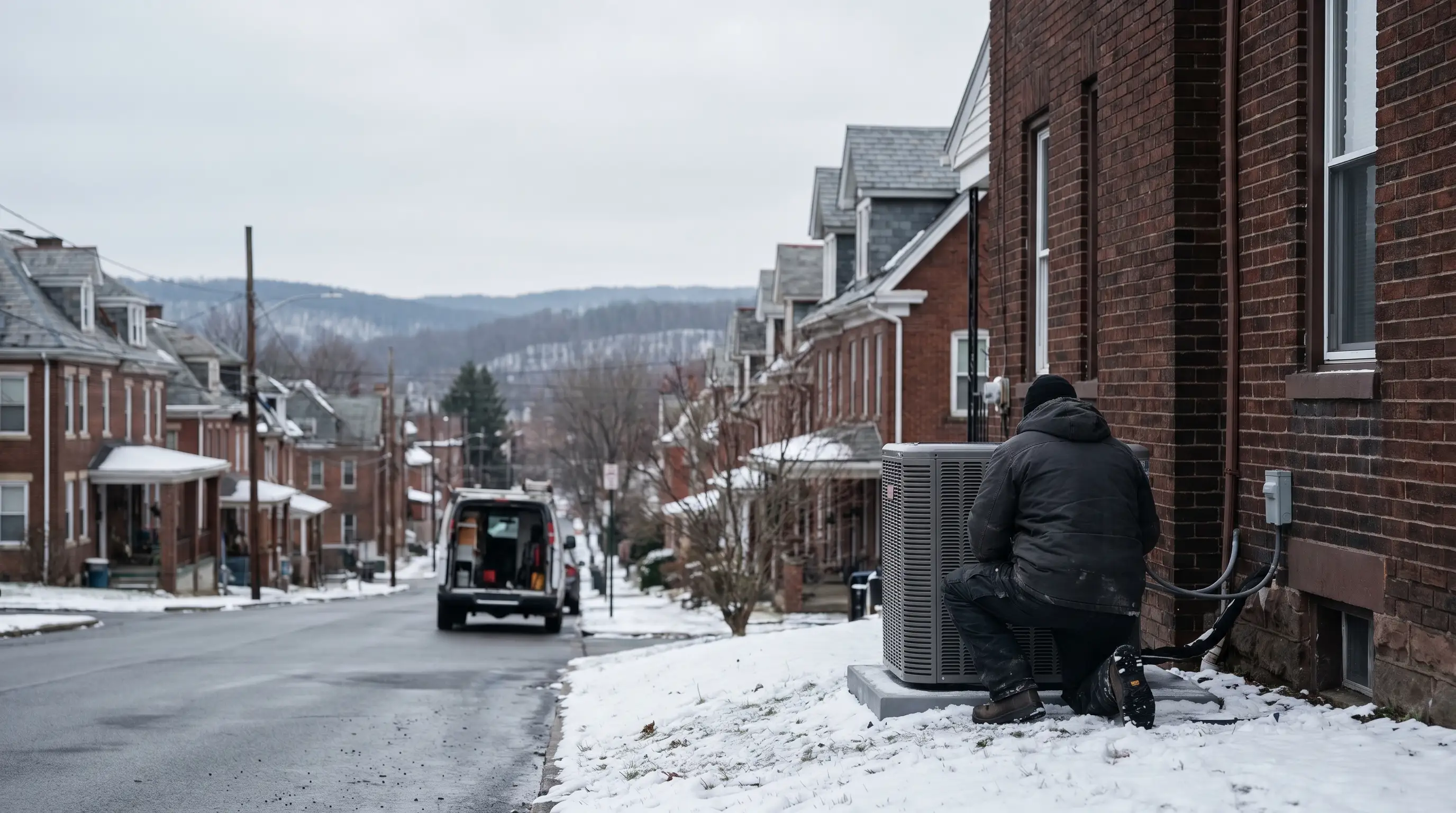
- Frozen pipe and burst pipe: "burst pipe water damage Scranton," "frozen pipe cleanup NEPA," "pipe burst flood cleanup" — CPC $35–$90. January–March surge window. Bid increases triggered by freeze-event forecasts below 20°F.
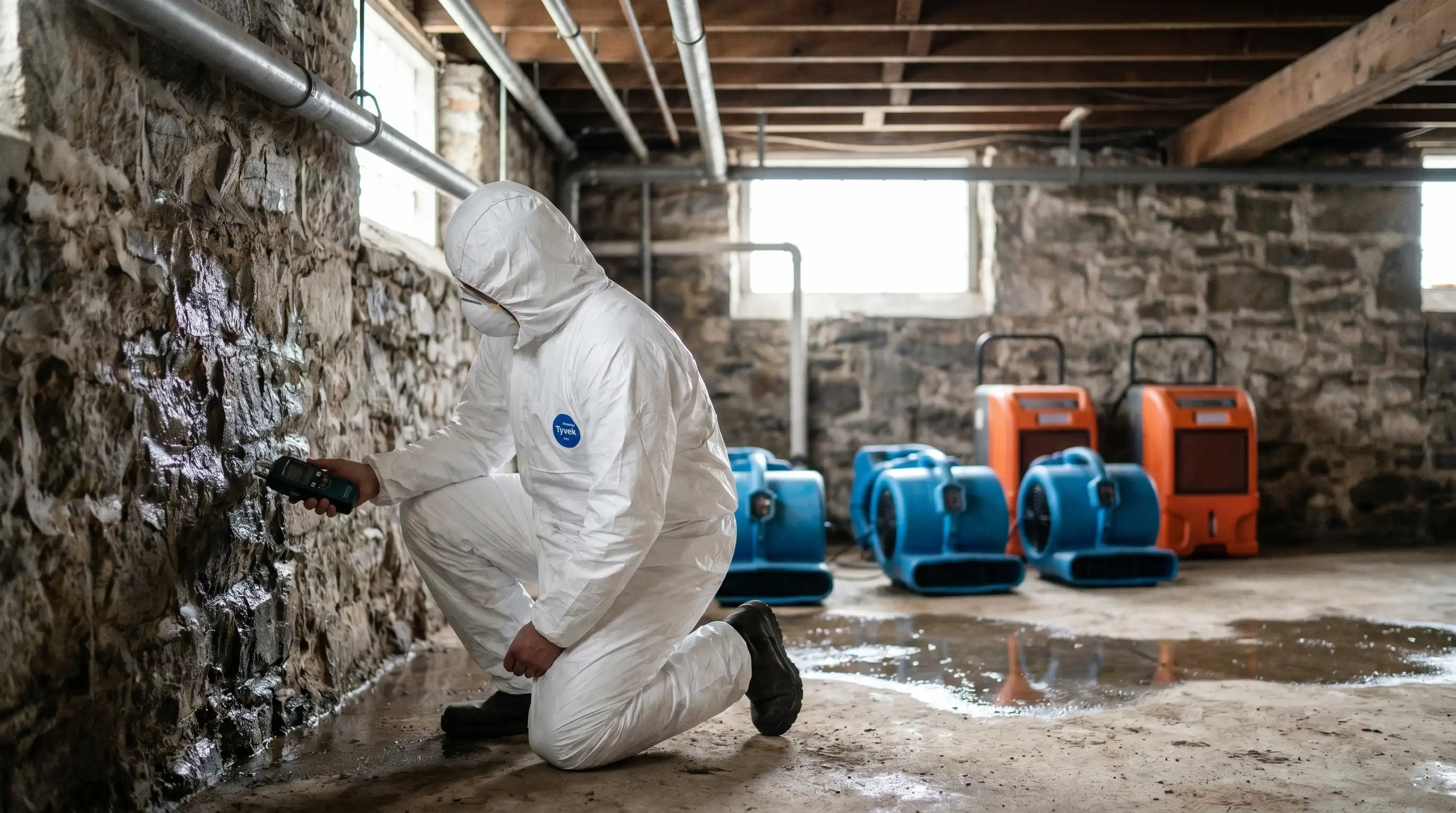
- Basement flooding: "basement flooding Scranton," "basement water intrusion NEPA," "flooded basement cleanup" — CPC $30–$70. Year-round for pre-1940 homes; peaks in spring snowmelt season (March–May). Specific to foundation water intrusion from stone and brick basement walls.
- Mold remediation: "mold removal after water damage Scranton," "mold remediation NEPA," "black mold removal" — CPC $25–$50. Lower urgency, higher research cycle. Captures post-water-damage homeowners who didn't use a restoration service immediately and now have secondary damage.
- Insurance claim navigation: "water damage insurance claim Scranton," "restoration company that works with insurance" — CPC $20–$40. Lower search volume, very high conversion rate. Captures homeowners whose primary concern is the claims process, not the service itself.
The LSA (Local Services Ads) channel is particularly high-value in restoration. Google Guaranteed badge placement above standard PPC ads carries significant trust weight for emergency callers who have never heard of your company and are making a rapid decision. LSA leads in restoration average $35–$100 per qualified call — substantially cheaper than the $150–$300 CPL range for standard Search campaigns in this category. Running LSA for emergency terms alongside Search campaigns for remediation and mold creates a dual-presence that covers both the instant-call segment and the research-stage segment at different cost structures.
Ad copy must lead with response speed and insurance support — not service descriptions. "Scranton Water Damage — Technician in 60 Minutes" and "We Bill Your Insurance Directly — SERVPRO Competitor" outperform generic restoration ads in CTR and conversion rate. Speed of response is the dominant purchase trigger in emergency restoration; insurance facilitation is the dominant conversion barrier eliminator.
Google Partner Agency
We're a certified Google Partner Agency, which means we don’t guess — we optimize withGoogle’s full toolkit and insider support.
Your campaigns get pro-level execution, backed by real expertise (not theory).

What Drives Water Damage Restoration Demand in Scranton Year-Round?
Scranton's restoration demand pattern isn't seasonal in the way roofing or HVAC is — it's multi-season, climate-driven, and structurally elevated by a housing stock that generates emergency calls in every month of the year. January brings frozen pipe bursts as temperatures drop below 17°F for sustained periods. March and April bring snowmelt infiltration as the ground thaws and historic stone foundations — porous, poorly waterproofed, and built 80+ years before modern waterproofing standards — can't contain the water table rise. June and July bring summer storm flooding. Basement water intrusion is year-round in pre-1940 homes. The restoration operator who runs a sustained, always-on campaign captures calls in every seasonal window; the one who pauses in "off-seasons" misses months of genuine emergency volume.
The Pre-1940 Foundation Crisis
Over half of Scranton's homes sit on stone-and-mortar or early concrete foundations built before World War II. These foundations were not designed to the waterproofing standards of modern construction — they absorb groundwater through mortar joints, develop cracks from decades of freeze-thaw cycling, and frequently lack functioning perimeter drains or sump systems. Basement flooding is endemic to North Scranton, the Hill Section, South Side, and most of the city's older neighborhoods. This creates a permanent baseline of restoration inquiry that doesn't require weather events to sustain — deferred maintenance and aging materials generate calls on their own schedule.
Seasonal Surge Windows and Freeze-Event Timing
- January–March (frozen pipe season): Sustained below-freezing temperatures cause pipe bursts in older plumbing systems. Average of 17°F January lows in Scranton creates predictable annual surge. Weather-triggered bid boosts 30–50% when overnight temps fall below 15°F capture the emergency call window at maximum conversion rate.
- March–May (snowmelt and spring rain): Ground thaw raises water table; stone foundations in pre-1940 homes saturate and fail. Basement flooding calls peak in this window — often the highest aggregate volume month for restoration in NEPA.
- June–August (summer storm season): Heavy precipitation events cause surface flooding and overwhelm aging storm drains in Scranton's older neighborhoods. Basement and crawlspace flooding from above-ground intrusion generates emergency restoration calls within hours of major rain events.
- Year-round mold follow-up: Homeowners who experienced water intrusion in any prior season and didn't fully dry the space face mold remediation needs 4–8 weeks after the original event. A mold remediation retargeting campaign or follow-up search campaign captures this secondary demand wave.
Why Local Restoration Operators Need Smarter PPC to Beat National Brands
SERVPRO and ServiceMaster win on name recognition in the Scranton market — but they don't win on every dimension that actually determines whether a homeowner calls. Local restoration operators can compete effectively on response time commitment, direct operator ownership, and insurance claim expertise — advantages that franchise models can't credibly claim with the same authenticity. The question is whether those advantages are communicated in the first two seconds of an ad impression.
MB Adv Agency's lead generation service builds restoration PPC campaigns that exploit the gaps in national franchise coverage. We structure emergency, remediation, and insurance navigation campaigns separately — each with purpose-built landing pages that speak directly to the specific homeowner situation. Insurance facilitation messaging, response-time commitments, and local-operator trust signals are front and center in every ad and landing page.
Our Plastic-Brick methodology eliminates budget waste on informational searches, DIY intent queries, and out-of-service-area impressions. For a restoration business operating in Lackawanna and surrounding NEPA counties, every dollar directs toward homeowner emergency calls — not searches that produce zero calls. See our pricing and request a free campaign audit — we'll show you exactly where your current restoration spend is going and what a restructured account delivers in this market. Our 98% client retention rate reflects the consistency that businesses in emergency-response verticals need.
Frequently Asked Questions
How Much Does Water Damage Restoration PPC Cost in Scranton, PA?
Water damage restoration Google Ads in Scranton costs $3,000–$6,000 per month for a competitive campaign, with CPCs ranging from $45–$120 for emergency water damage terms and $25–$50 for mold remediation searches. At the Scranton restoration market's average CPL of $150–$300 via standard Search campaigns and $35–$100 via LSA, a $4,500/month combined budget typically generates 15–30 qualified emergency calls monthly. For a business with a $3,500 average job value — the residential water damage average — and a 40% close rate on inbound calls, that's $21,000–$42,000 in monthly revenue opportunity. The strong case for restoration PPC is conversion rate: emergency intent searches convert at 8–12%, substantially above the home services average, because homeowners in an active emergency make a call within minutes of their first search rather than spending days in research mode.
The budget must be structured to cover true 24/7 delivery. Water damage emergencies happen at midnight on weekends — campaigns that use ad scheduling to reduce overnight spend miss a significant share of the highest-urgency calls. Keeping emergency campaigns fully active around the clock is non-negotiable for restoration businesses competing against national franchises that never go dark.
LSA (Local Services Ads) should run as a parallel investment, not a replacement for Search campaigns. The two channels capture different buyer moments: LSA gets the instant-call segment in the first position above standard ads; Search campaigns capture homeowners who clicked through to compare options. Running both simultaneously captures the full emergency funnel at the lowest blended CPL.
How Do Local Restoration Companies Compete with SERVPRO on Google Ads in Scranton?
Local restoration operators in Scranton can compete effectively against SERVPRO and other national franchises on Google Ads by targeting the three specific gaps where franchises are structurally weak: response time specificity, local ownership authenticity, and insurance navigation expertise. National franchises can't credibly promise "owner on-site within 60 minutes in Scranton" — a locally owned operator can. They can't claim deep knowledge of Lackawanna County insurance adjuster relationships — a company that's been handling NEPA claims for a decade can. Ad copy that leads with these specific, verifiable advantages ("Local-Owned — Scranton Technician On-Site in 60 Min," "We Handle Your Insurance Claim — No Stress") consistently outperforms generic "damage restoration" headlines in CTR and conversion rate, even when the local operator's brand is entirely unknown to the searching homeowner.
Geographic hyper-targeting is a second competitive lever. National franchises run broad-match campaigns across wide geographic areas, which means their ads sometimes appear for Scranton searches when their nearest technician is 45 minutes away. A local operator targeting Scranton and a defined service radius with specific neighborhood callouts in ad copy — "Serving North Scranton, Hill Section, South Side" — captures homeowners who want a genuinely local response and distrust the franchise promise of fast arrival.
Negative keyword discipline is the third lever. Franchises run large-scale campaigns and accept some wasted spend as a cost of scale. A local operator with a tight $3,000–$4,000 monthly budget can afford zero waste — building a 300+ negative keyword list from real search term data and reviewing it weekly creates a spend efficiency that erodes the franchise's scale advantage in the local auction.