
How Much Do Pinterest Ads Cost? CPC & CPM 2026

~48%
of Meta's average CPC
Pinterest avg. CPC $0.83 vs Meta $1.72 — DigitalApplied 2026
Pinterest CPM also runs below Meta ($9.20 vs $12.47). Platform reaches 631M monthly users globally (Pinterest Q1 2026 earnings). All figures are third-party vendor estimates — not mbadv client data.
How Much Do Pinterest Ads Cost? 2026 Ranges
Pinterest ads are priced at auction — there is no rate card, no platform subscription, and no published price list. What you pay is your bid against every other advertiser competing for the same Pinner at the same moment. Across named vendors, the typical cost per click (CPC) runs roughly $0.30–$1.50, CPM roughly $2–$10, and cost per conversion roughly $5–$30 depending on vertical and offer.
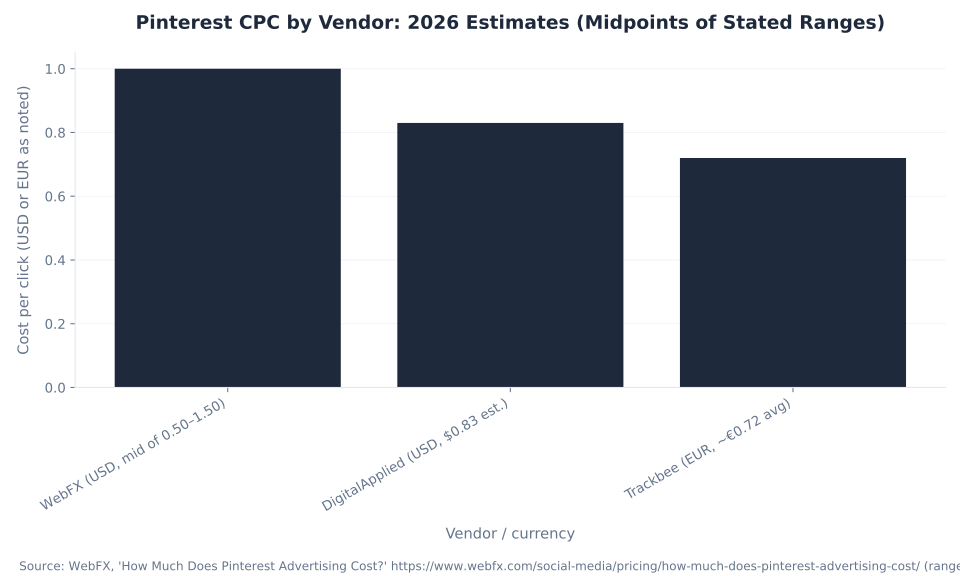
The range is genuine, not evasion. WebFX puts the editorial CPC benchmark at $0.50–$1.50. Trackbee cites €0.45–€1.30 with a vendor-stated average of ~€0.72. AdBacklog breaks it down by vertical: food and CPG brands pay $0.30–$0.60 per click, retail and fashion $0.50–$0.70, and finance advertisers at the high end $0.80–$1.50. Vendors use different account mixes, currencies, and date ranges — the directional picture is consistent even where exact figures disagree. A click on Pinterest most often lands well under a dollar to about a dollar-fifty, and your vertical is a stronger predictor of your cost than any single published average. That is the lead answer the rest of this guide unpacks.
One structural distinction sets Pinterest cost apart from most other platforms: your campaign objective determines not just the size of the bill but the unit you are billed in. Brand Awareness campaigns bill per thousand impressions (CPM, typically €3–€8 per Trackbee). Consideration campaigns — which absorb what used to be called Traffic — bill per click (CPC). Video Completion campaigns bill per view (CPV, roughly €0.13–€0.26 per Trackbee). Conversions and Catalog Sales campaigns bill per conversion or target return on ad spend (CPA/ROAS). Comparing a CPV of €0.13 to a CPC of $0.50 and calling one "cheaper" is a category error — they measure different outcomes. The table below gives the full range across all metrics; the Pinterest campaign objectives guide maps each objective to its billing model in full.
| Metric | 2026 range — vendor estimates, not a rate card | Source |
|---|---|---|
| Pricing model | Auction-based; you pay per result — CPM, CPC, CPV, or CPA by objective. No subscription / platform fee. | Trackbee / Pinterest |
| CPC (cost per click) | ~$0.30–$1.50 — WebFX: $0.50–$1.50; Trackbee: €0.45–€1.30 (avg ~€0.72); AdBacklog by vertical: $0.30–$0.60 (food/CPG) to $0.80–$1.50 (finance) | WebFX / Trackbee / AdBacklog |
| CPM (per 1,000 impr., Brand Awareness) | ~$2–$10 — Trackbee: €3–€8 editorial range; DigitalApplied cross-format avg: $9.20; Trackbee benchmark snapshot Jan 2026: ~$3.50 | Trackbee / DigitalApplied |
| CPV (cost per video view) | ~€0.13–€0.26 per view (Video Completion objective only) | Trackbee |
| Cost per engagement (CPE) | ~$0.10–$0.30 | WebFX |
| CPA / cost per conversion | Food/CPG ~$5–$8; beauty ~$7–$10; retail ~$7–$8; home décor ~$10+; finance ~$12–$15 — bottom-line ~$5–$30 by vertical | AdBacklog |
| CTR | ~0.15–0.25% (WebFX editorial); above ~0.5% = "solid" delivery (Trackbee) | WebFX / Trackbee |
| Conversion rate | ~2–4% general; 5–8% luxury / home goods; AOV ~50% higher than other social; 21–30-day purchase window | WebFX |
| vs Meta (positioning) | Pinterest CPC ~48% of Meta's ($0.83 vs $1.72); CPM ~26% below Meta ($9.20 vs $12.47); CPM also 30–50% below Meta by Trackbee's framing | DigitalApplied / Trackbee |
Sources: WebFX, "How Much Does Pinterest Advertising Cost?" webfx.com; Trackbee, "Pinterest Ads Cost in 2026" trackbee.io; AdBacklog, "Pinterest Ads Benchmarks per Industry (2025)" adbacklog.com; DigitalApplied, "Pinterest Statistics 2026" digitalapplied.com. All figures are third-party vendor estimates — not official Pinterest rates and not mbadv client data. Vendors quote in different currencies (€ vs $); present all as ranges.
Pinterest CPC runs at roughly 48% of Meta's cost per click — $0.83 vs $1.72 in a 2026 cross-platform comparison (DigitalApplied). On CPM, Pinterest also trails Meta: $9.20 vs $12.47. That cost gap, combined with a 631M-user audience in active planning mode, is the channel's core efficiency argument for DTC and visual-discovery brands.
Key Takeaways
- Auction pricing, no flat fee. Pinterest ads are priced entirely by auction. There is no subscription, no platform fee, and no published rate card. Cost is your bid vs. competing advertisers for the same audience.
- CPC: $0.30–$1.50 across vendors. WebFX cites $0.50–$1.50; Trackbee €0.45–€1.30 (avg ~€0.72); AdBacklog puts food/CPG at the low end ($0.30–$0.60) and finance at the high end ($0.80–$1.50). All are estimates.
- CPM: $2–$10 depending on format and season. Trackbee's editorial range is €3–€8; DigitalApplied's cross-format average is $9.20. Vendors disagree most on CPM because format mix and seasonality drive wide variation.
- CPV: ~€0.13–€0.26 per video view for Video Completion campaigns (Trackbee). Performance+ bidding only — no custom bid available for this objective.
- CPA by vertical: $5–$30. Food/CPG ~$5–$8; beauty ~$7–$10; retail ~$7–$8; home décor ~$10+; finance ~$12–$15 (AdBacklog 2025).
- Pinterest CPC is ~48% of Meta's. One 2026 cross-platform comparison (DigitalApplied) puts Pinterest at $0.83 vs Meta's $1.72. CPM runs 30–50% below Meta (Trackbee). The advantage is consistent across sources in direction if not magnitude.
- Objective determines your billing unit. Brand Awareness = CPM; Video Completion = CPV; Consideration = CPC; Conversions = CPA; Catalog Sales = CPA or ROAS. Comparing CPV to CPC as "cheaper" is a category error.
- The starting-budget rule: 4–5× your target CPA per day. A €10 CPA target needs €40–€50/day. Below that floor, the campaign starves its conversion signal and costs rise, not fall (Trackbee).
- Start on automatic (Performance+) bidding. For the first ~30 days, automatic bidding delivers a lower average CPC while the system learns. Switch to custom bidding once you have 50+ conversions and a margin to defend.
- Audience quality amplifies the CPC advantage. 96% of Pinterest searches are unbranded; AOV runs ~50% higher than other social; purchase window is 21–30 days. Planning intent converts Pinterest's cheaper click into meaningful cost-per-outcome efficiency (WebFX).
$0.30–$1.50
CPC range (vendor estimates)
$2–$10
CPM range (awareness campaigns)
$5–$30
CPA by DTC vertical
631M
Global MAU, Q1 2026
Pinterest Ad Cost by Industry Vertical (2026)
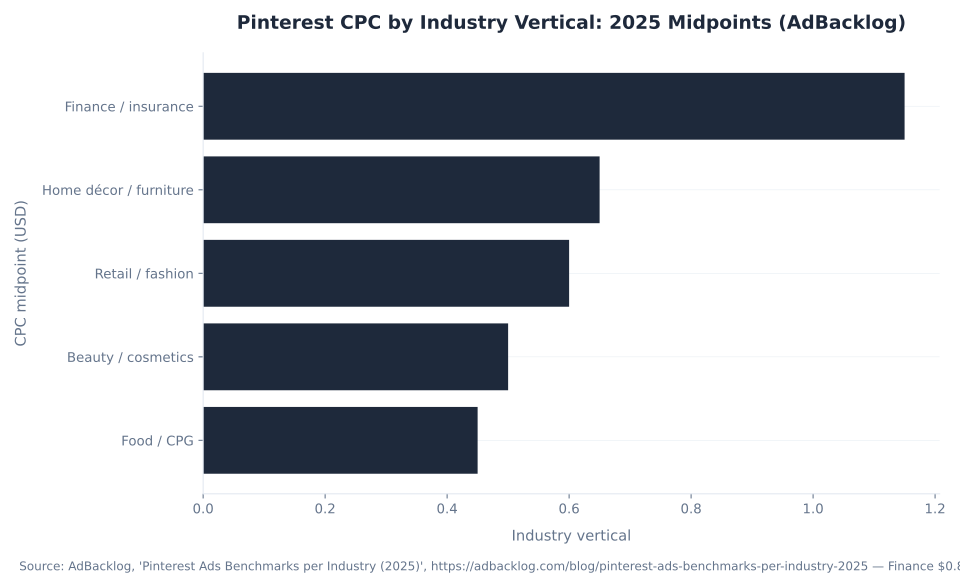
Not all verticals cost the same on Pinterest. The categories with the strongest Pinterest cultural fit — food, beauty, and fashion — also sit at the cheaper end of the CPC scale, while finance and high-AOV home décor sit at the top. The vertical spread runs from $0.30 per click (food/CPG) to $1.50 (finance), a 5× range on a single platform.
The data below comes from AdBacklog's 2025 Pinterest industry benchmark report (USD), with home décor and fashion CPC cross-checked against Pinwell Media's vertical benchmarks. These are directional estimates derived from aggregated advertiser accounts — not mbadv client data and not official Pinterest figures. The pattern holds across sources: Pinterest's core DTC verticals sit below $0.70/click, which is what makes the platform economically compelling for visual-discovery brands.
| Vertical | Typical CPC (USD) | Typical CPM (USD) | Typical CPA (USD) | CVR | Source |
|---|---|---|---|---|---|
| Food / CPG / beverage | $0.30–$0.60 | ~$2.00–$3.00 | ~$5–$8 | ~2.5–3.0% | AdBacklog / Pinwell |
| Beauty / cosmetics | $0.40–$0.60 | ~$2.50 | ~$7–$10 | ~1.5–2.0% | AdBacklog / Pinwell |
| Retail / fashion / ecommerce | $0.50–$0.70 | ~$3.00 | ~$7–$8 | ~2.0% | AdBacklog / Pinwell |
| Home décor / furniture | $0.50–$0.80 | ~$3.00–$4.00 | ~$10+ | ~1.0–1.5% | AdBacklog / Pinwell |
| Finance / insurance (highest) | $0.80–$1.50 | ~$5.00+ | ~$12–$15 | ~0.5–1.0% | AdBacklog / Trackbee |
Sources: AdBacklog, "Pinterest Ads Benchmarks per Industry (2025)" adbacklog.com; Pinwell Media, "Pinterest CPC Benchmarks by Industry" pinwellmedia.com; Trackbee trackbee.io. All USD. 2025 AdBacklog data — re-verify at publish if 2026 edition is live. CVR and CPM figures are directional estimates. Not mbadv client data.
Food and CPG brands running food & beverage PPC or food and grocery DTC campaigns get the cheapest CPCs on the platform ($0.30–$0.60) and the strongest CVRs (~2.5–3.0%). Pinterest over-indexes for recipe and meal-planning content, which creates dense, qualified inventory for food advertisers at lower auction pressure than fashion or home.
Finance is the clear outlier: high CPC ($0.80–$1.50), low CVR (~0.5–1.0%), and high CPA ($12–$15) make Pinterest materially less efficient than Google Search for financial-services advertisers. The platform's planning-intent audience is in visual-discovery mode, not financial-research mode. Brands in finance allocating Pinterest budget should treat it as a brand-awareness play (CPM objective) rather than a direct-response channel.
Home décor and furniture brands operate in Pinterest's highest-AOV sweet spot: CPCs of $0.50–$0.80 with a 21–30-day purchase window and average order values that dwarf most other social categories. For home decor PPC and furniture PPC advertisers, Pinterest's intent-rich audience justifies the higher-than-food CPC.
Pinterest vs Meta, TikTok, and LinkedIn: Platform Cost Comparison
One 2026 cross-platform comparison (DigitalApplied) shows Pinterest CPC at $0.83 — roughly 48% of Meta's $1.72, 80% of TikTok's $1.04, and 15% of LinkedIn's $5.40. CPM follows the same pattern: Pinterest at $9.20 vs Meta at $12.47 and TikTok at $10.18. All four figures come from a single source to avoid cross-vendor methodology mismatches in a side-by-side table.
Trackbee frames the gap differently: Pinterest CPM runs 30–50% below Meta overall. The two sources reach the same directional conclusion through different lenses — DigitalApplied uses a cross-format average across accounts, while Trackbee uses an editorial range. Both point to a consistent Pinterest cost advantage vs Meta of roughly one-third or more on CPM.
| Platform | Avg CPC (USD) | vs Pinterest CPC | Avg CPM (USD) | vs Pinterest CPM |
|---|---|---|---|---|
| $0.83 | — | $9.20 | — | |
| TikTok | $1.04 | +25% vs Pinterest | $10.18 | +11% vs Pinterest |
| Meta (Facebook + Instagram) | $1.72 | +107% vs Pinterest | $12.47 | +35% vs Pinterest |
| $5.40 | +551% vs Pinterest | $33.80 | +267% vs Pinterest |
Source: DigitalApplied, "Pinterest Statistics 2026: 130+ Marketing Data Points" digitalapplied.com. All four platform figures from one source for cross-platform methodological consistency. All USD. DigitalApplied methodology (account mix, date range, regional scope) is not fully disclosed — treat as directional, single-source estimates. Not mbadv client data.
The CPC advantage is real and consistent across sources. The question a DTC brand should ask is not "is Pinterest cheaper than Meta?" (it is) but "does Pinterest's lower CPC translate to a lower cost per outcome for my specific offer?" The answer depends on conversion rate and average order value — both of which are covered in the planning-intent section below. For the full head-to-head breakdown of audience, ROAS, and channel fit, see Pinterest ads vs other social media ads.
LinkedIn's $5.40 CPC and $33.80 CPM are included for context: Pinterest is not competing for B2B advertisers. The cost gap vs LinkedIn ($0.83 vs $5.40) reflects entirely different audience contexts — Pinterest's 631M visual-discovery users are not LinkedIn's professional network. DTC brands in fashion, beauty, and home décor comparing Pinterest to Meta are the relevant comparison; LinkedIn is a data reference point, not an alternative channel for these verticals.
The Five Factors That Set Your Pinterest Ad Cost
Five variables determine what you actually pay on Pinterest. Your objective determines the billing unit. Your bid type determines how aggressively you chase that unit. Targeting determines how much competition you face. Category determines the baseline auction pressure. Season determines when that pressure peaks. Together, they explain why "Pinterest CPC" is not one number.
1. Campaign Objective — the Billing Unit
Your objective determines whether you pay per impression, per click, per video view, or per conversion. Pinterest's five current campaign objectives are Brand Awareness (billed CPM), Video Completion (billed CPV), Consideration (billed CPC — this objective absorbs what used to be called Traffic), Conversions (billed CPA), and Catalog Sales (billed CPA or ROAS). Picking the wrong objective for your goal produces the wrong billing unit — a brand running a Conversions campaign when they need awareness traffic pays per conversion action rather than per impression or click, making the efficiency comparison meaningless. Objective selection is the first and largest cost lever. See Pinterest campaign objectives for the full decision framework.
2. Bid Type — Automatic vs Custom
Pinterest offers two bidding modes: automatic (Performance+) and custom. Automatic bidding is Pinterest's managed mode — the system updates bids several times per day to get the most results at the lowest cost within your budget, per Pinterest's own bid documentation. Trackbee reports that automatic bidding tends to deliver a lower average CPC in the first ~30 days while the algorithm learns which placements and audiences convert. Custom bidding — setting a max CPC, max CPM, or target CPA — is more precise but requires conversion data to calibrate. Setting a manual max CPC before the algorithm has signal produces constrained delivery at no cost advantage.
3. Targeting Breadth — Competition at the Auction Level
Broad interest-based targeting generates more auction competition than tight keyword or actalike audiences. "Actalike" is Pinterest's term for its lookalike-style audience product — it finds new users who behave like your existing customers without requiring an uploaded seed list. Narrow, high-intent keyword audiences reduce competition and can lower CPC, but they also reduce reach. For new advertisers, starting broad (interest targeting) and tightening once you identify which audience segments convert is the standard approach. See Pinterest ads targeting for the full targeting architecture and its cost implications.
4. Category Competition — Vertical Auction Pressure
Finance and high-AOV home décor sit at the top of Pinterest's CPC range ($0.80–$1.50 per AdBacklog); food/CPG, beauty, and retail sit at the cheaper end ($0.30–$0.70). The gap reflects both supply (how many advertisers compete for the category) and bid aggressiveness (how much a conversion is worth to the winning bidder). A DTC brand in organic and natural products competes in a lower-pressure environment than a bank advertising a rewards card — the auction economics are structurally different even on the same platform.
5. Season — When Auction Pressure Peaks
Q4 and spring consistently drive CPM increases on Pinterest. Trackbee's ad-cost benchmark data shows Pinterest CPM increased ~21% YoY in Q4 2024, with holiday peaks pushing CPM from a typical $2–$5 to $4–$7. January is historically the cheapest month on the platform post-holiday. Spring (February–May) drives secondary peaks in home-planning and wedding-adjacent categories. Brands in subscription boxes and jewelry see Valentine's Day as a distinct spike. Planning seasonal CPM buffers — not just a flat annual budget — is the structural adjustment that prevents Q4 cost surprises.
MB Adv Agency has found that new Pinterest advertisers most often underestimate seasonal CPM pressure. A campaign that runs efficiently in Q2 at $3.50 CPM can cost $5–$7 CPM in November and December — a 40–100% increase in impression cost for the same audience. Building a Q4 CPM buffer into the annual plan is not conservative budgeting; it is accurate planning.
Pinterest CPC by Vendor: 2026 Estimates (Midpoints of Stated Ranges)
Pinterest Bidding Strategies: Automatic vs Custom by Objective
Pinterest's bidding system ties bid type directly to campaign objective. The table below maps each objective to its billing unit and available bid options. The practical decision — automatic first, custom later — is less about control than about timing: automatic bidding collects the data custom bidding needs to be meaningful.
| Objective | You pay by | Bid options | Note |
|---|---|---|---|
| Brand Awareness | CPM (impressions) | Automatic (Performance+) or custom max CPM | — |
| Video Completion | CPV (~€0.13–€0.26/view) | Performance+ only — no custom bid | Trackbee |
| Consideration (incl. Traffic) | CPC (pin / outbound clicks) | Automatic (Performance+) or custom max CPC | Performance+ required for outbound clicks |
| Conversions | CPA (checkout / signup / add-to-cart) | Automatic (Performance+) or custom target avg CPA | — |
| Catalog Sales | CPA / ROAS | Performance+ (incl. Performance+ ROAS bidding) or custom CPA | Beta: median +10% ROAS |
| ★ When to use automatic | — | First ~30 days while system learns placement and audience data | Lower avg CPC in learning phase (Trackbee) |
| ★ When to use custom | — | After 50+ conversions / 30 days of data — once you have a margin to defend | Trackbee / Pinterest |
Sources: Pinterest Business Help, "Select a campaign objective" help.pinterest.com; Pinterest Business Help, "Set and edit your bid" help.pinterest.com; Pinterest Business Blog, "Smart bidding for Pinterest Shopping" business.pinterest.com (Performance+ ROAS bidding; beta median +10% ROAS); Trackbee trackbee.io (automatic lower avg CPC first 30 days). Objective names and bid availability are subject to Pinterest product changes — verify in live Ads Manager before launch.
Automatic bidding (Performance+) is Pinterest's fully managed mode. The system updates bids multiple times per day to spend your full budget at the lowest possible cost per result. No manual bid to set — Pinterest manages the auction position dynamically against competing advertisers. This mode tends to produce lower average CPC in the first 30 days because the algorithm is free to discover which placements and audience segments convert best for your specific creative and offer.
Performance+ ROAS bidding is available on Catalog Sales campaigns and adds a value-based dimension: instead of optimizing purely for conversion count, the system predicts the checkout value of each click and bids higher for transactions expected to generate more revenue. Pinterest's own beta data shows median +10% ROAS improvement vs standard bidding among participants. This is Pinterest-reported data, not mbadv client figures — but the directional case for value-based optimization on high-AOV catalog campaigns is sound.
Custom bidding earns its place once conversion data exists. Setting a custom max CPC of $0.80 or a target CPA of $15 constrains the auction, but the constraint only saves money if Pinterest's algorithm already knows which audiences are efficient. Without that signal (before ~30 days and ~50 conversions), a custom cap limits delivery to the cheapest placements rather than the most efficient ones. For Pinterest optimization at scale, the right sequence is automatic → validate → custom.
MB Adv Agency consistently sees new Pinterest campaigns perform better in the first month on automatic bidding than with manual bids set from day one. The algorithm needs conversion signal before custom constraints are calibrated to anything meaningful. Setting a max CPC on day one is setting a constraint without a reference point — and typically limits delivery before the system has earned the right to be constrained.
Pinterest vs Meta, TikTok & LinkedIn: Average CPC (USD, DigitalApplied 2026)

Pinterest Ad Budgets: Daily vs Lifetime and the Starting-Budget Rule
Pinterest supports both daily and lifetime budgets at the campaign and ad-group level. The structural choice between them matters less than the amount — and the most common budget mistake is setting a number too small for the campaign to optimize, which raises cost per result rather than lowering it.
| Item | Detail | Source |
|---|---|---|
| Daily budget | Supported at campaign / ad-group level. Best for always-on, evergreen delivery. Editable at any time. | Pinterest Help |
| Lifetime budget | Supported. A single total paced across a set flight. Best for a fixed-window push — a sale event, product launch, or seasonal window. | Pinterest Help |
| Test budget floor | ~$10–$50/day (~€9–€45). Conversion campaigns need ≥ ~€18/day or they starve the learning phase. | Trackbee |
| ★ Starting-budget rule | Set daily budget to ~4–5× your target CPA. A €5 CPA target → ~€20–€25/day. Below this floor the campaign can't gather enough conversion signal to optimize. | Trackbee |
| Test window / total | Run a real test 2–4 weeks. ~€500–€1,500 total is a typical Shopify-brand test window before judging results. | Trackbee |
| What most businesses spend/month | Survey: ~37.7% spend $0–$100/mo; ~22.1% $101–$500/mo; ~13.1% $501–$1,000/mo; ~19% over $5,000/mo | WebFX |
| % of total ad spend on Pinterest | 68% of businesses allocate 0–30% of their overall ad spend to Pinterest | WebFX |
Sources: Pinterest Business Help, "Campaign objectives" help.pinterest.com (daily and lifetime budgets at campaign/ad-group level); Trackbee, "Pinterest Ads Cost in 2026" trackbee.io (€9–€45/day test floor; €18/day conversion minimum; 4–5× CPA rule; 2–4-week / €500–€1,500 test total); WebFX, "How Much Does Pinterest Advertising Cost?" webfx.com (monthly spend survey; ad spend allocation). Not mbadv client data. Do not assert a hard "$X minimum" — present the 4–5× CPA rule and test floor as practitioner guidance.
The 4–5× CPA budget rule is not arbitrary. At a $10 CPA target and 3% CVR, each conversion requires about 33 clicks. At 5 conversions per day (the minimum for stable daily optimization), the campaign needs 167 clicks — and at $0.50 CPC, that is $83/day. Setting $40–$50/day (4–5× the $10 CPA) approximates that volume while leaving room for auction efficiency. Below $40/day, the campaign collects under 3 signals per day and Pinterest's algorithm is effectively guessing on bid placement — which produces worse cost-per-result, not better.
Daily vs lifetime: Daily budgets work best for always-on brand-building and product-discovery campaigns where you want consistent delivery week over week. Lifetime budgets fit better for defined pushes — a Q4 sale window, a new product launch, a Valentine's Day campaign. Pinterest paces a lifetime budget across the flight, which avoids the risk of burning through a fixed budget too fast in early days. For skincare brands running a product-launch push or activewear brands running a New Year campaign, lifetime budget on a 3–4 week flight is the standard approach.
The WebFX survey showing ~37.7% of businesses spending $0–$100/month reflects the broad spectrum of Pinterest advertisers — including many who are testing or inactive. For a DTC brand running a structured Conversions or Catalog Sales campaign with a real CPA target, $0–$100/month is not a functional budget. A $100/month total gives $3.33/day — well below the €18/day minimum for a conversion campaign to reach its learning phase. This does not mean Pinterest requires a large budget; it means under-budgeting is the most common structural mistake.
Pinterest CPC by Industry Vertical: 2025 Midpoints (AdBacklog)
Seasonal Pinterest Ad Costs: When CPMs Rise and Fall
Pinterest CPM is not flat year-round. Four seasonal patterns repeat across the platform's auction data, and DTC brands that plan around them avoid the most common Q4 budget shortfall: setting a flat monthly budget that was calibrated in Q2 and then fails to cover Q4 auction pressure.
| Season / Period | CPM pressure | vs baseline | Note |
|---|---|---|---|
| Q4 holiday (Oct–Dec) | High | +21% YoY in Q4 2024 | Holiday peaks push CPM to $4–$7; every DTC brand runs Q4 campaigns simultaneously |
| Valentine's Day / spring (Feb–May) | Moderate–high | Varies by vertical | Wedding, home-planning, and gifting intent spikes; jewelry and home décor most affected |
| January | Low | Historically lowest post-holiday | Cheapest month for testing new audiences and creative at minimal CPM |
| Q2 evergreen (Apr–Jun) | Baseline | Near average | Stable, predictable. Good window for creative testing and audience expansion. |
Source: Trackbee, "Ad Cost Benchmarks 2026: What Paid Ads Cost by Platform" trackbee.io/blog/ad-cost-benchmarks — Pinterest CPM ~$3.50 in January 2026 cross-platform snapshot; Q4 2024 CPM +21% YoY; holiday peaks $4–$7; January historically lowest post-holiday. Platform-wide aggregate signals, not Pinterest-account-specific data. Not mbadv client data.
For brands in fashion, home décor, and jewelry, Q4 is both the highest-cost and highest-priority season — creating a tension between the need to be present when purchase intent peaks and the reality that CPMs also peak then. The practical resolution: front-load audience building and creative testing in Q2 and Q3 so that Q4 campaigns launch with warmed audiences, not cold ones. Acquisition cost in Q2 at $3–$4 CPM is materially cheaper than acquisition in November at $6–$7 CPM.
January deserves more strategic attention than most DTC brands give it. Post-holiday CPM drops to near-yearly lows, and Pinners are in a planning mindset — New Year, home refresh, fitness goals — that aligns well with home décor, activewear, and organic products categories. A brand that budgets January as a low-priority month is passing on the cheapest testing window of the year.
MB Adv Agency's planning recommendation for DTC brands: model three CPM scenarios — Q4 peak ($4–$7), shoulder season ($2.50–$4), and low season ($2–$3) — and allocate monthly budget accordingly rather than using a flat monthly cap. Blending the three scenarios into a seasonally-weighted annual budget plan prevents both the under-investment problem (spending too little in Q4 when intent peaks) and the over-spend problem (setting a Q4-level CPM budget for January campaigns).
Pinterest Ad Format Costs: CPM by Format Type
Not all Pinterest ad formats cost the same per thousand impressions. DigitalApplied's 2026 format-level data shows a range from Standard ads at $8.40 CPM to Premiere Spotlight at $22.40 CPM — a near-3× difference on the same platform. Format choice is a cost lever that most advertisers ignore, defaulting to standard image ads without considering whether a Shopping or Carousel format delivers a better CPA at a higher CPM.
| Ad Format | Avg CPM (USD) | Best for | Note |
|---|---|---|---|
| Standard ads | $8.40 | Brand awareness, always-on discovery | Lowest CPM — entry point for most advertisers |
| Carousel ads | $9.80 | Multi-product showcase, lifestyle storytelling | +17% vs Standard on CPM; strong for fashion and home décor |
| Idea ads | $10.10 | Brand storytelling, tutorials, inspiration sequences | Formerly "Idea Pins" — that is the retired 2023 organic format name; "Idea ads" is the current paid format |
| Shopping / Catalog ads | $11.20 | Direct-response DTC, feed-based product ads | Higher CPM, but catalog ads achieve 35% lower CPA than standard shopping ads (DigitalApplied) |
| Premiere Spotlight | $22.40 | Brand launches, major campaign moments | Premium placement at the top of Home Feed for a 24-hour window — reserved buy |
Source: DigitalApplied, "Pinterest Statistics 2026: 130+ Marketing Data Points" digitalapplied.com. The $9.20 overall CPM cited in the platform comparison table is a cross-format average; individual formats vary $8.40–$22.40. The 35% lower CPA for catalog ads is DigitalApplied's figure — not mbadv client data. Verify format availability for your objective in live Ads Manager; not all formats are available for all objectives.
Shopping / Catalog ads at $11.20 CPM vs the $8.40 Standard rate: The 33% CPM premium is offset, per DigitalApplied's data, by a 35% reduction in CPA vs standard shopping formats. A DTC brand spending $11.20 CPM on Catalog ads and achieving $9.75 CPA is ahead of the same brand spending $8.40 CPM on Standard ads and achieving $15 CPA. The CPM is not the efficiency metric — CPA is. For brands in furniture, beauty products, and footwear with structured product feeds, Catalog ads are the higher-CPM, lower-CPA option.
On format naming precision: "Idea Pins" is the retired 2023 name for an organic Pinterest feature that no longer exists as a standalone content format. The current paid format is "Idea ads" — sequential visual storytelling that supports both awareness and Consideration objectives. Confusing the two produces planning errors: advertisers who read "Idea Pins" in older guides are reading documentation for a retired format. The active ad inventory for multi-scene storytelling is Idea ads, not Idea Pins.
Direct Links — on eligible Consideration and Catalog Sales campaigns, Direct Links is the default and cannot be disabled. A user who clicks an eligible ad goes directly to your landing page or product page without an intermediate close-up view. This changes the click-through economics: fewer close-up interactions, more direct traffic, and typically higher conversion rates for high-intent offers. Brands running Catalog ads in home décor or fashion with optimized product pages benefit from Direct Links' removal of friction in the click-to-purchase path.
Why Pinterest's Cheaper Click Produces Efficient Outcomes
A lower CPC is only worth citing if it translates to lower cost per outcome. On Pinterest, three characteristics of the audience make the cost-per-outcome math work in favor of DTC and visual-discovery brands: purchase planning intent, unbranded search dominance, and higher average order value than other social platforms.
Purchase planning intent and the 21–30-day window: Pinterest users are not in passive-scroll mode — they are actively planning purchases with a typical 21–30-day decision window (WebFX). A Pinner who saves a home décor ad is far more likely to convert in the following month than a user who scrolls past a Meta ad without engaging. That planning lag creates an attribution challenge (Pinterest conversions show up later than Meta conversions) but it also means the clicks are higher quality. ~96% of Pinterest searches are unbranded (Pinterest-published stat via WebFX), meaning Pinners are searching by category or need — not by brand — which makes them genuinely open to paid discovery.
AOV premium: Pinterest shoppers' average order value runs ~50% higher than other social platforms (WebFX, citing Pinterest-published data). A DTC brand selling a $150 home item that gets a $0.65 CPC on Pinterest is not comparing that to the same item at Meta's $1.72 CPC — the purchase value is also higher, so the revenue per conversion amplifies the CPC advantage.
The CVR bridge: WebFX benchmarks put Pinterest CVR at 2–4% generally, rising to 5–8% for luxury and home goods. The cost-per-outcome calculation runs: CPC ÷ CVR = cost per conversion. At $0.83 CPC and 3% CVR, cost per conversion = $27.67. At Meta's $1.72 CPC and the same CVR, cost per conversion = $57.33 — more than double. Pinterest's planning intent is what generates that CVR; remove the intent advantage and the CPC advantage alone is not sufficient to justify the channel. For Pinterest ROAS and metrics tracking, see the dedicated metrics pillar.
| CPA target | 4× daily budget | 5× daily budget | Min. test window | Estimated test total (4×) |
|---|---|---|---|---|
| $5 | $20/day | $25/day | 2–4 weeks | $280–$560 |
| $10 | $40/day | $50/day | 2–4 weeks | $560–$1,120 |
| $15 | $60/day | $75/day | 2–4 weeks | $840–$1,680 |
| $20 | $80/day | $100/day | 2–4 weeks | $1,120–$2,240 |
| $30 | $120/day | $150/day | 2–4 weeks | $1,680–$3,360 |
Starting-budget rule: set daily budget to 4–5× target CPA so the campaign gathers enough daily conversion signals to optimize (Trackbee). Test window: 2–4 weeks minimum before judging ROAS (Trackbee). These are practitioner guidelines, not guaranteed outcomes — actual results depend on creative quality, offer, and audience match. Not mbadv client data.
57% of businesses that advertise on Pinterest report satisfaction with their advertising ROI, per WebFX survey data (self-reported). That satisfaction rate is not universal — it reflects brands that matched their offer to Pinterest's audience. The brands in the unsatisfied 43% tend to share one of three failure modes: misaligned vertical (B2B, finance, or emergency services on a visual-discovery platform), under-funded campaigns (below the 4–5× CPA daily budget floor), or misattributed results (failing to account for Pinterest's 21–30-day conversion window in ROAS calculations). Fixing any of those three structural issues is the starting point for a profitable Pinterest account.
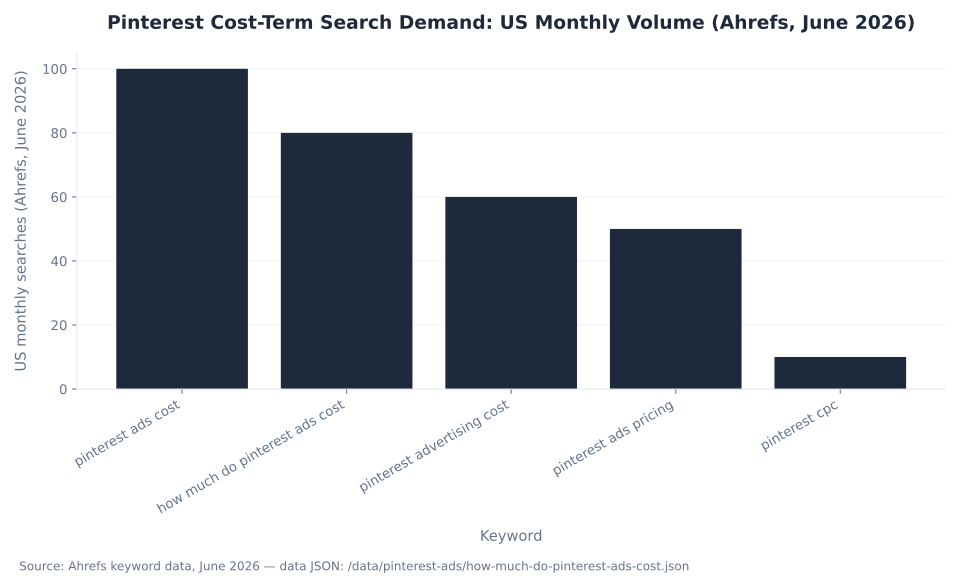
Pinterest Cost-Term Search Demand: US Monthly Volume (Ahrefs, June 2026)
Building a Pinterest budget for a DTC or visual-discovery brand?
MB Adv Agency helps fashion, beauty, and home décor brands set Pinterest bids and budgets that stay profitable as they scale — from the first test to full-funnel Catalog Sales campaigns. Our team works with brands in fashion, beauty, home décor, and beyond.
See our DTC PPC services →Three Pinterest Ads Cost Misconceptions
Three cost misconceptions appear consistently among advertisers who search "how much do Pinterest ads cost" — and each one produces a materially worse outcome when acted on. All three are refutable with vendor data and platform documentation.
Misconception 1: Pinterest ads have a fixed price or subscription
Pinterest ads are auction-priced. There is no platform fee, no subscription, and no published rate card you can quote to a CFO or include in a budget plan without caveats. What you pay is your bid relative to competing advertisers targeting the same Pinner at the same moment — and that bid changes in real time as Pinterest's system updates bids multiple times per day. The ranges cited by vendors ($0.30–$1.50 CPC, $2–$10 CPM) are estimates derived from aggregated advertiser accounts, not a price list. A DTC brand in food/CPG paying $0.35/click and a finance brand paying $1.30/click are both on Pinterest — neither is paying the "Pinterest price." The correct answer to "what does a Pinterest ad cost" is a vendor-attributed range plus the five levers that move it (objective, bid type, targeting, category, season) — not a single number.
Misconception 2: A cheaper Pinterest CPC automatically means a lower cost per conversion
Pinterest's CPC advantage over Meta — roughly 48% of Meta's cost per click in one 2026 comparison (DigitalApplied) — is real and consistent across multiple vendor sources. The error is the next step: assuming that cheaper clicks automatically produce cheaper conversions regardless of offer and execution. Cost per conversion equals CPC divided by conversion rate. A $0.83 Pinterest CPC paired with a 1% CVR produces an $83 CPA. The same $0.83 CPC paired with a 5% CVR produces a $16.60 CPA. The CPC is just the starting cost; the conversion rate is the amplifier. Pinterest's planning-intent audience — 96% unbranded searches, 21–30-day purchase window, AOV ~50% above other social — provides the structural conditions for strong CVR. But a misaligned offer, a poor landing page, or a creative that does not match Pinner intent wastes the CPC advantage entirely. The platform is efficient; the execution has to match it.
Misconception 3: A bigger budget lowers your CPC
Budget size does not directly lower auction price on Pinterest. The mechanism runs the other way at the low end: under-funding a campaign — below ~4–5× your target CPA per day — starves the algorithm of conversion signal, which produces worse cost per result, not better. A campaign set to $15/day with a $10 CPA target collects roughly 1.5 conversion signals per day — far below the threshold where Pinterest's system can optimize placement reliably. Raise the budget to $40–$50/day (4–5× the CPA target) and the campaign collects 4–5 signals per day, giving the system enough data to bid efficiently. The lever that lowers CPC is bid strategy and creative relevance — not raw spend. But adequate spend is the precondition for the system to work at all, which is why under-budgeting reliably raises cost per result even as it lowers the total bill. For more on Pinterest campaign optimization, see Pinterest ads optimization and AI.
Pinterest Advertising for DTC and Visual Discovery Brands
Pinterest's 631M monthly users (Q1 2026, Pinterest earnings) are disproportionately in active planning mode for purchases in visual-discovery categories. The platform's cost advantage is most meaningful for brands whose product categories match what Pinners are actually planning — and least meaningful for categories that require immediate intent rather than inspirational discovery.
Highest-value Pinterest verticals (cost-efficient + high intent)
Home décor and furniture: Pinterest over-indexes for home planning at every stage — from inspiration boards to "buy this piece" searches. Brands in home décor PPC and furniture PPC reach an audience with a 21–30-day purchase window and average order values that dwarf most other social categories. Catalog Sales with Performance+ ROAS bidding is the standard high-intent format for this vertical.
Fashion and accessories: Pinterest's visual format and discovery engine map directly to fashion browsing. Brands in fashion PPC and footwear PPC get $0.50–$0.70 CPCs (AdBacklog) with solid 2.0% CVRs. Carousel ads and Standard ads are the primary formats; Idea ads work well for seasonal lookbooks.
Beauty and personal care: Beauty products PPC and skincare PPC brands get $0.40–$0.60 CPCs — lower than fashion — with an audience actively researching products before purchase. Tutorial-style Idea ads drive strong engagement for beauty brands with visual education to offer.
Food, beverage, and subscription: Food & beverage PPC and food and grocery DTC brands get the cheapest CPCs on the platform ($0.30–$0.60) with strong CVRs (~2.5–3.0%). Subscription box PPC brands benefit from Pinterest's discovery context — Pinners building boards for cooking ideas, health routines, or lifestyle curation are a natural audience for curated subscription offers.
Jewelry and wellness: Jewelry PPC and organic products PPC operate in Pinterest's high-intent, high-AOV segment. Valentine's Day, Mother's Day, and wedding season drive strong seasonal intent windows. Activewear brands (activewear PPC) connect to January New Year planning intent at low CPMs.
Verticals where Pinterest's cost advantage is minimal
Finance: high CPC ($0.80–$1.50), low CVR (~0.5–1.0%), and high CPA ($12–$15) make Pinterest's cost structure unfavorable vs Google Search for direct-response financial products. Pinterest is a brand-awareness play for finance, not a lead-generation channel. CBD and hemp brands face Pinterest's category restrictions — verify ad policy before budgeting. B2B SaaS brands in general should pursue Google Search and LinkedIn before Pinterest; the platform's visual-discovery audience is not in enterprise software evaluation mode.
For brands that fit Pinterest's DTC sweet spots and want to pressure-test a starting budget against real margins, get in touch with MB Adv Agency. Our team works with visual-discovery brands across fashion, beauty, home, and food to build Pinterest campaigns that are structurally funded and properly bid from day one.
Frequently Asked Questions: Pinterest Ads Cost
Want to pressure-test your Pinterest budget against real margins?
Setting a Pinterest bid and budget that stays profitable as you scale is part strategy, part conversion tracking, and part knowing which vertical benchmarks to trust. MB Adv Agency's team can review your existing Pinterest setup or help build one from scratch.
Talk to the team →Methodology
Cost benchmarks in this article draw from four primary third-party vendor sources: WebFX, "How Much Does Pinterest Advertising Cost?" (CPC $0.50–$1.50 editorial range; CTR, CVR, AOV, and monthly spend survey data); Trackbee, "Pinterest Ads Cost in 2026" (CPC €0.45–€1.30, avg ~€0.72; CPM €3–€8; CPV €0.13–€0.26; bidding and budget guidance; ad-cost benchmark Q4 data); AdBacklog, "Pinterest Ads Benchmarks per Industry (2025)" (vertical CPC/CPM/CPA/CVR breakdowns); and DigitalApplied, "Pinterest Statistics 2026: 130+ Marketing Data Points" (cross-platform CPC/CPM comparison; format-level CPM data). Keyword demand data: Ahrefs, June 2026 (US monthly searches). Platform objective and bid documentation: Pinterest Business Help and Pinterest Business Blog (2026). All figures are third-party estimates — not official Pinterest rates and not mbadv client data. Data is presented as ranges; vendors disagree, particularly on CPM. Reviewed by MB Adv Agency, June 2026.
Pinterest has rapidly become a favored advertising platform, especially for brands targeting a predominantly visual and inspiration-driven audience. Understanding the cost structure of Pinterest Ads can help businesses plan their marketing budgets effectively and maximize their return on investment. In this article, we'll delve into how much Pinterest Ads cost, the factors influencing these costs, budgeting tips, and a cost comparison with other advertising platforms.
How Much Do Pinterest Ads Cost?
The pricing for Pinterest Ads is not fixed; instead, it operates on a bidding model. This means that advertisers can set their bids for different goals, such as conversions, clicks, or impressions. Typically, the cost-per-click (CPC) for Pinterest Ads ranges from $0.10 to $1.50, while cost-per-thousand-impressions (CPM) averages between $2 to $5. However, these figures can vary widely based on specific campaigns and target audiences.
One of the compelling aspects of Pinterest Ads is its flexibility in spending. Advertisers can create campaigns with daily budgets as low as $2, making it accessible for businesses of all sizes. However, to achieve significant visibility, a higher daily budget is often recommended, generally ranging from $20 to $50. This flexibility allows small businesses to dip their toes into digital advertising without a substantial financial commitment, enabling them to test the waters and gauge the effectiveness of their campaigns before scaling up.
It's essential for businesses to assess their goals and choose the appropriate bidding strategy to maximize their advertising spend. For instance, if your goal is to increase website traffic, a cost-per-click approach may be more advantageous. Conversely, for brand awareness, a cost-per-impression strategy could yield better results. Additionally, understanding the nuances of your target audience can help refine your approach, ensuring that your ads resonate with potential customers and drive engagement.
Factors affecting ad costs
Several factors influence the cost of Pinterest Ads, all of which can impact your overall advertising expenses. Understanding these factors can enable advertisers to make informed decisions when allocating their budgets.
- Target Audience: The demographics, interests, and behaviors of your target audience can significantly affect ad costs. Highly sought-after audiences may come with higher competition and, consequently, higher bid prices. For example, targeting a niche market might yield lower costs due to less competition, while broader categories could lead to inflated prices.
- Bidding Strategy: The type of bidding strategy you choose—whether CPC, CPM, or cost-per-action (CPA)—will directly influence your costs. Each strategy serves different goals and comes with varying price points. It's crucial to align your bidding strategy with your overall marketing objectives to ensure efficient use of your budget.
- Ad Quality and Relevance: Pinterest evaluates the quality and relevance of your ads. Higher quality ads tend to get more visibility and can lead to lower costs over time due to better engagement. Investing time in creating visually appealing and relevant content can pay off significantly in the long run.
- Seasonality: Certain times of the year, like holidays or back-to-school seasons, may see increased competition on Pinterest, leading to higher ad costs. Being aware of these trends allows businesses to time their campaigns effectively. For instance, planning holiday-themed ads well in advance can help secure better rates and visibility.
How to Set Your Ads Budget
Setting a budget for your Pinterest Ads requires careful planning. Here are some tips to help establish an effective advertising budget:
- Define Your Goals: Before diving into budgeting, clarify what you aim to achieve with your advertisements. Are you looking for brand recognition, increased traffic, or direct sales? Understanding your objectives will help dictate your spending limits. This clarity can also assist in determining which metrics to track for success.
- Research Costs: Look into typical costs within your industry. This research can provide insights into average CPC or CPM rates and help you set realistic budget expectations. Additionally, analyzing competitors' strategies can offer valuable insights into effective budget allocation.
- Start Small: If you are new to Pinterest advertising, consider starting with a smaller budget. This allows you to experiment with different ad types and strategies without overspending. Once you gain insights into what works best for your business, you can gradually increase your budget. Testing various creatives and messaging can help refine your approach and improve overall performance.
- Monitor and Adjust: Continuously monitor your ad performance. Use Pinterest’s analytics tools to understand which ads are performing well and adjust your budget accordingly. Regularly reviewing performance metrics can help identify trends and optimize your campaigns for better results.
Cost comparison with other platforms
To understand Pinterest Ads' cost-effectiveness, it's helpful to compare them with other popular ad platforms such as Facebook, Google, and Instagram. Each platform offers unique advantages and pricing structures.
Facebook Ads: Facebook generally has a CPC range of $0.50 to $2.00 and a CPM range of $5 to $10. While Facebook allows for highly targeted advertising, the costs can add up quickly, especially in competitive markets. Furthermore, the platform's extensive user base means that while you can reach a large audience, the competition for attention is fierce, often requiring brands to invest more in creative and compelling ad content to stand out.
Google Ads: The costs for Google Ads are often higher, with CPC ranging from $1 to $2.50 for search ads depending on the keywords' competitiveness. However, Google Ads's robust targeting and extensive reach can justify the higher investment for some businesses. The ability to target users based on their search intent can lead to higher conversion rates, making it a preferred choice for businesses looking to capture demand at the moment it arises. Additionally, the variety of ad formats available, including display ads and shopping ads, allows for a versatile approach to digital marketing.
Instagram Ads: Prices for Instagram are similar to Facebook, with CPC at around $0.50 to $3.00. Since Instagram is heavily visual, it can attract brands that have a visual aspect, making it a viable option for businesses that align with its audience. The platform's emphasis on aesthetics means that brands can leverage high-quality images and videos to create engaging content that resonates with users. Moreover, Instagram's integration with Facebook's advertising system allows for seamless ad management across both platforms, providing advertisers with a broader reach and more sophisticated targeting options.
When comparing these platforms, it's evident that Pinterest Ads can be particularly cost-effective for brands focusing on aesthetics and lifestyle. The platform's strong engagement rates and ability to drive conversions can make it a worthwhile investment compared to other options. Pinterest's unique user behavior, where users actively seek inspiration and ideas, positions it as an ideal platform for brands in sectors such as home decor, fashion, and food. Additionally, the longevity of Pins means that content can continue to drive traffic long after the initial ad spend, providing a compelling reason for brands to consider Pinterest as a key component of their advertising strategy.
Moreover, Pinterest's audience tends to be more receptive to brand messages, as they often use the platform for planning future purchases and gathering ideas. This intent-driven approach can lead to higher engagement rates and a more favorable return on investment (ROI) for advertisers. As users curate their boards and save Pins, brands have the opportunity to connect with potential customers at a critical stage in their buying journey, making Pinterest a powerful tool for driving both brand awareness and sales.
Conclusion
Advertising on Pinterest offers exciting opportunities for businesses looking to reach a visually-driven audience. By understanding the cost structures, various influencing factors, and setting effective budgets, advertisers can maximize their returns. Furthermore, when compared to other popular platforms, Pinterest Ads often provide a competitive edge in terms of cost-effectiveness, especially for brands that thrive on inspiration and aesthetics. As you consider your advertising strategies, be sure to weigh the costs and advantages of Pinterest Ads in your overall marketing plan.


As a Google Ads expert, I bring proven expertise in optimizing advertising campaigns to maximize ROI.
I specialize in sharing advanced strategies and targeted tips to refine Google Ads campaign management.
Committed to staying ahead of the latest trends and algorithms, I ensure that my clients receive cutting-edge solutions.
My passion for digital marketing and my ability to interpret data for strategic insights enable me to offer high-level consulting that aims to exceed expectations.
Google Partner Agency
We're a certified Google Partner Agency, which means we don’t guess — we optimize withGoogle’s full toolkit and insider support.
Your campaigns get pro-level execution, backed by real expertise (not theory).

4.9 out of 5 from 670+ reviews on Fiverr.
That’s not luck, that’s performance.
Highly recommend Matteo to set up your server side tracking. He has a deep understanding of e-commerce tracking and will go above and beyond to make sure everything is set up correctly and working 100%. If you are scaling your store this set up is non-negotiable in my opinion and there isn't many people who have this much knowledge or put the effort in to get it right. Thanks again!
avorodesign.com
I can only recommend Matteo! He was very patient, professional and very knowledgeable about GA4, Consent Mode v2, and GDPR compliance. Communication was clear, and the setup was done professionally and efficiently. Highly recommend him for anyone needing reliable tracking implementation.

www.natureiki.life
Matteo shines in the realm of online professionals. His work is not only deep in data but also complemented by his proactive communication and cooperation, setting a new standard for freelancers. If you want someone who truly exceeds expectations, look no further. Highly recommended!

www.omanbeverlysmyth.com
Exceptional Service Beyond Expectations - Outstanding Service Impeccable depth, flawless delivery, and exceptional language fluency—this service exceeded all expectations. Highly recommended. Matteo truly ROCKS!!!

ium-paris.com
Top-notch, always highly value working with Matteo. An absolute Google Ads Genius. This is approximately the 8th time I have hired him and he's helped us get 6-7 ROAS. We are excited in continuing to improve our lead flow. Hire this guy if you need Google Ads help. Thanks Matteo!

www.dleeventgroup.com
I finally found the guy who can setup server side tracking and all the ecosystem properly. I definitely recommend Matteo. He is very responsive, kind and wants to dig into things. He configured GA4, Meta, Google Ads, Outbrain and google consent v2 with Cookiebot. Thanks Matteo.

inomega.fr
MB Adv delivered exceptional work with outstanding professionalism and lots of patience, taking time to see effects of changes made and not just do the work and submit it. The proactive communication and video summaries of the work completed made working with Matteo a pleasure, as he consistently went above and beyond. Highly recommended for web analytics projects! We are already working on another project.

www.withnellsensors.co.uk
Working with Matteo on my Google Ads was a game-changer. He's not just a strategist, he's a true partner. He understood my goals and tailored a campaign that perfectly reached my target audience. I'm grateful for his expertise and dedication.
dccargo.com
Click-driven mind
with plastic-brick obsession.
We build Google Ads campaigns with the same mindset we use to build tiny brick worlds: strategy, patience, and zero tolerance for wasted pieces.
Data is our blueprint. Growth is the only acceptable outcome.