Pinterest Ads vs Other Social Media Ads (2026)

75%
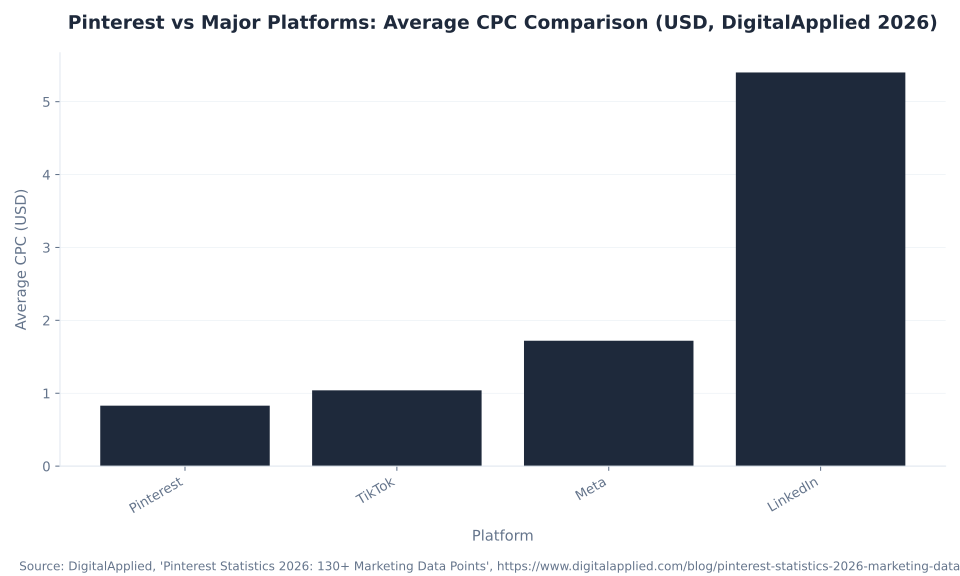
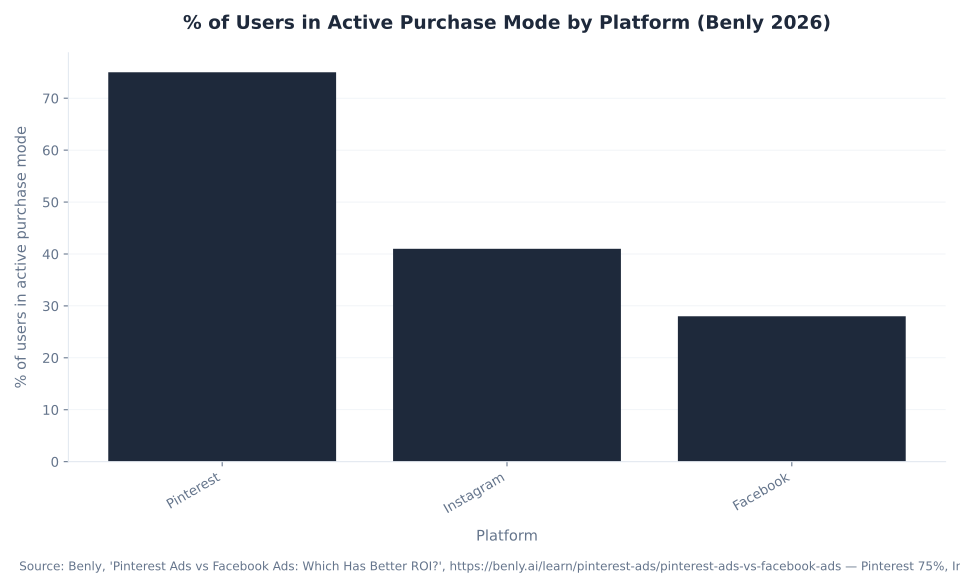
of Pinterest users are in active purchase mode — vs 28% on Facebook and 41% on Instagram. Pinterest is a visual discovery engine that catches buyers already planning a purchase, not a social network competing with Meta and TikTok for entertainment attention. Pinterest's average CPC ($0.83) runs ~48% of Meta's ($1.72) — the lower cost reflects a narrower, higher-intent audience, not platform superiority.
Source: Benly, "Pinterest Ads vs Facebook Ads" 2026 (purchase mode %); DigitalApplied, "Pinterest Statistics 2026" (CPC) — not mbadv client data
Pinterest Ads vs Other Social Media Ads at a Glance (2026)
Pinterest ads, Meta ads (Facebook and Instagram), and TikTok ads run on fundamentally different models of how users arrive and what they are doing when ads reach them. Pinterest is a visual discovery engine: users search for ideas, save content to boards, and plan purchases — which is why Pinterest reports ~96% of searches on the platform are unbranded (Pinterest via Sprout Social). Meta and TikTok are interruption platforms: users arrive to socialize or be entertained, and ads interrupt that activity to earn attention. The question is not which platform is better. It is which job each platform does, and which one matches the job at hand.
Pinterest's 631M global MAU (Q1 2026 earnings, a record +11% YoY) is smaller than Meta's Facebook (~3B) or TikTok (~1.9B per DemandSage 2026), but scale is not the load-bearing variable here. The users Pinterest reaches arrive in a planning and purchasing state: Benly's 2026 research puts ~75% of Pinners in active purchase mode, versus ~28% on Facebook and ~41% on Instagram. For home décor PPC, fashion PPC, and wedding PPC, that intent differential changes both the CPC economics and the conversion trajectory. See what Pinterest ads are for the full platform primer.
| Dimension | Meta (Facebook & Instagram) | TikTok | |
|---|---|---|---|
| Category | Visual discovery engine (planning surface) | Social network (interruption feed) | Short-video entertainment feed |
| How the user arrives | Planning / discovering a purchase or project | Socializing / passive scrolling | Being entertained |
| Dominant ad model | Catch intent (search + browse) | Buy attention (interrupt the feed) | Buy attention (entertain to convert) |
| Funnel sweet spot | Upper-mid → purchase (plan-to-buy) | Full funnel at scale | Top-funnel awareness / virality |
| Global MAU (2026) | 631M (Pinterest Q1 2026 earnings) | FB ~3B / IG ~2B (Meta-reported) | ~1.9B (DemandSage 2026 estimate) |
| Audience skew | ~70% women; Gen Z fastest-growing cohort | Broad; older skew on Facebook | Gen Z-led; younger millennials |
| Purchase intent | ~75% in active purchase mode (Benly 2026) | ~28% FB / ~41% IG (Benly 2026) | Discovery-led; rising social commerce |
| Best-fit verticals | Home, fashion, beauty, food, weddings, DIY, DTC | Broad / impulse / retargeting / B2B / apps | Trend-led, viral, younger consumer goods |
| Avg CPC vs Meta | $0.83 — ~48% of Meta's CPC (DigitalApplied 2026) | $1.72 all-industry avg (DigitalApplied 2026) | $1.04 (DigitalApplied 2026) |
| AI automation suite | Performance+ | Advantage+ | Smart+ / Smart Performance Campaigns |
Sources: Pinterest Q1 2026 earnings (631M MAU, record, +11% YoY); Sprout Social, "Essential Pinterest statistics 2026" (~96% unbranded searches, ~70% women, Gen Z growth; cites Pinterest-published figures); Benly, "Pinterest Ads vs Facebook Ads" 2026 (~75% / ~28% / ~41% active purchase mode); DigitalApplied, "Pinterest Statistics 2026" (CPC: Pinterest $0.83 / TikTok $1.04 / Meta $1.72); DemandSage, "TikTok User Statistics 2026" (~1.9B TikTok MAU estimate). Not mbadv client data.
The "catch intent vs. buy attention" axis in the table drives every downstream recommendation in this pillar. Pinterest catches buyers who have already started planning; Meta and TikTok manufacture and scale demand. For most visual-category DTC brands, the mature answer is running both — Pinterest to catch planning intent, Meta or TikTok to generate the awareness that creates it — with a defined role and a distinct success metric for each. See how much Pinterest ads cost for the detailed cost breakdown and Pinterest campaign objectives for the five objective types.
Key Takeaways
- Pinterest is a visual discovery engine, not a social network. Users arrive to search and plan, not to socialize or be entertained. ~96% of Pinterest searches are unbranded (Pinterest via Sprout Social) — buyers looking for ideas before they know the brand they will buy from.
- Pinterest CPC runs ~48% of Meta's. DigitalApplied's 2026 cross-platform study puts Pinterest at $0.83 CPC vs Meta at $1.72 and TikTok at $1.04. The lower cost reflects a narrower, higher-intent audience — not platform superiority. Trackbee (EUR) confirms the direction: Pinterest €0.45–€1.30 vs Meta €0.65–€1.65.
- Pinterest's average order value is ~50% higher than other social platforms. WebFX reports this AOV premium as a direct consequence of the planning-intent audience: buyers who have saved and researched before clicking are further along the decision journey than users interrupted mid-scroll.
- Pinterest targeting is keyword and search-driven, not interest-and-behavioral. Brands bid to appear when specific terms are searched using broad, phrase, or exact match — the same mechanic as search PPC. Meta and TikTok use interest and behavioral targeting with no real search layer.
- Most growing DTC brands run Pinterest alongside Meta or TikTok, not instead of them. The platforms serve different funnel jobs. Meta/TikTok manufacture and scale demand through reach and entertainment. Pinterest catches that demand when it becomes planning and search behavior.
- Pinterest's AI automation suite is Performance+, not Performance Max. Performance Max is Google's product. Pinterest's AI campaign automation is Performance+. Pinterest's lookalike equivalent is called an actalike audience, not a lookalike audience — terminology that reflects Pinterest's distinct identity as a discovery engine.
631M
Pinterest global MAU — Q1 2026 record, +11% YoY
Pinterest Q1 2026 earnings
~50%
higher average order value on Pinterest vs other social platforms
WebFX
2.2×
higher purchase intent on Pinterest vs other social platforms
Benly 2026
Pinterest Catches Intent; Meta and TikTok Buy Attention
The framing that fixes the entire comparison: Pinterest is a visual search engine where users arrive in planning mode; Meta and TikTok are entertainment and social platforms where the ad has to interrupt whatever the user is doing. These are two different businesses. Running "Pinterest OR social" as the decision framework is the wrong question — the right question is which platform does which job.
On Pinterest, a user opens the app or types a query because they are actively planning something — a bedroom renovation, a capsule wardrobe, a wedding, a recipe project. Pinterest reports ~96% of searches on the platform are unbranded (Sprout Social 2026, citing Pinterest-published data). That unbranded majority means buyers are searching for solutions before they have settled on a brand — the ideal moment for a well-placed ad to shape the decision. Pinterest also reports ~80% of weekly Pinners say the platform inspires their purchases, and ~85% have bought based on a Pin (both Pinterest-reported figures via Sprout Social). Benly's 2026 cross-platform research puts Pinterest purchase intent at ~2.2× higher than other social platforms, with ~75% of Pinners in active purchase mode at any given time (Benly 2026).
On Meta and TikTok, the motion runs opposite. Users are there to see what their friends are doing (Facebook), to browse visual content (Instagram), or to watch short entertainment videos (TikTok). Ads interrupt that activity, and the platform's job is to make the interruption engaging enough that the user clicks. Benly places Facebook at ~28% active purchase mode and Instagram at ~41% — both well below Pinterest's 75%. That gap is not a failure of Meta or TikTok: it is a structural feature of entertainment platforms. Meta's advantage is reach — Facebook at ~3B and Instagram at ~2B dwarfs Pinterest's 631M MAU — and the ability to target across demographics, interests, behaviors, and customer lists at scale. TikTok's advantage is viral reach and Gen Z penetration at ~1.9B MAU (DemandSage 2026).
Pinterest behaves like search PPC, not like social PPC. Brands bid on keywords — broad, phrase, or exact match — to appear when users search for relevant terms, exactly as on Google Search. Meta and TikTok have no real search layer: they use interest and behavioral targeting to find users in the feed. The consequence: Pinterest rewards products that are planned and searched for; Meta and TikTok reward creative that earns attention in an entertainment context.
This distinction changes creative strategy as much as it changes targeting. A Pin performs for weeks because saved Pins resurface as other users re-share and engage — Pinterest's distributed discovery model extends creative lifespan. A Meta or TikTok creative unit fatigues in days as frequency climbs and the algorithm exhausts the target audience. For beauty products PPC and subscription box PPC, Pinterest's longer creative shelf life means less production overhead per dollar of ongoing distribution. For jewelry PPC and other gift-category brands, the planning-to-purchase window (21–30 days per WebFX) maps cleanly onto the decision journey for considered purchases. See Pinterest ads targeting for the full keyword and audience-targeting guide.
MB Adv Agency's working frame for this decision: treat Pinterest as visual search PPC, not as another Meta. When a brand's product is something people plan and save toward — home furnishings, seasonal fashion, beauty routines, wedding details, specialty food — Pinterest is a structural fit that Meta's interruption model cannot replicate. When a brand needs to manufacture awareness for a new product that users are not yet searching for, Meta or TikTok must come first to build the demand that Pinterest will later catch.
Pinterest vs Facebook vs TikTok: Cost Benchmarks (2026)
Pinterest's CPC ($0.83) runs ~48% of Meta's ($1.72) and ~80% of TikTok's ($1.04), based on DigitalApplied's 2026 cross-platform study — a single-vendor source used for all four platforms to avoid cross-methodology mismatches. Trackbee reports the same directional gap in EUR: Pinterest €0.45–€1.30 (avg ~€0.72) vs Meta €0.65–€1.65 (Trackbee 2026). The cost gap is real, but it reflects a narrower, higher-intent audience, not a free performance advantage. Lower CPC means fewer competing advertisers fighting for a smaller, more qualified pool — a trade that works in Pinterest's best-fit verticals and fails in categories where broad reach matters more than planning intent.
| Metric | Meta (Facebook / Instagram) | TikTok | |
|---|---|---|---|
| Avg CPC (single-source, USD) | $0.83 | $1.72 | $1.04 |
| Avg CPC range (multi-vendor, EUR) | €0.45–€1.30, avg ~€0.72 | €0.65–€1.65 | ~€1.00 |
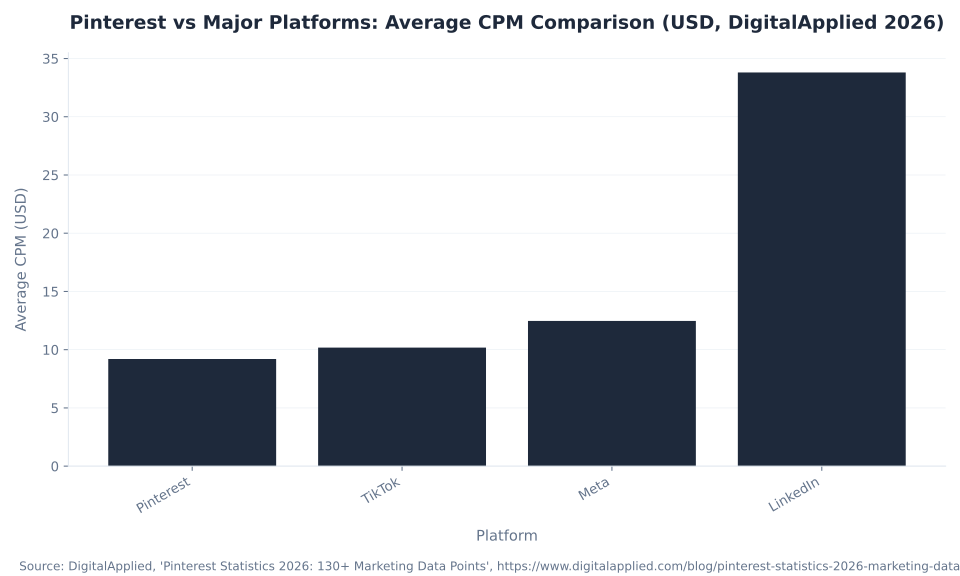
| Avg CPM (single-source, USD) | $9.20 | $12.47 | $10.18 |
| Awareness CPM range (EUR, Trackbee) | €3–€8 (awareness formats only) | ~€9.50–€12.50 | ~€10 |
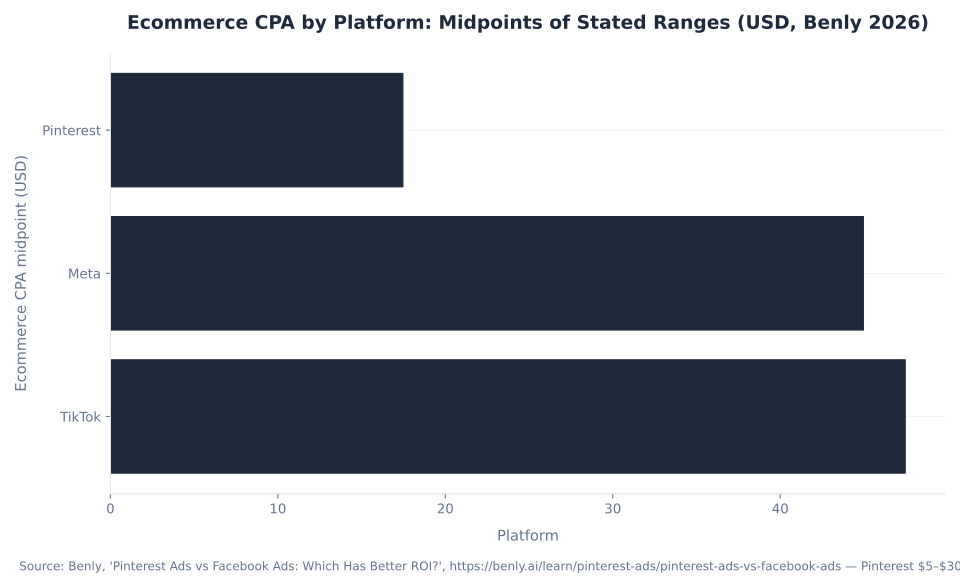
| Ecommerce CPA range (USD) | $5–$30 (mid ~$17.50) | $15–$75 (mid ~$45) | $15–$80 (mid ~$47.50) |
| Conversion rate | ~2–4%; up to 5–8% luxury/home | ~1.94% all-industry avg (Facebook) | Varies widely — no reliable single avg |
| Avg order value vs other social | ~50% higher than other social platforms | — | — |
| LinkedIn (B2B reference) | CPC $5.40 / CPM $33.80 (DigitalApplied 2026) — included for B2B scale context; not a Pinterest competitor for DTC/visual brands | ||
Single-source CPC/CPM figures: DigitalApplied, "Pinterest Statistics 2026" (all four platforms from one vendor for cross-platform consistency; USD). Multi-vendor EUR ranges: Trackbee, "Pinterest Ads Cost 2026" and Trackbee, "Ad Cost Benchmarks 2026" (EUR — do not convert to USD without noting the difference). Ecommerce CPA and CVR: Benly 2026 (single source for CPA consistency); Facebook CVR 1.94%: DigitalApplied, "Facebook Ads Benchmarks 2026"; Pinterest CVR 2–4%/5–8%: WebFX; Pinterest AOV ~50% higher: WebFX. WordStream/LocaliQ cover Google + Facebook only — not cited for Pinterest. All figures are third-party vendor estimates, not mbadv client data.
A note on CPM vendor disagreement: Trackbee's awareness-specific CPM for Pinterest is €3–€8, while DigitalApplied's cross-format average is $9.20. Both figures are correct for what they measure. Trackbee isolates awareness campaign CPMs; DigitalApplied averages across all formats including Shopping ads and Premiere Spotlight placements, which carry higher CPMs. In practice, Pinterest CPM for awareness campaigns runs lower than the cross-format average, and Shopping/catalog ad CPMs run higher. Represent Pinterest CPM as a range ($3–$10) in planning discussions rather than a single point. For the vertical-specific cost picture, see how much Pinterest ads cost and Pinterest ads metrics and ROAS.
Formats, Targeting & Shopping: Why Pinterest Behaves Like Search
The most consequential structural difference between Pinterest and Meta or TikTok is the targeting model. Pinterest is keyword-driven and search-driven — brands bid on terms like "small living room ideas" or "minimalist wedding décor" using broad, phrase, or exact match, and ads appear in search results and a Browse home feed. Meta and TikTok use interest and behavioral signals with no real search layer: brands define audiences, and the algorithm finds those users mid-scroll. This single difference determines which brands belong on Pinterest, which creative formats work, and how long a campaign stays productive.
| Capability | Meta (Facebook / Instagram) | TikTok | |
|---|---|---|---|
| Signature formats | Standard image, video, Carousel, Collections, Shopping, Idea ads, Showcase, Quiz, Premiere Spotlight | Image, video, Carousel, Collection, Reels, Stories, Advantage+ Shopping | In-Feed, TopView, Spark Ads, Branded Effects (video-first) |
| Targeting model | Keyword (broad/phrase/exact match) + interest — search-driven; two placements: Browse and Search | Interest + behavioral + custom audiences — no real search layer | Interest + behavioral — entertainment-led; limited search placement |
| Lookalike term | Actalike audiences | Lookalike Audiences | Lookalike Audiences |
| Shopping / catalog | Catalog → Shopping ads, Collections, dynamic retargeting; Direct Links are the default on eligible campaigns (send users straight to site) | Catalog → Advantage+ Shopping, dynamic product ads, Meta Shops | TikTok Shop, Video Shopping Ads, catalog |
| AI automation suite | Performance+ (not "Performance Max" — that is Google's product) | Advantage+ | Smart+ / Smart Performance Campaigns |
| Objectives (current) | Brand Awareness, Video Completion, Consideration (absorbs Traffic), Conversions, Catalog Sales — 5 official objectives | Awareness, Traffic, Engagement, Leads, App Promotion, Sales | Awareness, Community, Traffic, App Installs, Lead Generation, Sales |
| Creative shelf life | Long — Pins resurface for weeks as they are saved and re-shared | Short — creative fatigues in days to weeks as frequency climbs | Very short — trend-cycle and algorithm-dependent |
| Conversion tracking best practice | Pinterest Tag + Conversions API (CAPI) + enhanced match, deduplicated | Meta Pixel + Conversions API, deduplicated | TikTok Pixel + Events API |
Sources: Pinterest Business documentation (formats: Standard image, video, Carousel, Collections, Shopping, Idea ads, Showcase, Quiz, Premiere Spotlight; targeting: keyword broad/phrase/exact, Browse vs Search placements; actalike audiences; Catalog/Shopping/Direct Links; Performance+; 5 official objectives — Consideration absorbs Traffic, no standalone Traffic or App-installs objective); Meta Ads documentation (Advantage+, Lookalike Audiences, Shops); TikTok Ads documentation (Smart+/Smart Performance Campaigns, Spark Ads, TikTok Shop). Verify platform automation-suite names at publish — they rebrand frequently. Not mbadv client data.
A note on Pinterest-specific terminology that affects campaign setup: Pinterest's AI automation suite is Performance+ — never "Performance Max" (Google's product). Pinterest's lookalike equivalent is an actalike audience. Direct Links on eligible campaigns send users straight to the advertiser's website by default and cannot be disabled for those campaigns. Pinterest has five current objectives: Brand Awareness, Video Completion, Consideration (which absorbs the former standalone Traffic objective), Conversions, and Catalog Sales — there is no standalone Traffic or App-installs objective. Idea ads are a live current ad format; "Idea Pins" is the retired (2023) organic content name and does not describe a paid ad format. See Pinterest campaign objectives for the full objective-to-bidding map and food & grocery DTC PPC for DTC catalog strategy across platforms.
Pinterest vs Major Platforms: Average CPC Comparison (USD, DigitalApplied 2026)
Audience & Demographics: The "Pinterest Is Just for Women" Myth
Pinterest is female-majority (~70% women, per Sprout Social 2026 citing Statista/platform data), but the demographic picture practitioners act on is stale. Gen Z is Pinterest's fastest-growing cohort, men are growing, and 631M global MAU (Q1 2026, +11% YoY) represents a meaningfully large reach pool even against Facebook's ~3B and TikTok's ~1.9B. The more commercially important demographic insight is not who is on the platform but what they do there: Pinterest's average order value runs ~50% higher than other social platforms (WebFX), which means fewer, higher-intent, higher-basket buyers.
| Metric | TikTok | |||
|---|---|---|---|---|
| Global MAU (2026) | 631M (Pinterest Q1 2026 earnings) | ~1.9B (DemandSage estimate — ByteDance does not publicly disclose) | ~3B (Meta-reported) | ~2B (Meta-reported) |
| Gender skew | ~70% women (Sprout Social) | Gen Z-led; more gender-balanced | Broad; older skew relative to other platforms | Female-leaning; younger skew |
| Fastest-growing cohort | Gen Z (Sprout Social 2026) | Gen Z / younger millennials | Older demographics (35+) | Gen Z / millennial |
| % in active purchase mode | ~75% (Benly 2026) | — (Benly does not publish a TikTok equivalent) | ~28% (Benly 2026) | ~41% (Benly 2026) |
| Purchase intent vs other social | ~2.2× higher than other social (Benly 2026) | — | Baseline | — |
| Avg order value vs other social | ~50% higher (WebFX) | — | Baseline | — |
| Q1 2026 revenue | $1.008B (+18% YoY) | Not disclosed (ByteDance private) | Meta Family of Apps $42B+ (Q1 2026) | |
Sources: Pinterest Q1 2026 earnings press release (631M MAU, +11% YoY, $1.008B revenue, +18% YoY); Sprout Social, "Pinterest statistics 2026" (~70% women, Gen Z fastest-growing; cites Statista/Pinterest-published data); Benly 2026 (purchase mode %; ~2.2× intent; directional behavioral/survey research, not official platform figures); WebFX (AOV ~50% higher); DemandSage 2026 (TikTok ~1.9B MAU estimate — third-party aggregate, not an official ByteDance disclosure). Meta MAU are Meta-reported approximations from recent earnings. Not mbadv client data.
The "Pinterest is just for women / just for recipes" framing describes the 2015 platform, not a 631M-MAU visual commerce engine with Shopping ads, catalogs, Direct Links, Performance+ AI, and Gen Z as its fastest-growing cohort. For skincare PPC and organic and natural products PPC, the female-majority, planning-intent, higher-AOV audience is not a limitation — it is the target audience. The correct comparison is not "small audience vs. big audience" but "concentrated, planning-minded, higher-basket audience vs. broad, entertainment-minded mass audience." For most visual-category DTC brands, "fewer but higher-intent" is the better trade than "more but lower-intent," especially where Pinterest CPA ($5–$30 per Benly) competes favorably against Meta's ($15–$75) because the audience is pre-qualified at the planning stage.
Pinterest vs Major Platforms: Average CPM Comparison (USD, DigitalApplied 2026)
Attribution Windows & Creative Shelf Life
Attribution windows define how long after an ad impression or click a platform takes credit for a resulting conversion. Pinterest's default attribution window is 30-day click / 30-day engagement — longer than Meta's 7-day click default — because Pinterest's planning-to-purchase cycle is longer. A user who saves a Pin and buys 25 days later is a real Pinterest conversion; a 7-day Meta window would miss it entirely. Comparing ROAS across platforms without accounting for window differences produces misleading cross-platform "winners."
| Dimension | Meta (Facebook / Instagram) | TikTok | |
|---|---|---|---|
| Default attribution window | 30-day click / 30-day engagement | 7-day click / 1-day view (default) | 7-day click / 1-day view |
| Max available window | 30–60 days click (Benly; configurable in Ads Manager) | 28-day click (max; Meta Ads Manager) | 28-day click (max) |
| Typical purchase window | 21–30 days (WebFX) — planning-to-purchase cycle | Impulse-to-days for most categories | Short — trend-driven, impulse-leaning |
| Creative shelf life | Weeks to months — Pins resurface as they are saved, re-shared, and indexed in search | Days to weeks — frequency caps and algorithm fatigue; creative refresh needed every 1–3 weeks | Days — trend-cycle; high refresh cadence required |
| Cross-platform ROAS note | Never compare ROAS directly across Pinterest, Meta, and TikTok without aligning attribution windows. Pinterest's 30-day window captures planning-to-purchase conversions that a 7-day Meta window misses entirely — making Pinterest look worse than it is when compared on a single cross-platform dashboard. See Pinterest ads metrics & ROAS for the full measurement framework. | ||
Attribution window sources: Benly 2026 (Pinterest 30–60-day click vs Facebook 7-day/28-day max); WebFX (Pinterest 21–30-day purchase window); Meta Ads Manager (7-day click / 1-day view default; 28-day max); TikTok Ads Manager (7-day click / 1-day view default). Creative shelf life: editorial synthesis from Pinterest's discovery model (Pins resurface through saves/shares) vs Meta/TikTok frequency fatigue patterns. Not mbadv client data.
MB Adv Agency has found that brands comparing Pinterest and Meta performance on a shared 7-day attribution window systematically undercount Pinterest's contribution. The planning-to-purchase cycle on Pinterest (21–30 days) reflects a fundamentally different consumer behavior — saving content, returning to it, making a decision — that is invisible in a 7-day cross-platform attribution view. The correct measurement framework tracks each platform on its own window and uses incrementality testing or multi-touch models to assess the combined contribution, not a head-to-head ROAS comparison on misaligned windows. For furniture PPC and other considered-purchase categories where decision timelines run 2–4 weeks, this attribution gap is especially consequential.
% of Users in Active Purchase Mode by Platform (Benly 2026)
Best-Fit Verticals: Where Pinterest Wins on CPA
Pinterest's planning-intent model concentrates value in a specific set of verticals where buyers actively search and save toward a purchase decision. The strongest categories map directly to Pinterest's core user behaviors: home planning, wardrobe building, beauty routines, recipe collecting, wedding preparation, and gardening projects. Outside these categories — impulse goods, B2B, commodity products, or brands with no existing search demand — the intent model is a disadvantage rather than an advantage, because there are fewer searchers to catch and the creative cannot replicate Meta's broad behavioral reach.
| Vertical | Pinterest CPA (USD) | Meta CPA midpoint (USD) | Platform fit verdict |
|---|---|---|---|
| Home décor / furniture | ~$10+ (AdBacklog 2025) | ~$45 midpoint (Benly 2026) | Pinterest primary — planning-intent category; buyers save inspiration boards weeks before purchasing |
| Beauty / cosmetics | ~$7–$10 (AdBacklog 2025) | ~$45 midpoint (Benly 2026) | Pinterest + Meta — Pinterest catches tutorial search intent; Meta scales reach and UGC retargeting |
| Retail / ecommerce (general) | ~$7–$8 (AdBacklog 2025) | ~$45 midpoint (Benly 2026) | Pinterest + Meta — depends on visual-planning fit; impulse SKUs lean Meta |
| Food / CPG / recipes | ~$5–$8 (AdBacklog 2025) | ~$45 midpoint (Benly 2026) | Pinterest primary — recipe search is one of Pinterest's highest-volume query types |
| Fashion / apparel | ~$7–$10 est. (analogous to beauty, AdBacklog) | ~$45 midpoint (Benly 2026) | Pinterest + Meta — seasonal planning searches on Pinterest; Meta scales across full wardrobe audiences |
| Weddings | Planning-intent category — high AOV, long cycle | ~$45 midpoint (Benly 2026) | Pinterest primary — wedding planning is one of Pinterest's defining use cases; search-and-save behavior dominates |
| Subscriptions / DTC box | Planning-adjacent; varies by category | ~$45 midpoint (Benly 2026) | Pinterest + Meta — Pinterest for discovery; Meta for retargeting and trial offers |
| Finance / insurance | ~$12–$15 (AdBacklog 2025) | Varies (often $50–$100+) | Meta primary — Pinterest has limited finance vertical; B2B / lead-gen categories fit Meta better |
Pinterest CPA by vertical: AdBacklog, "Pinterest Ads Benchmarks per Industry (2025)" — USD estimates; 2025 data. Meta CPA midpoints: Benly 2026 (ecommerce range $15–$75; midpoint $45). AdBacklog Pinterest figures are vertical-specific and narrower than Benly's broader $5–$30 range — both are valid; use Benly for cross-platform comparisons and AdBacklog for vertical-specific planning. Pinterest does not allow CBD/cannabis advertising — cbd-hemp-ppc is excluded. Not mbadv client data.
The vertical CPA table shows Pinterest's structural advantage most clearly in categories where a buyer's purchase journey begins with inspiration and research — home, food, beauty, fashion, weddings. In these categories, Pinterest's planning-intent model produces CPAs well below Meta's ecommerce midpoint because the audience arrives pre-qualified. Outside these categories, that advantage reverses: a brand selling impulse goods, SaaS, professional services, or commodity products is better served by Meta's behavioral reach and TikTok's entertainment-driven virality. MB Adv Agency recommends starting with the vertical fit question before the platform question: if your product is something people plan and save toward, Pinterest earns a line in the budget; if your product requires creating demand from scratch, Meta or TikTok should come first.
Four Misconceptions That Cause Brands to Misuse Pinterest (or Skip It Entirely)
The most expensive errors in cross-platform social advertising come from applying the wrong mental model to a platform. Pinterest gets three specific misconceptions applied to it consistently — each of which leads either to skipping a genuinely efficient channel or to running it incorrectly and concluding it does not work.
Misconception 1: "It's Pinterest OR the big social platforms — pick the one with the most users." Reach is not the deciding variable; intent and fit are. Pinterest's 631M MAU is smaller than Meta's or TikTok's, but ~75% of those users arrive in active purchase mode (Benly 2026) versus ~28% on Facebook. Picking the biggest audience ignores that a smaller, higher-intent, higher-AOV audience in the right vertical outperforms a larger, lower-intent one on CPA. For visual-category brands, "Pinterest and at least one of Meta/TikTok, with a deliberate split" is the mature answer, not "the platform with the most logins." The platforms do different jobs and should be funded for different outcomes.
Pinterest's lower CPC ($0.83 vs Meta's $1.72) is not proof of platform superiority — it is the price signal of a narrower, higher-intent audience. Meta's higher CPC is not inefficiency — it is the cost of reaching the awareness, social, and entertainment moments that create the demand Pinterest later catches. (DigitalApplied 2026)
Misconception 2: "Pinterest's lower CPC means it is the cheaper / better platform." The CPC gap is real — Pinterest $0.83 vs Meta $1.72 and TikTok $1.04, single-vendor DigitalApplied 2026 — but lower CPC reflects the narrower audience, not free performance. Pinterest's clicks are cheaper because the platform reaches users already in planning mode, and there are fewer competing advertisers fighting for a smaller pool. Meta and TikTok pay more per click because they also reach the awareness and entertainment moments that create the demand Pinterest catches downstream. Judging Meta by Pinterest's CPC is comparing a demand-creation engine to a demand-catching engine on the catcher's home metric. Cost only means something next to intent, and intent only means something next to conversion rate and AOV. Pinterest's ~50% higher AOV (WebFX) partially offsets the narrower reach.
Misconception 3: "Pinterest is just for women and DIY / recipes — it cannot move real ecommerce revenue." This describes the 2015 platform. Pinterest at 631M MAU (Q1 2026), +11% YoY, with Gen Z as its fastest-growing cohort and $1.008B in Q1 2026 revenue (+18% YoY) is a measurably large and growing commerce platform. Its strongest verticals — home, fashion, beauty, food, weddings — are high-AOV ecommerce categories, and Pinterest's average order value runs ~50% higher than other social platforms (WebFX). The 70% female majority is real and remains a factor in vertical selection, but "female-majority" describes the audience composition, not a ceiling on the platform's commercial capacity.
Misconception 4: "Pinterest ads work the same way as Facebook and TikTok ads — set up audiences and let the algorithm run." They do not, and treating Pinterest as "another Meta" is how brands underperform on it. Pinterest is search-and-keyword-driven (broad/phrase/exact match) with Browse and Search placements; Meta and TikTok are interest/behavior-driven with no real search layer. On Pinterest, the brand bids to appear for what users are actively searching and planning; on Meta/TikTok, the brand defines audiences and the algorithm finds them. The creative cadence also differs: a Meta or TikTok ad requires fresh creative every 1–3 weeks as frequency builds; a Pin keeps working for weeks because it resurfaces through saves and discovery. A brand that ports its Meta playbook 1:1 onto Pinterest — no keywords, impulse creative, 7-day flight — will conclude "Pinterest does not work" when it simply ran a search platform as if it were an interruption platform.
Which Is Better for You? The Decision Framework
The answer to "Pinterest ads vs other social media ads — which is better?" depends entirely on the job the ad needs to do, the vertical the brand operates in, and where the brand sits on the demand maturity curve. Pinterest catches planning intent; Meta and TikTok create and scale awareness. Neither beats the other in the abstract. The matrix below maps the most common brand scenarios to a platform recommendation — framed as conditional leans, not absolute verdicts.
| Your goal / vertical | Lean toward | Why |
|---|---|---|
| Home décor, furniture, weddings, DIY, gardening | Pinterest primary | Planning-intent categories where buyers search and save toward a purchase; lower CPC, higher AOV (~50% above other social, WebFX) |
| Fashion, beauty, food & recipes, DTC subscription | Pinterest + Meta | Pinterest catches planning and search intent at lower CPC; Meta scales reach and retargeting across the full awareness funnel |
| Maximum reach, broad demographics, retargeting, B2B, apps | Meta primary | Largest audience (~3B Facebook / ~2B Instagram) + most precise interest/behavior targeting + Advantage+ AI at scale |
| Viral / trend-led product launch, Gen Z consumer goods | TikTok primary | Entertainment-native virality, fastest-growing platform for Gen Z (~1.9B MAU), in-feed video format drives UGC and trend cycles |
| Cheapest high-intent clicks for a visual/planning product | $0.83 avg CPC (~48% of Meta) with ~75% of the audience in active purchase mode (DigitalApplied / Benly 2026) — the lowest cost-per-planning-intent click of the major platforms | |
| Brand-new product with no existing search or planning demand | Meta / TikTok first | Pinterest catches intent but does not create it. Manufacture awareness at scale first; layer Pinterest once planning-stage searches appear |
| B2B / lead-gen / professional services | Meta / LinkedIn | Pinterest and TikTok are poor B2B fits; consumer and visual-discovery intent does not map to professional purchasing decisions. LinkedIn CPC ($5.40) reflects the B2B audience premium worth paying for genuine decision-maker reach (DigitalApplied 2026) |
| Jewelry, watches, luxury accessories | Pinterest + Meta | Jewelry PPC benefits from Pinterest's high-AOV planning audience (gift planning, occasion searches) plus Meta's retargeting at the decision moment |
Sources: Benly 2026 (best-fit verticals; purchase intent split); WebFX (AOV ~50% higher; CVR 2–4% / up to 5–8% luxury-home); DigitalApplied 2026 (CPC cross-platform); AdBacklog 2025 (Pinterest CPA by vertical). These are conditional leans — the right answer depends on vertical, demand maturity, and budget. Running more than one platform is the mature default for visual-category DTC. Not mbadv client data.
MB Adv Agency's working recommendation for visual-category DTC brands: fund Pinterest for planning-and-purchase intent, fund Meta for reach and retargeting, measure each on its own metric (not cross-platform ROAS on misaligned attribution windows), and resist the instinct to declare a single "winner." The most common failure mode is pulling Pinterest budget after 7 days because the ROAS looks weak against Meta — before the 21–30 day planning-to-purchase cycle has had time to complete. The second most common failure is running both platforms on the same creative and the same 7-day optimization window, then concluding Pinterest underperforms. Both errors stem from treating platforms as interchangeable when they are complementary. Not sure whether Pinterest belongs in the mix? Talk to our team for a Pinterest-versus-social audit framed around your specific vertical and budget.
Ecommerce CPA by Platform: Midpoints of Stated Ranges (USD, Benly 2026)
Ready to Put Pinterest in the Right Role in Your DTC Mix?
MB Adv Agency helps visual-category DTC brands decide whether Pinterest belongs in the budget alongside Meta and TikTok — and if so, what job it does and how to measure it. We run the vertical-fit analysis, the cross-platform budget split, and the attribution framework so each channel earns its line in the plan.
See Our Home Décor PPC Services →Platform Trajectory: How Pinterest, Meta, and TikTok Are Diverging in 2026
Pinterest posted its 10th consecutive quarter of double-digit MAU growth in Q1 2026, reaching 631M users and $1.008B in revenue (+18% YoY). That sustained growth trajectory — driven by Gen Z adoption and the expansion of visual commerce features: Shopping ads, Direct Links, Catalog Sales, and Performance+ — marks a platform that has moved decisively from social network to visual search engine. The competitive frame has shifted: Pinterest is not chasing Meta’s scale; it is deepening its advantage in the planning-intent surface Meta and TikTok do not occupy.
The AI automation comparison across the three platforms reflects different strategic architectures. Meta’s Advantage+ Shopping campaigns use behavioral modeling at scale across ~3B Facebook and ~2B Instagram users — the dataset advantage is structural and unmatched. TikTok’s Smart+ Campaigns automate creative, bidding, and audience in a TikTok Shop-native context for a predominantly Gen Z user base. Pinterest’s Performance+ automates targeting, bidding, and ad group creation within a keyword-and-search model, using planning intent as the primary signal instead of social-behavioral data. The three automation suites are not interchangeable: each is optimized for its platform’s own data type and user behavior, and cross-applying one platform’s automation playbook to another produces suboptimal results.
| Dimension | Pinterest Performance+ | Meta Advantage+ | TikTok Smart+ |
|---|---|---|---|
| Primary signal | Search queries, save behavior, planning intent | Social-behavioral: interests, demographics, cross-app signals across ~3B+ users | Video engagement, TikTok Shop interactions, For You Feed behavior |
| What it automates | Keyword targeting, bidding, ad group creation, creative testing within search model | Audience finding, creative variants, placements, budget distribution at scale | Targeting, bidding, creative optimization in entertainment-feed context |
| Best use case | Catalog Sales, Conversions for planning-stage visual DTC in home/fashion/beauty/food | Broad ecommerce at scale — full-funnel awareness to purchase across Meta’s placements | Viral product launches, TikTok Shop, Gen Z brand growth |
| Common operator error | Calling it “Performance Max” — that is Google’s product; Pinterest’s suite is Performance+ | Treating Advantage+ as a replacement for campaign-objective and audience-strategy decisions | Running Smart+ without a creator-quality video asset; automation amplifies what exists, not what is missing |
Sources: Pinterest Business documentation (Performance+); Meta Ads documentation (Advantage+); TikTok Ads documentation (Smart+ / Smart Performance Campaigns). Automation suite names and capabilities change with platform updates — verify current feature scope at publish. Not mbadv client data. See also AdRoll, “Social Media Ad Cost Breakdown: Facebook, Instagram, TikTok, Pinterest” for a cross-platform cost context from a DSP perspective.
Gen Z is the fastest-growing cohort on Pinterest (Sprout Social 2026), the same demographic driving TikTok’s ~1.9B MAU growth. This creates a convergence scenario that is commercially significant: the Gen Z buyer who discovers a product through TikTok and saves it to a Pinterest board before purchasing represents a multi-platform planning behavior that most DTC brands are not yet measuring as a unified funnel. For fashion PPC and beauty products PPC brands reaching Gen Z, the practical implication is that TikTok and Pinterest are complementary discovery surfaces for the same cohort: TikTok at the entertainment and viral awareness stage, Pinterest at the planning and save-to-purchase stage. Funding only one leaves the other stage unserved and the funnel incomplete.
Pinterest vs Other Platforms: Key Stats at a Glance
Pinterest CPC: $0.83 (DigitalApplied 2026)
~48% of Meta’s $1.72 CPC. Lower cost reflects a narrower, planning-intent audience and fewer competing advertisers — not platform superiority over Meta or TikTok ($1.04).
75% of Pinners in active purchase mode (Benly 2026)
Versus ~28% on Facebook and ~41% on Instagram. The intent differential is the structural reason Pinterest’s CPA runs lower for planning-stage DTC verticals.
Ecommerce CPA: $5–$30 on Pinterest (Benly 2026)
Versus Meta $15–$75 and TikTok $15–$80. Pinterest’s lower CPA midpoint ($17.50) reflects the planning-intent efficiency advantage in home décor, beauty, food, and wedding verticals.
~50% higher AOV than other social (WebFX)
Pinterest’s planning-minded audience arrives further along the decision journey, producing a higher average order value than buyers interrupted mid-scroll on Facebook or TikTok.
For a DTC brand already on Meta and evaluating Pinterest, the single most useful mental model is this: Meta and TikTok manufacture demand; Pinterest catches it. A buyer who discovered a product on TikTok and then searched Pinterest for “modern living room ideas with that sofa” is in a different buying state than when the TikTok ad ran. Pinterest’s ad appears in that planning search, at lower CPC, to a buyer who has already self-qualified. The combined output of both channels exceeds either alone — provided each is measured on its own metric and not compared head-to-head on the same attribution window. See Pinterest ads metrics and ROAS for the full cross-platform measurement framework, and how much Pinterest ads cost for the complete budget-planning guide.
Frequently Asked Questions
Should I use Pinterest ads or Facebook ads?
Pinterest ads and Facebook ads serve different funnel stages and are not direct substitutes. Pinterest reaches buyers already planning and searching for ideas: ~75% of Pinners are in active purchase mode (Benly 2026), and ~96% of Pinterest searches are unbranded (Pinterest via Sprout Social), meaning the user has not settled on a brand yet. That is the ideal moment for a well-placed ad in a visual-planning category. Facebook reaches a far larger audience (~3B MAU) in a social and passive-scrolling context where ~28% are in active purchase mode (Benly 2026). Facebook’s advantage is reach, behavioral precision across demographics, and Advantage+ retargeting at scale.
For a visual DTC brand selling home, fashion, beauty, food, or wedding products, the practical answer is run both: Facebook to manufacture awareness and retarget, Pinterest to catch the planning-stage demand that awareness creates. Measure each on its own metric: Pinterest on planning-to-purchase CPA across a 21–30-day window, Facebook on reach, frequency, and 7-day conversion volume. The budget split is driven by where the brand sits on the demand maturity curve, not which platform has a lower CPC.
Are Pinterest ads cheaper than Facebook?
Pinterest CPC averages $0.83 versus Facebook’s $1.72 — a ~48% gap — per DigitalApplied’s 2026 cross-platform study using a single source for all four major platforms. Trackbee (2026) confirms the direction in EUR: Pinterest €0.45–€1.30 versus Meta €0.65–€1.65. Pinterest is consistently the lowest-CPC major social platform for DTC advertisers.
The reason is structural: Pinterest reaches a narrower, planning-intent audience actively searching for ideas. Fewer advertisers compete for a smaller, self-qualified pool, which lowers the auction price. Meta and TikTok pay more per click because they also reach awareness and entertainment moments that create the demand Pinterest later catches. Lower CPC does not mean Pinterest is the better platform. Judge Pinterest by CPA in your specific vertical (€5–$30 ecommerce, Benly 2026) and the average order value of buyers it delivers (~50% higher than other social, WebFX). Where cheaper, higher-intent clicks convert at a higher AOV, the lower CPC reflects genuine structural efficiency — not just a smaller audience.
What is the difference between Pinterest ads and Instagram ads?
Pinterest and Instagram are both visually-led platforms, but their ad mechanics and user intent differ in ways that change which brands belong on each. Pinterest is keyword and search-driven: advertisers bid on terms like “boho living room ideas” or “spring brunch recipes” using broad, phrase, or exact match, and ads appear in Search results and a Browse home feed. Users arrive on Pinterest to plan actively. Instagram is interest and behavioral: advertisers define audiences by demographics, interests, and behaviors, and ads interrupt the feed or Stories. Users arrive to socialize and browse.
The intent split is the commercial difference. Benly’s 2026 research puts Pinterest at ~75% of users in active purchase mode versus ~41% on Instagram. Pinterest’s average order value runs ~50% higher than other social platforms (WebFX), reflecting a planning-minded audience further along the decision journey. Pinterest’s CPM ($9.20, DigitalApplied 2026) also runs below Instagram’s. For home, fashion, beauty, and wedding brands, the complementary strategy runs Pinterest to catch planning-stage searches at lower CPC, and Instagram to retarget warm audiences and scale reach at the consideration and conversion stages.
Is Pinterest advertising worth it for a DTC brand?
Pinterest advertising is worth it for DTC brands in categories where buyers plan and search before purchasing: home décor, fashion, beauty, food, weddings, gardening, and subscription boxes. CPC averages $0.83 (DigitalApplied 2026), ecommerce CPA ranges from $5–$30 (Benly 2026), and average order value runs ~50% above other social platforms (WebFX). For these verticals, the planning-intent audience arrives pre-qualified, producing CPAs that compare favorably to Meta ($15–$75) and TikTok ($15–$80).
Pinterest advertising is not the right first move for brands that need to manufacture awareness from scratch. Impulse goods, commoditized products, and brand-new launches with zero market awareness do not have planning-stage searches to catch. Pinterest catches intent; it does not create it. Start with Meta or TikTok to build demand; layer Pinterest once planning-stage search behavior develops. The clearest readiness signals: product imagery performs well in vertical-format visuals, the vertical maps to Pinterest’s core categories, and a product catalog is available for Shopping ads. For visual brands already on Meta with rising CPMs, Pinterest is the natural next channel: lower CPC, higher-intent audience, longer creative shelf life, and a distinct audience that does not simply duplicate Meta’s reach. See what Pinterest ads are for the full platform primer.
Can I run Pinterest ads and Meta ads at the same time?
Running Pinterest ads and Meta ads simultaneously is the standard strategy for growing visual DTC brands. The platforms do different jobs, so there is no meaningful budget cannibalization between them. Meta (Facebook + Instagram) manufactures and scales demand: broad audiences, behavioral targeting, Advantage+ AI, full-funnel retargeting at scale. Pinterest catches the planning-stage intent that Meta’s demand creates: buyers actively searching for solutions, saving ideas to boards, and moving toward a purchase decision they are already making.
For a home décor PPC or wedding PPC brand: run Meta for awareness and retargeting; run Pinterest’s Consideration and Conversions objectives to capture planning-intent searches. Measure Meta on reach, frequency, and 7-day conversion volume. Measure Pinterest on 21–30-day click CPA and average order value. The most common failure is comparing ROAS head-to-head on misaligned attribution windows — Pinterest’s 30-day default versus Meta’s 7-day default captures more of the planning-to-purchase cycle. That measurement mismatch makes Pinterest look worse than it is on a shared cross-platform dashboard, and is the leading reason brands incorrectly pull Pinterest budget before the planning cycle has completed.
How does TikTok compare to Pinterest for ecommerce?
TikTok and Pinterest occupy different positions in the ecommerce funnel. TikTok at ~1.9B MAU (DemandSage 2026) is an entertainment platform where products go viral through creator content, trend cycles, and the For You Feed. TikTok Shop integrates direct purchase into video, compressing discovery to checkout. CPC is $1.04 and CPM is $10.18 (DigitalApplied 2026), both above Pinterest’s $0.83 and $9.20, reflecting TikTok’s younger, larger, entertainment-oriented audience.
Pinterest at 631M MAU (Q1 2026 earnings) is a visual search engine where users plan before they buy. Its CPC of $0.83 and planning-intent audience (~75% in active purchase mode, Benly 2026) make it the more efficient channel for categories with search-and-save purchasing behavior: home, fashion, beauty, food, weddings. Pinterest’s average order value runs ~50% higher than other social platforms (WebFX); TikTok skews toward impulse and trend-led purchases. For a visual DTC brand reaching Gen Z, the complementary model runs both: TikTok for viral discovery and brand momentum, Pinterest for planning-stage conversion. See Pinterest ads targeting for the search-and-keyword model that separates Pinterest from TikTok’s interest-behavioral approach.
Not Sure Whether Pinterest Belongs in Your Mix?
We work with DTC and visual-category brands across home décor, fashion, beauty, food, and subscription boxes. If you’re comparing platforms and want a data-grounded recommendation, talk to our team.
Get a Pinterest + Social Consult →Methodology & Data Sources
Cost benchmarks and platform statistics in this pillar are drawn from named third-party vendors: DigitalApplied 2026 (CPC/CPM cross-platform; single vendor for all four platforms); Trackbee 2026 (Pinterest and cross-platform CPC/CPM in EUR); Benly 2026 (purchase intent percentages, ecommerce CPA ranges, best-fit verticals); WebFX (Pinterest CPC range, CVR, AOV premium); AdBacklog 2025 (Pinterest CPA by vertical); Sprout Social 2026 citing Pinterest-published data (MAU, unbranded-search percentage, inspiration statistics); DemandSage 2026 (TikTok MAU estimate — third-party aggregate, not an official ByteDance disclosure); Pinterest Q1 2026 earnings press release (631M MAU, $1.008B revenue, +18% YoY, +11% MAU YoY). No mbadv client benchmark data is used anywhere in this pillar. Currency is noted per figure — Trackbee reports in EUR; all other sources in USD. WordStream and LocaliQ are not cited for Pinterest — they do not publish Pinterest benchmark data. Last updated June 2026. Reviewed by MB Adv Agency, June 2026.
Pinterest has emerged as a unique player in the advertising landscape, providing opportunities for businesses to reach their target audience in innovative ways. Many advertisers often find themselves comparing Pinterest Ads to traditional social media platforms such as Facebook and Instagram. This article delves into the key differences, use cases, and unique strategies for Pinterest advertising that can help businesses maximize their marketing potential.
Pinterest Ads vs. Other Social Media Ads
When discussing Pinterest Ads in relation to other social media platforms, it's essential to understand the fundamental distinctions in their user engagement models. Pinterest is primarily a visual discovery platform where users seek inspiration, making it inherently different from platforms that focus on social interactions.

While Facebook and Instagram feature a more social environment, with users sharing updates and engaging in discussions, Pinterest users are more likely in a mindset to plan, organize, and discover ideas. This difference in user intent means that the ad strategies employed on these platforms also diverge significantly.
On Pinterest, advertisements known as “Promoted Pins” integrate seamlessly into a user’s feed as native content. In contrast, ads on Facebook and Instagram may feel more intrusive due to their overt branding as ads. The experience of scrolling through a Pinterest feed allows users to stumble upon brand content organically, which is crucial for creating a positive perception of a business.
Key differences between Pinterest Ads and Facebook or Instagram Ads
One of the main differences between Pinterest Ads and ads on platforms like Facebook and Instagram is related to audience behavior. Pinterest users are typically in a higher funnel stage, looking for ideas related to hobbies, projects, or upcoming life events. This sets a fertile ground for brands seeking to promote products or services focused on DIY, weddings, home decor, fashion, and food.
In contrast, Facebook and Instagram ads often cater to users who are already engaged within a social context, which may make them more resistant to promotional content. The advertising model on these platforms often revolves around social proof, leveraging likes and shares to engage audiences. This can make it more challenging for brands that are less socially inclined to capture attention.
Another critical difference lies in targeting capabilities. Pinterest allows advertisers to target users based on their interests and search queries, aligning ads with the specific topics users are exploring. In contrast, Facebook offers a more detailed demographic and psychographic targeting feature that can be beneficial for brands with a well-defined audience profile.
Use cases for Pinterest Ads
Pinterest Ads are especially effective for several use cases, including driving website traffic, increasing brand awareness, and generating leads. Here are some key scenarios where businesses can leverage Pinterest Ads:
- Promoting New Products: When launching a new product, Pinterest can help in creating buzz and excitement. By designing visually appealing Pins linked directly to product pages, brands can drive traffic effectively.
- Event Marketing: Brands can utilize Pinterest to enhance visibility around events, such as anniversaries or product launches. Creating boards that reflect themes related to events can captivate an audience and foster anticipation.
- Content Marketing: If a brand produces helpful content, such as blog posts or how-to guides, they can use Promoted Pins to drive traffic to that content. This not only builds brand authority but also engages users seeking specific solutions.
- Seasonal Campaigns: Pinterest users often search for seasonal inspiration, making it an ideal platform for brands in industries such as fashion and home decor to tap into seasonal trends effectively.
Moreover, tracking and analyzing engagement metrics on Pinterest Ads enables brands to refine their approach continually. While implementing promotional strategies, it's vital to create content that resonates with Pinterest’s aesthetic and theme-driven user base. This means focusing on high-quality images and thoughtful design, which are crucial for capturing the attention of users who are browsing for inspiration.
Additionally, brands can benefit from leveraging Pinterest's unique features, such as Idea Pins, which allow for more dynamic storytelling. These multi-page video and image formats can showcase products in action, provide tutorials, or even share customer testimonials, thereby enhancing user engagement. By utilizing these features, brands can create a more immersive experience that not only promotes their offerings but also aligns with the platform's emphasis on creativity and discovery.
Examples of unique Pinterest advertising strategies
To stand out on Pinterest, brands must adopt unique advertising strategies tailored to the platform's visual nature. Here are some effective approaches that have been successfully implemented:

- Creating Rich Pins: Rich Pins include extra information directly on the Pin itself. For brands selling products, this could mean automatically updating the price and availability from their e-commerce site, enhancing user experience by providing valuable context without additional clicks.
- Story Pins: This interactive content format allows brands to create engaging narratives that include images, videos, and text. By telling stories, brands can capture user interest and encourage them to share or save these pins for later.
- Utilizing Video Pins: Given the rise of video content, brands can capitalize on Video Pins to showcase products in action. Whether demonstrating a recipe or a DIY project, video content is often more engaging than static images alone.
- Incorporating User-Generated Content: Encouraging customers to share their own experiences with products can be a compelling advertising strategy. Brands can repin high-quality user-uploaded images, essentially showcasing real-world applications of products.
Additionally, tagging trending topics and using keywords strategically within Pin descriptions can help boost discoverability. By keeping the content fresh and relevant, brands can maintain user engagement and interest.
Moreover, brands can leverage Pinterest's unique audience insights to tailor their content more effectively. By analyzing data on what types of Pins resonate most with their target demographic, businesses can refine their strategies to align with user preferences. This data-driven approach not only enhances the relevance of the content but also increases the likelihood of engagement, as users are more inclined to interact with Pins that reflect their interests.
Another innovative strategy involves collaborating with influencers who have a strong presence on Pinterest. By partnering with these content creators, brands can tap into established audiences and gain credibility. Influencers can create authentic content that showcases products in a relatable context, making it more appealing to potential customers. This synergy not only amplifies brand visibility but also fosters a sense of community among users who share similar interests.
In summary, Pinterest Ads offer an excellent opportunity for brands looking to connect with users in a unique way. By leveraging the platform's distinct characteristics and understanding how it differs from more traditional social media ads, businesses can create effective advertising strategies that drive results. Emphasizing creativity, authenticity, and user engagement will be key in standing out on this vibrant platform.

As a Google Ads expert, I bring proven expertise in optimizing advertising campaigns to maximize ROI.
I specialize in sharing advanced strategies and targeted tips to refine Google Ads campaign management.
Committed to staying ahead of the latest trends and algorithms, I ensure that my clients receive cutting-edge solutions.
My passion for digital marketing and my ability to interpret data for strategic insights enable me to offer high-level consulting that aims to exceed expectations.
Google Partner Agency
We're a certified Google Partner Agency, which means we don’t guess — we optimize withGoogle’s full toolkit and insider support.
Your campaigns get pro-level execution, backed by real expertise (not theory).

4.9 out of 5 from 670+ reviews on Fiverr.
That’s not luck, that’s performance.
Highly recommend Matteo to set up your server side tracking. He has a deep understanding of e-commerce tracking and will go above and beyond to make sure everything is set up correctly and working 100%. If you are scaling your store this set up is non-negotiable in my opinion and there isn't many people who have this much knowledge or put the effort in to get it right. Thanks again!

avorodesign.com
I can only recommend Matteo! He was very patient, professional and very knowledgeable about GA4, Consent Mode v2, and GDPR compliance. Communication was clear, and the setup was done professionally and efficiently. Highly recommend him for anyone needing reliable tracking implementation.

www.natureiki.life
Matteo shines in the realm of online professionals. His work is not only deep in data but also complemented by his proactive communication and cooperation, setting a new standard for freelancers. If you want someone who truly exceeds expectations, look no further. Highly recommended!

www.omanbeverlysmyth.com
Exceptional Service Beyond Expectations - Outstanding Service Impeccable depth, flawless delivery, and exceptional language fluency—this service exceeded all expectations. Highly recommended. Matteo truly ROCKS!!!

ium-paris.com
Top-notch, always highly value working with Matteo. An absolute Google Ads Genius. This is approximately the 8th time I have hired him and he's helped us get 6-7 ROAS. We are excited in continuing to improve our lead flow. Hire this guy if you need Google Ads help. Thanks Matteo!

www.dleeventgroup.com
I finally found the guy who can setup server side tracking and all the ecosystem properly. I definitely recommend Matteo. He is very responsive, kind and wants to dig into things. He configured GA4, Meta, Google Ads, Outbrain and google consent v2 with Cookiebot. Thanks Matteo.

inomega.fr
MB Adv delivered exceptional work with outstanding professionalism and lots of patience, taking time to see effects of changes made and not just do the work and submit it. The proactive communication and video summaries of the work completed made working with Matteo a pleasure, as he consistently went above and beyond. Highly recommended for web analytics projects! We are already working on another project.

www.withnellsensors.co.uk
Working with Matteo on my Google Ads was a game-changer. He's not just a strategist, he's a true partner. He understood my goals and tailored a campaign that perfectly reached my target audience. I'm grateful for his expertise and dedication.

dccargo.com
Click-driven mind
with plastic-brick obsession.
We build Google Ads campaigns with the same mindset we use to build tiny brick worlds: strategy, patience, and zero tolerance for wasted pieces.
Data is our blueprint. Growth is the only acceptable outcome.