Link Building in SEO: What It Is & How It Works (2026)

Link Building in SEO 2026
3.8×
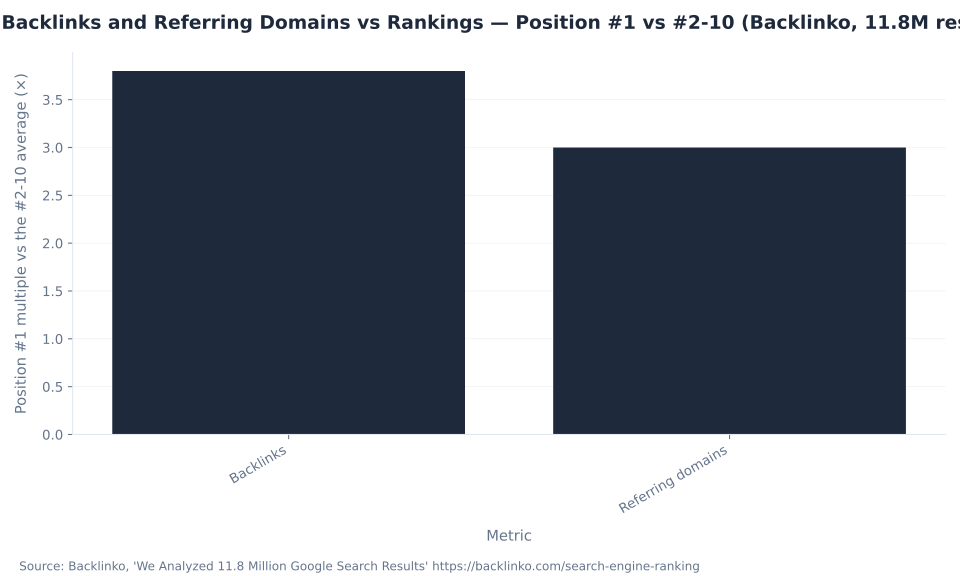
The #1 Google result has about 3.8× more backlinks — and roughly 3× more referring domains — than the average of positions #2–10 (Backlinko, 11.8M results). It is a correlation, not causation: the winning move is to earn links from diverse, authoritative sites, not to manufacture them.
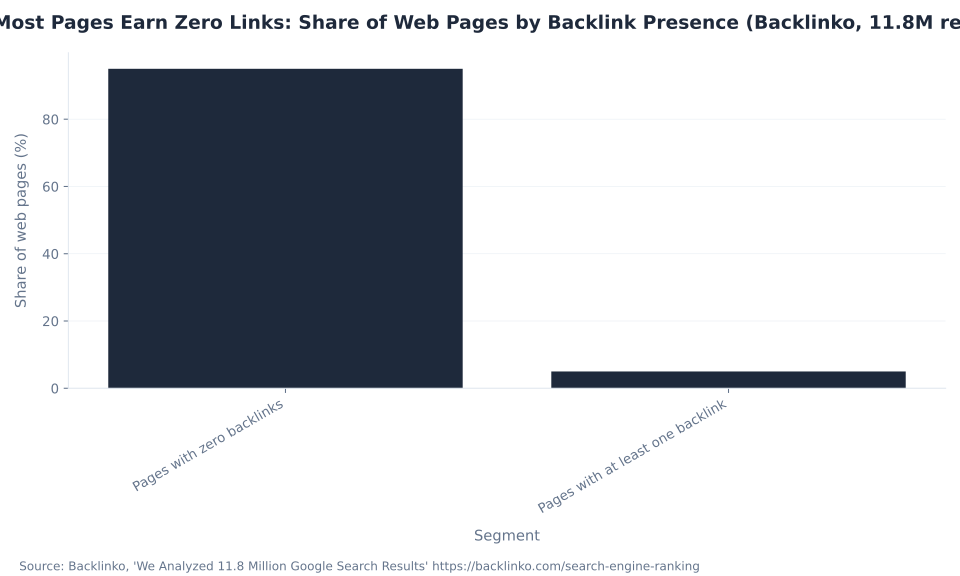
Backlinko 11.8M results · ~95% of pages have zero backlinks · rel=ugc + rel=sponsored since Sept 10, 2019 · nofollow a hint since Mar 1, 2020
What Is Link Building in SEO?
Link building is the practice of earning backlinks — links from other websites to yours — because backlinks, especially from many distinct, authoritative referring domains, are among the highest-correlating signals with how pages rank in Google. The goal is to earn editorial links by doing genuinely link-worthy work, not to manufacture them; the quality and diversity of your referring domains matter far more than raw link count.
A backlink is simply an inbound link: one site references another with a clickable link. When a relevant, authoritative site links to a page, it passes a signal of trust and relevance that Google uses as one input among many. Link building is the off-page discipline of increasing the number and quality of those inbound links — the core of off-page SEO. New to the topic entirely? Start with what SEO is, then return here for the off-page half of the picture.
The strongest public evidence that links still matter is Backlinko’s analysis of 11.8 million Google results (Table 1): the #1 result has about 3.8× more backlinks and roughly 3× more referring domains than the average of positions #2–10, and about 95% of pages have zero backlinks. That last figure is the honest reframing — most pages never earn a single link, so the pages that do earn a diverse referring-domain profile hold an outsized advantage. Read the number as correlation, not causation: high-ranking pages tend to have more links partly because good content earns links and ranks.
| Finding | Figure | What it means (correlation, not causation) |
|---|---|---|
| Backlinks at position #1 vs #2–10 | ~3.8× more | The top result tends to have far more total backlinks than the pages below it |
| Referring domains at #1 vs #2–10 | ~3.0× more | Links from many distinct sites correlate more strongly than raw link count |
| Pages with zero backlinks | ~95% | The vast majority of pages never earn a single external link |
| Nature of the relationship | Correlation, not causation | High-ranking pages tend to have more links; it does not prove links alone cause the ranking |
Source: Backlinko, “We Analyzed 11.8 Million Google Search Results” (backlinks ↔ rankings; referring domains among the highest-correlating factors; ~95% of pages have zero backlinks). Figures are approximate and describe correlation, not causation. Not mbadv data.
Why Backlinks Still Matter — Correlation, Not Causation
Backlinks remain one of the highest-correlating ranking signals in 2026, and that fact is the whole page. But the honest version carries a caveat most thin “link-building hacks” content drops: the relationship Backlinko measured is a correlation, not a causal law. High-ranking pages tend to have more links because link-worthy content both earns links and ranks — so the strategy is to build work worth linking to, not to chase raw volume.
The single most load-bearing number in Backlinko’s study is referring domains, not total backlinks. Links from many distinct sites correlate more strongly with rankings than a large count of links from the same few domains. One hundred links from one site is far weaker than links from twenty different authoritative sites. Referring-domain diversity is what compounds; raw backlink count is not. This is why buying a burst of links from a single network does nothing durable — and why a handful of genuinely earned editorial links from respected sites moves the needle.
The reframing changes the entire workflow. Instead of asking “how do I get more links,” the productive question is “what would a journalist, a resource page, or a peer site actually want to link to?” The most reliable answer is publishing link-worthy SEO content — original research, tools, and definitive guides that earn citations on their merits. MB Adv Agency frames it the same way for every client: earned links build the organic authority, and the paid search we run is the complement that turns that visibility into measurable pipeline.
How to Build High-Quality Backlinks (Backlinking Strategies)
The backlinking strategies that hold up in 2026 all share one property: they earn links by making something worth linking to. Quality and referring-domain diversity beat quantity every time, so the work is to create link-worthy assets and put them in front of the people who cite sources — journalists, resource-page curators, and subject-matter peers. Table 2 draws the bright line between sanctioned earning and the link schemes Google acts on.
Four white-hat methods do the heavy lifting. Digital PR turns a genuinely newsworthy story or dataset into editorial coverage and high-authority links. HARO and expert sourcing earn citations by answering journalist queries with real expertise. Broken-link building finds a dead resource on a relevant page and offers your working replacement — value for value. And linkable assets — original research, free tools, and definitive guides — attract links passively over time because they are worth referencing. Genuine guest contribution to a relevant publication is fine too; it is guest posting at scale for the anchors that crosses into a scheme.
The line you must not cross is equally clear. Google’s link-spam policy names buying or selling links that pass PageRank, excessive link exchanges, automated link programs and private blog networks (PBNs), and large-scale guest posting with keyword-rich anchors as violations. The rule that keeps you safe is the same rule that makes links effective: earn them by being worth linking to. For businesses that want the paid-search complement to their earned authority, MB Adv Agency runs lead-generation PPC that converts organic visibility into leads — and for SaaS brands running digital-PR link campaigns alongside paid, see SaaS PPC. Ahrefs’ link-building guide is a solid reference for the outreach mechanics.
| Tactic | Classification | Why |
|---|---|---|
| Digital PR / earning editorial coverage | ✅ White-hat | Earns editorial links from relevant, authoritative sites |
| HARO / journalist sourcing (expert quotes) | ✅ White-hat | Earns citations by providing genuine expertise |
| Broken-link building | ✅ White-hat | Replaces a dead resource with your working one — value for value |
| Linkable assets (original research, tools, data) | ✅ White-hat | Attracts links by being genuinely reference-worthy |
| Buying / selling links that pass PageRank | ✗ Black-hat (link scheme) | A direct violation of Google’s link-spam policy |
| Large-scale guest posting with keyword-rich anchors | ✗ Black-hat (link scheme) | Named in Google’s link-spam policy as a violation |
| Excessive link exchanges (“link to me, I’ll link to you”) | ✗ Black-hat | A violation when done at scale to manipulate ranking |
| Automated link programs / PBNs | ✗ Black-hat | Programmatic link creation built to manipulate ranking |
Source: Google Search Central — spam policies / link spam (link schemes: buying or selling links that pass PageRank, excessive exchanges, automated programs, and large-scale guest posting with keyword-rich anchors). Not mbadv data.
Link-Building Outreach Methods (And When Each One Fits)
There is no single “best” way to earn links — there is a portfolio of methods, each suited to a different situation. The reliable ones all earn links editorially; the point of Table 3 is to match a method to your assets, audience, and appetite for outreach, and to flag the one caveat that turns each tactic risky.
For a brand with a real story or dataset, digital PR earns the highest-authority links, though it compounds slowly and needs a genuine hook. For subject-matter experts, HARO and journalist sourcing convert expertise into citations. Resource and roundup pages reward patient broken-link building. And any business that publishes linkable assets — original research, a free tool, a definitive guide — earns links passively as other sites reference the work.
The method that gets businesses into trouble is guest posting. Contributing genuine, editorial content to a relevant publication is legitimate and useful; producing keyword-anchored guest posts at scale to manipulate ranking is a named link scheme. The safe test is intent: are you contributing because the audience is right, or because you want the anchor text? MB Adv Agency sees the strongest results when link earning pairs with a matching paid-search program — for DTC and ecommerce brands that lean on linkable assets and digital PR, see fashion and ecommerce PPC, and for end-to-end paid media alongside organic, our PPC services hub.
| Method | How it works | Best for | Caveat |
|---|---|---|---|
| Digital PR | Newsworthy story or data → journalist pitches → editorial coverage and links | Brand plus high-authority links | Needs a genuine story; slower to compound |
| HARO / expert sourcing | Respond to journalist queries with real expert quotes | Niche authority links | Requires genuine expertise; competitive |
| Broken-link building | Find dead links on relevant pages, offer your working replacement | Resource and roundup pages | Labor-intensive prospecting |
| Linkable assets / content marketing | Publish original research, tools, or definitive guides that attract links | Passive, compounding links | Requires upfront investment |
| Guest posting (genuine, editorial) | Contribute real content to relevant sites | Relationships plus referral traffic | ✗ At scale, for keyword anchors, it becomes a link scheme — keep it genuine, not programmatic |
| Unlinked-mention reclamation | Find brand mentions without a link, request the link | Known brands with existing mentions | Only works if you are already being mentioned |
Sources: Ahrefs and Moz link-building guides; the guest-posting-at-scale caveat is from Google’s link-spam policy. Not mbadv data.
Dofollow vs Nofollow Links (and rel=ugc / rel=sponsored)
For years the entire conversation was “nofollow vs dofollow.” That framing is now years out of date. A standard link — often called “dofollow,” though there is no such attribute — passes ranking signal. rel=“nofollow” tells Google not to pass that credit. The two attributes most guides still omit are rel=“ugc” and rel=“sponsored,” both introduced on Sept 10, 2019. Table 4 decodes all four.
The practical rules are simple. Use rel=“sponsored” for any paid, advertising, or affiliate link — Google prefers it over nofollow for paid links. Use rel=“ugc” for user-generated content such as blog comments and forum posts. Use rel=“nofollow” for links you cannot otherwise vouch for. You can combine values — rel=“ugc nofollow” is valid. A standard editorial link you genuinely endorse needs no rel value at all.
The correction that trips up most practitioners: since Mar 1, 2020, nofollow is a hint, not a directive. Google can still crawl a nofollowed link and use it for context and discovery — nofollow is not a crawl block. All three rel values became ranking hints in 2019, which means they tell Google how to treat a link for ranking, not whether to reach it. A page still teaching “nofollow blocks crawling” or omitting ugc and sponsored is describing the web of a decade ago. For where links sit inside site architecture and crawlability, see technical SEO.
| Attribute | What it tells Google | When to use it | Passes ranking signal? | Introduced |
|---|---|---|---|---|
| (standard / “dofollow”) — no rel value | A normal editorial endorsement you vouch for | Editorial links you genuinely stand behind | Yes — treated as a ranking hint | default (always) |
| rel=“nofollow” | “Do not associate my site with, or pass ranking credit to, this link” — a hint since Mar 1, 2020 | Links you cannot vouch for | Generally no; a hint (Google can still crawl and use it for context) | Jan 2005 |
| rel=“ugc” | Link came from user-generated content (comments, forum posts) | Comment and forum links your users create | Treated as a hint | Sept 10, 2019 |
| rel=“sponsored” | Link is paid, advertising, or affiliate | Any paid, ad, or affiliate link — preferred over nofollow for paid | Treated as a hint (should not pass rank) | Sept 10, 2019 |
| Combined (e.g. rel=“ugc nofollow”) | Multiple values are allowed | A user comment you also do not vouch for | Hint | multiple values supported |
Source: Google Search Central — “Evolving nofollow” (Sept 10, 2019) and “Qualify your outbound links to Google”; nofollow became a crawling/indexing hint on Mar 1, 2020. Not mbadv data.
Anchor Text in Link Building
Anchor text is the visible, clickable text of a link, and it works as a relevance signal: it gives Google context about the page being linked to. That makes it useful and, when abused, risky. An unnatural spike of exact-match keyword anchors is the classic Penguin-era manipulation pattern, so over-optimized anchors carry real risk. Table 5 maps the anchor types by their signal strength and their risk profile.
A natural backlink profile is dominated by branded anchors (“MB Adv Agency”), naked URLs, and partial-match phrases, with exact-match keyword anchors as the exception rather than the rule. Exact-match anchors carry the strongest topical signal but also the highest over-optimization risk; branded and naked-URL anchors carry little keyword signal but read as the most natural. Generic anchors (“click here”) and image links (where the alt text serves as the anchor) round out a realistic distribution.
The critical caveat is a hard rule for this whole program: “safe anchor ratios” are practitioner heuristics, not Google-published thresholds. Google evaluates anchor text as one relevance signal among many and publishes no percentage limit, so any content presenting a specific “natural anchor ratio” as Google guidance is inventing a number. The defensible advice is qualitative: earn links editorially and let the anchor mix stay natural — you rarely control the exact words another site uses to link to you, which is exactly why earned links look natural. This over-optimization pattern is part of the broader Google algorithm updates story. For a link-competitive professional vertical, see legal PPC.
| Anchor type | Example | Relevance signal | Over-optimization risk (practitioner view — NOT a Google threshold) |
|---|---|---|---|
| Exact-match | “link building services” | Strong topical signal | ✗ Highest — an unnatural spike of exact-match anchors is the classic Penguin-era manipulation pattern |
| Partial-match | “guide to building links” | Moderate signal | Lower |
| Branded | “Ahrefs” / “MB Adv Agency” | Low keyword signal, high trust | Very low — usually the most natural |
| Naked URL | “https://example.com” | Minimal keyword signal | Very low — natural |
| Generic | “click here”, “read more” | Little topical signal | Low |
| Image link (alt text) | (image; alt acts as the anchor) | Alt text serves as the anchor | Low |
Source: Moz anchor-text guidance; Google (Penguin legacy: Penguin Apr 2012 → core/real-time Sept 2016). “Safe ratios” are practitioner heuristics, not Google-published thresholds — Google evaluates anchor text as one relevance signal and publishes no percentage limit. Not mbadv data.
Link Juice and PageRank
“Link juice” — or the slightly more formal “link equity” — is an informal term for the ranking value a link passes from one page to another. It is not Google vocabulary, but the value it describes is real. The common claim that “PageRank is dead” is wrong: PageRank is still used internally. Only the public Toolbar PageRank died, back in 2016.
The distinction matters because a lot of stale advice is built on the confusion. The 2016 event was the retirement of the public Toolbar PageRank — the little green bar that showed a page’s score. PageRank the ranking signal never went away; a 2024 Google API leak surfaced a rawPagerank field, confirming it remains part of the internal machinery. So “link juice” is a fine shorthand for a real thing, even though you will not find the phrase in Google’s documentation. Table 6 separates the informal terms from the documented reality.
The practical takeaway: do not obsess over “sculpting link juice” with nofollow — that technique stopped behaving the way old guides describe years ago. Do understand that links still pass ranking value, that referring-domain diversity is what compounds externally, and that internal linking is the one link-equity lever you fully control — it distributes equity around your own site and is a technical SEO fundamental. Earning value from external links is the hard part; distributing it internally is the part you own.
| Term / claim | The documented reality | Source |
|---|---|---|
| “Link juice” / “link equity” | An informal term for the ranking value a link passes — useful shorthand, but not Google vocabulary | Industry convention |
| “PageRank is dead” | Wrong. PageRank is still used internally (a 2024 API leak surfaced a rawPagerank signal) | Search Engine Land |
| “Toolbar PageRank” | The public Toolbar PageRank was retired in 2016; that is the only PageRank that “died” | Search Engine Land |
| “Sculpt link juice with nofollow” | Stopped working the way old guides claim years ago; nofollow is a hint, not a plumbing valve | Google Search Central |
| Internal linking | Distributes link equity around your own site — a real, controllable lever you own end to end | Industry convention |
Source: Search Engine Land — Google removing Toolbar PageRank (2016); PageRank remains an internal signal (2024 leak: rawPagerank). “Link juice” and “link equity” are informal terms, not Google vocabulary. Not mbadv data.
Toxic Links and Penalties: The Myth vs the Reality
This is the highest-value correction on the page. “Toxic links” is a third-party-tool concept, not a Google concept. John Mueller of Google has said it plainly: “The concept of toxic links is made up by SEO tools so that you pay them regularly.” There is no Google “toxic links” classification, and Google automatically ignores the vast majority of spam links. Table 7 decodes the myth against the documented reality.
The mechanics back this up. The December 2022 link spam update (Dec 14, 2022 through Jan 12, 2023) was the first to use SpamBrain to neutralize — nullify — spammy links, turning off their credit rather than penalizing the site, with no Search Console notification. That means the anxiety loop — “a tool flagged toxic links, I must disavow” — is usually solving a problem Google already handles automatically. The disavow tool is only for sites with a manual action for unnatural links; Mueller has repeatedly said it is not part of normal site maintenance, and most sites should never touch it.
Where a real link penalty does surface, it is a manual action — a human reviewer’s decision that shows up in Search Console, not a “toxic link score” from a third-party tool. Google surfaces your backlinks and any manual action for unnatural links in the Links / Manual Actions & Security reports — the only place a genuine link penalty appears. The Dec 2022 update sits inside the broader Google algorithm updates timeline. MB Adv Agency’s guidance to clients is blunt: do not buy a “disavow service” to fix links Google already neutralizes on its own.
| Common claim (often from SEO tools) | Google’s actual position | Source |
|---|---|---|
| “Toxic links” are a defined category that hurt you | “Toxic links” is a concept made up by SEO tools, not a Google concept; Google auto-ignores the vast majority of spam links | Mueller (Search Engine Roundtable) |
| Bad links trigger an automatic penalty | The Dec 2022 link spam update uses SpamBrain to neutralize (nullify) spammy links — it does not penalize; no GSC notification | Google Search Central (Dec 2022 link spam update) |
| You should routinely disavow toxic links | Most sites should NOT use disavow; it is only for sites with a manual action for unnatural links | Google / Mueller (Search Engine Journal) |
| Nofollow blocks Google from crawling the link | nofollow is a hint (since Mar 1, 2020), not a crawl block; Google can still crawl | Google Search Central |
| PageRank is dead | PageRank is still used internally (2024 leak: rawPagerank); only the public Toolbar PageRank died in 2016 | Search Engine Land / Google |
Sources: Search Engine Roundtable (Mueller on “toxic links”); Google — December 2022 link spam update; Search Engine Journal (Mueller on the disavow tool); Google — Disavow backlinks. Not mbadv data.
Link-Building Myths vs Facts
Link building carries more stubborn myths than almost any other SEO topic, and each myth costs businesses either money or ranking. The five in Table 8 are the ones that most often send people down the wrong path — buying links they do not need, disavowing links Google already handles, or dismissing links that still deliver value.
The most expensive myth is “more backlinks always mean higher rankings.” It drives link-buying and PBN spend that does nothing durable, because it ignores the two facts that actually matter: referring-domain diversity beats raw count, and the relationship is correlation, not causation. The second most expensive is the “toxic links” and routine-disavow loop, which funnels money to tools and services for a problem Google neutralizes automatically. And “nofollow links are worthless” leaves value on the table — nofollowed links still drive referral traffic, brand exposure, and discovery, and since nofollow is a hint, Google can still use them for context.
The pattern across every myth is the same: they treat Google’s link handling as more fragile and more manipulable than it is. The durable strategy ignores the myths entirely — earn diverse editorial links, set rel attributes correctly, and let Google’s automatic systems handle the spam. For local businesses, citation and local-link tactics are covered in local SEO.
| Myth | Fact | Source |
|---|---|---|
| More backlinks always mean higher rankings | Quality and referring-domain diversity matter more than raw count; referring domains correlate more strongly, and ~95% of pages have zero backlinks — correlation, not causation | Backlinko |
| Nofollow links are worthless | Nofollow (and ugc/sponsored) links can still drive referral traffic, brand exposure, and discovery — and nofollow is a hint, so Google can still use context | |
| Toxic links will get you penalized | “Toxic links” is a third-party-tool concept; Google neutralizes most spam links automatically — no penalty | Mueller / Search Engine Roundtable |
| You must disavow bad links regularly | Disavow is only for sites with a manual action for unnatural links — not routine maintenance | Google / Search Engine Journal |
| PageRank no longer exists | PageRank is still used internally; only the public Toolbar PageRank was retired in 2016 | Search Engine Land |
Sources: Backlinko; Google Search Central; Search Engine Roundtable; Search Engine Land. Not mbadv data.
Link-Building Search Demand and Difficulty
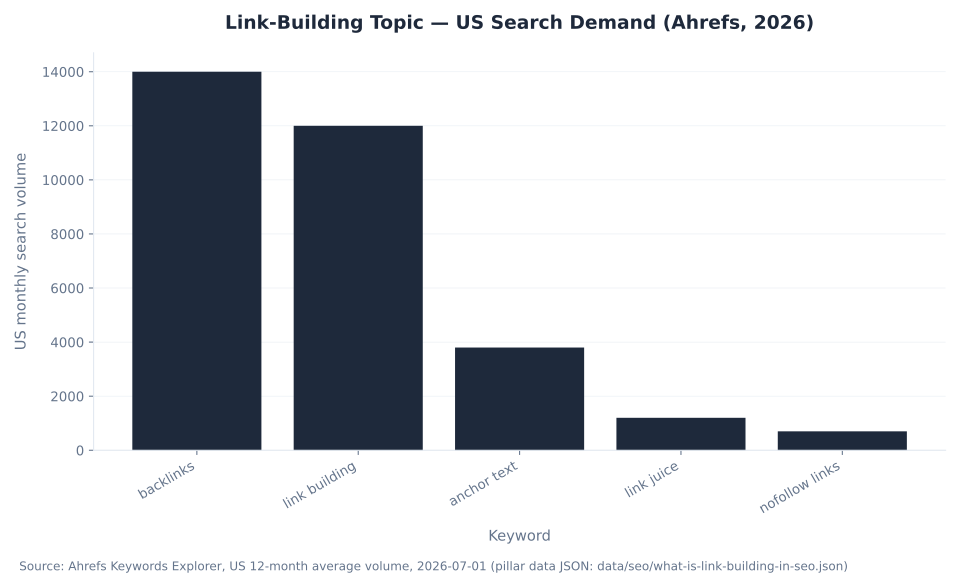
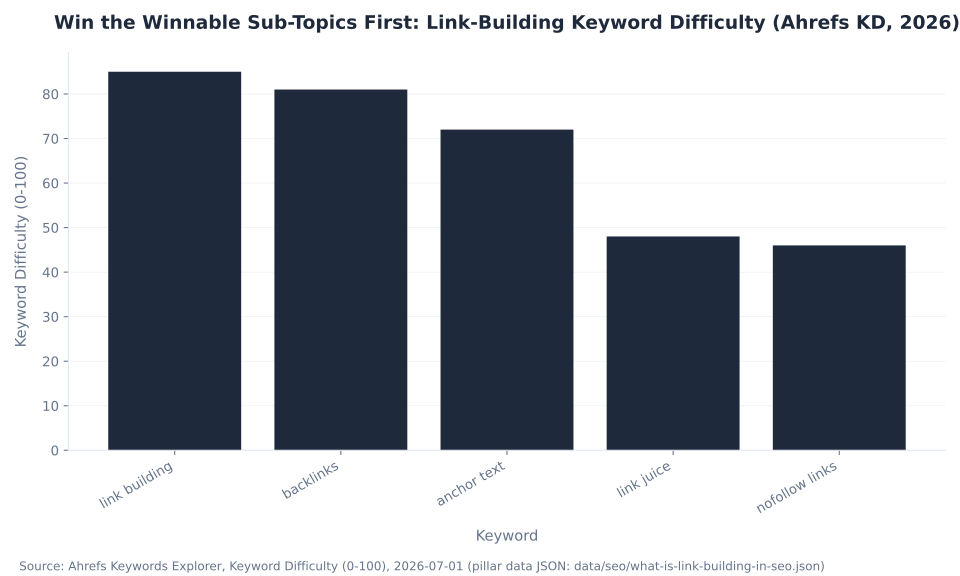
Demand for this topic is large and highly competitive. In Ahrefs’ US data (Table 9), “backlinks” runs 14,000 searches per month at Keyword Difficulty 81, and “link building” runs 12,000 at KD 85 — two of the highest-competition terms in the entire SEO cluster. Keyword Difficulty is an Ahrefs 0–100 estimate, not a Google figure.
The strategic read is to separate the head terms from the winnable long tail. “link building” (KD 85) and “backlinks” (KD 81) are terms you earn over time through topical authority, not overnight. The winnable sub-topics are “anchor text” (3,800/mo, KD 72), “link juice” (1,200/mo, KD 48), and “nofollow links” (700/mo, KD 46) — lower-competition terms this pillar concentrates so it can rank on the sub-topics while building authority toward the head terms. Attack the low-KD sub-topics with deep, correct content first.
This pillar consolidates a cluster of older pages into one authoritative guide, preserving their search footprints through anchored redirects. The one page with a real footprint — the former “top strategies for building high-quality backlinks” page — held 731 impressions at position 26.7 for the top query “backlinking strategies,” which the Search Console data confirms; that demand now lands in the backlinking-strategies section above. For teams pairing link building with paid search, MB Adv Agency runs B2B PPC; if you are weighing organic against paid spend, a Google Ads PPC audit shows where the paid budget is going.
| Keyword | US volume (12-mo) | Global volume | KD (0–100) | CPC (USD) |
|---|---|---|---|---|
| link building | 12,000 | 36,000 | 85 | $6.00 |
| backlinks | 14,000 | 47,000 | 81 | $4.50 |
| anchor text | 3,800 | 12,000 | 72 | $1.30 |
| link juice | 1,200 | 4,700 | 48 | $0.09 |
| nofollow links | 700 | 1,500 | 46 | $1.00 |
Source: Ahrefs Keywords Explorer (US 12-month average volume and Keyword Difficulty 0–100, an Ahrefs estimate, not a Google figure; pillar data JSON, 2026-07-01). GSC note: the absorbed page “top-strategies-for-building-high-quality-backlinks” held 731 impressions / 47 keywords / position 26.7 (top query “backlinking strategies”) in the 90-day window. Not mbadv data.
How to Approach Link Building the Right Way
The whole discipline reduces to one principle: earn links by being worth linking to, then set the technical details correctly and let Google’s automatic systems handle the rest. Table 10 turns that principle into a scannable do-this-not-that checklist that keeps you effective and out of link-scheme territory.
Start with the asset, not the outreach. A genuine linkable asset — original research, a free tool, a definitive guide — earns links on its merits and gives every outreach method something real to point at. Then earn those links from many distinct referring domains rather than piling up volume from a few sources, because diversity is what correlates with rankings. On the technical side, set rel=“sponsored” on paid and affiliate links, let anchor text stay natural, and use internal linking to distribute equity around your own site.
Just as important is what not to do: do not buy PageRank-passing links, do not force exact-match anchors, and do not routinely disavow “toxic” links Google already neutralizes. MB Adv Agency gives every client the same honest framing — we do not sell link building, and there is no shortcut that beats earning links editorially; what we run is the lead-generation PPC that turns the organic visibility your links build into measurable leads.
| Do this | Not that | Why |
|---|---|---|
| Publish linkable assets (research, tools, guides) | Buy links that pass PageRank | Earned editorial links compound; bought links are a scheme Google acts on |
| Earn links from many distinct referring domains | Chase raw backlink volume from a few sources | Referring-domain diversity correlates more strongly than raw count |
| Use rel=“sponsored” on paid/affiliate links | Leave paid links as plain followed links | Undisclosed paid links that pass PageRank violate the link-spam policy |
| Let anchor text stay natural (branded, URL, partial) | Force exact-match keyword anchors | An exact-match anchor spike is the classic Penguin-era risk |
| Trust Google to neutralize spam links automatically | Routinely disavow “toxic” links | Disavow is only for manual actions; the Dec 2022 update neutralizes spam |
| Distribute equity with internal linking | “Sculpt” PageRank with nofollow | Internal linking is the equity lever you actually control |
Sources: Google link-spam policy; Backlinko; Google — Dec 2022 link spam update. Not mbadv data.
Links Build Authority — Paid Search Builds Pipeline
Earn the links; let us run the paid side that compounds them
MB Adv Agency runs the Google Ads and PPC campaigns that complement your earned links and organic authority — turning organic visibility into measurable leads. We do not sell link building; we run the paid search that pairs with it. Talk to our team about the paid side of your growth.
Talk to our team →The rel-Attribute and Link-Spam Timeline (Why the Dates Matter)
SEO link mechanics drift on a timeline, and the dates are load-bearing — getting them wrong is what makes so much link-building content stale. Table 11 lays out the sequence that keeps the dofollow/nofollow, anchor-text, and toxic-links sections correct in 2026.
Two dates carry most of the weight. On Sept 10, 2019, Google introduced rel=“ugc” and rel=“sponsored” and turned all three rel values into ranking hints. On Mar 1, 2020, nofollow itself became a crawling and indexing hint rather than a directive. Together they retired the old “nofollow blocks crawling” model that predated them. The December 2022 link spam update then changed enforcement: SpamBrain now neutralizes spammy links rather than penalizing the site, which is why “link-spam updates penalize you” is a misread.
The Penguin lineage explains the anchor-text risk: Penguin launched in April 2012 and folded into the core algorithm, running in real time, in September 2016 — so anchor and link signals are continuous, not a periodic refresh you can wait out. And the 2016 Toolbar PageRank retirement, paired with the 2024 rawPagerank leak, is why “PageRank is dead” is wrong: only the public toolbar died. These corrections are the citation magnets on the page, and they sit inside the wider Google algorithm updates story.
| Date | Event | Why it still matters |
|---|---|---|
| Jan 2005 | rel=“nofollow” introduced (originally a directive) | The oldest rel value; its meaning changed in 2020 |
| Apr 2012 | Penguin launched (anchor-text / link manipulation) | Origin of the exact-match-anchor risk |
| Sept 2016 | Penguin became part of the core algorithm, real-time | Anchor and link signals are now continuous, not a periodic refresh |
| 2016 | Public Toolbar PageRank retired | Only the toolbar died — PageRank itself remains internal |
| Sept 10, 2019 | rel=“ugc” + rel=“sponsored” introduced; all three rel values became ranking hints | The attributes most guides still omit |
| Mar 1, 2020 | nofollow became a crawling/indexing hint, not a directive | Nofollow no longer blocks crawling |
| Dec 14, 2022 → Jan 12, 2023 | December 2022 link spam update — SpamBrain neutralizes spammy links | Spam links are nullified, not penalized |
| 2024 | Google API leak surfaced a rawPagerank signal | Confirms PageRank is still used internally |
Sources: Google Search Central (rel attributes, 2019/2020); Google — Dec 2022 link spam update; Search Engine Land (Toolbar PageRank, 2016). Not mbadv data.
Link Building in 2026: The Principles That Hold
Strip away the tactics and the myths, and link building comes down to a short list of principles that have survived every algorithm update. They are worth stating plainly because they are what separate durable authority from the link-buying churn that gets neutralized or penalized.
Earn, do not manufacture. Backlinks correlate with rankings because good content earns links and ranks — so the work is to build things worth linking to. Diversity over volume. Links from many distinct, authoritative referring domains compound; raw counts from a few sources do not. Set the attributes correctly. rel=“sponsored” for paid, rel=“ugc” for user content, rel=“nofollow” otherwise, and remember nofollow is a hint, not a crawl block. Let anchors stay natural. There is no Google-published anchor ratio; earned links look natural because you do not control the wording.
Trust the automatic systems. Google neutralizes the vast majority of spam links on its own; “toxic links” is a tool concept, disavow is for manual actions only, and PageRank is still working internally behind the scenes. The businesses MB Adv Agency works with that also invest in organic treat link building as a long-term authority play, not a quick hack — and they pair it with the paid search we run. For end-to-end paid media alongside your organic SEO, see our PPC services.
Frequently Asked Questions About Link Building
Pairing Organic With Paid?
A PPC audit shows where paid budget complements your earned links
If you are earning links and want paid search working alongside your organic authority, our team maps where budget converts — and where it does not. See where the paid complement fits.
Google Ads PPC audit →All PPC servicesMethodology & Sources
Every number in this guide is either Google-documented or attributed to a named authority, and no figure is a fabricated or client metric. The backlinks-and-rankings figures come from Backlinko’s analysis of 11.8 million Google results and describe correlation, not causation; the search-demand and difficulty numbers come from Ahrefs Keywords Explorer (US, 2026-07-01).
The link-mechanics facts are sourced to Google Search Central and named reporters: rel=“ugc” and rel=“sponsored” (Sept 10, 2019) and nofollow as a hint (Mar 1, 2020) from Google’s “Evolving nofollow” post; the December 2022 link spam update (SpamBrain neutralizes spam links) from Google Search Central; the disavow-for-manual-actions-only guidance from Google Search Help and John Mueller via Search Engine Journal; the “toxic links”-is-a-tool-concept correction from Mueller via Search Engine Roundtable; and the Toolbar-PageRank-retired-2016 / PageRank-still-internal facts from Search Engine Land. Keyword Difficulty is a proprietary Ahrefs 0–100 estimate, not a Google figure, and no anchor-text percentage is presented as Google guidance, because Google publishes none.
MB Adv Agency has no SEO or link-building service page and no link-building client dataset, so the point of view here stays qualitative: our team, the businesses we work with that also invest in organic, and the paid search we run that complements earned links. No client metric appears anywhere in this guide. Last updated 2026-07-01. To discuss the paid search that pairs with your organic authority, talk to our team.
In the vast landscape of digital marketing, search engine optimization (SEO) plays a critical role in enhancing website visibility and driving organic traffic. One fundamental aspect of SEO that can significantly influence a site's ranking on search engine results pages (SERPs) is link building. This article delves into what link building entails, its benefits, the different types of links, and the best practices for building quality links.
Definition and benefits
Link building is the process of acquiring hyperlinks from other websites to your own. A hyperlink, or link, is a reference that allows users to navigate between pages on the internet. When a website links to your content, it indicates to search engines that your site is a credible and valuable resource. This, in turn, can improve your site’s authority and ranking in SERPs.
The benefits of link building in SEO are manifold. Primarily, quality backlinks can lead to higher search engine rankings, which increases the likelihood of web traffic and potential conversions. Moreover, link building can enhance brand awareness as reputable sites linking to your content can introduce a wider audience to your brand. Additionally, a strong backlink profile can result in referral traffic, wherein users click on these links and navigate directly to your website, providing yet another avenue for potential customers.
Furthermore, link building can also contribute to the overall health of your website's SEO strategy. By diversifying your backlink profile with links from various sources, you can create a more robust online presence. This diversity not only helps to mitigate the risk of losing traffic due to changes in search engine algorithms but also positions your site as a well-rounded authority in your niche. Engaging in link building can also foster relationships with other businesses and influencers in your industry, leading to potential collaborations and partnerships that can further enhance your visibility and reach.
Improved search engine rankings
One of the primary benefits of link building lies in its ability to elevate search engine rankings. Search engines, like Google, utilize complex algorithms to determine the relevance and authority of a webpage. Backlinks act as votes of confidence, affirming to search engines that your content is credible and trustworthy. The more quality backlinks you have from authoritative sites, the more likely it is that your pages will rank higher in search results. Additionally, the context of the links matters; links from pages that are topically relevant to your content can carry even more weight, signaling to search engines that your site is not only popular but also relevant to specific queries.
Increased referral traffic
Link building also aids in driving direct traffic to your site through referral links. When another website links to yours, users who find that content interesting are likely to click through to learn more. This inbound traffic can not only boost your overall visitor counts but also enhance engagement and conversion rates if the content resonates with your audience. Moreover, the quality of this traffic is often higher, as users arriving through relevant links are typically more interested in your offerings, leading to increased chances of them becoming loyal customers. An effective link building strategy can therefore be seen as a way to not just increase numbers, but to attract the right kind of visitors who are more likely to convert.
Enhanced brand authority
Having quality backlinks from reputable sites can elevate your brand authority in your industry. When recognized brands reference your content, it builds trust and credibility among potential customers. This status as a thought leader can further solidify your place in the market, as users are more likely to engage with brands they perceive as knowledgeable and trustworthy. Additionally, being featured on high-authority sites can lead to further opportunities, such as speaking engagements, guest blogging, or even media features, which can amplify your brand's reach and influence. As your authority grows, so does your ability to influence industry conversations and trends, making link building a crucial component of long-term brand strategy.
Types of links (internal, external, backlinks)
Understanding the different types of links is essential for effective link building. There are several categories, each playing a distinct role in your SEO strategy. The three primary types include internal links, external links, and backlinks.
Internal links
Internal links are hyperlinks that point to another page on the same website. They help with navigation, allowing users to explore related content easily. Additionally, internal linking can distribute page authority throughout your site, improving the SEO of multiple pages. This practice is critical for creating a logical structure within your site and is a fundamental part of optimizing for both users and search engines. By strategically placing internal links, you can guide visitors through a curated path of content, encouraging them to spend more time on your site and reducing bounce rates. Furthermore, search engines use these links to crawl your site more effectively, ensuring that all your valuable content is indexed and accessible.
External links
External links are links that direct users to other domains. When you link to credible sources in your content, you provide additional context and information for your readers. This not only enhances the credibility of your content but can also foster relationships with those linked sites, which may lead to reciprocal linking opportunities in the future. Moreover, external links can enhance user experience by offering readers a broader perspective on the topic at hand, thereby enriching the overall quality of your content. It's important to ensure that the external sites you link to are reputable and relevant, as linking to low-quality or unrelated sites can negatively impact your own site's credibility and SEO performance.
Backlinks
Backlinks are links that come from external sites pointing back to your own. These are the most sought-after type of link in link building because they are seen as endorsements of your content. Search engines evaluate the quality and relevance of these backlinks when determining your website's overall authority. Hence, acquiring high-quality backlinks from reputable sources is pivotal for achieving a successful SEO strategy. Engaging in guest blogging, creating shareable infographics, and participating in industry forums are effective methods to earn backlinks. Additionally, monitoring your backlink profile is crucial; tools like Google Search Console can help you identify which sites are linking to you and assess the quality of those links. A healthy backlink profile not only boosts your SEO but also increases your site's visibility and trustworthiness in the eyes of both users and search engines.
Best practices for building quality links
Effective link building requires strategic planning and execution. It's crucial to focus on quality over quantity when it comes to acquiring links. Here are some best practices to keep in mind:

Create high-quality content
The cornerstone of any successful link building strategy is high-quality, valuable content. When you produce informative and engaging content, other websites are more likely to link to it. Whether through blog posts, infographics, or research articles, creating content that resonates with your audience can naturally attract backlinks. Ensure that your content addresses user needs and provides insights that are unique to your brand. Additionally, consider updating existing content to keep it relevant and fresh, as this can also encourage other sites to link back to your improved resources.
Engage in outreach
Link building often involves reaching out to other webmasters and bloggers in your niche. Personalized outreach can lead to link exchanges, guest blogging opportunities, and collaborations. By establishing genuine relationships with others in your industry, you can increase the likelihood of gaining valuable backlinks. Provide real value to their audience when reaching out, which can build goodwill and mutual benefit. Furthermore, attending industry conferences and networking events can enhance your outreach efforts, allowing you to connect with potential link partners face-to-face, thus fostering stronger professional relationships.
Utilize social media
Promoting your content on social media platforms can also enhance your link building efforts. When your content is shared broadly, it increases the chances of it being seen by other webmasters and bloggers who may link to it. Use platforms like Twitter, LinkedIn, and Facebook to disseminate your content effectively. Engaging with relevant communities can yield significant visibility for your brand. Consider creating shareable content specifically designed for social media, such as short videos or eye-catching graphics, to capture attention and encourage sharing among users, further amplifying your reach.
Monitor your backlink profile
Regularly assessing your backlink profile can help you identify what is working and what needs adjustment. Tools like Google Search Console and Ahrefs can provide valuable insights into your existing backlinks. Pay attention to which links are coming from high-authority sites and which ones are not benefiting your SEO efforts. This information can guide your future link building strategies. Additionally, keep an eye on your competitors' backlink profiles; understanding where they are getting their links from can offer inspiration and potential opportunities for your own link building initiatives.
Conclusion
Link building is an essential component of any successful SEO strategy. By understanding the different types of links and implementing best practices for building quality links, you can elevate your website’s authority, improve its search engine rankings, and enhance overall brand visibility. As the digital landscape continues to evolve, maintaining a focus on link building will remain a critical factor in your online success.


As a Google Ads expert, I bring proven expertise in optimizing advertising campaigns to maximize ROI.
I specialize in sharing advanced strategies and targeted tips to refine Google Ads campaign management.
Committed to staying ahead of the latest trends and algorithms, I ensure that my clients receive cutting-edge solutions.
My passion for digital marketing and my ability to interpret data for strategic insights enable me to offer high-level consulting that aims to exceed expectations.
Google Partner Agency
We're a certified Google Partner Agency, which means we don’t guess — we optimize withGoogle’s full toolkit and insider support.
Your campaigns get pro-level execution, backed by real expertise (not theory).

4.9 out of 5 from 670+ reviews on Fiverr.
That’s not luck, that’s performance.
Highly recommend Matteo to set up your server side tracking. He has a deep understanding of e-commerce tracking and will go above and beyond to make sure everything is set up correctly and working 100%. If you are scaling your store this set up is non-negotiable in my opinion and there isn't many people who have this much knowledge or put the effort in to get it right. Thanks again!
avorodesign.com
I can only recommend Matteo! He was very patient, professional and very knowledgeable about GA4, Consent Mode v2, and GDPR compliance. Communication was clear, and the setup was done professionally and efficiently. Highly recommend him for anyone needing reliable tracking implementation.
www.natureiki.life
Matteo shines in the realm of online professionals. His work is not only deep in data but also complemented by his proactive communication and cooperation, setting a new standard for freelancers. If you want someone who truly exceeds expectations, look no further. Highly recommended!

www.omanbeverlysmyth.com
Exceptional Service Beyond Expectations - Outstanding Service Impeccable depth, flawless delivery, and exceptional language fluency—this service exceeded all expectations. Highly recommended. Matteo truly ROCKS!!!
ium-paris.com
Top-notch, always highly value working with Matteo. An absolute Google Ads Genius. This is approximately the 8th time I have hired him and he's helped us get 6-7 ROAS. We are excited in continuing to improve our lead flow. Hire this guy if you need Google Ads help. Thanks Matteo!
www.dleeventgroup.com
I finally found the guy who can setup server side tracking and all the ecosystem properly. I definitely recommend Matteo. He is very responsive, kind and wants to dig into things. He configured GA4, Meta, Google Ads, Outbrain and google consent v2 with Cookiebot. Thanks Matteo.
inomega.fr
MB Adv delivered exceptional work with outstanding professionalism and lots of patience, taking time to see effects of changes made and not just do the work and submit it. The proactive communication and video summaries of the work completed made working with Matteo a pleasure, as he consistently went above and beyond. Highly recommended for web analytics projects! We are already working on another project.
www.withnellsensors.co.uk
Working with Matteo on my Google Ads was a game-changer. He's not just a strategist, he's a true partner. He understood my goals and tailored a campaign that perfectly reached my target audience. I'm grateful for his expertise and dedication.
dccargo.com
Click-driven mind
with plastic-brick obsession.
We build Google Ads campaigns with the same mindset we use to build tiny brick worlds: strategy, patience, and zero tolerance for wasted pieces.
Data is our blueprint. Growth is the only acceptable outcome.