Automotive Repair PPC Houston, TX
Houston's extreme heat — 90°F+ for 90+ consecutive days every summer — makes automotive AC repair the single highest-demand seasonal auto service in any major US market, spiking 40–60% June through August and rewarding the shops that have pre-staged campaigns before the heat arrives.
Houston Auto Repair PPC: Summer Heat, Hyper-Local Competition, and the Christian Brothers Factor
Houston's auto repair PPC market has a peculiar competitive dynamic: it's dominated at the brand level by a franchise that was founded in Houston. Christian Brothers Automotive — started in Houston in 1982 — now operates 300+ US locations and maintains a dominant branded and generic search presence in the metro that most independent shops can't match on head-to-head brand terms. Layer in Firestone, Jiffy Lube, Valvoline, Pep Boys, and Midas, and the national chain presence across commodity service terms (oil change, brake service, tire rotation) is significant. CPCs for competitive auto repair terms run $3–$12 — accessible — but the Quality Score and landing page optimization advantage that established chains carry compresses the margin for independent shops on broad terms.
The 2025 change in Texas vehicle inspection law adds a structural shift: Texas eliminated mandatory vehicle safety inspections in 2025. For years, annual inspection reminders drove routine shop visits with no advertising required — a captive annual touchpoint. That touchpoint is gone. Search behavior is now entirely symptom-driven: "check engine light," "brakes squealing," "AC not blowing cold." Shops that have historically relied on inspection-season walk-ins must now compete on symptom-specific search terms they've never prioritized before. The keyword strategy needs to reflect this shift.
Emergency vs. Planned Maintenance: Two Completely Different Conversion Behaviors
Houston auto repair searches split into two intent groups with opposite behaviors:
- Emergency searches (breakdown, warning light, AC failure): Mobile-dominant, immediate click-to-call, 30-second decision. The person is often literally in the car or roadside. Reviews are scanned, not read deeply. CVR 12–18% — the highest in auto services. CPC $6–$12.
- Planned maintenance searches (oil change, tire rotation, scheduled service): Price-comparison behavior; 2–3 shop comparison; Yelp + Google reviews read carefully. Lower urgency, more price sensitivity. CVR 5–8%. CPC $3–$7.
Running identical ad copy and landing pages for both behaviors loses both segments. Emergency searchers need a phone number above the fold and a "same-day service" promise — not a pricing table. Planned maintenance searchers want a competitive price anchor and review count. A single generic "auto repair Houston" campaign serves neither effectively.
The Summer AC Surge No Houston Shop Should Miss
Houston's 90+ consecutive days above 90°F every summer make auto AC repair the city's highest seasonal auto service demand — a category that doesn't exist at this scale in any northern US market. AC system failures, refrigerant depletion, and compressor burnouts spike 40–60% from June through August as vehicles operate under sustained extreme heat. A Houston auto shop that doesn't run dedicated AC repair campaigns in June is functionally invisible during its single highest-demand service window of the year. "Car AC repair Houston," "AC recharge near me Houston," and "auto AC not working Houston" are among the highest-intent, highest-CVR searches in the entire auto repair vertical — and they're available at moderate CPCs because most shops don't build dedicated campaigns around them.
Houston Auto Repair PPC: Service-Level Segmentation and Summer Staging
The strategic foundation is segmentation by service type and intent group — not one campaign covering all repairs. Each major service line (AC repair, brakes, oil change, diagnostic/check engine) has different CPCs, different CVRs, different seasonal peaks, and different competitive densities. Lumping them together produces mediocre performance across all of them simultaneously.
Platform Stack and Budget Allocation
Google Search Ads are the primary channel — emergency and diagnostic intent is hyper-search-driven. Google Local Services Ads (LSA / Google Guaranteed) are critical for trust: the badge provides the credibility signal that distinguishes an established independent shop from a chain with high turnover and upsell pressure. For planned maintenance (oil changes, tire rotations), Facebook Ads with price-anchor promotions and location-specific targeting drive coupon-driven visits at lower CPCs than Search. Yelp Advertising is worth a secondary allocation in Houston specifically — Houston auto repair customers use Yelp at higher rates than most markets, and an unoptimized Yelp profile with no advertising loses leads that Google Ads paid to attract.
A $2,500/month budget allocates to: $1,400 Google Search (AC, brakes, diagnostic, emergency terms), $600 LSA (Google Guaranteed, pay-per-lead), $300 Facebook (oil change promotions, maintenance coupons), $200 Yelp (profile ads). Scale to $4,000–$5,000 in June for AC surge season.
Keyword Groups by Service and CPC Range
- AC repair — summer surge: "car AC repair Houston," "AC recharge Houston TX," "auto AC not working Houston," "car AC service near me" — $5–$12 CPC; CVR 12–18%; highest-priority June–August
- Emergency / diagnostic: "check engine light Houston TX," "mechanic near me Houston," "auto repair emergency near me," "car won't start Houston" — $6–$12 CPC; immediate click-to-call intent
- Brake and maintenance: "brake repair Houston TX," "oil change near me Houston," "transmission repair Houston," "tire shop Houston TX" — $3–$8 CPC; planned maintenance behavior
- Post-flood vehicle: "flood car inspection Houston," "water damage car repair Houston," "flood vehicle assessment Houston" — $4–$9 CPC; low competition, recurring seasonal demand after storms
- Spanish-language: "mecánico cerca de mí Houston," "reparación de auto Houston TX," "taller mecánico Houston" — $2–$6 CPC; minimal competition, East Houston/Pasadena targeting
Geographic Targeting: Hyper-Local Radius Strategy
Auto repair is the most hyper-local of all Houston home service verticals — customers will not drive more than 8–15 miles to a mechanic under normal circumstances, and emergency searchers want the nearest available shop. Build campaigns around a tight radius from your shop location. For shops in higher-income areas (The Woodlands, Memorial, Sugar Land), layer in premium service messaging (European vehicle specialists, advanced diagnostics) and slightly higher bids — the average repair value is higher and the close rate from quality searchers is better. For shops in East Houston and Pasadena, Spanish-language campaigns with bilingual service messaging capture the large Hispanic vehicle-owner population at significantly lower CPCs than English-only competitors in the same radius.
Google Partner Agency
We're a certified Google Partner Agency, which means we don’t guess — we optimize withGoogle’s full toolkit and insider support.
Your campaigns get pro-level execution, backed by real expertise (not theory).

Houston Auto Repair Market: The Climate and Structural Factors Driving Demand
Houston's auto repair market supports 3,000–3,500 independent shops alongside a significant chain presence, serving a city where car dependency is structural and unavoidable. Houston's minimal transit infrastructure means nearly all residents drive, and most drive extensively. The average Houston commute is 27.3 minutes by car; multi-vehicle households are common across all income levels. High mileage on congested highway corridors — I-10, I-45, I-610 — accelerates brake wear, tire wear, and transmission stress at rates above national averages.
The Climate Stress Factor Is Unique in the US
No other major US market puts vehicles under sustained thermal stress comparable to Houston's summer. 90+ consecutive days above 90°F, with heat indices regularly hitting 105–112°F, accelerate compressor failure, tire blowouts from road surface heat, battery drain, and radiator overheating at rates that northern mechanics don't see. AC system failures are the most direct consequence — and the most profitable seasonal service for an independent shop that runs dedicated AC repair campaigns. The shops that build separate summer AC campaigns each April and activate them fully by Memorial Day weekend consistently report their highest lead volume months of the year from June through August. Those that don't run any AC-specific PPC leave a predictable, high-volume seasonal spike on the table year after year.
The 2025 Texas inspection elimination shifts keyword strategy permanently. Pre-2025, shops could rely on "vehicle inspection Houston" and "Texas safety inspection near me" as a steady source of walk-ins. That compliance-driven search volume is gone. The replacement is symptom-specific: "check engine light won't go off Houston," "brake grinding noise Houston TX," "car shaking highway speed." Shops that have updated their keyword lists to reflect this transition are already capturing volume their competitors haven't adjusted for yet.
Post-Flood Vehicle Inspection: A Recurring Niche
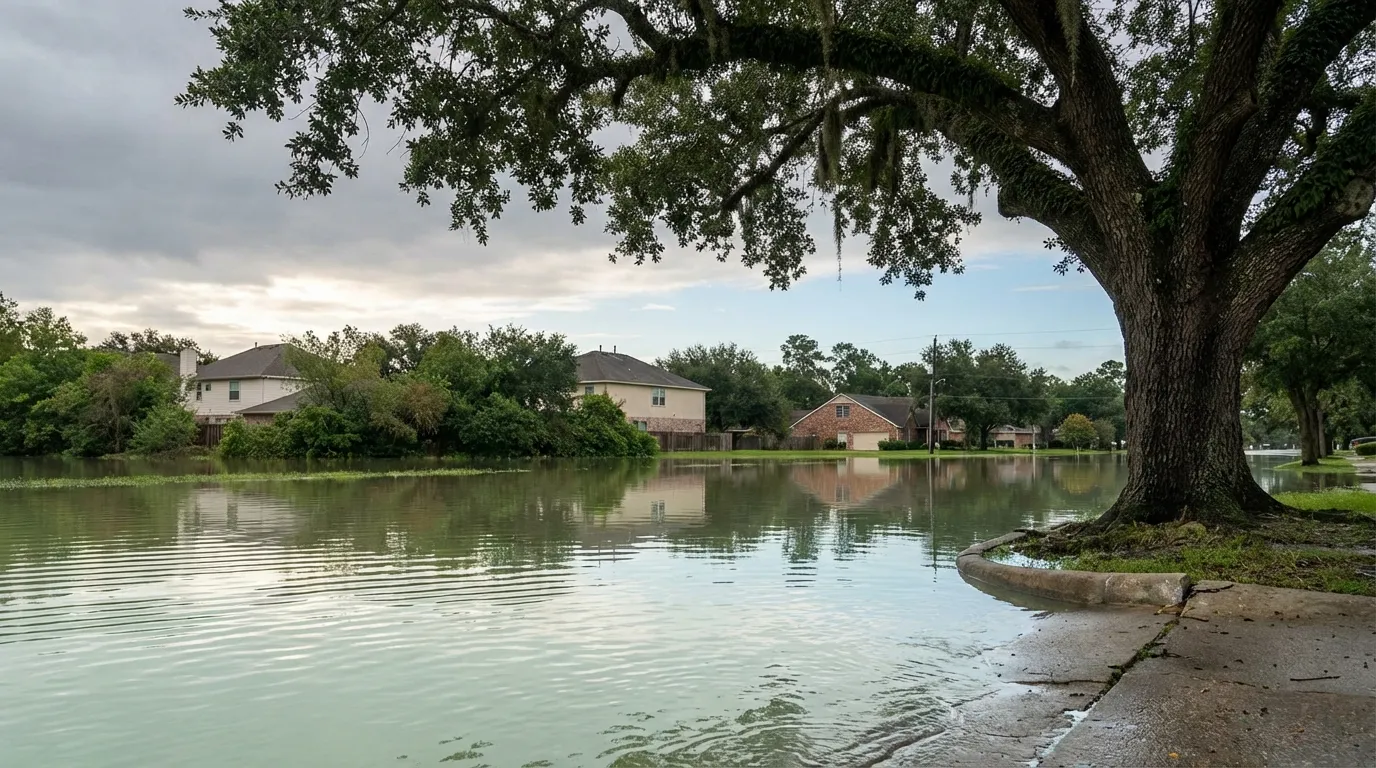
Houston's chronic flooding — from hurricanes, tropical storms, and the city's 2,500+ miles of overflow-prone bayous — creates recurring demand for flood vehicle inspection and restoration. Harvey alone damaged tens of thousands of vehicles; subsequent flood events continue to generate this demand. "Flood car inspection Houston" and "water damage vehicle Houston TX" are actively searched, frequently after major rain events, with minimal advertiser competition. Shops with experience identifying flood damage, drying interiors, and assessing electrical systems have a genuine service differentiator that PPC can amplify — and a keyword category with almost no competition.
A national auto repair PPC agency treats "mechanic Houston" as a single keyword with a single strategy. Local knowledge understands that Pasadena and East Houston shops serving working-class and industrial employee households need Spanish-language campaigns with click-to-call as the primary CTA — because the customer is often calling from a disabled vehicle near the petrochemical corridor, not browsing from a desktop. It knows that Memorial and Galleria-area shops can differentiate on European vehicle expertise and extended diagnostic capability, serving the luxury car density of those neighborhoods at higher average ticket values. It knows that Christian Brothers Automotive's hometown brand presence means local independent shops cannot compete on "Christian Brothers alternatives" terms — they need to compete on specific service lines and neighborhood terms where the franchise's metro-wide messaging doesn't match their hyper-local reality.
MB Adv Agency builds Houston auto repair PPC campaigns segmented by service type and intent group — with dedicated summer AC surge campaigns, separate emergency and planned maintenance ad groups, and bilingual targeting for East Houston and Pasadena. Our lead generation approach is structured around your specific service mix and neighborhood, not a franchise playbook applied uniformly across 300+ locations.
View transparent pricing for Houston auto repair campaigns — no long-term contracts, no setup fees.
Frequently Asked Questions
How much does auto repair PPC cost in Houston?
A competitive Houston auto repair PPC campaign costs $1,500–$3,000/month for an independent shop targeting a single location's service radius. CPCs run $3–$12 across primary repair and maintenance keywords — among the most accessible CPCs of any home service vertical in Houston. At a $1,500/month budget, a well-structured campaign generates 20–35 qualified leads per month (phone calls and appointment requests) at a cost-per-lead of $35–$65.
June through August warrants a dedicated AC surge budget increase. The 40–60% spike in AC repair demand during Houston's sustained summer heat creates a window where the ROI per ad dollar is higher than any other period of the year. A shop that increases its budget to $3,000–$4,000 in June, with dedicated "car AC repair Houston" and "AC recharge near me" campaigns, typically sees its best month of the year from a lead-to-revenue standpoint. The return is predictable enough to plan for — not a reactive response to a surprise event.
Google LSA is particularly cost-effective for auto repair: pay-per-lead pricing of $20–$50 per verified contact at verified quality means the risk of wasted spend is low. Emergency repair leads from LSA close at 50–70%+ because the searcher is actively in need — not just researching. The combination of Search + LSA covers both the emergency-intent and planned-maintenance segments with appropriate cost structures for each.
What is the best season to run auto repair PPC in Houston?
Unlike most US markets, Houston auto repair has no meaningful slow season — the climate keeps vehicles in active use and stress year-round. But demand does concentrate into distinct peaks that should shape budget allocation across the calendar.
- June–August (AC season): Peak period for the single highest-demand service. Budget up 50–100% above baseline. Run dedicated "car AC repair Houston" campaigns. This is the highest ROI window of the year for any Houston shop that does AC work.
- January–March (post-holiday maintenance): Deferred repairs come due; people address issues avoided over the holidays. Good period for diagnostic and general maintenance campaign focus.
- October–November (pre-winter maintenance): Mild planning activity; battery, brakes, and tires before cooler weather. Moderate volume, lower competition than summer.
- Post-storm (any month): Flood vehicle inspection demand spikes within 24–48 hours of a major rain or hurricane event — deploy "flood car inspection" campaigns immediately, reduce after 4–6 weeks.
Year-round campaign continuity is important: pausing entirely in December loses Quality Score and keyword history that directly affects CPC in the first months of the following year. Maintain a base budget of $800–$1,200/month in the slowest months, scaling aggressively for AC season and post-flood demand windows.