HVAC PPC Houston, TX
Houston runs 90+ consecutive days above 90°F every summer, with heat indices regularly hitting 105–112°F — making HVAC PPC in Houston the most urgency-driven home service category in the country, where a failed air conditioner triggers an emergency call within minutes and the first credible contractor in search wins the job. <!-- stats-article-link --> <p><em>See how this city's Hvac PPC costs compare nationally in our <a href="/resources/hvac-ppc-statistics">Hvac PPC Statistics</a> report, featuring data from 40+ US cities.</em></p>
Why Most Houston HVAC Campaigns Fail Before Summer Even Starts
Houston's HVAC PPC market is one of the most competitive home service environments in the United States — and the failure mode is almost always the same. A contractor launches in June, burns through a $3,000 monthly budget in two weeks, generates a handful of leads, and concludes that "Google Ads doesn't work." The actual problem: they entered peak-season competition without the Quality Score, campaign structure, or budget architecture that established advertisers built over the preceding twelve months.
CPCs for Houston HVAC keywords range from $12 to $45 in normal conditions. Emergency phrases like "AC not working Houston" and "HVAC emergency repair near me" regularly exceed $50 per click during sustained heat events. The competition behind those prices is institutional. ARS/Rescue Rooter, One Hour Air Conditioning & Heating, and Aire Serv run year-round Houston campaigns with mature Quality Scores and multi-year conversion histories. Local heavyweights Abacus Plumbing, Air & Electric and ABC Home & Commercial Services compound the pressure with heavy TV and radio spend that inflates branded search volume. An account launching in June is bidding against advertisers who have been optimizing since February.
Houston's Five-Month Hot Season Breaks Northern PPC Templates
National HVAC PPC templates are built for a two-to-three month peak season. Houston's hot season runs effectively May through October — five consecutive months of active emergency demand. Houston records 90+ consecutive days above 90°F annually, with July average highs of 95°F and heat indices hitting 105–112°F on peak days. The city averages 10–15 days per year above 100°F. When temperatures stay at 98°F for two weeks, HVAC emergency calls don't taper — they compound. Emergency AC replacement searches spike 300–400% above baseline during sustained heat events, and at those temperatures homeowners do not comparison-shop. They call the first credible company that appears in search. Campaigns that haven't pre-staged summer budgets and built Quality Score before May are invisible in that window — or paying $15–$20 more per click than entrenched competitors for the same ad position.
Metro-Wide Targeting Drains Budget Across 669 Square Miles
Houston's city limits span 669 square miles — larger than the entire city of Los Angeles. A single metro-wide HVAC campaign spreads budget across zip codes with dramatically different household incomes, competitive densities, and language preferences. The Woodlands (average household income $90K–$150K+) and Katy require premium service messaging; they convert on speed, reliability, and certifications. East Houston and Pasadena serve a Spanish-dominant homeowner population that responds to entirely different ad copy. Bellaire, West University, and Meyerland have aging housing stock averaging 25–40 years — a constant replacement market — but their behavior is completely different from the new-construction suburbs in Katy and Pearland. One campaign dilutes messaging across all of these simultaneously and fails all of them.
The bilingual gap amplifies this problem. Houston's population is 44.1% Hispanic. Spanish-language HVAC searches in Southwest Houston, Gulfton, and Pasadena face 30–50% lower CPCs than their English equivalents — yet most HVAC companies run zero Spanish-language campaigns. The competitive vacuum is real: high homeownership rates in these neighborhoods mean genuine emergency demand, with almost no advertisers capturing it. A campaign that doesn't include bilingual targeting isn't just leaving money on the table — it's functionally invisible to nearly half of Houston's potential HVAC market.
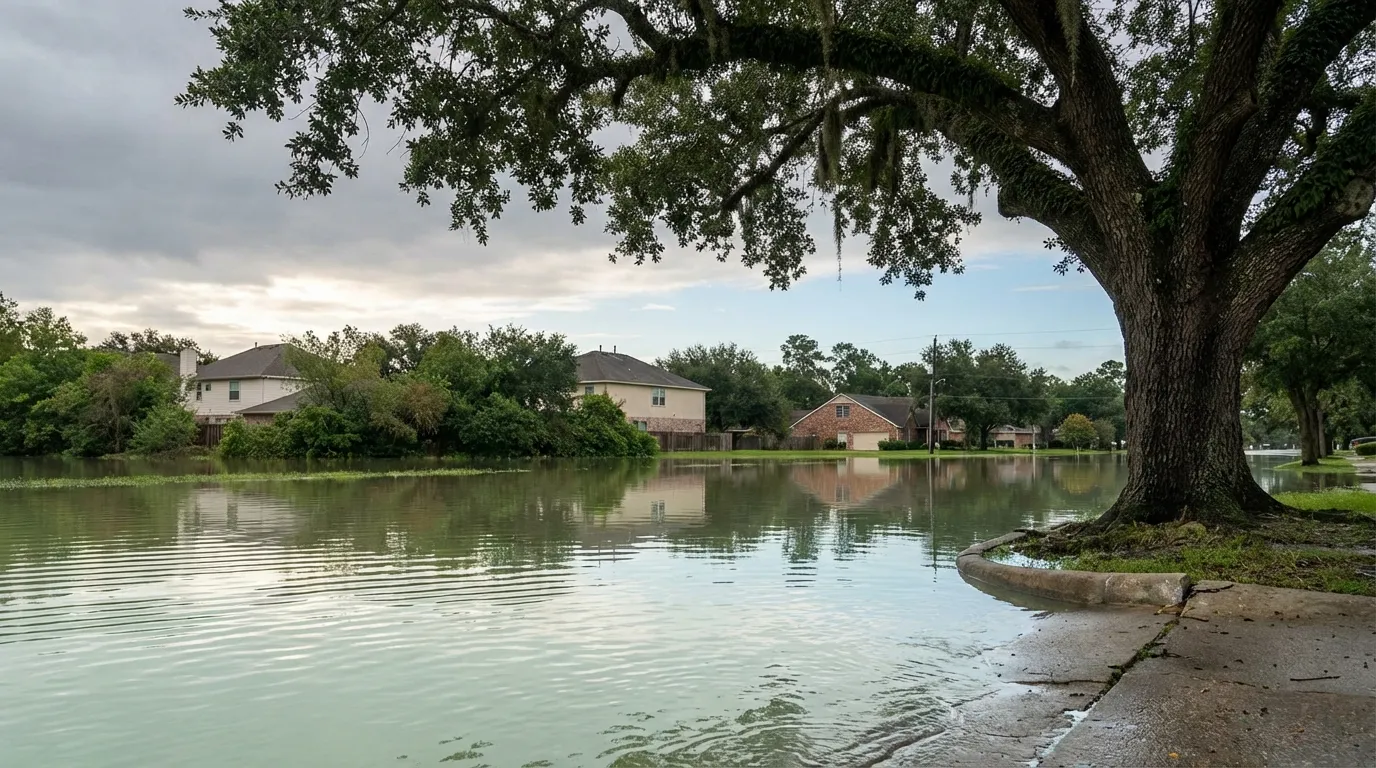
Hurricane season (June–November) adds a demand layer that no national template anticipates. Tropical storms cause power surge damage and lightning strikes on outdoor condenser units; flooding disables ground-level equipment. During active storm recovery, "storm-damaged AC unit replacement" searches spike alongside water damage queries — a Houston-specific keyword cluster that requires a pre-staged response campaign, not a last-minute keyword addition after the fact.
Campaign Architecture That Converts in Houston's HVAC Market
Winning Houston HVAC PPC requires a layered structure: the right platform stack, submarket-specific targeting, pre-staged seasonal budgets, and bilingual ad groups. Each element is necessary — none alone is sufficient. The companies that dominate Houston HVAC search year after year have all four pieces running simultaneously.
Platform Stack: Search + LSA as the Core Combination
Google Search Ads capture the emergency and replacement intent that drives HVAC revenue. Google Local Services Ads (LSA) — Google's pay-per-lead format with the Google Guaranteed badge — appear above standard search results and generate leads at $25–$65 per verified contact. For emergency HVAC searches, the Google Guaranteed badge is the highest-trust signal available: a homeowner in a 98°F house is not reading reviews carefully — they're calling the first credentialed company they see. LSA is not optional in this market. Facebook and Instagram Ads serve a supporting role: spring tune-up promotions, maintenance agreement campaigns, and retargeting homeowners who visited the site but didn't call. Facebook's value is in shoulder-season lead volume and maintenance program enrollment, not emergency response.
A $5,000/month budget allocates approximately: $2,500 to Google Search (emergency and replacement keywords), $1,500 to LSA (pay-per-lead, highest-quality contacts), $700 to Facebook (seasonal promotions, retargeting), $300 to display/remarketing. In summer surge months — June through August — scale to $8,000–$12,000. The ROI per dollar invested is highest during peak season.
Keyword Groups by Intent and CPC Range
- Emergency repair: "AC not working Houston TX," "emergency AC repair [suburb]," "HVAC emergency near me" — $25–$50 CPC; highest urgency, CVR 10–15%
- Replacement/installation: "AC unit replacement Houston," "HVAC replacement cost," "new air conditioner installation Houston TX" — $20–$40 CPC; high job value ($4,000–$12,000)
- Maintenance and tune-up: "AC tune-up Houston," "HVAC maintenance near me," "air conditioner service Houston" — $12–$22 CPC; shoulder season volume
- Spanish-language: "reparación de aire acondicionado Houston," "técnico de AC Houston TX," "emergencia AC Houston" — $8–$18 CPC; 30–50% lower than English equivalents, minimal competition
Geographic Targeting: Separate Campaigns Per Submarket
Build separate ad groups — or separate campaigns for high-value areas — targeting The Woodlands and Spring (premium messaging, higher bids warranted by higher job values), Katy and Cypress (suburban family households, emphasize speed and response time), Pearland and Sugar Land (high homeownership, bilingual opportunity in southern Pearland), and Pasadena / East Houston (Spanish-language primary campaign; zip codes 77503, 77502, 77081). Geographic separation lets copy, bids, and landing pages match each audience — and prevents one metro-wide budget from burning on incompatible zip codes simultaneously.
Pre-stage a storm-response campaign — built and paused, ready to activate — with messaging like "Storm-damaged AC? Emergency replacement available 24/7." When a tropical storm or heat wave event occurs, the campaign activates within hours. Competitors who react manually lose the first 48 hours of peak demand every time. That first-mover window is where the highest-urgency calls happen and where CPL is lowest relative to conversion value.
Key negative keywords to exclude from all campaigns from day one:
- "DIY," "how to fix," "YouTube," "parts," "diagram," "certification," "jobs," "HVAC school," "training program"
- "Rent," "apartment maintenance," "landlord," "commercial only" (if residential-focused)
Google Partner Agency
We're a certified Google Partner Agency, which means we don’t guess — we optimize withGoogle’s full toolkit and insider support.
Your campaigns get pro-level execution, backed by real expertise (not theory).

Houston HVAC Market: What the Numbers Actually Show
Houston's HVAC market supports an estimated 4,000–5,000 licensed contractors in the metro — but raw count overstates real competition. Only a fraction run consistent, optimized PPC campaigns year-round. Most rely on referrals, truck branding, and seasonal bursts. The window for a company with proper campaign structure is genuine: in a market where emergency intent peaks at 300–400% above baseline and advertiser sophistication per capita is low, Quality Score and campaign continuity compound into measurable cost efficiency over time.
The Climate Economics That Define the Market
Houston's combination of extreme heat and Gulf Coast humidity is uniquely punishing on HVAC systems. Compressors fail more frequently, refrigerant depletes faster, and capacitors burn out earlier than in drier climates. Average home age in target neighborhoods like Heights, Meyerland, and Pasadena is 25–40 years — a large installed base of aging equipment due for replacement. The replacement market runs year-round; summer simply accelerates it to emergency velocity.
The five-month hot season creates economics unavailable in northern markets. A Dallas HVAC company competes for emergency AC calls roughly 60 days per year. A Houston company competes for 150+ days. That extended window means well-run campaigns with high Quality Score produce ROI across nearly half the calendar year, not just a narrow peak window. The math on campaign investment is fundamentally different — and significantly more favorable — than any comparable northern city.
The Bilingual PPC Opportunity No One Is Capturing
Houston's 44.1% Hispanic population is the most underexploited HVAC PPC audience in the metro. Homeownership in Hispanic-majority zip codes — Gulfton (77081), Sharpstown (77036), Pasadena (77503/77502) — is substantial. These are homeowners with real HVAC systems that break down in 100°F summer heat. Spanish-language HVAC keywords like "reparación de aire acondicionado Houston" and "técnico HVAC Houston TX" carry CPCs 30–50% lower than English equivalents because almost no local HVAC companies have built Spanish-language campaigns. A company willing to invest in bilingual creative — Spanish ad copy, Spanish landing pages, bilingual on-call staff — reaches high-homeownership neighborhoods at materially lower cost-per-lead than English-only campaigns in the same market.
Houston added 139,789 new metro residents in 2023 — growth concentrated in Katy, Pearland, and The Woodlands. New construction in these corridors creates fresh installation demand from households at $90K–$150K household income who pay premium for speed and reliability. These submarkets reward submarket-specific campaigns more than any other targeting approach.
A national PPC agency doesn't know that the Energy Corridor runs on oil-industry schedules — that commercial HVAC calls peak before 8am when floor managers start their day, and that same-day commercial service commands a premium that residential campaigns don't reflect. They don't know that Meyerland and Memorial flood repeatedly in hurricane season, making "storm-damaged unit replacement" ad messaging convert dramatically better than standard emergency copy during active storm recovery. They don't know that Katy's new-construction growth rate makes installation follow-on campaigns unusually productive for HVAC companies already active in the western suburbs.
MB Adv Agency builds Houston HVAC PPC campaigns with genuine submarket knowledge — separate targeting for The Woodlands, Katy, Sugar Land, Pearland, and East Houston, with pre-staged summer surge budgets and Spanish-language ad variants for the bilingual market. Our lead generation approach is built around emergency intent: getting your phone ringing when a family's AC goes down at 3pm on a 100°F afternoon in Pearland. That's the moment the campaign earns its cost — and it takes Houston-specific strategy, not a national template, to be there consistently.
Ready to own Houston HVAC search results this summer? View transparent pricing — no long-term contracts, no setup fees.

Frequently Asked Questions
How much does HVAC PPC cost in Houston?
A competitive Houston HVAC PPC campaign costs $2,500–$5,000/month during shoulder seasons (September through April) and $5,000–$10,000/month in peak summer (May through August), when emergency replacement searches spike 300–400% above baseline. CPCs for emergency keywords like "AC not working Houston" range from $25 to $50; maintenance and tune-up terms run $12–$22.
Google Local Services Ads (LSA) offer an effective entry point. The pay-per-lead model ($25–$65 per verified contact) means you pay only when a qualified customer contacts you directly — not for impressions or clicks. Most Houston HVAC companies see first leads within 1–3 days of LSA activation. At a combined Google Search + LSA budget of $2,500/month, a well-structured campaign generates 20–30 qualified leads per month at a cost-per-lead of $40–$80 for emergency repair and $80–$150 for full system replacement.
One Houston-specific budget reality: June and July require a dedicated surge allocation regardless of annual plan. During heat events above 100°F — Houston averages 10–15 per year — competitor bids escalate sharply. A campaign without a budgeted summer surge cap exhausts its daily budget by 10am on the hottest days, going dark exactly when the highest-value emergency calls occur. Build the surge into your annual plan before April — reactive budget increases mid-June cost significantly more per lead than pre-staged campaigns that are already optimized when peak demand arrives.
When should Houston HVAC companies start Google Ads?
The right answer is April — six weeks before summer competition peaks. Campaigns launched in May or June compete against accounts with higher Quality Scores, refined negative keyword lists, and months of conversion data informing bid strategies. A six-week head start lets you build Quality Score, eliminate wasted clicks, optimize landing page conversion rates, and position for maximum visibility when temperatures hit 95°F+ in early June.
Houston's hot season runs effectively May through October — twice the duration of a typical northern US peak season. There is no single "peak week" to time around. This extended window means a well-structured campaign produces positive ROI across nearly six consecutive months — the investment math is fundamentally more favorable than any comparable market. The implication is also clear about winter: don't pause campaigns entirely. Accounts paused between December and March lose accumulated Quality Score and conversion history, re-entering spring at a measurable cost disadvantage. Maintain a base budget of $1,500–$2,000/month year-round to preserve campaign health and capture fall maintenance searches, then ramp aggressively as summer approaches.
The most expensive pattern Houston HVAC companies fall into: launching in June after the first heat wave, overpaying for every click in peak competition, then pausing entirely by November. This produces the highest CPLs (entering peak competition cold) and wastes the shoulder-season maintenance traffic that pre-sells customers before emergency season begins. Year-round continuity with seasonal budget adjustments consistently outperforms the reactive launch-and-pause cycle — particularly in a five-month market where there's no recovery time if you miss the ramp.