Real Estate PPC Houston, TX
With 45,000+ active HAR members competing for buyer and seller leads in a metro where Zillow and Realtor.com dominate broad keywords, Houston real estate PPC rewards agents who compete on neighborhood specificity, flood zone expertise, and the bilingual reach that the portals structurally cannot provide. <!-- stats-article-link --> <p><em>See how this city's Real Estate PPC costs compare nationally in our <a href="https://www.mbadv.agency/ppc-industry-statistics/real-estate-ppc-statistics">Real Estate PPC Statistics</a> report, featuring data from 40+ US cities.</em></p>
Houston Real Estate PPC: Competing Against Portals With Unlimited Budgets
Houston's real estate PPC market presents one of the starkest budget asymmetry problems in any US industry vertical. Zillow, Realtor.com, and Redfin aggressively buy Houston real estate keywords at scale — "Houston homes for sale," "homes for sale Katy TX," "Houston real estate agent" — with budgets that dwarf any individual agent or small brokerage. These platforms have spent years accumulating Quality Score on every major Houston real estate keyword and have built landing page experiences specifically optimized to capture leads for resale to agents. An individual agent bidding on "Houston homes for sale" against Zillow is not competing; they're subsidizing Zillow's impression share while generating zero leads from the same auction.
The raw competitive density is extreme. HAR (Houston Association of Realtors) counts 45,000+ active members — one of the largest realtor associations in the US. Many of these agents run their own Google Ads or Facebook campaigns, creating dense competition at the individual agent level on top of the portal competition above them. CPCs reflect this reality: buyer lead terms run $3–$12 for broad searches, but seller-side terms like "sell my home Houston" reach $15–$25+ because seller leads are far more valuable (one listing versus one buyer transaction) and everyone in the market is bidding on them.
The Post-Harvey Flood Zone Dimension No Portal Addresses
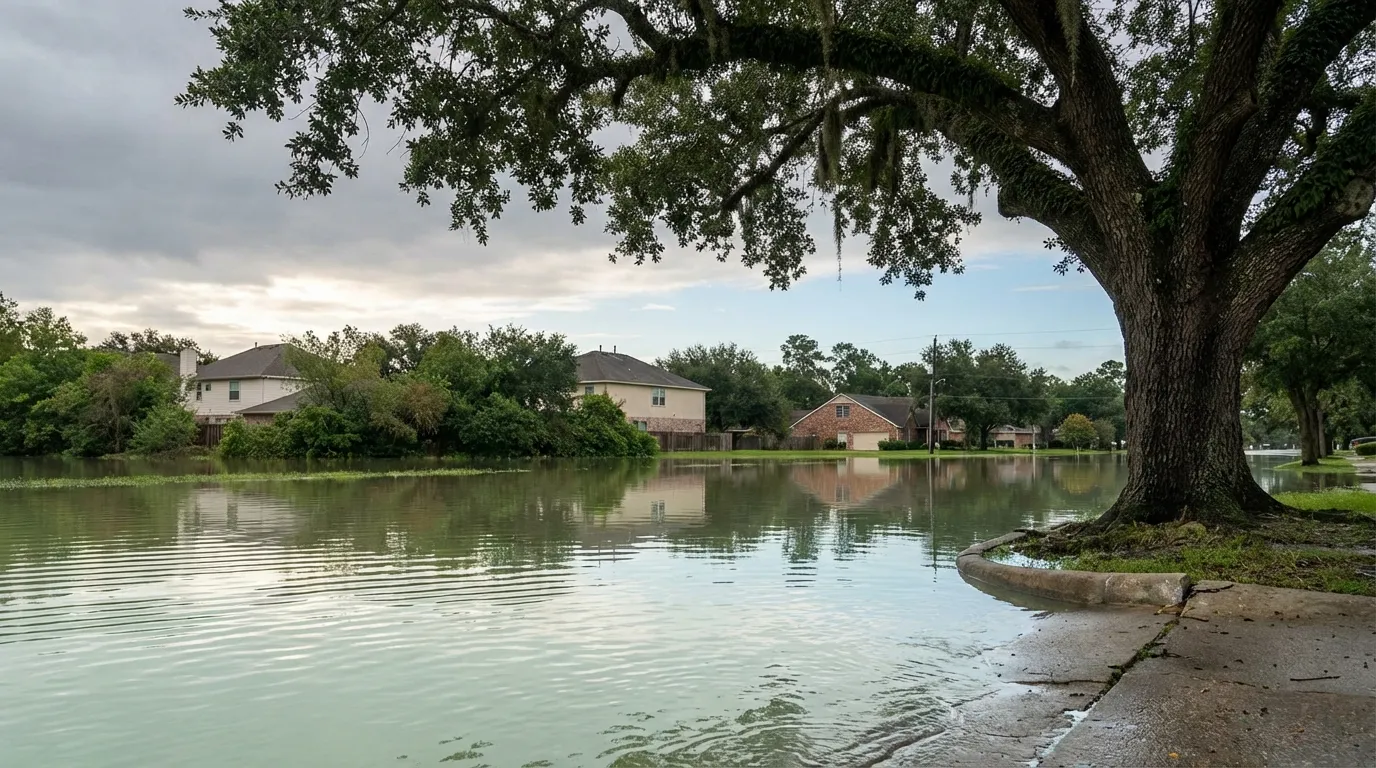
Since Hurricane Harvey (2017), flood zone status is the #1 buyer concern in Houston real estate. Buyers — particularly those relocating from out of state — actively search for "flood zone Houston homes," "non-flood zone neighborhoods Houston TX," and "Harvey flooded homes Houston" before any other market research. Zillow's landing pages don't provide detailed flood zone analysis. Redfin surfaces FEMA maps but doesn't provide local expertise. An agent with demonstrable flood zone expertise — who can explain Harris County's HCFCD buyout program, evaluate specific neighborhoods' Harvey flood history, and help buyers navigate the specific flood insurance implications of different zip codes — has a positioning angle that no portal can replicate and that converts well in Google Search because the search intent is highly specific.
Houston's 42% Homeownership Rate Creates a Structural Opportunity
Houston's homeownership rate is 42% — dramatically below the US national average of 65%. This gap is not primarily demographic; it reflects the large number of Houstonians who rent out of choice or circumstance in a city with historically affordable single-family housing. The renter-to-buyer conversion opportunity is substantial, particularly in gentrifying neighborhoods like Heights, Montrose, Midtown, and EaDo where rising rents are pushing long-term renters toward purchasing. Agents who target first-time buyer search terms in these zip codes — "first time home buyer Houston TX," "how to buy a home Houston," "FHA loan Houston real estate agent" — access a large, underserved audience that portals also don't address well.
The Spanish-language real estate gap mirrors the broader Houston bilingual PPC opportunity. 44.1% of Houstonians are Hispanic; many are homeowners or first-time buyers in the fast-growing suburbs of Katy, Pearland, and the Northside corridor. Spanish-language real estate terms like "agente de bienes raíces Houston TX" and "casas en venta Houston TX" carry CPCs 50–70% lower than English equivalents, with almost no competition from independent agents running bilingual campaigns.
Houston Real Estate PPC Architecture: Specificity Over Volume
The core strategic principle for Houston real estate PPC is that specificity beats volume at every level — neighborhood-specific over metro-wide, seller over buyer, niche positioning over generic "Houston real estate agent." Every layer of specificity reduces competition and improves conversion because the intent is more qualified when it arrives.
Platform Stack: Search + Facebook as Primary Combination
Google Search Ads capture the immediate intent of buyers searching neighborhoods and sellers researching home values. Facebook and Instagram Ads are unusually effective in real estate because the decision timeline is weeks-to-months, visual listing photos convert well, and Facebook's demographic and behavioral targeting (recent life events, income range, homeownership status) allows precise audience segmentation that Google Search cannot match. A Houston agent running Facebook "coming soon" listing ads or neighborhood market report ads to specific zip codes in The Woodlands reaches buyers at the consideration stage before they've started Googling specific addresses — ahead of portal competition entirely.
A $4,000/month budget allocates to: $2,000 Google Search (seller intent + flood zone + relocation terms), $1,500 Facebook/Instagram (listing ads, neighborhood guides, first-time buyer targeting), $300 Google LSA or retargeting, $200 Zillow Premier Agent (optional; only if the practice area economics justify shared lead cost). Do not spend the majority of budget on buyer-side Google Search terms where Zillow dominates — concentrate there only on specific neighborhood or niche terms where the portal's generic messaging can't compete.
Keyword Groups by Audience and CPC Range
- Seller intent (highest value): "sell my home Houston TX," "home value Houston," "list my house Houston," "top real estate agent Houston TX" — $12–$25 CPC; highest conversion value; one listing = one transaction
- Buyer — neighborhood-specific: "homes for sale The Woodlands TX," "houses for sale Katy TX under 400k," "Pearland TX new homes" — $4–$10 CPC; specific enough to avoid portal head-term competition
- Flood zone and relocation: "flood zone Houston homes for sale," "relocating to Houston TX real estate," "non-flood zone Houston neighborhoods" — $5–$15 CPC; very high intent, specialized expertise required to convert
- First-time buyer: "first time home buyer Houston TX," "FHA loan realtor Houston," "how to buy a home Houston" — $5–$12 CPC; large underserved segment, lower portal competition
- Spanish-language: "agente de bienes raíces Houston TX," "casas en venta Houston TX," "comprar casa Houston" — $3–$8 CPC; 50–70% below English equivalents
Geographic Targeting: Submarket Campaigns Over Metro-Wide
Build separate campaigns or strong bid adjustments for each submarket you actively serve. The Woodlands (77380–77382), Katy (77494), Sugar Land (77478–77479), and Pearland (77584) each have different competitive densities, different buyer profiles, and different messaging requirements. A single metro-wide "Houston real estate agent" campaign is competing against 45,000+ HAR members and three national portals simultaneously. A "best real estate agent The Woodlands TX" campaign competes against a fraction of that field, with messaging that can reference specific sold properties, neighborhood days-on-market data, and school district expertise that no portal can match.
Google Partner Agency
We're a certified Google Partner Agency, which means we don’t guess — we optimize withGoogle’s full toolkit and insider support.
Your campaigns get pro-level execution, backed by real expertise (not theory).

Houston Real Estate Market: The Data Points That Drive Strategy
Houston's real estate market combines extraordinary volume with structural dynamics that create specific PPC opportunities unavailable in other major metros. Houston added 139,789 new metro residents in 2023 — a population surge that keeps new home permits among the highest nationally (47,000+ in 2023) while simultaneously driving demand in the existing home market as new arrivals buy and current residents move up. The metro's flat topography, no zoning laws, and historically affordable land enable development at a velocity that sustains agent volume at the high end of any US market.
The Corporate Relocation Market Is Structurally Underserved in PPC
Houston's energy, petrochemical, and medical sectors generate a significant and high-value corporate relocation market year-round. ExxonMobil, Shell, Chevron, and ConocoPhillips relocate executives and technical staff to Houston on predictable cycles; Texas Medical Center's 120,000+ employees represent a constant flow of new medical professionals incoming from out of state. These relocating buyers are highly paid, often working with a relocation package that includes closing cost assistance, and are on a compressed timeline — they need to find a home before a start date. They search from Dallas, San Francisco, or New York: "relocating to Houston TX real estate agent," "best neighborhoods Houston TX for families," "Energy Corridor Houston homes."
Very few Houston agents run PPC campaigns targeting out-of-state relocation searches. This is a significant gap: CPCs on relocation-intent terms run $6–$15, competition is thin because most Houston agents only target local searchers, and the average transaction value from a relocating buyer is higher than a local move-up buyer. An agent with a relocation specialist positioning, a dedicated landing page featuring Houston neighborhood guides, and targeted ads in energy-sector cities (Midland, Calgary, Houston satellites) reaches this audience before they ever arrive in the city.
Spring Selling Season: Budget Concentration vs. Year-Round Distribution
Houston's peak real estate season — February through June — coincides with its highest CPC period for all real estate keywords. The conventional wisdom is to increase budget for spring. The contrarian approach with strong supporting evidence: off-peak months (July–September, November–January) often produce lower CPL despite slower overall market activity, because competitor spending drops while motivated buyers and sellers remain active. An agent running consistent year-round campaigns at moderate spend often achieves better annual CPL than one who concentrates all spend in the competitive spring window and goes dark in the fall.
A national real estate PPC agency sees "Houston homes for sale" and bids on it. Local knowledge understands that targeting that term means bidding against Zillow's $50K+/month campaigns on a keyword they've been optimizing for a decade. It knows that flood zone expertise converts in specific Harvey-affected zip codes — Meyerland, Memorial, Greens Bayou — where buyers are actively searching for agents who know which streets flooded and which didn't, and that a landing page answering "did [specific street] flood in Harvey?" converts dramatically better than a generic home search page. It knows that the Northside corridor (77093, 77076) has a growing Hispanic homebuyer population in the $200K–$350K range that almost no agents are targeting with Spanish-language campaigns, and that "comprar casa Houston TX" is an underpriced keyword with real conversion demand behind it.
MB Adv Agency builds Houston real estate PPC campaigns built on neighborhood specificity, seller-side conversion optimization, and bilingual reach — structured to avoid the portal keyword competition trap and focus spend where individual agents can actually win. Our lead generation approach is built around the specific positioning that converts in your submarket, not a generic real estate template.
See our transparent pricing for Houston real estate campaigns — no long-term contracts, no setup fees.

Frequently Asked Questions
How much should a Houston real estate agent spend on Google Ads?
Individual Houston agents typically invest $1,500–$4,000/month in Google Ads and Facebook combined, with the most effective allocation weighted toward Facebook for buyer reach and Google for seller intent. Seller-side Google campaigns — "sell my home Houston," "home value Houston TX" — are the highest-value investment: CPCs of $12–$25 are higher than buyer terms, but a single secured listing at 3% commission on a $350,000 home generates $10,500, covering months of ad spend from one conversion.
The minimum viable budget for competing on Houston real estate Google Search is $1,500/month — lower than that and daily budget caps prevent full-day coverage of search queries. Facebook can deliver meaningful reach at $800–$1,200/month with tighter audience targeting. For a combined Search + Facebook approach, $2,500–$3,500/month is the sweet spot for individual agents targeting 2–3 specific submarkets. Agents attempting to cover the entire metro at that budget will dilute spend too broadly to generate consistent lead volume from any single submarket.
For Spanish-language campaigns, the budget math is particularly compelling: $800–$1,500/month targeting Spanish-dominant zip codes in Katy, Northside, and Pasadena can generate 10–20 buyer consultations per month at CPLs of $60–$120 — well below what English-only campaigns in comparable submarkets produce. The bilingual investment is the highest-ROI entry point for an agent willing to serve Houston's Spanish-dominant homebuyer market.
How do Houston real estate agents compete against Zillow and Realtor.com in PPC?
Competing with Zillow on broad Houston real estate terms is a losing proposition for any individual agent — the budget gap is too large and Zillow's Quality Score advantage on those terms is years in the making. The winning approach shifts competition to three areas where portals are structurally weak:
- Neighborhood hyperspecificity: Zillow's landing pages can't match an agent's "The Woodlands TX real estate — 47 sales in 2024, local since 2012" positioning. Neighborhood-specific terms with specific proof points convert at rates portals can't touch, at CPCs 40–60% below broad metro terms.
- Flood zone expertise: Zillow surfaces FEMA maps. An agent with a dedicated "Harvey flood history by neighborhood" landing page and specific knowledge of which streets flooded answers the question that post-Harvey Houston buyers are actually asking. No portal can replicate that specific local content, and it ranks and converts on flood-specific search terms where Zillow doesn't compete effectively.
- Facebook relocation targeting: Portals don't run Facebook ads targeting oil and gas workers in Midland or Calgary with "relocating to Houston?" messaging. An agent who does reaches high-value relocation buyers before they search Google, at Facebook CPCs well below what Google Search charges for the same audience after they've already started searching.