Construction PPC Denver, CO
Denver's construction market has been in a sustained boom since 2010, but a booming market doesn't mean easy leads — it means 2,800 contractors competing in a fragmented Google Ads auction where the contractors who specialize win and the generalists bleed budget on "contractor Denver" keywords they can't profitably convert. With skilled trades in short supply across Colorado and homeowners in Highlands, Wash Park, and Cherry Creek budgeting $20,000–$150,000 for remodels, the PPC opportunity is real — but only for campaigns built around Denver's neighborhood economics and four-season project cycle. <!-- stats-article-link --> <p><em>See how this city's Construction PPC costs compare nationally in our <a href="https://www.mbadv.agency/ppc-industry-statistics/construction-ppc-statistics">Construction PPC Statistics</a> report, featuring data from 40+ US cities.</em></p>
The Denver construction PPC market is deceptively difficult. On the surface, demand looks strong: a growing population, a 15-year boom in residential renovation, and a luxury market concentrated in neighborhoods where homeowners routinely commission $50,000–$150,000 projects. But the 2,800 construction contractors in the metro create an auction environment where broad keywords like "general contractor Denver" or "home remodeling" attract bids from solopreneurs, mid-size firms, national networks, and everyone in between — and the resulting CPC of $15–$25 on medium-intent searches often doesn't yield the call-through rates that justify the spend.
The Low-Intent Research Problem
Construction searches differ fundamentally from HVAC or roofing searches in one critical way: most of the search volume is research-phase, not hire-phase. Someone searching "kitchen remodeling Denver" is most likely looking at photos, thinking about a project they might start in three to six months, and not ready to call a contractor. Campaigns that bid on these terms without segmenting by intent signal spend significant budget reaching homeowners who are emotionally engaged but months away from a buying decision. Colorado Dream Builders (18 employees, custom homes and remodels, 4.8 stars Google) and Denver Remodeling Group (12 employees, kitchen and bath specialist) both compete for this research-phase traffic — but the contractors who convert more efficiently are the ones who send research-phase searchers to educational content rather than a generic "call us today" landing page.
The portfolio trust problem compounds the low-intent challenge. 85% of Denver homeowners review contractor portfolio photos before making initial contact. Campaigns that don't surface portfolio imagery in display or responsive search formats — or that drive all traffic to homepages without neighborhood-specific project galleries — lose the visual credibility check before the phone rings. A contractor with a strong portfolio in Highlands remodels who fails to show that work in their PPC-linked pages is handing leads to competitors with weaker work but better presentation.
Seasonal Budget Mismatches
Denver construction runs on a pronounced four-season cycle. Summer (June–August) represents 35–40% of annual project revenue, while winter (November–February) drops to 10–15% — exterior work stops when snow arrives, and interior remodels slow as homeowners prioritize holidays over project decisions. Contractors running flat monthly budgets systematically underfund the summer peak and waste spend during the winter slow period. The correct approach commits 40–45% of annual budget to June–August, ramps in spring as outdoor project searches accelerate, and scales back to a maintenance level in November and December.
The neighborhood concentration of premium projects creates another strategic divide. A contractor building a presence in Highlands, Wash Park, or Cherry Creek — where average project budgets run $30,000–$150,000 — requires different campaign architecture than one targeting volume across Aurora, Thornton, and Lakewood. Premium neighborhood campaigns should prioritize appointment booking and consultation CTAs (longer sales cycle, higher close value). Volume zone campaigns should emphasize fast estimate turnaround and price transparency (more competitive, price-sensitive buyers).
The foundational structural decision for Denver construction PPC is intent segmentation: separating research-phase keywords from hire-phase keywords and building different campaigns, landing pages, and CTAs for each. Research-phase searches ("kitchen remodeling ideas Denver," "contractor cost estimates," "bathroom renovation before after") deserve content-forward landing pages that capture contact information through a consultation offer, not a hard close. Hire-phase searches ("kitchen contractor Denver," "licensed contractor near me," "deck builder schedule estimate") warrant an immediate booking CTA and availability messaging.
Keyword Groups and CPC Ranges
- Hire-phase specialty (highest priority): "kitchen contractor Denver," "bathroom remodeler Denver," "deck builder Denver," "licensed general contractor" — CPC $10–$18; highest intent; conversion rates 15–25% to booked estimate
- Hire-phase broad: "general contractor Denver," "home remodeling contractor," "remodeling contractor near me" — CPC $15–$25; medium intent; send to portfolio landing pages
- Neighborhood-specific (premium zones): "Highlands remodel contractor," "Cherry Creek kitchen renovation," "Wash Park home renovation" — CPC $12–$20; low competitive density; high-value conversions
- Research-phase (lead capture): "kitchen remodeling Denver," "bathroom renovation cost," "home renovation ideas" — CPC $8–$15; route to educational content with consultation CTA; lower CPA but longer pipeline
- Emergency/damage: "contractor water damage," "emergency repair contractor," "structural repair Denver" — CPC $20–$30; high urgency; strong call intent; small volume but strong conversion
For premium neighborhood campaigns, bid multipliers of +35–40% in Highlands (80204), +30–35% in Wash Park (80209), and +25–30% in Cherry Creek (80206) reflect the higher project values in those zip codes. A kitchen remodel in Cherry Creek averages $45,000–$75,000; the same project scope in Aurora averages $18,000–$30,000. The bid premium for Cherry Creek clicks is justified by the margin differential, assuming the contractor can close at premium pricing.
Facebook and Instagram deserve a larger allocation (15%) for construction than for trade services like HVAC or pest control. Construction is inherently visual — before/after galleries, mid-renovation progress content, and finished project photography generate engagement and remarketing audiences that warm research-phase leads over time. Running Facebook ads to homeowners in Highlands and Wash Park zip codes with Highlands-specific kitchen or bathroom renovation portfolio content generates consultation requests at $50–$80 CPL — lower than search CPL for the same audience segment.
Google Partner Agency
We're a certified Google Partner Agency, which means we don’t guess — we optimize withGoogle’s full toolkit and insider support.
Your campaigns get pro-level execution, backed by real expertise (not theory).

The defining feature of Denver's construction market is the labor constraint. Colorado faces one of the most acute skilled trades shortages in the country — electricians, plumbers, finish carpenters, and tile setters are booked weeks to months in advance in peak season. This creates a counterintuitive PPC dynamic: in a labor-constrained market, the contractor who books projects earliest in the decision cycle wins the job, even if they're not the cheapest quote. Homeowners who understand that good contractors are scarce don't comparison shop as aggressively. PPC campaigns that communicate scheduling urgency ("Summer Schedule Filling Fast — Request Your Estimate Now") close faster than campaigns that compete on price alone.
The 1970s Housing Stock Renovation Wave
Denver's housing stock is concentrated in a renovation sweet spot. The city's major residential build-out happened from the 1960s through the 1990s, meaning hundreds of thousands of homes are now 35–60 years old and approaching or past their original kitchen, bathroom, and structural component lifecycles. Congress Park, Speer, Five Points, and Baker neighborhoods — all popular with the 35–44 professional demographic that drives Denver's fastest-growing income bracket — are full of homes where the bones are good but the kitchens and bathrooms haven't been touched since the Reagan era. This creates durable renovation demand that doesn't depend on population growth or new construction — it's driven by the age of the existing stock.
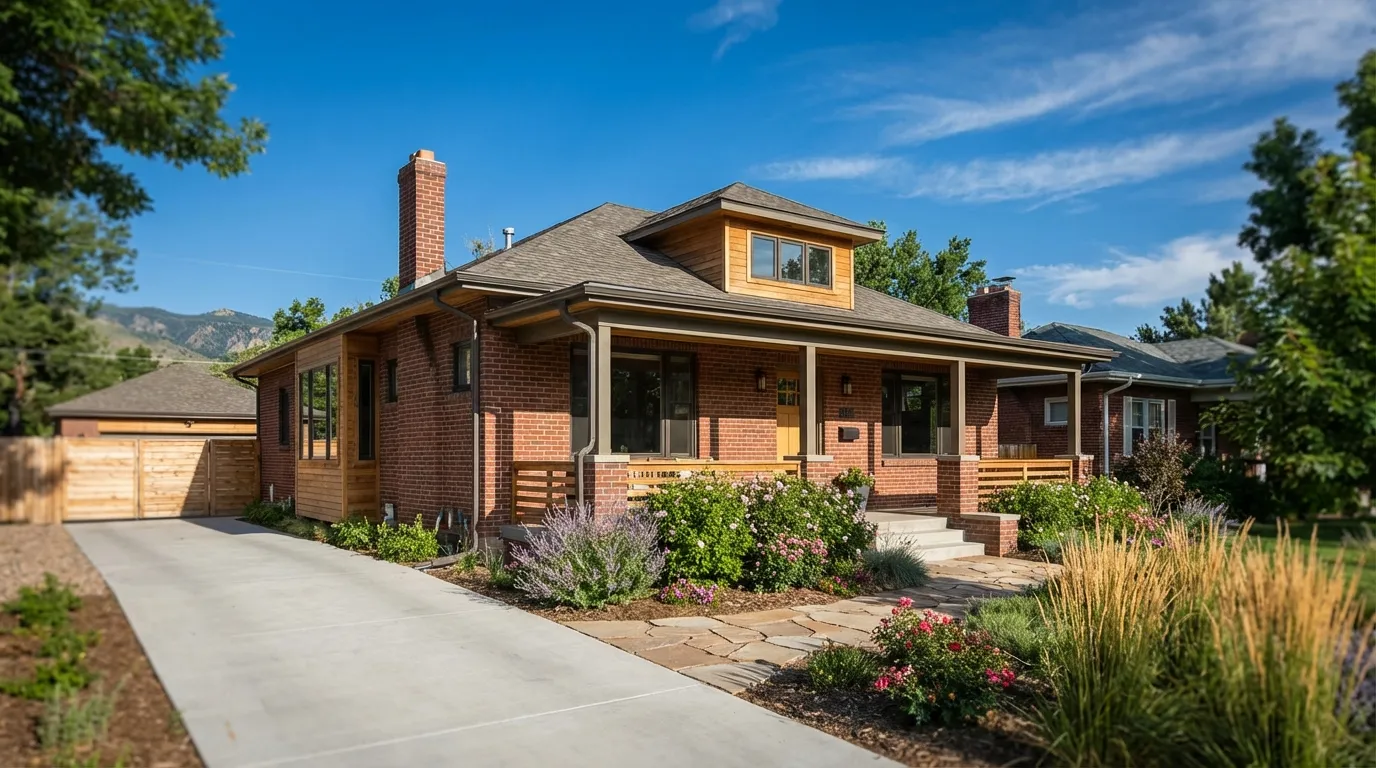
The luxury segment in Highlands, Cherry Creek, and Wash Park amplifies this further. Median home values in these neighborhoods range from $700,000 to $1.1 million, and renovation projects there regularly run $50,000–$200,000. A contractor specializing in this segment with a well-maintained portfolio of Highlands kitchen renovations, targeting "Highlands remodel contractor" and "Wash Park kitchen renovation" keywords at $12–$20 CPC, faces almost no competition from the national franchise networks — those keywords are simply too granular for a state-level or national campaign to target profitably. Local contractors with specific neighborhood expertise own these keywords by default if they choose to bid on them.
Seasonal data reinforces the concentration of opportunity. June through August drives 35–40% of annual construction revenue. During this window, search volume on "kitchen contractor Denver" and "home remodeling company" is roughly 2.5x the January baseline. Tax refund season (March–April) triggers an additional demand ramp as homeowners earmark refund funds for projects they've been planning since winter. Contractors who increase budget by 50–75% in March to capture this planning-phase demand and maintain elevated spend through August capture the full arc of Denver's construction season. Premium neighborhood average project budgets, for bid calibration:
- Highlands (80204): Average remodel $30,000–$150,000; kitchen renovations average $45,000–$75,000; justify +40% bid multipliers
- Cherry Creek (80206): Average remodel $35,000–$120,000; bathroom and full-kitchen projects dominant; +30% bid premium
- Wash Park (80209): Average remodel $25,000–$100,000; strong home-addition and deck market; +35% bid premium
- Aurora / Thornton (volume zones): Average remodel $10,000–$30,000; higher lead volume but lower margins; standard bids, focus on CPA efficiency
Construction PPC in Denver is a neighborhood game played on a seasonal calendar. The contractor who runs generic "general contractor Denver" campaigns year-round at flat spend is competing on the same terms as every other contractor in the metro. The contractor who runs "Highlands kitchen remodeling" with a Highlands portfolio landing page in June through August, then shifts to interior renovation keywords in November for the winter remodel market, is operating in a different competitive environment — one where neighborhood specificity reduces competition and the seasonal calendar concentrates spend where return is highest.
MB Adv Agency builds campaign architecture around Denver's neighborhood economics. We know that a Wash Park bathroom remodel and an Aurora bathroom remodel are different buyers with different budgets, different decision timelines, and different response to ad copy. Our lead generation framework segments by neighborhood, project type, and seasonal intent — so your spend reaches homeowners who are ready to hire, not homeowners who are still browsing Pinterest.
Denver construction clients working with MB Adv Agency see 10:1–16:1 ROAS during peak season — not because the market is easy, but because the campaign architecture is built for how Denver homeowners actually buy. Review our pricing tiers to see where your current spend fits, and what a properly segmented construction PPC campaign returns in Denver's competitive summer market.

Frequently Asked Questions
What's the right PPC budget for a Denver construction contractor?
The budget answer for construction is more variable than for trade services because project values span such a wide range — a bathroom renovation at $12,000 and a full luxury kitchen at $75,000 have very different economics for ad spend. That said, the working baseline for consistent lead flow in Denver construction is $2,500–$4,500 per month, with seasonal scaling to $5,500–$6,500 during the June–August peak.
At $4,000/month during peak season, a well-structured campaign targeting hire-phase specialty keywords ("kitchen contractor Denver," "bathroom remodeler," "deck builder") generates 20–25 qualified calls per month, of which 60–75% convert to a scheduled estimate. Of those estimates, 30–40% close to booked projects at an average job value of $8,000–$12,000 — yielding 5–8 booked jobs per month and a ROAS of 10:1–16:1 in peak months.
The seasonal adjustment is critical. Committing too much budget to winter (when exterior work is impossible and homeowners are focused on holidays) wastes spend on research-phase traffic that won't convert for months. The most efficient allocation: 40–45% of annual budget in June–August, 25–30% in March–May, 15–20% in September–October, and only 10–15% in November–February. During winter, shift keyword focus entirely to interior renovation terms (kitchen, bathroom, flooring) and run portfolio-forward landing pages that capture consultation requests for spring projects.
How do I compete with larger national construction networks in Denver's PPC market?
National construction networks and franchise referral platforms (HomeAdvisor, Angie's List) spend $5,000–$15,000/month targeting broad Denver construction keywords. Competing on their terms — bidding on "contractor Denver" and "home remodeling" with the same budget — is a losing proposition. The winning approach is to compete on terms they can't or won't target: hyper-local neighborhood keywords, specialty project keywords, and seasonal intent keywords that are too granular for a national campaign to optimize profitably.
"Highlands kitchen remodel contractor" — a keyword that generates 20–50 monthly searches — isn't worth building into a national campaign. For a Denver contractor who specializes in Highlands work, it's a $12–$16 CPC keyword with near-zero competition and a conversion rate of 20–30% (these are homeowners who already know what neighborhood they want to find a contractor in). Multiply that logic across "Cherry Creek bathroom renovation," "Wash Park home addition," "Congress Park historic remodel," and you've built a low-competition keyword portfolio that nationals will never invest in and local generalists won't think to build.
Portfolio differentiation is the second lever. Nationals show generic project photos from anywhere in the country. A local contractor with a dedicated landing page showing six before/after kitchens in Wash Park, with client testimonials from Wash Park addresses and a Google review rating above 4.7 stars, wins the visual trust check before the phone comparison begins. The combination of neighborhood-specific keywords and neighborhood-specific portfolio landing pages creates a local moat that a $10,000/month national campaign can't easily cross.