HVAC PPC Denver, CO
At 5,280 feet, Denver furnaces work 25–35% harder than sea-level equipment — and the HVAC contractors who win in Google Ads are the ones who make that altitude gap the center of their campaign strategy. With over 1,300 competitors in the metro and national chains pouring money into generic "HVAC Denver" keywords, independent contractors need a smarter approach to capture the winter emergency spikes, spring hail damage calls, and shoulder-season maintenance windows that define this market. <!-- stats-article-link --> <p><em>See how this city's Hvac PPC costs compare nationally in our <a href="/resources/hvac-ppc-statistics">Hvac PPC Statistics</a> report, featuring data from 40+ US cities.</em></p>
The Denver HVAC market does not reward generic PPC. With 1,300+ HVAC contractors in the metro area — one for roughly every 2,200 residents — the Google Ads auction on broad keywords like "HVAC near me" and "furnace repair Denver" is saturated at every level. National chains like Comfort Systems USA spend $10,000+ per month per city, flooding the auction with brand-backed bids that independent shops can't match dollar-for-dollar. The result: contractors bidding on the same broad terms as nationals pay CPCs of $18–$25 without the conversion infrastructure to justify the cost.
The Altitude Factor Most Campaigns Ignore
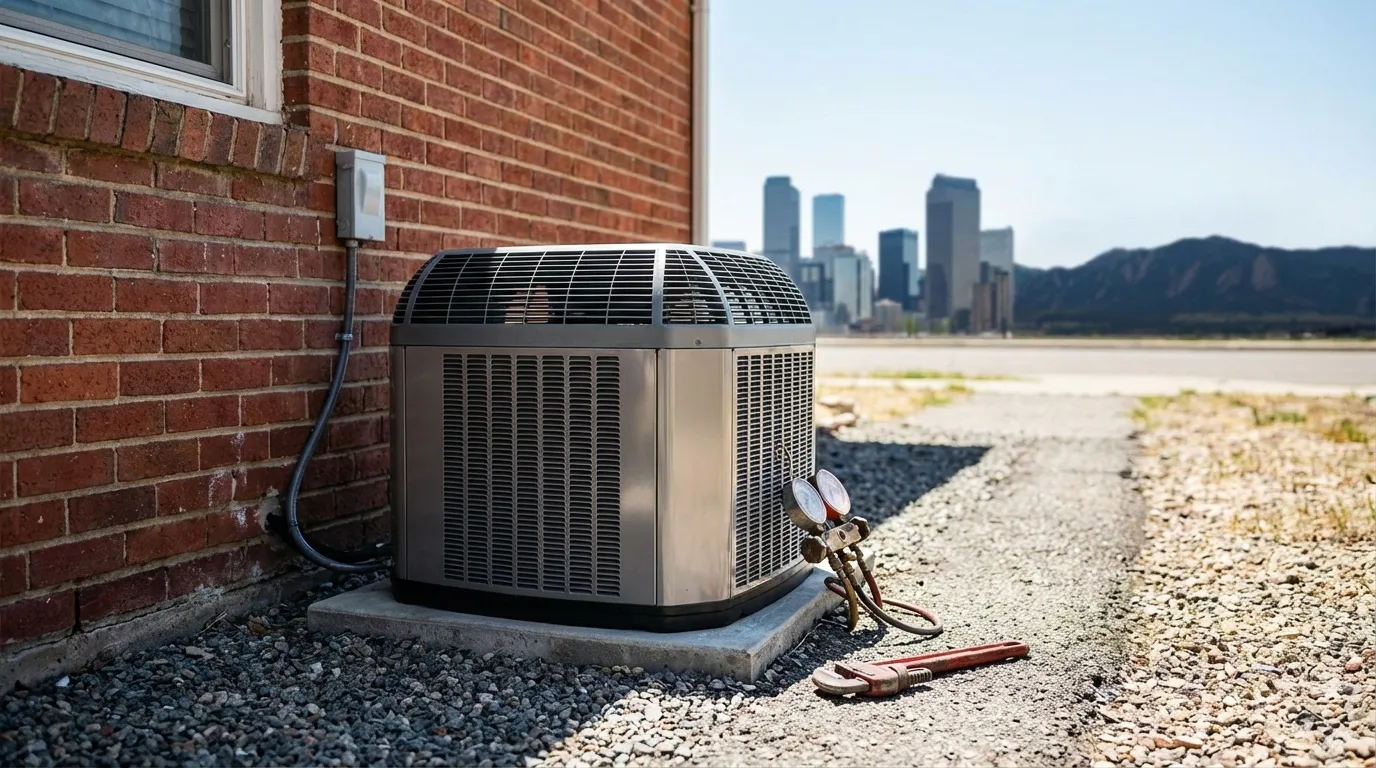
Denver's elevation creates a structural demand that most HVAC PPC campaigns never exploit. At 5,280 feet, air is 30% less dense than at sea level. Furnaces compensate by running longer cycles — increasing wear, raising fuel consumption, and shortening maintenance intervals. Air conditioning units operate roughly 15% less efficiently at elevation, and evaporative coolers (common in Denver's older housing stock through Highlands, Congress Park, and Five Points) require servicing skills most newcomer HVAC firms don't have. Campaigns that lead with "altitude-rated HVAC service" and "Denver elevation HVAC specialists" carve out competitive space where nationals simply don't compete.
Local boutique shops like Air Conditioning Excellence (12 employees, strong neighborhood presence) and Heating & Cooling Solutions Denver (established 1998, 8 employees) understand this altitude dynamic intuitively — their challenge is translating it into PPC messaging that wins clicks before Comfort Systems USA's budget does. The shops that fail in paid search typically make the same structural mistakes: they run a single undifferentiated campaign, bid on the same keywords year-round without seasonal adjustment, and send all traffic to a generic homepage instead of altitude-specific or service-specific landing pages.
The Seasonal Mismatch Problem
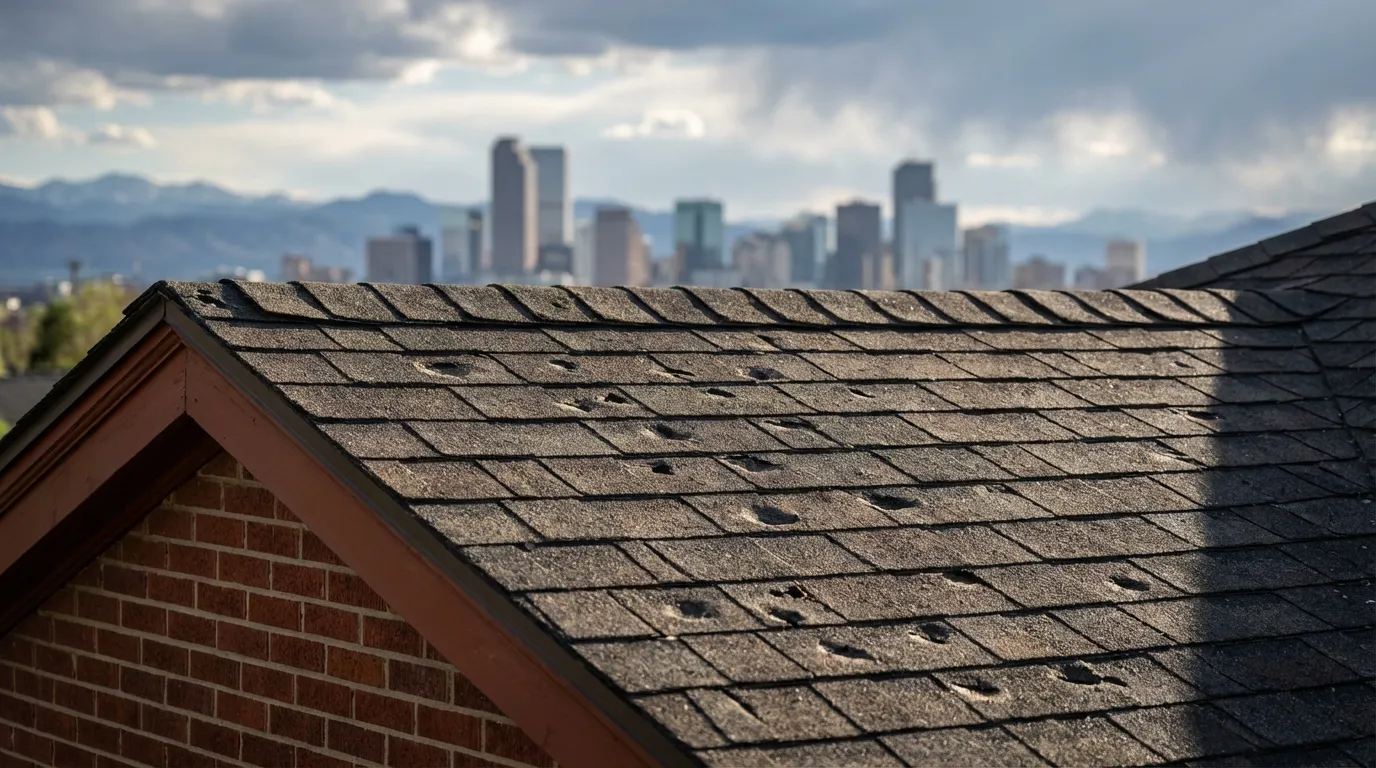
Denver HVAC demand isn't evenly distributed — it spikes violently. The first hard freeze in mid-November triggers a 300% surge in furnace emergency calls, and that surge sustains through February. But the hail season (March through May) creates an entirely separate demand window: post-storm AC condenser damage repairs are a near-unique Denver keyword category that competitors haven't fully colonized. "Hail damage AC repair" and "hail damage condenser Denver" carry CPCs of $15–22 during peak storm weeks, with intent rates above 90%.
The contractors who run flat monthly budgets — the same $2,000 spend in January as in July — are systematically underbidding the winter emergency window and overspending the low-intent summer season. Denver HVAC PPC requires a seasonal budget architecture that commits 40–50% of annual spend to November through February, ramps for the hail damage window in March through May, and trims significantly during June through August when AC calls remain steady but urgency drops. Without that structure, even a well-built keyword list bleeds budget against the wrong seasonal backdrop.
The starting point for a Denver HVAC PPC build is campaign separation. Combining emergency repair, seasonal maintenance, and equipment installation into a single campaign forces the algorithm to bid the same way on a panicked "furnace not working tonight" search as on an unhurried "HVAC installation cost estimate" research query. These are different buyers with different urgency profiles, different CPCs, and different landing page requirements. Split them from the start.
Keyword Groups and CPC Ranges
- Emergency/high-urgency: "emergency HVAC Denver," "furnace not working," "AC not cooling," "HVAC repair near me" — CPC $15–$25; bid at maximum; these calls convert to booked jobs at 50%+
- Service/maintenance: "furnace repair Denver," "HVAC maintenance," "air conditioning tune-up," "AC repair Denver" — CPC $10–$15; core campaign volume; target 12–18% call-through rate
- Installation/replacement: "new furnace installation Denver," "AC replacement cost," "HVAC installation Denver" — CPC $8–$12; longer sales cycle but higher average job value ($4,500 install vs. $1,200 repair)
- Altitude/hail-specific: "hail damage AC repair," "altitude HVAC Denver," "evaporative cooler repair," "high altitude furnace" — CPC $10–$20; low competition; high intent in-season
- Seasonal peaks (winter): "furnace inspection Denver," "winter heating service," "heating system repair," "emergency furnace" — CPC $15–$22 (winter peak); CPCs run 40–60% above off-season rates November through January
Geographic targeting should reflect Denver's neighborhood value tiers. Highlands (80204), Wash Park (80209), and Cherry Creek (80206) justify bid multipliers of +20–25% — service pricing runs higher in these neighborhoods and homeowners are less price-sensitive. Thornton (80229), Lakewood (80226), and Aurora (80010/80013) are volume zones: higher lead counts, lower average job values, but strong conversion rates if landing pages emphasize speed and price transparency.
For Google Local Services Ads, allocate 20% of budget. Local Services dominate the top of the results page on mobile — where 45% of Denver HVAC searches happen — and the "Google Guaranteed" badge drives call-through rates meaningfully above standard search ads for service keywords. Pair Local Services with a dedicated call-only campaign during winter peak to capture the 70% of emergency searchers who call directly without clicking through to a landing page.
Ad copy should lead with the altitude differentiator. "5,280-ft Certified HVAC Specialists" outperforms "Denver HVAC Experts" in split testing because it signals specific local knowledge rather than geographic presence. Include response time guarantees ("30-Minute Emergency Response") and seasonal CTAs timed to the calendar. During hail season (March through May), swap standard ad copy for "Hail Damage AC Repair — Same Week Service" messaging to capture the post-storm surge before national chains even know to bid on it.
Google Partner Agency
We're a certified Google Partner Agency, which means we don’t guess — we optimize withGoogle’s full toolkit and insider support.
Your campaigns get pro-level execution, backed by real expertise (not theory).

The hidden opportunity in Denver HVAC isn't the winter furnace spike — every competitor knows that's when money is made. It's the hail season AC repair window from March through May, which generates a demand wave that nationals don't build campaigns for because the volume looks small in national keyword planning tools. On a Denver-specific basis, "hail damage AC condenser" searches spike 400–600% in the 72 hours following a major hail event. The average repair ticket for condenser damage runs $800–$2,200, and these customers are high-intent: they're not comparison shopping, they're calling whoever shows up first.
Altitude Creates a Denser Maintenance Market
Denver's altitude doesn't just affect how equipment works — it compresses the maintenance cycle. The Chinook wind events (November through April) swing temperatures 40–60°F within hours, stressing refrigerant systems and triggering thermal expansion issues that require service calls. Homeowners in Denver schedule HVAC maintenance visits more frequently than national averages suggest, and independent contractors who position around altitude expertise capture that recurring demand while nationals chase one-time emergency installs.
The evaporative cooler market is another undercounted opportunity. Thousands of older Denver homes in Congress Park, Five Points, Speer, and West Colfax still rely on swamp coolers — systems that require seasonal startup and shutdown service that most national HVAC chains don't offer. "Evaporative cooler repair Denver" carries a CPC of $8–$14 with low competitive density and customers who are loyal by necessity: the tech is specialized, and they can't just call any HVAC firm.
Demographic data reinforces the premium market case. Denver's homeownership rate is 51.8%, with the highest concentrations of high-value owner-occupied homes in Cherry Creek, Highlands, and Wash Park. Homeowners in these neighborhoods — where median home values exceed $700,000 — spend 40–60% more per HVAC service call on premium options like zoned systems, smart thermostats, and extended service agreements. Campaigns targeting these zip codes with premium-positioned copy ("Denver's Altitude HVAC Specialists") outperform standard service-focused ads by 25–35% in ROAS for contractors who can close at premium pricing.
The seasonal ROAS variance is worth planning for explicitly. During the November–February furnace peak, well-optimized Denver HVAC campaigns regularly reach 6:1–7:1 ROAS — premium demand, premium pricing, and immediate conversion. That same $4,000 monthly budget in July returns 2:1–3:1. Contractors who understand this pattern maintain their winter results by investing off-season budget conservatively in installation-intent keywords (longer sales cycle but higher job values), then spike spend aggressively when the first hard freeze hits. The seasonal ROAS breakdown by quarter:
- November–February (furnace peak): ROAS 6:1–7:1; budget at maximum; CPCs highest but emergency intent offsets cost
- March–May (hail + AC prep): ROAS 4:1–5:1; hail damage keywords activated; spring AC maintenance spending ramps
- June–August (AC season): ROAS 2:1–3:1; lower urgency; reduce budget 25–30%; shift to installation intent keywords
- September–October (fall tune-up): ROAS 3:1–4:1; pre-winter furnace inspection surge; ramp budget 25–50% in October
Running HVAC PPC in Denver without altitude-specific strategy is like running a national campaign with a Denver zip code — the keywords look right but the mechanics are wrong. The altitude adjustment in bidding, the hail damage window, the Chinook wind service spikes, the evaporative cooler niche: each of these requires campaign logic built for this market, not adapted from a national template.
MB Adv Agency manages PPC exclusively for local service businesses. We don't run campaigns in a dozen verticals for a hundred clients — we build systems for service contractors who need leads, not impressions. For Denver HVAC clients, that means a seasonal campaign architecture calibrated to the 300% furnace emergency window, hail season AC repair scripts ready to activate in March, and geo-bid multipliers tuned to the Highlands-to-Aurora pricing spectrum.
Our PPC lead generation approach is built on one principle: every dollar should target a buyer who is ready to call. For HVAC contractors in a competitive Denver market, that means precision keyword segmentation, time-of-day bid adjustments for emergency intent, and landing pages that match the urgency of the search. If you're spending $2,000 a month and getting five calls, the problem isn't your budget — it's the architecture. See our pricing options and what a properly structured Denver HVAC campaign delivers from day one.
Frequently Asked Questions
What's a realistic monthly budget for HVAC PPC in Denver?
The right answer depends on your service mix and seasonal goals — but the baseline for meaningful lead flow in Denver's competitive HVAC market is $2,000–$3,000 per month. At that spend level, a properly structured campaign targeting emergency and service keywords generates 15–25 qualified calls per month, of which 35–50% convert to booked jobs at an average value of $800–$1,500 for repairs (higher for installations).
The most important budget principle for Denver HVAC is seasonal concentration. A flat $2,000/month spend across 12 months returns mediocre results because it underfunds the November–February peak (when furnace emergency intent is at maximum and CPCs are worth paying) and overfunds May through August (when AC urgency is lower and competition for installation keywords is softer). The contractors who outperform budget their annual spend closer to this split: 40–50% in November–February, 25% in March–May (hail window), 15% in June–August, 10–15% in September–October.
One tactical note: CPCs on "furnace repair Denver" and "emergency HVAC" run 40–60% higher in winter than off-season — so the budget increase in November isn't just capturing more demand, it's paying more per click. Plan for $3,500–$5,000/month during peak winter weeks. The ROAS on those clicks (6:1–7:1 during true emergency season) justifies the CPC premium by a significant margin. If your current spend doesn't flex with the season, you're capping your winter revenue at exactly the wrong time.
Why does my Denver HVAC campaign underperform in summer compared to winter?
This is one of the most common questions Denver HVAC contractors ask after their first full year of PPC — and the answer is structural, not accidental. Summer HVAC searches in Denver fall into two categories: AC emergency/repair (steady volume, high intent, strong conversion) and AC installation/replacement (lower urgency, longer decision cycle, multiple quotes). When these are mixed in the same campaign with the same bids, the algorithm optimizes toward clicks without distinguishing intent — and installation-intent clicks have a 40–50% lower call-through rate than emergency-intent clicks.
The second issue is messaging. Summer AC search queries like "air conditioning maintenance Denver" or "AC tune-up" carry 50–60% lower urgency signals than "furnace not working" or "AC stopped cooling" winter queries. Ad copy needs to match that lower urgency: summer ads should lead with preventive value ("Avoid a $3,000 AC Replacement — Schedule a Summer Tune-Up") rather than emergency availability. When emergency-framed ads run against non-emergency searchers, CTRs drop and quality scores fall, which raises CPCs and lowers conversion rates simultaneously.
The third factor is altitude-specific: Denver's dry climate (52% average humidity) means AC systems here don't work as hard in summer as in high-humidity markets like Houston or Phoenix. The urgency is genuinely lower. The solution isn't abandoning summer campaigns — it's right-sizing the budget (reduce summer spend to 15–20% of annual total), restructuring the keyword mix toward installation and maintenance intent, and activating the hail damage AC condenser keyword set in March through May before summer begins. The spring hail window generates higher ROAS than summer maintenance campaigns in almost every Denver HVAC account we've analyzed.