Roofing PPC Denver, CO
Denver isn't just one of the most hail-prone metros in the United States — it's the market where roofing PPC can return 40:1 ROAS during a single spring storm week, or drain budget entirely if the campaign wasn't built for the hail window. Three of the ten costliest hailstorms in US history struck Denver (1990, 2009, 2017), and the spring atmospheric conditions that produce them haven't changed. For Denver roofing contractors, PPC is either a demand-capture machine tuned to that reality, or it's an expensive imitation of what national chains already do better. <!-- stats-article-link --> <p><em>See how this city's Roofing PPC costs compare nationally in our <a href="/resources/roofing-ppc-statistics">Roofing PPC Statistics</a> report, featuring data from 40+ US cities.</em></p>
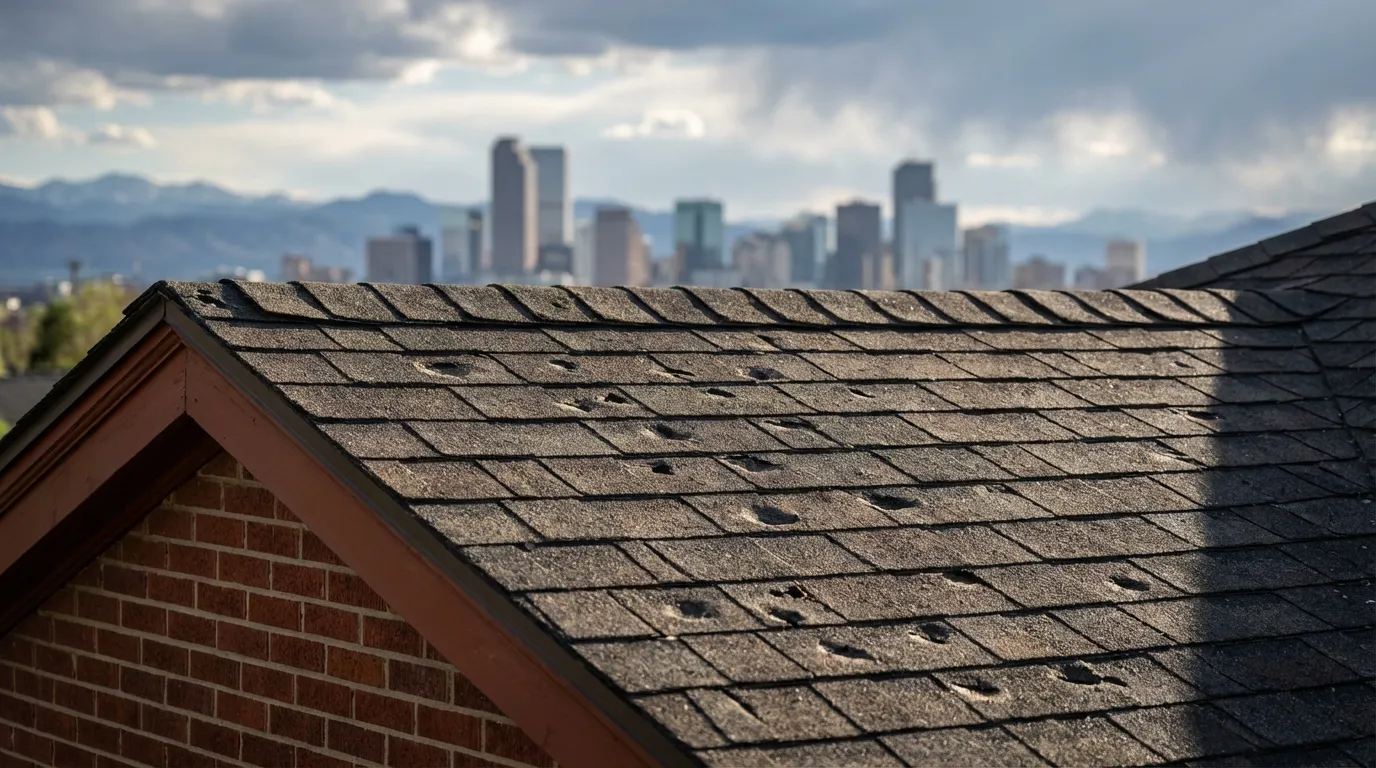
The Denver roofing market bifurcates every year along a single seam: before hail season and during hail season. The 800–1,000 roofing contractors in the metro area spend most of the year in moderate competition — CPCs on "roof repair Denver" running $20–$30, call-through rates a manageable 15–20%. Then March arrives. The Denver Convergence Vorticity Zone (DCVZ) — a localized atmospheric phenomenon where warm southerly winds collide with cold air descending from the Rockies — begins producing supercell thunderstorms. In the 72 hours following a significant hail event, call volumes at major Denver roofing companies surge 500–700 calls per day. CPCs on "hail damage roof Denver" spike to $40–$60. Every contractor in the market accelerates their spend simultaneously.
What National Chains Miss — And Where Locals Win
The nationals present in Denver — Owens Corning franchises and GAF Master Elite networks — run broad regional campaigns that target generic roofing keywords across Colorado. Their messaging emphasizes brand trust ("Manufacturer-Backed Warranty," "National Network of Certified Installers") but misses the hail-specific urgency that drives 45–50% of Denver's annual roofing revenue in March through May. During a post-hail surge, a homeowner searching "hail damage roof inspection Denver" is not looking for brand credentials — they're looking for the fastest available contractor who understands insurance claim processes.
Local mid-tier shops like DEN Roofing Group (12 employees, established 2005, strong hail reputation) and Rocky Mountain Roofing (8 employees, 4.7 stars) compete effectively on speed and expertise — but their PPC campaigns often aren't structured to capitalize on the hail window. The most common failure: budget caps that hold the same monthly limit during hail season as in January. When the March storm hits and 800 contractors start competing for "hail damage roof" clicks, a campaign running at $2,000/month is functionally invisible. Hail season roofing PPC requires 3–5x the off-season budget to capture demand before competitor bids eat every available impression.
The UV Altitude Factor Year-Round
Even outside hail season, Denver presents structural roofing demand that other markets don't. UV radiation at 5,280 feet is 30–40% more intense than at sea level, accelerating asphalt shingle degradation to a replacement cycle of 12–15 years — compared to the 15–20 year national average. This means Denver homeowners need new roofs sooner, creating year-round planned-replacement demand. "Class 4 impact-resistant shingles Denver" — a keyword covering both hail mitigation and UV longevity — carries moderate CPC ($15–$25) and very low competitive density from national chains, which don't market the Class 4 distinction at all.
The contractors who underperform in Denver roofing PPC typically share one trait: they run a single campaign budget that doesn't flex with the calendar. Hail season ROI of 35:1–50:1 is only achievable if the budget is scaled in January to be ready by March — not scrambled in response after the first storm has already driven every competitor to maximum spend.
Denver roofing PPC demands two distinct campaign architectures running in parallel: a hail-season surge campaign and a year-round baseline campaign. The baseline handles service, maintenance, and planned replacement keywords at steady spend. The hail-season campaign sits dormant from October through February, pre-built and tested, ready to activate at maximum budget the moment storm activity begins. These cannot be the same campaign — the keyword intent, bid logic, landing pages, and ad copy are fundamentally different.
Keyword Groups and CPC Ranges
- Hail emergency (March–May priority): "hail damage roof Denver," "hail damage inspection," "emergency roof repair hail," "post-storm roof repair" — CPC $30–$60 during hail events; bid aggressively; conversion rate 70%+ (insurance process drives pre-commitment)
- Insurance claim keywords: "insurance roof claim Denver," "adjuster-approved roofer," "roof estimate insurance claim," "State Farm approved roofer" — CPC $20–$35; high conversion; leads from inspection wave (1–3 weeks post-storm)
- Planned replacement: "roof replacement Denver," "new roof cost Denver," "asphalt shingles installation," "roof contractor estimates" — CPC $12–$20; longer sales cycle; active June–August
- Service/repair: "roof repair Denver," "roof leak repair," "roof damage repair" — CPC $15–$25; year-round; mixed intent
- Altitude/Class 4 specialty: "Class 4 shingles Denver," "hail-resistant roof," "impact-resistant shingles," "UV damage roof repair" — CPC $12–$22; Denver-specific; low competitive density
Geographic targeting for Denver roofing follows the hail frequency map, not just the population density map. Thornton (80229), Lakewood (80226), and Aurora (80010/80013) are high-frequency hail zones with strong lead volume. Highlands (80204), Wash Park (80209), and Cherry Creek (80206) carry higher average job values ($12,000–$15,000 per job vs. $7,000–$9,000 in volume zones) and justify bid multipliers of +25–35%.
Ad copy strategy for the hail window needs to run two waves. Wave 1 (day of/day after storm): "Emergency Roof Damage? We're Scheduling Today." — pure urgency, call extension prominent, location callout. Wave 2 (1–3 weeks post-storm): "State Farm Pre-Approved. Insurance Claim Roofing Specialists." — shifts from urgency to credibility, reflects the insurance approval timeline. Contractors who only run Wave 1 messaging during Week 2 lose leads to competitors who pivot to the insurance claim angle. Seasonal budget allocation for a Denver roofing campaign averaging $5,000/month annually:
- March–May (hail season): $7,500–$10,000/month — maximize spend; every dollar returns 35:1–50:1 after major storm events
- June–August (install season): $4,000–$5,000/month — planned replacement keywords; post-hail repair completion work
- September–October (fall prep): $3,000–$4,000/month — pre-winter inspection keywords; maintain Quality Scores
- November–February (off-season): $1,800–$2,500/month — emergency repair only; don't pause; maintain account activity for spring readiness
Google Partner Agency
We're a certified Google Partner Agency, which means we don’t guess — we optimize withGoogle’s full toolkit and insider support.
Your campaigns get pro-level execution, backed by real expertise (not theory).

The data on Denver's hail risk isn't a marketing claim — it's actuarial fact. Denver metro ranks among the top 10 most hail-prone metropolitan areas in the United States. The 2017 hailstorm alone caused more than $1.4 billion in damage and left over 200,000 damaged roofs requiring replacement. The insurance claim ecosystem around that event employed thousands of adjusters for months. For roofing contractors with PPC campaigns built for that wave, it was the highest-revenue quarter in company history. For those who weren't ready, it was a frustrating period of watching competitors book the demand they couldn't capture.
The Two-Wave Demand Curve After Each Storm
Post-hail roofing demand follows a predictable pattern. Immediately after a storm, emergency roof tarping and damage assessment queries spike — homeowners need visible damage addressed before the next rain. Two to three weeks later, once insurance adjusters have completed inspections and issued approvals, contract signing volume peaks. The total window from storm to installation completion runs 4–6 weeks per job. Contractors who understand this two-wave structure keep their Google Ads budget elevated through both phases, not just the day-of emergency window.
The UV degradation angle creates a quieter but consistent year-round opportunity. At 5,280 feet of elevation, Denver homeowners replace roofs every 12–15 years on average — a 20–25% faster cycle than the national norm. The economic math: Denver metro has approximately 750,000 housing units. A 15-year replacement cycle means roughly 50,000 roofs replaced per year from UV wear alone, independent of hail damage. Campaigns targeting "roof replacement cost Denver" and "how long do roofs last Denver" with Class 4 shingle upgrade messaging tap this non-emergency replacement market through the summer and fall slow seasons.
The insurance pre-approval dynamic is a conversion lever most local contractors underutilize. Denver homeowners filing hail damage claims are effectively pre-qualified buyers — the insurance company is paying for the roof. Contractors displaying "State Farm Pre-Approved" or "Allstate Certified" language in their ad copy see 30–40% higher call-through rates during hail season compared to contractors without insurance credentialing in their messaging. Nationals don't emphasize this because their certification varies by location. Local contractors with established adjuster relationships can own this positioning entirely.
Denver roofing PPC is a timing game played with seasonal precision. The contractors who dominate hail season aren't the ones with the biggest budgets in July — they're the ones who built their hail-season campaign in January, tested the insurance claim ad copy in February, and activated at full spend before the first DCVZ storm cell formed. By the time a national chain notices the surge and ramps its bid strategy, the local contractor has already captured two weeks of leads.
MB Adv Agency manages the full seasonal arc for roofing clients: off-season baseline campaigns that maintain visibility without wasting spend, hail-season surge protocols ready to launch on a 24-hour notice, and post-storm Wave 2 messaging that shifts from emergency to insurance credentialing on the right timeline. The lead generation infrastructure we build handles hail spikes without campaign structure failures — because the architecture was built for the spike, not the steady state.
For Denver roofing contractors serious about dominating the hail window, the question isn't whether PPC works in this market — the 35:1–50:1 ROAS during storm weeks answers that. The question is whether your campaign is structured to capture it. Review our pricing tiers and see how Denver roofing clients move from reactive to proactive PPC management.
Frequently Asked Questions
How much should I spend on roofing PPC in Denver during hail season?
The short answer: more than you're comfortable with in March — because the ROAS will justify it by May. The working budget framework for Denver roofing hail season is $6,000–$10,000 per month from March through May, scaling to the higher end immediately following a confirmed storm event. At $8,000/month during a high-hail spring, a well-structured campaign targeting "hail damage roof Denver" and insurance claim keywords generates 60–80 qualified calls per month. At a 60–70% call-to-job conversion rate (insurance-driven leads are pre-qualified), that's 36–56 jobs at an average of $10,000–$15,000 each — a ROAS of 40:1 or better.
The year-round baseline matters too. Maintaining a $2,000–$2,500/month campaign October through February on emergency repair, planned replacement, and Class 4 shingle keywords keeps the account's Quality Scores healthy, accumulates conversion data the algorithm uses for hail-season smart bidding, and captures the 10–15% of annual revenue that comes from off-season emergency repairs. Don't pause entirely in winter — the January-started account that's been running for four months performs dramatically better in March than the one that was paused and reactivated.
Budget allocation across the platform mix: 75% Google Search (dominate the hail emergency and insurance claim keywords), 15% Google Local Services (map pack visibility on mobile "roofer near me" searches), and 10% Facebook/Instagram for remarketing to site visitors who didn't call. The remarketing component is particularly effective post-hail: a homeowner who visited your landing page after the storm but didn't call is still in the market — a retargeting ad at $8–$10 CPM brings them back.
What makes Denver roofing PPC different from other cities?
Three structural factors make Denver roofing PPC categorically different from most US markets: the hail season demand spike, the UV altitude replacement cycle, and the insurance claim ecosystem. Each requires campaign logic that doesn't exist in national roofing PPC templates.
The hail season spike is the most dramatic. In markets like Atlanta or Dallas, roofing PPC runs at a fairly steady budget all year. In Denver, the correct approach is to concentrate 40–50% of annual ad budget into March through May, with a surge reserve ready to double spend within 24 hours of a major storm. That single tactical decision — building a surge-ready campaign structure rather than a steady-state budget — is the difference between capturing 30+ hail jobs in a spring week and watching competitors take them.
The UV altitude factor creates demand that doesn't exist at sea level. Denver's 30–40% higher UV intensity means homeowners replace roofs more frequently, and the "Class 4 impact-resistant shingles" category — which offers both hail protection and UV longevity — is a Denver-specific keyword cluster with low national competition. Adding Class 4 shingle content to planned-replacement landing pages increases average contract value by 15–20% because the upgrade sells itself on the altitude-specific durability math.
The insurance ecosystem is the third differentiator. In Denver, a significant percentage of roofing jobs in spring are insurance claim replacements — meaning the homeowner isn't price-shopping, they're looking for an adjuster-approved contractor who can start within the week. Keywords like "insurance roof claim Denver" and "State Farm roofing contractor" carry 80%+ conversion intent and CPCs of $20–$35 that look high until you account for the fact that you're bidding on pre-sold leads.