Healthcare PPC St. Louis, MO
Healthcare is the single largest employment sector in St. Louis — 25,969 workers in the city proper — anchored by the Washington University Medical Center, BJC HealthCare, and Mercy Health systems, but the highest-yield PPC opportunity isn't inside those hospital networks; it's in the growing layer of independent specialty clinics, urgent care centers, and mental health practices that compete for the patients those systems don't reach. <!-- stats-article-link --> <p><em>See how this city's Healthcare PPC costs compare nationally in our <a href="https://www.mbadv.agency/ppc-industry-statistics/healthcare-ppc-statistics">Healthcare PPC Statistics</a> report, featuring data from 40+ US cities.</em></p>
The Washington University Physicians Shadow Effect
St. Louis healthcare PPC has a structural dynamic that doesn't appear in comparable markets: Washington University Physicians — one of the largest and most recognized physician networks in the Midwest — casts a brand awareness shadow over the entire metro. When a St. Louis resident searches for a specialist or primary care physician, the first reference point in their mental model is often "Wash U" or "Barnes-Jewish." This creates an implicit credentialing standard that independent practices have to work harder to overcome in their marketing than practices in markets without a dominant academic medical center.
The competitive challenge is compounded by the scale of resources available to hospital-affiliated networks. BJC HealthCare, SSM Health, and Mercy Health all have marketing budgets that dwarf any independent clinic operator. On broad healthcare terms — "doctor St. Louis," "physician near me St. Louis" — they can bid with efficiency that independent practices can't match. Independent clinics that attempt to compete on the same broad terms typically generate high CPCs ($15–$22), mediocre Quality Scores against large established advertisers, and CPL figures that don't support their business model.
The Independent Clinic Opportunity
The solution is specificity — and it's a genuine structural advantage for independent practices, not just a consolation. Washington University Physicians and BJC HealthCare run brand-level campaigns with location-level targeting. They do not build service-specific, neighborhood-level, insurance-acceptance-specific campaigns for every subspecialty and every suburb. That gap is where independent practice PPC wins.
A dermatology practice in Chesterfield running "dermatologist Chesterfield MO accepting new patients" at $10–$16 CPC is competing against zero hospital network campaigns and two or three other independent practices. An urgent care center in the Central West End running "urgent care Central West End open now" at $10–$18 CPC is reaching Washington University students and employees who want care without navigating the hospital system. The win condition for independent healthcare PPC in St. Louis is targeting the service-level and geography where the hospital networks don't show up — and building the highest-quality landing page in that sub-market.
The mental health category is the fastest-growing segment of St. Louis healthcare PPC and the most under-served by hospital network campaigns. Demand for therapy, counseling, and psychiatric services has grown substantially post-COVID, and the supply of providers has not kept pace. Independent therapists and group practices running well-structured campaigns consistently generate $75–$110 CPL in a category where the hospital networks are largely absent.
Service-Specific Campaign Architecture
Healthcare PPC in St. Louis requires building around specific service lines rather than general "healthcare" categories. Each service line has its own buyer urgency, conversion timeline, and competitive landscape. Mixing them produces mediocre results across all categories.
- Urgent care / immediate care: "urgent care St. Louis MO," "walk-in clinic St. Louis open now," "urgent care near me St. Louis" — CPC $10–$20. High urgency, same-day conversion. Ads must include hours, current availability signal ("open now"), and distance. Peak demand: September–March (flu/respiratory season).
- Mental health / therapy: "therapist St. Louis MO," "anxiety counseling St. Louis," "mental health clinic St. Louis MO" — CPC $8–$18. Growing fastest of any healthcare category. Insurance acceptance is the primary conversion barrier — ads that name accepted insurers (Aetna, United, BCBS) convert at significantly higher rates. Conversion timeline 3–7 days.
- Orthopedics / sports medicine: "orthopedic doctor St. Louis MO," "knee pain specialist St. Louis," "sports medicine clinic St. Louis" — CPC $14–$22. Research-phase buyer, 5–10 day timeline. Landing pages should feature specific conditions treated (ACL, rotator cuff, hip replacement) rather than generic "orthopedics."
- Dermatology: "dermatologist St. Louis MO," "skin doctor St. Louis accepting new patients," "acne treatment St. Louis" — CPC $12–$22. Both medical and cosmetic demand. Cosmetic (Botox, chemical peels, laser) buyers are research-phase; medical (rash, mole check, psoriasis) are more urgent. Separate campaigns for each.
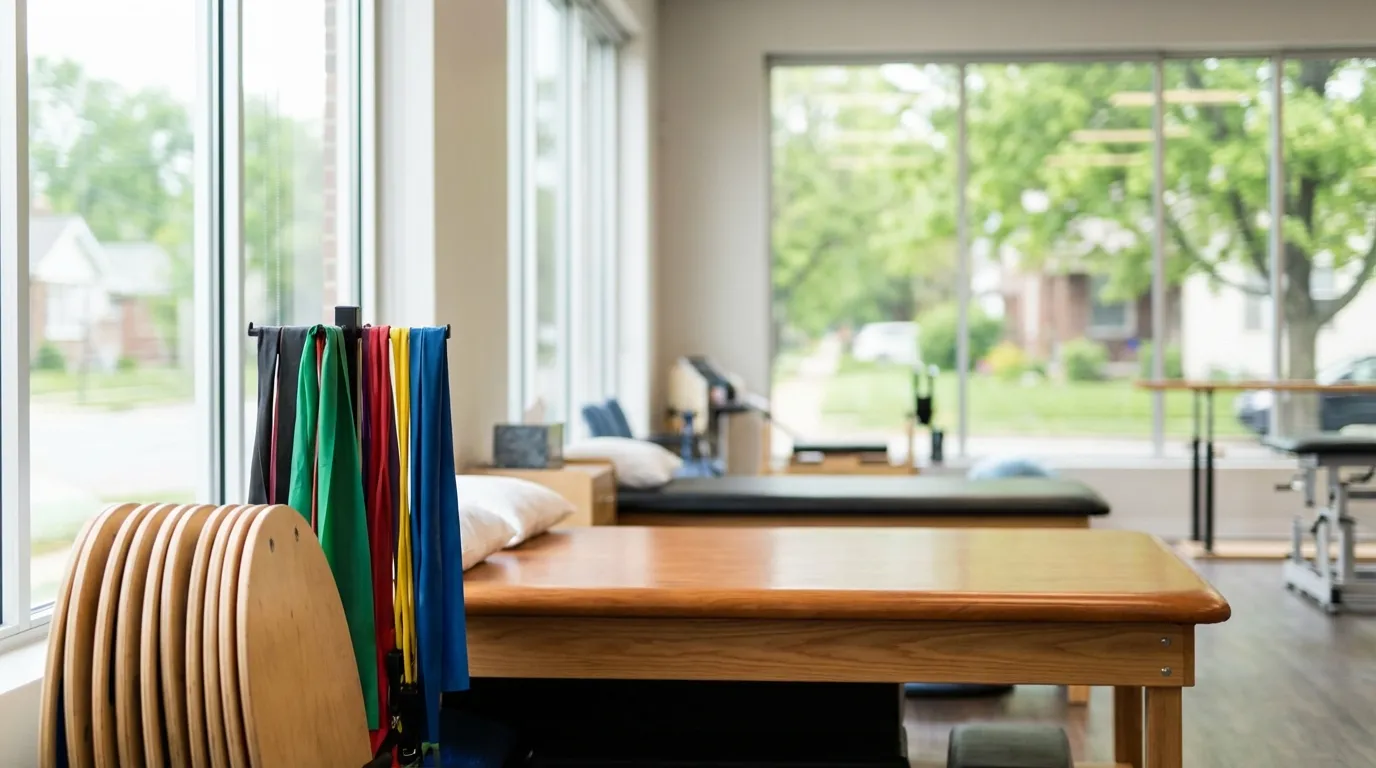
- Physical therapy: "physical therapy St. Louis MO," "PT clinic near me St. Louis," "back pain physical therapy St. Louis" — CPC $8–$15. Referral-supplemented (many PT patients come from physician referrals, PPC captures the self-referred segment). Low hospital network competition.
Insurance specificity is the single highest-converting ad copy element in St. Louis healthcare PPC. Naming insurance carriers in headlines — "Accepting Anthem BCBS — Book Today," "United Healthcare Welcome — St. Louis PT" — addresses the primary patient objection before the click. The major St. Louis commercial carriers to name by priority: Anthem Blue Cross Blue Shield, United Healthcare, Cigna, and Aetna. Landing pages that include a full insurance acceptance list prominently above the fold convert at 25–40% higher rates than generic "most insurance accepted" copy. For mental health specifically, calling out telehealth availability alongside in-person care options captures an additional search segment that St. Louis's post-COVID patient base now expects.
Google Partner Agency
We're a certified Google Partner Agency, which means we don’t guess — we optimize withGoogle’s full toolkit and insider support.
Your campaigns get pro-level execution, backed by real expertise (not theory).

The University District Demand Cluster
St. Louis has an unusual geographic concentration of healthcare demand that most independent practice PPC campaigns don't exploit. The Central West End — where Washington University Medical Center, Barnes-Jewish Hospital, and St. Louis Children's Hospital are located — also contains the residential neighborhoods where Washington University, Saint Louis University, and Barnes-Jewish employees live and seek personal healthcare. This is a dense, high-income, health-literate consumer cluster that produces above-average search volume for specialist care, mental health services, and dermatology within a geographically compact area.
The student population adds a distinct layer. Saint Louis University has over 12,000 students; Washington University has over 15,000. Combined with Ranken Technical College and several smaller institutions, the metro has 30,000+ students who generate concentrated demand for urgent care and mental health services — particularly around campus neighborhoods — during fall and spring semesters. "Urgent care near Wash U St. Louis" and "therapist near SLU St. Louis MO" are geography-specific terms with genuine volume and minimal competition from hospital network campaigns.
The mental health demand surge in St. Louis is more pronounced than the national average for several reasons. The metro's above-average poverty rate (20.6% in the city proper), high crime concentration in specific neighborhoods, and the economic stress associated with population decline in the city have created elevated mental health need alongside the national post-COVID awareness trend. Independent therapists and group practices that serve the professional suburbs (Clayton, Kirkwood, Webster Groves) operate in a market where wait times for new patients at established practices run 4–8 weeks — creating consistent urgency-driven search demand for "therapist accepting new patients St. Louis."
Key insight: Physical therapy is the most systematically under-PPC'd high-value healthcare category in St. Louis. Hospital networks don't compete aggressively on PT-specific terms. The major national PT chains (ATI Physical Therapy, Results Physiotherapy) run primarily brand campaigns. Independent PT clinic groups running well-targeted local campaigns at $8–$15 CPC face minimal competition and generate CPL of $65–$95 — one of the strongest CPL economics in any St. Louis healthcare category.
Independent healthcare practices in St. Louis are competing in a market dominated by one of the most well-resourced hospital networks in the Midwest. The way to win is not to compete on hospital network terms — it's to own the service-specific, insurance-specific, geography-specific searches that the major systems don't address. That requires local market knowledge, not a national healthcare PPC template.
At MB Adv Agency, we build St. Louis healthcare campaigns around the gaps: mental health growth, PT under-competition, urgent care neighborhood targeting, and insurance-specificity copy that converts the insurance-first patient. We work with independent practices, specialty clinic groups, and urgent care operators in the $2,000–$8,000 monthly ad spend range. Every campaign starts with a service-line audit to identify where your highest-value patients are actually searching — and where the hospital networks aren't competing.
- Service-specific campaign tracks — urgent care separate from specialty separate from mental health
- Insurance acceptance named in headlines and landing pages
- University district and suburb-specific geo-targeting
- Seasonal budget allocation for flu/respiratory season urgency peaks
Learn more at our healthcare lead generation page, review pricing, or see our full St. Louis PPC services. Our full services overview covers all healthcare sub-specialties we manage.
Frequently Asked Questions
How much should an independent clinic budget for Google Ads in St. Louis?
$2,000/month is the minimum for a single service line to generate meaningful lead volume in most St. Louis healthcare categories. At that level, a well-structured urgent care or mental health campaign generates 14–22 new patient leads per month at $65–$110 CPL — economics that work for practices where a new patient generates $300–$800 in first-year revenue.
Service lines vary significantly in their budget requirements. Urgent care and mental health therapy produce the highest lead volume per dollar spent because search volume is high and CPCs are moderate ($8–$20). Orthopedics and dermatology require slightly higher budgets ($2,500–$3,500/month) because CPCs run $12–$22 and conversion timelines are longer — these buyers take 5–10 days to convert, requiring remarketing investment on top of the initial campaign cost. Physical therapy is the most budget-efficient category: low CPCs ($8–$15), low competition, and CPL in the $65–$95 range consistently outperform other healthcare categories on a per-dollar basis.
For multi-location urgent care groups or specialty clinic groups with 3+ locations, $5,000–$10,000/month is the range where location-level targeting, service-specific campaigns, and insurance-specificity copy can all run simultaneously without budget constraints limiting impression share. Below that range, you're making tradeoff decisions about which service lines to fund — which is acceptable if done deliberately.
What makes healthcare Google Ads convert differently than other industries in St. Louis?
Healthcare PPC converts on trust signals more than any other industry category — and the specific trust signals that matter in St. Louis differ from national benchmarks. Insurance acceptance named explicitly in the ad headline converts at 25–40% higher rates than generic copy. Years in practice, specific condition expertise, and hospital affiliations on landing pages reduce the research-to-booking gap for specialty care. For mental health specifically, intake availability (same-week appointments) is the conversion-driving claim — a therapist ad that says "accepting new patients, appointments this week" outperforms "experienced therapist" by a wide margin.
The conversion timeline also varies materially by service type. Urgent care converts in under 2 hours — the buyer needs care today. Mental health therapy converts in 3–7 days — the buyer is researching fit and insurance. Orthopedics and specialty care convert in 7–14 days. These different timelines require different campaign tools: urgent care needs call extensions and "open now" copy; specialty care needs remarketing to recapture 7-day-old visitors who are still deciding. A campaign that treats all healthcare buyers as urgent care buyers misses the research-phase specialty patient entirely.
Landing page quality is the single largest lever for improving healthcare conversion rates in St. Louis. The most common conversion failure point: sending all healthcare PPC traffic to a generic practice homepage rather than service-specific landing pages with the relevant insurance information, provider credentials, and a single clear booking CTA. The difference between a generic homepage and a service-specific landing page in healthcare PPC is typically a 30–60% improvement in conversion rate — the single highest-ROI optimization available before touching campaign structure.