Start
$590$990/month
1 platform · Google or MetaGoogle + Meta- Ad spend
- up to $3,000
- New creativesmade by us
- Google + Meta only4 a month
 By Matteo Braghetta, Founder · Google Ads
St. Louis sits in the Midwest severe weather corridor where hail events capable of damaging thousands of roofs hit the metro 5–8 times per year — and the roofing companies that capture that demand aren't the ones with the best roofs, they're the ones whose Google Ads campaigns are ready to surge within 24 hours of the NWS issuing a severe weather warning.
See how this city's Roofing PPC costs compare nationally in our Roofing PPC Statistics report, featuring data from 40+ US cities.
In St. Louis, MO, people search for roofing services about 2,210 times a month on Google; a top-of-page click costs $16–$66, and demand peaks in October.
Google Keyword Planner · Oct 2025 – Sep 2026
| Search | Monthly searches | Top-of-page CPC |
|---|---|---|
| roofing company | 320 | $26–$112 |
| roofers | 320 | $14–$66 |
| roofer near me | 260 | $16–$65 |
| roofing contractor | 260 | — |
| metal roofing | 210 | $4–$13 |
| roof repair | 170 | $16–$55 |
| roof replacement | 90 | $21–$36 |
| roof inspection | 90 | $18–$150 |
| gutter installation | 90 | $21–$87 |
| roof leak repair | 70 | $14–$34 |
US: $61
Google Keyword Planner · Oct 2025 – Sep 2026
Source: Google Keyword Planner (Google Ads), Google Search, English, St. Louis, MO, Oct 2025 – Sep 2026. Volumes are Google's monthly averages; CPC is the top-of-page bid range, weighted by search volume. How we collect these figures.
St. Louis roofing PPC has two distinct competitive environments, and most operators only know how to navigate one of them. The steady-state market — planned replacement, pre-sale inspection, routine repairs — runs year-round at $16–$66 CPC with moderate competition from regional and local contractors. This is a manageable market where well-structured campaigns produce consistent lead flow.
Then a hail storm hits. Within 48 hours of a significant weather event, St. Louis roofing CPCs can double or triple as every roofing company in the metro — plus national storm-chasing franchises like RoofClaim.com — surges their budgets simultaneously. Advertisers without pre-staged emergency campaign structures watch their CPC jump sharply for terms they were paying far less for yesterday. The companies that profit from St. Louis hail season are the ones who planned for it; the ones who react to it get the leftovers at inflated rates.
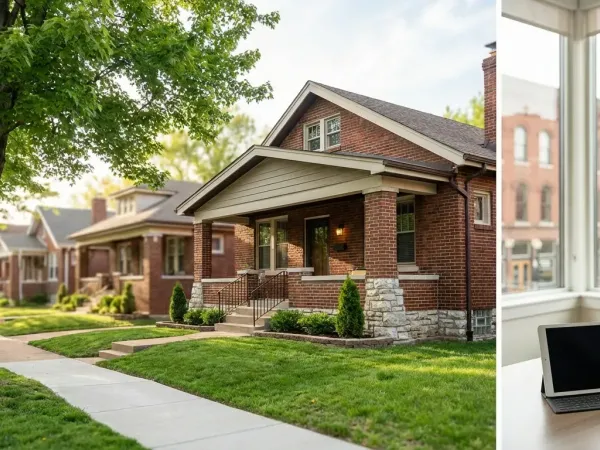
The second challenge is the scope of the market itself. St. Louis isn't just a standard asphalt shingle market. The city's housing stock includes a significant inventory of brick homes with architectural features — gabled dormers, parapet walls, flat or low-pitch sections, clay tile remnants, chimney penetrations with complex flashing — that require skilled specialty work beyond standard steep-slope replacement. Most national franchise campaigns (and most local campaigns) don't address this specialty demand. A homeowner with a flat-section parapet on their 1940s brick rowhouse searching "flat roof repair St. Louis" is a buyer that commodity roofing campaigns completely ignore.
Storm-damage roofing in St. Louis involves insurance claims for a large percentage of leads — and insurance-claim buyers behave differently from standard service buyers. They're not price-sensitive in the same way; they want a contractor who understands the claim process, works directly with adjusters, and minimizes the friction between the storm event and a signed contract. Ad copy that references the insurance claim process — "We work with all major insurers," "Free insurance claim review," "Storm damage assessment" — converts measurably better with this buyer segment than generic "Roof Replacement St. Louis" messaging.
The competitive landscape includes Empire Contractors (St. Louis-specific), Mid America Contracting, Owens Corning Platinum and GAF Master Elite dealer networks, and several national storm franchises. Differentiation on credentials (manufacturer certification level, years in market, insurance claim experience) matters more in this category than in most home services verticals, because the purchase decision involves a high-dollar insurance claim, not just a service call.
The most valuable strategic asset a St. Louis roofing company can build in Google Ads is a pre-staged storm surge campaign structure. The concept: maintain base campaigns year-round at standard budget, with emergency ad groups already written, reviewed, and set to "paused." When the NWS issues a severe thunderstorm or hail watch for the St. Louis metro, activate those campaigns within hours — before the post-storm search volume peaks and before competitors saturate the SERP.
Suburb-specific campaigns add meaningful value in the West County corridor. Chesterfield, Ladue, Town and Country, and Frontenac have high-income homeowners who invest in premium roofing materials — GAF Timberline HDZ, Owens Corning Duration, architectural shingles with 50-year warranties. Campaigns in these zip codes that position the contractor as a certified premium installer convert at above-average average job values ($12,000–$20,000) compared to city-wide campaigns.
St. Louis receives 5–8 significant hail events per year, with events producing 1"+ hail (the threshold for roof damage) occurring multiple times annually. The metro's position at the boundary between cold northern air masses and warm Gulf moisture — the same dynamics that produce severe weather across the Great Plains — makes it one of the most storm-active metros in the Midwest. A single large hail event can produce 15,000–30,000 insurance claims across the metro in 72 hours.
What makes St. Louis distinctive within the hail market is the housing stock density and age. Cities like Dallas and Atlanta have large suburban footprints of newer homes with standard asphalt shingle roofs — these are easy to price and replace, and the storm damage market is essentially commoditized. St. Louis's denser urban grid of brick homes with complex rooflines, flat sections, and aging infrastructure creates specialty demand that a commodity roofing contractor can't serve. The contractors who capture the high-value St. Louis roofing market — replacement + insurance + specialty flat — are the ones who communicate all three capabilities clearly in their campaigns and landing pages.
The pre-sale roof replacement segment is growing significantly as St. Louis's real estate market heats up. With median property values up 6.7% year-over-year and homes moving in 18–25 days in active neighborhoods, sellers who receive inspection reports flagging aging roofs are motivated to replace before listing to protect their sale price and timeline. "Roof replacement before selling," "pre-sale roof inspection St. Louis," and "replace roof before listing St. Louis MO" are undercompeted keywords that target a high-motivation buyer with a defined timeline.
Key insight: The St. Louis County suburb belt — Kirkwood, Webster Groves, Maplewood, Brentwood, Richmond Heights — contains a dense stock of homes from the 1940s–1960s with original or first-generation replacement roofs now 20–35 years old. This cohort represents structural replacement demand that will sustain above-baseline roofing search volume through the end of the decade. Campaigns targeting these specific suburbs reach motivated buyers with above-average job values in a less competitive segment than city-wide terms.
Roofing PPC in St. Louis rewards preparation more than almost any other category. The storm surge window — the 48–96 hours after a major hail event when motivated buyers are searching in high volume before insurance adjusters have even finished their assessment — is the highest-value lead generation window in the market. Operators without a pre-staged surge strategy leave those leads to competitors who planned ahead.
At MB Adv Agency, we build St. Louis roofing campaigns around the full demand structure: four distinct campaign tracks, storm surge activation protocols, flat roof specialty targeting, and insurance claim-oriented copy. Every element is calibrated to the St. Louis market — not redeployed from a template built for Phoenix or Atlanta.
We work with roofing contractors in the $2,500–$10,000 monthly ad spend range. Learn how we structure these campaigns at our lead generation services page, review our pricing tiers, or see our full St. Louis PPC services.
Year-round — but with dramatically different budget allocation depending on the season and weather events. The structural replacement and emergency repair market runs 12 months a year in St. Louis, driven by the aging housing stock and ongoing weather-related wear. You should never go completely dark on roofing campaigns in this market.
The peak storm damage window is April through August — St. Louis's primary hail and severe weather season. During this period, allocate 40–50% of your annual roofing PPC budget. When a significant hail event hits, activate your storm surge campaigns and budget 3–5x your normal spend for 48–96 hours. The post-storm window produces the highest-intent, highest-conversion-rate searches you'll see all year — homeowners who watched golf ball hail hit their roof are not price-shopping; they want a contractor now.
Winter (November–February) is the slowest roofing demand period in St. Louis, but not zero. Emergency roof repairs from ice storm damage, wind events, and fall inspection findings continue through the cold months. Running at 30–40% of peak budget during winter maintains brand visibility for the spring ramp-up without wasting spend on absent search volume. Contractors who go completely dark in winter lose Quality Score momentum and pay more to restart campaigns in March when the spring season opens.
At a well-run campaign, a St. Louis roofing replacement lead costs $115–$185. At $9,000–$14,000 average job value for a full replacement and a 35–45% close rate from qualified PPC leads, the math works consistently — one closed PPC lead typically returns 5–8x the cost of generating it. The question isn't whether Google Ads works for St. Louis roofing; it's whether your campaign is structured to produce qualified leads at that CPL range.
The most common reason St. Louis roofing campaigns underperform is campaign structure, not market conditions. Running a single "roofing St. Louis" campaign against both storm damage buyers (who want emergency response) and planned replacement buyers (who want pricing and warranties) produces poor ad relevance for both groups, drops Quality Score, and raises CPCs. Separating these into distinct tracks — each with its own keywords, copy, and landing page — typically reduces blended CPL by 20–35% within 60 days of restructuring.
Budget floor for a meaningful presence: $2,500/month covers steady-state replacement and emergency repair campaigns with enough impression share to generate 13–22 leads per month. To participate in post-storm surges at competitive levels, you need the capacity to flex to $5,000–$8,000 for 48–96 hours after major hail events. Operators who can't flex budget during storm windows leave the most valuable leads to competitors with pre-staged campaigns.
How to read this Cost per click and monthly searches are measured with Google Keyword Planner (see above). Cost per lead, conversion rate, budget and leads are estimates compiled from public benchmarks such as WordStream, not measurements.
Sources LocalIQ Roofing & Gutters 2024; St. Louis storm market calibration
$590$990/month
1 platform · Google or MetaGoogle + Meta$790$1,290/month
1 platform · Google or MetaGoogle + Meta$1,140$1,940/month
1 platform · Google or MetaGoogle + MetaChatGPT Ads: a separate pilot, $250/month, added to a plan. See the pilot →

Matteo Braghetta founded MB Adv and runs its Google Ads accounts. He takes the first call with every new client, reads the accounts every week and writes the agency’s guides.
The other half of his job is measurement: GA4, Consent Mode and server-side tracking, so the platforms learn from real sales.
MB Adv is a Google Partner agency managing about $4.4M a year in ad spend for clients in the US, the UK and Europe.
Managed on numbers you can check.
Plans for the US