HVAC PPC Tulsa, OK
Tulsa's summers push heat indexes past 100°F for weeks at a stretch — and when a homeowner's AC fails at 10pm on a Tuesday in July, they don't scroll past the first result they find. With 150–200 active HVAC companies competing across a metro of 1.06 million, the difference between a full dispatch board and an empty one often comes down to who holds position in the paid results at that exact moment. <!-- stats-article-link --> <p><em>See how this city's Hvac PPC costs compare nationally in our <a href="/resources/hvac-ppc-statistics">Hvac PPC Statistics</a> report, featuring data from 40+ US cities.</em></p>
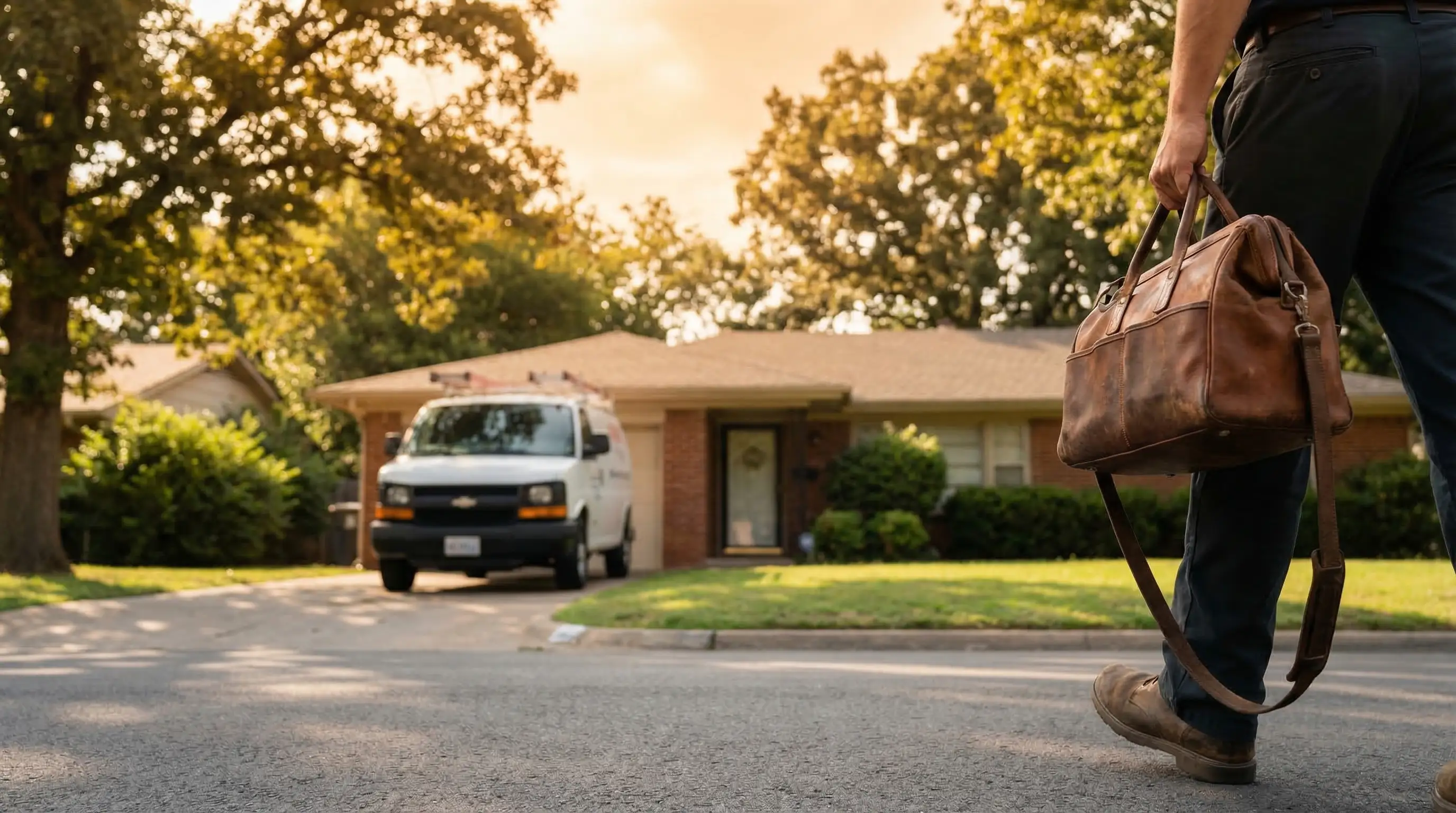
Tulsa's climate is not forgiving. Average July highs hit 93°F, heat indexes regularly exceed 100°F, and the winters bring ice storms more frequently than most Oklahoma cities — including OKC. For HVAC contractors, this means you're not running a seasonal business. You're running a year-round emergency response operation, and your Google Ads campaign has to be built like one.
The Franchise Advantage Problem
The first structural challenge is franchise spend. Aire Serv of Greater Tulsa and One Hour Heating & Air operate with corporate PPC budgets that dwarf what the average local owner-operator can sustain. These franchises don't need to win on efficiency — they win on volume and brand recall. When a homeowner's AC breaks and they search "HVAC company Tulsa," a franchise with a $12,000/month ad budget can simply bid until they own the top three positions on every high-intent query.
The average independent Tulsa HVAC company running $2,500–$4,500/month can't out-budget that. But they can out-structure it. The franchises use blunt national campaign templates. A locally-managed campaign can target the specific micro-geographies, service types, and timing windows where independent contractors actually convert.
The Winner-Take-All Emergency Window
Emergency HVAC searches are categorically different from planning searches. When a homeowner's system fails at 11pm during a heat wave, they don't compare three providers. They call the first one that answers. This winner-take-all dynamic means that CPCs for emergency keywords ("AC repair Tulsa same day," "emergency HVAC Tulsa") run $25–$50/click — two to three times the $12–$28 baseline for general HVAC searches. Most HVAC advertisers set a single campaign budget and let it run flat. That's the wrong structure.
During a 100°F Tulsa heat wave, every call is worth $250–$12,000 depending on whether it's a repair or a system replacement. Even at $50/click, converting 1 in 10 emergency clicks into a system replacement job produces a 10:1 return. The economics justify surge bidding — but only if the campaign is pre-configured to execute it automatically.
The Geographic Complexity of Tulsa's Market
Tulsa HVAC demand doesn't stop at the city limits. Broken Arrow (population 115,000), Owasso (40,000), Jenks, Bixby, and Sand Springs all represent significant residential service corridors with their own competitive density. The mix of franchise presence in each corridor varies — Broken Arrow has stronger franchise penetration than Owasso, for example. A flat geo-targeting approach that treats the entire metro as one zone misses these distinctions and wastes budget in corridors where you're not competitive.
The Tulsa metro also includes an aging housing stock: most residential neighborhoods were built between the 1950s and 1980s. That means original ductwork, aging equipment, and homeowners who are increasingly facing replacement rather than repair decisions. The average HVAC system replacement in Tulsa runs $5,000–$12,000 — and those high-value replacement leads are often lost to whichever contractor captured the initial repair search.
- Baseline search CPCs: $12–$28/click ("HVAC company Tulsa OK," "air conditioning repair Tulsa")
- Emergency search CPCs: $25–$50/click ("emergency AC repair Tulsa," "AC broke Tulsa same day")
- Suburban corridor keywords: $8–$20/click ("Broken Arrow HVAC," "Owasso air conditioning repair") — lower CPCs, less competition
Running a competitive Tulsa HVAC campaign means managing all three tiers simultaneously — and knowing when to surge the emergency tier by 40–60% in real time. That's not a set-it-and-forget-it structure. It's active campaign management built around Tulsa's specific climate events.
A Tulsa HVAC campaign that converts doesn't look like a national template. It's built around three structural principles: service separation, geo-layering, and emergency pre-staging. Here's how each one works.
Service-Separated Campaign Architecture
The most common HVAC campaign mistake is running all service types in one ad group. When "AC repair Tulsa" and "HVAC installation Tulsa" share a budget and a landing page, Quality Scores suffer and conversion rates drop because the ad copy can't be specific enough to match the searcher's intent. The fix is campaign segmentation by service type:
- Emergency repair: "AC not working Tulsa," "furnace out Tulsa," "HVAC emergency Tulsa" — CPC $25–$50; 24/7 ad scheduling; click-to-call only; dedicated emergency landing page
- General repair: "AC repair Tulsa," "air conditioner repair Tulsa OK," "furnace repair Tulsa" — CPC $12–$22; standard ad scheduling; callout extensions for same-day availability
- Installation/replacement: "AC installation Tulsa," "HVAC system replacement Tulsa," "new HVAC unit Tulsa OK" — CPC $15–$28; higher-intent, longer decision cycle; form fill + phone CTA
- Maintenance/tune-up: "AC tune-up Tulsa," "HVAC maintenance Tulsa," "furnace tune-up Broken Arrow" — CPC $8–$15; seasonal timing; lead into maintenance contract offer
Each campaign segment gets its own ad copy, landing page, and bid strategy. Emergency campaigns run Enhanced CPC or Target CPA. Maintenance campaigns can run lower bids with a tighter geo radius. This structure produces Quality Scores 30–40% higher than the blended-campaign approach — which directly reduces average CPC.
Geo-Layered Targeting with Suburban Splits
Tulsa proper and its suburbs require separate bidding. In Broken Arrow, franchise density is higher — you need more competitive bids to appear for general terms, but the longer-tail suburb-specific keywords ("Broken Arrow HVAC company," "AC repair 74012") face far less competition. In Owasso and Bixby, franchise presence drops further — a local HVAC company can dominate these corridors at $8–$15/click with virtually no franchise competition.
The geo structure: a core Tulsa campaign at competitive bids, a Broken Arrow campaign targeting the 74011/74012/74014 zip codes at competitive bids on suburb-specific keywords, and an outer-suburb campaign (Owasso, Jenks, Bixby, Sand Springs) at lower bids with long-tail geo keywords. Bid adjustments of +15–25% for higher-intent zip codes in established Tulsa residential neighborhoods (Midtown, South Tulsa, Brookside) where replacement demand is highest due to aging housing.
Storm-Season Surge Configuration
Tulsa's summer heat waves and winter ice storms are predictable events. What's not acceptable is reacting to them manually. A properly configured Tulsa HVAC campaign has automated bid rules pre-set to activate when heat index forecasts exceed 100°F or when NOAA issues a winter storm watch for the Tulsa metro. When those rules trigger, emergency campaign bids increase 40–60%, daily budgets double, and ad scheduling shifts to 24/7 with call-only ads promoted.
June, July, and August require budget surge planning built into the annual media plan — not emergency budget requests when the heat hits. Summer surge budget for competitive Tulsa HVAC: $4,500–$7,000/month versus the $2,500–$4,500 baseline the rest of the year. December through February requires the same pre-staging logic for ice storm emergency response.
Google Partner Agency
We're a certified Google Partner Agency, which means we don’t guess — we optimize withGoogle’s full toolkit and insider support.
Your campaigns get pro-level execution, backed by real expertise (not theory).

Tulsa's HVAC market has a structural dynamic that most contractors don't think about explicitly: Tulsa averages more winter ice storm events than Oklahoma City. This matters for campaign planning. While most HVAC competitors pour budget into summer AC campaigns, winter emergency search volume in Tulsa is disproportionately high for a Southern city. Furnace failures during ice storms generate the same winner-take-all emergency search behavior as summer AC breakdowns — but with less competition for those keywords in January and February than in July and August.
The Aging Housing Stock Replacement Wave
Tulsa's residential character was largely built out between the 1950s and the 1980s. HVAC systems have a functional lifespan of 15–20 years. The math tells a story: a significant share of Tulsa's housing stock is cycling through its second or third system replacement right now. With 51.9% homeownership (196,000+ owner-occupied homes in the metro), the replacement demand pipeline is substantial and ongoing.
Key insight: The average HVAC system replacement generates $5,000–$12,000 in revenue — versus $250–$600 for a repair call. A contractor who wins the initial repair search and builds a strong follow-up process converts a meaningful percentage of those repair customers into replacement jobs within 12–24 months. PPC that only targets replacement keywords misses the funnel entry; PPC that only targets repair keywords misses the upsell. The best Tulsa HVAC campaigns target both layers with distinct ad sets and landing pages.
Suburban Expansion and Corridor Opportunity
Broken Arrow (115,000 population) is Tulsa's largest suburb and one of the fastest-growing cities in Oklahoma. The residential housing stock in Broken Arrow is newer on average than Tulsa proper — but it's aging. Homes built in the 1990s are now 30+ years old, which is HVAC replacement territory. Broken Arrow represents the single largest suburban HVAC opportunity in the Tulsa market, with enough population to justify its own dedicated campaign at competitive bids.
Owasso (40,000) and Bixby represent the outer growth ring — newer developments, newer homes, but a population that's grown significantly since 2010. These corridors have lower franchise competition and lower CPCs ($8–$15/click vs. $12–$28 in Tulsa proper). An independent HVAC company can effectively own these suburban markets at a fraction of the cost of competing in core Tulsa.
- Tulsa core market: High competition, $12–$28 CPCs, franchise-heavy — requires tight segmentation to compete
- Broken Arrow: Medium-high competition, $10–$22 CPCs, growing aging stock — highest volume suburban opportunity
- Owasso/Bixby/Jenks: Lower competition, $8–$15 CPCs, newer but aging stock — highest efficiency per ad dollar
The practical implication: a Tulsa HVAC company running $3,500/month that allocates 60% to core Tulsa and 40% to suburban corridors will typically generate more total leads — and lower average CPA — than a company that concentrates 100% of budget on core Tulsa. The suburbs don't get the franchise attention, and the CPCs reflect it.
One more factor: Tulsa's humidity level is higher than OKC's due to the Ozark moisture belt. Higher humidity amplifies cooling demand — systems run harder, wear faster, and require more maintenance. This is a legitimate differentiator in ad copy and landing page content for Tulsa contractors: emphasizing the Oklahoma humidity factor resonates with homeowners who've noticed their systems struggling in July in a way that general "hot summers" messaging doesn't.
Running HVAC PPC in Tulsa requires campaign management that understands Oklahoma's climate cycles, knows the difference between Broken Arrow's competitive landscape and Owasso's, and has the technical infrastructure to activate emergency surge bids within hours of a heat wave or ice storm forecast. Generic campaign templates — the kind that national agencies apply to every metro — don't account for any of that.
At MB Adv Agency, our Tulsa HVAC campaigns are built around the market's actual emergency economics. We maintain pre-configured storm-response campaign structures for contractors on standby. When NOAA issues a heat advisory or winter storm watch for the Tulsa metro, our automated rules activate — bids surge, budgets expand, and call-only ads take priority before the phone lines start ringing. We don't react to demand spikes. We pre-position for them.
Our Plastic-Brick methodology eliminates the wasted spend that inflates most HVAC campaigns' CPA — broad match keywords attracting non-converting curiosity traffic, landing pages that don't match emergency intent, and flat bidding that doesn't differentiate between a $200 repair call and a $10,000 replacement lead. What remains is a campaign structure that spends precisely where Tulsa HVAC revenue is won.
We work with Tulsa HVAC companies in the $2,000–$9,000/month ad spend range. Review our pricing tiers and see how our flat-fee management model keeps incentives aligned — we benefit when your campaign produces jobs, not when it burns clicks. Your Tulsa PPC foundation is already in place. The HVAC campaign structure is the next layer.
Frequently Asked Questions
How much should a Tulsa HVAC company spend on Google Ads?
The honest answer: it depends on your service area, your revenue targets, and whether you want to compete in emergency keywords or stick to planned maintenance and replacement searches. But for a Tulsa HVAC contractor targeting the full metro — including Broken Arrow and the suburban corridors — the functional entry point is $2,000–$3,000/month in ad spend (our Growth Mode tier). Below that threshold, you can't maintain consistent presence across the keyword categories that generate service calls.
For contractors who want to compete aggressively on emergency keywords — the $25–$50/click territory where heat wave and ice storm calls originate — a realistic summer campaign budget runs $4,000–$7,000/month during peak season. That sounds like a lot until you run the math: if your campaign converts 1 in 12 emergency clicks into a system replacement at $8,000 average job value, your CPL is $400–$600 and your return is 13–20x. The budget isn't the constraint; the conversion infrastructure is.
Seasonal planning matters more in HVAC than almost any other vertical. The right Tulsa HVAC budget is not flat across the year. It surges June through August (summer emergency season), surges again December through February (ice storm season), and reduces in spring and fall when demand is lighter. A flat $3,000/month budget deployed year-round typically underperforms a variable $2,000–$6,000/month budget calibrated to Tulsa's actual demand curve — because you're either overspending in slow periods or underexposed during the emergency windows that generate the highest-value jobs.
Can a local Tulsa HVAC company compete with franchises on Google Ads?
Yes — but not by matching budgets. Franchises like Aire Serv and One Hour win on volume and brand recall. An independent contractor wins on campaign precision. The franchise campaign is a national template. Your campaign can be built around the specific zip codes, service types, and timing windows where you actually convert. That specificity — lower CPCs on long-tail terms, higher Quality Scores from tighter ad-to-keyword-to-landing-page alignment, and geo-targeting that focuses spend on your actual service radius — is how independent HVAC companies sustainably compete against corporate budgets.
The specific advantage points: Suburban corridors (Owasso, Bixby, Jenks) where franchise density drops and CPCs run $8–$15/click versus $20–$28 in core Tulsa. Specialty service campaigns (mini-split installation, heat pump replacement, commercial HVAC for small businesses) where the franchise templates don't go. Hyper-local ad copy that names specific Tulsa neighborhoods, references local landmarks, and sounds like a local company rather than a national brand — because it is. Conversion data consistently shows that Tulsa homeowners trust a locally-owned HVAC company over a franchise when the ads communicate that distinction effectively.
The other factor: franchises run always-on campaigns at fixed spend levels. They don't have local managers activating storm surge protocols for a Tulsa heat wave. An independently managed campaign with an Oklahoma-aware manager can out-position a franchise in the moments that matter most — the emergency search window during a 105°F heat index day — because the manager is watching the weather and the campaign simultaneously.