Start
$590$990/month
1 platform · Google or MetaGoogle + Meta- Ad spend
- up to $3,000
- New creativesmade by us
- Google + Meta only4 a month
 By Matteo Braghetta, Founder · Google Ads
Tulsa is the seat of the Northern District of Oklahoma federal court and home to 700–900 active law firms serving a metro of 1.06 million — with a poverty rate of 18.7% that drives disproportionately high demand for criminal defense and family law, and an energy-sector wealth concentration that supports high-asset estate and business litigation. Personal injury keywords in Tulsa run $65–$400 per click. The economics of legal PPC are unforgiving: a mismanaged campaign at those CPCs burns through $10,000 in a month with nothing to show for it.
See how this city's Legal PPC costs compare nationally in our Legal PPC Statistics report, featuring data from 40+ US cities.
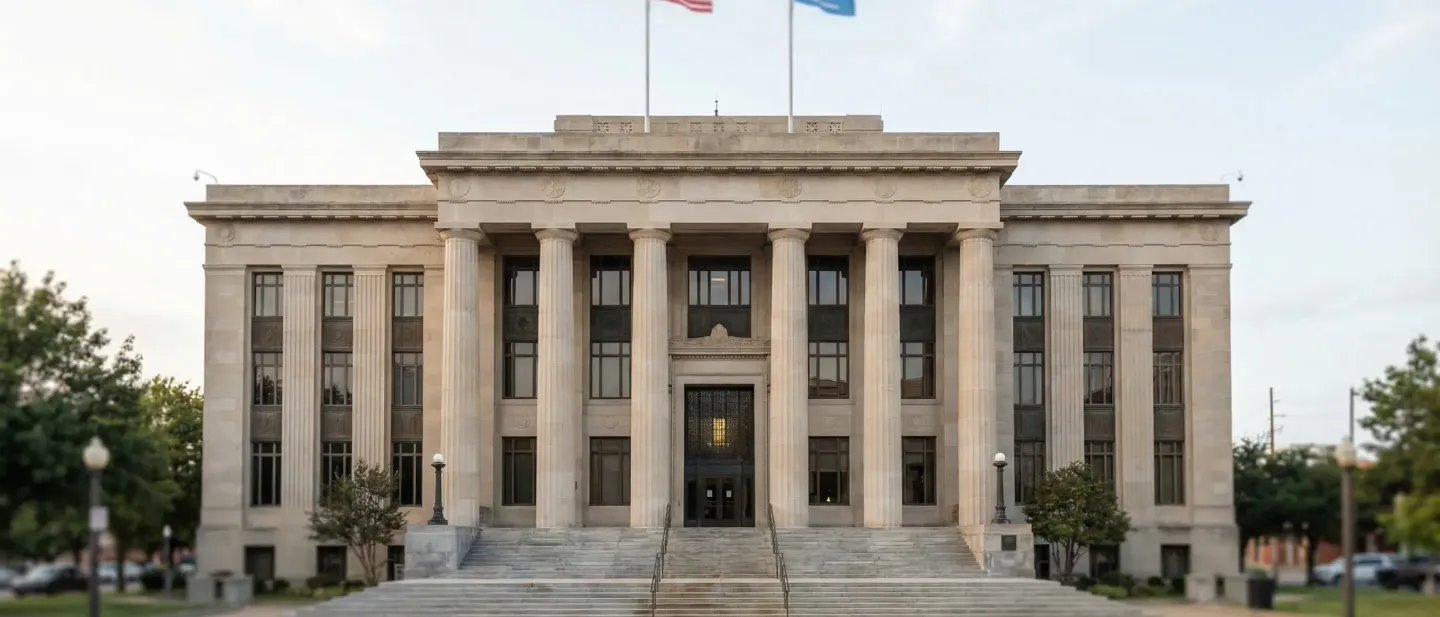
In Tulsa, OK, people search for legal services about 2,980 times a month on Google; a top-of-page click costs $12–$84, and demand peaks in May.
Google Keyword Planner · Oct 2025 – Sep 2026
| Search | Monthly searches | Top-of-page CPC |
|---|---|---|
| estate planning attorney | 390 | — |
| family law attorney | 320 | $5–$24 |
| divorce lawyer | 260 | $4–$84 |
| lawyer | 260 | $6–$19 |
| personal injury lawyer | 210 | $65–$400 |
| dui lawyer | 170 | $29–$189 |
| immigration lawyer | 170 | $11–$40 |
| employment lawyer | 170 | $1.03–$4.55 |
| attorney | 170 | $5–$19 |
| business lawyer | 140 | — |
US: $69
Google Keyword Planner · Oct 2025 – Sep 2026
Source: Google Keyword Planner (Google Ads), Google Search, English, Tulsa, OK, Oct 2025 – Sep 2026. Volumes are Google's monthly averages; CPC is the top-of-page bid range, weighted by search volume. How we collect these figures.
Legal PPC is the highest-stakes paid search vertical in the Tulsa market. Personal injury keywords run $65–$400 per click. Criminal defense terms run $16–$165. Family law searches hit $5–$24. At those CPCs, a single day of poor campaign management can waste more than most industries spend in a month. The margin for structural error is essentially zero.
Tulsa's legal PPC landscape is shaped by extreme budget asymmetry. Major personal injury firms — Smolen & Roytman, Gary Richardson's firm, Martin, Jean & Jackson — operate PPC budgets of $15,000–$40,000/month. They occupy the top ad positions for high-volume PI keywords by default. A 5–10 attorney firm running $4,000–$7,000/month cannot win a head-to-head bidding war on "Tulsa personal injury lawyer" against a firm spending 5x more.
The solution isn't to abandon those keywords entirely — it's to compete strategically on the subset where you can win. Long-tail practice area keywords ("Tulsa slip and fall lawyer," "workers compensation attorney Tulsa OK," "Midtown Tulsa personal injury attorney") have meaningful search volume but far less competition at the top end. CPCs on these terms run below the broad head terms. A mid-size firm that dominates long-tail intent converts at a lower CPA than one that burns budget chasing head terms against firms with 5x the ad budget.
National legal aggregators — FindLaw, Avvo, Justia — run permanent campaigns across all Tulsa legal keywords, capturing searchers and reselling leads to multiple firms simultaneously. When a homeowner in Tulsa searches "divorce lawyer Tulsa" and clicks an Avvo result, they're entering a lead funnel that will sell their contact information to 3–5 attorneys. The lead quality is diluted because the prospect is simultaneously being contacted by multiple firms. A firm's own PPC landing page, with a direct CTA, converts significantly better than an aggregator-mediated lead — because the relationship starts with direct intent rather than a shared list.
This is one of the clearest economic arguments for direct PPC spend in legal: the cost per case acquisition through aggregator leads is often higher than through owned PPC campaigns once you account for the competition factor and the lower close rates on shared leads. Tulsa attorneys who run their own campaigns and capture searchers directly pay more per click — but pay less per retained client.
The Oklahoma Bar Association's Rules of Professional Conduct impose specific restrictions on attorney advertising that affect how PPC ads are written. Claims about outcomes, case values, and results must be carefully qualified. "We win cases" requires caveats. Any suggestion that results are guaranteed is prohibited. These compliance constraints narrow the creative space for ad copy — which makes campaign quality score and landing page optimization even more important as differentiators when the ad copy field is relatively constrained across competitors.
Legal PPC in Tulsa requires practice-area isolation as its structural foundation. Running personal injury, criminal defense, and family law in a single campaign with shared keywords and a generic landing page is the fastest way to generate high CPCs, low Quality Scores, and zero case intake. Each practice area has a distinct searcher intent, decision cycle, and conversion action — and each requires its own campaign architecture.
The campaign structure for a Tulsa law firm targeting multiple practice areas:
Each campaign sends traffic to a practice-area-specific landing page — not the firm's homepage. A "Tulsa car accident attorney" searcher who lands on a generic law firm page bounces at 70–80%. The same searcher who lands on a car accident case intake page with testimonials, a visible call button, and a "free consultation — call now" CTA converts at 15–25%. That difference, at these click costs, is the difference between a sustainable campaign and a money pit.
Legal prospects research extensively before calling. A personal injury victim or someone facing criminal charges doesn't typically call the first attorney they click on — they visit 3–5 attorney websites over 5–10 days before making contact. This research behavior creates a remarketing opportunity that most Tulsa law firms leave on the table.
RLSA (Remarketing Lists for Search Ads) and display remarketing keep your firm's name in front of high-intent searchers during their research window. A prospect who visited your PI landing page last week and is now searching "how much does a personal injury lawyer cost Tulsa" can be shown a bid-adjusted ad that reinforces your free consultation offer. Remarketing CPCs run 30–50% lower than first-touch CPCs for legal terms — and conversion rates are significantly higher because the prospect already has brand familiarity with your firm.
The key legal remarketing insight: segment by practice area. A criminal defense prospect who visited your DUI page should see DUI-specific remarketing ads — not your family law messaging. Segmented remarketing audiences maintain the practice area specificity that drives conversion rates across all legal campaign types.
Tulsa's legal market has two distinct demographic demand drivers that create specific PPC opportunities — and most competing law firms don't structure their campaigns around either of them explicitly.
Tulsa's 18.7% poverty rate — significantly above the national average of 11.6% — creates disproportionately high demand for criminal defense and family law services. Low-income households interact with the criminal justice system at higher rates than the national baseline. DUI arrests, domestic dispute charges, drug possession charges, and theft-related offenses generate significant criminal defense search volume from a segment of the population that often cannot access public defenders effectively and must find private representation.
Key insight: Criminal defense keywords in Tulsa — particularly DUI and misdemeanor defense terms — convert at higher rates than their CPCs suggest because the searcher urgency is immediate and the alternative (public defender with a massive caseload) is unattractive. A criminal defense attorney who runs a well-structured, responsive campaign targeting Tulsa's poverty-driven demand can generate a consistent caseload at $1,800–$4,500 CPA on terms running $16–$165/click.
Tulsa's energy sector — Williams Companies, ONEOK, BOK Financial, and dozens of oil & gas operators — concentrates significant household wealth in segments of the Tulsa metro. The Midtown, South Tulsa, and certain suburban Broken Arrow corridors have household incomes substantially above the city median. This wealth concentration drives demand for high-asset divorce, estate planning, business litigation, and commercial real estate legal services — practice areas where the revenue per client is multiples of the standard personal injury or criminal defense case.
High-asset divorce in Tulsa involves oil-industry income, company equity positions, and mineral rights portfolios — all complex valuation challenges. Family law firms that specifically target "high-asset divorce Tulsa" and "complex property division attorney Tulsa" access a search category where competition is far thinner than the broad "divorce lawyer Tulsa" keyword, and the revenue per retained client is $15,000–$40,000+ versus $4,000–$8,000 for standard dissolution cases.
A Tulsa law firm that segments its campaigns by client profile — not just practice area — can allocate budget toward the segments where their expertise and pricing match the demand. A firm that handles both standard divorce and high-asset divorce shouldn't run the same ads to the same landing page for both. The messaging, the proof points, and the CTA are entirely different for a $5,000 dissolution versus a $30,000 complex property division case.
Legal PPC in Tulsa at $12–$84/click requires a manager who treats every click as a material financial decision. A generic campaign template — broad match keywords, homepage landing page, no practice area segmentation — burns through legal PPC budgets in weeks without producing case intake. The structural rigor of the campaign architecture is the difference between a 3:1 and a 12:1 return on ad spend.
At MB Adv Agency, our legal PPC campaigns are built around Tulsa's specific market dynamics: the budget asymmetry against major PI firms, the aggregator competition, the Oklahoma Bar compliance requirements, and the dual demand profile created by the city's poverty rate and energy sector wealth. We build campaigns that let mid-size Tulsa law firms compete effectively against firms spending 5x more — by out-targeting, not out-spending.
Our Plastic-Brick lead generation methodology isolates and eliminates the wasted spend categories that inflate legal CPA — broad match keywords attracting non-case-type traffic, homepage bounce rates that waste paid clicks, and flat bidding that doesn't distinguish between a high-value PI keyword and a low-conversion informational search. Review our pricing tiers and see how our flat-fee model aligns incentives with your case acquisition goals — we don't benefit from your click volume, we benefit from your retained clients.
We work with Tulsa law firms in the $3,000–$15,000/month ad spend range. Your Tulsa PPC service page is live — the legal campaign structure is what turns it into case intake.

Personal injury is the highest-revenue-per-case category — PI settlements in Tulsa average $25,000–$75,000, generating attorney fees of $8,000–$25,000 per case on contingency. At $65–$400 CPCs, the CPA math depends on where in that range you bid: if 10% of PI landing page visitors convert to a consultation and 30% of consultations become retained clients, your CPA is about $7,750 per retained PI client at a typical click of about $232.
But PI also has the toughest competition — you're bidding against firms with $20,000–$40,000/month budgets on the head terms. For a firm with a $5,000–$8,000/month budget, the better-efficiency play is often criminal defense or DUI: CPCs run $16–$189, competition is thinner, and the searcher urgency is immediate (someone arrested yesterday is searching today, not in two weeks). Criminal defense close rates on strong leads run 35–50% because the need is non-deferrable.
The highest-efficiency opportunity in the Tulsa legal market right now is specifically high-asset divorce and estate planning — thin competition, high revenue per client ($15,000–$40,000+), and a demographic demand driver (energy-sector wealth) that's underserved by the current PPC landscape. Most Tulsa family law advertisers target the generic "divorce lawyer Tulsa" keyword. The firm that specifically targets "complex property division attorney Tulsa" and "oil and gas estate planning Tulsa" is fishing in a much less crowded pond at comparable CPCs.
The three leading causes of low-quality legal leads from PPC are: broad match keywords, generic landing pages, and no lead qualification gate. Broad match allows Google to match your "personal injury lawyer Tulsa" keyword to searches like "personal injury claim process Oklahoma" or "what does a personal injury lawyer do" — informational queries that never convert to case intake. Exact match and phrase match control is mandatory for legal PPC at $65–$400/click; broad match is not an option at these CPCs.
Generic landing pages — the law firm homepage with a navigation menu and five practice areas listed — produce 70–80% bounce rates on paid traffic. A prospect who clicked your "Tulsa car accident attorney" ad and lands on a homepage doesn't know where to go next. A dedicated landing page with a single CTA (free consultation form or direct call button), social proof (reviews, bar ratings, years in practice), and case-type specific content converts at 15–25%. That's a 3–4x improvement in conversion rate at the same CPC — which cuts your effective CPA by 3–4x.
The third lever: add a pre-qualification step to the form. A field asking "What type of legal matter do you need help with?" with checkboxes for practice areas screens out off-target inquiries before they consume intake staff time. Most Tulsa law firm PPC campaigns have no intake qualification — they generate leads, hand them to the receptionist, and discover 40% are outside the firm's practice areas. A qualification field on the landing page pays for itself in staff time saved within the first month.
How to read this Cost per click and monthly searches are measured with Google Keyword Planner (see above). Cost per lead, conversion rate, budget and leads are estimates compiled from public benchmarks such as WordStream, not measurements.
Sources WordStream Legal benchmark + Tulsa market estimates; PI keywords $45-130/click; criminal defense $20-65/click (Phase 2 research)
$590$990/month
1 platform · Google or MetaGoogle + Meta$790$1,290/month
1 platform · Google or MetaGoogle + Meta$1,140$1,940/month
1 platform · Google or MetaGoogle + MetaChatGPT Ads: a separate pilot, $250/month, added to a plan. See the pilot →

Matteo Braghetta founded MB Adv and runs its Google Ads accounts. He takes the first call with every new client, reads the accounts every week and writes the agency’s guides.
The other half of his job is measurement: GA4, Consent Mode and server-side tracking, so the platforms learn from real sales.
MB Adv is a Google Partner agency managing about $4.4M a year in ad spend for clients in the US, the UK and Europe.
Managed on numbers you can check.
Plans for the US