
What Is SEO? A Plain-English Guide (2026)

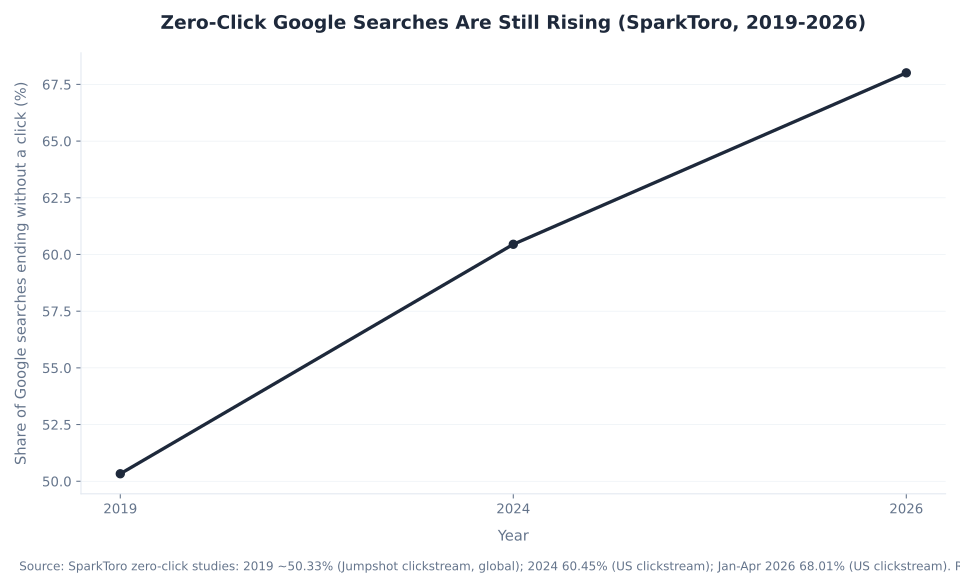
Zero-click search — SparkToro, early 2026
68%
of US Google searches ended without a click in early 2026 — up from 60% in 2024. Yet the AI answers absorbing those clicks are built from the same indexed, authoritative content SEO produces, which is why SEO is expanding into SEO + AEO + GEO rather than dying.
Source: SparkToro 2026 zero-click study; retrieved 2026-07-01
What Is SEO? A Plain-English Definition
SEO — search engine optimization — is the practice of improving a website so it earns more relevant, unpaid (“organic”) traffic from search engines like Google. In practice that means building a site search engines can crawl and understand, that genuinely answers what people search for, and that other trustworthy sites link to — so it surfaces when someone searches for what you offer. It is the ongoing work of earning visibility you do not pay per click for, and it is the single most durable channel most businesses can build.
Three things SEO is not, because each is a common confusion. It is not paid advertising: that is PPC (pay-per-click, such as Google Ads), and you cannot buy an organic ranking — the separation is the whole point of the word “organic.” It is not a one-time setup: algorithms update several times a year, competitors move, and content ages, so SEO is maintained, not switched on. And it is not a single trick: it is a system of content, links, and technical health working together. The framing here follows Google Search Central and Ahrefs.
MB Adv Agency runs the paid side — Google Ads and PPC — that complements organic search, and the businesses we work with that also invest in organic treat the two as complements, not either/or. This page is the orientation anchor for the whole SEO glossary: it settles what SEO is, how search works, why it still matters in 2026, whether it is dead now that AI answers so many queries, and how to use this glossary to go deeper — then routes you into the depth.
Key Takeaways
- SEO is the practice of earning unpaid, organic traffic from search engines by improving a site’s content, links, and technical health — it is separate from paid ads and cannot be bought.
- Search works in three steps: crawl, index, rank. Bots discover pages, the content is stored in an index, and the most relevant, highest-quality indexed pages are ordered for each query. A page that is not indexed cannot rank.
- SEO has three pillars: on-page, off-page, and technical. Content and keywords, backlinks and authority, and the crawl/index/speed foundation — the mental model the whole discipline hangs on.
- SEO compounds; paid search is rented. An earned ranking keeps returning clicks without a per-click cost, while paid traffic stops the moment the budget stops. SEO is slower to build but durable.
- SEO is not dead in the AI era — it is expanding. AI Overviews and AI Mode answers are built from the same indexed, authoritative content SEO produces, so the discipline is broadening into SEO + AEO + GEO.
How Search Works, at a High Level: Crawl → Index → Rank
Every SEO decision traces back to three steps. Crawling: search engines send automated bots (Googlebot) to discover pages by following links and reading sitemaps. Indexing: the content they find is analyzed and stored in a massive index — and a page that is not indexed literally cannot rank. Ranking: when someone searches, the engine pulls the most relevant, highest-quality indexed pages and orders them using hundreds of signals.
That is the whole model at orientation level, and it is worth memorizing because it explains why so much of SEO is unglamorous plumbing: if Google cannot crawl a page it never gets indexed, and a page that is not in the index cannot appear for any query, no matter how good it is. The mechanics underneath the model — crawl budget, mobile-first indexing, robots.txt, sitemaps, and log-file analysis — are their own discipline; for the full picture of crawling, indexing, and ranking, follow the dedicated pillar. The crawl-index-rank model is documented directly by Google Search Central’s “How Search works.”
The Three Pillars of SEO: On-Page, Off-Page, and Technical
The discipline is conventionally organized into three pillars (industry convention per Ahrefs, Moz, and Search Engine Land — not a single Google announcement). On-page is the content and HTML you control on the page: keywords and search intent, content that answers that intent, title tags, headers, internal links, and image optimization. Off-page is the signals from outside your site — backlinks, brand mentions, and authority earned through link building. Technical is the crawl, index, speed, and security foundation covered by technical SEO: Core Web Vitals, HTTPS, mobile-friendliness, and structured data.
The pillars are a division of labor, not a ranking of importance — a strong page needs all three, and a weakness in one caps the others. The on-page versus off-page split is the first distinction most practitioners learn, and businesses that serve a geographic area add a fourth dimension on top: local SEO. One caution on off-page: backlinks correlate with rankings but do not simply buy them — Backlinko’s study of 11.8 million results found that roughly 95% of pages have zero backlinks, so authority is earned over time, not switched on.
| Pillar | What it covers | Go deeper |
|---|---|---|
| On-page SEO | Content quality, keywords & search intent, title tags, headers, internal links, image SEO | Keywords · content · on-page |
| Off-page SEO | Backlinks, brand mentions, and authority signals from other sites (about 95% of pages have zero backlinks — Backlinko) | Link building |
| Technical SEO | Crawling & indexing, site speed / Core Web Vitals, HTTPS, mobile-friendliness, structured data | Technical SEO · how search works |
Source: three-pillar taxonomy is industry convention (Ahrefs, Moz, Search Engine Land); backlink distribution from Backlinko. Verified 2026-07-01.
Why SEO Matters in 2026: Organic vs Paid
For most businesses, organic search is the largest source of trackable website traffic, and unlike paid clicks it compounds: a page that earns its ranking keeps returning clicks without paying per click, whereas paid traffic stops the moment the budget stops. That is the core economic case for SEO. The honest trade-off is speed — SEO is slower to start and cannot be switched on overnight, while PPC is instant but rented.
SEO also has no platform or media fee. Unlike PPC, you do not pay Google per click or per impression for an organic ranking; the real investment is content, technical work, and either in-house time or an agency retainer. So the rankings are unpaid, but the work to earn them is not. How to price and measure that work is its own topic — track SEO performance in Google Search Console, the free tool that reports the clicks, impressions, and positions your organic pages earn (see the Google Search Console glossary’s overview of the tool).
MB Adv Agency manages the paid campaigns, so we say this plainly: the strongest programs run both. Organic builds the durable asset; paid buys speed and coverage where organic is thin. If you need managed PPC services or campaign management alongside your SEO, that is the side our team owns. The demand behind the core vocabulary of the discipline is enormous — which is exactly why the head terms are so competitive, and why an earned position on them is a durable asset rather than a rented one.
| Term | US volume | KD |
|---|---|---|
| seo | 629,000 | 94 |
| search engine optimization | 75,000 | 92 |
| local seo | 46,000 | 86 |
| what is seo | 35,000 | 93 |
| backlinks | 14,000 | 81 |
| technical seo | 13,000 | 70 |
| generative engine optimization (GEO) | 7,800 | 74 |
| why is seo important | 1,300 | 49 |
Source: Ahrefs Keywords Explorer (US, 12-month average), retrieved 2026-07-01.

Organic and paid, working together
SEO Builds the Asset — Paid Buys the Speed
Organic SEO earns the durable rankings; the paid campaigns that complement it — Google Ads and PPC — are where our team comes in. A strong program runs both: managed PPC services and campaign management sit alongside your organic work, and for software companies that lean on both, see our SaaS PPC services.
Talk to our team →SEO in the AI Era: Is SEO Dead? (AI Overviews, Zero-Click, AEO + GEO)
This is the biggest question of the moment, and the honest answer is: no, SEO is not dead — it is changing. The shift is real and worth stating with named data. Zero-click search is rising: SparkToro measured about 68% of US searches ending without a click in early 2026, up from 60% in 2024. AI Overviews now appear on roughly 16% of queries by Semrush’s keyword-set method and on more than 20% by Similarweb’s clickstream method — two different measurements, kept distinct — and when one is present it cuts click-through by roughly 60%. And AI Mode passed one billion monthly users at Google I/O 2026.
Zero-Click Google Searches Are Still Rising (SparkToro, 2019–2026)
Here is the argument the numbers support. AI Overviews, AI Mode, and chatbots build their answers from the same indexed, authoritative, well-structured content that SEO produces — nothing gets cited that Google never crawled, indexed, or trusted. So “SEO is dead because of AI” gets the mechanism backwards: the discipline is broadening, not ending. It is expanding into SEO + AEO (Answer Engine Optimization — being the extracted answer in snippets, voice, and AI boxes) + GEO (Generative Engine Optimization — being cited inside generative answers like ChatGPT, Perplexity, Gemini, and AI Overviews). AEO and GEO are industry coinages, not official Google terms; the consensus, as Digiday lays out, is that they extend SEO rather than replace it. For the full mechanics of how AI is changing SEO, follow the dedicated pillar.
How to Use This SEO Glossary as a Hub
Treat this glossary as a learning path, not a dictionary. Start here for the mental model, then follow the pillar map in roughly the order the work actually happens on a site.
Begin with the foundations: how search engines work and technical SEO make your site eligible to rank at all. Then build the on-page layer: keywords and search intent, SEO content, and the on-page versus off-page distinction. Earn authority through link building, and if you serve a geographic area, add local SEO. Keep pace with the platform through Google algorithm updates and how AI is changing SEO. Finally, measure and expand: track performance in Search Console and, for multi-country sites, international SEO. One myth worth retiring before you start: SEO is not “just stuffing keywords,” and it is not a box you check once — modern search runs on natural-language understanding and entities, keyword stuffing is a spam-policy violation rather than a tactic, and the work is continuous because the algorithm and your competitors never stop moving.
Frequently Asked Questions: SEO
Next in the SEO series
See How Search Actually Works
You have the mental model — now go one level deeper. The next pillar breaks down crawling, indexing, and ranking: how Googlebot finds your pages, how they get stored, and how the results are ordered.
Read the next guide →Methodology & Sources
This pillar is the orientation anchor for the SEO glossary; depth lives in the linked siblings. The crawl-index-rank model is from Google Search Central. The zero-click figures are SparkToro clickstream estimates (about 68% of US searches in early 2026, up from 60% in 2024), and AI Overview prevalence is reported as a range because the methods differ: roughly 16% by Semrush’s 10-million-keyword set versus more than 20% by Similarweb’s clickstream — never merged into one number. The AI Mode figure (one billion-plus monthly users) is from Google’s I/O 2026 announcement, and the backlink distribution (about 95% of pages have zero backlinks) is from Backlinko. Head-term search volumes are from Ahrefs Keywords Explorer (US, 12-month average, retrieved 2026-07-01). No mbadv client metrics appear in this article — MB Adv Agency has no SEO service page, and its perspective here is qualitative. Reviewed by MB Adv Agency, July 2026.
Search Engine Optimization, commonly known as SEO, is an essential practice for anyone looking to establish a robust online presence. In today’s digital era, where competition is fierce and visibility can make a significant difference, understanding SEO is crucial. It encompasses various strategies designed to enhance a website's visibility on search engine results pages (SERPs), driving organic traffic to the site. This article explores SEO in depth, breaking down its definition and purpose, its significance in digital marketing, and the key benefits it offers to businesses.
Definition and purpose
SEO can be defined as a set of practices aimed at improving the ranking of a website on search engines like Google, Bing, and Yahoo. The primary purpose of SEO is to increase the quality and quantity of traffic to a website through organic search engine results. This involves optimizing various aspects of a website, including content, technical setup, and user experience, to make it more appealing to both search engines and users.

At its core, SEO seeks to ensure that a website provides valuable content that fulfills user intent while optimizing for specific keywords and phrases. This means understanding what potential customers are searching for and strategically positioning a website to meet those queries. SEO is not a one-time effort, but rather a continuous process that requires ongoing adjustments and refinements as search engine algorithms evolve and user behavior changes. The dynamic nature of SEO emphasizes the importance of staying informed about industry trends and algorithm updates, which can significantly impact a website's visibility and performance in search results.
Moreover, the role of SEO extends beyond just attracting traffic; it also involves building trust and credibility with users. A well-optimized website not only ranks higher but also provides a seamless experience for visitors, encouraging them to engage with the content and return in the future. This is particularly vital in today's digital landscape, where users have countless options at their fingertips, and their attention spans are shorter than ever. By focusing on delivering high-quality content that resonates with the target audience, businesses can foster loyalty and establish a strong online presence that drives long-term success.
Key components of SEO
There are three main pillars of SEO: on-page optimization, off-page optimization, and technical SEO.
- On-page SEO: This involves optimizing the content and HTML source code of a page. Key elements include title tags, meta descriptions, header tags, and keyword placement. Additionally, on-page SEO encompasses the use of multimedia, such as images and videos, which can enhance user engagement and improve dwell time on the site.
- Off-page SEO: This pertains to actions taken outside the website to improve its position in search results. This includes link-building activities, social media promotion, and influencer outreach. Establishing a robust backlink profile is crucial, as high-quality links from reputable sources signal to search engines that the website is trustworthy and authoritative.
- Technical SEO: This focuses on improving the more technical aspects of a website, such as site speed, mobile-friendliness, and the overall architecture of the site. Ensuring that a website is easily crawlable by search engine bots and that it adheres to best practices for indexing can significantly enhance its chances of ranking well. Furthermore, implementing structured data can help search engines better understand the content of a site, potentially leading to rich snippets in search results, which can improve click-through rates.
Importance for digital marketing
In the realm of digital marketing, SEO holds a paramount position. With the massive amount of content available online, the ability to stand out and attract the right audience is critical. SEO not only drives traffic but also enhances brand visibility and credibility. The competition is fierce, and businesses that neglect SEO risk being overshadowed by competitors who prioritize it. As search engines evolve, so do the algorithms that determine how content is ranked, making it essential for marketers to stay updated on best practices and emerging trends.

Essentially, digital marketing revolves around reaching potential customers at various stages of their buying journey. SEO plays a significant role in facilitating this connection. According to numerous research studies, search engines are the starting point for most online experiences. Hence, having a strong SEO strategy ensures that a business is present when potential customers embark on their search for products or services. This presence is not just about being found; it’s about being found by the right people at the right time, which can lead to higher engagement and ultimately, increased sales.
The role of SEO in inbound marketing
SEO integrates seamlessly with inbound marketing strategies. By focusing on creating high-quality content that addresses the needs of target audiences, businesses can attract visitors organically. This synergy between content marketing and SEO not only boosts search rankings but also fosters better engagement with potential customers. When users find content that is both relevant and valuable, they are more likely to share it, thereby amplifying its reach and impact. This organic sharing can create a ripple effect, drawing in even more visitors and potential leads.
Moreover, effective SEO helps businesses identify valuable keywords that align with their offerings and customer queries. Understanding these keywords contributes to the creation of relevant content that resonates with users, thereby improving conversion rates. Additionally, the insights gained from keyword research can inform broader marketing strategies, guiding businesses in their product development and customer service efforts. By aligning their offerings with the specific needs and interests of their target audience, companies can build stronger relationships and foster brand loyalty, which is invaluable in today’s competitive marketplace.
Key benefits for businesses
Incorporating SEO into a business strategy introduces a multitude of advantages. Here, we explore some of the most compelling benefits that highlight why businesses must prioritize SEO.
- Increased organic traffic: By improving search rankings, businesses can attract more visitors without the need for paid advertising. This organic traffic is often more valuable as it targets users actively searching for related products or services.
- Cost-effectiveness: Compared to traditional advertising methods, SEO provides a higher return on investment. Once established, a strong SEO presence requires fewer resources for maintenance compared to ongoing paid ad campaigns.
- Enhanced user experience: SEO involves optimizing the user experience, which means not only improving page load speed and mobile compatibility but also providing valuable and relevant content. A better user experience can lead to higher conversion rates.
- Increased brand credibility: Websites that rank high in search results are often perceived as more credible and trustworthy. Users tend to associate top-ranking results with authority in their respective fields.
- Insights into customer behavior: SEO tools provide valuable data and insights into customer behaviors, preferences, and trends. This information can inform marketing strategies and lead to better-targeted campaigns.
In conclusion, SEO is not just a technical process; it is a holistic approach that plays a pivotal role in digital marketing success. Its powerful impact on brand visibility, traffic generation, and overall user experience makes it an indispensable component for any business aiming to thrive in the digital landscape.
Whether you are a small startup or a large corporation, investing in a robust SEO strategy can lead to sustainable growth and success. As the digital landscape continues to evolve, staying updated with SEO best practices will ensure that businesses can maintain, or even elevate, their competitive edge.
Moreover, SEO can significantly enhance local visibility for businesses that operate within specific geographical areas. Local SEO strategies, such as optimizing for Google My Business and local keywords, can help businesses attract customers in their vicinity. This is particularly beneficial for brick-and-mortar establishments, as it allows them to connect with potential customers who are searching for services or products nearby, ultimately driving foot traffic and increasing sales.
Another critical aspect of SEO is its role in content marketing. By integrating SEO techniques into content creation, businesses can ensure that their articles, blogs, and other forms of content reach a wider audience. High-quality, SEO-optimized content not only helps in ranking better on search engines but also engages users, encouraging them to share and interact with the brand. This synergy between SEO and content marketing can create a powerful engine for growth, fostering a loyal customer base and enhancing brand recognition in an increasingly crowded marketplace.

As a Google Ads expert, I bring proven expertise in optimizing advertising campaigns to maximize ROI.
I specialize in sharing advanced strategies and targeted tips to refine Google Ads campaign management.
Committed to staying ahead of the latest trends and algorithms, I ensure that my clients receive cutting-edge solutions.
My passion for digital marketing and my ability to interpret data for strategic insights enable me to offer high-level consulting that aims to exceed expectations.
Google Partner Agency
We're a certified Google Partner Agency, which means we don’t guess — we optimize withGoogle’s full toolkit and insider support.
Your campaigns get pro-level execution, backed by real expertise (not theory).
4.9 out of 5 from 670+ reviews on Fiverr.
That’s not luck, that’s performance.
Highly recommend Matteo to set up your server side tracking. He has a deep understanding of e-commerce tracking and will go above and beyond to make sure everything is set up correctly and working 100%. If you are scaling your store this set up is non-negotiable in my opinion and there isn't many people who have this much knowledge or put the effort in to get it right. Thanks again!
avorodesign.com
I can only recommend Matteo! He was very patient, professional and very knowledgeable about GA4, Consent Mode v2, and GDPR compliance. Communication was clear, and the setup was done professionally and efficiently. Highly recommend him for anyone needing reliable tracking implementation.

www.natureiki.life
Matteo shines in the realm of online professionals. His work is not only deep in data but also complemented by his proactive communication and cooperation, setting a new standard for freelancers. If you want someone who truly exceeds expectations, look no further. Highly recommended!

www.omanbeverlysmyth.com
Exceptional Service Beyond Expectations - Outstanding Service Impeccable depth, flawless delivery, and exceptional language fluency—this service exceeded all expectations. Highly recommended. Matteo truly ROCKS!!!
ium-paris.com
Top-notch, always highly value working with Matteo. An absolute Google Ads Genius. This is approximately the 8th time I have hired him and he's helped us get 6-7 ROAS. We are excited in continuing to improve our lead flow. Hire this guy if you need Google Ads help. Thanks Matteo!
www.dleeventgroup.com
I finally found the guy who can setup server side tracking and all the ecosystem properly. I definitely recommend Matteo. He is very responsive, kind and wants to dig into things. He configured GA4, Meta, Google Ads, Outbrain and google consent v2 with Cookiebot. Thanks Matteo.
inomega.fr
MB Adv delivered exceptional work with outstanding professionalism and lots of patience, taking time to see effects of changes made and not just do the work and submit it. The proactive communication and video summaries of the work completed made working with Matteo a pleasure, as he consistently went above and beyond. Highly recommended for web analytics projects! We are already working on another project.

www.withnellsensors.co.uk
Working with Matteo on my Google Ads was a game-changer. He's not just a strategist, he's a true partner. He understood my goals and tailored a campaign that perfectly reached my target audience. I'm grateful for his expertise and dedication.
dccargo.com
Click-driven mind
with plastic-brick obsession.
We build Google Ads campaigns with the same mindset we use to build tiny brick worlds: strategy, patience, and zero tolerance for wasted pieces.
Data is our blueprint. Growth is the only acceptable outcome.